How to Verify Suppliers Use Promised Raw Materials for Kids Optical Frames Production?
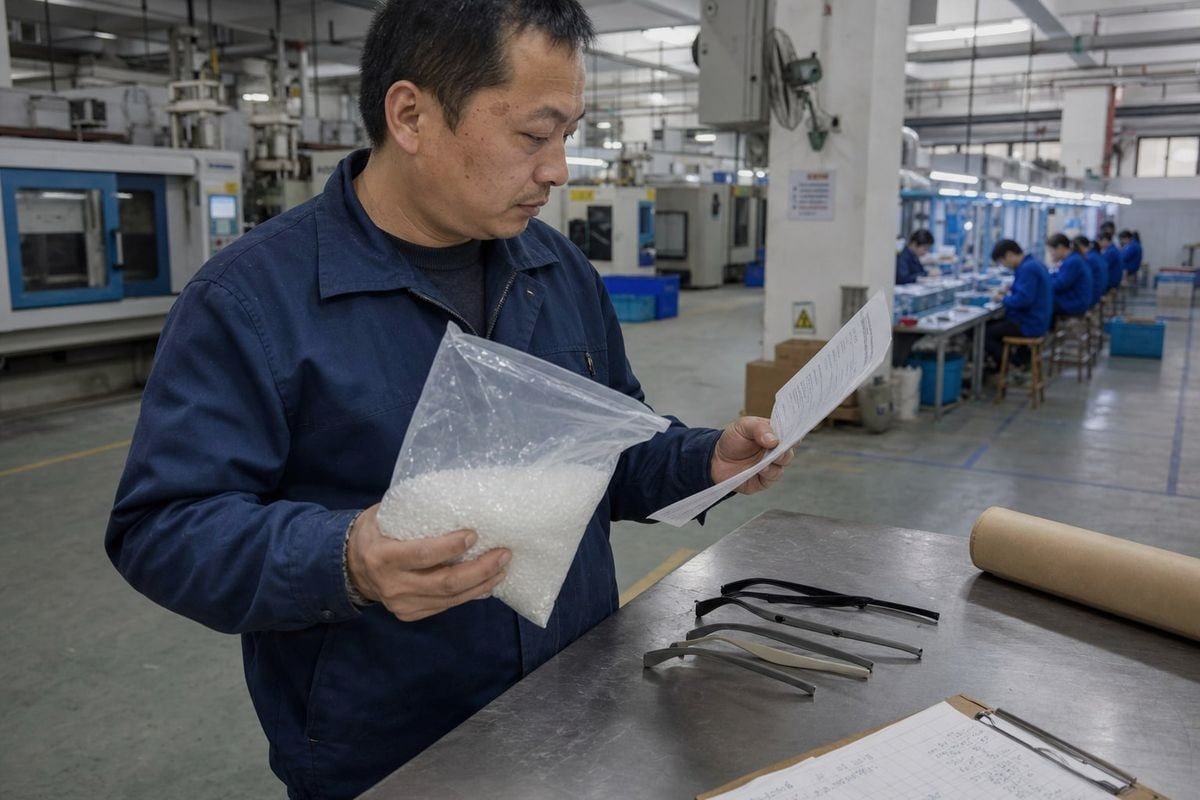
Verifying suppliers use promised raw materials for kids optical frames is a real fear for buyers. On our production line, we’ve seen why: substitution is invisible until frames fail.
To verify suppliers use promised raw materials for kids optical frames, combine documentary proof, third-party lab testing, on-site factory audits, and batch traceability. Request material certificates, validate test reports with the issuing lab, test samples independently, and trace one production lot from resin receipt to packing.
No single check is enough on its own. You need a chain of evidence. Below, I break down each link in that chain, step by step.
What Documentation Should I Request to Confirm TR90 and TPEE Material Authenticity?
A buyer from Australia once asked me a blunt question: "How do I know your TR90 is really TR90?" I liked that question. At our Taizhou factory, we answered it with paperwork before we answered it with words.
Request the resin supplier's material certificate of analysis, technical data sheet, purchase invoices for the specific batch, third-party lab test reports, MSDS documents, and a Children's Product Certificate where applicable. Then validate report numbers directly with the issuing laboratory, such as SGS or Intertek, to rule out forgeries.

Documents are your first filter. They are not final proof, but they tell you fast whether a supplier runs a controlled operation or improvises. In our fifteen years making flexible kids' eyewear, we have learned that a factory with real material control 1 can produce these papers in a day or two. A factory that stalls for weeks is usually hiding something.
The Core Document Set
Ask for documents at three levels: the raw material itself, the regulatory compliance of the finished frame, and the link between the two. Here is what a complete package looks like for TR90 injection molding and TPEE temples:
| Document | Ce qu'il prouve | Common Weakness |
|---|---|---|
| Certificate of Analysis (CoA) | The resin batch matches the promised grade | Can be recycled from an old batch |
| Technical Data Sheet (TDS) | Density, flexibility, and melt properties of the grade | Generic; not batch-specific |
| Resin purchase invoices | The factory actually bought that material recently | Suppliers may resist sharing; that resistance is itself a signal |
| Third-party lab test reports | Composition, phthalate-free components, lead limits | Reports can be forged — always validate the report number |
| Certificat de produit pour enfants | CPSIA compliance for the US market | Must map to your exact SKU, not a "similar" frame |
| REACH / EN test reports | Sécurité chimique 2 for the EU market | Check the scope covers frame and coating, not lens only |
Validating the Paper Trail
Do not stop at receiving PDFs. Match report numbers and product SKUs against the official databases of accredited labs 3 like SGS, TUV, or Intertek. Forged test reports circulate widely in low-cost eyewear sourcing. A two-minute verification call catches most of them. Also check that the resin grade named on the CoA matches the grade on the TDS and the invoice. If the names drift between documents, the "TR90" claim may be a marketing label wrapped around a cheaper nylon blend. For kids' frames sold under CPSIA compliance or REACH regulation, that gap becomes your legal liability, not the factory's.
Which Tests Can I Ask My Supplier to Perform to Verify Raw Material Quality?
There is a trade-off we weigh with every new client: testing costs money and time, but skipping it costs more. When we develop TR90 frames with TPEE temples, we build the test plan into the quotation, not around it.
Ask for third-party chemical tests covering total lead, phthalates, and nickel release; mechanical tests including bridge deformation, temple pull-out, and impact resistance testing; and material identification via NIR spectroscopy or FTIR. Require testing on production samples, not hand-picked golden samples, and use accredited labs.
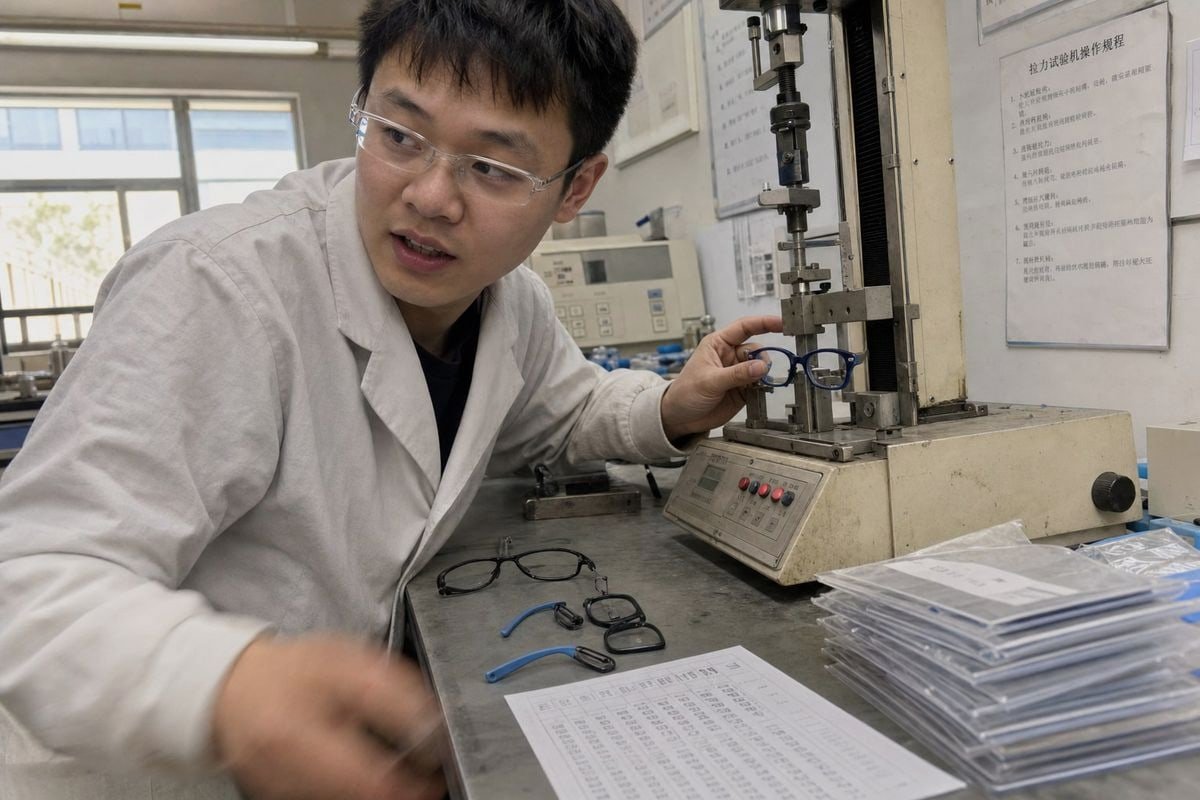
Testing splits into two families: chemical safety and physical performance. Kids' frames need both. A frame can be chemically clean but snap at the bridge. It can also survive every drop test yet leach restricted substances onto a child's skin. Your test plan should close both doors.
Chemical Safety Tests for Children's Eyewear
Children chew temples, sweat into nose pads, and wear frames for hours against their skin. So mandate tests par des tiers for child-specific hazards. The essentials:
| Test | Cible | Pourquoi c'est important pour les enfants |
|---|---|---|
| Total lead content | Frame, coating, decorations | CPSIA compliance requirement for US children's products |
| Phthalates (6P/7P) | Soft plastics, TPEE parts, silicone hooks | Confirms phthalate-free components in mouth-contact-risk parts |
| Libération de nickel | Hinges, screws, metal cores | Prevents skin allergy on the nose and ears |
| Cadmium and heavy metals | Colorants and coatings | Required under REACH regulation for EU markets |
Physical and Material Identification Tests
Beyond chemistry, verify the material behaves like the grade you paid for. Normes ISO 12870 4 give you a shared reference frame for bridge deformation, temple endurance, and dimensional stability. Add temple pull-out force and a drop-ball style impact check for lenses. For material identity, handheld NIR spectroscopy 5 is a powerful tool. It identifies polymers non-destructively in seconds, so an inspector can distinguish genuine TR90 or TPEE from a lower-cost substitute right on the factory floor. Some buyers also ask about molecular tagging — microscopic tracers embedded in resin pellets that remain detectable in finished frames. It is still rare in eyewear, but it shows where high-assurance sourcing is heading. Also insist that tested samples come from a real production run. We pull ours at random during batch inspections, because a golden sample proves nothing about lot number three thousand.
How Can I Inspect a Factory to Ensure They Use the Materials They Promised?
One lesson from our 5S-managed workshop shaped how I advise buyers: a factory's material honesty is visible in its storage room before it is visible in its frames. Messy, unlabeled resin bags predict messy answers.
Audit the factory by tracing one frame backward: inspect raw material storage and labeling, review Incoming Quality Control records for resin batches, watch the injection molding line for unauthorized regrind, and confirm the approved master sample is physically present at the QC station guiding production.
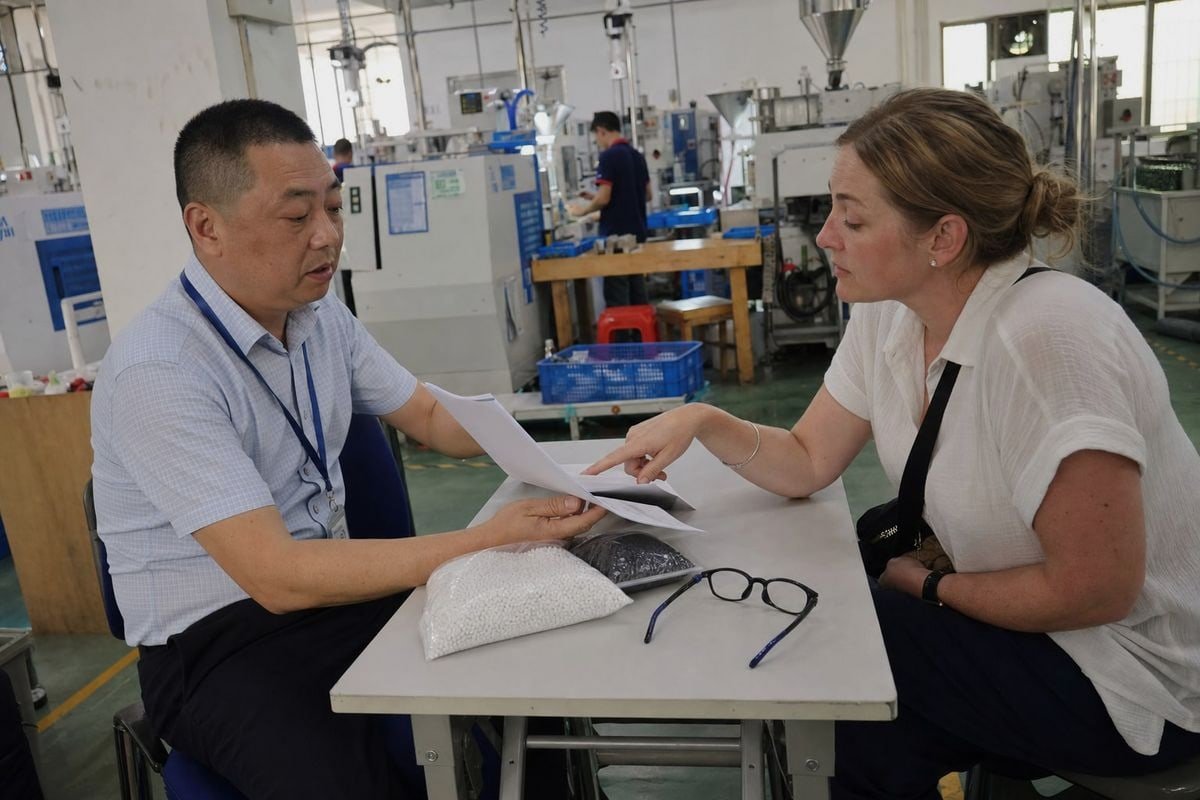
An audit works best when you follow one product through the building instead of taking a general tour. Tours show you what the factory wants you to see. Traceability exercises show you how the factory actually operates. Here is the walk-through we recommend, and the one we invite our own clients to perform.
The One-Frame Traceability Walk
- Start at the warehouse. Check that TR90 and TPEE pellets are stored in sealed, labeled bags with batch numbers and moisture control. Ask which resin sub-suppliers are approved and whether cellulose acetate sheets, if used, come from named sources.
- Review Incoming Quality Control logs. A serious factory checks specific gravity 6, moisture content, and purity of incoming resin before releasing it to production. Ask to see the last three IQC records and match them to purchase invoices.
- Watch the injection molding stage. In-process quality control should confirm no unauthorized regrind or scrap material is blended into virgin resin. Ask what the regrind policy is; a vague answer is a warning.
- Check machine parameters. Melt temperature and pressure settings should align with the technical data sheet of the promised grade. TR90 and cheaper substitutes do not process identically, so telemetry that contradicts the TDS is evidence of substitution.
- Find the master sample. The frame you approved should sit at the QC station as the physical reference for color, dimensions, and finish.
- Test traceability backward. Pick a finished frame from packing and ask the team to identify its production date, line, operator, and resin batch. Strong supply chain traceability means they can answer in minutes.
Use a written supplier audit checklist so every visit covers the same points and results stay comparable over time. Scale the depth to your risk: a pilot order may justify a remote video audit, while a long-term program deserves an on-site visit or a third-party inspection firm. Some advanced supply chains now pilot blockchain-based material passports that log each resin batch from chemical maker to finished frame — useful for brands that need airtight audit trails.
What Red Flags Suggest a Supplier Might Be Substituting Cheaper Materials?
Early in our export history, a distributor showed me frames from another vendor that turned brittle within a season. The quote had promised TR90. The invoice said "TR material." That one dropped word told the whole story.
Watch for vague "equivalent material" language, prices far below the resin cost floor, refusal to share batch records or invoices, inconsistent sample quality between orders, test reports that fail lab verification, and recycled catalog photos. Any two of these together justify independent testing before payment.
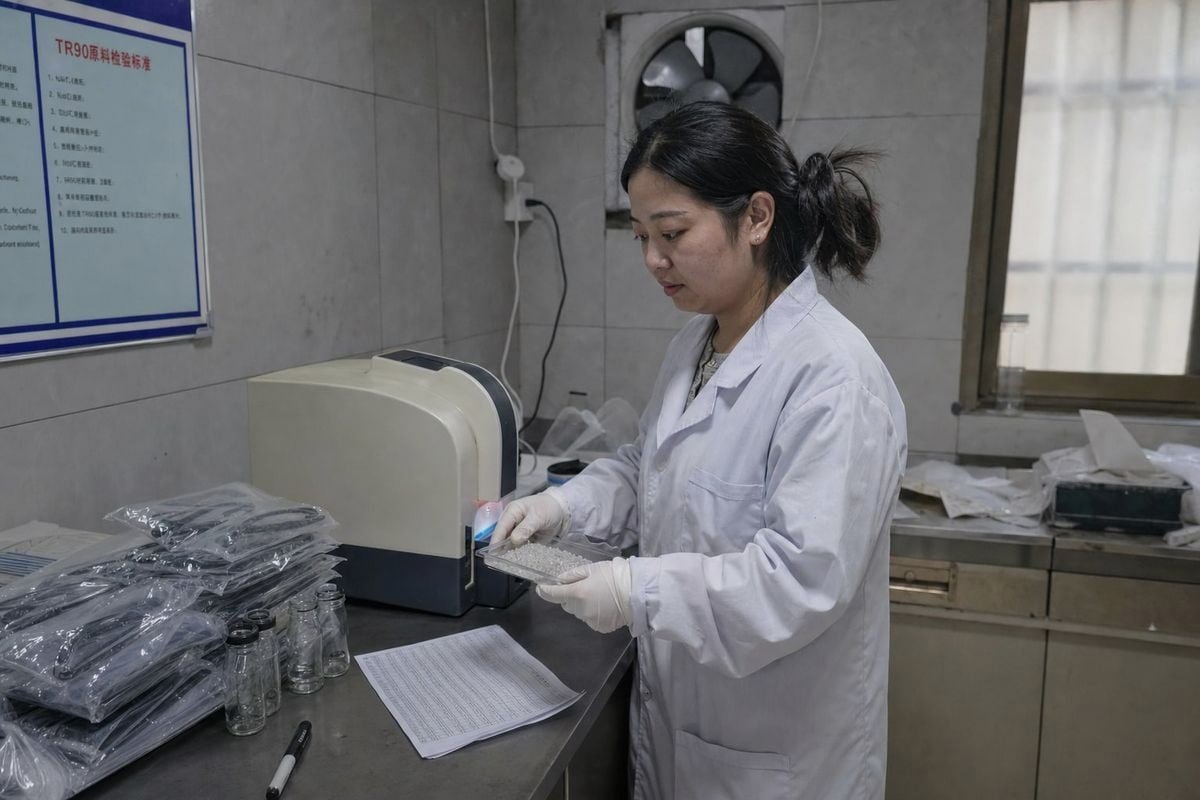
Substitution rarely announces itself. It hides in small wording changes, quiet cost pressures, and gaps in paperwork. Some suppliers will argue that certificates and a long relationship should be enough. In our experience exporting to buyers in more than twenty countries, that argument fails exactly when margins tighten — which is precisely when substitution risk peaks. Trust the pattern of evidence, not the length of the relationship alone.
Red Flags Ranked by Severity
| Drapeau rouge | Gravité | Ce que cela signifie habituellement |
|---|---|---|
| Test report fails verification with the issuing lab | Critique | Forged documentation; stop and re-test independently |
| Refusal to show IQC logs or resin invoices | Élevé | No traceability, or something to hide |
| "Equivalent" or "TR-type" wording in quotes | Élevé | A cheaper nylon blend sold under the TR90 name |
| Price well below the raw material cost floor | Élevé | The math only works with regrind or substitutes |
| Sample quality drifts between the pilot and bulk run | Moyen | Weak process control or a mid-run material switch |
| No kids-specific styles or child-fit expertise on display | Moyen | A generic eyewear plant relabeling adult capability |
| Recycled or stolen catalog photos, mismatched company details | Moyen | The "factory" may be a trader with no material control |
Turning Red Flags into Contract Protection
Spotting a red flag is only half the job. Write your defenses into the purchase contract. Name the exact resin grade and sub-supplier, reference ISO 12870 standards and your chemical test scope, and define inspection avant expédition 7 as a payment milestone. Add a clear remedy clause: if independent testing finds substituted material, the supplier replaces the goods and covers the testing cost. Then confirm everything with a small trial order before scaling. Speed pressure is real, but a fast approval that skips verification is how substituted frames end up on children's faces. Our approach with new brand clients is simple: we would rather lose a week to testing than lose a partner to a recall.
Conclusion
Material substitution in kids' eyewear is preventable. Combine documents, independent tests, factory traceability, and contract safeguards into one repeatable system, and demand proof from resin bag to finished frame.
Notes de bas de page
1. Explains the importance of systematic material management in manufacturing environments. ↩︎
2. Provides a global perspective on chemical safety standards and risk management. ↩︎
3. Information on the global network for laboratory accreditation and verification standards. ↩︎
4. Reference to the international standard for spectacle frames, ensuring mechanical and physical quality. ↩︎
5. Technical overview of near-infrared spectroscopy used for non-destructive material identification. ↩︎
6. Authoritative Wikipedia entry for specific gravity (relative density) providing a stable, accessible definition. ↩︎
7. Explains the process
Plus d'articles que vous pourriez aimer

Vous recherchez un partenaire fiable en lunetterie pour enfants ?
Explorez plus de 800 styles prêts et un support OEM/ODM complet adapté à votre marque.
Contactez-nous English
  Español de México
  Deutsch
  Français
  日本語
日本語  العربية
  Português do Brasil