How Do Spring, Screw-Free, and Regular Hinges Compare in Durability for Kids’ Eyewear?
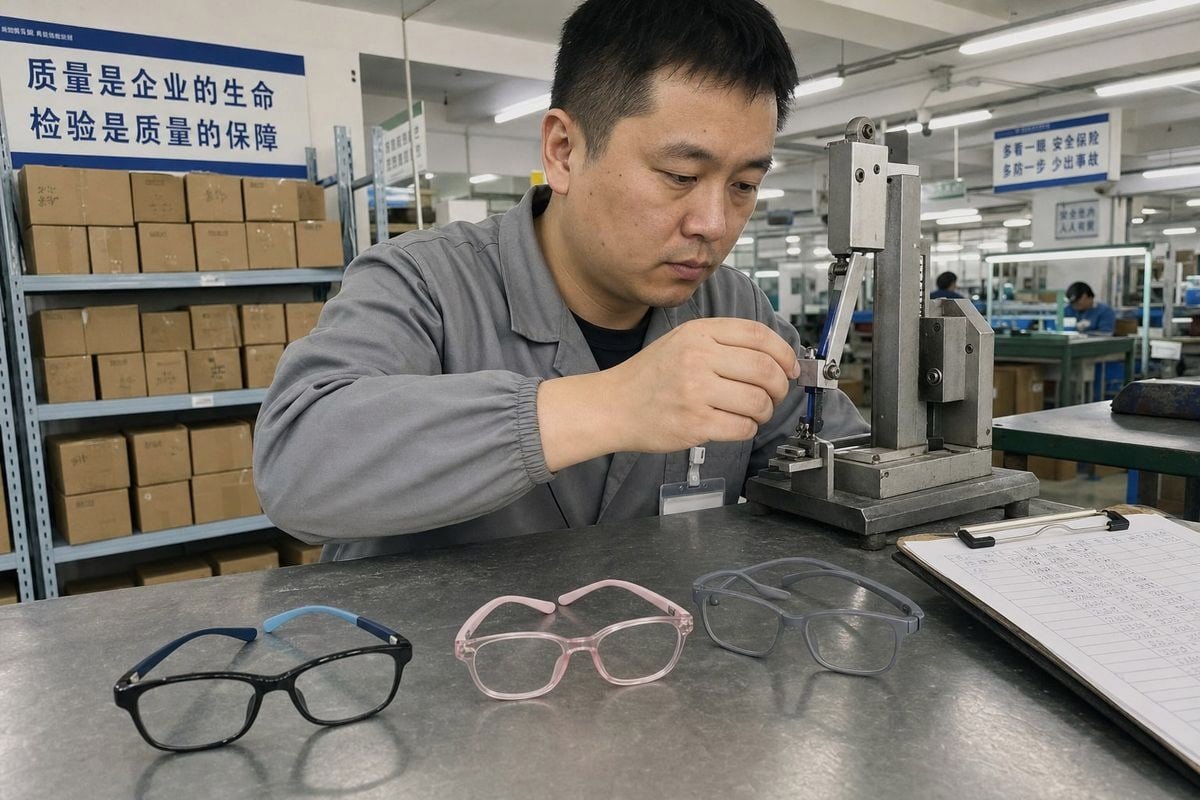
Hinge durability for kids’ eyewear is the question I hear most on our production line. Kids yank frames off one-handed, sit on them, and twist them daily. One weak hinge ruins everything.
Spring hinges offer the best durability for active kids because they flex beyond 90 degrees and absorb stress. Screw-free hinges eliminate lost-screw failures and choking hazards. Regular hinges are cheapest to repair but loosen fastest under rough handling, typically after about 5,000 flex cycles.
Each hinge type fails in a different way. So the right choice depends on the child, the frame material, and your brand’s repair policy. Let me walk you through each one.
What makes spring hinges more durable for active children compared to standard hinges?
Last year, a buyer from Australia sent us a box of competitor frames returned by parents. Nearly every failure started at a rigid hinge. That box shaped how we test.
Spring hinges outlast standard hinges under kid-style abuse because an internal coil lets the temple flex outward past 90 degrees, absorbing the lateral stress of one-handed removal. Standard hinges concentrate that force at a rigid pivot, which loosens, warps, or snaps the frame front.
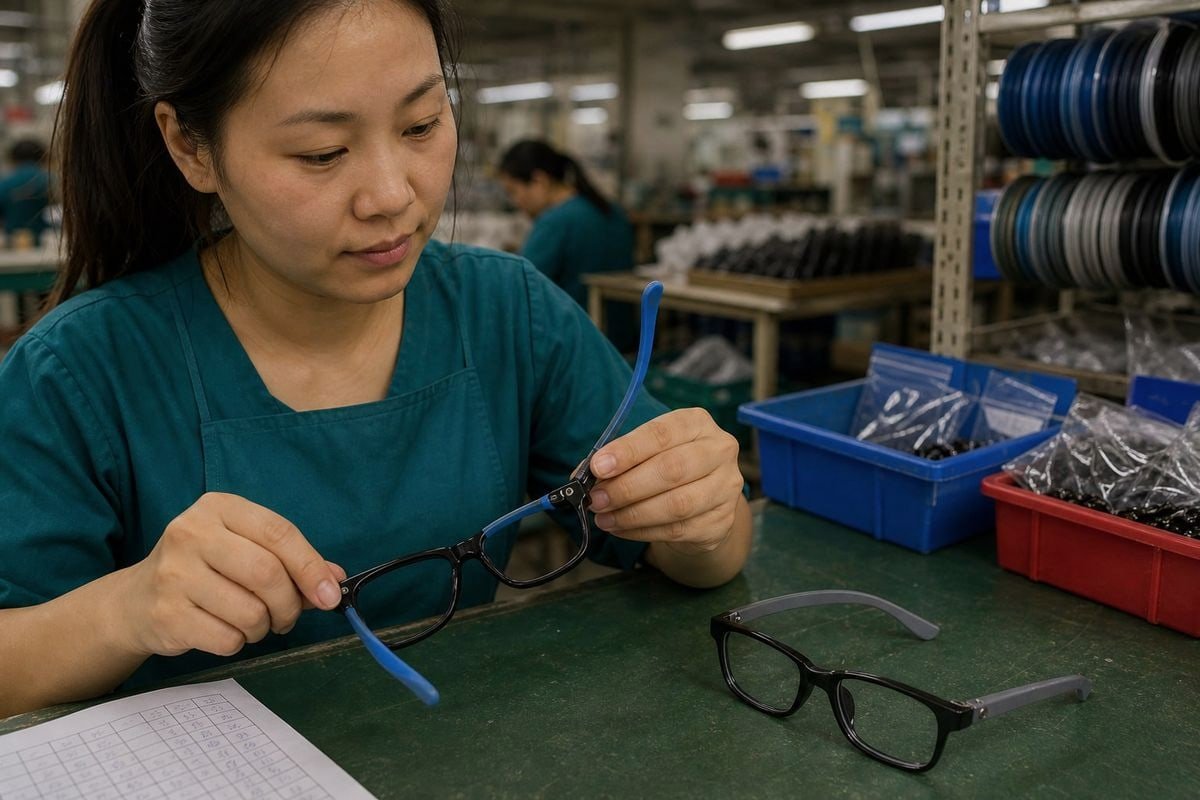
The core idea is simple: durability is about stress management, not just metal thickness. When a child pulls glasses off with one hand, the temple gets pushed far past its normal opening angle. A rigid barrel hinge has nowhere to send that force. So the force travels into the pin, the rivets, and the frame front. Over time, the hinge loosens or the frame cracks near the joint.
A spring hinge adds "give." The coil compresses, the temple swings outward, and then it snaps back. In ISO-style flex testing, standard hinges can show measurable temple-width increase after about 5,000 cycles. Basic spring hinges show less tension loss even after 10,000 cycles, and premium versions hold longer still. Some vendors claim 50,000 to 100,000 cycles with maintained alignment, though I treat those numbers as marketing data, not independent proof.
Where spring hinges still fall short
To be fair, a spring hinge is a mechanical part. It can lose tension, and the coil can rust or break. When that happens, the whole temple often needs replacement. That is a real trade-off we discuss openly with buyers.
| Facteur | Spring Hinge | Standard Hinge |
|---|---|---|
| Lateral flex tolerance | High (flexes past 90°) | Low (rigid pivot) |
| Typical tension loss | After 10,000+ cycles | Around 5,000 cycles |
| Failure mode | Coil wear, full temple swap | Loose screws, pin wear |
| Repair cost | Higher, needs specific parts | Low, simple tools |
| Fit retention | Excellent for wider heads | Needs frequent adjustment |
Temple arm flexibility also helps comfort. Less pressure on the head means less over-bending by the child, which indirectly extends optical frame longevity.
Are screw-free hinge designs really safer and longer-lasting for kids' frames?
When we were developing our TPEE baby sunglasses, a European buyer raised a concern I had not fully weighed before: a tiny hinge screw is a choking hazard for a toddler.
Yes, screw-free hinges are both safer and longer-lasting for young children. They eliminate the most common failure point—lost or stripped screws—and remove a choking hazard for toddlers. Paired with flexible TPEE construction, they create near-unibody frames that bend flat and twist without permanent damage.
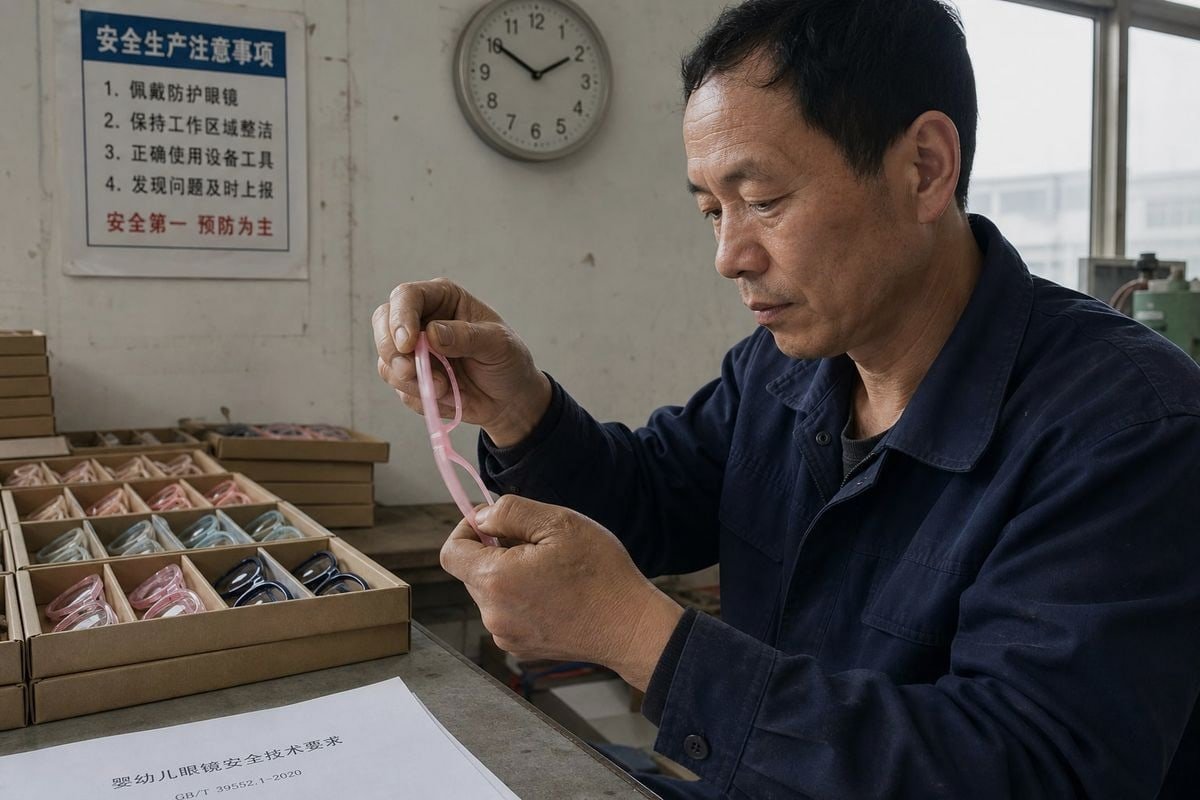
Screwless frame technology solves a problem that spring hinges cannot touch. In a regular hinge, the screw is the weakest link. It backs out, gets stripped, or falls onto a playground and disappears. In our fifteen years of building children's eyewear, lost screws account for more warranty conversations than any other single part.
Screw-free designs remove that link entirely. Some use molded interlocking joints. Others use Nitinol memory metal 1, which gives a "self-healing" property: the hinge bends to extreme angles and returns to its original calibrated alignment when released. The most robust versions pair screw-free joints with TPEE, a thermoplastic polyester elastomer. That combination produces a near-unibody structure that can be bent flat or twisted 180 degrees without permanent deformation. This is exactly why we build most of our baby and toddler styles with TR90 frames and TPEE temples.
Safety standards matter here
Advanced screw-free hinges are increasingly designed to meet ISO 12870 requirements 2 for children under three, with specific focus on pull-force resistance that exceeds what traditional soldered hinges can handle. For B2B buyers targeting the baby market, that standard should be a checklist item, not a nice-to-have.
The trade-offs to weigh
Screw-free frames are harder to adjust for a precise optical fit. And a newer trend helps offset repair concerns: modular snap-and-swap designs let parents perform field repairs by snapping on a new temple without optical tools.
How do I choose the right hinge type for my children's eyewear collection?
Buyers often ask me to pick one "best" hinge for their entire range. I always push back. A collection serving toddlers, school kids, and pre-teens needs different answers at each age.
Match the hinge to the child's age and use case: screw-free flexible designs for toddlers under three, spring hinges for active school-age kids, and quality regular hinges for budget lines or older children. Pair every hinge with impact-resistant materials like TR90 for the best result.
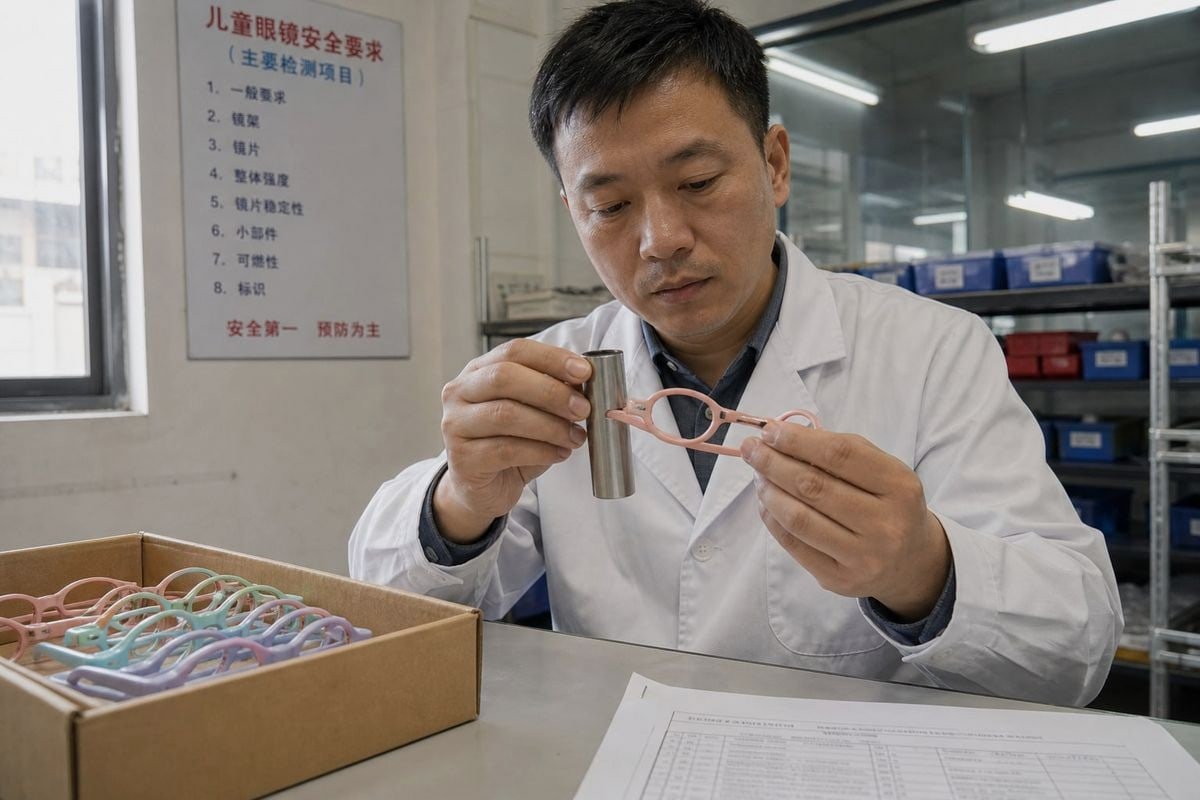
Here is the decision framework we walk buyers through when they select from our existing styles:
- Toddlers and babies (0–3 years): Choose screw-free, near-unibody TPEE construction. Safety and twist tolerance outrank everything, including optical adjustability.
- Active kids (4–9 years): Choose spring hinges or flex hinges on a TR90 memory plastic front. This age group produces the most one-handed removals and playground impacts.
- Older children (10+): Quality regular hinges become viable. These kids handle frames more carefully, and easy adjustment matters for a growing face.
- Budget or promotional lines: Well-made regular barrel hinges on strong frames still work. A well-made regular hinge on a strong frame can outlast a cheap spring hinge.
Hinge choice never works alone
Children's frame construction is a system. A great hinge on brittle acetate still fails. Break-resistant glasses come from matching hinge, frame material, and fit together.
| Buyer Priority | Recommended Hinge | Frame Material Pairing |
|---|---|---|
| Maximum toddler safety | Screw-free / unibody | TPEE or TR90 + TPEE temples |
| Fewest repairs for active kids | Spring or flex hinges | TR90 memory plastic |
| Lowest unit cost, easy repair | Regular barrel hinge | Reinforced TR90 |
| Extreme rough use | Flex hinge / memory metal | Nitinol temple core |
One more emerging option worth watching: 3D-printed frames with living hinges, where a thin flexible section of the frame itself acts as the joint. This eliminates mechanical wear entirely, though it remains a niche category today. For most brands launching now, choosing from proven styles—we keep roughly 800 in our catalog—lets you test different hinge types across your range without mold investment.
Can hinge durability affect the overall safety and lifespan of kids' sunglasses?
A lesson I learned early in exporting: parents rarely blame the hinge when sunglasses fail. They blame the brand. That is why hinge specs deserve boardroom attention, not just factory attention.
Yes, hinge durability directly determines both safety and lifespan. A failing hinge misaligns lenses, weakens UV protection coverage, exposes sharp edges or loose screws, and shortens frame life. Durable hinges can extend usable lifespan significantly and reduce hinge-related repairs by roughly half in kids' glasses.
Think about what a loose hinge actually does. The temples splay outward. The frame slides down the child's nose. Now the verres UV400 3 no longer sit in front of the eyes correctly, so sunlight leaks around the edges. Poor optical alignment is not just an annoyance; it undermines the entire protective purpose of kids' sunglasses.
Safety risks compound from there. A stripped screw can work loose and become a swallowing hazard. A snapped rigid hinge leaves a sharp metal stub near a child's temple. A frame that no longer grips falls off during sport and gets stepped on. Every one of these scenarios starts at the hinge.
The lifespan math for brands
One vendor claims spring-hinge frames need 70% fewer repairs and last 40–60% longer. I would frame those numbers as marketing data rather than independent consensus. But the direction is right, and it matches what our QC records and buyer feedback show over repeat orders. Fewer hinge failures mean fewer returns, fewer negative reviews, and stronger reorder rates.
| Hinge Condition | Safety Impact | Lifespan Impact |
|---|---|---|
| Tight, functioning hinge | Lenses aligned, full UV coverage | Full expected frame life |
| Loose regular hinge | Frame slides, screw hazard | Frequent adjustments, early retirement |
| Failed spring coil | Temple flops, poor retention | Temple replacement needed |
| Screw-free flexible joint | No small parts, high pull-force resistance | Near maintenance-free eyewear |
For brands, the practical takeaway is to specify hinge cycle testing in your QC plan, not just drop testing. Durable hinges are how a pair of sunglasses survives a full season instead of a single beach trip.
Conclusion
Kids will always yank, twist, and drop their glasses. Weak hinges turn that into returns and lost trust. Choose spring, screw-free, or regular hinges by age and use case—and pair them with flexible, impact-resistant materials.
Notes de bas de page
1. Technical background on the shape-memory alloy used in flexible, screw-free eyewear hinges for children. ↩︎
2. Peer-reviewed PubMed Central study discussing ISO 12870 standards for spectacle frame durability. ↩︎
3. The FDA regulates eyewear safety and provides standards for UV protection in the United States. ↩︎
Plus d'articles que vous pourriez aimer

août 5, 2026
Bio-Based vs Regular Cellulose Acetate: What's the Difference for Kids' Frames?

août 5, 2026
How Recyclable Are Kids' Optical Frame Materials, and What Eco-Friendly Alternatives Exist?

août 5, 2026
Do Kids Optical Frames Whiten or Age in Storage, and How to Control Warehouse Conditions?
Vous recherchez un partenaire fiable en lunetterie pour enfants ?
Explorez plus de 800 styles prêts et un support OEM/ODM complet adapté à votre marque.
Contactez-nous English
  Español de México
  Deutsch
  Français
  日本語
日本語  العربية
  Português do Brasil