Spring Hinges vs Screw-Free vs Ordinary Hinges: Which Is Best for Kids Sunglasses?
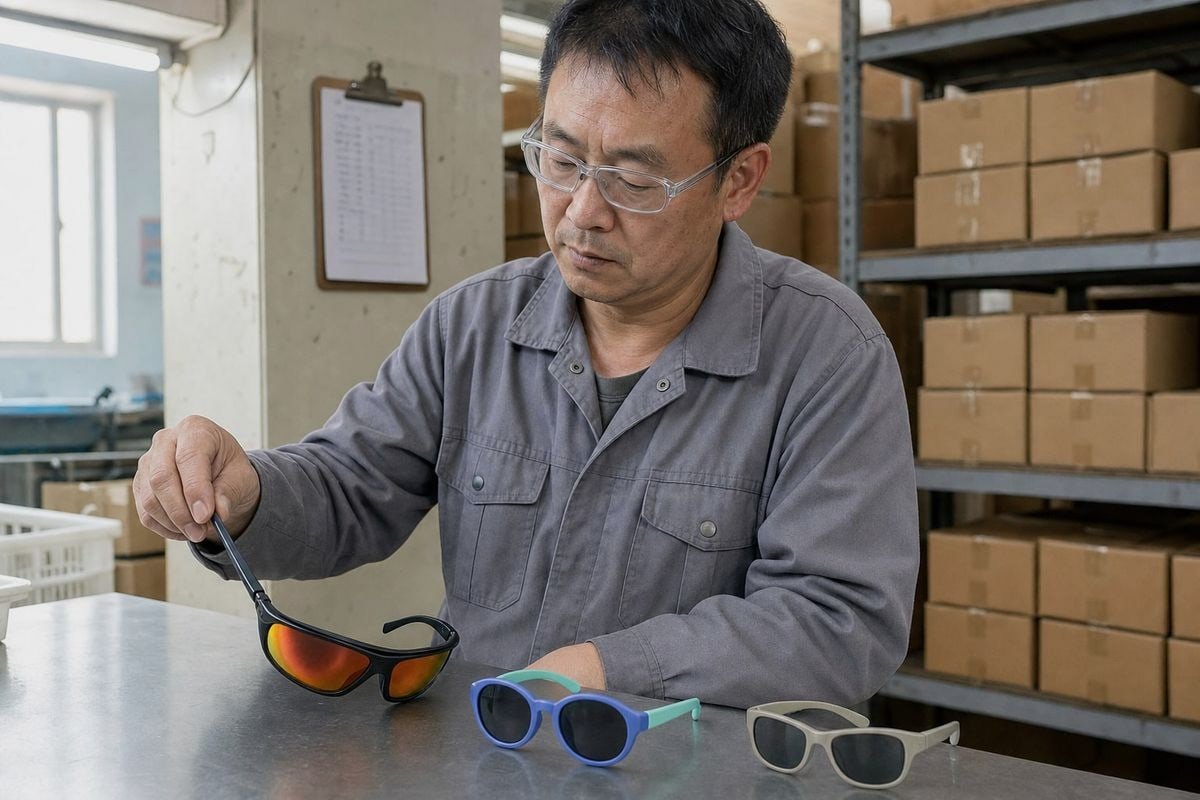
Hinge choice makes or breaks kids sunglasses. On our production line in Taizhou, I have watched one weak hinge sink an entire product launch — returns, complaints, lost trust, everything.
Spring hinges are best for most kids sunglasses because they flex outward, absorb rough handling, and stay comfortable on growing heads. Ordinary hinges suit budget lines needing easy repairs, while screw-free hinges work best in flexible TPEE frames designed for toddlers.
Each hinge type solves a different problem. Below, I break down safety, cost, durability, and the exact questions to ask before you commit to a design.
How do I know which hinge type is safest for active kids who play rough?
Last year, a buyer from Australia sent us a competitor's broken frame. The barrel hinge had snapped at the joint after a playground fall. That sample taught our team a lot.
Spring hinges are the safest choice for active kids because the temples flex beyond 90 degrees instead of snapping. Screw-free hinges built into flexible TPEE material rank a close second, especially for toddlers, since they remove small screws that pose choking risks.
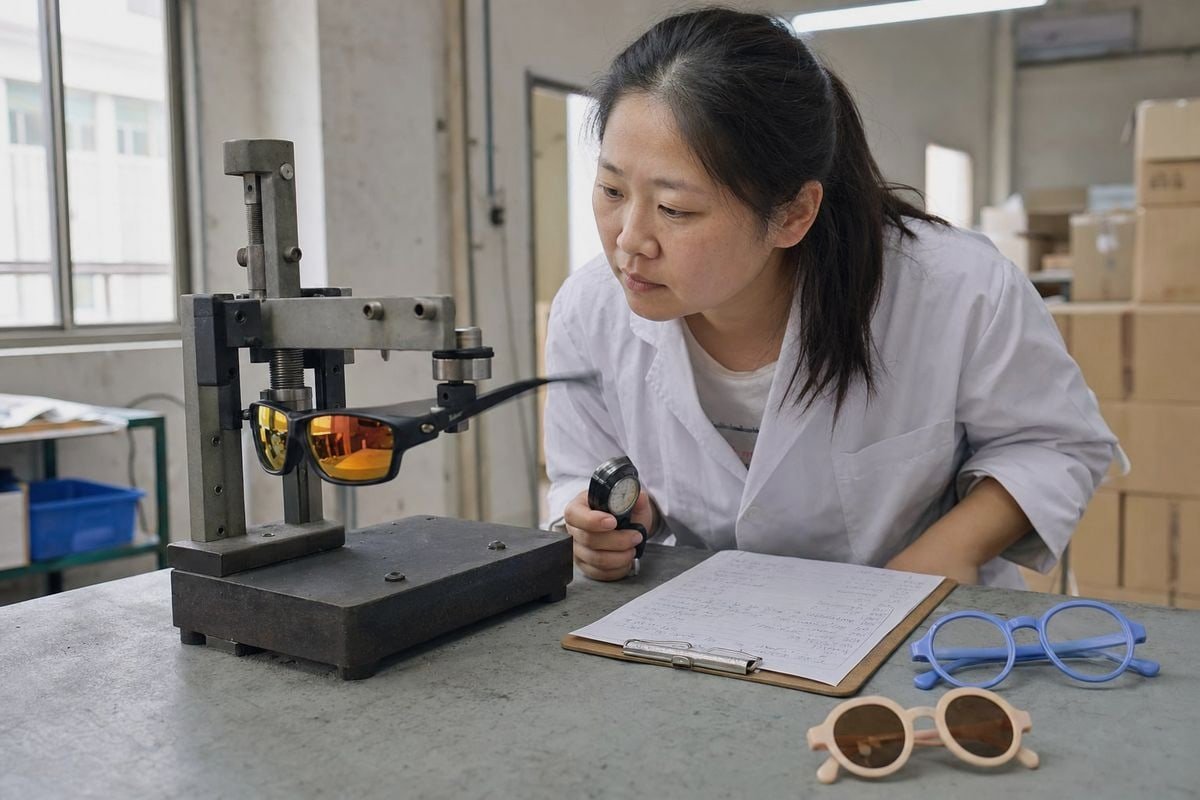
Safety for children's eyewear has two sides. First, the frame must survive impact without shattering into sharp pieces. Second, the hardware itself must not become a hazard. A hinge type can pass one test and fail the other.
How each hinge handles rough play
Spring hinges use a small internal coil. When a child yanks the sunglasses off with one hand, the temple flexes outward and returns. This absorbs the force that would otherwise snap a rigid joint. In our drop and flex testing, spring-hinge samples consistently outlast standard barrel hinges 1 under repeated outward stress. That is why we recommend them for active kids sunglasses in sport and wraparound styles.
Ordinary barrel hinges transfer stress directly to the screw and the frame front. A hard twist can crack the lug or strip the screw threads. They are not unsafe by default, but they have no give.
Screw-free hinges shine in toddler eyewear safety. Small metal screws can loosen, fall out, and end up in a curious mouth. Removing them removes that risk entirely. When we mold screw-free joints into soft TPEE material 2, the whole frame bends as one piece, which supports genuine breakage prevention.
| Facteur de sécurité | Spring Hinge | Ordinary Hinge | Screw-Free Hinge |
|---|---|---|---|
| Survives outward pulling | Excellent | Mémoire de forme | Good to excellent |
| Small-part choking risk | Bas | Moderate (screws) | Aucun |
| Sharp edges after breakage | Rare | Possible | Very rare |
| Meilleur groupe d'âge | 4+ years | 8+ years | 0–5 years |
For very young children, I always pair hinge design with les montures sans BPA 3 and rounded temple tips. The hinge is only one part of a safe system.
Which hinge design will save me money on returns and warranty claims over time?
Cost per unit is easy to compare. Cost per season is harder. One European distributor we supply switched hinge types mid-line, and their warranty data changed our own quoting advice.
Spring hinges save the most money over time because they prevent the outward-force breakage that drives most warranty claims. Ordinary hinges cost less upfront but generate more returns from loose screws, worn barrels, and snapped temples within months of daily use.
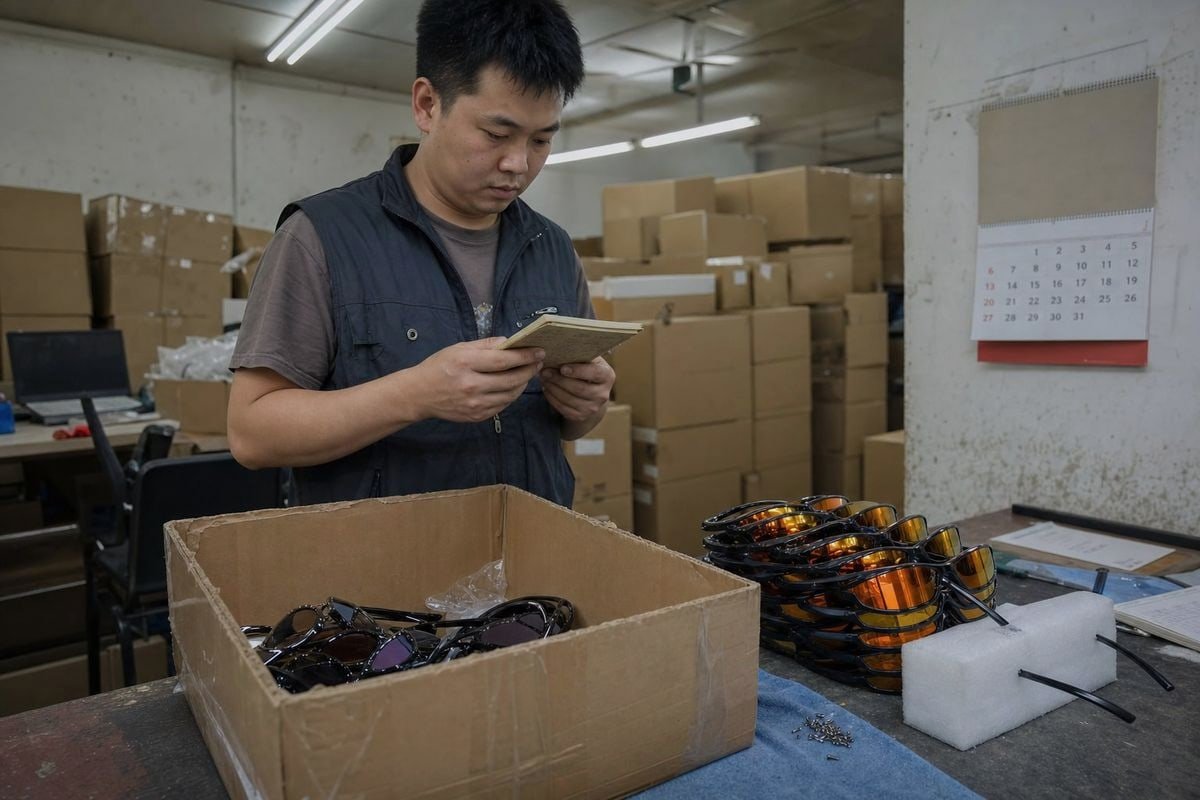
Returns on kids sunglasses rarely come from lens defects. In our fifteen years of eyewear production, the majority of complaints trace back to the joint: a lost screw, a floppy temple, or a clean snap at the hinge. So the real question is which hinge reduces those failure points.
The hidden math of hinge failures
An ordinary hinge costs the least to install. But barrel friction wears down over months of opening and closing. The temple loosens, the fit drifts, and the child stops wearing the sunglasses. Parents then return the product or skip your brand next time. That quiet loss never shows up on a warranty report.
A spring hinge adds a small amount to unit cost. In exchange, it removes the single biggest failure mode for children: outward over-extension. It also keeps constant tension on the temples, so the fit stays snug as the frame ages. Fewer failures, fewer returns, better reviews.
Screw-free hinges sit in between. They eliminate lost-screw claims completely, which is the most frequent single complaint category we see from buyers. But a poorly designed screw-free joint cannot be repaired at all, so a failure means a full replacement.
| Cost Factor | Spring Hinge | Ordinary Hinge | Screw-Free Hinge |
|---|---|---|---|
| Coût unitaire | Plus élevé | Le plus bas | Modéré |
| Typical return driver | Coil fatigue (rare) | Loose/lost screws | Full joint failure (rare) |
| Repairable by parent | Non | Oui | Non |
| Expected complaint rate | Bas | Élevé | Bas |
| Lifetime value to brand | Élevé | Modéré | High for toddler lines |
My honest advice to procurement managers: judge hinges by cost per wearable month, not cost per unit. Eyewear durability is what parents remember at reorder time.
Can screw-free hinges really survive daily drops without breaking or loosening?
Skepticism about screw-free hinges is fair. Early designs earned a bad reputation. When our engineers first tested screwless samples years ago, some cracked at the pivot within a week of flex cycling.
Yes, modern screw-free hinges survive daily drops when they are molded into flexible frame materials like TPEE. The joint relies on material memory instead of mechanical parts, so there is nothing to loosen. Rigid plastic screw-free designs, however, remain fragile and should be avoided.
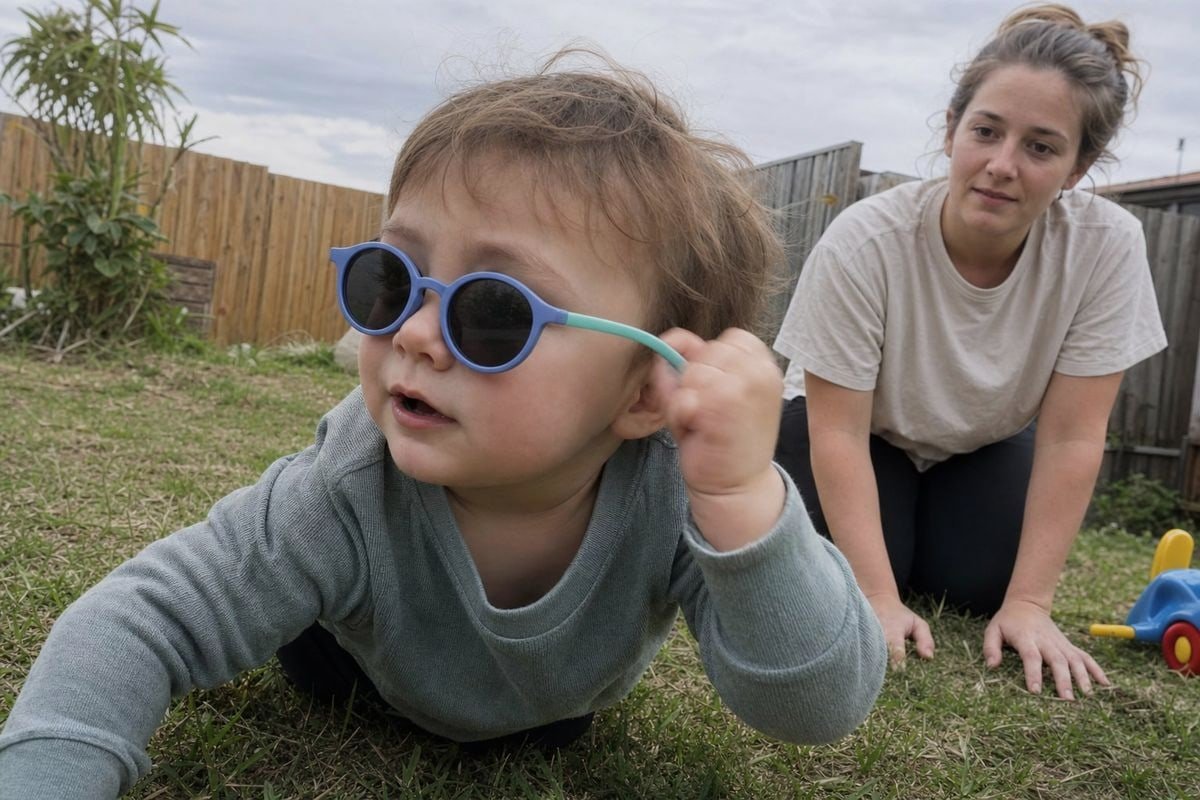
The answer depends entirely on the frame material behind the hinge. A screw-free joint in stiff, brittle plastic concentrates stress at one thin point. That is the version that fails. A screw-free joint integrated into flexible frame technology behaves completely differently.
Why material matters more than the joint
TPEE material has elastic memory. Bend it, twist it, sit on it — it returns to shape. When we build a screw-free hinge into a TPEE temple, the entire arm becomes the flex mechanism. Some of our toddler styles offer near 360-degree flexibility, meaning the temples can twist and fold in almost any direction without damage. There is no coil to fatigue and no screw to back out. This monoblock approach is why we lead many baby and toddler lines with TR90 5 fronts and TPEE temples.
What a proper drop test looks like
Here is the simple validation sequence we run before approving any screw-free design:
- Flex each temple outward to 180 degrees, 500 cycles minimum.
- Drop the frame from table height onto hard flooring, ten repetitions per orientation.
- Twist the frame front and temples in opposite directions and check for stress whitening.
- Age samples in heat and cold, then repeat the flex test.
- Inspect the pivot area under magnification for micro-cracks.
A frame that passes all five stages will handle a normal childhood. One caution: screw-free hinges cannot be adjusted by an optician. The fit you mold is the fit the child gets, so sizing across your range must be right from the start.
What should I ask my manufacturer before choosing a hinge type for my kids' sunglasses line?
A product developer from Japan once sent me eleven questions before her first order. I keep that email as a model, because every question she asked prevented a problem later.
Ask your manufacturer about hinge material and testing standards, replacement part availability, flex-cycle test results, screw-locking methods, compatibility with flexible frames, minimum order quantities per hinge type, and whether existing molds support your preferred hinge without new tooling costs.
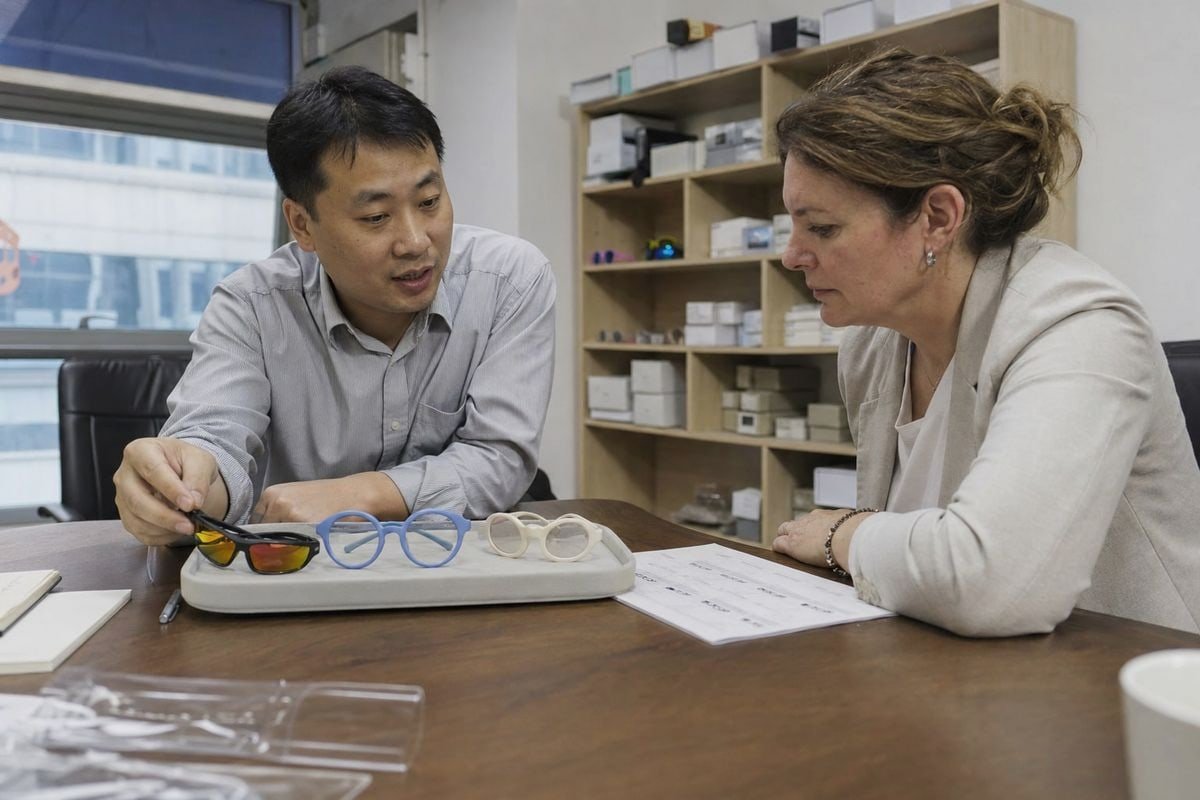
Good suppliers welcome hard questions. Vague answers about hinges usually signal a trading company reselling generic frames, not a factory that controls its own quality. Our workshop runs 5S management 6 with around 120 workers, and we can answer every item below from our own process documents. Your supplier should be able to do the same.
The questions that reveal real capability
| La liste essentielle des questions | Pourquoi c'est important | Red-Flag Answer |
|---|---|---|
| What flex-cycle count do your hinges pass? | Proves eyewear durability claims with data | "They are very strong" |
| How are screws secured on ordinary hinges? | Thread-locking prevents the top return cause | "Standard assembly" |
| Is the hinge integrated with TPEE or TR90? | Impact resistance depends on the material system | "We can use any plastic" |
| Do you stock replacement temples and screws? | Supports your after-sales service | "No spare parts" |
| Can I test existing styles before tooling? | Réduit votre risque de lancement | "New mold required first" |
| Are frames BPA-free with test reports? | Non-negotiable for children's products | "Probably, yes" |
Match the hinge to the child, not the trend
Also discuss your target age group openly. For toddlers, push toward screw-free joints in soft flexible material. For school-age kids, spring hinges with temple pressure relief keep frames comfortable through long outdoor days, which directly improves UV protection compliance 7 — sunglasses only work when children actually wear them. For sporty older kids, wraparound frames with spring hinges hold securely during movement. A factory with a deep existing catalog, like our roughly 800 ready styles, lets you sample all three hinge approaches before committing to one, without paying for custom molds upfront.
Conclusion
Weak hinges quietly destroy kids eyewear brands through returns and lost trust. Choose spring hinges for most children, screw-free TPEE designs for toddlers, and ordinary hinges only for repair-friendly budget lines.
Notes de bas de page
1. Wikipedia overview of hinge mechanisms supports technical comparison of barrel versus spring hinges. ↩︎
2. Wikipedia explains thermoplastic elastomer properties underlying the article’s TPEE flexibility claims. ↩︎
3. Updated FDA link providing current safety assessments and regulatory status of BPA. ↩︎
4. CDC provides authoritative safety data on choking hazards relevant to small hinge screws. ↩︎
5. Wikipedia background on polyamide materials used in TR90 eyewear frame construction. ↩︎
6. Wikipedia explains the 5S workplace organization methodology referenced for factory quality control. ↩︎
7. WHO provides authoritative background on UV radiation risks relevant to sunglasses protection claims. ↩︎
Plus d'articles que vous pourriez aimer
Vous recherchez un partenaire fiable en lunetterie pour enfants ?
Explorez plus de 800 styles prêts et un support OEM/ODM complet adapté à votre marque.
Contactez-nous English
  Español de México
  Deutsch
  Français
  日本語
日本語  العربية
  Português do Brasil