How to Combine Small Overseas Orders for Lower Unit Prices on Kids’ Sunglasses?
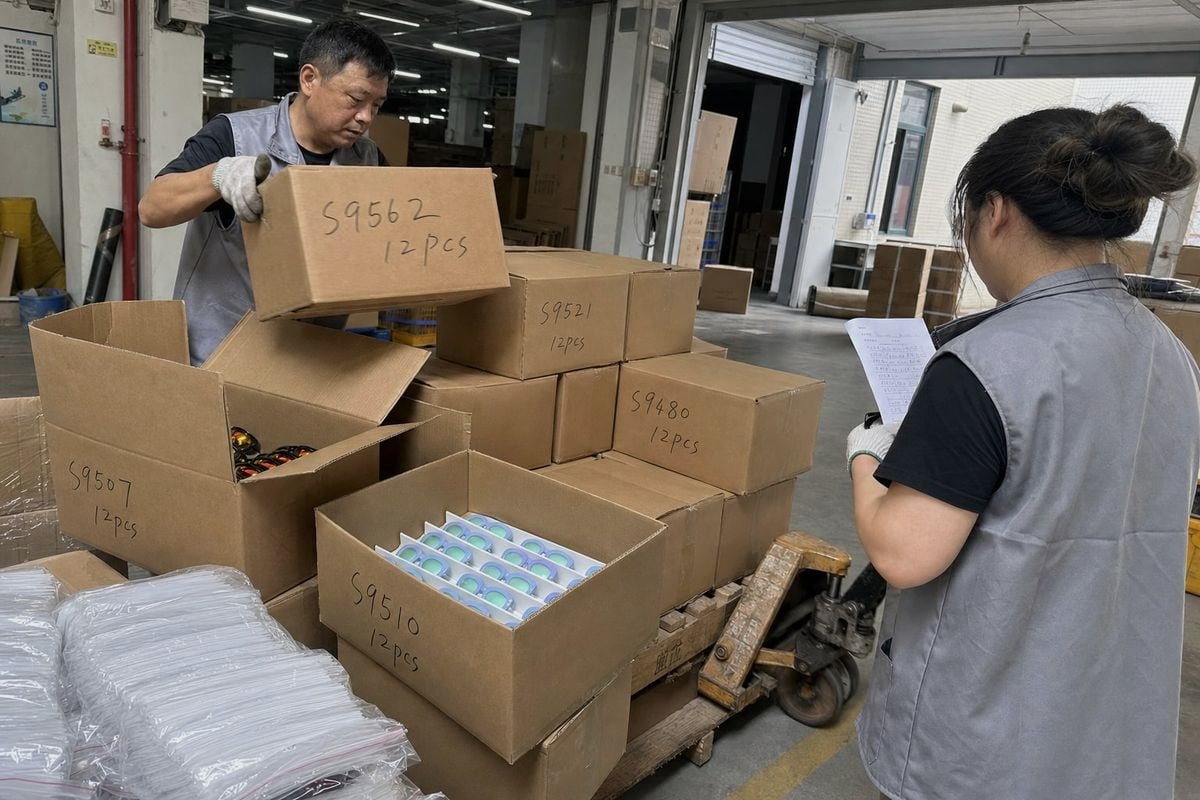
Combining small overseas orders for kids’ sunglasses is a question I hear weekly at our Taizhou factory Marquage CE 1. Small buyers overpay on freight, miss pricing tiers, and lose margin fast.
To combine small overseas orders for lower unit prices on kids’ sunglasses, consolidate multiple styles into one shipment, mix SKUs to reach factory MOQ tiers, use a hold-and-combine warehouse arrangement, and calculate total landed cost so freight, duties, and handling spread across more pairs.
Below, I break down each step. I will show you exactly how buyers work with us to merge orders, hit better pricing tiers, and protect quality along the way.
How can I combine multiple small orders into one shipment to reduce my per-unit costs?
A buyer from Australia once placed three separate orders with us in six weeks Marquage CE 2. She paid international freight three times. When we merged her fourth round into one shipment, her per-pair cost dropped noticeably.
Combine multiple small orders by placing them with one factory, asking the supplier to hold finished goods until all batches are ready, then shipping everything in one consolidated carton or pallet. This spreads freight, packaging, and handling fees across every pair, cutting per-unit costs.
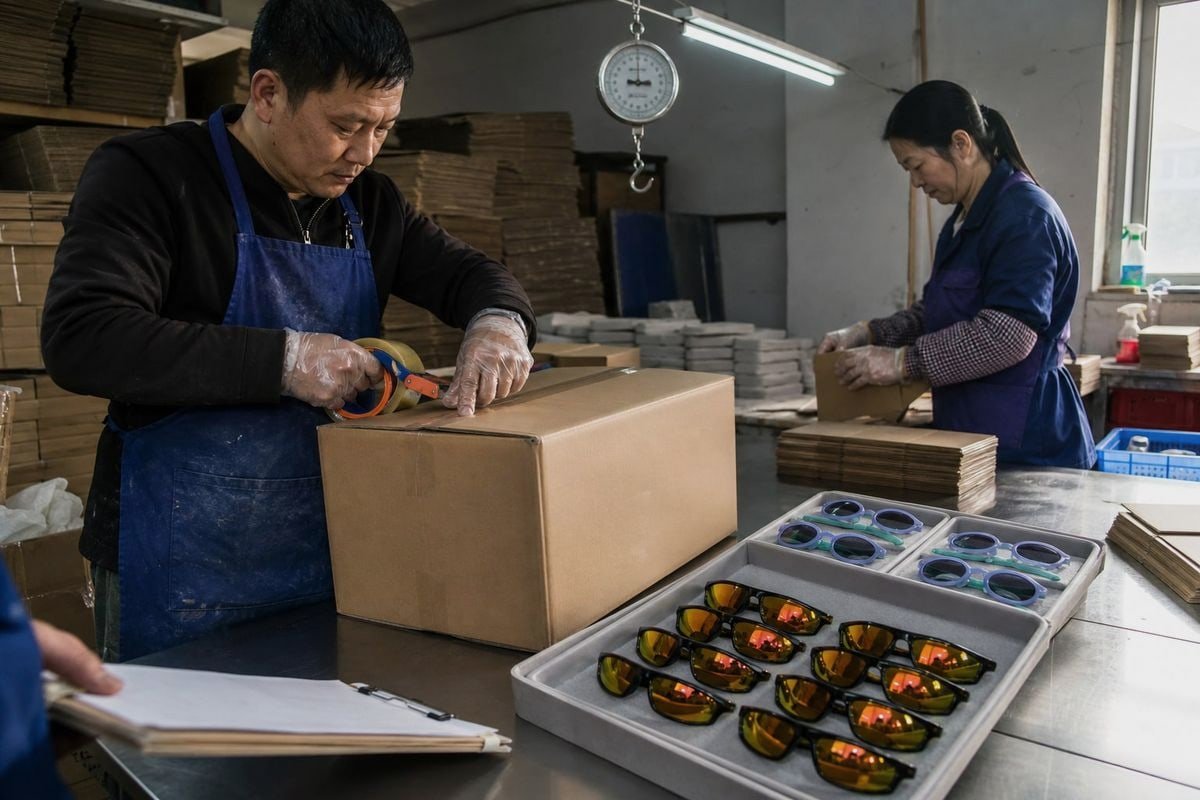
The real savings in small-order eyewear rarely come from the product discount alone. They come from logistics efficiency. Kids' sunglasses are light and compact, so a single pair shipped alone carries a huge freight overhead relative to its value. When you merge orders, that overhead gets divided across dozens or hundreds of pairs.
D'où viennent les économies
There are three cost layers you compress when you consolidate:
| Cost Layer | Shipped Separately | Shipped Consolidated |
|---|---|---|
| International freight | Paid per parcel, every time | Paid once, on combined weight |
| Export packaging | Duplicate cartons and fillers | One optimized master carton |
| Handling and documentation | Repeated fees per shipment | Single set of paperwork |
Practical steps that work
First, plan your purchases so production batches finish close together. At our workshop, we can schedule a wraparound sport shield style and a pastel round frame on overlapping timelines so both are ready for one pickup. Second, ask your supplier to remove excess retail packaging or use flat-folded boxes when volumetric weight matters. Carriers price by size as well as weight, and eyewear boxes waste air. Third, compare shipping quotes before and after consolidation. Occasionally a merged parcel crosses into a higher bracket or a duty threshold, so the biggest box is not always the cheapest. Finally, keep fragile lenses protected. Mirrored gradient lenses scratch easily, so we always add individual pouches inside consolidated cartons. Saving two dollars on freight means nothing if crushed frames arrive.
What is the minimum order quantity I need to reach better pricing tiers from a factory?
Our sales team spends a lot of time explaining tier structures to first-time importers. The confusion is understandable, because MOQ for a stock style and MOQ for a custom color are two very different numbers.
Most kids' sunglasses factories set entry MOQs around 300–1,200 pairs per style for stock designs, with better pricing tiers unlocking at roughly 3,000, 5,000, and 10,000 total pairs. Custom colors, logos, or packaging usually raise the per-style minimum.
The key insight is that pricing tiers usually apply to your total order volume, not to each individual style. That is why combining small orders matters so much. Three orders of 500 pairs, placed months apart, each get entry-level pricing. One combined order of 1,500 pairs can move you up a tier.
How typical tiers are structured
| Total Order Volume | Typical Pricing Effect | What Usually Changes |
|---|---|---|
| Under 500 pairs | Entry or sample pricing | Stock styles only, standard packaging |
| 500–3,000 pairs | First discount tier | Custom logo printing becomes viable |
| 3,000–10,000 pairs | Mid-tier pricing | Custom colors, custom packaging feasible |
| 10,000+ pairs | Best per-unit rates | Full OEM/ODM flexibility, priority scheduling |
Why factories price this way
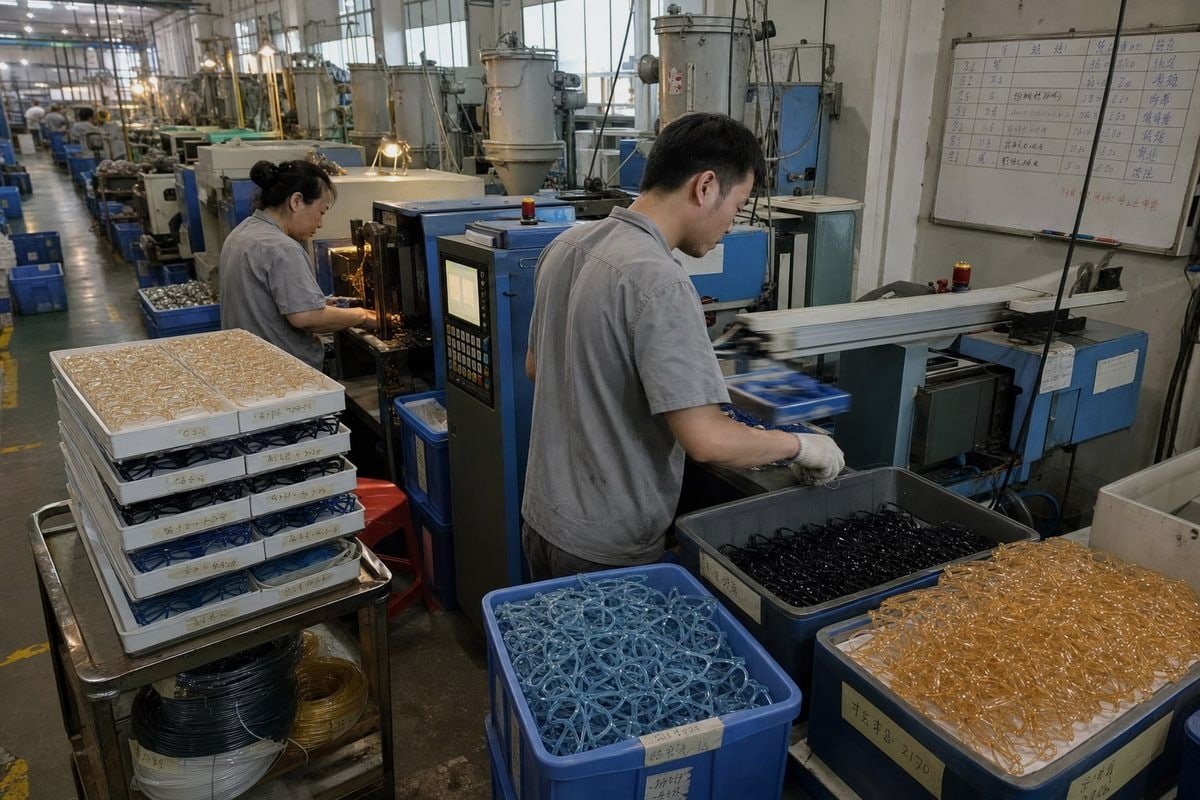
Setup costs drive tiers. Every color change on an injection machine 4 takes cleaning time. Every new lens tint requires calibration. When we run TR90 frames with TPEE temples 5, switching materials mid-run also costs machine hours. Larger consolidated orders let us amortize those setup costs, and we pass part of that saving back to the buyer.
One more practical tip: timing helps. The weeks after Chinese New Year are typically slower for most factories. Buyers who consolidate their spring orders into that window often find suppliers more flexible on combining smaller batches at better rates, because everyone wants to fill idle capacity.
Also remember that price is only one output of volume. Higher tiers usually earn you priority production slots and stronger negotiating room on packaging upgrades, which matter just as much for a growing kids' brand.
Can I mix different styles or colors in one bulk order to meet MOQ requirements?
When we developed our current catalog of roughly 800 existing styles, mixed-SKU ordering was the exact problem we wanted to solve. New brands rarely want 3,000 pairs of one design.
Yes, most eyewear factories allow mixing styles and colors within one bulk order to meet total MOQ, provided each individual style or colorway hits a smaller per-SKU minimum, typically 100–300 pairs, so production runs stay efficient.

Mixing SKUs is the single most useful tactic for small buyers, and it deserves a careful breakdown. A factory's total MOQ exists to make the order commercially worthwhile. The per-SKU minimum exists to make each production run technically efficient. Understand both, and you can build a smart assortment.
A realistic mixed-order example
Imagine you need 1,500 pairs total to reach a better tier. You could structure it like this:
| Style | Colorway | Quantity | Target Market Use |
|---|---|---|---|
| Sport wraparound shield | Black frame, orange-gold mirror lens | 400 | Active kids, cycling, running |
| Sport wraparound shield | White frame, orange-to-teal gradient lens | 400 | Outdoor adventure, ski season |
| Retro round frame | Periwinkle-blue with mint temples | 400 | Casual, everyday, gift market |
| Retro round frame | Alternate pastel colorway | 300 | Seasonal refresh, siblings sets |
Every SKU clears a reasonable per-style minimum. The total hits your tier. And your catalog covers two very different customer segments in one shipment.
Rules of thumb when mixing
Keep three things in mind. First, mixing colors within one frame style is usually easier than mixing entirely different molds, because color changes are cheaper than mold changes. Second, keep lens specifications consistent where you can. If every SKU uses the same UV400 lens standard 6, testing and certification paperwork stays simpler. Third, ask your supplier which combinations share components. Two styles sharing the same temple design or hinge give the factory efficiency it can reward with pricing. In our experience, buyers who ask this question early get noticeably better mixed-order quotes.
How do I work with a manufacturer to consolidate orders from different markets without sacrificing quality?
A distributor client of ours sells in both Japan and Europe. His challenge was real: two markets, two sets of compliance rules, one budget. We solved it together with a hold-and-combine plan.
Work with your manufacturer by agreeing on a hold-and-combine arrangement, aligning all SKUs to the strictest market's safety standards, splitting packaging by destination, and setting a single QC inspection before the consolidated shipment leaves the factory.

Consolidating across markets adds complexity, but it is very manageable with a supplier who exports widely. Our factory ships to buyers in more than twenty countries, and the process below is what consistently works.
A step-by-step consolidation workflow
- Map your compliance requirements first. Kids' eyewear faces stricter rules than adult product. US-bound goods need CPSIA compliance 7, Europe needs CE marking, and UV protection claims should follow recognized standards. Align every SKU in the combined order to the strictest applicable requirement, so one production run serves all destinations.
- Agree on a hold-and-combine schedule. The factory produces batch one, stores it in-house, produces batch two, then ships everything together. This avoids repeated less-than-container-load surcharges. Confirm the free storage window in writing before production starts.
- Split packaging by market, not production. We often run identical frames, then apply different retail packaging, hang tags, or language inserts per destination. The consolidated carton carries clearly labeled inner cartons for each market.
- Book one pre-shipment inspection. A single third-party or factory QC check on the full consolidated order costs less than multiple inspections and catches issues before anything leaves.
- Plan the destination split. Some buyers ship the consolidated load to a bonded warehouse or a regional hub, then redistribute smaller batches domestically. This can defer duties and improve cash flow versus paying tariffs on repeated small imports.
The quality trade-off to watch
Never let consolidation stretch your timeline so far that early batches sit unprotected. Lenses and flexible TPEE temples store well, but only in proper conditions. Ask how and where your goods will be held, and ask for photos before the final shipment. A good long-term supplier will offer this without being asked.
Conclusion
Small orders bleed margin through repeated freight, missed tiers, and duplicated fees. Consolidate compatible orders, mix SKUs wisely, verify landed cost, and partner with a factory built for it.
Notes de bas de page
1. Background on the EU conformity mark referenced for European market compliance. ↩︎
2. Official EU page explaining CE marking requirement referenced for European market compliance. ↩︎
3. WTO overview of tariffs and duty thresholds relevant to import cost planning. ↩︎
4. Background on the manufacturing process used for producing plastic eyewear frames. ↩︎
5. Explains the flexible polymer material used for children’s sunglasses temple components. ↩︎
6. FDA consumer guidance explains UV protection standards relevant to sunglasses lenses. ↩︎
7. Official US safety statute governing children’s products including sunglasses sold in America. ↩︎
Plus d'articles que vous pourriez aimer

1 août 2026
L'usine doit-elle gérer l'emballage et l'étiquetage des lunettes pour enfants, ou utiliser un fournisseur désigné ?

1 août 2026
Entrepôt propre vs. exécution directe par le fournisseur : lequel réduit les coûts de retour pour les marques de lunettes pour enfants ?

1 août 2026
Entrepôt direct au port ou staging outre-mer : lequel permet d'économiser le plus sur l'expédition des lunettes pour enfants ?
Vous recherchez un partenaire fiable en lunetterie pour enfants ?
Explorez plus de 800 styles prêts et un support OEM/ODM complet adapté à votre marque.
Contactez-nous English
  Español de México
  Deutsch
  Français
  日本語
日本語  العربية
  Português do Brasil