How to Choose the Right Storage Case for Kids’ Optical Frames?
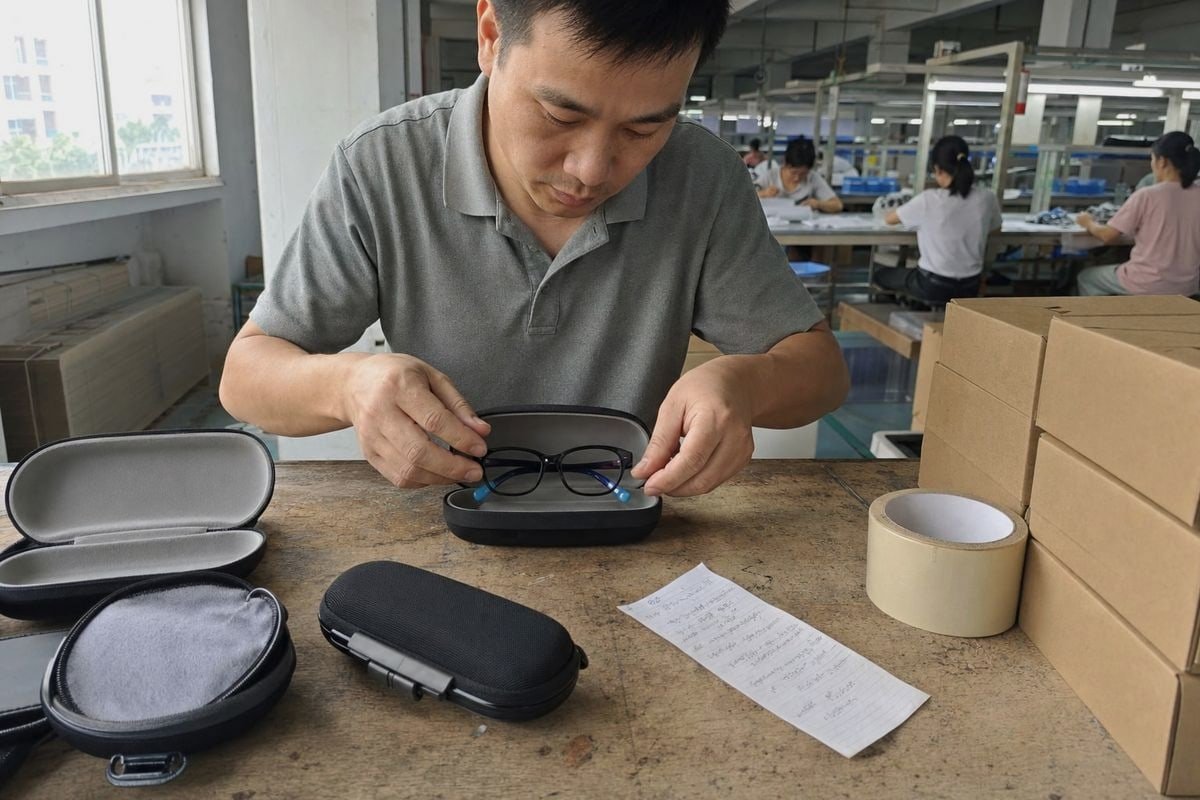
Choosing a storage case for kids’ optical frames sounds simple — until our factory receives returned samples with scratched lenses and twisted temples caused by the wrong case pairing.
The right storage case for kids’ optical frames is a lightweight, hard-shell case with a soft inner lining, a secure closure a child can operate alone, and internal dimensions that hold the frame snugly without compressing the temples or hinges.
A case is not decoration. It is the first line of defense for a child’s prescription glasses prescription glasses care 1. Let me walk you through how we help brands get this decision right.
What materials should I look for in a durable kids' eyewear case?
At our Taizhou workshop, we test cases the same way children treat them: we drop them, sit on them, and toss them into loaded sample bags before approving any pairing with our frames.
Look for impact-resistant materials such as hard ABS or PC shells, EVA molded cases, or thick TPU. The exterior must resist crushing, the interior needs a soft microfiber or velvet lining, and every component should be BPA-free plastic safe for children's daily handling.
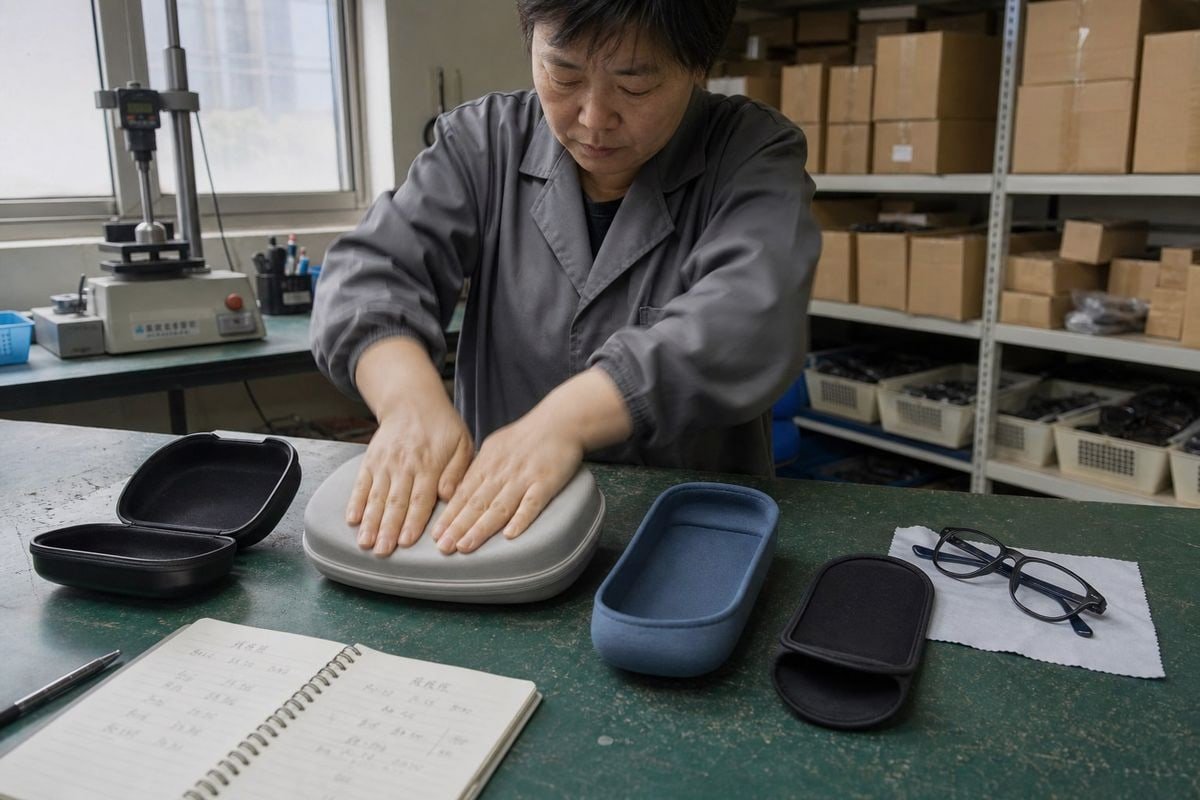
Material choice decides whether a case survives a school year or fails in the first month. Retail and eyewear-care sources consistently position hard-shell protection as the safest default for eyewear storage, and our own quality checks confirm it. A soft pouch alone cannot stop a textbook from crushing a frame inside a backpack.
The main material families
Here is how the common options compare, based on what we supply alongside our kids' optical frames:
| Matériel | Crush Resistance | Poids | Meilleure utilisation |
|---|---|---|---|
| Hard ABS/PC shell | Excellent | Moyen | School backpacks, daily use |
| EVA molded (semi-hard) | Très bon | Léger | Travel, sports bags |
| TPU / silicone | Modéré | Léger | Toddlers, secondary case |
| Neoprene pouch | Bas | Très léger | Lens scratch protection only |
EVA molded cases are our most requested option for B2B buyers. They combine a crush-proof design with a lightweight portable design that small hands can manage. Hard ABS shells offer the strongest protection but add weight, so we usually recommend them for older children.
Safety and interior details
The interior matters as much as the shell. A high-density microfiber or velvet lining prevents abrasive dust particles from scratching lens coatings 2 during transit. This is basic prescription glasses care, and it is often overlooked in cheap novelty cases. We also insist on BPA-free plastic and non-toxic finishes, because children chew, lick, and handle cases in ways adults never would. If your target market is Europe, Japan, or Australia — where most of our clients sell — material safety documentation is not optional. Ask your supplier for it before you commit to a production run.
How do I choose a case size that fits TR90 and TPEE frames safely?
One buyer from Australia once paired our smallest des montures optiques pour enfants en TR90 3 with an adult-sized case. The glasses slid around inside, and hinge screws loosened within weeks. Sizing is not a detail — it is the whole job.
Measure the frame's total width, temple length when folded, and lens height, then choose a case with 3–8 mm of internal clearance on each dimension. The frame should sit freely without sliding, and the temples must never be compressed by the shell.

Flexible materials like TR90 et TPEE 4 are wonderful for children's faces. They bend, flex, and bounce back. But that same flexibility means a badly sized case can hold the frame in a slightly bent position for hours every day. Over time, this can affect temple alignment and how the glasses sit on the child's face — which matters enormously for optical frames, where lens position affects vision correction.
A simple sizing process
Follow these four steps before selecting or ordering a case:
- Fold the glasses and measure the widest point, usually across the folded temples.
- Measure the height from the top of the frame to the bottom of the folded temples.
- Measure the depth, including any raised nose pads or thick lenses.
- Add clearance: enough that the frame does not rattle, but never so tight that closing the case presses on the temples.
Typical size ranges we recommend
| Child Age Group | Typical Frame Width | Suggested Internal Case Length |
|---|---|---|
| 2–5 ans | 105–115 mm | 120–130 mm |
| 6–9 ans | 115–125 mm | 130–140 mm |
| 10–14 ans | 125–135 mm | 140–150 mm |
Because we offer roughly 800 existing frame styles, we keep matched case sizes on file for each one. That saves our buyers from guessing. If you develop a custom frame with us, we spec the case at the same time, so the two arrive as a tested pair — not an afterthought.
Can I customize the case design with my brand's logo and colors?
When we developed a doodle-pattern case series for a European kids' accessory brand last year, the case became part of their retail story — not just packaging. Their feedback taught us that a branded case sells the frame.
Yes. Full OEM/ODM customization is standard practice: logo printing, embossing, or debossing on the shell; custom Pantone colors; matched interior lining; and coordinated accessories like a branded microfiber cleaning cloth. Minimum order quantities typically start lower than custom frame molds.
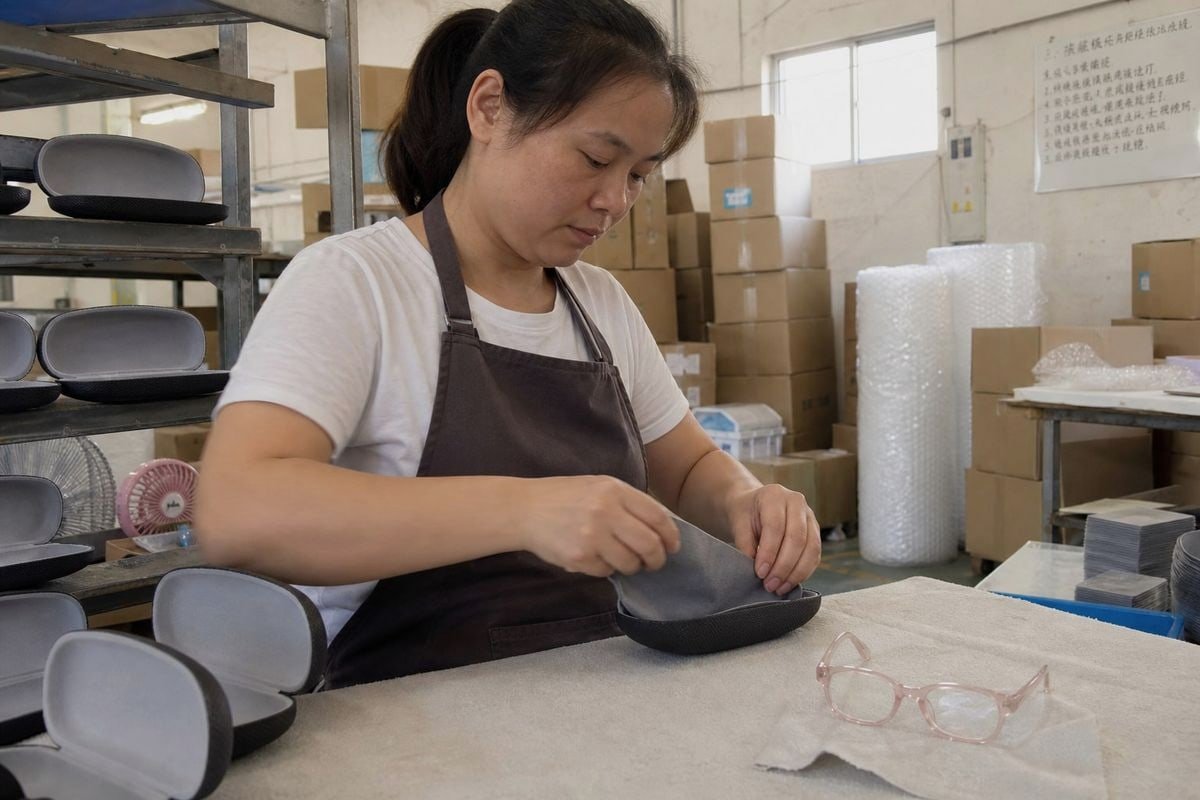
Customization is where a case shifts from a cost item to a marketing asset. In our OEM/ODM projects, we treat the case, the frame, and the packaging as one retail-ready system. A parent unboxing a child's first prescription glasses should see a coherent brand — matching colors, a clean logo, and protective eyewear accessories that feel intentional.
What can be customized
- Shell color and finish: matte, glossy, or soft-touch, matched to your frame collection's palette — for example, a translucent pale pink case to echo a candy-colored acetate frame.
- Logo application: silk-screen printing, heat embossing, debossing, or a metal badge, depending on the shell material.
- Interior lining: color-matched microfiber or velvet, with your logo printed inside the lid if desired.
- Included accessories: a branded microfiber cleaning cloth, an adjustable strap, or a care instruction card printed in your market's language.
- Shape and theme: character shapes and playful designs are possible, but we always advise buyers to keep the crush-proof design intact underneath the styling.
One caution on novelty designs
Colorful, character-themed cases genuinely improve compliance — children use a case they love, and high-visibility colors make the case easier to spot in a cluttered classroom. But cute shapes alone do not guarantee real protection. We have declined novelty case requests where the shape left the hinge area of the glasses unsupported. Our position is simple: style should sit on top of protection, never replace it. That is the standard we apply across every custom project, because a damaged frame damages your brand's reputation with the parent.
What case features help protect flexible frames during daily use and travel?
There is a trade-off we weigh in every case recommendation: security versus convenience. A zipper seals best, but a five-year-old may struggle with it and simply stop using the case. The best feature set balances both.
Prioritize a secure snap or magnetic closure a child can open alone, a rigid crush-proof shell, a soft inner lining, a lightweight build under roughly 100 grams, and an attachment loop or clip so the case stays anchored inside a backpack.
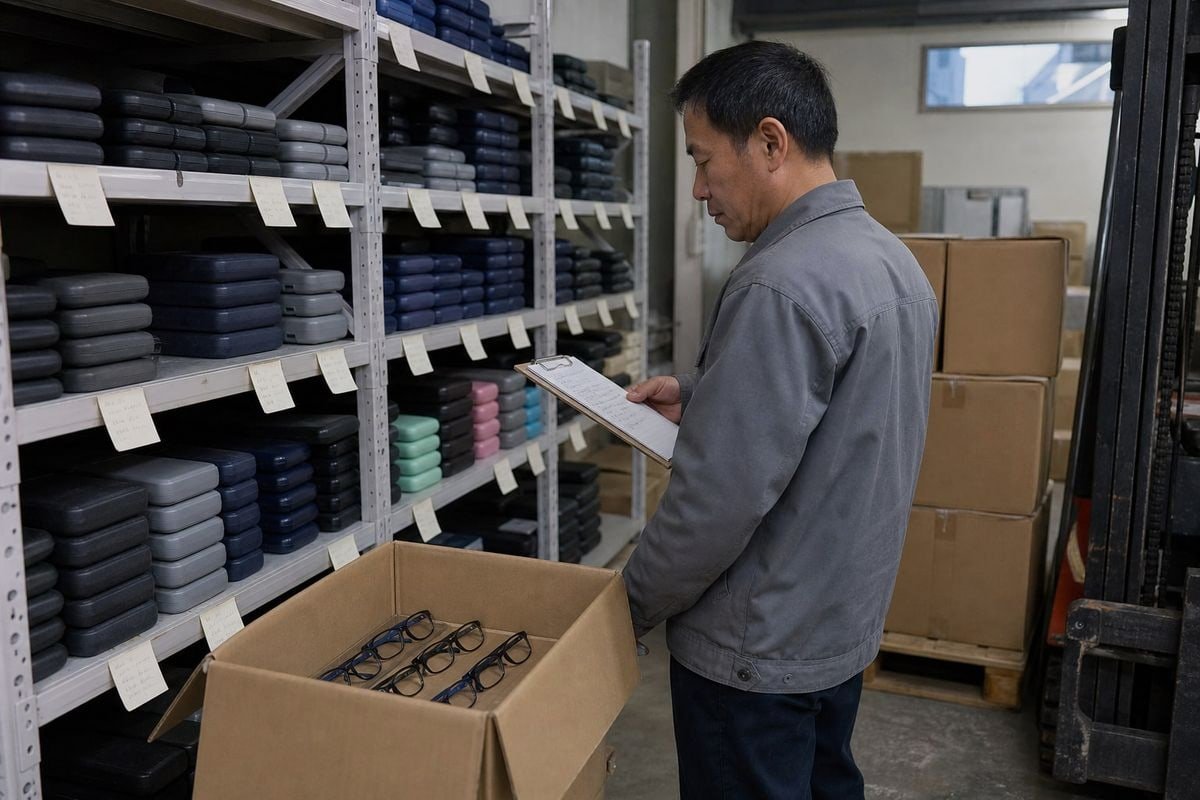
Daily use for a child's glasses means backpacks, playgrounds, car seats, and school lockers. Travel adds pressure changes, temperature swings, and rougher handling. The features below are the ones we specify most often for buyers whose end customers are active kids.
Closure types compared
| Closure Type | Protection Level | Ease for Young Children | Idéal pour |
|---|---|---|---|
| Secure snap closure | Élevé | Easy | Ages 4+, daily school use |
| Magnetic closure | Moyen-élevé | Very easy | Toddlers, first glasses |
| Zipper | Très élevé | Harder for small hands | Travel, older children |
| Velcro flap | Moyen | Very easy | Backup or sports pouch |
A secure snap closure is our default recommendation. It stays shut when the case tumbles inside a bag, yet a child's developing fine motor skills can manage it independently. That independence builds the habit — glasses go in the case every time they come off.
Features worth adding
- Attachment points: a loop or carabiner clip secures the case to a backpack strap so it is never buried or lost.
- Breathable design: micro-perforations let moisture from sweat or rain evaporate, which helps prevent lens fogging and hinge oxidation — useful for outdoor and sports-focused brands.
- Tracker slot: a recessed internal pocket for a Bluetooth tracking tag can offset the high replacement cost of lost prescription eyewear.
- Antimicrobial treatment: silver-ion or antimicrobial coatings inhibit bacteria transferred from children's hands, a feature increasingly requested by our Japanese buyers.
- Eco materials: recycled plastics or cork shells align with sustainability trends and give parents a talking point with their child.
None of these features matter if the case is too bulky to carry. Keep the lightweight portable design as the non-negotiable baseline, then layer features onto it.
Conclusion
The best storage case for kids' optical frames balances hard shell protection, correct sizing, child-friendly closures, and brand-ready customization — a system we build alongside every frame we produce.
Notes de bas de page
1. The WHO provides guidance on the care of prescription glasses to ensure effective vision correction for children. ↩︎
2. The National Eye Institute provides resources on the proper care and maintenance of corrective lenses and coatings. ↩︎
3. TR90 is a popular thermoplastic material used in eyewear, known for its flexibility and durability. ↩︎
4. ISO standards provide the testing protocols for frames made from flexible materials like TR90 and TPEE. ↩︎
Plus d'articles que vous pourriez aimer

Vous recherchez un partenaire fiable en lunetterie pour enfants ?
Explorez plus de 800 styles prêts et un support OEM/ODM complet adapté à votre marque.
Contactez-nous English
  Español de México
  Deutsch
  Français
  日本語
日本語  العربية
  Português do Brasil