How to Calculate Volumetric vs Actual Weight for Kids’ Sunglasses from China?
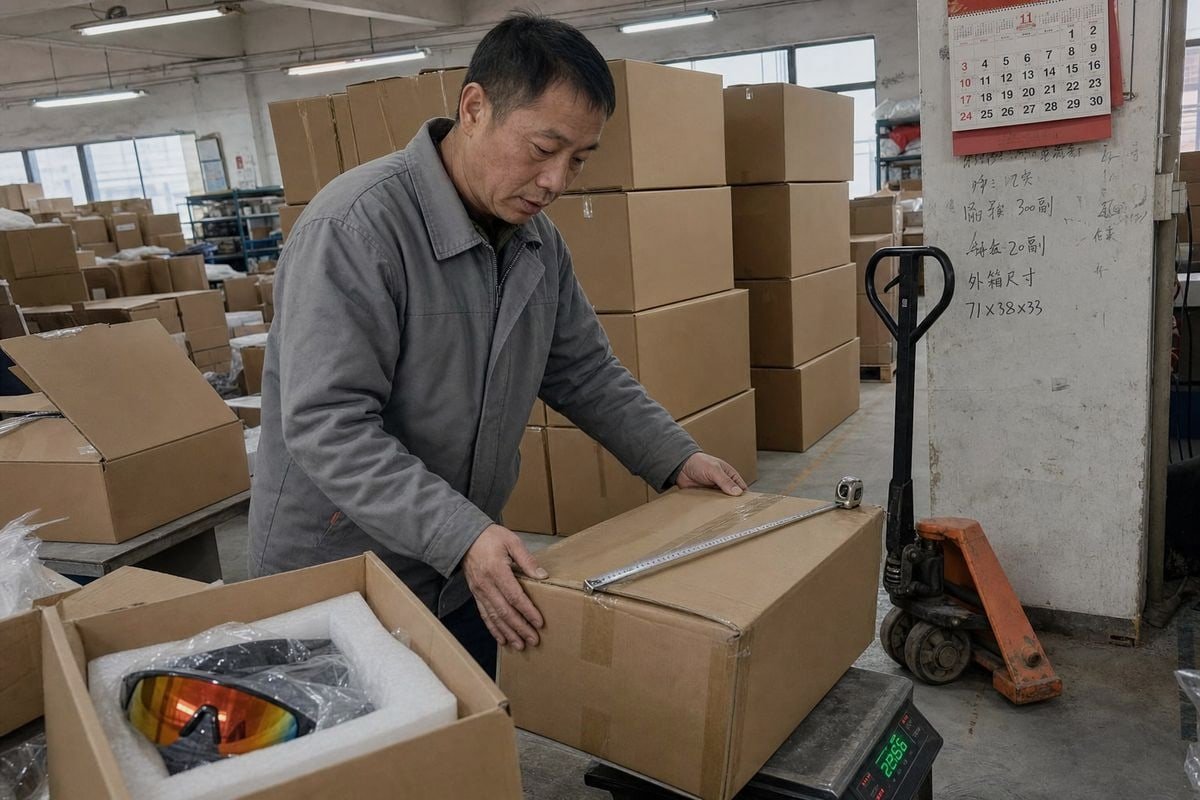
Volumetric vs actual weight confuses many buyers we ship kids’ sunglasses to. A freight bill arrives higher than expected, margins shrink, and nobody knows why. Let me fix that.
Actual weight is the scale weight of your packed kids’ sunglasses shipment. Volumetric weight equals length × width × height in centimeters divided by a carrier divisor, usually 5000 or 6000 from China. Carriers bill on whichever number is higher, called the chargeable weight.
Below, I will walk you through the exact formula, explain why forwarders bill this way, and share the packaging tactics we use at our Taizhou factory to cut costs.
How do I calculate volumetric weight for a kids' sunglasses shipment from China?
Last month, a buyer in Australia asked me why her 12 kg carton of TR90 1 kids' frames was billed at 21 kg. The answer was hiding in the carton dimensions, not the scale.
Measure the outer carton in centimeters, then multiply length × width × height and divide by the carrier's divisor — typically 6000 for air freight from China, or 5000 for express couriers like DHL and FedEx. Compare the result with the scale weight; the higher figure is your billable weight.
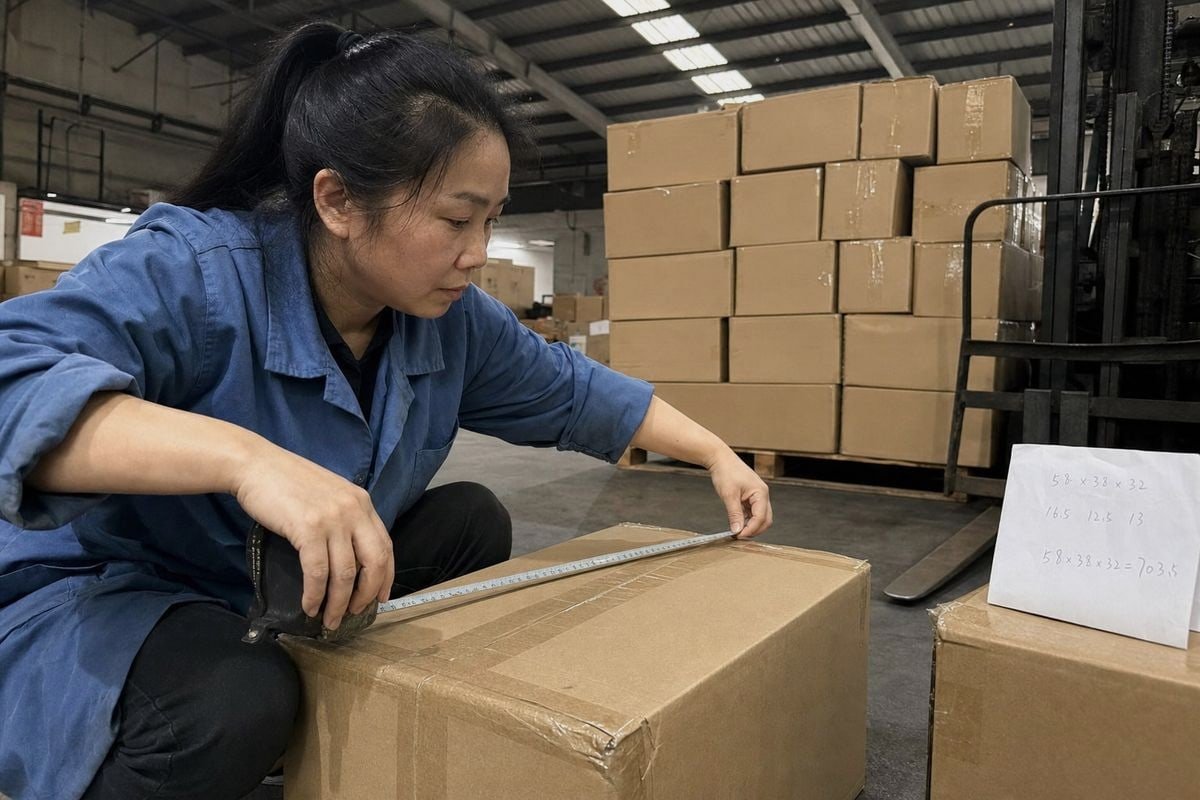
Let me break this down step by step, because getting one detail wrong can throw off your entire landed-cost estimate.
The three weights you must know
| Type | What it measures | How it is obtained | Why it matters |
|---|---|---|---|
| Actual weight | Physical mass | A calibrated scale | The baseline shipping weight |
| Volumetric weight | Space occupied | L × W × H (cm) ÷ divisor | Prices lightweight but bulky parcels |
| Chargeable weight | Billing weight | The higher of the two | Determines what you actually pay |
A real carton example
Our standard export carton for one of our wraparound sport styles measures 60 × 40 × 35 cm. Packed with 300 pairs in poly bags 2, it weighs about 12 kg on the scale. Now run the formula with an air freight 3 divisor of 6000:
60 × 40 × 35 ÷ 6000 = 14 kg volumetric weight.
The carrier bills 14 kg, not 12 kg, because 14 is higher. Switch to an express courier using 5000, and the same carton becomes 16.8 kg chargeable. Same box, same sunglasses, different bill.
How to measure correctly
- Measure the outermost carton, including any bulging, not the product or inner box.
- Use centimeters. Most China-origin calculations require metric units.
- Round up to the nearest whole centimeter before multiplying, as most carriers require.
- Calculate volumetric weight, then compare it against the scale weight.
- Use the higher number in your cost projections. Always.
One more tip from our shipping floor: measure after the carton is sealed and strapped. Tape and strapping can add a centimeter, and carriers measure what arrives, not what your spec sheet says.
Why does my freight forwarder charge me based on volumetric weight instead of actual weight?
A procurement manager in Japan once challenged our quoted freight estimate. He weighed a sample pair — barely 20 grams — and could not see how 500 pairs cost so much to fly.
Freight forwarders charge on volumetric weight when it exceeds actual weight because aircraft and trucks sell out of space before they run out of payload capacity. Kids' sunglasses are light but bulky once packed, so dimensional pricing lets carriers recover the cost of the cargo space you occupy.
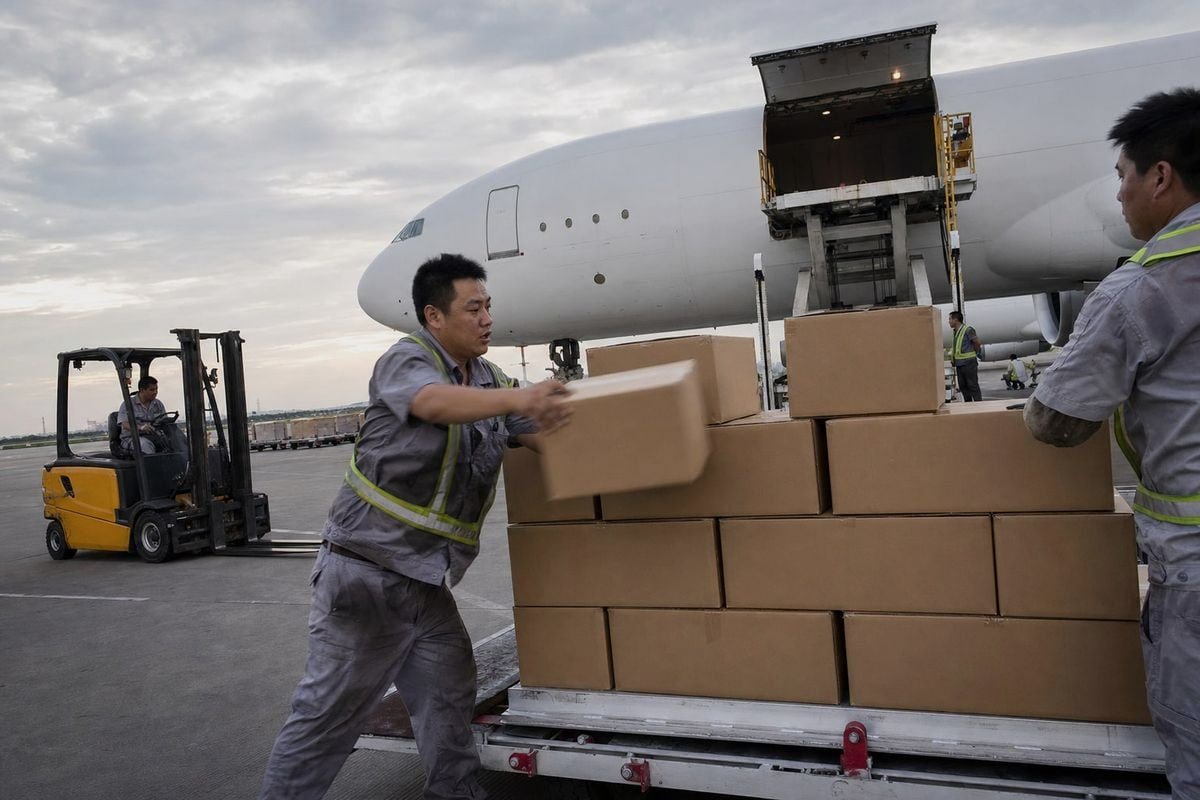
Think about it from the carrier's side for a moment. A cargo aircraft has a fixed hold. If every shipper filled it with feathers priced by the kilogram, the plane would fly full but earn almost nothing. Dimensional weight 4 solves that problem. It converts space into a billable weight so light, bulky cargo pays its fair share.
Why kids' sunglasses are a textbook case
Our TPEE and TR90 kids' frames are deliberately lightweight. That is a safety and comfort feature — a child's nose bridge cannot carry a heavy frame. But the same lightness works against you in freight. Add a rigid case, a cleaning cloth, a hang tag, a retail box, and a cushioned master carton, and the actual weight barely moves while the volume balloons. The product weight and the shipment weight become two very different numbers.
The divisor changes the bill
The divisor is the exchange rate between space and weight. A smaller divisor means a harsher conversion.
| Shipping method | Common divisor | Volumetric weight for a 60 × 40 × 35 cm carton |
|---|---|---|
| Express courier (DHL, FedEx, UPS) | 5000 | 16.8 kg |
| Air freight from China | 6000 | 14.0 kg |
| Some economy air lines | 8000 | 10.5 kg |
| Sea freight (CBM-based) | 1000000 | 0.084 CBM, billed by volume |
Notice the spread. The same carton is billed at 16.8 kg by courier but only 14 kg by standard air freight. This is why I always tell buyers to confirm the exact divisor with their forwarder before quoting retail prices. Copying a formula from another route can quietly wreck a margin calculation.
Sea freight plays by different rules entirely. It bills by cubic meters 5, which is why large bulk orders of sunglasses almost always travel by sea.
How can I reduce volumetric weight costs when importing kids' sunglasses in bulk?
When we redesigned the export packing for one of our round pastel frames two seasons ago, we cut the master carton volume by roughly a quarter without a single extra breakage claim. The change was mostly about removing air.
Reduce volumetric weight by shrinking the outer carton: bulk-pack sunglasses in poly bags or nested trays instead of individual retail boxes, remove excess void fill, choose the tightest carton size that still protects, and compare chargeable weight across courier, air, and sea before booking.
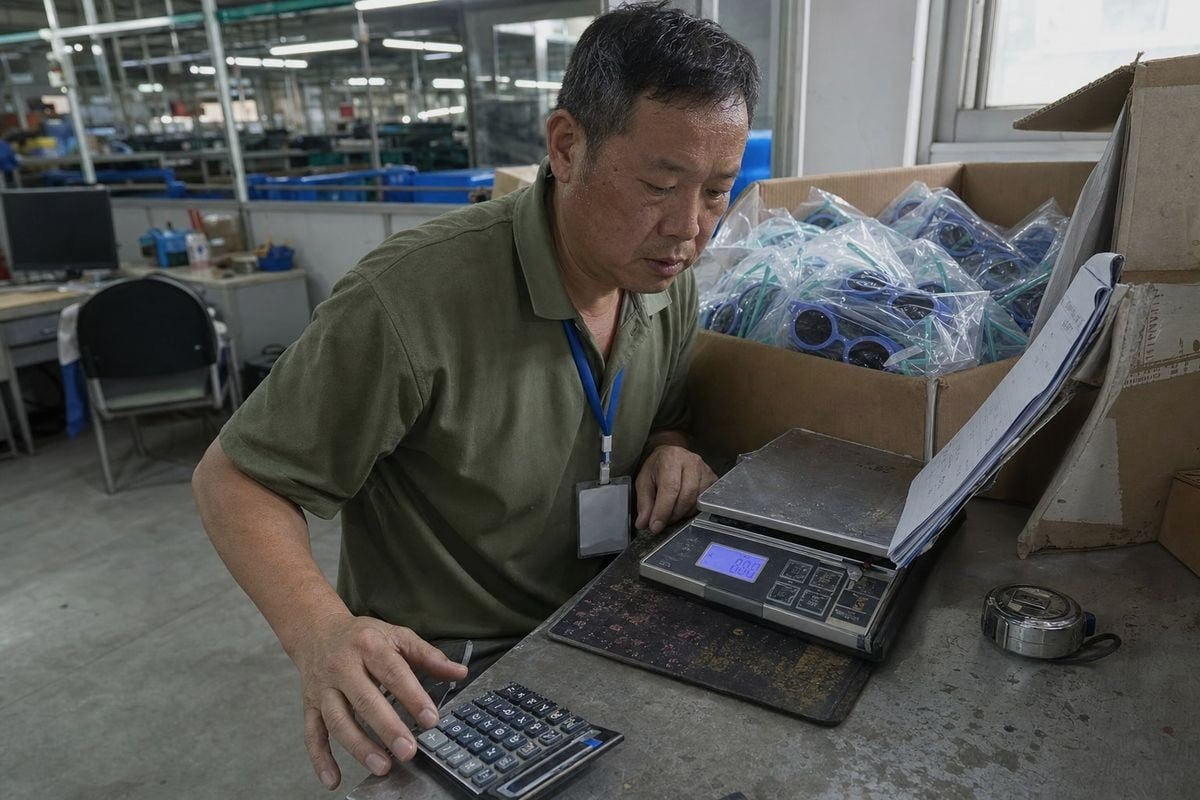
The most powerful lever you control is the packing configuration you request from your factory. Here is how I usually walk buyers through it.
Choose the right packing configuration
- Poly bag bulk packing. Each pair goes into a soft poly bag, packed in layers inside the master carton. This is the densest option. It suits importers who repackage domestically or sell to opticians.
- Tray or insert packing. Molded trays hold pairs in nested rows. Slightly bulkier than poly bags, but faster to unpack and safer for mirrored or polarized lenses.
- Retail-ready packing. Each pair ships in its final box or pouch with a case. This is the bulkiest option, but it saves domestic labor and protects your brand presentation.
There is a genuine trade-off here. Bulk packing minimizes the China-to-destination freight, but you pay for repackaging labor at home. Retail-ready packing costs more to fly, but the goods land shelf-ready. In our experience exporting to 20-plus countries, brands with domestic fulfillment teams save with bulk packing, while smaller brands without warehouse staff usually come out ahead with retail-ready cartons despite the higher freight.
Match the shipping mode to the order size
Small sample orders under 2 kg can sometimes travel on flat-rate sample tiers that sidestep dimensional pricing altogether. Mid-size replenishment orders usually suit air freight at a 6000 divisor. Full seasonal orders — say, several thousand pairs — nearly always belong on sea freight, where volume is billed per CBM and the per-pair cost drops sharply.
Also, ask your forwarder to run cartonization comparisons. Two carton sizes with identical total volume can produce different chargeable weights once rounding rules apply. We routinely test two or three carton layouts before confirming a packing list.
What packaging choices help me lower shipping costs without compromising my sunglasses' protection?
Protection is the one thing I refuse to negotiate away. A cracked shield lens on a kids' sport frame is not just a refund — it is a safety issue and a brand problem. So every packaging change we test at our workshop has to pass drop and compression checks first.
Use slim semi-rigid cases or microfiber pouches instead of oversized hard boxes, pick flexible frame materials like TPEE and TR90 that tolerate compression, nest frames in layered trays, and right-size the master carton so contents cannot shift — dense packing protects better than loose void fill.
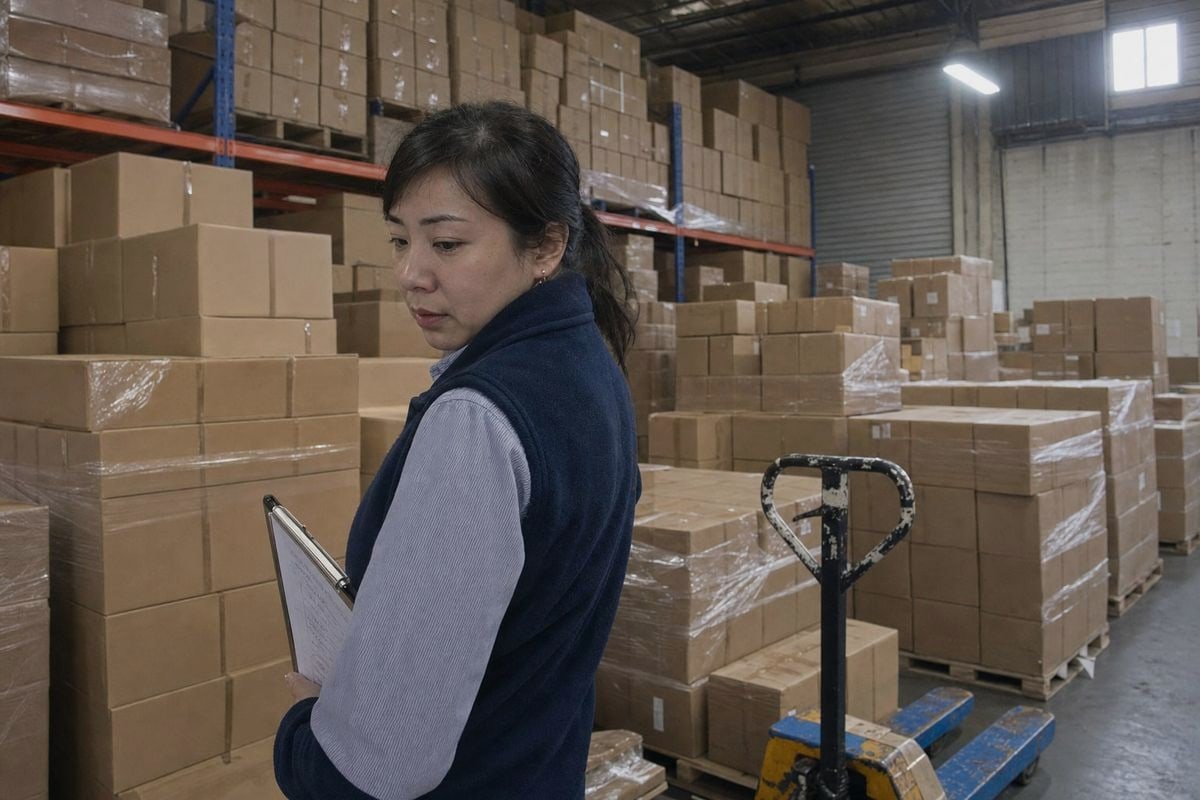
The instinct of many new buyers is that bigger boxes and more bubble wrap mean safer goods. Our returns data over fifteen years says otherwise. Damage in transit mostly comes from movement inside the carton, not from lack of padding. A tightly packed, well-organized carton usually arrives in better shape than a half-empty one stuffed with air pillows.
Packaging options compared
| Packaging choice | Volume impact | Protection level | Idéal pour |
|---|---|---|---|
| Hard clamshell case per pair | Élevé | Excellent | Premium retail, low quantities |
| Slim semi-rigid case | Medium | Very good | Retail-ready air shipments |
| Microfiber pouch + tray | Bas | Good | Bulk imports, flexible frames |
| Poly bag layered packing | Lowest | Adequate for TPEE/TR90 | Large sea shipments |
Let the material do some of the work
This is where product design and logistics quietly overlap. Rigid acetate 6 or metal frames need rigid protective packaging, and that packaging inflates volumetric weight. Flexible TPEE temples and TR90 fronts — the materials we build most of our children's styles around — bend under compression and spring back. That resilience means they can safely travel in lower-volume packing formats that would be risky for stiffer frames. In other words, choosing a flexible, child-safe material lowers your freight bill as a side effect.
Small design tweaks that shrink cartons
A few adjustments we regularly make for OEM clients: fold temples fully flat with no hinge protrusion, alternate frame orientation in each layer to interlock pairs, print the retail box on a fold-flat blank that ships separately, and spec the master carton to the packed contents plus a small tolerance rather than a generic stock size. None of these touches the product itself. Together, they can shave enough centimeters to move a shipment below a chargeable-weight break point.
Conclusion
Light does not mean cheap to ship. Measure your carton, apply the right divisor, bill on the higher weight, and design packaging that protects without wasting space.
Getting this wrong quietly erodes margin on every order. supply chain 7 Getting it right — with smart packing configurations and flexible, compression-tolerant frames — turns freight from a surprise cost into a planned one. If you want help running the numbers on a specific kids' sunglasses order, our team quotes packed dimensions and chargeable weights alongside every product quotation, so you see the full landed picture before you commit.
Notes de bas de page
1. Background on the TR90 polymer frame material referenced repeatedly in the article. ↩︎
2. Background on poly bag packaging referenced as a bulk-packing method. ↩︎
3. Background concept for air cargo shipping method discussed throughout. ↩︎
4. Explains the industry-standard dimensional weight concept referenced when describing carrier pricing methods. ↩︎
<span id="
Plus d'articles que vous pourriez aimer

1 août 2026
L'usine doit-elle gérer l'emballage et l'étiquetage des lunettes pour enfants, ou utiliser un fournisseur désigné ?
1 août 2026
Entrepôt propre vs. exécution directe par le fournisseur : lequel réduit les coûts de retour pour les marques de lunettes pour enfants ?

1 août 2026
Entrepôt direct au port ou staging outre-mer : lequel permet d'économiser le plus sur l'expédition des lunettes pour enfants ?
Vous recherchez un partenaire fiable en lunetterie pour enfants ?
Explorez plus de 800 styles prêts et un support OEM/ODM complet adapté à votre marque.
Contactez-nous English
  Español de México
  Deutsch
  Français
  日本語
日本語  العربية
  Português do Brasil