How to Ask China Suppliers for Cost Breakdown and Capacity Statement for Kids Sunglasses Bids?
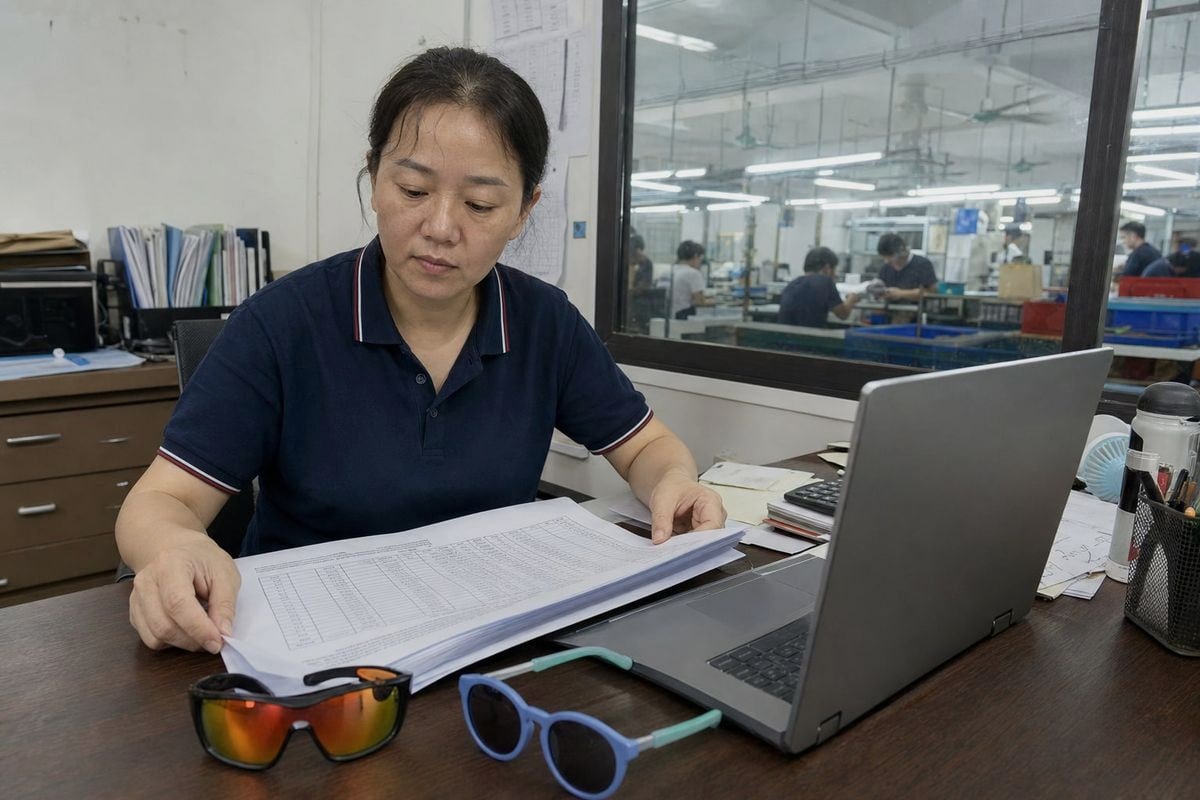
Requesting a cost breakdown and capacity statement for kids sunglasses bids sounds simple — until vague quotes arrive AS/NZS 1. On our production line, I see why unclear RFQs get unclear answers.
Ask each supplier for an itemized quote separating frame material, lens type, labor, packaging, tooling, and testing, plus a written capacity statement showing daily output, monthly capacity, production lines, and lead time. Send identical specs and Incoterms to 3–5 factories so bids compare fairly.
That is the short answer. Below, I will walk you through exactly what to request, how to verify the answers, and which red flags to watch for.
What Should I Include in a Cost Breakdown Request to Compare Kids Sunglasses Suppliers Fairly?
A buyer from Australia once sent us a one-line RFQ: "Quote 5,000 kids sunglasses." Our team had to ask twelve follow-up questions before we could price anything honestly.
Include full product specs (frame material, lens type, UV rating, size), order quantities by tier, packaging requirements, and a fixed Incoterm. Then ask suppliers to itemize materials, labor, decoration, packaging, tooling, testing, and export handling — so every bid covers identical scope.
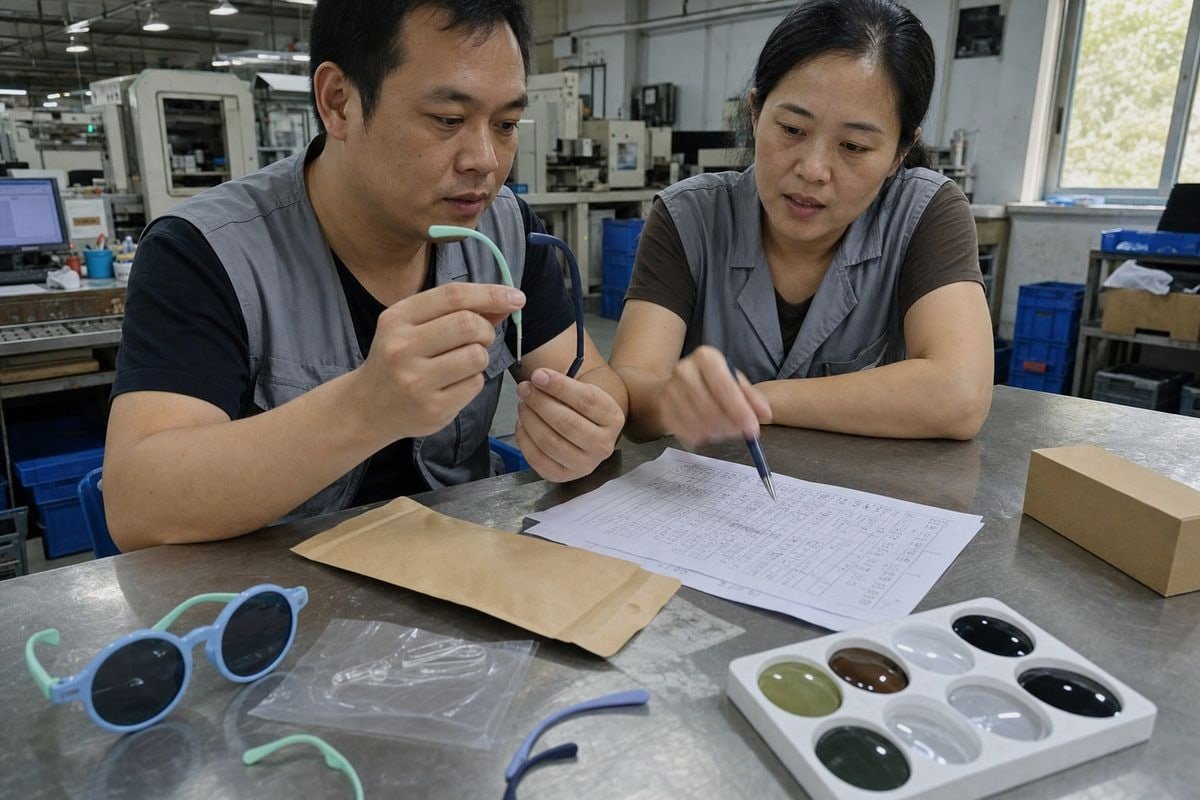
A cost breakdown only works if every factory quotes the same thing. In our fifteen years making children's eyewear in Taizhou, the biggest pricing gaps between suppliers usually come from scope differences, not efficiency differences. One factory includes a retail pouch and hang tag; another quotes bare glasses in a polybag. On paper, the second looks 15% cheaper. In reality, it is not cheaper at all.
Fix the spec before you ask for the price
Kids sunglasses are spec-sensitive. A flexible TPEE temple costs more than rigid PC plastic, but it survives being sat on by a four-year-old. A polarized UV400 lens costs more than a tinted acrylic one. If your RFQ does not lock these choices, suppliers will each pick their own defaults — usually the cheapest ones.
Send suppliers: product photos or drawings, frame material and finish, lens color and coating, UV requirement, target age range, decoration (printed logo, pad printing), packaging spec, quantity tiers, target delivery date, and one Incoterm (EXW or FOB is easiest to compare).
The line items to demand
| Line Item | Why It Matters for Kids Sunglasses |
|---|---|
| Frame material | TR90/TPEE vs. cheap PC changes cost and child safety |
| Lens material & coating | Polycarbonate vs. TAC/acrylic affects UV protection 2 and impact resistance |
| Assembly labor | Reveals whether the price is realistic or a bait quote |
| Decoration/printing | Logos and patterns are often quoted separately |
| Packaging & labeling | Pouches, cases, barcodes, retail cards add up fast |
| Tooling/mold fees | One-time vs. amortized per-unit changes long-term comparison |
| Testing/certification | EN71 3, CPSIA, UV400 verification may or may not be included |
| Export handling | Domestic freight and documentation are sometimes hidden extras |
Ask for the quote as a formal PDF or proforma invoice, not a chat message. Written quotes with stated validity dates prevent "price adjustments" after sample approval. When we quote from our catalog of roughly 800 existing styles, we always state what the price includes — because the buyer who compares apples to apples is the buyer who comes back for repeat orders.
How Can I Verify a Supplier's Production Capacity Before Placing a Bulk Order?
There is a trade-off I explain to every new buyer: a factory that says yes to everything instantly is riskier than one that checks its schedule first. Our planning team refuses orders we cannot slot properly.
Verify capacity by requesting a written capacity statement on company letterhead, then cross-check it with the business license, factory audit reports, workshop photos or video calls, production records for similar SKUs, and third-party verification. Confirm whether the supplier is a factory or a trading company.
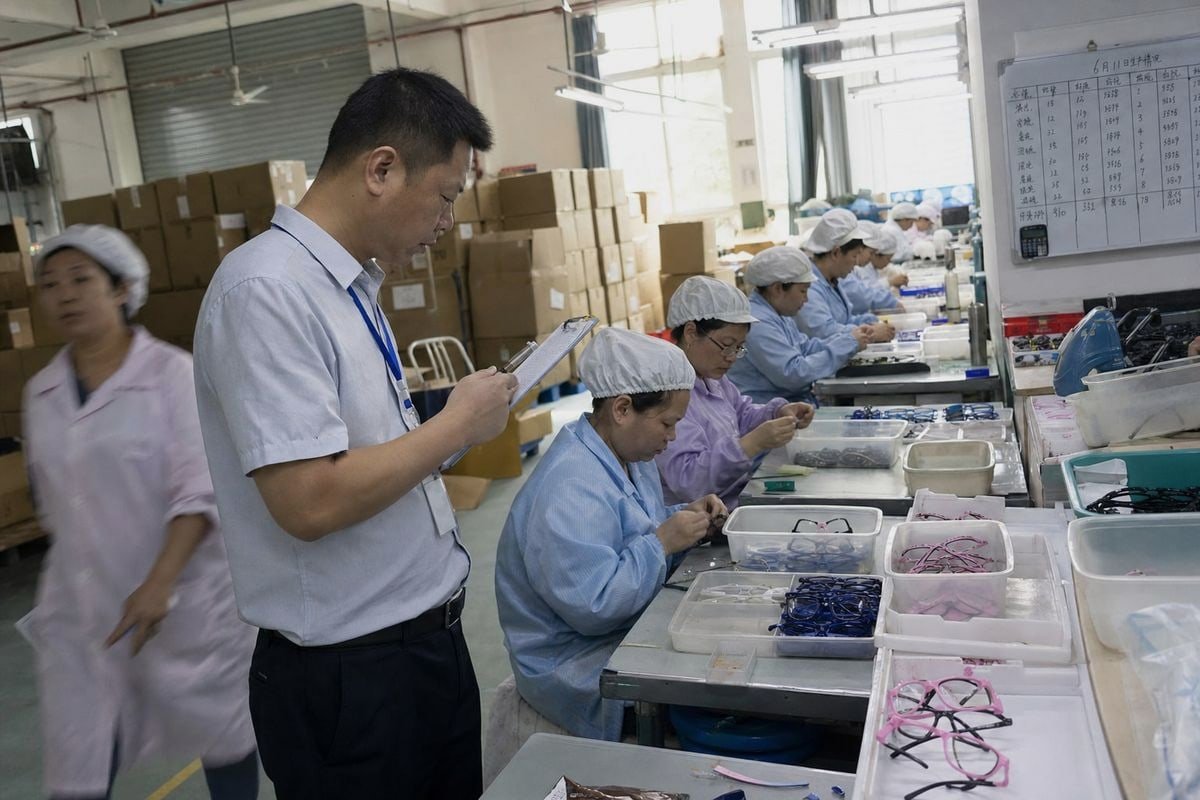
A capacity claim is easy to type. Proof is harder. Over the years, I have seen buyers burned by trading companies 4 that claimed "50,000 pairs per month" while actually forwarding orders to three different workshops with no control over any of them. Verification is not paranoia. It is standard sourcing discipline.
A practical verification sequence
- Ask for the business license and check that the registered scope includes eyewear manufacturing, not just trading.
- Request a capacity statement in writing: monthly maximum output, daily output, number of production lines, workers assigned, and current utilization rate.
- Ask which processes are in-house. Injection molding 5, lens cutting, coating, assembly, and packaging are often split. Outsourced steps create hidden bottlenecks.
- Do a live video walkthrough of the workshop. Five minutes of live footage tells you more than fifty photos. In our 5S-managed workshop with around 120 workers, we do these calls weekly — a genuine factory has nothing to hide.
- Ask for evidence of past output: shipping records for similar quantities, or references from existing export markets.
- For larger programs, commission a third-party factory audit before signing.
Match capacity type to your product
Wraparound shield styles with mirrored gradient lenses need different tooling and coating capacity than simple round pastel frames. A factory may assemble 5,000 basic frames daily but bottleneck at 800 units on coated shield lenses. Always ask for capacity on your exact model or the closest existing SKU, not a factory-wide average.
What Questions Should I Ask to Confirm Material and Safety Costs Aren't Cut Corners?
During a QC review last spring, we rejected a batch of outsourced lenses because the UV blocking did not match the certificate. That incident shaped how I advise buyers to question every safety-related cost line.
Ask suppliers to name the exact frame resin and lens material, confirm UV400 protection with test reports, state which certifications apply (EN71, CPSIA, ANSI Z80.3), and show whether testing costs are in the quote. Request material datasheets and verify lens type in writing.
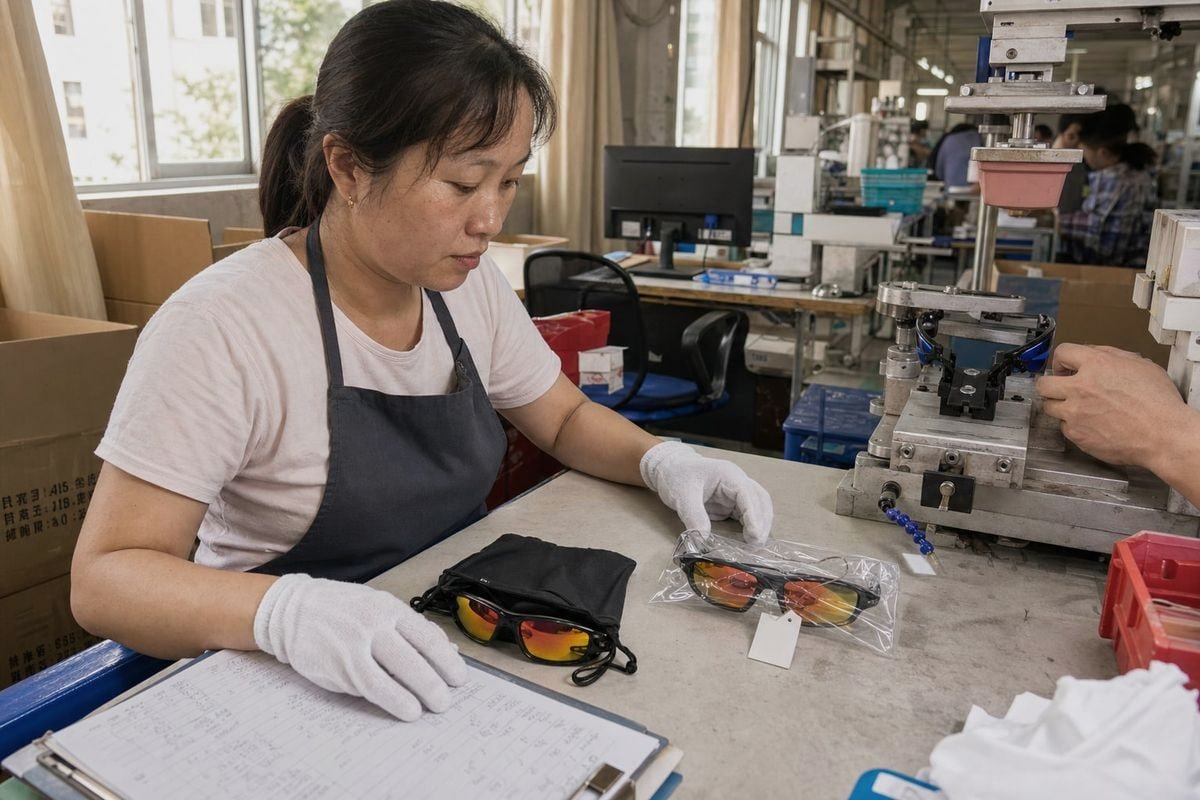
Children's sunglasses are regulated products, not toys with tinted plastic. A dark lens without real UV protection is worse than no sunglasses at all, because it dilates a child's pupil while letting UV through. This is why material questions and cost questions must be asked together. When a quote is suspiciously low, the savings usually hide inside the lens, the resin, or the skipped test.
Questions that expose corner-cutting
- What is the exact frame material — TR90, TPEE, PC, or recycled blend? Can you provide the material datasheet?
- What lens material do you use — polycarbonate, TAC, or acrylic — and is UV400 verified by a test report?
- Which safety standards does this model meet: EN71 6 for the EU, exigences CPSIA 7 for the US, AS/NZS for Australia?
- Are testing and certification costs included in the unit price, or billed separately?
- Do you use nickel-free hinges and screws?
- Are the paints and coatings compliant with heavy-metal limits for children's products?
How material choices move the price
| Component | Budget Option | Safer Option | Typical Cost Impact |
|---|---|---|---|
| Frame | Rigid PC plastic | Flexible TR90/TPEE | Higher, but resists snapping into sharp fragments |
| Lens | Tinted acrylic | UV400 polycarbonate or polarized | Higher, but real eye protection and impact resistance |
| Charnières | Standard metal | Nickel-free or flexible hinge | Slightly higher, avoids skin reactions |
| Coating | Unverified spray | Tested, compliant coatings | Modest, avoids recall risk |
At our factory we build with TPEE and TR90 precisely because active kids bend, drop, and chew their glasses. A supplier who cannot explain their material choices in writing is not saving you money. They are transferring risk onto your brand — and a product recall costs far more than the two cents saved per lens.
How Do I Use Capacity Statements to Judge if a Factory Can Meet My Delivery Deadlines?
One European buyer taught me a lesson early on: he asked not "how much can you make?" but "how much can you make for me, in June, alongside your other clients?" That question changes everything.
Compare the stated free capacity against your order quantity and delivery date, confirm when the lead time clock starts (usually after deposit receipt), and ask how the factory prioritizes orders during the pre-summer peak. If free capacity barely covers your order, build in buffer time.

A capacity statement is a screening tool, not a guarantee. Its real value is in the math it lets you do. Kids sunglasses demand spikes sharply before summer in each hemisphere. A factory quoting a 30-day lead time in November may need 55 days in April. Our production planning fills up months before the Northern Hemisphere season, and any honest factory will tell you the same.
The calculation that matters
Take the stated daily output for your model. Multiply by working days. Subtract committed orders (ask for the utilization rate). What remains is free capacity. If your 10,000-unit order needs 20 production days but the factory only has 12 free days before your ship date, the promise is already broken — before production even starts.
Translate the statement into a delivery judgment
| Capacity Statement Detail | What It Tells You | Follow-Up Question |
|---|---|---|
| Daily output for your SKU | Realistic production speed | Is this for my exact lens and decoration spec? |
| Current utilization rate | How much room actually exists | What orders are already booked for my window? |
| Lead time start point | Real calendar timing | Does the clock start at PO, deposit, or sample approval? |
| Peak-season policy | Your priority ranking | How do you allocate lines in April–June? |
| Outsourced steps | External bottleneck risk | What is your backup if the coating subcontractor delays? |
Also clarify what happens if capacity slips: partial shipments, penalty terms, or air-freight cost sharing. Put the agreed lead time and start trigger into the proforma invoice. In my experience serving brands across 20+ countries, buyers who book capacity early and confirm terms in writing almost never face season-killing delays — buyers who chase the cheapest last-minute quote almost always do.
Conclusion
Vague quotes create expensive surprises. A structured cost breakdown and capacity statement for kids sunglasses bids turns guesswork into evidence — and we welcome buyers who ask these questions.
Notes de bas de page
1. Points readers to the official Australian/New Zealand standards body referenced in the article. ↩︎
2. WHO explains health risks of inadequate UV protection, reinforcing why lens quality matters for children. ↩︎
3. Clarifies the EU toy/eyewear safety standard referenced for children’s sunglasses certification. ↩︎
4. Explains the trading-company business model buyers must distinguish from actual manufacturers. ↩︎
5. Background on the manufacturing process used to produce plastic sunglasses frames in-house. ↩︎
6. Background on the European toy and children’s product safety standard referenced by suppliers. ↩︎
7. Official CPSC page defines the U.S. regulation buyers must confirm suppliers meet. ↩︎
Plus d'articles que vous pourriez aimer
1 août 2026
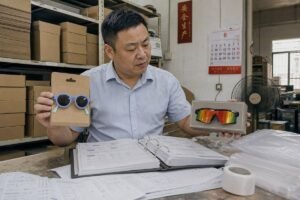
L'usine doit-elle gérer l'emballage et l'étiquetage des lunettes pour enfants, ou utiliser un fournisseur désigné ?
1 août 2026
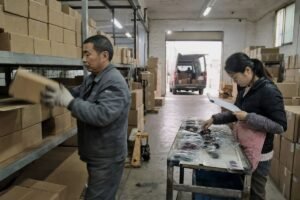
Entrepôt propre vs. exécution directe par le fournisseur : lequel réduit les coûts de retour pour les marques de lunettes pour enfants ?
1 août 2026
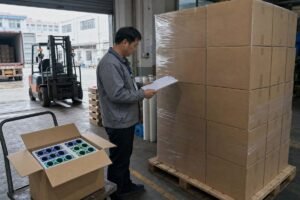
Entrepôt direct au port ou staging outre-mer : lequel permet d'économiser le plus sur l'expédition des lunettes pour enfants ?
Vous recherchez un partenaire fiable en lunetterie pour enfants ?
Explorez plus de 800 styles prêts et un support OEM/ODM complet adapté à votre marque.
Contactez-nous English
  Español de México
  Deutsch
  Français
  日本語
日本語  العربية
  Português do Brasil