¿Cuáles son las etapas típicas de desarrollo en la personalización de gafas de sol para niños ODM?
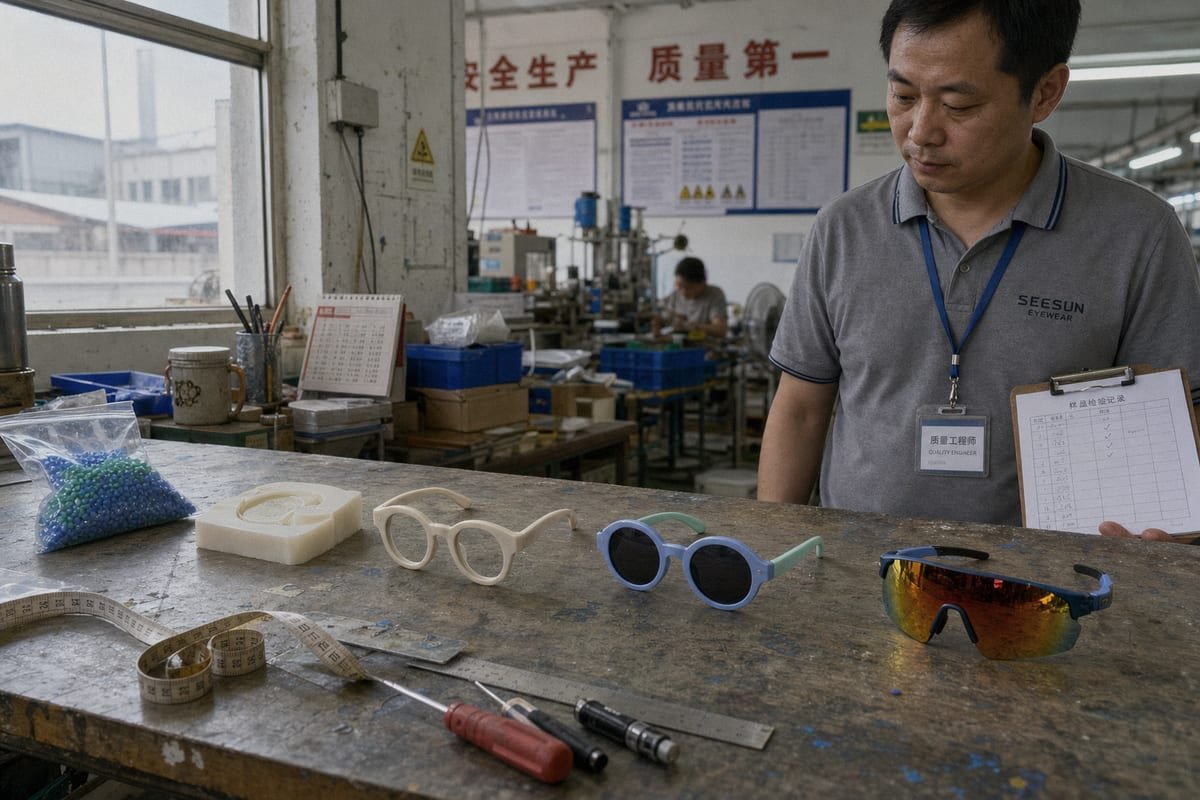
La personalización de gafas de sol para niños ODM parece sencilla hasta que se incumplen los plazos Estándares REACH y EN 1. He visto marcas perder temporadas minoristas enteras porque nadie explicó las etapas por adelantado. En nuestra línea de producción, la claridad previene ese dolor.
La personalización de gafas de sol para niños ODM generalmente pasa por ocho etapas: resumen del producto, propuesta de diseño, viabilidad y cotización, desarrollo de muestras, rondas de revisión, creación de herramientas o moldes si es necesario, muestreo de preproducción y producción en masa con inspección final de control de calidad antes del embalaje y envío.
Cada etapa tiene su propio propósito, cronograma y punto de control de aprobación. Permítanme guiarlos a través de todo el proceso, desde el primer boceto hasta el contenedor de envío.
¿Cómo paso del concepto inicial a una muestra terminada en el desarrollo de ODM?
La primavera pasada, un comprador de Australia envió a nuestro equipo una sola foto de un tablero de inspiración y pidió una colección completa para niños. Esa única imagen se convirtió en tres muestras aprobadas en cinco semanas.
Moverse del concepto a la muestra implica cinco pasos: presentar un resumen detallado del producto, revisar la propuesta de diseño de la fábrica o el diseño CAD 3D, confirmar la viabilidad y la cotización, recibir un prototipo físico y completar rondas de revisión hasta que se apruebe una muestra dorada para la producción.
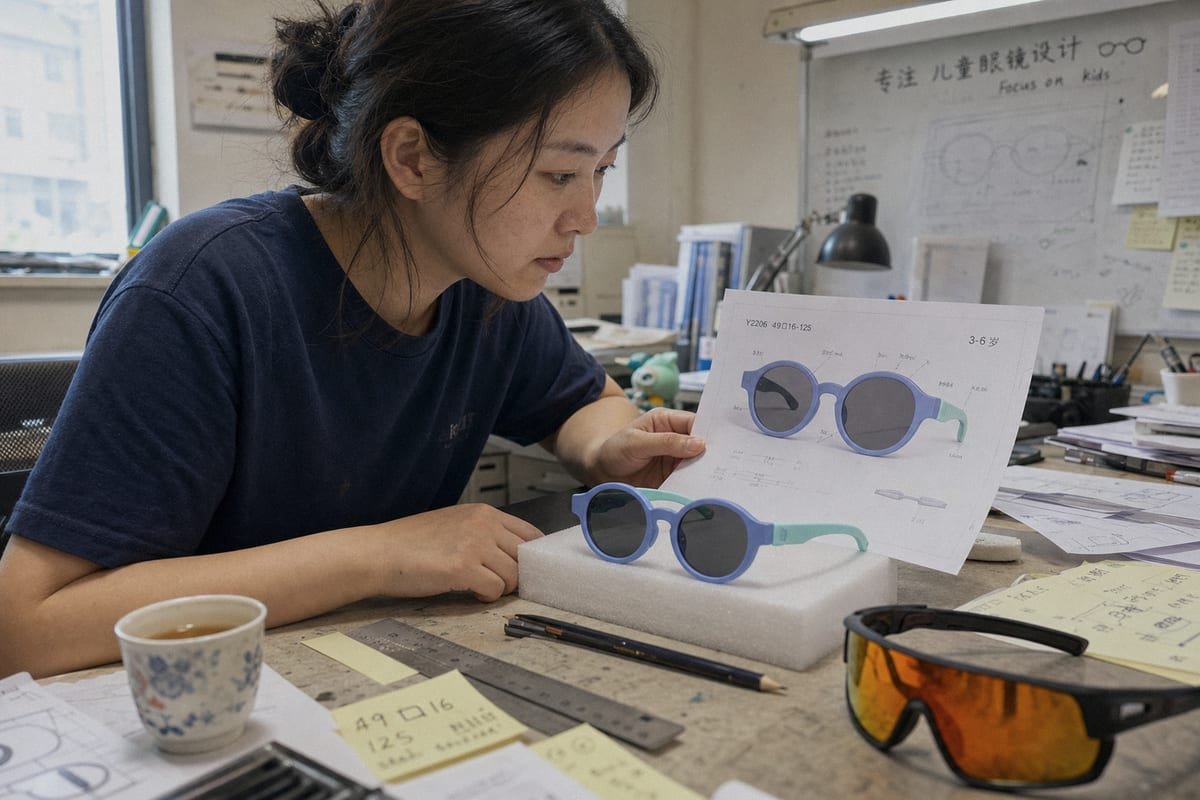
La etapa de concepto es donde la mayoría de los proyectos tienen éxito o fracasan. En nuestra experiencia sirviendo a compradores en más de 20 países, un brief poco claro causa más retrasos que cualquier cuello de botella en la fábrica. Por lo tanto, siempre insistimos en los detalles desde el principio: rango de edad objetivo, canal de ventas, punto de precio y características requeridas como lentes UV400 o monturas flexibles 2.
Paso 1: El Brief del Producto
Su brief debe definir el grupo de edad del niño, la dirección del estilo y cualquier requisito de seguridad. Una montura para niños pequeños con bordes de color azul lavanda suave y curvas orgánicas redondeadas necesita una estructura muy diferente a la de una lente envolvente deportiva para un ciclista de ocho años. Ambos son productos para niños. Pero su tamaño, diseño de bisagra y montaje de lentes difieren por completo.
Paso 2: Propuesta de Diseño y CAD
A continuación, nuestros ingenieros convierten el brief en bocetos y archivos de diseño CAD 3D 3. Aquí es donde se calibra el ancho del puente y la longitud de la patilla para las proporciones faciales pediátricas. Como tenemos aproximadamente 800 estilos existentes, muchos compradores personalizan una montura base probada en lugar de empezar desde cero. Ese atajo es la ventaja principal del ODM sobre el OEM puro.
Paso 3: Viabilidad, Cotización y Prototipo
Antes del muestreo, confirmamos los materiales, MOQ, opciones de acabado y si se necesitan nuevas herramientas. Luego comienza el desarrollo del prototipo. Dependiendo del diseño, utilizamos corte CNC, impresión 3D o moldes existentes para producir una muestra física que pueda sostener, doblar y ajustar en la cara de un niño real.
Paso 4: Revisiones a la Muestra Dorada
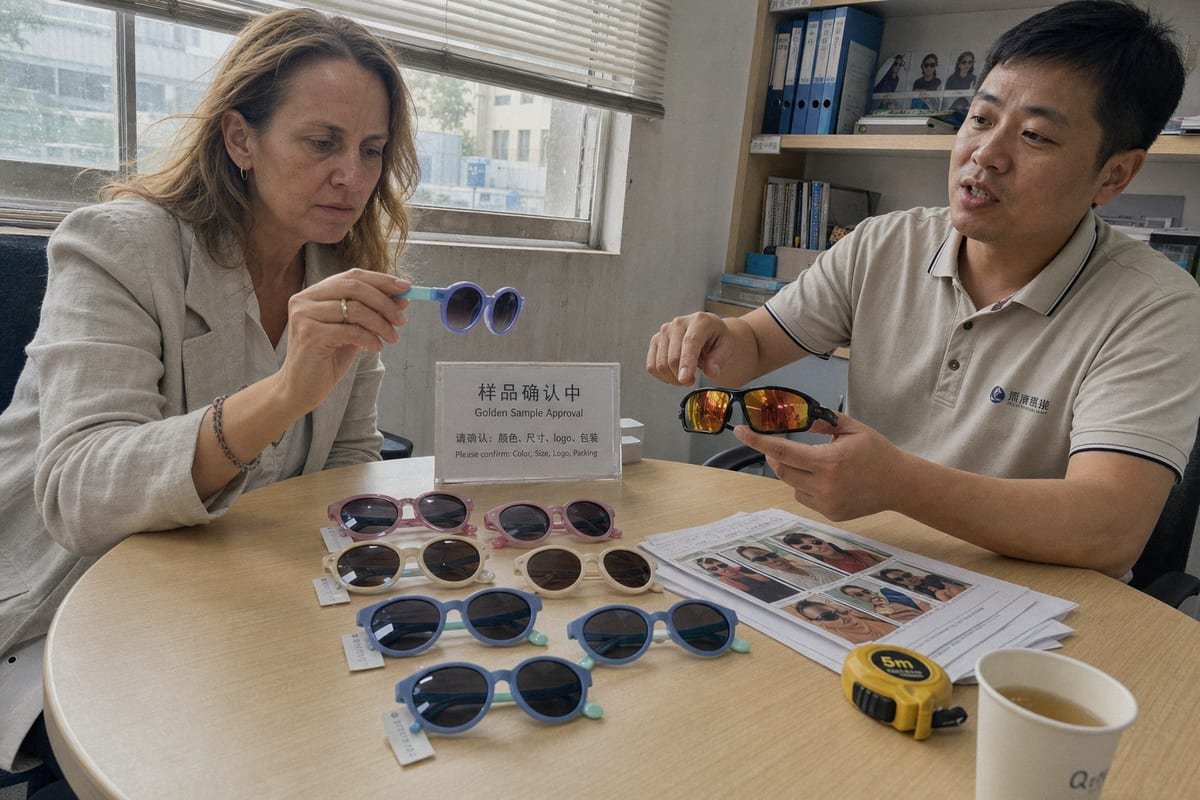
Espere una a tres rondas de revisión. Usted da su opinión sobre la sensación de la bisagra, la precisión del color, la colocación del logotipo, y la calidad de la lente. Una vez que todo coincide con sus expectativas, bloqueamos una "muestra dorada". Esa muestra se convierte en la referencia legal y práctica para la producción en masa.
¿Qué debo esperar durante las etapas de selección de materiales y pruebas de seguridad?
Un tornillo de bisagra falló una prueba de tracción en un lote de preproducción en nuestro taller. Detuvimos la línea, reemplazamos el lote de bisagras y volvimos a probar. Para eso existe esta etapa.
Espere que la fábrica proponga materiales seguros para niños como TR90 y TPEE, confirme el cumplimiento no tóxico y libre de BPA, luego pruebe las muestras para la eficacia UV400, la resistencia al impacto, la durabilidad de las bisagras y la seguridad química según estándares como CPSIA para EE. UU. o EN y REACH para Europa.
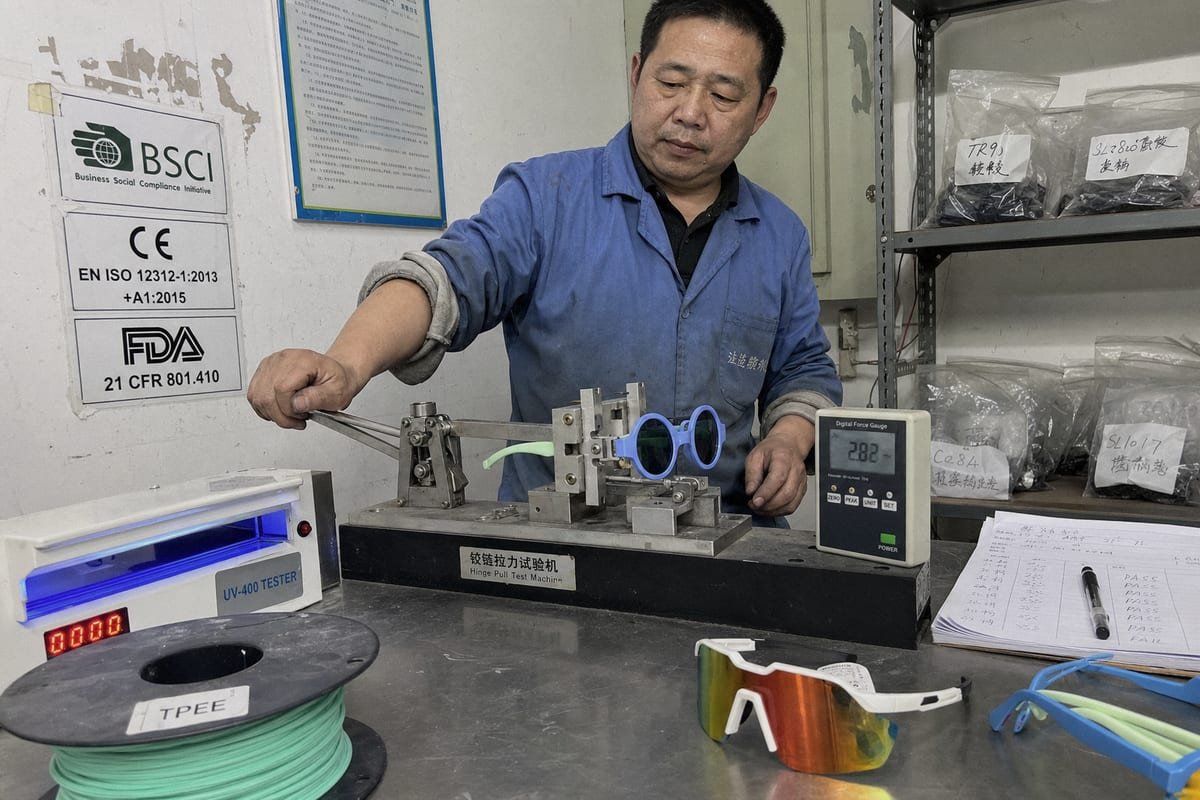
La selección de materiales para gafas infantiles está mucho más limitada que para gafas de moda para adultos. Los niños tiran sus gafas de sol. Se sientan sobre ellas. Muerden las puntas de las patillas. Por lo tanto, el material de la montura debe doblarse sin romperse, y cada componente debe ser químicamente seguro.
Por qué TR90 y TPEE Dominan las Gafas Infantiles
Nuestra fábrica ha pasado quince años trabajando con polímeros flexibles, y especificamos monturas flexibles de TPEE o TR90 para casi todos los proyectos infantiles. Aquí se comparan las opciones comunes:
| Material | Flexibilidad | Peso | Perfil de Seguridad Infantil | Mejor uso |
|---|---|---|---|---|
| TPEE | Extremadamente alto, casi irrompible | Muy ligero | No tóxico, suave para la piel | Gafas de sol para bebés y niños pequeños |
| TR90 | Alta flexibilidad, memoria elástica | Muy ligero | Libre de BPA, duradero | Monturas ópticas y gafas de sol para niños |
| Frente rígido, brazos blandos | Beneficios combinados | Ligero | Niños activos, líneas premium | Niños activos, estilos deportivos |
| PC/acrílico estándar | Baja | Ligero | Puede agrietarse bajo estrés | Artículos promocionales económicos |
| Acetato de base biológica | Moderado | Medio | Ecológico, tacto premium | Líneas premium sostenibles |
Una construcción híbrida — una montura frontal de TR90 con patillas de TPEE 4 — le brinda un soporte de lente estable más brazos suaves y flexibles que no lastimarán la cabeza de un niño durante el juego brusco.
La Lista de Verificación de Pruebas
Las pruebas de seguridad suelen cubrir cuatro áreas. Primero, rendimiento de la lente: verificación de los estándares de seguridad UV400 y pruebas de claridad óptica. Segundo, durabilidad mecánica: resistencia al impacto de caída de bola 5, ciclaje de bisagras y resistencia de las patillas. Tercero, cumplimiento químico: Requisitos de certificación CPSIA 6 para el mercado de EE. UU., además de los estándares REACH y EN para Europa. Cuarto, seguridad del diseño físico: bordes redondeados, sin piezas pequeñas desmontables y retención segura de las lentes. Solicite informes de prueba a su proveedor antes de aprobar la producción en masa. Una fábrica confiable los compartirá sin dudarlo.
¿Cuánto tiempo suele durar cada etapa del desarrollo de gafas de sol ODM para niños?
Las preguntas sobre el cronograma surgen en casi todas las primeras llamadas que recibimos de nuevos compradores. La respuesta honesta depende de una cosa por encima de todo: si su diseño necesita moldes nuevos.
Muestrear un estilo ODM existente toma alrededor de 7 a 10 días, el desarrollo de un nuevo prototipo toma de 15 a 20 días, la creación de herramientas y moldes agrega aproximadamente 25 días, y la producción en masa se extiende de 40 a 45 días después de la aprobación. Un proyecto totalmente personalizado con herramientas generalmente abarca 90 a 120 días en total.
Estos números se agrupan estrechamente en toda la industria, y nuestro propio cronograma de producción sigue un ritmo similar. Pero los promedios ocultan la historia real. Permítanme desglosar dónde va realmente el tiempo.
Cronograma Etapa por Etapa
| Etapa de Desarrollo | Estilo ODM Existente | Nuevo Diseño Personalizado |
|---|---|---|
| Resumen y propuesta de diseño | 2–5 días | 5–10 días |
| Factibilidad y cotización | 1–3 días | 3–7 días |
| Desarrollo de muestras | 7–10 días | 15–20 días |
| Rondas de revisión (cada una) | 5–10 días | 7–14 días |
| Creación de herramientas y moldes | No es necesario | ~25 días |
| Muestreo de preproducción | 3–5 días | 5–7 días |
| Producción en masa | 40–45 días | 40–45 días |
| Control de calidad final y preparación del envío | 3–7 días | 3–7 días |
Dónde Ocurren Realmente los Retrasos
Según nuestra experiencia de exportación, cuatro cosas alargan los plazos. Primero, los resúmenes vagos que desencadenan bucles de revisión adicionales. Segundo, los recubrimientos de lentes personalizados: una lente degradada espejada, como una lente de escudo de naranja a dorado en una montura envolvente deportiva, necesita pruebas de recubrimiento que las lentes grises estándar omiten. Tercero, los cambios de moldes después de que las herramientas han comenzado, lo que puede reiniciar el reloj en semanas. Cuarto, la aprobación del embalaje, porque el embalaje de marca privada a menudo se diseña demasiado tarde y luego retrasa el envío.
Cómo Comprimir el Cronograma
Elija un marco base existente cuando sea posible. Apruebe las muestras rápidamente y consolide los comentarios en un solo documento por ronda. Comience el diseño de su embalaje durante el muestreo, no después. Y reserve la inspección de terceros con anticipación si su mercado lo requiere. Las marcas que hacen estas cuatro cosas rutinariamente ahorran de dos a cuatro semanas en su lanzamiento.
¿Qué papel juego en la aprobación de diseños antes de que comience la producción en masa?
Una lección que nuestro equipo aprendió hace años: nunca permita que un comprador apruebe una muestra solo por foto. Una cámara no puede decirle cómo se siente una bisagra o cómo se flexiona una montura.
Usted actúa como el tomador de decisiones final en cada etapa: aprobando la propuesta de diseño, dando el visto bueno a la muestra de referencia, confirmando las muestras de preproducción y validando el arte del empaque. Su aprobación por escrito en cada punto de control autoriza a la fábrica a proceder, por lo que nada entra en producción en masa sin su confirmación.

Sus aprobaciones no son una formalidad. Son los puntos del contrato que definen qué significa "correcto" para su pedido. Si llega un envío a granel y el color de la patilla es ligeramente diferente, la muestra dorada es la referencia que resuelve la disputa. Así que trate cada aprobación con seriedad.
Sus Cuatro Puertas de Aprobación
- Aprobación de diseño. Confirma los renders CAD, las dimensiones, las combinaciones de colores y la ubicación del logotipo antes de que se fabrique cualquier muestra física.
- Aprobación de muestra dorada. Inspecciona físicamente el ajuste, la flexibilidad, la calidad de la lente, la sensación de la bisagra y el acabado. Esta muestra se convierte en la referencia maestra para todo el flujo de trabajo de producción en masa.
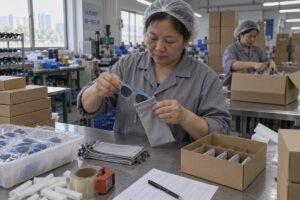
- Aprobación de muestra de preproducción. Después de la fabricación de herramientas, la fábrica ejecuta un pequeño lote piloto. Verifique que la producción en masa coincida con la muestra dorada, incluida la aplicación del logotipo y el ajuste de la lente.
- Aprobación de embalaje y etiquetado. Aprueba el embalaje de marca privada, los códigos de barras, las etiquetas de advertencia y las marcas de las cajas para que los productos lleguen listos para la venta.
Qué Comprobar en Cada Puerta
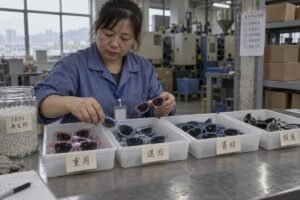
Concéntrese en las cosas que son caras de arreglar más tarde. Verifique el ajuste del puente en un niño real si puede. Flexione las patillas repetidamente. Raye la prueba del logotipo. Sostenga las lentes contra la luz para detectar distorsiones. Confirme que la marca UV400 coincide con el informe de prueba. En nuestro taller gestionado con 5S 7, la inspección de control de calidad detecta la mayoría de los problemas internamente, pero sus ojos independientes en cada puerta protegen su marca de maneras que ninguna lista de verificación de fábrica puede reemplazar.
También acuerde por escrito cuántas rondas de revisión se incluyen, qué desencadena tarifas de muestreo adicionales y cuáles son sus límites de calidad aceptables para la inspección final. Las reglas claras por adelantado evitan fricciones posteriores.
Conclusión
Omitir etapas en la personalización de gafas de sol para niños ODM crea riesgos. Seguir las etapas construye una línea de productos segura y repetible. Estamos encantados de guiar a su marca a través de cada punto de control.
Notas al pie
Resumen oficial de la Comisión Europea sobre las regulaciones de seguridad química REACH para productos vendidos en la UE. ↩︎
Proporciona contexto técnico para los estándares de protección contra la radiación ultravioleta requeridos para gafas de niños. ↩︎
Explica el proceso técnico utilizado para crear modelos digitales precisos para monturas de gafas. ↩︎
Enlaces al fabricante principal del poliamida transparente de alto rendimiento utilizado en gafas duraderas. ↩︎
Regulación oficial de la FDA que detalla la prueba obligatoria de caída de bola para lentes resistentes a impactos. ↩︎
Recurso oficial del gobierno de EE. UU. sobre regulaciones de seguridad para productos destinados a niños. ↩︎
Define el método de organización del lugar de trabajo utilizado para garantizar la eficiencia y la calidad en la fabricación. ↩︎
Más artículos que te podrían gustar

¿Buscas un socio confiable en gafas para niños?
Explore más de 800 estilos listos y soporte OEM/ODM completo adaptado a su marca.
Ponte en contacto English
  Español de México
  Deutsch
  Français
  日本語
日本語  العربية
  Português do Brasil