What Is TR90’s Temperature Tolerance for Kids Sunglasses Left in a Hot Car?
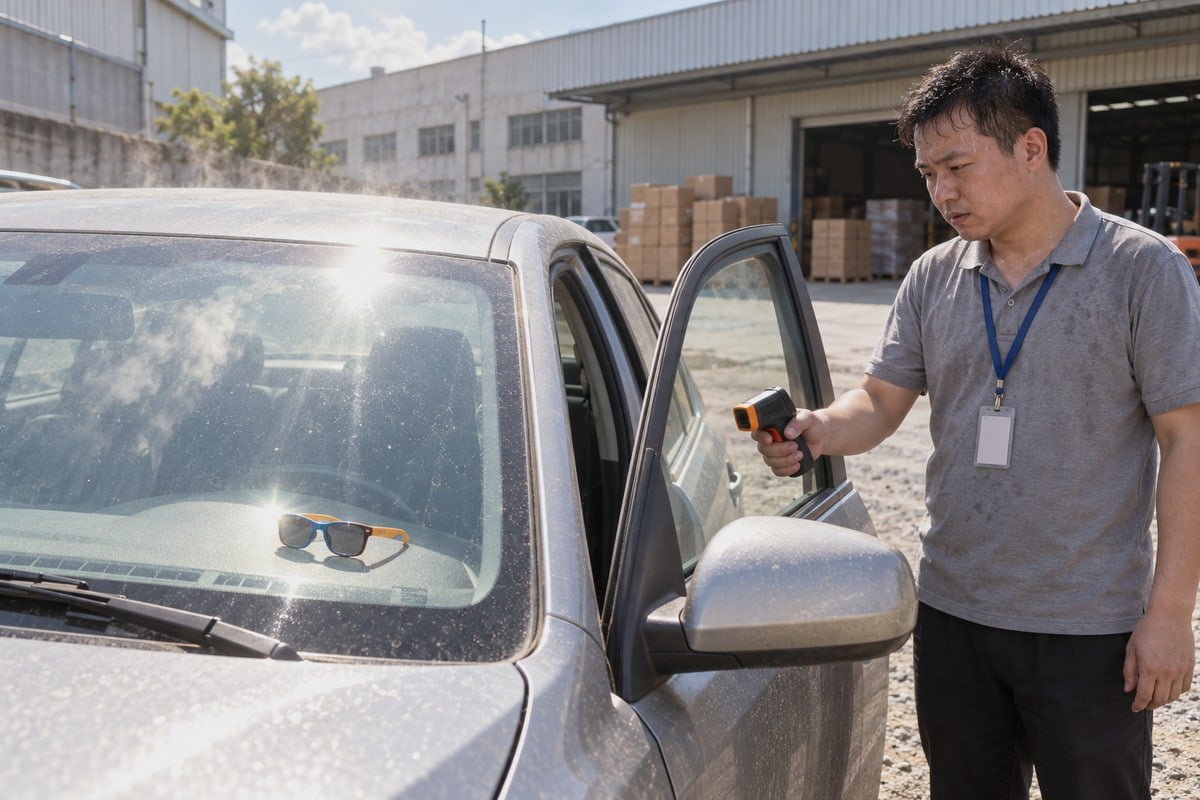
TR90 temperature tolerance is the first question buyers ask our Taizhou factory. A parent forgets kids sunglasses on a dashboard, the frame warps, and your brand eats the return.
TR90 temperature tolerance for kids sunglasses covers a heat distortion temperature of roughly 110–120°C, well above the 71°C (160°F) a closed car reaches. Short hot-car exposure rarely warps TR90 frames, but hours of repeated baking can soften frames and damage lens coatings.
That answer has two halves. The material is strong. The environment is harsh. Below, I walk through what a hot car actually does, what the TR90 numbers mean, what breaks first, and how to source frames that survive summer.
How hot can a car really get before TR90 kids sunglasses are affected?
One July, a QC team member left a sample tray of TR90 frames in a van outside our workshop for an afternoon. Every frame came back straight.
A closed car can reach about 71°C (160°F) inside, and dashboards in direct sun can exceed 70°C. TR90 kids sunglasses are not affected at these levels in short stints, because the material's heat distortion temperature sits around 110–120°C, roughly 40°C higher.
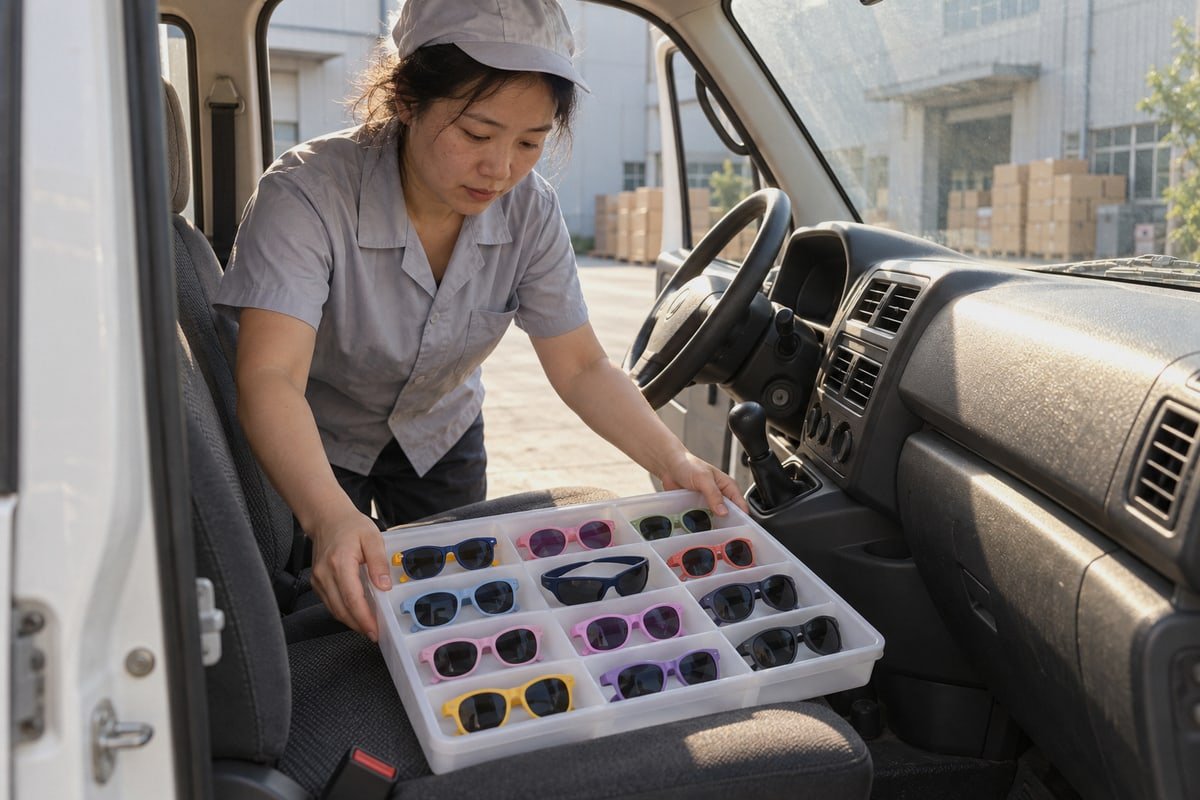
That van story is not proof of anything on its own. One afternoon is not a whole summer. But it does show the basic margin between interior car temperature 1 and the point where TR90 starts to move. Let me break that margin down.
Why interior car temperature climbs so fast
A parked car behaves like a small greenhouse. Sunlight passes through the glass. The dashboard, seats, and any object lying on them absorb that light and turn it into heat. The trapped air cannot escape. So the cabin gets much hotter than the air outside, and it happens within an hour on a sunny day. Care guides warn that a dashboard in direct sun can pass 70°C (160°F). The cabin air itself peaks near 71°C (160°F) in the worst conditions.
Where the sunglasses sit matters as much as the weather. A pair on the dashboard takes direct sun and contact heat from the plastic below it. A pair under a seat sees only warm air. Dark frames, like the glossy black oval style in our kids range, absorb more sunlight than light-colored frames, so they warm faster on a dashboard.
| Where the sunglasses sit | Exposición al calor | Risk to TR90 frame shape | Risk to lenses and coatings |
|---|---|---|---|
| Dashboard, direct sun | Highest, can exceed 70°C / 160°F | Low for one errand; rises with all-day, repeated exposure | Alta |
| Seat in direct sun | Near cabin peak, around 71°C / 160°F | Low to medium over repeated days | Medium to high |
| Glovebox or under a seat | Warm air only, cooler than dashboard | Baja | Baja a media |
| Inside a hard case in a bag | Más bajo | Muy bajo | Baja |
The gap between 71°C and 110°C
On paper the gap looks comfortable. TR90 needs roughly 110–120°C before a standard test bar starts to deflect under load. A car tops out around 71°C. So a single hot afternoon should not bend a frame.
The gap shrinks in real life for three reasons. First, kids frames are thin. A slim temple heats through faster than a thick test bar. Second, load matters. A frame pressed under a backpack or sat on by a child while warm is under stress. Third, time matters. Heat that would never bend a frame in one hour can slowly relax the plastic over many days of the same routine. That is why I tell buyers that TR90 is heat-tolerant, not heat-proof. A hot car is a risk zone, not a storage space.
What temperature range can TR90 frames safely withstand without warping?
Every season we weigh one trade-off: the stiffer a TR90 blend, the higher its thermal stability, but the less forgiving it feels on a child's face.
TR90 frames safely withstand continuous use up to about 80°C, resist deformation up to a heat distortion temperature near 110–120°C, and only melt between 200°C and 250°C. Frame warping becomes a real risk when heat is prolonged, repeated, or combined with pressure on the frame.
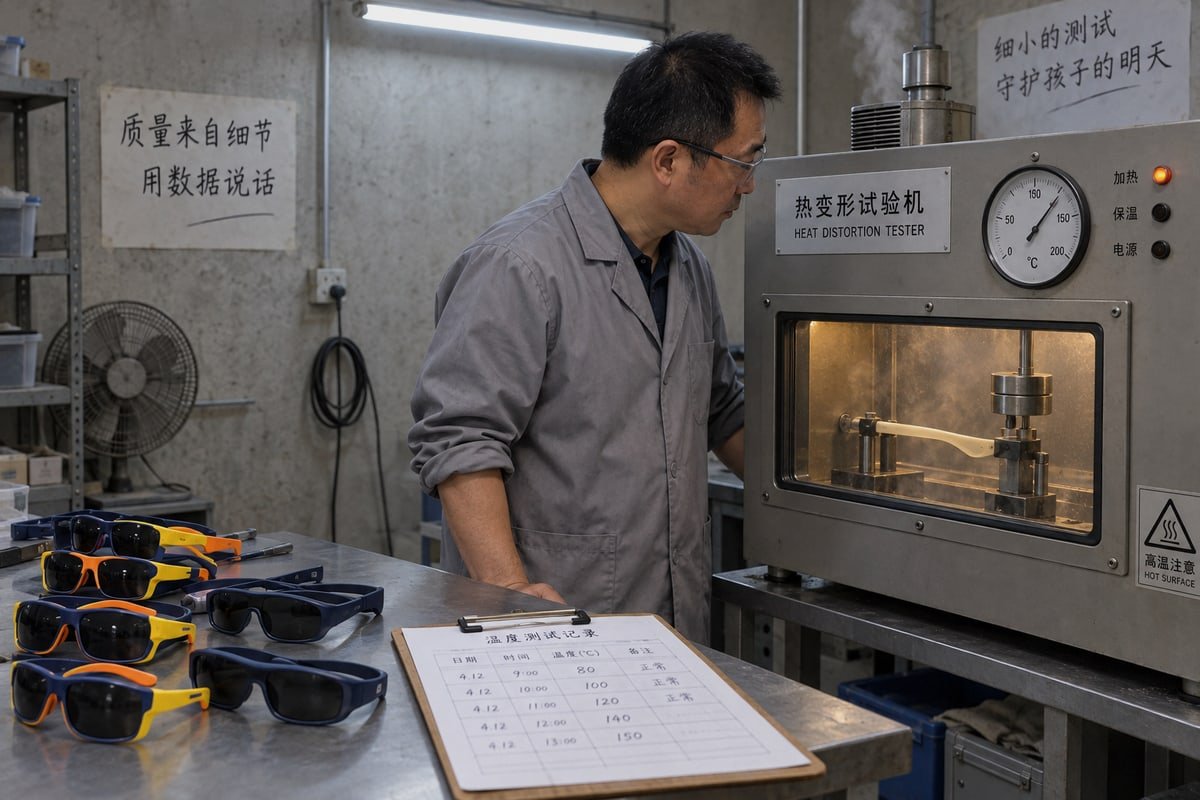
TR90 is a thermoplastic polyamide. In plain words, it is a nylon-based plastic that was developed in Switzerland for eyewear. It is light, it bends without snapping, and it handles heat far better than acetate. The problem is that different sources quote different temperature numbers, and buyers get confused. Here is the ladder as I explain it to our clients.
| Threshold | Approximate value | Lo que significa en la práctica | Where the claim comes from |
|---|---|---|---|
| Conservative long-term service limit | About 80°C | Safe for long, repeated exposure without slow shape loss | Care and maintenance guides |
| Heat distortion temperature 2 | About 110–120°C | Point where a loaded test bar starts to bend in a lab | Material data sheets |
| Aggressive marketing claim | Up to 150°C continuous | Seller claim; treat with caution for thin kids frames | Some sales pages |
| Melting range | 200–250°C | The plastic actually liquefies | Material data sheets |
What the heat distortion temperature does not tell you
El heat distortion temperature is a lab metric. A technician takes a bar of material, puts a set load on it, raises the temperature at a set rate, and records the point where the bar deflects a set distance. That is useful for comparing materials. It is not a promise about a pair of kids sunglasses lying on a seat for six hours.
Buyers often push back here. "Your competitor's page says 150°C continuous. Why are you telling me to plan for 80°C?" My answer is simple. A high lab rating and a real-world warping complaint are not contradictory. A frame can carry a high heat distortion temperature and still take a slight set if it sits warm, under load, day after day. Kids frames have thin temples, hinge screws, and lenses that press outward on the groove. Those stresses are always present. We would rather our partners design for the conservative number and be pleasantly surprised than trust the marketing number and handle returns.
Memory polymer properties and why they help
TR90 has memory polymer properties. The frame bends under pressure or mild heat and springs back when the force is removed. This is why a child can sit on a pair and the frame survives. In a hot car, this shape memory gives you a second chance. A frame that softened slightly and got nudged out of line will often return to shape as it cools, as long as nothing held it bent while it was warm.
The memory has limits. If a warm frame is pinned under a bag or twisted in a pocket while it cools, it can lock into the new shape. That is what most people mean when they report frame warping from a hot car. The material did not fail. The combination of heat, load, and time overwhelmed its memory.
Will leaving TR90 sunglasses in a hot car damage the lenses or frame shape?
A distributor in Australia once sent us photos of returned kids sunglasses. The TR90 frames looked fine. The polarized lens coating had bubbled.
Leaving TR90 sunglasses in a hot car usually damages lenses before frame shape. Polarized and anti-reflective coatings can delaminate at far lower temperatures than TR90 softens. Repeated heat cycles also loosen lenses through thermal expansion differences and can fade frame color over time.
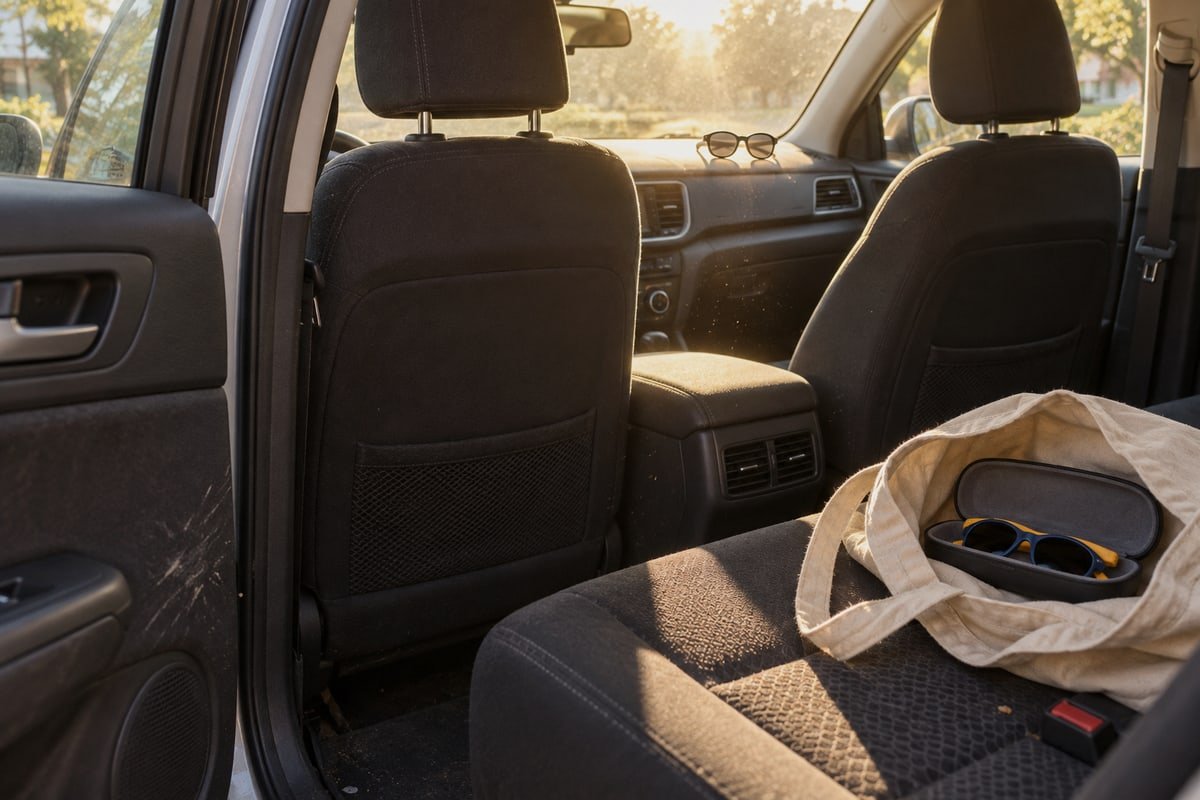
Those photos changed how I talk about hot cars. Most people worry about the frame melting. In our experience, the frame is the last thing to give up. The lenses, the coatings, the color, and the surface finish all show damage first. Here are the five failure modes I see, roughly in the order they appear.
- Polarized lens coating and anti-reflective layer delamination. These layers are thin films bonded to the lens. They can bubble, peel, or haze at temperatures well below the point where TR90 moves. This is the number one hot-car complaint on polarized kids sunglasses.
- Thermal expansion differential. The frame and the lens are different materials. They expand at different rates when heated and shrink at different rates when cooled. One cycle does nothing. Dozens of cycles slowly stretch the lens groove, and the lens starts to rattle or pop out.
- Photo-oxidation fading. Heat acts as a catalyst for UV breakdown of color pigments. A frame baking behind a windshield fades faster than the same frame worn outdoors. Vivid colors, like the yellow-orange temples on one of our dual-tone wayfarer styles, get the most pigment testing at our factory for this reason.
- Plasticizer migration in lower-grade blends. Cheap TR90 blends can turn sticky or tacky after repeated heating. The surface then grabs dust and is hard to clean. We check this on soft-touch finishes, such as the matte rubberized navy sport wrap in our range, because those finishes show tackiness first if the base material is poor.
- Thermal shock cracks. A child gets into a 150°F car, the parent blasts the air conditioning, and the frame drops from very hot to cold in minutes. That rapid change can create microscopic stress fractures at the bridge. The frame does not break that day. It snaps weeks later during normal play, and nobody connects the two events.
| Damage type | Frame or lens | Heat needed | What parents notice |
|---|---|---|---|
| Delaminación del recubrimiento | Lente | Low, below TR90 softening | Bubbles, haze, peeling edges |
| Lens loosening | Ambos | Repeated cycles, moderate heat | Rattling lens, lens pops out |
| Color fading | Marco | Prolonged sun plus heat | Dull, uneven color |
| Tacky surface | Frame, low-grade blends | Repeated heat | Sticky feel, dust cling |
| Deformación de la montura | Marco | Prolonged heat plus load | Crooked fit, arms splayed |
Frame shape is the least likely victim
Good-grade TR90 is a BPA-free material 3, and it does not outgas harmful chemicals when it warms in a car. That matters to parents in a way that is separate from durability. Shape loss needs the full combination of prolonged heat, repeated exposure, and pressure on the frame. Short exposure on a hot day is a lens problem, not a frame problem.
How do I choose heat-resistant materials when sourcing kids sunglasses for hot climates?
Fifteen years of eyewear production taught us one lesson: buyers who ask about material grade before price get fewer summer returns than buyers who do it the other way around.
Choose TR90 or TPEE frames over acetate for hot climates, confirm the heat distortion temperature and BPA-free status with the factory, request samples for a hot-box test, specify heat-stable polarized lens coatings, and package each pair with a hard case so parents never store sunglasses loose on a dashboard.
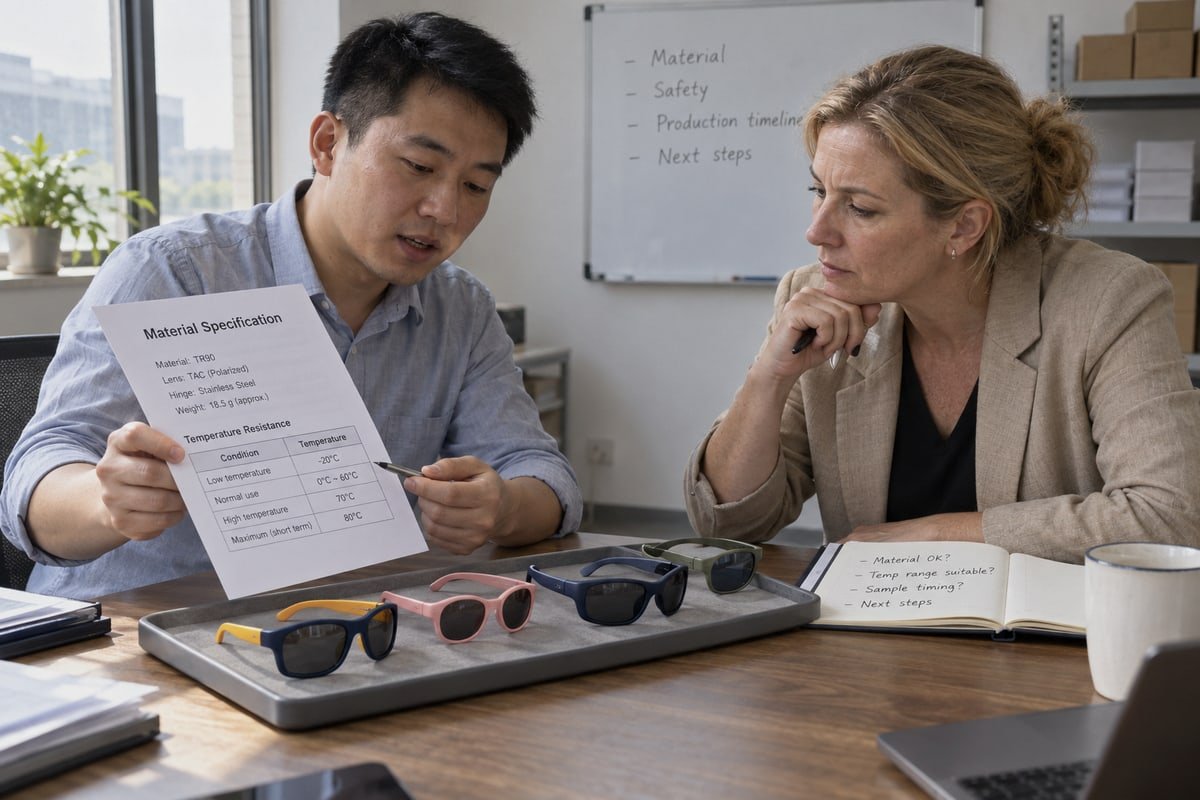
When a buyer in Australia, Japan, or southern Europe asks us for a hot-climate kids line, I start with a material comparison. It saves a lot of back and forth later.
| Material del marco | Heat tolerance | Flexibility and impact resistance | Peso | Frame warping risk in a hot car | Best fit for kids |
|---|---|---|---|---|---|
| TR90 (thermoplastic polyamide) | High, heat distortion temperature about 110–120°C | High flexibility, high impact resistance, shape memory | Muy ligero | Baja | Everyday, sport, optical frames |
| TPEE | Good thermal stability, very soft and bendable | Extremely flexible, hard to snap | Muy ligero | Baja | Baby and toddler frames, temples on TR90 fronts |
| Acetato | Lower, softens readily in heat | Rigid, can crack on impact | Más pesado | Alta | Fashion looks, not hot-car use |
| Polycarbonate frame | Moderado | Good impact resistance, stiffer than TR90 | Ligero | Medio | Budget sport styles |
Questions to ask before you approve a sample
I recommend a short, ordered process. It works for a founder launching a first line and for a procurement manager adding a summer range.
- Ask for the material grade. Confirm the frame is a genuine TR90 or TPEE blend and a BPA-free material. Lower-grade blends are where plasticizer migration and tackiness show up.
- Ask for the heat distortion temperature and the recommended long-term service temperature. If a factory only quotes the highest marketing number, ask for the conservative one too.
- Run your own hot-box test. Leave samples in a parked car or a controlled oven around 70°C for several hours. Check lens fit, coating clarity, surface feel, and frame alignment before and after. Repeat over a few days to see cycling effects.
- Specify the lens build. UV400 tinted lenses are simpler and more heat-tolerant than polarized lenses. If you want a polarized lens coating, ask how it is bonded and whether it has been heat-cycled.
- Look at the lens groove and hinge. A deeper groove and a well-fitted hinge tolerate thermal expansion 4 differences better.
- Ask about pigment stability. Bright colors sell well for kids, but they need UV-stable pigments to resist photo-oxidation fading.
- Require a hard case and a care card. The best storage advice in the world only works if it reaches the parent.
Why existing styles lower your risk
New brands often assume they need a custom mold to get a heat-resistant kids frame. They do not. Our factory in Taizhou keeps roughly 800 existing styles in TR90 and TPEE, including frentes de TR90 con patillas de TPEE. The tooling is already proven. That means a buyer can sample several silhouettes, run the hot-box test above, pick the winners, and test the market without heavy mold investment.
Flexible frame technology is our core, not an add-on. Around 120 workers in a 5S-managed workshop handle everything from injection to final QC, and we ship to partners in more than 20 countries. Full OEM/ODM support covers custom colors, logos, lens options, packaging, and accessories. For hot-climate lines, I always suggest a care card inside the retail box with one plain sentence: do not store these on the dashboard. It costs almost nothing. It prevents most of the complaints described in this article.
Conclusión
TR90 temperature tolerance is high, but a hot car is a risk zone, not storage. Pick the right material, protect the lenses, and give parents a case.
Interested in sourcing the products mentioned in this article? See details and request a quote here:
Notas al pie
1. The CDC provides authoritative safety information regarding extreme heat and temperature risks inside parked vehicles. ↩︎
2. ScienceDirect provides technical engineering definitions and testing standards for heat distortion in polymer materials. ↩︎
3. The FDA provides official guidance and safety information regarding BPA-free materials in consumer products. ↩︎
4. Wikipedia explains the physical principles of how different materials expand and contract when subjected to heat. ↩︎
Más artículos que te podrían gustar


¿Buscas un socio confiable en gafas para niños?
Explore más de 800 estilos listos y soporte OEM/ODM completo adaptado a su marca.
Ponte en contacto English
  Español de México
  Deutsch
  Français
  日本語
日本語  العربية
  Português do Brasil