What to Do When Kids Sunglasses Inspection Report Doesn’t Match Product Model?
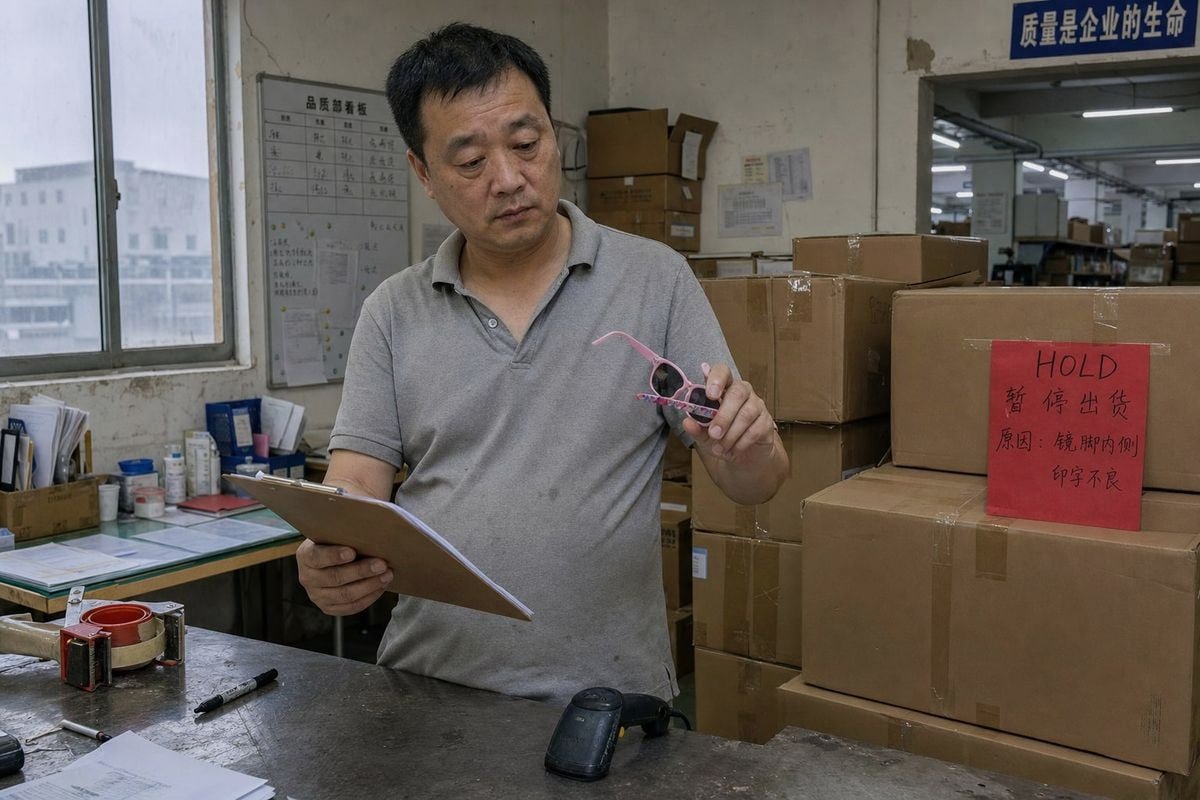
A kids sunglasses inspection report that doesn’t match your product model is a problem I’ve seen land on our QC desk more than once — and it can freeze an entire shipment.
When a kids sunglasses inspection report doesn’t match the product model, pause all sales and shipping, cross-check the SKU, markings, and packaging against the report, contact the supplier and testing lab, then request a report amendment for clerical errors or a full re-test for physical differences.
Below, I’ll walk you through how to verify the mismatch, what to ask your supplier, whether you can still sell, and how to prevent this next time.
How do I verify if a kids sunglasses inspection report actually matches my ordered model?
A buyer from Australia once emailed me at 2 a.m. our time, worried her test report listed a model code 1 one digit off from her carton labels. That single digit mattered.
Verify the match by comparing the report's model number, SKU, and photos against the physical product's frame markings, mold cavity IDs, packaging barcodes, lens color, and dimensions. If the report photo shows a different frame shape, lens tint, or temple design, treat it as a genuine mismatch, not a typo.
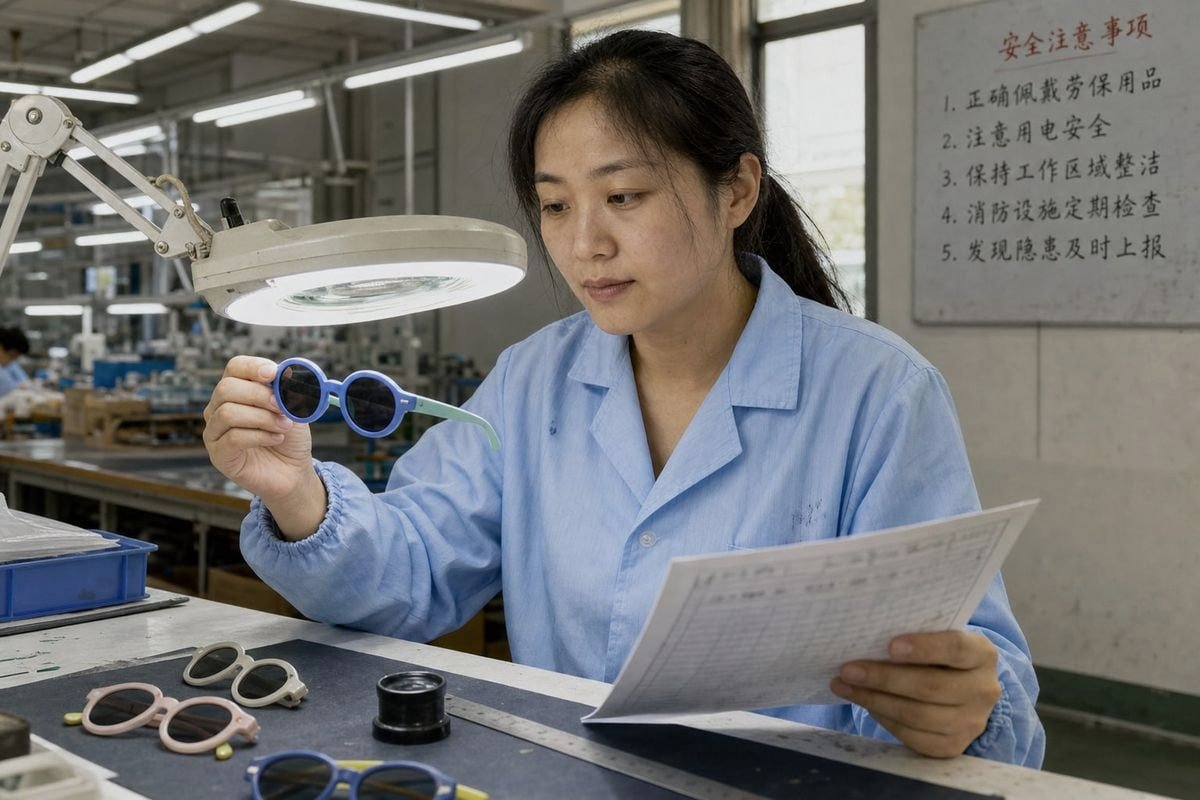
Start with the paperwork trail before you panic. In our 15 years running an eyewear factory in Taizhou, most mismatches we've investigated turned out to be one of two things: a clerical error 2 in the report header, or a real product substitution. The verification steps for each are the same, but the outcomes are very different customs seizure 3.
Step-by-step verification process
- Read the report header. Note the model number, style code, batch number, lens type, and frame material listed.
- Check the physical product. Look inside the temple arms. Most injected frames — including our TR90 and TPEE styles — carry a molded model code and often a tiny mold cavity ID near the hinge or bridge.
- Compare photos. A good Mercado de destino 4 report includes sample photos. Put your product next to the report image. Check frame shape, lens tint, hinge style, and any gradient or mirror coating.
- Match the packaging. Scan the barcode, UPC, and SKU on the polybag or box against your purchase order and the report.
- Check the batch. A batch number mismatch between the carton and the report can mean the tested sample came from a different production run.
What each mismatch type usually means
| What differs | Causa probable | Severidad |
|---|---|---|
| One digit in model code, product looks identical | Clerical or data-entry error | Low — amendable |
| Report photo shows different frame or lens | Wrong sample tested, or product substitution | High — re-test needed |
| Batch number differs, model matches | Report applied to a different production run | Medium — verify traceability |
| Color differs, everything else matches | Colorway variant not covered by the style list | Medium — check lab's variant policy |
| Lens type differs (e.g., polarized vs. tinted) | Lens-batch swap or spec change | High — safety-critical |
For children's eyewear, pay special attention to the lens. A wraparound sport shield with a mirrored orange-to-gold gradient lens is a completely different optical product from a round two-tone frame with opaque gray lenses, even if a paperwork error assigned them the same code. If the UV400 protection standards claim on your packaging is based on a report for a different lens, the claim itself is unverified.
What should I ask my supplier when the lens or frame specs differ from the test report?
Trade-offs come up constantly on our production line: a lens vendor changes a coating batch, or a color pigment gets updated. Good factories document these changes. Weak ones don't — and that's exactly what your questions should expose.
Ask the supplier to explain the exact discrepancy in writing, confirm whether any material, lens, or design change occurred after testing, provide the original lab report and golden sample records, and state whether the lab will issue a report amendment or requires full re-testing.

Your goal here is simple: separate a clerical error from an unauthorized change. In our experience exporting to buyers in 20+ countries, an honest supplier can answer these questions within one or two working days, with documents attached. Evasive or slow answers are themselves a red flag.
La lista esencial de preguntas
| Pregunta a hacer | What a good answer looks like |
|---|---|
| Why does the report model code differ from my product? | A specific explanation with evidence, not "don't worry, same product" |
| Did any design, material, or lens change happen after testing? | A change log or written confirmation of no change |
| Was the tested sample pulled from my production batch? | Batch records showing sample traceability |
| Can the lab issue an amendment, or is re-testing required? | Direct written confirmation from the lab, not the factory's opinion |
| Does the report's style list cover my colorway or variant? | A copy of the style list naming your exact variant |
| Do the bill of materials and technical drawings match my order? | BOM showing hinges, screws, lens type, and frame material |
Why lens questions matter most for children's sunglasses
For kids' products, lens performance is the heart of the report. Push hardest on these points. Ask whether the tested lens carries the same UV transmittance profile as your shipment. Ask whether impact resistance requirements were tested on your actual lens material. Ask whether lead and phthalates testing 5 was done on the same frame material and pigments used in your order — Cumplimiento de CPSIA 6 depends on the exact materials, not a lookalike sample. At our factory, we keep golden samples and material lot records for every OEM order precisely so these questions can be answered fast. If your supplier can't produce a golden sample from your order for comparison, insist on re-testing before you accept the goods.
Also ask about the corrective action plan. A serious partner will not just fix your report; they will explain how they'll prevent the mismatch on future orders.
Can I still import or sell children's sunglasses if the inspection report has model discrepancies?
One lesson I learned early in my export career: customs officers and marketplace compliance teams do not accept "it's basically the same model" as an answer. Documentation either matches or it doesn't.
No — you should not import or sell children's sunglasses while the inspection report and product model conflict. In the US, a mismatched Children's Product Certificate violates CPSIA regulations and risks seizure, delisting, or a product safety recall. Quarantine the stock until documentation is corrected or the product is re-tested.
Let me be direct about the legal exposure, because this is where importers get hurt. A Children's Product Certificate must be based on third-party lab testing of the actual product being sold. If your CPC references model A but you're selling model B, the certificate does not cover your goods. It's that simple. The same logic applies under EU sunglasses standards and under ASTM safety standards referenced by many US buyers: the technical file must describe the product on the shelf.
Risk levels by market and mismatch type
| Escenario | Nivel de riesgo | Practical consequence |
|---|---|---|
| Clerical typo, product physically identical, lab confirms | Baja | Amended report; sales can resume quickly |
| Wrong variant on report, same lens and material | Medio | Style list update or supplementary testing |
| Different lens type or coating than tested | Alta | Full re-test; UV and impact claims are void |
| Report belongs to a different model entirely | Muy alta | Goods are effectively uncertified; potential recall exposure |
What to do with stock right now
Quarantine it. Move the affected inventory to a segregated area, label it as nonconforming, and open a formal nonconformance record. Pull the listings from your webshop and marketplaces. This feels painful, but it's far cheaper than a mandatory product safety recall 7, a customs seizure, or a marketplace ban. From our side of the cadena de suministro 8, we always tell brand customers the same thing: a two-week documentation delay is recoverable; a recall involving children's eye protection is a brand-level crisis. Also document everything — emails, photos, report copies — in a compliance due diligence log. If a regulator like the CPSC ever asks questions, a clear paper trail showing you acted responsibly is your best defense.
How do I prevent mismatched inspection reports on my next kids eyewear order?
Prevention is where our 5S-managed workshop earns its keep. With roughly 800 existing styles in our catalog, we would drown in mismatches without strict model naming and photo-matched records — so we built the discipline into every order.
Prevent mismatches by standardizing model codes across PO, molds, and packaging, requiring photo-matched inspection records tied to your exact SKU, locking design changes behind written approval, pulling test samples from the actual production batch, and keeping technical files synchronized with every change.
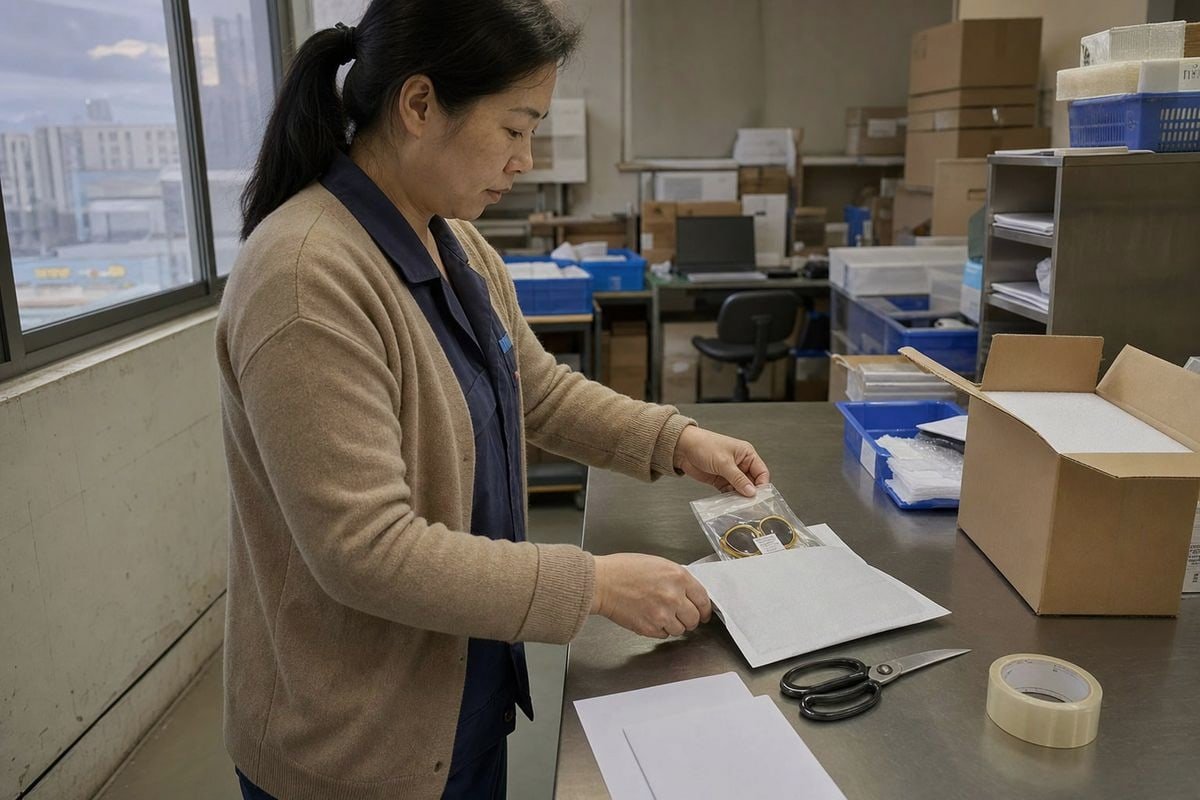
Most mismatches are born long before the lab report is printed. They come from loose naming conventions, undocumented changes, and samples that don't come from the real production run. Fix those three things, and you eliminate most of the risk.
A prevention checklist for your next order
- One code, everywhere. The model code on your purchase order must match the mold marking, the carton label, the polybag sticker, and the lab submission form. Reject near-identical codes for different variants.
- Photo-match every record. Require your inspection agency to photograph the frame markings, lens, hinge, and packaging of the exact sampled units, and attach those photos to the report.
- Sample from the batch. Insist that lab samples are drawn from your production batch — not from a showroom shelf. This closes the batch number mismatch loophole.
- Lock changes behind approval. Any change to lens supplier, coating, pigment, or material requires your written sign-off and a technical file update before production continues.
- Keep a golden sample. Hold the approved prototype at your office and require the factory to hold a sealed duplicate. Every future shipment gets compared against it.
- Sync the technical file. When a variant is added, update the style list, BOM, and label samples immediately, and confirm with the lab whether the existing report covers it.
- Gate your logistics. If your systems allow it, block shipping document generation unless the lab report ID maps one-to-one to the SKU in your inventory system.
When we run OEM programs — custom colors, logos, lenses, and packaging — we assign a unique internal code per variant and keep the buyer's SKU mapped to it in our records. That mapping is boring administrative work, but it's exactly what keeps a UV400 report attached to the right pair of glasses. Choose suppliers who treat this discipline as normal, not as a special favor.
Conclusión
A mismatched kids sunglasses inspection report is a stop-and-verify moment. Pause sales, trace the discrepancy, demand documented answers, and build prevention into your next order — your brand and young customers deserve it.
Notas al pie
1. Wikipedia explanation of how model codes and SKUs are used in inventory management. ↩︎
2. Wikipedia definition of a clerical error in documentation and record-keeping. ↩︎
3. Official U.S. Customs and Border Protection page regarding trade enforcement and seizures. ↩︎
4. Official CPSC guide on the requirement for third-party testing for children’s products. ↩︎
5. CPSC guidance on testing requirements for lead in children’s products. ↩︎
6. Official CPSC page detailing the Consumer Product Safety Improvement Act requirements. ↩︎
7. Official US government database and information portal for product safety recalls. ↩︎
8. Wikipedia definition and explanation of supply chain management and logistics. ↩︎
Más artículos que te podrían gustar
¿Buscas un socio confiable en gafas para niños?
Explore más de 800 estilos listos y soporte OEM/ODM completo adaptado a su marca.
Ponte en contacto English
  Español de México
  Deutsch
  Français
  日本語
日本語  العربية
  Português do Brasil