¿Son las bisagras de resorte más duraderas para las gafas infantiles contra la torsión?
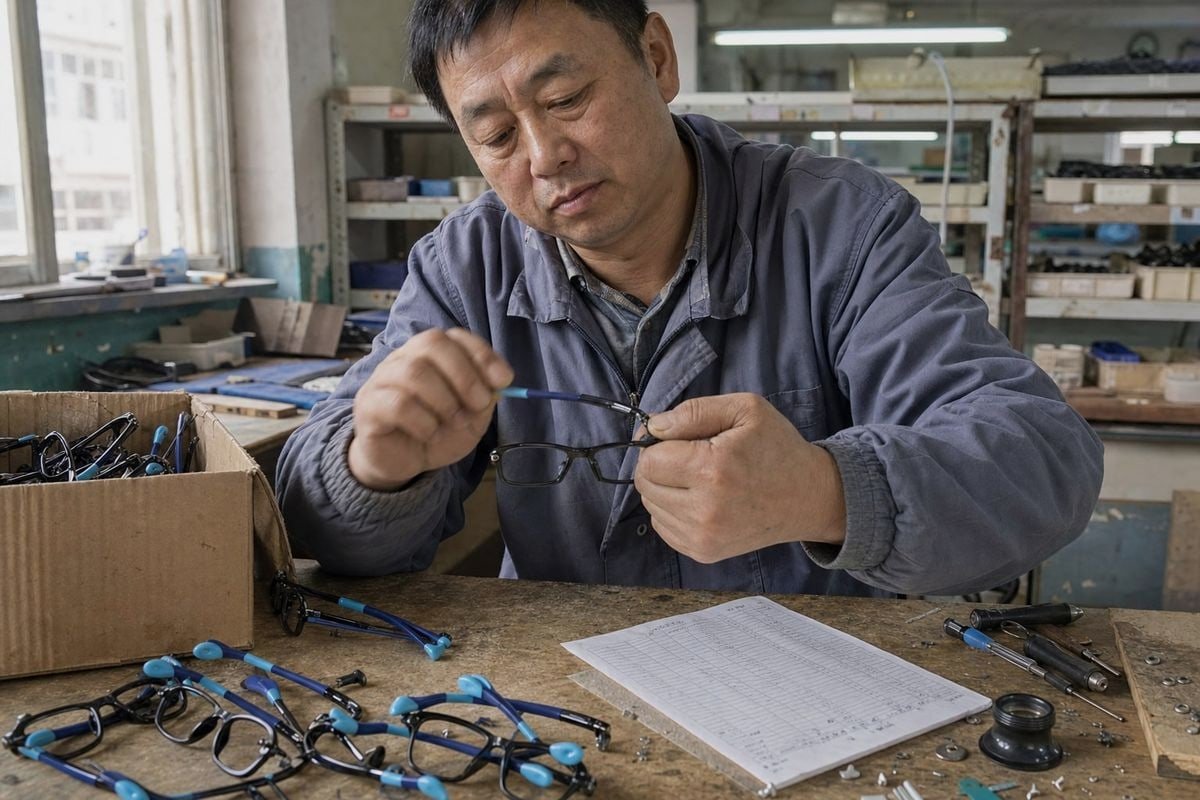
Cada semana, en nuestra línea de producción en Taizhou, veo muestras devueltas de compradores cuyos armazones infantiles fallaron en la bisagra pruebas de caída o impacto 1. La torsión es el asesino. El frente del armazón sobrevive; el punto de pivote no. Esa falla le cuesta a las marcas reclamaciones de garantía, malas críticas y pérdida de clientes habituales, por eso las bisagras de resorte siguen apareciendo en nuestras conversaciones de OEM.
Las bisagras de resorte son generalmente más duraderas para las gafas infantiles contra la torsión porque la bobina interna permite que las patillas se flexionen hacia afuera más allá de los 90 grados, absorbiendo el par en lugar de concentrarlo en un pivote rígido. Sin embargo, la vida útil general aún depende de la calidad de la bisagra, el material del armazón y la construcción.
Así que la respuesta corta es sí, con condiciones. A continuación, le explicaré cómo verificar la durabilidad de las bisagras, cuándo la flexibilidad del TR90 es la mejor opción, qué pruebas exigir a su fábrica y cómo las bisagras afectan la comodidad. Vamos a desglosarlo.
¿Cómo sé si las bisagras de resorte realmente resistirán el uso diario rudo de mis hijos?
Una compradora de Australia una vez nos envió una bolsa de armazones rotos de su proveedor anterior. Casi todos habían fallado de la misma manera: las patillas torcidas más allá de su tope hasta que la bisagra se rompió. Esa bolsa me enseñó más sobre el comportamiento real de los niños que cualquier informe de laboratorio.
Puede verificar la durabilidad de las bisagras de resorte comprobando las clasificaciones de pruebas de ciclos, la calidad de la aleación del resorte, el ajuste del tornillo y el refuerzo de la carcasa. Las bisagras flexibles de calidad sobreviven decenas de miles de ciclos de apertura-cierre y extensiones excesivas repetidas, mientras que las baratas pierden tensión o se atascan en pocos meses de uso diario por parte de los niños.
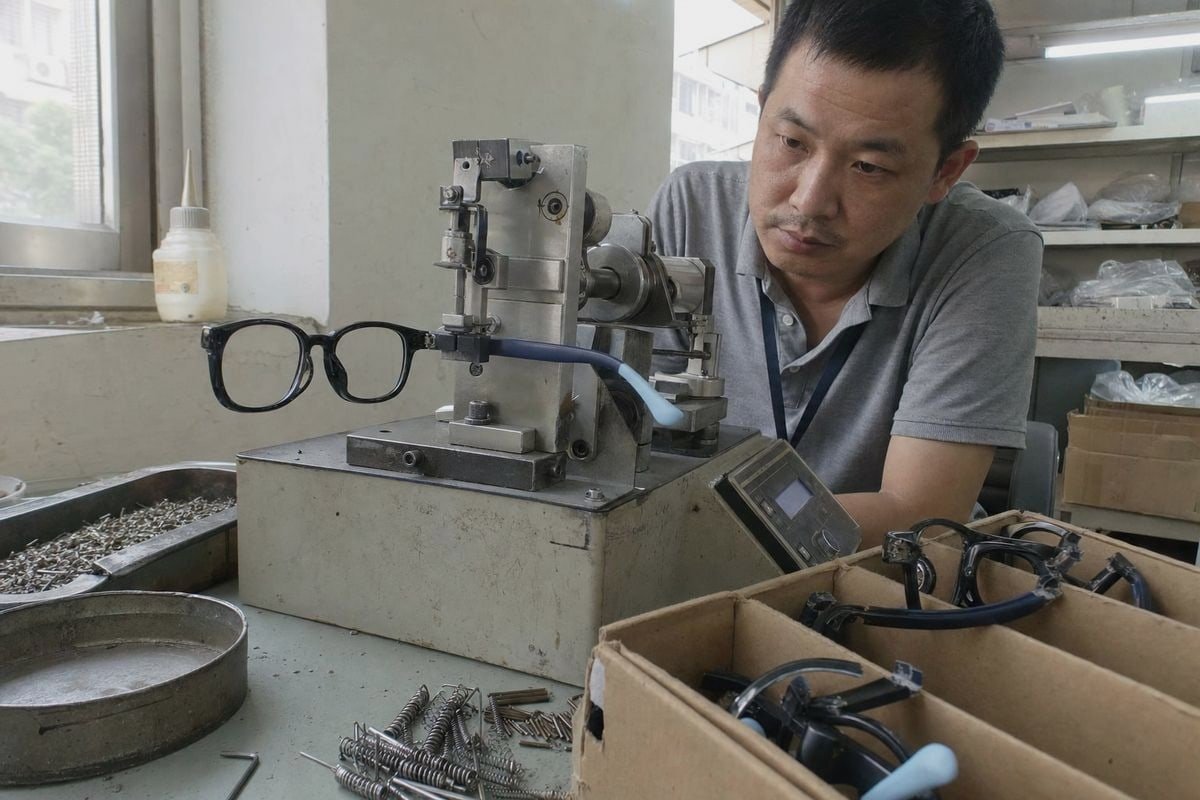
Los niños no tratan las gafas con delicadeza. Se las quitan con una mano. Las meten en las mochilas. Luchan con ellas puestas. Cada una de estas acciones aplica torsión, y la torsión es exactamente lo que peor maneja una bisagra de barril rígida. Una bisagra flexible redirige esa fuerza a la bobina del resorte, que se comprime y recupera en lugar de agrietarse.
Pero no todas las bisagras de resorte son iguales. En nuestros 15 años fabricando gafas para niños, hemos visto tres niveles de calidad en el mercado, y las diferencias importan más que el tipo de bisagra en sí.
¿Qué diferencia a una bisagra de resorte buena de una mala?
| Factor de calidad | Bisagra de baja calidad | Bisagra de calidad |
|---|---|---|
| Aleación de resorte | Acero al carbono blando, se oxida con el sudor | Aleación inoxidable o tratada, resistente a la corrosión acero inoxidable 2 |
| Vida útil del ciclo | Pierde tensión en meses | Mantiene la tensión durante años de uso diario |
| Ajuste del tornillo | Se afloja rápidamente, se desgasta fácilmente | Tolerancia ajustada, a menudo con recubrimiento de fijación de roscas 3 |
| Carcasa | Plástico delgado que se agrieta debajo de la caja del resorte | Carcasa reforzada o sobremoldeada |
| Sensación de rebote | Chasquido de retorno áspero e irregular | Retorno suave y consistente |
Hay un modo de falla que los compradores a menudo pasan por alto: la fractura de la carcasa de la bisagra. En los armazones de plástico, la caja metálica del resorte puede durar más que su propia carcasa. La presión localizada del mecanismo rígido agrieta el plástico circundante durante la torsión extrema. Es por eso que reforzamos el área de la patilla en nuestros armazones ópticos infantiles de TR90 en lugar de depender solo de la bisagra. La durabilidad es un sistema, no un componente único.
También preste atención al entorno. El sudor, la suciedad y la humedad pueden hacer que la bobina interna se oxide o se atasque con el tiempo, y en climas bajo cero el mecanismo puede volverse quebradizo. Si su mercado es Escandinavia o Canadá, pregunte a su proveedor específicamente sobre el rendimiento en bajas temperaturas.
¿Debo elegir bisagras de resorte o armazones flexibles de TR90 para una mejor resistencia a la torsión?
Este es el compromiso que más discuto con los gerentes de producto. Ambos enfoques resuelven la torsión, pero la resuelven de manera diferente y para diferentes grupos de edad. Nuestra fábrica construye ambos, así que no tengo ninguna razón para promocionar uno sobre el otro.
Elija armazones flexibles de TR90 o TPEE para niños pequeños y en edad preescolar, donde la flexibilidad de una sola pieza sin tornillos es más segura. Elija bisagras de resorte para niños en edad escolar que necesiten precisión óptica y un aspecto de armazón clásico. La opción más resistente combina plástico con memoria TR90 con bisagras flexibles de calidad.
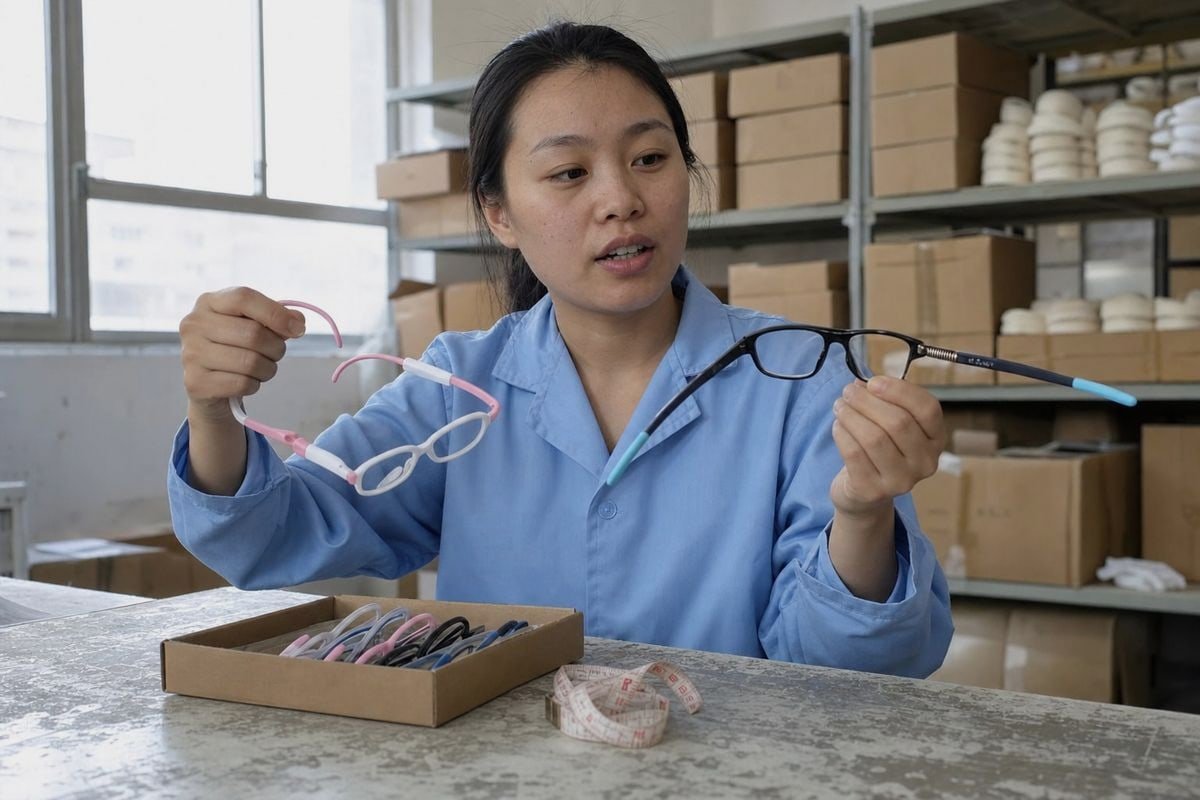
Aquí está la comparación rápida antes de profundizar:
| Característica | Bisagras de resorte | Armazones flexibles de TR90 / TPEE |
|---|---|---|
| Resistencia a la torsión | Muy buena: la bobina absorbe el par | Excelente: todo el armazón se dobla y recupera |
| Riesgo de piezas pequeñas | Tornillos y bobinas presentes | Diseños de una sola pieza sin tornillos disponibles |
| Mejor rango de edad | Niños en edad escolar | Niños pequeños hasta la primera infancia |
| Reparabilidad | Es posible que se necesite un reemplazo de la patilla | Rara vez se rompe; reemplace el marco completo si lo hace |
| Retención del ajuste | La tensión constante del resorte mantiene el ajuste | Depende de la geometría del marco |
| Idoneidad del marco óptico | Excelente | Bueno, con un diseño de ranura de lente adecuado |
Plástico con memoria TR90 4 es un material notable. Se dobla, se retuerce y vuelve a su forma debido a su memoria molecular, un primo plástico de la tecnología de metal con memoria utilizada en monturas de adultos de primera calidad. Cuando realizamos pruebas de resistencia a la tracción del marco en muestras de TR90, el material sobrevive rutinariamente a torsiones que destruirían acetato estándar. TPEE va aún más allá en suavidad, por eso lo usamos para las patillas y para nuestros estilos enfocados en bebés.
Por qué la edad impulsa la decisión
Para los niños pequeños, alejamos a los compradores de las bisagras de resorte por completo. Los tornillos pequeños y las bobinas de metal son potenciales peligros de piezas pequeñas 5, y los niños pequeños mastican todo. Un marco TPEE de una sola pieza sin tornillos elimina esos riesgos por completo. Para los niños en edad escolar que usan gafas graduadas, las bisagras de resorte se ganan su lugar. Brindan al brazo de la patilla la flexibilidad que los niños activos necesitan, mantienen un ajuste ceñido en rostros en crecimiento y combinan bien con una parte frontal rectangular de TR90 como nuestros modelos ópticos de estilo wayframe clásico.
El enfoque híbrido: frentes de TR90, patillas flexibles, bisagras flexibles de calidad, es lo que la mayoría de nuestros compradores B2B recurrentes terminan pidiendo. Superpone dos sistemas de protección en lugar de depender de uno.
¿Qué pruebas de durabilidad puedo solicitar a mi fabricante para verificar la resistencia de las bisagras?
Al principio de mi carrera en nuestro taller de Taizhou, asumí que los compradores sabían qué pedir. La mayoría no lo hace. Preguntan "¿es duradero?" y aceptan "sí" como respuesta. Los gerentes de compras inteligentes solicitan protocolos de prueba específicos en su lugar, y cualquier fábrica seria debería agradecer esas preguntas.
Solicite pruebas de ciclo de bisagra, pruebas de sobreextensión de patilla, verificaciones de torsión y recuperación de torsión, pruebas de retención de torque de tornillo, pruebas de corrosión en spray de sal y pruebas de caída o impacto. Solicite resultados documentados con criterios de aprobación, no garantías verbales, antes de confirmar cualquier pedido a granel.
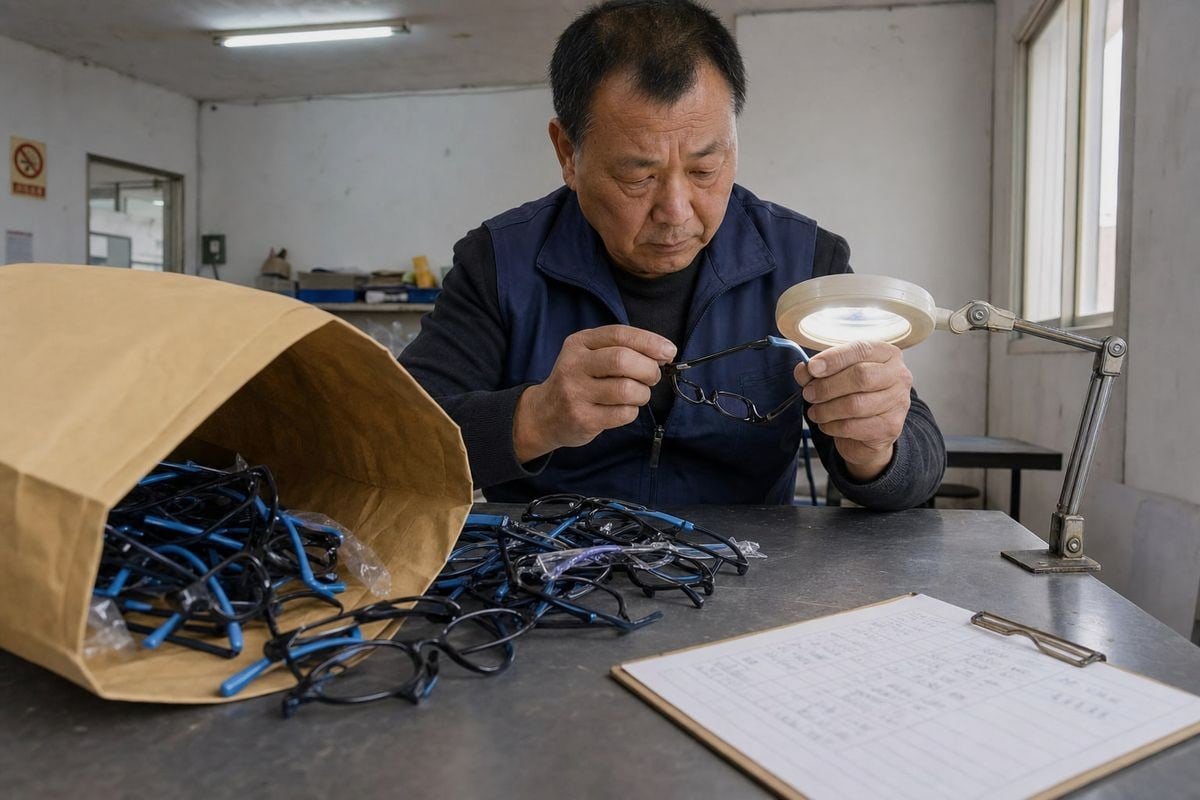
En nuestro taller gestionado con 5S, la verificación de bisagras es parte del control de calidad estándar, no una solicitud especial. Aquí está el menú de prueba que recomiendo que cada comprador incluya en su acuerdo de compra, aproximadamente en orden de importancia para las gafas de los niños.
La lista de verificación de pruebas esencial
| Prueba | Lo que simula | Qué Pedir |
|---|---|---|
| Prueba de ciclo de apertura-cierre | Uso diario de encendido/apagado durante años | Recuento de ciclos sin pérdida de tensión ni juego |
| Prueba de sobreextensión | Retirada con una mano, sentarse sobre las gafas | Patilla flexionada más allá del tope repetidamente, sin agrietamiento |
| Torsión 6 / prueba de giro | Niños retorciendo las patillas durante el juego | Marco retorcido a un ángulo determinado, recuperación completa de la forma |
| Retención del torque del tornillo | Vibración y flexión repetida | Los tornillos mantienen el torque después del ciclo; verifique las medidas de prevención de aflojamiento de tornillos, como el fijador de roscas |
| Corrosión por spray de sal | Sudor y climas húmedos | Las bisagras y los tornillos no muestran óxido después de la exposición pruebas de corrosión por spray de sal 7 |
| Prueba de caída / impacto | Caídas en el patio de recreo | Los marcos y bisagras resistentes al impacto sobreviven a caídas definidas |
| Flexión a baja temperatura | Uso al aire libre en invierno | La bisagra permanece suave y elástica después de la exposición al frío |
Algunas notas prácticas de nuestro lado. Primero, pregunte cómo las muestras de fábrica para pruebas — por lote, por envío o solo en la etapa de desarrollo. Las pruebas continuas de lotes detectan la deriva del proveedor en los componentes de la bisagra. Segundo, tenga cuidado con las afirmaciones del ciclo de marketing. Los números grandes significan poco sin conocer los criterios de aprobación: ¿la bisagra simplemente se abrió, o conservó su tensión original? Tercero, solicite una comparación de bisagras de barril si no está decidido. Ver una bisagra estándar de 3 barriles y una bisagra flexible pasar por la misma prueba de torsión lado a lado resuelve el debate rápidamente.
Finalmente, pregunte sobre todo el ensamblaje, no solo sobre la bisagra. Una bisagra de resorte perfecta en una carcasa débil aún falla. Probamos la bisagra, la carcasa y la patilla como una sola unidad, porque así es como los niños las rompen.
¿Las bisagras de resorte afectarán la comodidad y el ajuste general de los diseños de gafas de mis hijos?
La comodidad es donde me opongo a los compradores que piensan que las bisagras son solo una decisión de durabilidad. Cuando desarrollamos nuestra línea óptica TR90 de dos tonos — las que tienen puntas de patilla de silicona suave — la elección de la bisagra cambió la forma en que la montura se asentaba en caras pequeñas tanto como el puente nasal.
Sí, las bisagras de resorte mejoran la comodidad y el ajuste. La tensión suave y constante mantiene las monturas ajustadas en caras en crecimiento sin pellizcar, reduce el deslizamiento durante el juego y permite que las patillas se adapten a diferentes anchos de cabeza. Una mayor comodidad también significa que los niños manipulan menos las gafas, lo que prolonga indirectamente la vida útil de la montura.
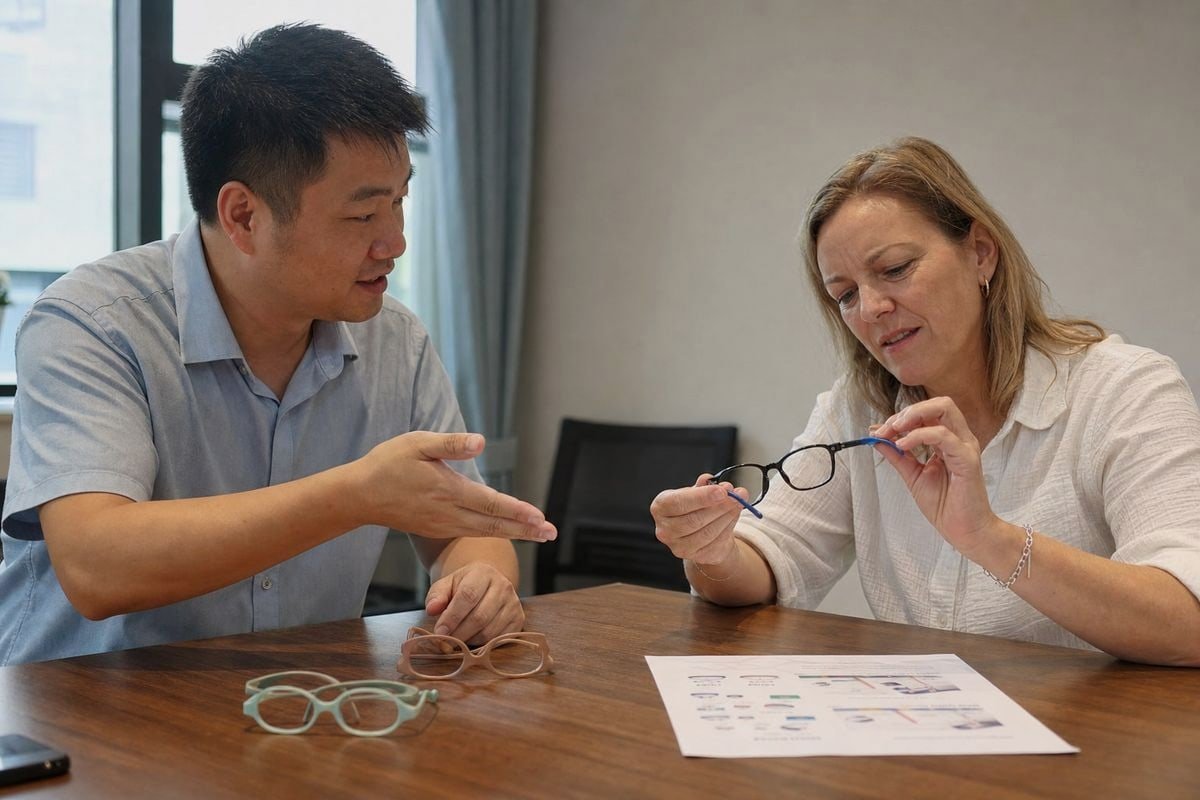
Piense en lo que una bisagra rígida le obliga a hacer. La extensión de la patilla es fija. Si la cabeza de un niño es ligeramente más ancha que la apertura diseñada de la montura, las patillas presionan constantemente hacia adentro. El niño se siente apretado, por lo que manipula las gafas, se las quita y las manipula bruscamente. Si la cabeza es más estrecha, la montura se desliza por la nariz durante cualquier actividad. Ninguno de los resultados es bueno para las gafas de estilo de vida activo.
Las bisagras de resorte resuelven ambos problemas con un solo mecanismo. La bobina proporciona una tensión de retorno externa ligera y constante. En una cabeza más ancha, las patillas se abren sin pellizcar. En una cabeza más estrecha, la tensión mantiene un contacto ligero para que la montura permanezca en su lugar durante la carrera, el salto y los deportes. Esta retención del ajuste es uno de los beneficios más subestimados para las marcas infantiles, porque los niños en crecimiento pueden usar la misma montura cómodamente durante más tiempo.
El bucle de retroalimentación de comodidad-durabilidad
Aquí está la conexión que muchos gerentes de producto pasan por alto: la comodidad reduce directamente el abuso. Un niño que olvida que lleva gafas no se las quita veinte veces al día. Menos manipulación significa menos torsión, menos monturas caídas y menos mantenimiento de las monturas ópticas para los padres. En nuestra experiencia exportando a compradores en Japón y Europa, los estilos con menos quejas de garantía son siempre los más cómodos — no necesariamente los que tienen las especificaciones más resistentes en el papel.
Dos precauciones de diseño, sin embargo. Primero, tenga cuidado con la expansión de las patillas. La tensión constante del resorte puede doblar gradualmente la parte frontal de la montura hacia afuera durante muchos meses de uso, lo que puede requerir un ajuste profesional con calor para restaurar la alineación. Una buena geometría de la montura y la elección del material minimizan esto. Segundo, combine las bisagras de resorte con puntos de contacto suaves — puntas de silicona, patrones de agarre texturizados — para que la tensión se distribuya en el área de la oreja en lugar de crear un único punto de presión. Esa combinación es estándar en nuestra gama óptica infantil por esta misma razón.
Conclusión
Las bisagras de resorte realmente resisten mejor la torsión que las bisagras rígidas, pero la durabilidad real proviene del sistema completo: bobinas de calidad, construcción TR90, pruebas verificadas y ajuste cómodo que trabajan juntos.
Si está desarrollando una línea de gafas para niños y desea comparar muestras de bisagras de resorte y monturas flexibles lado a lado, nuestro equipo en OKAY EYEWEAR — con alrededor de 800 estilos existentes y soporte OEM/ODM 8 completo — estará encantado de enviar muestras de prueba. Póngase en contacto con Alan Kong en sales@okayeyewear.com.
Notas al pie
Guía oficial de la FDA sobre requisitos de resistencia al impacto y prueba de caída de bola para gafas. ↩︎
Información de fondo sobre la aleación resistente a la corrosión referenciada como material de resorte de bisagra de calidad. ↩︎
Explica la tecnología adhesiva utilizada para prevenir el aflojamiento de tornillos en bisagras de calidad. ↩︎
Explica el comportamiento de memoria molecular detrás del material TR90 descrito en el artículo. ↩︎
Recurso de seguridad infantil de los CDC relevante para las preocupaciones de riesgo de asfixia por tornillos y bobinas de bisagra pequeños. ↩︎
Información de Wikipedia sobre mecánica de torsión, el estrés físico central discutido en todo el artículo. ↩︎
Información de fondo sobre el método de prueba de corrosión estandarizado al que se hace referencia para tornillos y resortes de bisagra. ↩︎
Recurso comercial de la OMC relevante para la fabricación OEM/ODM y el contexto de exportación de la fábrica de gafas.
{
</p>
<p></p>
<p></p>
</body></html>">
Más artículos que te podrían gustar
¿Buscas un socio confiable en gafas para niños?
Explore más de 800 estilos listos y soporte OEM/ODM completo adaptado a su marca.
Ponte en contacto English
  Español de México
  Deutsch
  Français
  日本語
日本語  العربية
  Português do Brasil