¿Qué factores afectan la vida útil de las gafas de sol para niños?
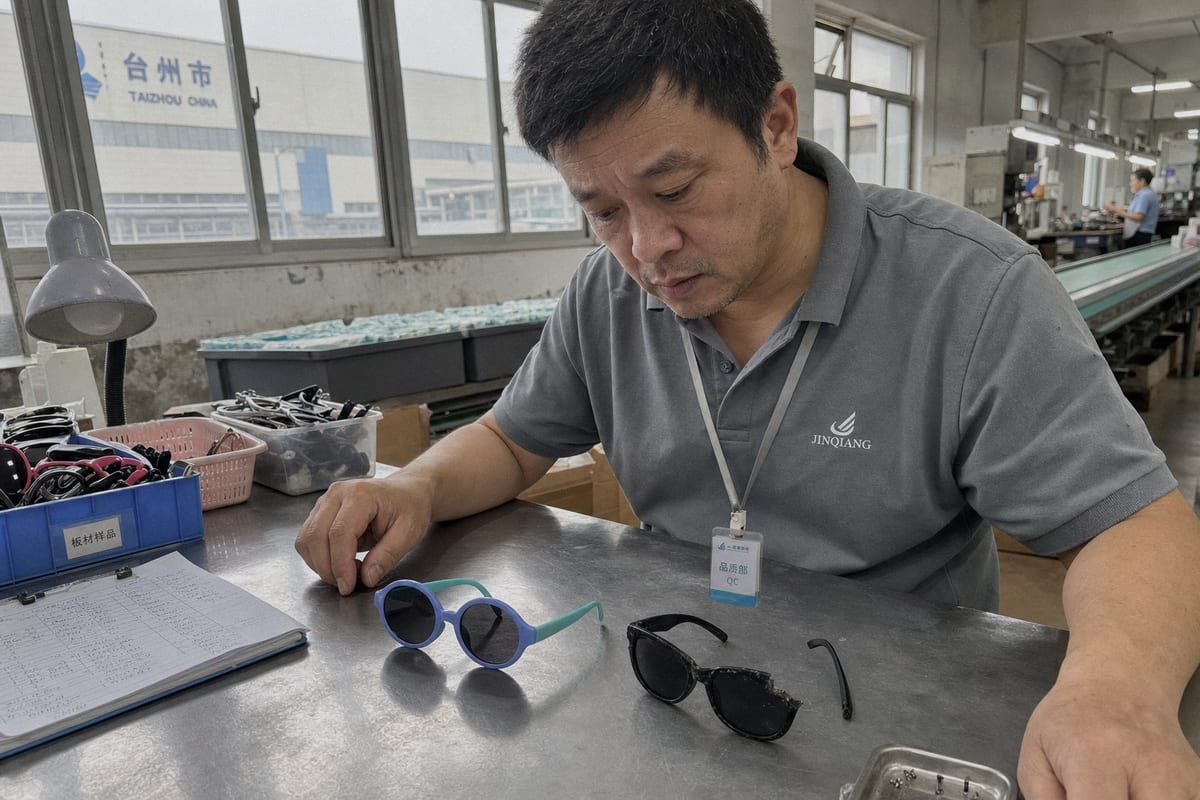
La [vida útil de las gafas de sol para niños](https://okayeyewear.com/how-long-kids-sunglasses-typically-last-do/) desconcierta a muchos compradores que visitan nuestra fábrica de Taizhou. Los padres se quejan de que los pares se rompen en semanas. Las marcas pierden clientes habituales. Las causas reales son solucionables.
La vida útil de las gafas de sol para niños depende del material de la montura, la calidad de las lentes, el nivel de actividad diaria, los hábitos de limpieza, las condiciones de almacenamiento y la calidad de fabricación. Los pares bien hechos con monturas TR90 o TPEE y lentes resistentes a los arañazos duran de 2 a 3 años, mientras que las gafas de sol baratas sometidas a un uso rudo pueden fallar en cuestión de meses.
Permítanme desglosar cada factor. Les mostraré qué es lo más importante, qué suelen pasar por alto los compradores y cómo juzgar si un par sobrevivirá al uso real de la infancia.
¿Cómo Afectan los Materiales de Montura Como TR90 y TPEE la Durabilidad con el Tiempo?
Durante una prueba de flexión en nuestra línea de producción la primavera pasada, una patilla de TPEE sobrevivió a más de mil ciclos de flexión, mientras que una montura de PC barata se rompió en el cuadragésimo. Ese contraste dio forma a cómo explico la elección del material a cada nuevo comprador.
El material del marco es el principal impulsor de la vida útil física. El TR90 me ofrece flexibilidad de memoria y resistencia al impacto, volviendo a su forma después de torcerse. El TPEE añade una suavidad similar a la goma que absorbe caídas y tirones. Ambos duran más que el acetato rígido o el plástico PC barato durante años en el uso diario de los niños.
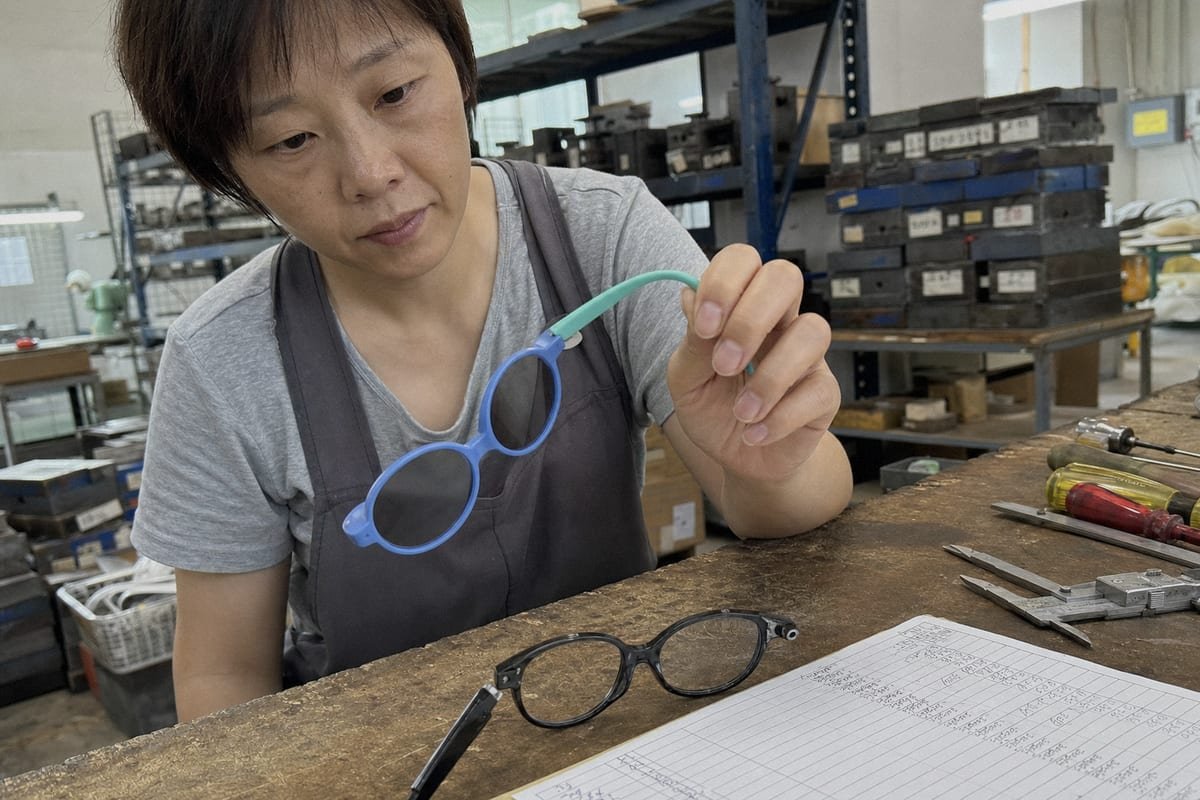
El material de la montura decide cómo responde un par a las tres cosas que los niños hacen más: doblarlo, dejarlo caer y sentarse sobre él. Los plásticos rígidos se agrietan bajo esas fuerzas. Los polímeros flexibles los absorben y vuelven a su forma. Esa diferencia por sí sola puede convertir un producto de tres meses en un producto de tres años.
Por qué elegimos TR90 y TPEE para niños
En nuestros quince años fabricando gafas para niños, nos decidimos por TR90 y monturas flexibles de TPEE 1 por razones claras. El TR90 es un termoplástico con memoria. Puedes torcer las patillas y vuelven a su forma original. El TPEE va más allá. Se siente casi gomoso, por lo que se flexiona sin forzar los puntos de bisagra. También es suave con la cara del niño, lo que importa para la comodidad y la seguridad, no solo para la durabilidad. Ambos materiales son ligeros, por lo que los niños realmente se ponen las gafas en lugar de quitárselas.
Comparación de materiales de un vistazo
| Material del marco | Flexibilidad | Resistencia al impacto 2 | Vida útil típica en uso infantil | Comodidad en la piel |
|---|---|---|---|---|
| TPEE | Excelente, similar al caucho | Excelente | 2–3+ años | Muy suave, seguro |
| TR90 | Muy buena, flexión con memoria | Muy buena | 2–3 años | Ligero y suave |
| Plástico PC estándar | Pobre, rígido | Regular | 3–12 meses | Bordes duros |
| Acetato barato | Pobre | Pobre | Semanas a meses | Puede agrietarse bruscamente |
La resistencia al calor también es importante. El TR90 tolera el interior de un coche caliente mejor que los plásticos baratos, que se deforman rápidamente en un salpicadero. Ningún material es invencible, pero empezar con el polímero adecuado aumenta enormemente las probabilidades a tu favor. Muchos de nuestros clientes de marca a largo plazo combinan una parte frontal de TR90 con patillas de TPEE, porque las patillas soportan el mayor abuso de torsión cuando los niños se ponen y quitan las gafas.
¿Qué papel juega el uso diario y el nivel de actividad de los niños en el desgaste?
Uno de nuestros compradores australianos nos envió una vez una caja de muestras de la competencia que sus clientes habían destruido. Ni una sola tenía una lente rota. Casi todas tenían bisagras fatigadas y patillas estiradas por el constante manejo al ponérselas y quitárselas.
El uso diario y los altos niveles de actividad acortan drásticamente la vida útil. El manejo frecuente de encendido y apagado fatiga las bisagras, el sudor y el protector solar erosionan los recubrimientos, y las caídas durante el juego estresan las monturas y las lentes. Un niño activo puede desgastar las gafas de sol de dos a cuatro veces más rápido que un usuario ocasional.
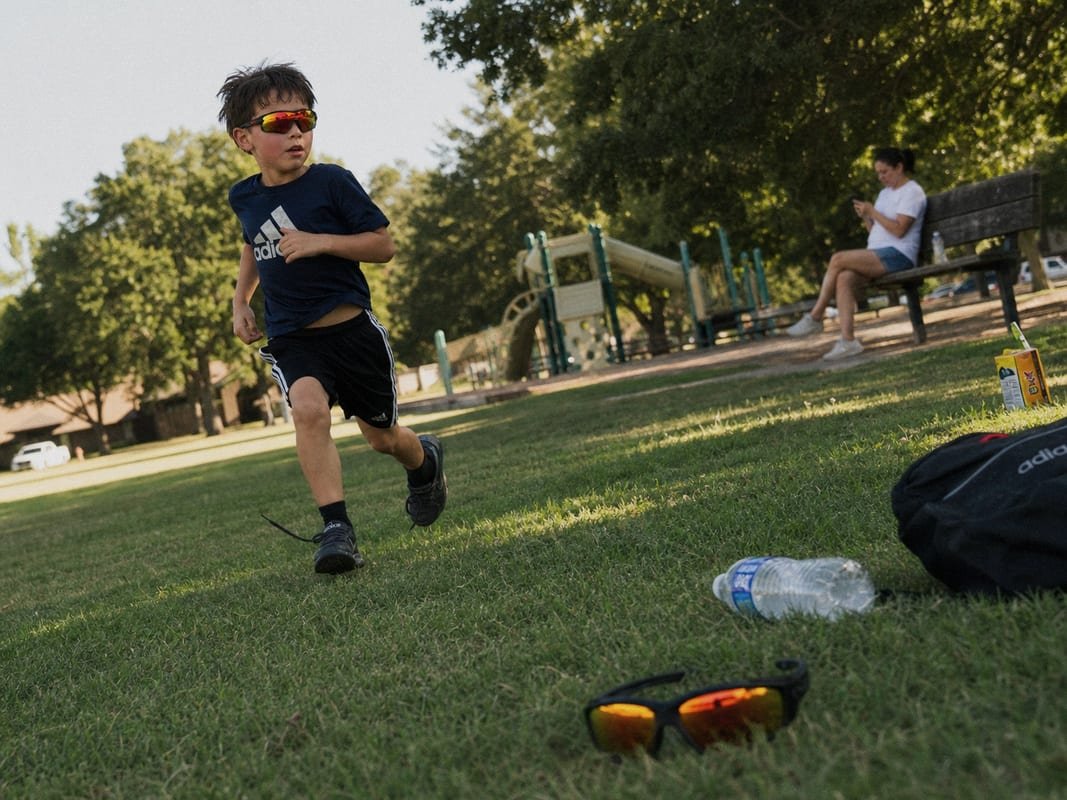
Los niños no son usuarios cuidadosos. Se quitan las gafas con una mano, lo que tuerce la montura cada vez. Las dejan caer en hormigón, arena y goma de parque infantil. Las meten en mochilas con botellas de agua y juguetes. Cada evento es pequeño. Juntos, suman fatiga mecánica.
El costo oculto del manejo al ponérselas y quitárselas
Las bisagras se llevan la peor parte. Un niño puede ponerse y quitarse las gafas docenas de veces al día. Cada ciclo estresa el tornillo y el cañón. Por eso especificamos herrajes de bisagra de calidad y, en algunos estilos ópticos, bisagras de resorte que se flexionan hacia afuera en lugar de resistir. Las bisagras de resorte perdonan la extracción con una mano. Las bisagras estándar no.
Nivel de actividad y ventanas de reemplazo realistas
| Patrón de uso | Eventos de estrés típicos | Vida útil realista |
|---|---|---|
| Uso ocasional, solo vacaciones | Pocas caídas, principalmente en estuche | 2–5 años |
| Uso diario en la escuela y el parque | Manejo frecuente, algunas caídas | 1–2 years |
| Sports, beach, cycling | Sweat, sand, impacts, salt air | 6–18 months |
Sport use deserves special attention. For our wraparound shield styles, we pair flexible frames with policarbonato 3 because impact resistance is non-negotiable when a ball or handlebar is involved. A shatterproof design protects the eye first and the product second. Sweat and sunscreen also creep into hinge joints and attack lens coatings, so active kids age a pair chemically as well as mechanically. Environment amplifies everything: beach sand abrades lenses, salt air corrodes screws, and strong coastal UV works on coatings all day long. The more active the child and the harsher the setting, the shorter the honest lifespan estimate should be.
¿Pueden la limpieza y los hábitos de almacenamiento adecuados prolongar la vida útil de mis gafas de sol?
A lesson I learned early in export work: two identical pairs from the same batch can have wildly different lives. One buyer bundled a hard case and microfiber cleaning cloth with every unit. Her return rate told the whole story.
Sí, el cuidado adecuado puede duplicar o triplicar la vida útil de un par. Limpiar las lentes con un paño de microfibra previene arañazos, enjuagar el protector solar protege los recubrimientos y guardar las gafas de sol en un estuche rígido lejos del calor previene deformaciones, aplastamientos y delaminación del recubrimiento.
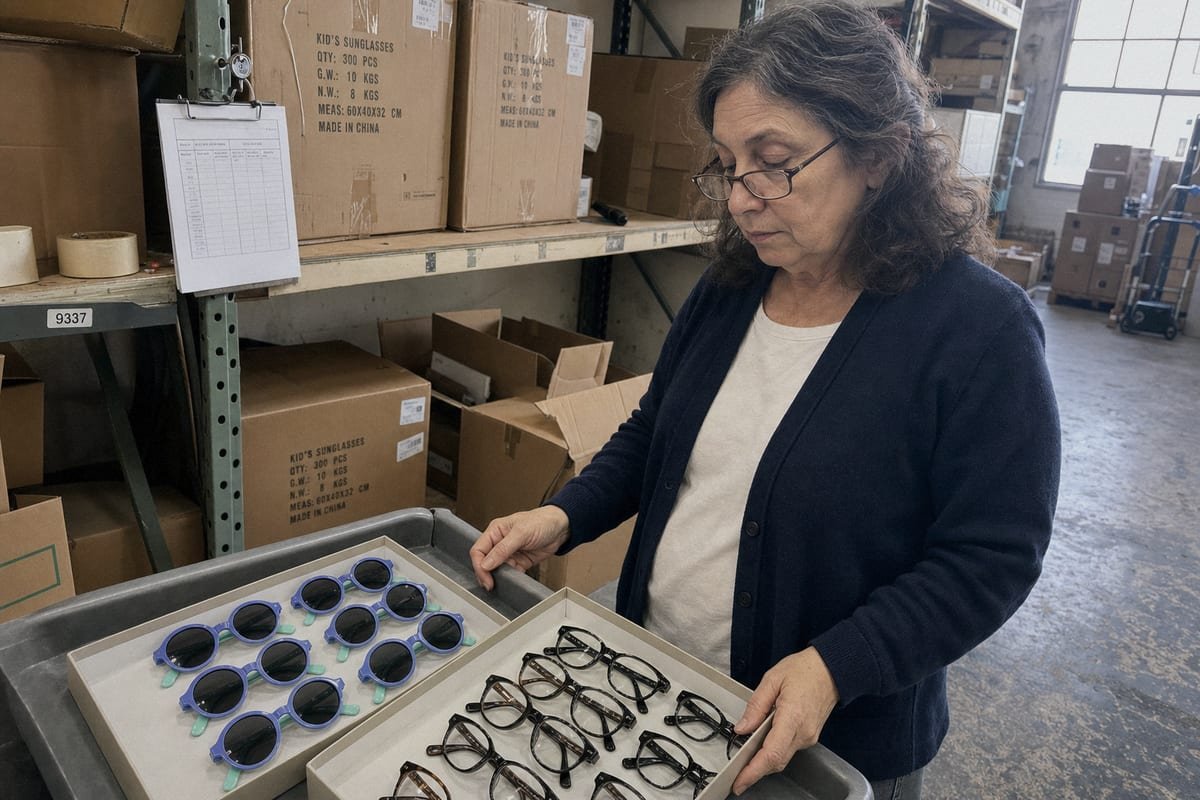
Care habits are the factor parents control most directly, yet they get the least attention. The good news is that the right habits are simple. The bad news is that the wrong habits cause permanent, invisible damage long before anything visibly breaks.
Cleaning: What Helps and What Harms
Wiping lenses with a t-shirt or paper towel is the fastest way to ruin them. Dust and sand act like sandpaper under fabric. Paper products are wood-based and abrasive. Even a good scratch-resistant coating cannot survive daily dry wiping over grit. The safe routine takes thirty seconds: rinse with lukewarm water, add a drop of mild soap if needed, then dry with a clean microfiber cleaning cloth. Sunscreen and insect repellent 4 deserve a special warning. These chemicals erode lens coatings and can degrade frame surfaces, so they should be rinsed off the same day.
Storage: The Silent Lifespan Killer
Heat is the enemy nobody sees. A car dashboard in summer can warp even good frames and cause multi-layer coatings to delaminate. Rapid swings between air conditioning and outdoor heat stress coatings the same way. Simple storage rules prevent most of this:
- Keep a hard case in the car, the beach bag, and the school bag.
- Never leave sunglasses on a dashboard or sunny windowsill.
- Store lenses facing up, never lens-down on any surface.
- Rinse after beach or pool days to remove salt and chlorine.
- Teach kids one home spot where the case always lives.
We encourage our brand clients to include cases and cloths in retail packaging. It is a small cost that visibly extends product life and builds customer trust.
¿Cómo afecta la calidad de fabricación a la duración real de las gafas de sol para niños?
Every batch that leaves our 5S-managed workshop passes hinge-torque checks, lens-fit inspection, and UV verification. I insist on this because the failures buyers blame on kids are often failures we could have caught at the factory.
La calidad de fabricación determina la vida útil física y protectora. Bisagras precisas, ajuste seguro de la lente, protección UV400 en masa y recubrimientos resistentes a los arañazos evitan roturas prematuras y la disminución invisible de los rayos UV. Los pares mal hechos fallan en los tornillos, los recubrimientos y los bordes de las lentes en cuestión de meses.
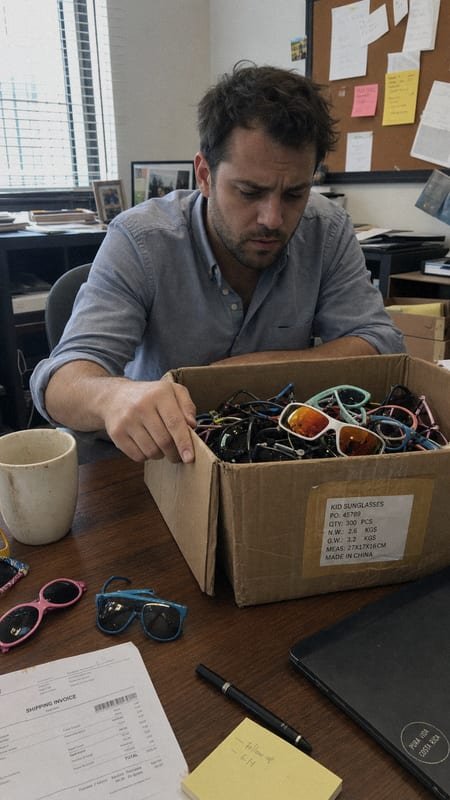
Here is the distinction I always share with product managers: a pair of kids' sunglasses has two lifespans. The physical lifespan is how long frames, hinges, and lenses survive. The protective lifespan is how long the lenses keep blocking UV reliably. Manufacturing quality controls both, and a pair can look fine while its protection quietly declines.
Where Quality Is Built In or Left Out
Good construction shows up in small details. Screws should be seated with thread stability so they do not back out after a hundred folds. Lenses should sit firmly in the rim with no gaps that let them pop free on impact. Coatings should be applied evenly, because thin or uneven scratch-resistant coating layers 5 peel first at the edges. UV protection matters most of all. Quality polycarbonate lenses carry Protección UV400 6 within the lens material itself, not merely as a surface film, so scratches do not strip the defense. Reputable production also aligns with recognized benchmarks such as los estándares ANSI Z80.3 7 for nonprescription sunwear, which cover UV claims and impact behavior. Polarized lens technology adds real glare comfort for water and snow, though buyers should know polarization improves vision quality rather than durability by itself.
Quality Checkpoints That Predict Lifespan
| Punto de control | Qué se ve bien | Failure Mode When Skipped |
|---|---|---|
| Hinge and screw assembly | Smooth, even tension; no wobble | Loose temples within weeks |
| Asiento de la lente | Snug fit, no edge gaps | Lenses pop out on drops |
| verificación UV400 | In-mass protection, tested per batch | Invisible UV decline |
| Coating application | Uniform, edge-to-edge adhesion | Peeling and hazing |
| Abastecimiento de materiales | Certified TR90/TPEE resins | Brittleness and warping |
This is also why mold-free development helps new brands. Choosing from proven existing styles means the tooling, hinges, and lens fits have already survived real-world use across many markets, instead of gambling on an untested design.
Conclusión
Cheap kids’ sunglasses fail fast, and failures cost brands their reputation. The fix is knowable: flexible TR90 or TPEE frames, verified UV400 lenses, solid hinges, and simple care habits. Choose quality construction, teach case-and-cloth routines, and replace based on damage and fit rather than the calendar. That is how the lifespan of kids' sunglasses stops being a gamble and becomes a promise your brand can keep.
Notas al pie
1. TPEE is a common thermoplastic elastomer used in flexible eyewear frames for children. ↩︎
2. Official FDA guidance on impact resistance standards and testing requirements for sunglass lenses. ↩︎
3. Polycarbonate is the industry standard material for impact-resistant lenses in children’s and sports eyewear. ↩︎
4. The EPA provides information on insect repellents, which can chemically damage lens coatings and frames. ↩︎
5. Anti-scratch coatings are essential for extending the life of plastic lenses in high-wear environments. ↩︎
6. The WHO provides guidelines on UV radiation and the importance of eye protection against solar rays. ↩︎
7. The FDA regulates the impact resistance of lenses used in sunglasses and eyeglasses. ↩︎
Más artículos que te podrían gustar

¿Buscas un socio confiable en gafas para niños?
Explore más de 800 estilos listos y soporte OEM/ODM completo adaptado a su marca.
Ponte en contacto English
  Español de México
  Deutsch
  Français
  日本語
日本語  العربية
  Português do Brasil