What Factors Affect the Lifespan of Kids’ Sunglasses?
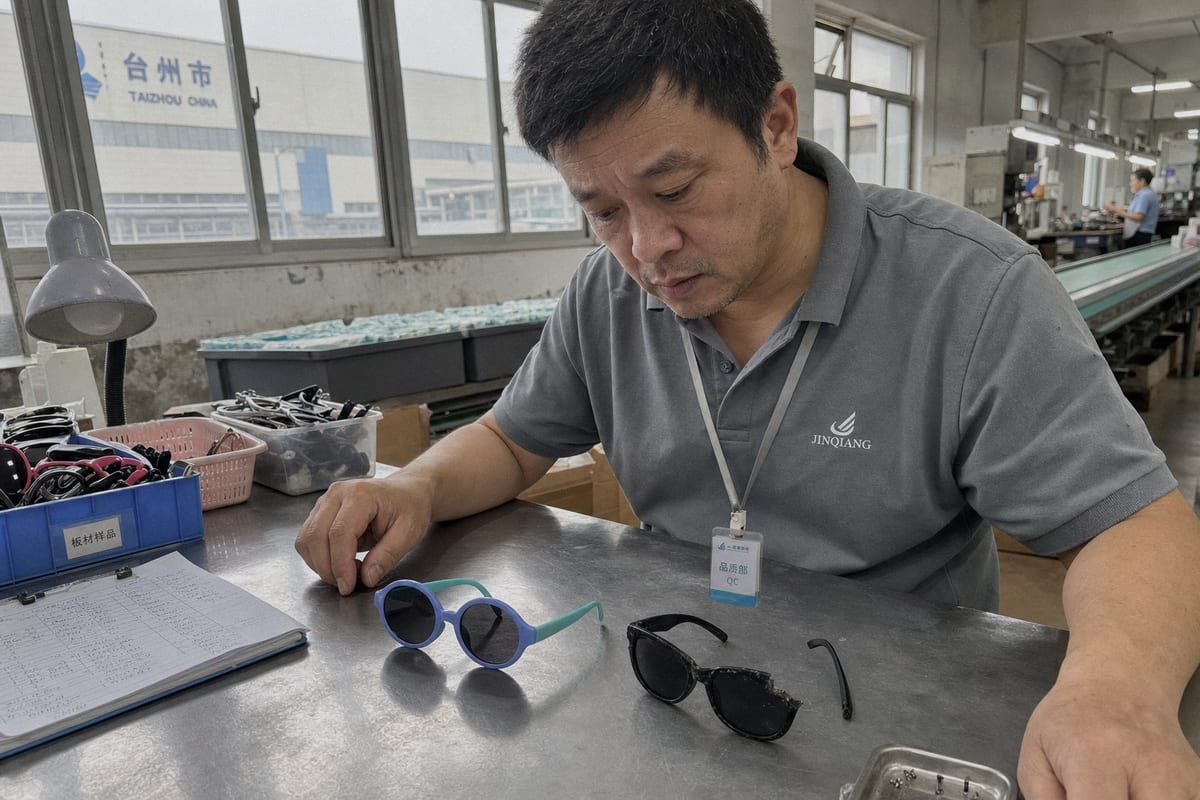
The [lifespan of kids’ sunglasses](https://okayeyewear.com/how-long-kids-sunglasses-typically-last-do/) puzzles many buyers who visit our Taizhou factory. Parents complain pairs break in weeks. Brands lose repeat customers. The real causes are fixable.
The lifespan of kids’ sunglasses depends on frame material, lens quality, daily activity level, cleaning habits, storage conditions, and manufacturing quality. Well-made pairs with TR90 or TPEE frames and scratch-resistant lenses last 2–3 years, while cheap sunglasses under rough use may fail within months.
Let me break down each factor. I will show you what matters most, what buyers often overlook, and how to judge whether a pair will survive real childhood use.
How Do Frame Materials Like TR90 and TPEE Impact Durability Over Time?
During a bend test on our production line last spring, a TPEE temple survived over a thousand flex cycles while a cheap PC frame snapped on the fortieth. That contrast shaped how I explain material choice to every new buyer.
Frame material is the single biggest driver of physical lifespan. TR90 offers memory flexibility and impact resistance, snapping back after twisting. TPEE adds rubber-like softness that absorbs drops and pulls. Both outlast rigid acetate or cheap PC plastic by years in children's daily use.
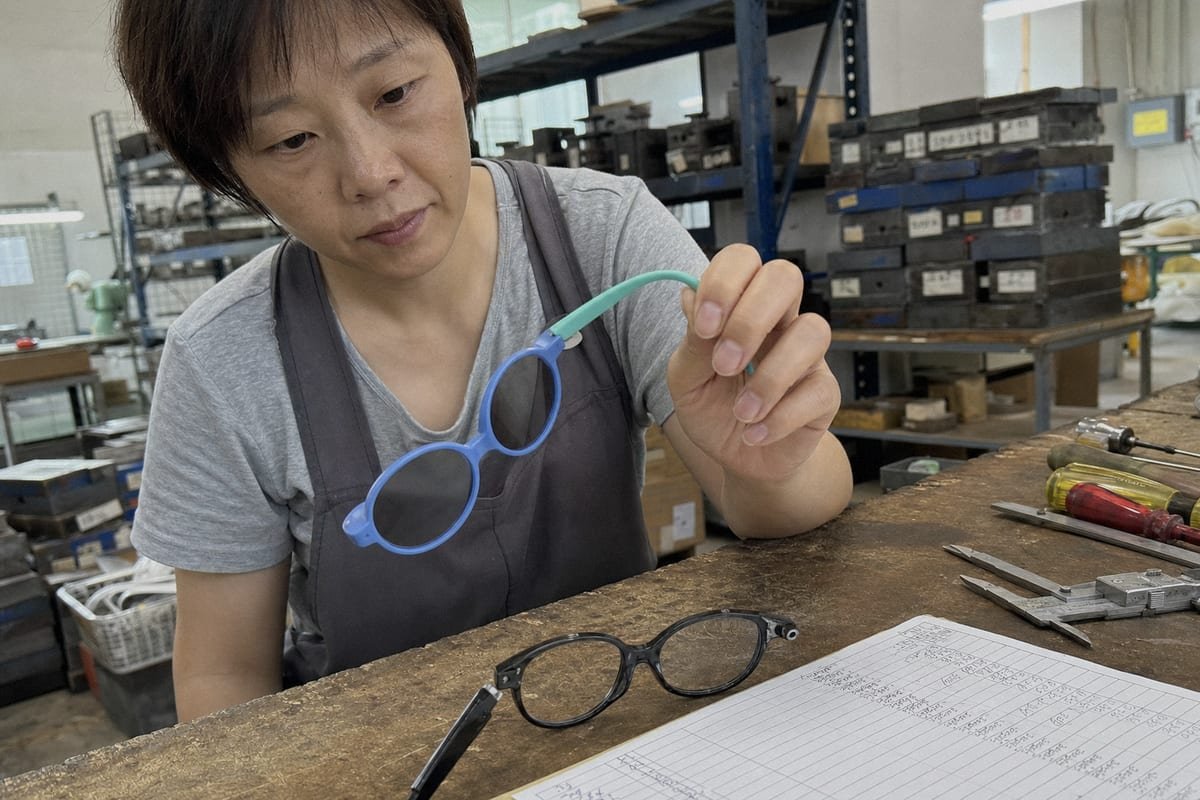
Frame material decides how a pair responds to the three things kids do most: bend it, drop it, and sit on it. Rigid plastics crack under those forces. Flexible polymers absorb them and return to shape. That difference alone can turn a three-month product into a three-year product.
Why We Chose TR90 and TPEE for Children
In our fifteen years of making children's eyewear, we settled on TR90 and les montures flexibles en TPEE 1 for clear reasons. TR90 is a thermoplastic with memory. You can twist the temples, and they return to their original shape. TPEE goes further. It feels almost rubbery, so it flexes without stressing the hinge points. It is also gentle on a child's face, which matters for comfort and safety, not just durability. Both materials are lightweight, so kids actually keep the glasses on instead of yanking them off.
Material Comparison at a Glance
| Matériau de la monture | Flexibilité | Résistance aux chocs 2 | Typical Lifespan in Kids' Use | Comfort on Skin |
|---|---|---|---|---|
| TPEE | Excellent, aspect caoutchouc | Excellent | 2–3+ years | Very soft, safe |
| TR90 | Très bon, flex mémoire | Très bon | 2–3 years | Light and smooth |
| Plastique PC standard | Poor, rigid | Bon, mais points de contrainte des charnières | 3–12 months | Hard edges |
| Cheap acetate | Mémoire de forme | Mémoire de forme | Semaines à mois | Can crack sharp |
Heat resistance matters too. TR90 tolerates the inside of a warm car better than cheap plastics, which warp quickly on a dashboard. No material is invincible, but starting with the right polymer stacks the odds heavily in your favor. Many of our long-term brand clients combine a TR90 front with TPEE temples, because the temples take the most twisting abuse when children pull the glasses on and off.
What Role Does Daily Wear and Kids' Activity Level Play in Wear and Tear?
One of our Australian buyers once shipped us back a box of competitor samples her customers had destroyed. Not one had a broken lens. Nearly all had fatigued hinges and stretched temples from constant on-off handling.
Daily wear and high activity levels shorten lifespan sharply. Frequent on-off handling fatigues hinges, sweat and sunscreen erode coatings, and drops during play stress frames and lenses. An active child can wear out sunglasses two to four times faster than an occasional wearer.
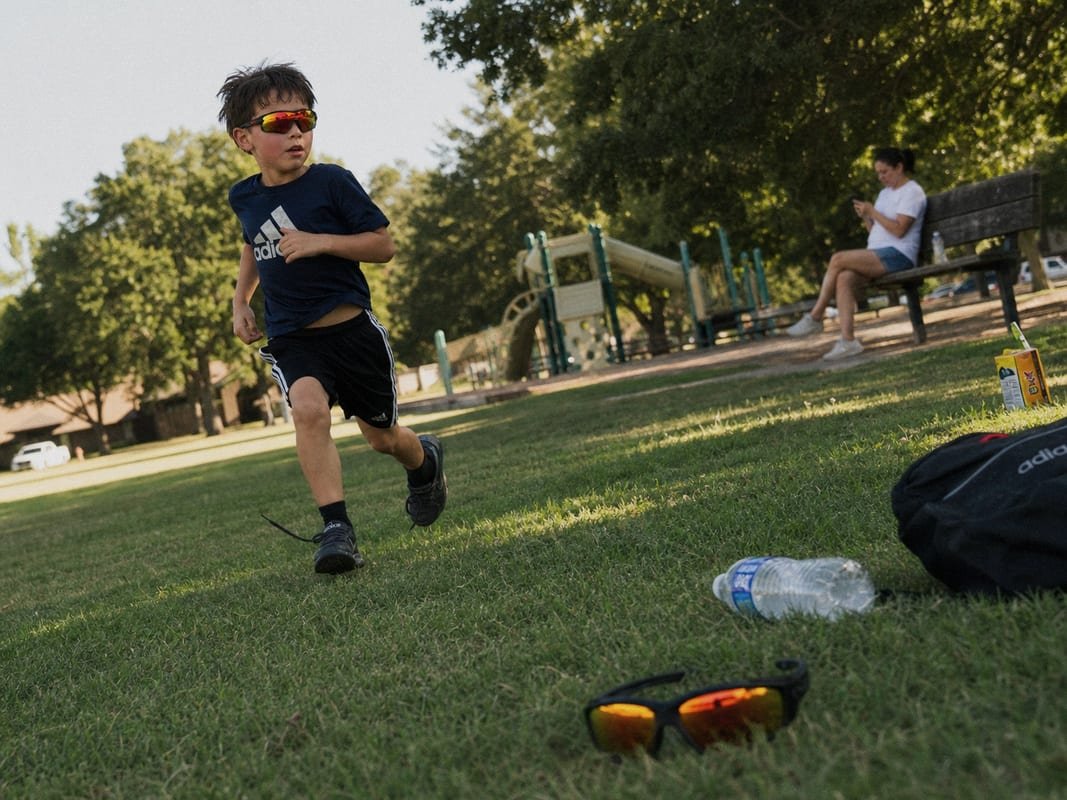
Kids are not gentle users. They pull glasses off with one hand, which twists the frame every single time. They drop them on concrete, sand, and playground rubber. They shove them into backpacks with water bottles and toys. Each event is small. Together, they add up to mechanical fatigue.
The Hidden Cost of On-Off Handling
Hinges take the worst of it. A child may put glasses on and take them off dozens of times a day. Each cycle stresses the screw and barrel. This is why we specify quality hinge hardware and, on some optical styles, spring hinges that flex outward instead of resisting. Spring hinges forgive one-handed removal. Standard hinges do not.
Activity Level and Realistic Replacement Windows
| Usage Pattern | Typical Stress Events | Realistic Lifespan |
|---|---|---|
| Occasional use, holidays only | Few drops, mostly cased | 2–5 ans |
| Daily school and park wear | Frequent handling, some drops | 1–2 years |
| Sports, beach, cycling | Sweat, sand, impacts, salt air | 6–18 months |
Sport use deserves special attention. For our wraparound shield styles, we pair flexible frames with verres en polycarbonate 3 because impact resistance is non-negotiable when a ball or handlebar is involved. A shatterproof design protects the eye first and the product second. Sweat and sunscreen also creep into hinge joints and attack lens coatings, so active kids age a pair chemically as well as mechanically. Environment amplifies everything: beach sand abrades lenses, salt air corrodes screws, and strong coastal UV works on coatings all day long. The more active the child and the harsher the setting, the shorter the honest lifespan estimate should be.
Can Proper Cleaning and Storage Habits Extend My Sunglasses' Lifespan?
A lesson I learned early in export work: two identical pairs from the same batch can have wildly different lives. One buyer bundled a hard case and microfiber cleaning cloth with every unit. Her return rate told the whole story.
Yes, proper care can double or triple a pair's useful life. Cleaning lenses with a microfiber cloth prevents scratches, rinsing off sunscreen protects coatings, and storing sunglasses in a hard case away from heat prevents warping, crushing, and coating delamination.
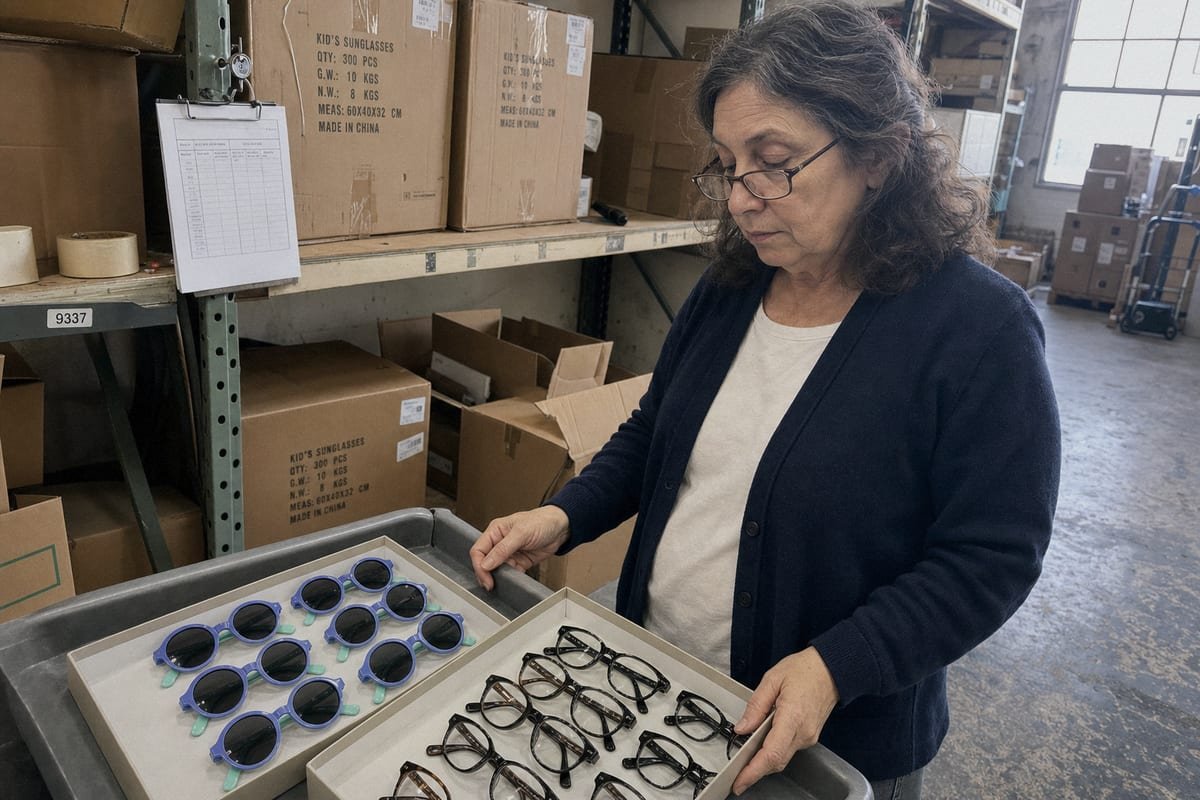
Care habits are the factor parents control most directly, yet they get the least attention. The good news is that the right habits are simple. The bad news is that the wrong habits cause permanent, invisible damage long before anything visibly breaks.
Cleaning: What Helps and What Harms
Wiping lenses with a t-shirt or paper towel is the fastest way to ruin them. Dust and sand act like sandpaper under fabric. Paper products are wood-based and abrasive. Even a good scratch-resistant coating cannot survive daily dry wiping over grit. The safe routine takes thirty seconds: rinse with lukewarm water, add a drop of mild soap if needed, then dry with a clean microfiber cleaning cloth. Sunscreen and insect repellent 4 deserve a special warning. These chemicals erode lens coatings and can degrade frame surfaces, so they should be rinsed off the same day.
Storage: The Silent Lifespan Killer
Heat is the enemy nobody sees. A car dashboard in summer can warp even good frames and cause multi-layer coatings to delaminate. Rapid swings between air conditioning and outdoor heat stress coatings the same way. Simple storage rules prevent most of this:
- Keep a hard case in the car, the beach bag, and the school bag.
- Never leave sunglasses on a dashboard or sunny windowsill.
- Store lenses facing up, never lens-down on any surface.
- Rinse after beach or pool days to remove salt and chlorine.
- Teach kids one home spot where the case always lives.
We encourage our brand clients to include cases and cloths in retail packaging. It is a small cost that visibly extends product life and builds customer trust.
How Does Manufacturing Quality Affect How Long Kids' Sunglasses Really Last?
Every batch that leaves our 5S-managed workshop passes hinge-torque checks, lens-fit inspection, and UV verification. I insist on this because the failures buyers blame on kids are often failures we could have caught at the factory.
Manufacturing quality determines both physical and protective lifespan. Precise hinge assembly, secure lens seating, in-mass UV400 protection, and consistent scratch-resistant coatings prevent early breakage and invisible UV decline. Poorly made pairs fail at screws, coatings, and lens edges within months.
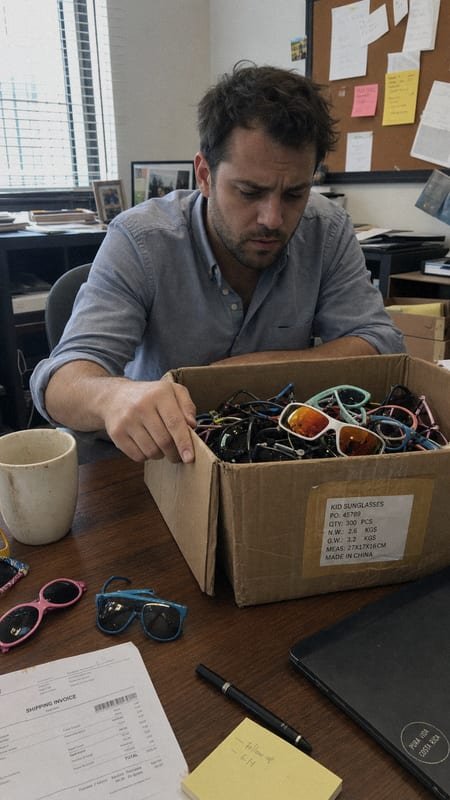
Here is the distinction I always share with product managers: a pair of kids' sunglasses has two lifespans. The physical lifespan is how long frames, hinges, and lenses survive. The protective lifespan is how long the lenses keep blocking UV reliably. Manufacturing quality controls both, and a pair can look fine while its protection quietly declines.
Where Quality Is Built In or Left Out
Good construction shows up in small details. Screws should be seated with thread stability so they do not back out after a hundred folds. Lenses should sit firmly in the rim with no gaps that let them pop free on impact. Coatings should be applied evenly, because thin or uneven scratch-resistant coating layers 5 peel first at the edges. UV protection matters most of all. Quality polycarbonate lenses carry protection UV400 6 within the lens material itself, not merely as a surface film, so scratches do not strip the defense. Reputable production also aligns with recognized benchmarks such as normes ANSI Z80.3 7 for nonprescription sunwear, which cover UV claims and impact behavior. Technologie de lentilles polarisées adds real glare comfort for water and snow, though buyers should know polarization improves vision quality rather than durability by itself.
Quality Checkpoints That Predict Lifespan
| Point de contrôle | Ce à quoi ressemble un bon résultat | Failure Mode When Skipped |
|---|---|---|
| Hinge and screw assembly | Smooth, even tension; no wobble | Loose temples within weeks |
| Lens seating | Snug fit, no edge gaps | Lenses pop out on drops |
| la vérification UV400 | In-mass protection, tested per batch | Invisible UV decline |
| Coating application | Uniform, edge-to-edge adhesion | Peeling and hazing |
| Material sourcing | Certified TR90/TPEE resins | Brittleness and warping |
This is also why mold-free development helps new brands. Choosing from proven existing styles means the tooling, hinges, and lens fits have already survived real-world use across many markets, instead of gambling on an untested design.
Conclusion
Cheap kids’ sunglasses fail fast, and failures cost brands their reputation. The fix is knowable: flexible TR90 or TPEE frames, verified UV400 lenses, solid hinges, and simple care habits. Choose quality construction, teach case-and-cloth routines, and replace based on damage and fit rather than the calendar. That is how the lifespan of kids' sunglasses stops being a gamble and becomes a promise your brand can keep.
Notes de bas de page
1. TPEE is a common thermoplastic elastomer used in flexible eyewear frames for children. ↩︎
2. Official FDA guidance on impact resistance standards and testing requirements for sunglass lenses. ↩︎
3. Polycarbonate is the industry standard material for impact-resistant lenses in children’s and sports eyewear. ↩︎
4. The EPA provides information on insect repellents, which can chemically damage lens coatings and frames. ↩︎
5. Anti-scratch coatings are essential for extending the life of plastic lenses in high-wear environments. ↩︎
6. The WHO provides guidelines on UV radiation and the importance of eye protection against solar rays. ↩︎
7. The FDA regulates the impact resistance of lenses used in sunglasses and eyeglasses. ↩︎
Plus d'articles que vous pourriez aimer
Vous recherchez un partenaire fiable en lunetterie pour enfants ?
Explorez plus de 800 styles prêts et un support OEM/ODM complet adapté à votre marque.
Contactez-nous English
  Español de México
  Deutsch
  Français
  日本語
日本語  العربية
  Português do Brasil