Are Kids’ Sunglasses Suitable for Long Car Rides or Outdoor Outings?
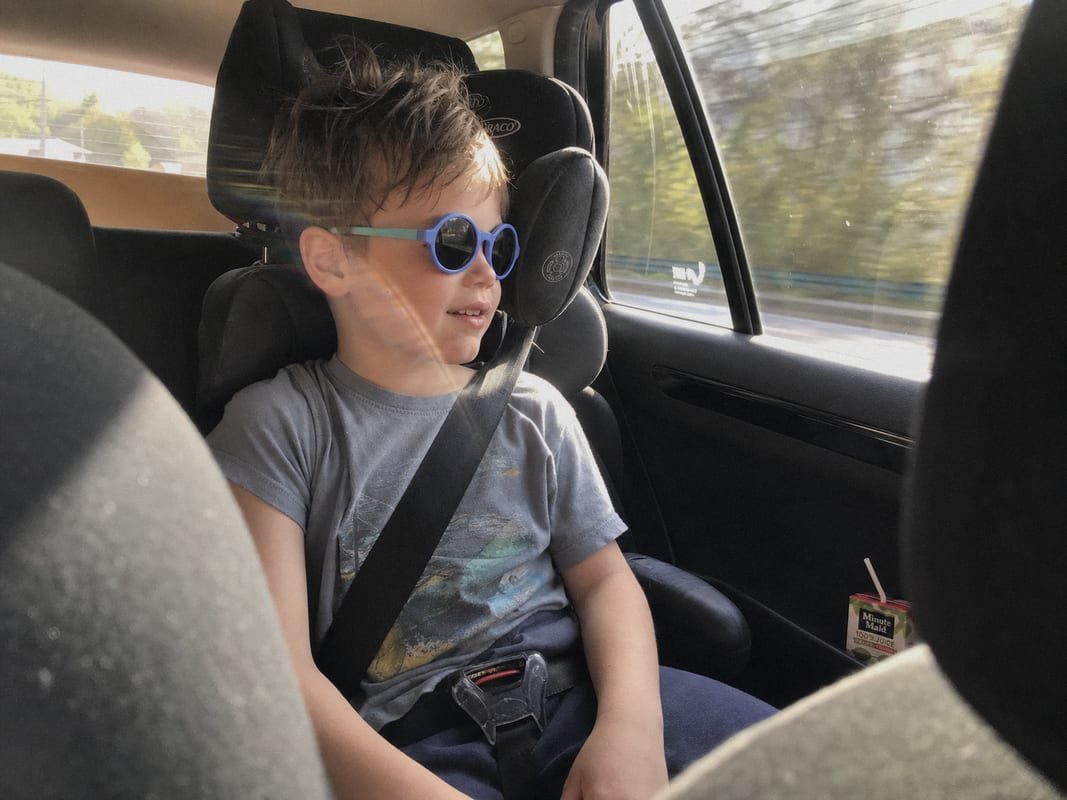
Buyers often ask me whether kids’ sunglasses truly work for road trips and outings. On our Taizhou production line, we design for exactly those scenarios — because parents notice failures fast. A frame that pinches in a car seat, or a lens that fakes UV protection, becomes a return, a bad review, and a lost customer for your brand.
Yes, kids’ sunglasses are suitable for long car rides and outdoor outings — provided they offer 100% UVA and UVB protection (UV400), fit snugly without pressure, and use flexible, shatter-resistant materials. Outdoors, they shield young eyes from cumulative UV damage; in cars, they cut glare and improve visual comfort.
The real question is not whether kids should wear sunglasses. It is which features make sunglasses work in each setting. Let me walk you through what we have learned building children’s eyewear for brands in more than twenty countries.
How do I choose kids' sunglasses that stay comfortable during long car rides?
A distributor in Australia once sent us a competitor's frame that kids kept pulling off in car seats. The temples were thick and rigid. The headrest pushed the glasses forward within minutes.
Choose kids' sunglasses with flat, thin temples that will not be pushed forward by car seat headrests, lightweight flexible frames under about 20 grams, moderate Category 2 lens tints that keep the cabin bright enough for reading, and soft nose bridges that prevent pressure points during hours of wear.
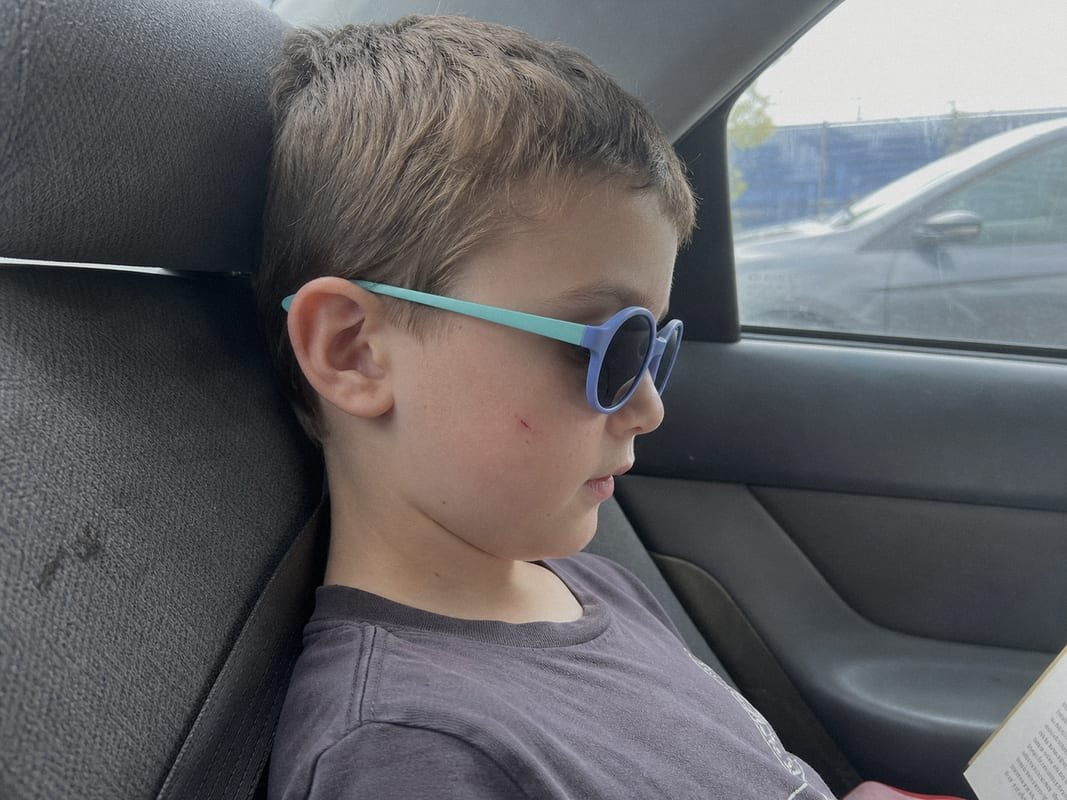
Car rides punish poorly designed eyewear. A child sits in one position for hours, head resting against a padded seat. Any frame that creates pressure will be rejected quickly. Comfort is not a luxury here. It is the difference between sunglasses that get worn and sunglasses that end up on the floor mat.
Why temple design matters most in the car
The headrest is the enemy of most kids' frames. Thick, curved temples get squeezed between the child's head and the seat padding. The frame slides down the nose, the child gets annoyed, and off it comes. Our engineers keep temple profiles flat and thin on styles intended for travel. TPEE temples also flex under pressure instead of digging into the skin behind the ear.
The lens tint question parents miss
Very dark lenses are a mistake inside a vehicle. A child may want to read, look at a tablet, or watch scenery. A Category 4 lens 1 makes the cabin feel like dusk. A Category 2 lens delivers meaningful glare reduction while preserving enough light for near tasks.
| Característica | Why it matters in the car | What to specify |
|---|---|---|
| Temple thickness | Headrests push thick temples forward | Flat, ultra-thin, flexible temples |
| Frame weight | Long wear time magnifies pressure | Lightweight TPEE or TR90 builds |
| Redacción explícita de idoneidad para uso en carretera | Cabin must stay bright for reading | Category 2 tint, UV400 |
| Puente nasal | Hours of contact on soft skin | Soft, integrated or rubberized bridge |
| Tipo de lente | Side-window glare and road flicker | Polarized lenses where budget allows |
One more benefit worth telling your customers: reducing high-contrast visual flicker through the window can support visual comfort on winding roads, and managed light exposure in late-afternoon travel may even help children settle toward sleep more easily.
Which lens features protect my customers' children during outdoor outings and travel?
During a factory audit last year, a European buyer asked us to prove our lens claims on the spot. We ran her samples through our UV transmission tester right there in the QC room. That moment changed how she wrote her spec sheets.
Outdoor-ready kids' lenses must block 100% of UVA and UVB rays (UV400), use shatterproof polycarbonate for impact resistance, and ideally add polarization for reflective settings like water, sand, and snow. Wraparound coverage further blocks peripheral light that slips past flat lens designs.

Children's eyes are not small adult eyes. Their lenses are clearer, so more UV reaches the retina. Pediatric eye health experts consistently note that UV damage 2 is cumulative, starting in childhood. That makes lens quality the single most important spec in your sourcing checklist — well ahead of style or color.
UV400 es la base, no un extra
UV400 protection means the lens blocks wavelengths up to 400 nanometers, covering both UVA and UVB rays. Here is the trap with cheap sunglasses: a dark tint without genuine UV filtering is worse than no sunglasses at all. The dark lens dilates the pupil, letting more unfiltered UV 3 flood in. We test lens batches on incoming inspection because a tint tells you nothing about UV performance.
Cuándo la polarización justifica su costo
Lentes polarizadas are secondary to UV protection, but they shine in specific environments. They cut reflected glare 4 from horizontal surfaces. For a beach brand or a snow-market distributor, they are worth the added cost. For a general park-and-playground line, standard UV400 lenses perform well.
| Outing type | Minimum lens spec | Recommended upgrade |
|---|---|---|
| Park visits, stroller walks | UV400, Categoría 2–3 | Policarbonato |
| Beach and waterfront | UV400, Category 3 | Lentes polarizadas |
| Hiking and sports | UV400 polycarbonate | Wraparound frames, mirrored coating |
| Snow trips | UV400, Category 3 | Polarized, high-coverage shield lens |
| Cloudy-day outings | UV400, Category 2 | Lighter tint, full UV filtering |
Remind your customers that UV penetrates clouds. Sunglasses are a year-round product, not a summer accessory. That single message can double the selling season for your line.
Will flexible TPEE and TR90 frames hold up to kids' active movement in the car or outside?
Fifteen years of making children's frames taught us one blunt lesson: kids will sit on their sunglasses. They will bend them, drop them on pavement, and stuff them into backpack pockets. We design for that reality, not for a display shelf.
Yes — TPEE and TR90 frames are specifically engineered for children's active use. TR90 is a memory polymer that flexes and returns to shape, while TPEE temples bend safely against a child's head. Both survive drops, twisting, and being sat on far better than rigid plastics.
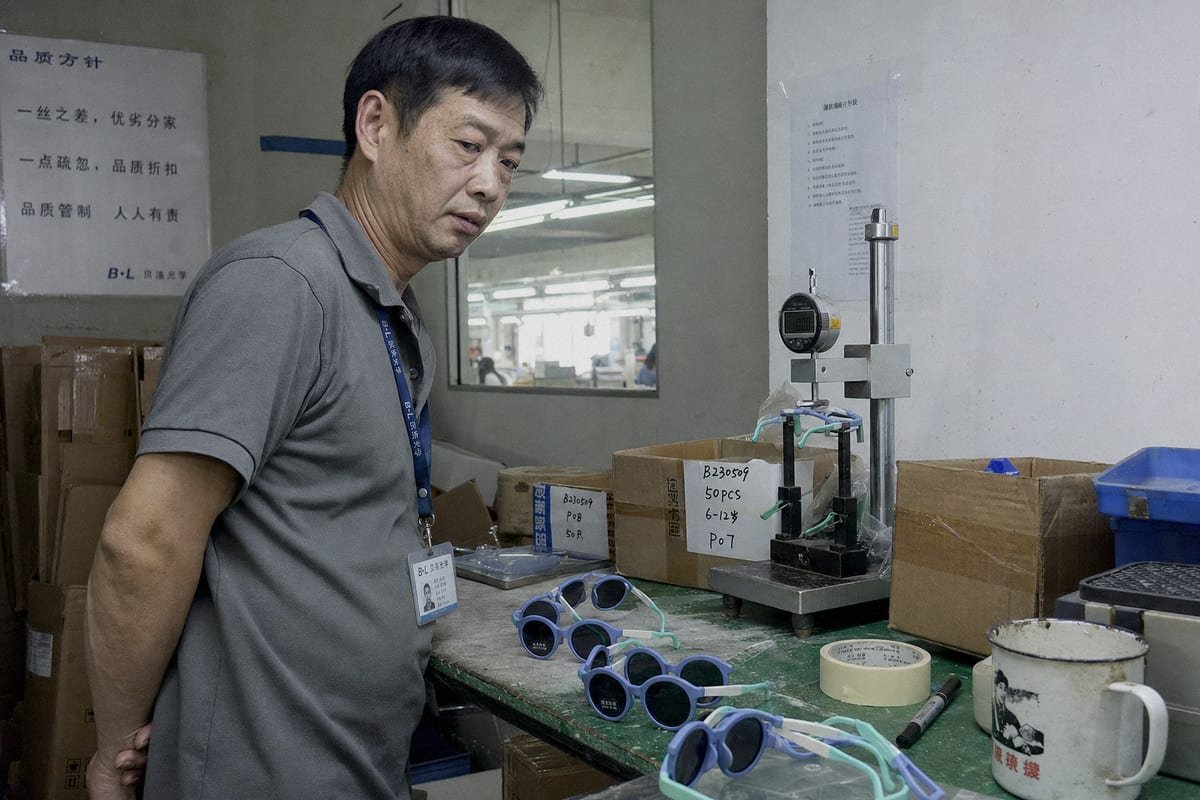
Material choice is where cheap sunglasses and proper children's eyewear part ways. Traditional acetate or standard injection plastics 5 can snap under stress, and a snapped frame near a child's face is a genuine safety hazard. Flexible materials solve both the durability problem and the safety problem at once.
What each material contributes
TR90 is a thermoplastic with memory properties. Twist a parte frontal de TR90 6 and release it — it returns to its original geometry. It is also remarkably light, which reduces nose pressure during long wear. TPEE is even softer and more elastic. On our best-selling combinations, we pair a TR90 front with TPEE temples. The front holds the lenses in stable alignment; the temples flex when a toddler yanks them off sideways or leans against a car window.
Durability under real travel conditions
In the car, frames get compressed between the head and the seat, dropped into seat gaps, and stepped on during rest stops. Outdoors, they take direct impacts during sports and play. Our workshop runs repeated flex and stress checks on production batches, because a brand's reputation rides on the frame that survives month six, not day one. The materials we use are also environmentally friendly and BPA-free, which matters increasingly to baby and kids' brands in Europe, Japan, and Australia. Add adjustable straps for babies and toddlers, and the frame stays secure through stroller rides and beach play alike.
A practical durability comparison
Rigid budget plastics may look identical in photos. They fail in hands. When buyers visit our Taizhou factory, we let them twist samples themselves. The difference is immediate and it sells the product better than any spec sheet.
What safety and quality standards should I look for when sourcing sunglasses for travel-ready kids' brands?
A procurement manager from Japan once told me her biggest fear was not price — it was a compliance failure after 10,000 units landed. That conversation shaped how we document quality on every order leaving our 5S-managed workshop.
Look for verified UV400 or 100% UVA/UVB protection, shatterproof polycarbonate lenses, BPA-free and non-toxic frame materials, and compliance with your market's standards such as EN ISO 12312-1, ANSI Z80.3, or AS/NZS 1067. Demand batch-level QC documentation, not just certificates on file.
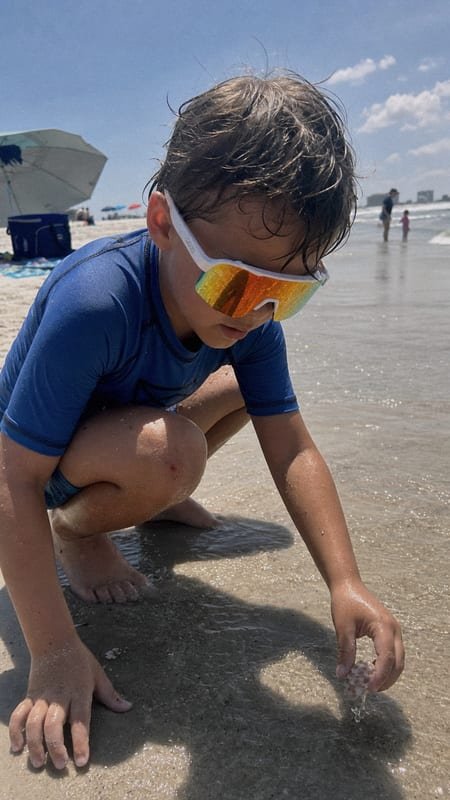
Sourcing children's eyewear is a higher-stakes decision international safety standards 7 than sourcing most kids' accessories. Sunglasses sit on a child's face, next to their eyes, for hours. Standards exist for a reason, and travel-ready product lines get inspected more closely by both regulators and parents.
The core compliance checklist
Different markets apply different frameworks, but the underlying requirements overlap heavily. Build your spec sheet around these pillars:
- Optical safety — verified UV transmission testing on production lenses, not just golden samples.
- Resistencia al impacto — shatterproof polycarbonate that will not splinter when dropped or hit.
- Seguridad del material — BPA-free, non-toxic, skin-safe frame compounds suitable for prolonged contact.
- Seguridad mecánica — no small detachable parts, smooth edges, secure hinges.
- Etiquetado — correct lens category, UV claims, and market-specific markings on retail packaging.
| Mercado | Key standard | Qué cubre |
|---|---|---|
| Unión Europea | EN ISO 12312-1 | UV filtering, lens categories, robustness |
| Estados Unidos | ANSI Z80.3 / FDA impact rules | Impact resistance, transmittance |
| Australia / NZ | AS/NZS 1067 | Mandatory sunglass performance |
| Japón | JIS-referenced specs | Transmittance and safety alignment |
What separates a partner from a supplier
Certificates are the starting point, not the finish line. In our experience exporting to brands across twenty-plus countries, the buyers who succeed ask about process: incoming lens inspection, in-line checks, and pre-shipment audits. A factory with roughly 800 existing styles also lowers your risk — you can launch a travel-ready collection without heavy mold investment, then customize colors, logos, lenses, and retail-ready packaging once the market responds. That staged approach protects cash flow while keeping quality consistent from sample to mass production.
Conclusión
Kids' sunglasses genuinely earn their place on road trips and outings — when built right. The risk is sourcing pretty frames that fail on UV, fit, or durability. Specify UV400 protection, flexible TPEE/TR90 construction, and verified quality control, and your brand delivers eyewear parents trust and children actually keep on.
Notas al pie
1. Wikipedia’s detailed breakdown of sunglass lens categories, including the dark Category 4 tint. ↩︎
2. Expert advice from the American Academy of Ophthalmology regarding cumulative UV damage in children. ↩︎
3. WHO resource explaining how ultraviolet radiation affects the eyes and the necessity of protection. ↩︎
4. Authoritative Wikipedia page explaining how polarized lenses reduce reflected glare. ↩︎
5. Comprehensive Wikipedia guide to injection molding and standard plastic materials. ↩︎
6. Technical background on Nylon 12, the material used for high-performance TR90 eyewear frames. ↩︎
7. Official ISO landing page for the current international sunglasses safety standard. ↩︎
Más artículos que te podrían gustar
¿Buscas un socio confiable en gafas para niños?
Explore más de 800 estilos listos y soporte OEM/ODM completo adaptado a su marca.
Ponte en contacto English
  Español de México
  Deutsch
  Français
  日本語
日本語  العربية
  Português do Brasil