¿Cómo mejorar la durabilidad de las bisagras al buscar monturas oftálmicas para niños?
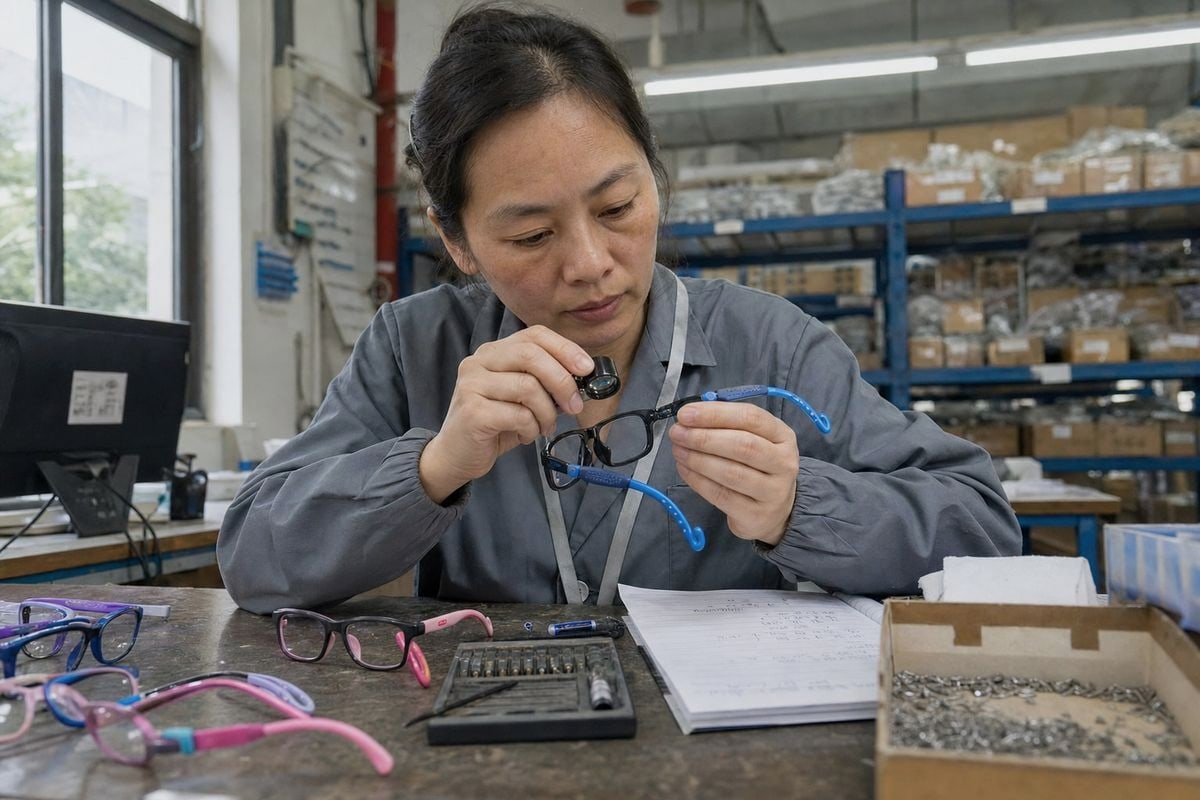
La durabilidad de la bisagra es lo primero que reviso cuando una montura oftálmica para niños devuelta llega a mi escritorio en nuestro taller de Taizhou. Nueve de cada diez veces, la bisagra falló primero. Los padres culpan a la marca, los minoristas emiten reembolsos y los compradores pierden pedidos repetidos, todo por una pequeña unión. ¿La buena noticia? Después de quince años construyendo monturas para niños, sabemos exactamente cómo prevenirlo.
Para mejorar la durabilidad de las bisagras en las monturas ópticas infantiles, especifique bisagras de resorte o diseños flexibles sin tornillos, requiera tornillos de acero inoxidable con el ajuste adecuado, haga coincidir la bisagra con el material de la montura y exija pruebas de ciclo de al menos 5.000 ciclos de apertura y cierre antes de aprobar la producción en masa.
Esa respuesta es corta, pero cada parte oculta decisiones reales de abastecimiento. A continuación, desgloso las pruebas, los materiales, los detalles de fabricación y cómo elegir al socio de fábrica adecuado.
¿Cómo puedo probar la durabilidad de las bisagras antes de realizar un pedido al por mayor?
Un comprador de Australia una vez me pidió que abriera y cerrara una montura de muestra doscientas veces durante una videollamada. Se sintió tedioso. Pero su instinto era correcto: probar antes de ordenar ahorra dinero a todos.
Pruebe la durabilidad de las bisagras solicitando pruebas de ciclos de más de 5.000 ciclos de apertura y cierre, comprobando la fricción mantenida y la retención de tornillos después, realizando pruebas manuales de movimiento y rebote en las muestras, y verificando el movimiento suave de las patillas sin chirridos, bamboleos ni juego lateral.
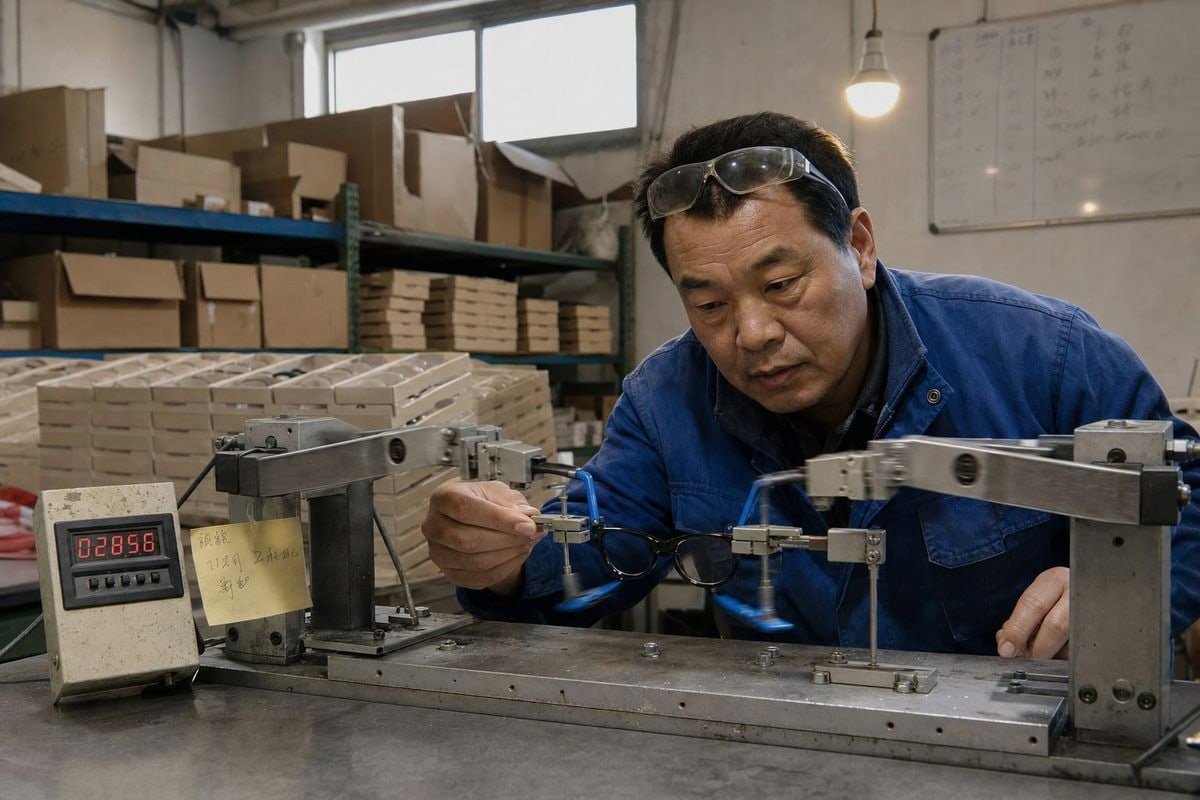
Los niños pueden someter una bisagra a más de 10.000 ciclos de apertura y cierre al año. Esa cifra sorprendió a uno de nuestros clientes europeos, pero piénsalo: encendido, apagado, tirado en una bolsa, quitado con una mano, repetido a diario. Sus pruebas previas al pedido deben simular ese abuso, no solo una inspección suave en la sala de exposición.
El enfoque de prueba de tres capas que recomendamos
Primero, pida a la fábrica que realice pruebas de ciclos de máquina. Un punto de referencia orientado al cumplimiento es de 5.000 ciclos: si la bisagra pierde fricción o el tornillo se afloja antes de ese punto, el diseño necesita una revisión. En nuestra línea de producción, realizamos estas pruebas en nuevos ensamblajes de bisagras antes de que lleguen a la ficha técnica de un cliente.
Segundo, haga sus propias comprobaciones manuales de muestras. No necesita un laboratorio para esto.
| Prueba manual | Cómo hacerlo | Qué parece un fallo |
|---|---|---|
| Sensación de apertura-cierre | Abra y cierre las patillas más de 50 veces | Ruido de rozamiento, chasquido o pérdida de tensión |
| Prueba de holgura | Sostenga la patilla abierta y muévala suavemente hacia los lados | Juego lateral visible o bamboleo del cañón |
| Prueba de rebote (bisagras de resorte 1) | ) | Empuje la patilla hacia afuera más allá de su tope |
| Retorno lento o débil a la posición | Asiento del tornillo | Inspeccione con una lupa |
| Cabezas de tornillo salientes, inclinadas o dañadas | Comprobación de simetría | Abra ambas patillas completamente |
Ángulos de apertura desiguales o cañones desalineados. Tercero, realice una pequeña prueba de abuso. Gire la montura, flexione las patillas más allá de los 90 grados y deje caer la montura sobre un escritorio desde la altura de la mesa. Gafas flexibles diseñadas para niños.
deberían sobrevivir a todo esto sin que la bisagra se afloje. Si una muestra falla en su prueba de escritorio, imagínela en manos de un niño de cinco años.
¿Qué materiales de bisagra resisten mejor el uso rudo y cotidiano de los niños?
Existe una compensación que sopesamos en casi todos los proyectos nuevos: máxima flexibilidad frente a fácil reparación. Nuestras monturas TR90 3 con patillas de TPEE se inclinan hacia la flexibilidad, porque los niños activos castigan primero las uniones rígidas.
Bisagras de resorte con resortes de acero de calidad, tornillos de acero inoxidable y bisagras integradas sin tornillos en TR90 o TPEE son las que mejor resisten para los niños. Los sistemas de bisagras flexibles absorben las torsiones y la sobreextensión, mientras que los herrajes resistentes a la corrosión evitan el aflojamiento que causa la mayoría de las fallas tempranas.
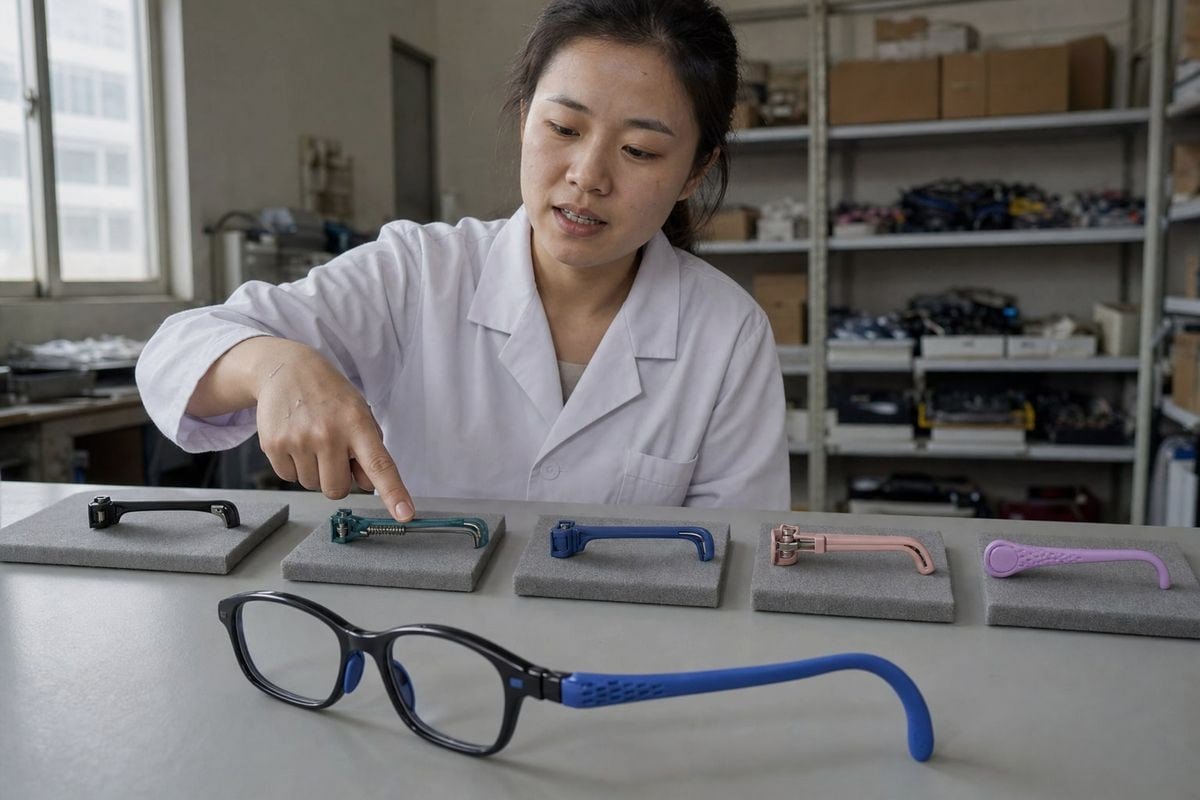
Aquí hay una comparación rápida de las principales opciones de bisagras para gafas de niños antes de profundizar:
| Tipo de bisagra | Durabilidad para niños | Reparabilidad | Plástico básico de PC/ABS | Mejor para |
|---|---|---|---|---|
| Bisagra de cañón estándar | Moderado | Fácil | Baja | Niños tranquilos y mayores; líneas económicas |
| Bisagra de resorte (bisagra flexible) | Alta | Moderado | Medio | Niños más activos |
| Bisagras de 180 grados | Muy alta | Moderado | Se dobla y recupera | Sports and rough daily use |
| Screwless / integrated hinge | Alta | Harder | Medio | Niños pequeños y preescolares |
| Hingeless flexible frame | Muy alta | Limitada | Varía | Very young children |
Why spring hinges are the safe default
Spring hinges let the temple flex outward beyond its normal stop. When a child rips glasses off with one hand — which happens constantly — the spring absorbs the stress instead of the barrel snapping. In our export experience across 20+ countries, spring hinges and 180 degree hinges consistently generate the fewest hinge complaints.
But I will raise the objection buyers often bring me: spring hinges add complexity and are harder to repair than a simple barrel hinge. That is true. The resolution is context. If your retail model includes optician support and kids glasses repair services, standard barrels with quality screws can work. If your frames are sold online with no repair channel, the extra flex of a spring hinge prevents the failure in the first place — prevention beats repair.
Match the hinge to children's eyewear materials
The hinge never works alone. TR90 nylon flexes and recovers its shape, so it pairs naturally with spring or integrated hinges. Las monturas de metal con memoria 4 and titanium frames offer similar resilience in metal, though titanium raises cost. Templo TPEE 5 — which we use widely — bend dramatically without cracking, taking load off the hinge entirely. Even the lenses matter: lightweight policarbonato 6 reduce the mass swinging on the hinge every time the frame is dropped.
For toddlers, screwless hinges or fully hingeless flexible frames remove the tiny screw as a failure point and a safety concern at the same time.
¿Qué detalles de fabricación afectan realmente cuánto dura una bisagra?
During a 5S audit of our workshop last year, we traced a batch of loose temples back to a single worn heat-insertion tool. That lesson stuck with me: hinge durability lives or dies in small manufacturing details buyers never see.
La vida útil de la bisagra depende de la calidad de la aleación, el revestimiento, la especificación del tornillo y el asiento, la alineación del cañón, el método de fijación adaptado al material del marco y las tolerancias de montaje. Incluso un diseño de bisagra de primera calidad falla prematuramente cuando las tolerancias son holgadas o los tornillos están mal asentados.
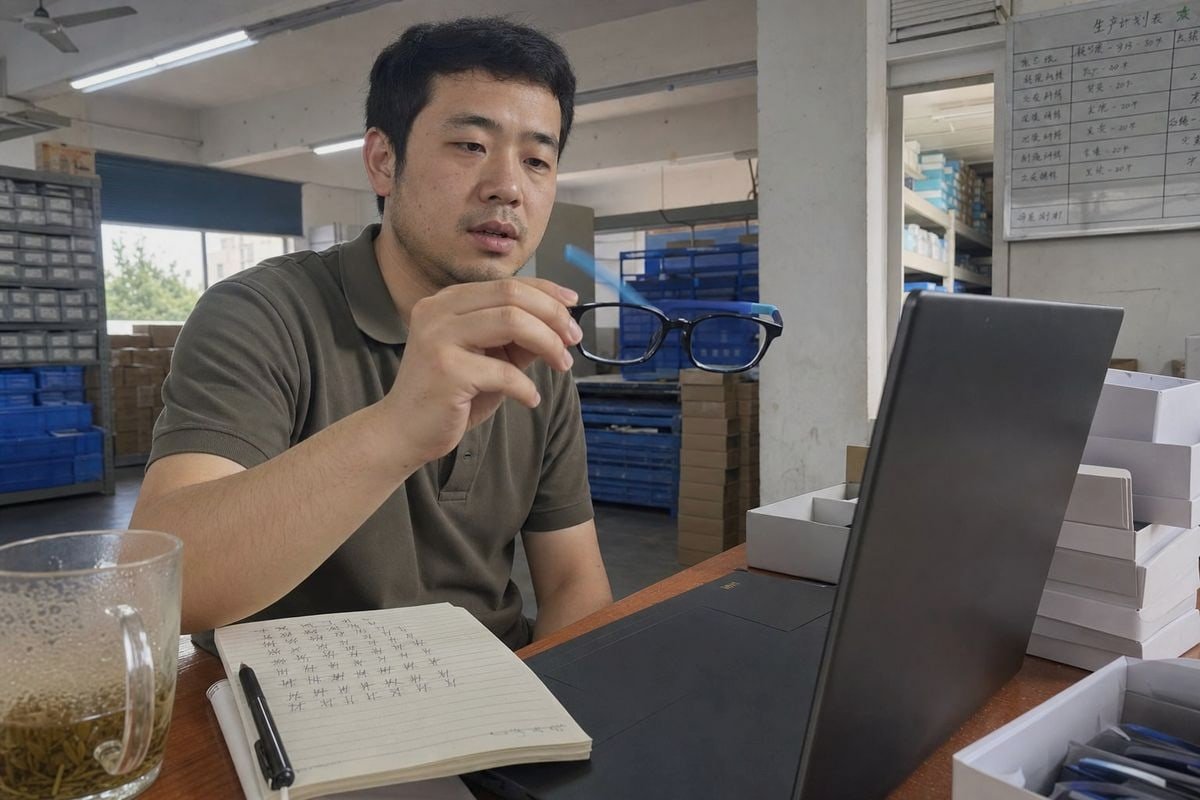
Durability is a system property, not a component property. That is the single most important idea in this article. Buyers often ask me for "the best hinge" as if it were a catalog item. In reality, the same hinge model can last five years or five weeks depending on how it is specified and installed.
The details that matter most, ranked
- Screw quality and retention. Loose or stripping screws are the most common early failure. Specify stainless steel or nickel-free alloy screws, recessed and seated flush. stainless steel screws 7 Thread-locking treatments help on frames sold without local repair support.
- Attachment method matched to substrate. Acetate, injection-molded plastic, TR90, and metal each need a different anchoring approach — heat-inserted, riveted, molded-in, or soldered. A mismatch causes the hinge to pull out of the frame long before the hinge itself wears.
- Barrel alignment and tolerances. Misaligned barrels concentrate stress on one edge, grinding themselves loose. Clean alignment gives smooth, even opening force.
- Alloy and plating quality. Low-grade alloys fatigue, and poor plating corrodes — especially with children's sweat and outdoor play. Corrosion accelerates loosening and can trigger skin irritation.
- Spring component quality. In spring hinges, a weak spring means weak rebound and rapid fatigue. Test rebound on every sample round.
What to write into your tech pack
Request the hinge supplier and model number, hinge material and finish, attachment method, and full screw specification. On our OEM/ODM projects, we include all of this by default, because a documented hinge spec keeps batch two identical to batch one. Impact resistance in the finished frame comes from this whole chain working together — not from any single glamorous component.
¿Cómo elijo un socio de fábrica que garantice una calidad de bisagra fiable?
Early in my time at our Taizhou factory, a distributor told me he had switched suppliers three times in two years — always over hinge complaints, never over price. That conversation shaped how we present our own QC process today.
Elija un fabricante que documente las especificaciones de las bisagras por escrito, realice pruebas de ciclo internas con umbrales de falla claros, ofrezca piezas de repuesto y tornillos estandarizados, demuestre experiencia en materiales en sistemas de bisagras TR90 y flexibles, y muestre registros de control de calidad consistentes en lotes repetidos.
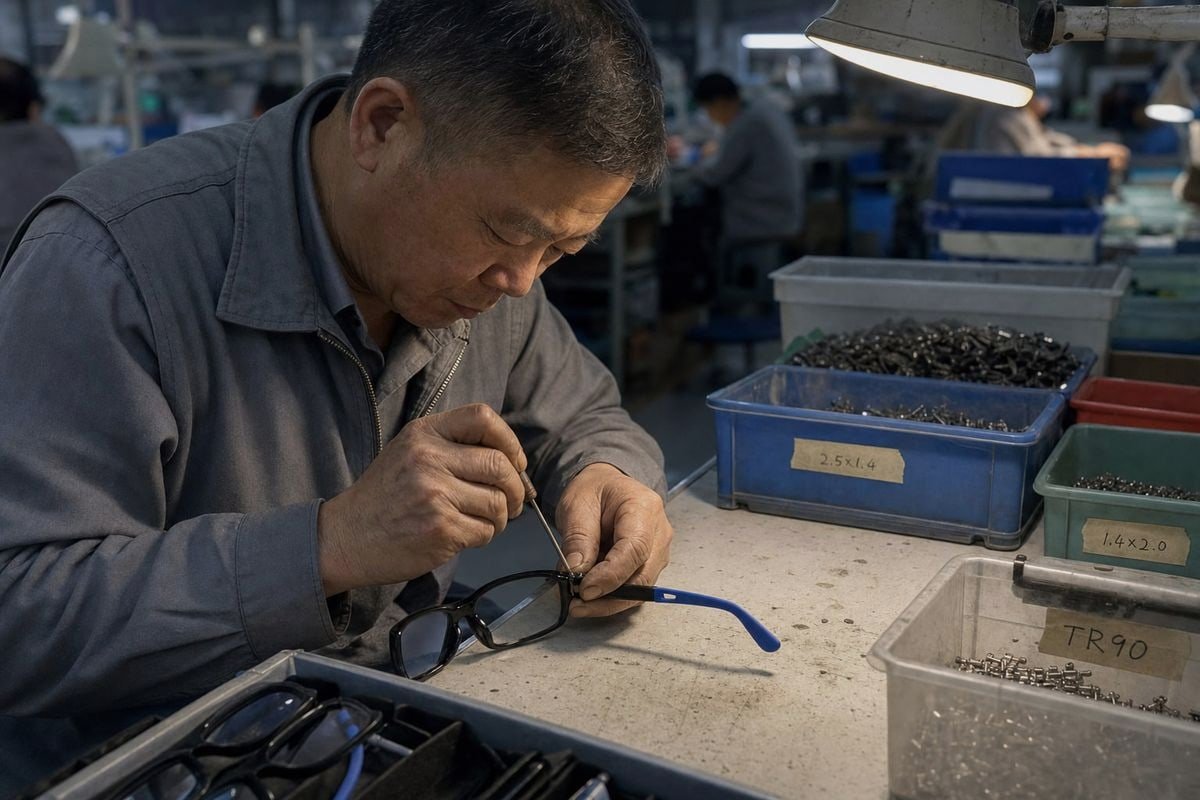
A factory visit or video audit tells you more than any catalog. But if you cannot visit, ask targeted questions and judge the quality of the answers. Vague replies signal vague processes.
Questions that separate real factories from traders
| Pregunta a realizar | Respuesta fuerte | Signo de advertencia |
|---|---|---|
| Who supplies your hinges? | Named supplier, model numbers, spec sheets | "Good quality, don't worry" |
| Do you cycle-test hinges? | Yes, with cycle counts and failure thresholds | No testing, or "the hinge factory tests" |
| What screws do you use? | Stainless steel, spec available, flush seating standard | Unspecified generic hardware |
| Are repair parts available? | Standardized screws, spare temples on request | Proprietary parts, no aftersales support |
| Can I see QC records? | Inspection reports per batch | Nothing documented |
Why repairability belongs in the conversation
Serviceability is part of long-term durability. Standardized screws and replaceable hinge components mean a small kids glasses repair keeps a frame in use instead of in a landfill. When we develop frames for baby and kids brands, we flag which styles use standard hardware and which use molded screwless hinges, so the buyer can choose deliberately based on their retail model.
There is also a shortcut worth mentioning. New brands do not need to engineer hinges from zero. With roughly 800 existing styles on our shelf — spring hinges, screwless designs, TPEE temples, TR90 fronts — a buyer can test the market with proven hinge systems and no mold investment. Once volumes grow, full OEM customization of colors, logos, lenses, and packaging builds on a hinge platform that already passed cycle testing. That sequencing lowers risk on both sides.
Finally, weigh communication. A partner who explains a hinge trade-off honestly — even when it costs them a quick sale — will still be answering your emails in year three.
Conclusión
Hinge failure kills kids' frames — and repeat orders. But it is preventable. Specify spring hinges or screwless systems, demand cycle testing and stainless hardware, and partner with a factory that proves durability in writing.
Notas al pie
1. Explains the function and benefits of spring hinges for eyewear durability and comfort. ↩︎
2. Describes glasses endurance test for hinge durability, including cycle testing. ↩︎
3. Describes the properties and advantages of TR90 material, a common choice for durable eyewear frames. ↩︎
4. Provides information on memory metal as a resilient and flexible material for eyewear frames. ↩︎
5. Explains the benefits of TPEE material for temple flexibility, durability, and resistance to wear. ↩︎
6. Describes the advantages of polycarbonate lenses, including impact resistance and lightweight properties. ↩︎
7. Details the importance of stainless steel for screw quality, retention, and corrosion resistance in eyewear. ↩︎
Más artículos que te podrían gustar

¿Buscas un socio confiable en gafas para niños?
Explore más de 800 estilos listos y soporte OEM/ODM completo adaptado a su marca.
Ponte en contacto English
  Español de México
  Deutsch
  Français
  日本語
日本語  العربية
  Português do Brasil