How Do EU vs Australia Documentation and Labeling Requirements Differ for Kids’ Optical Frames?
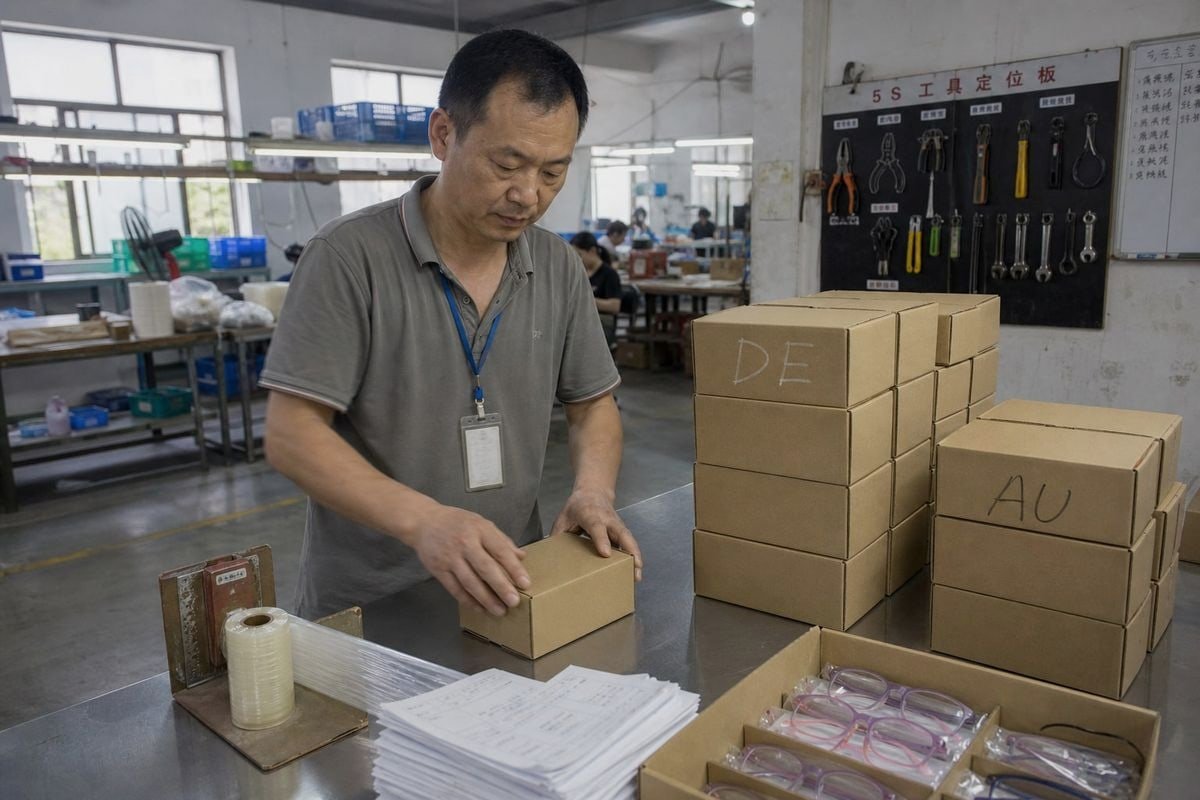
On our production line in Taizhou, one shipment of kids’ optical frames can head to Hamburg while an identical style heads to Sydney — and the EU vs Australia documentation and labeling requirements behind each carton are surprisingly different. Get one wrong, and customs holds your stock, retailers reject your delivery, and your launch date slips a full season. The good news is that the differences follow a clear pattern, and once you understand it, one well-planned frame design can clear both markets.
The EU treats kids’ optical frames as Class I medical devices under MDR 2017/745, demanding CE marking, a technical file, and a Declaration of Conformity. Australia’s TGA exempts lens-free frames from medical device rules, instead enforcing visible consumer labeling — supplier identity, lens category, and warnings — under AS/NZS standards.
In short, the EU is stricter on paperwork, while Australia is stricter on what the customer sees at the point of sale. Let me break down each side, then show you how to satisfy both with a single sourcing plan.
What Documentation Do I Need to Sell Kids' Optical Frames in the EU?
A German buyer once asked our team for the "certificate" for a TR90 kids optical frame. There is no single certificate — the EU wants a whole documentation package, and that surprised him.
To sell kids' optical frames in the EU, you need a technical documentation file containing a product description, design specs, risk assessment, EN ISO 12870 test reports, and a signed Declaration of Conformity. The frame must carry CE marking, typically on the inside of the temple arm, plus manufacturer identification.

The EU framework matters because spectacle frames are classified as Class I medical devices under the EU Medical Device Regulation (MDR 2017/745) 1. That classification does not mean you need a notified body for a standard passive frame, but it does mean you carry real legal obligations as the party placing the product on the market. In our fifteen years exporting children's eyewear to Europe, the buyers who prepare their files early always clear market surveillance checks faster than those who scramble afterward.
What Goes Into the Technical File
Your technical documentation file should read like a complete story of the product. Authorities can request it at any time, and importer obligations under the MDR mean you must be able to produce it — not just point at your factory.
| Documento | Qué cubre | Who Prepares It |
|---|---|---|
| Product description & design specs | Materials, dimensions, intended use, age group | Factory + brand together |
| Applied standards | EN ISO 12870 2 for frames; EN ISO 12312-1 if sun lenses | Factory |
| Risk assessment | Child-specific hazards: small parts, hinge pinch points, skin contact | Brand, with factory input |
| Test reports | Mechanical, bridge deformation, endurance, chemical safety | Accredited lab |
| Declaración de conformidad | Legal statement of compliance, signed by the responsible party | Brand / EU responsible person |
| Labeling samples | CE mark placement, manufacturer name and postal address | Factory + brand |
Two more points deserve attention. First, the EU does not require a "Made in" origin label, but if you print one, it must be accurate. Second, the regulatory trend is toward digital traceability: the EU's Unique Device Identification (UDI) guidance for spectacle frames introduces a Master UDI-DI requirement that begins applying from 1 November 2028, with a three-year transitional period. We already advise European clients to plan their SKU and labeling architecture with that date in mind, so a redesign is not needed later.
How Do Australia's Labeling Rules Differ From the EU for Children's Eyewear?
One lesson we learned early with an Australian distributor: a compliant frame can still fail inspection if a retailer's price sticker covers the required label. Australia checks what shoppers actually see.
Australia requires a clear, legible mark or label showing the manufacturer or supplier identity, lens category number, usage information, and warning statements — none of which may be hidden by stickers. Unlike the EU, there is no CE mark; lens-free frames sit outside TGA medical device regulation entirely.
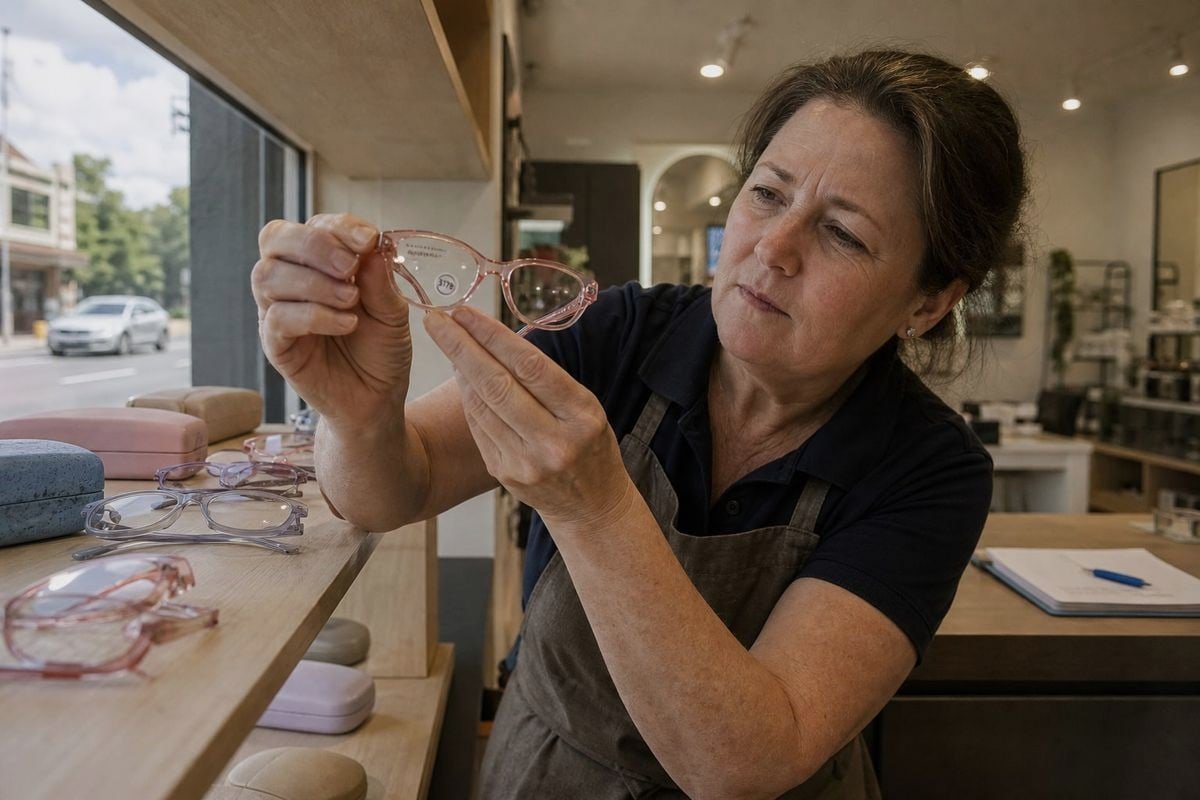
The philosophical difference is easy to state. The EU asks, "Can you prove conformity on paper?" Australia asks, "Can the parent standing in the shop understand what they are buying?" Australia’s TGA regulations exempt spectacle frames without lenses, and prescription lenses for refractive correction, from the medical device pathway. TGA medical device regulation 3 The ODMA importing guidance treats standalone frames as consumer products. But once your kids' product includes sun lenses, the mandatory consumer standard built on AS/NZS 1067.1 4 applies — and it is widely regarded as one of the strictest UV protection standards in the world, reflecting Australia's intense sun exposure.
Where the Label Can Physically Go
Australian rules are refreshingly practical about placement. The required information may be delivered as:
- An indelible marking on the frame itself,
- A removable label on the lens,
- A swing tag or label attached to the frame, or
- Any combination of the above.
The catch is durability through retail handling. The marking must stay clear, legible, and uncovered until the moment of sale. When we produce for Australian brands, we usually recommend an indelible temple marking plus a printed lens sticker showing the lens category, because swing tags get torn off in stores.
Direct Comparison at a Glance
| Requisito | UE | Australia |
|---|---|---|
| Frame classification | Class I medical device (MDR 2017/745) | Consumer product (TGA-exempt without lenses) |
| Conformity mark | CE marking mandatory | No CE equivalent |
| Key document | Technical file + Declaration of Conformity | Supplier records; emphasis on the label itself |
| Sunglasses regime | PPE Regulation EU, EN ISO 12312-1 | Mandatory standard based on AS/NZS 1067.1 |
| Visible label content | Manufacturer name and address, CE mark | Supplier identity, lens category number, usage info, warnings |
| Label placement rule | Frame, packaging, or accompanying document | Frame marking or attached label; must not be obscured |
For children's eyewear safety specifically, Australia also brings extra scrutiny on chemical content, including phthalates such as DEHP in materials that contact a child's skin. Our TPEE and TR90 flexible frame materials are chosen partly because they let us meet these chemical expectations without sacrificing the softness active kids need.
Which Certifications Should I Request From My Manufacturer for Both Markets?
Whenever a new buyer sends us an RFQ for children's frames, my first counter-question is always the same: which markets, and with or without lenses? The answer decides the entire testing plan.
Request EN ISO 12870 or AS/NZS ISO 12870 frame test reports, EN ISO 12312-1 or AS/NZS 1067.1 lens reports for sun products, chemical safety results covering phthalates and heavy metals, and — for the EU — the documents needed to support your Declaration of Conformity and CE marking.

Here is a helpful fact that simplifies life: both regions build on the same international backbone. ISO 12870 governs spectacle frame requirements and test methods, adopted as EN ISO 12870 in Europe and AS/NZS ISO 12870 in Australia and New Zealand. So a well-run product conformity assessment against ISO 12870 gives you the mechanical core for both markets. The divergence appears in lenses, chemistry, and paperwork formality.
The Practical Request List
When you brief your factory or third-party lab, be specific. A vague "please send certificates" email produces vague results. Ask for:
| Test / Document | EU Need | Australia Need |
|---|---|---|
| ISO 12870 frame report (bridge deformation, endurance, temple retention) | Yes — cite in technical file | Yes — supports due diligence |
| ISO 12312-1 / AS/NZS 1067.1 lens report | Yes, for sun lenses (PPE) | Yes, mandatory for sunglasses |
| Chemical report (DEHP and other phthalates, nickel release on metal parts) | Yes — child risk assessment | Yes — child product scrutiny |
| Declaration of Conformity support pack | Sí | Not required |
| Labeling artwork approval (CE placement vs lens category label) | Sí | Sí |
One honest trade-off from our side of the workshop: full dual-market testing on a brand-new mold adds cost and several weeks. That is precisely why we keep roughly 800 existing styles with established test histories — a new brand can select a proven frame, run confirmation testing on its chosen colorway, and reach both markets without funding a mold and a full test program from zero. During OEM projects, we also verify that custom logos, printed temples, and packaging changes do not interfere with required markings before mass production starts.
Can I Source One Frame Design That Meets EU and Australian Requirements Together?
The trade-off we weigh most often in development meetings is temple real estate: a child-sized temple arm must carry CE marking, model codes, and sometimes Australian supplier details — all on a few centimeters of TR90.
Yes. Because both markets reference ISO 12870 for frames and comparable UV protection standards for lenses, one design can satisfy both. Build the product to the stricter requirement in each category: EU-level documentation and CE marking, plus Australia-level visible labeling and lens category information.
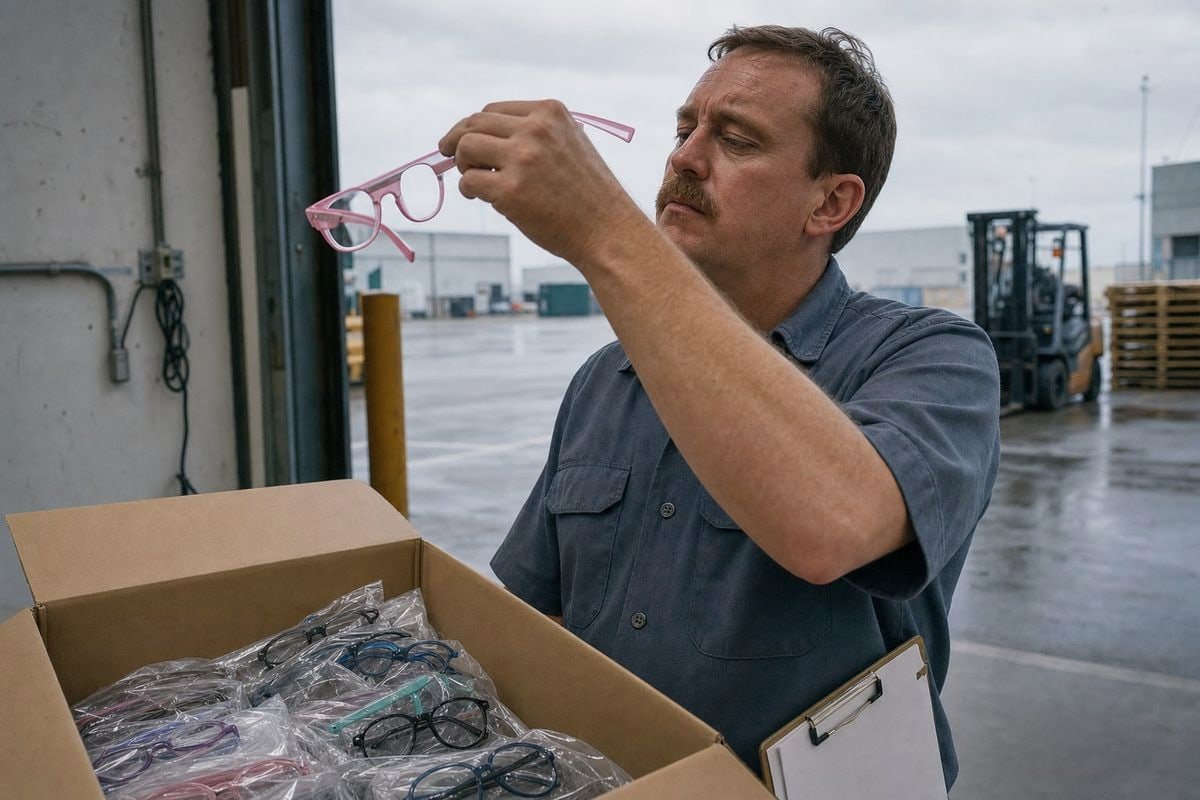
We call this the "superset" strategy, and it is how we run most dual-market OEM projects. Instead of maintaining two versions of a frame, you engineer one version that clears the highest bar on every dimension. The physical frame — say, a lightweight TR90 front with soft TPEE temple tips like our two-tone black-and-blue kids' style — stays identical. What changes is the marking plan and the paperwork behind each destination.
How We Build a Dual-Market Frame
The process we follow with brands looks like this:
- Classify the product honestly. Optical frame awaiting lenses, complete sunglasses, or fashion spectacles — each has a different pathway, and mixing them up is the root of most compliance failures.
- Test once, to the tougher spec. Run ISO 12870 mechanical testing plus chemical screening that satisfies both the EU child risk assessment and Australian expectations on phthalates.
- Design a combined marking layout. CE mark and manufacturer details molded or pad-printed inside the temple; a removable Australian lens category label added only for sun versions bound for Australia.
- Split the paperwork, not the product. The EU shipment travels with the technical file and Declaration of Conformity; the Australian shipment travels with supplier identification and label artwork records.
- Future-proof the identifiers. Reserve space in your SKU and marking system for the EU's UDI requirements arriving in 2028, and consider documenting sustainable material content — recycled or biodegradable inputs — which buyers increasingly request in documentation packs.
One nuance worth resolving directly: some buyers worry that EU sunglasses being PPE while frames are medical devices means the regimes contradict each other. They do not. Different eyewear products simply sit under different legal regimes, and a clear classification step at the start removes the confusion entirely. Get that step right, and one great kids' frame really can travel the world.
Conclusión
The EU demands deeper documentation; Australia demands clearer visible labels. Plan one superset design, test to the tougher spec, and your kids' optical frames can clear both markets confidently.
Notas al pie
1. Official EU legal text for medical devices, defining requirements and classifications. ↩︎
2. The original ISO link returned a 403 error. This replacement provides a detailed overview of the EN ISO 12870:2025 standard for ophthalmic optics and spectacle frames from a reputable standards information provider. ↩︎
3. Official Australian legislation for the regulation of medical devices. ↩︎
4. Australian government information on sun protection and the mandatory standard for sunglasses. ↩︎
Más artículos que te podrían gustar
5 de agosto de 2026
Bio-Based vs Regular Cellulose Acetate: What's the Difference for Kids' Frames?
5 de agosto de 2026
How Recyclable Are Kids' Optical Frame Materials, and What Eco-Friendly Alternatives Exist?
5 de agosto de 2026
Do Kids Optical Frames Whiten or Age in Storage, and How to Control Warehouse Conditions?
¿Buscas un socio confiable en gafas para niños?
Explore más de 800 estilos listos y soporte OEM/ODM completo adaptado a su marca.
Ponte en contacto English
  Español de México
  Deutsch
  Français
  日本語
日本語  العربية
  Português do Brasil