How Does Dual-Sourcing Kids Sunglasses Outside China Compare in Total Cost?

Dual-sourcing kids sunglasses outside China sounds like a smart hedge — until the invoices arrive. Buyers visiting our Taizhou factory ask me about this almost every month, and the math often surprises them.
Dual-sourcing kids sunglasses outside China rarely lowers total cost on its own. Tariff savings of 3–7% are frequently erased by higher freight, duplicate tooling, extra compliance testing, and defect risk. It works best for stable, high-volume basic SKUs — while complex or custom styles usually stay cheaper in China.
Let me walk you through the real numbers. We will look at hidden costs, material quality, operational risks, and finally whether the strategy fits your brand at all.
Last year, a European buyer showed me a quote from a Southeast Asian factory that beat our price by $0.30 per pair. Then we built a análisis de costo de llegada 1 together — and the picture flipped.
Hidden costs typically add 40–80% on top of the factory quote. Duties differ by only a few points between origins, while freight, duplicate molds, compliance testing, and defect rework often cost more from newer hubs. A lower ex-factory price can easily become a higher total landed cost.
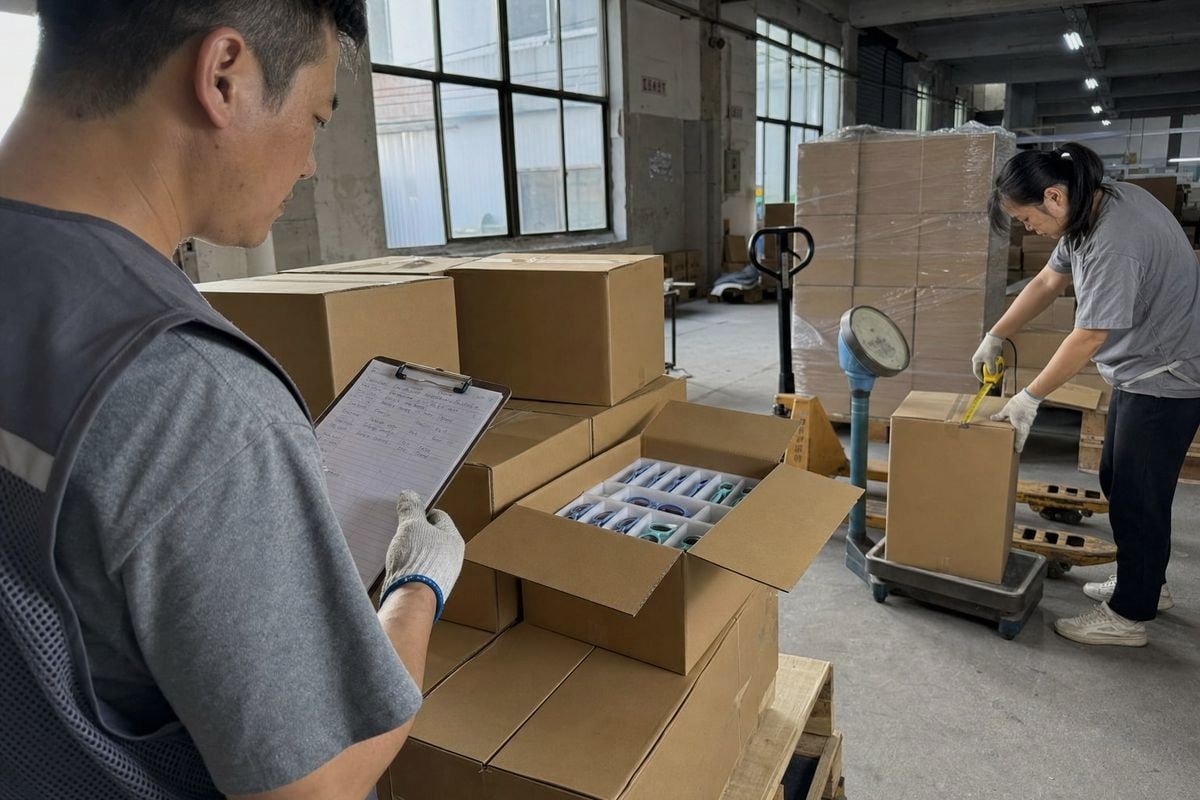
The core mistake I see is comparing unit prices instead of Total Cost of Ownership. Kids sunglasses are a price-sensitive, high-volume category, so a $0.20 difference matters — but only if it survives the full cost stack.
What actually goes into landed cost
Start with the factory price, then add packaging, tooling amortization, testing, freight, import tariffs and duties 2, and a defect allowance. Each line moves independently by country. For reference, recent U.S. duty estimates put China at roughly 22%, Thailand near 19%, Vietnam around 20%, and Italy or the EU at about 15% — with Mexico at 0% only if USMCA rules of origin are genuinely met.
A worked example
Here is a simplified comparison for a basic kids polycarbonate sunglass, 10,000 pairs, shipped to the U.S.:
| Cost line (per pair) | China factory | Southeast Asia factory |
|---|---|---|
| Ex-factory price | $2.20 | $1.95 |
| Retail packaging | $0.45 | $0.55 |
| Tooling amortized over order | $0.10 | $0.22 |
| Compliance testing per style | $0.15 | $0.25 |
| Ocean freight and handling | $0.18 | $0.24 |
| Duty (22% vs 19%) | $0.48 | $0.37 |
| Defect/rework allowance | $0.07 | $0.15 |
| Total landed cost | $3.63 | $3.73 |
The "cheaper" quote loses by $0.10 per pair. That is $1,000 on this order — before counting extra management time. Logistics and freight costs bite harder than most buyers expect too, because lightweight kids eyewear is billed on volumetric weight 3, not actual weight. A carton of sunglasses is mostly air, so the shipping rate per pair barely drops when you move to a slightly cheaper origin with a longer or less direct route.
Delays carry their own price. Slower or less predictable lead times force you to hold more safety stock, which ties up cash and increases markdown risk 4 on seasonal kids styles. That inventory carrying cost never appears on any quote, but it is real money.
Can I get the same flexible TR90 and TPEE quality from a second manufacturing region?
Our engineers spent years dialing in the injection parameters for TPEE temples injection molding parameters 5 — the flexible, twist-without-breaking material that makes kids sunglasses genuinely safe on small faces. That expertise does not travel automatically.
Matching TR90 and TPEE quality outside China is possible but difficult. Most flexible-eyewear material supply, mold expertise, and process knowledge is concentrated in China. Many overseas factories import Chinese TR90 resin and lenses anyway, adding cost and lead time while quality consistency often lags for one to two years.
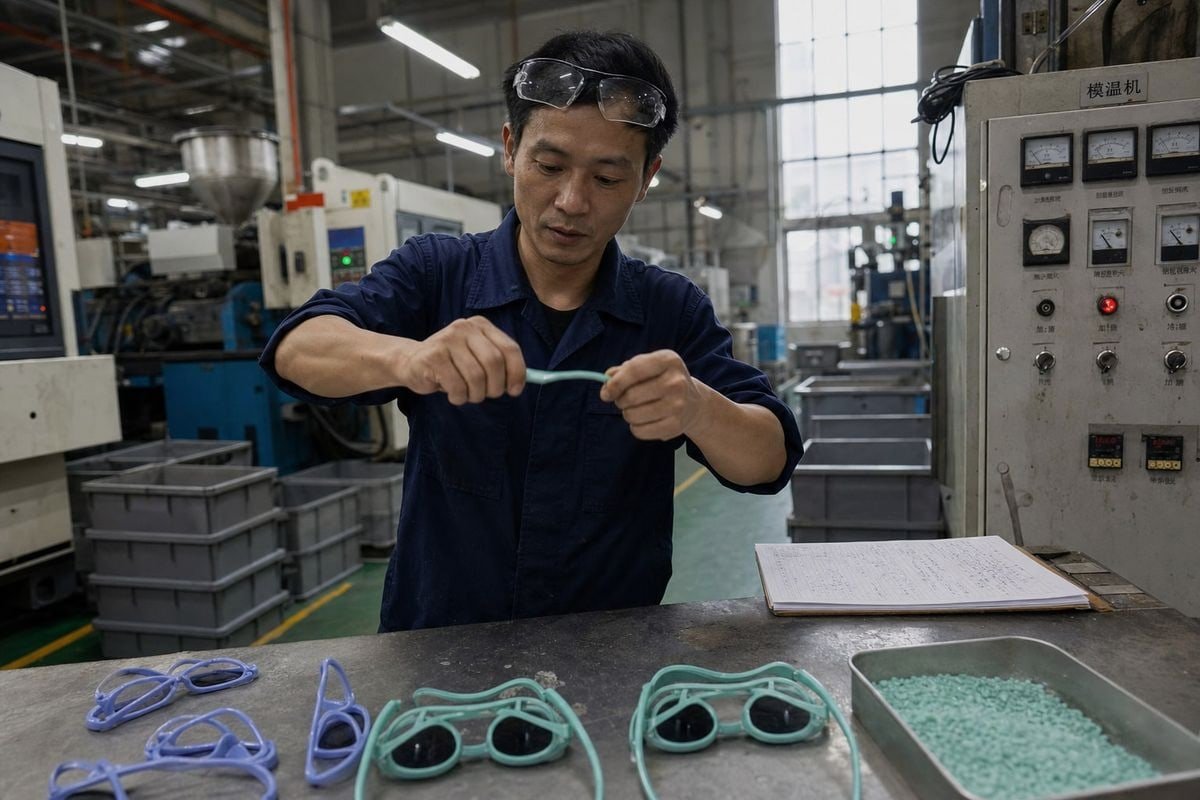
Material quality in kids eyewear is not cosmetic. It is a safety function. A TR90 frame with TPEE temples flexes when a child falls, sleeps on their glasses, or sits on them. Getting that flexibility right requires the correct resin grade, precise injection temperature control 6, and mold designs that avoid stress points at the hinge. In our 5S-managed workshop, we adjusted these variables over many production cycles before hitting consistent results.
The double-logistics trap
Here is what many buyers discover too late. Newer hubs in Vietnam or Thailand often do not have local supply of eyewear-grade TR90, TPEE, or polarized UV400 lens stock. They import those inputs from China. That creates a hidden second supply chain inside your supply chain:
- Chinese resin and lens suppliers ship materials to the third country.
- Customs clearance and handling add days and cost.
- Any material defect requires a cross-border replacement cycle.
- Tightened country-of-origin rules now demand substantial local transformation, so simple assembly of Chinese components may not even qualify for the tariff benefit you were chasing.
Quality comparison in practice
| Quality factor | Mature China eyewear base | Newer non-China hub |
|---|---|---|
| TR90/TPEE material access | Local, multiple graded suppliers | Often imported from China |
| Mold and tooling ecosystem | Dense, fast, competitive | Limited, slower iteration |
| UV400/polarized lens supply | Local and deep | Frequently imported |
| Process experience on flexible frames | 15+ years in clusters like Taizhou | Building, often under 5 years |
| CPSIA/CE testing infrastructure | Established labs, streamlined | Higher third-party auditing fees |
CPSIA safety regulations 7 and EN standards apply regardless of origin. But testing infrastructure is more streamlined in China, and factory audit requirements 8 are easier to satisfy where auditors already work daily. None of this means a second region can never match the quality. It means you should verify material certificates, run full pre-production samples, and test flexibility and impact performance before committing volume — not after.
What risks am I taking on with MOQs, lead times, and communication when I split my sourcing?
A distributor from Australia once told me his hardest month was managing two factories through one product launch. He got two sample rounds, two QC standards, and two versions of the same colorway — none matching.
Splitting sourcing doubles your operational load. You carry two MOQs, two sampling cycles, two QC protocols, and two communication rhythms. Lead times from newer hubs run longer and less predictably, and small forecast errors leave you stuck below one supplier's Minimum Order Quantity.
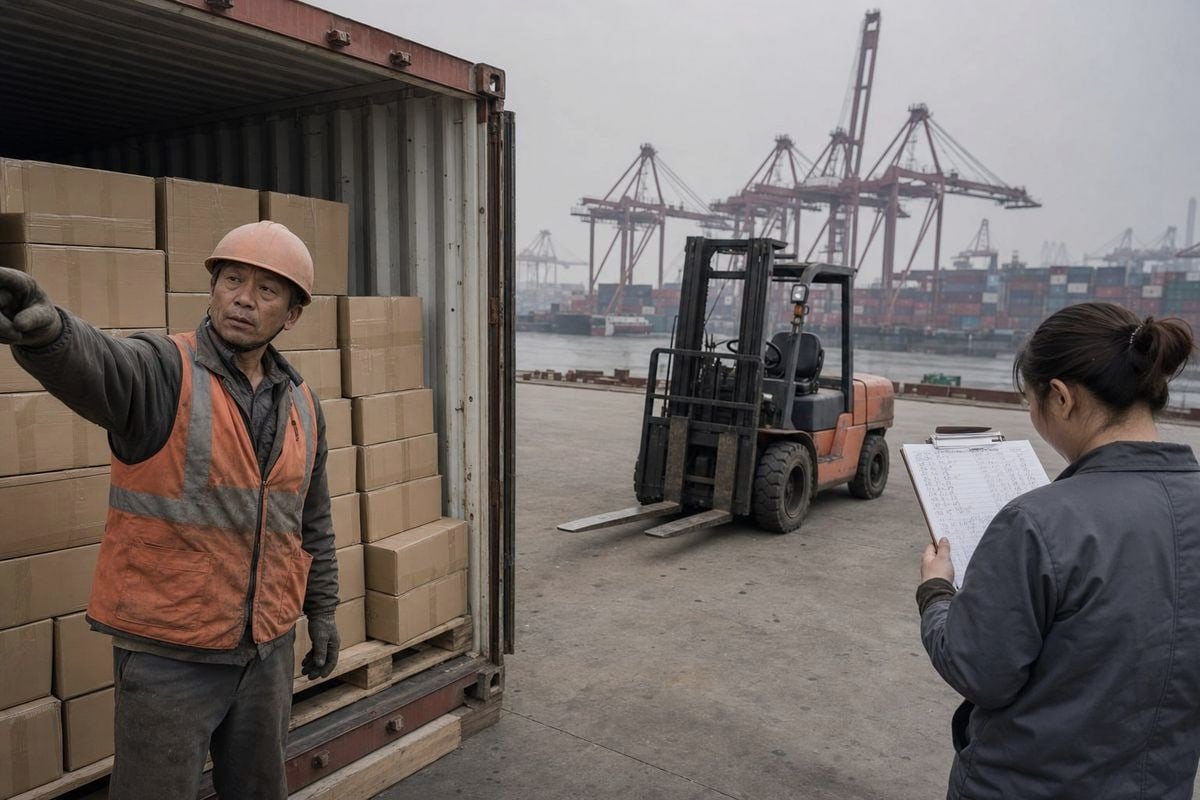
Dual-sourcing is often framed as pure risk reduction. In reality, it trades one risk for several smaller ones. The question is whether your team can absorb them.
The MOQ math gets harder
When you split an order of 10,000 pairs across two factories, each side must independently clear its Minimum Order Quantity. If demand softens, you may fall below one factory's MOQ and lose the relationship or pay a surcharge. Interestingly, emerging hubs sometimes offer more flexible MOQs for mid-volume orders, while Chinese mega-factories chase massive runs. At our factory, we solve this differently: with around 800 existing styles, buyers can launch or split product lines without heavy mold investment at all, which lowers the risk of testing any sourcing structure.
Lead time and communication realities
Lead time optimization is not just about production days. It includes sampling turnaround, revision cycles, and how fast a factory answers a technical question. In our experience exporting to 20+ countries, a color correction that takes 48 hours in a mature cluster can take two weeks in a newer hub — because the pigment supplier is in another country.
| Risk area | Single mature supplier | Dual-sourced setup |
|---|---|---|
| Sampling rounds | One cycle | Two cycles, must match each other |
| QC standard | One agreed protocol | Two protocols to align |
| Color/logo consistency | Controlled in one place | Cross-factory matching risk |
| Forecast flexibility | Pooled volume clears MOQ easily | Volume split may miss MOQs |
| Communication overhead | One contact rhythm | Two time zones, two styles |
| Lead time variability | Known and stable | One known, one unproven |
My honest advice: budget real management hours. Duplicate sampling, dual factory audits, and consolidated QC reporting can quietly cost more than the tariff savings you targeted. If you do split, move only proven, stable core SKUs to the second source — never a new launch.
Is dual-sourcing actually worth it, or would a reliable single China-based factory serve my brand better?
Weighing this trade-off is something I do with buyers regularly, and my answer is never one-size-fits-all — it depends on your volume, SKU complexity, and how much disruption your retail calendar can absorb.
Dual-sourcing is worth it for large brands with stable, high-volume basic SKUs and real tariff exposure. For most growing kids brands, a reliable single China factory delivers lower total cost, faster development, and consistent quality — with supply chain resilience built through inventory planning rather than a second factory.
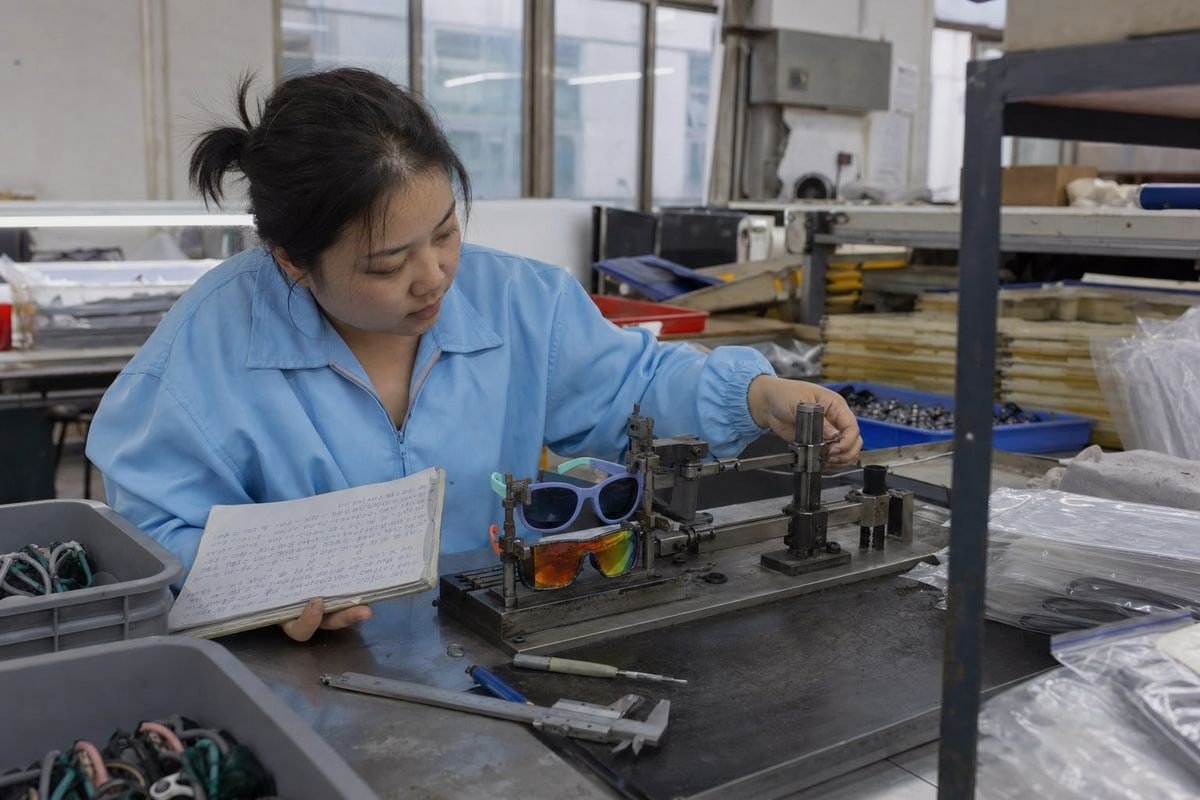
The industry-standard pattern here is "China + 1": keep China as the core engine and add a second location for geopolitical risk mitigation. That model exists because it works — for a specific type of buyer. Let me break down who that buyer is.
When dual-sourcing makes sense
- Your annual volume per SKU is high enough to clear two MOQs comfortably.
- Your core styles are simple, repetitive, and rarely change.
- Your import market imposes a large duty gap, or you can genuinely meet rules of origin for zero-duty treatment (Mexico under USMCA is the clearest case).
- Your team has procurement capacity to manage dual QC, dual audits, and dual forecasting.
- Retail deadlines make supply chain resilience worth a modest cost premium.
When a single reliable factory serves you better
- You run many SKUs at moderate volumes — typical for growing kids brands.
- Your styles involve custom colors, logos, packaging, or new designs each season, where China's fast iteration and mold ecosystem cut development friction dramatically.
- You cannot absorb a cross-factory quality inconsistency reaching parents — the least forgiving customers in eyewear.
- Newer reciprocal tariff structures in your market apply flat surcharges to all origins, shrinking the duty gap that justified splitting in the first place.
There is also a middle path, and it is the one I recommend most often. Build depth with one proven partner first. Use existing tooling-free styles to test the market, lock in your QC standard and packaging spec, and stabilize demand. Once two or three core SKUs show steady reorders over multiple seasons, you have a genuine candidate to dual-source — and the data to run an honest landed cost analysis before you commit. Resilience can also come from buffer stock, staggered shipments, and transparent production scheduling with a single factory, at a fraction of the overhead of a second facility.
Conclusión
Dual-sourcing kids sunglasses outside China cuts tariff exposure, not total cost — usually. Run a full landed cost analysis, move only proven SKUs, and keep complex styles with a trusted China partner.
Notas al pie
1. Explains the financial components used to calculate the true cost of imported goods. ↩︎
2. Authoritative government overview of the tariffs and fees applied to imported commercial goods. ↩︎
3. Defines the shipping calculation method used for lightweight, high-volume products like sunglasses. ↩︎
4. Explains the financial risk associated with reducing the price of inventory that fails to sell. ↩︎
5. Authoritative Wikipedia entry covering standard manufacturing process parameters for injection molding. ↩︎
6. Scientific explanation of how temperature affects material properties during manufacturing. ↩︎
7. Comprehensive overview of the U.S. safety act governing children’s product standards. ↩︎
8. Overview of the systematic examination of quality systems used to verify factory compliance. ↩︎
Más artículos que te podrían gustar
1 de agosto de 2026
¿Debería la fábrica encargarse del embalaje y etiquetado de las gafas de sol para niños, o utilizar un proveedor designado?
1 de agosto de 2026
Almacén propio vs. Cumplimiento directo del proveedor: ¿Qué reduce los costos de devolución para las marcas de gafas de sol para niños?
1 de agosto de 2026
Directo al almacén del puerto o staging en el extranjero: ¿Cuál ahorra más en el envío de gafas de sol para niños?
¿Buscas un socio confiable en gafas para niños?
Explore más de 800 estilos listos y soporte OEM/ODM completo adaptado a su marca.
Ponte en contacto English
  Español de México
  Deutsch
  Français
  日本語
日本語  العربية
  Português do Brasil