How to Determine Restock Frequency and Safety Stock for Kids Sunglasses on Your Site?
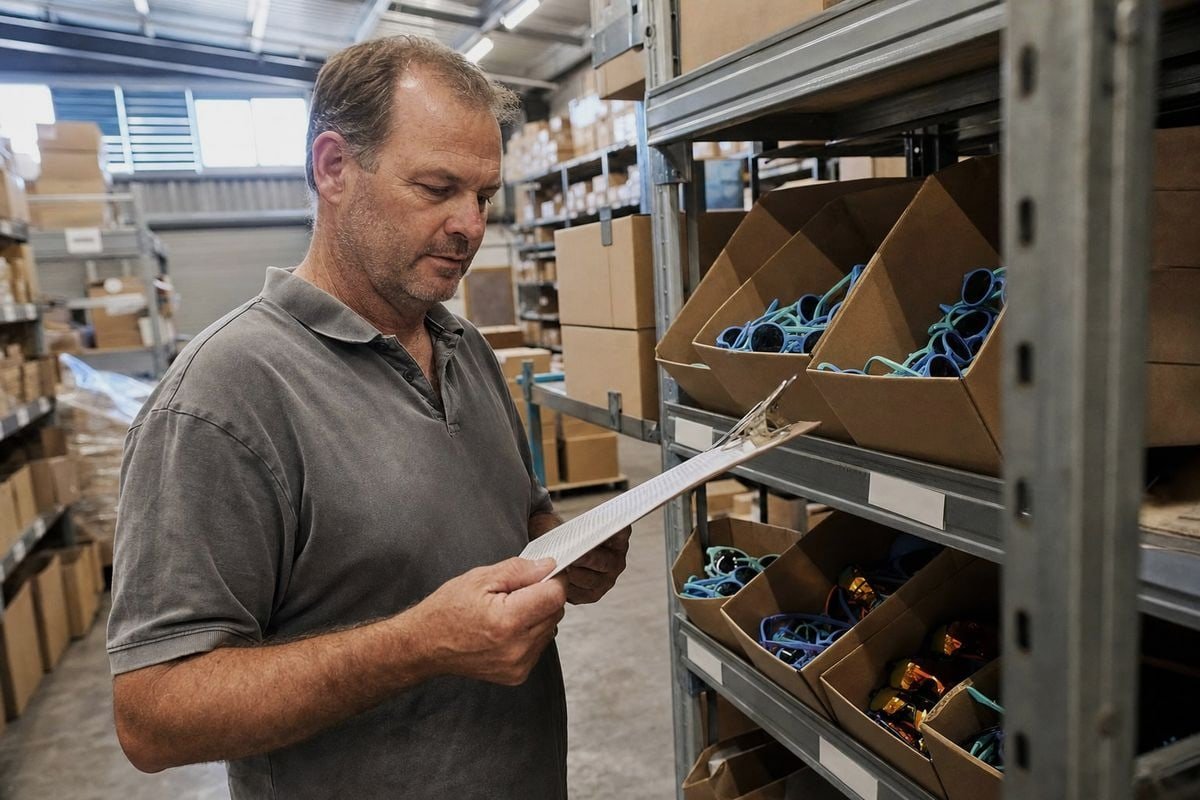
Restock frequency and safety stock 1 for kids sunglasses trip up many of the brand buyers who visit our Taizhou factory. Sell out in June, and revenue vanishes. Overstock in September, and cash sits frozen in slow colorways cost of goods sold 2. I have watched both mistakes drain young brands, so let me share the replenishment math that actually works for this category.
Set your reorder point as average daily sales multiplied by supplier lead time, plus safety stock. Hold 2–4 weeks of buffer for best-selling kids sunglasses, 1–2 weeks for mid-tier styles, and minimal stock for slow movers. Review fast sellers weekly and increase buffers 30–50% before peak summer season.
That is the short answer. Now let us break it into four practical decisions: how much safety stock to hold, what lead time 3s to plan for, how seasonality changes the timing, and which data to track.
How do I calculate the right safety stock level for kids sunglasses based on my sales velocity?
A distributor in Australia once asked us to air-freight an emergency reorder of our two-tone TPEE round frames in mid-December. Their summer stock had sold out in three weeks. That expensive rescue happened because their safety stock was based on winter sales velocity, not peak-season demand.
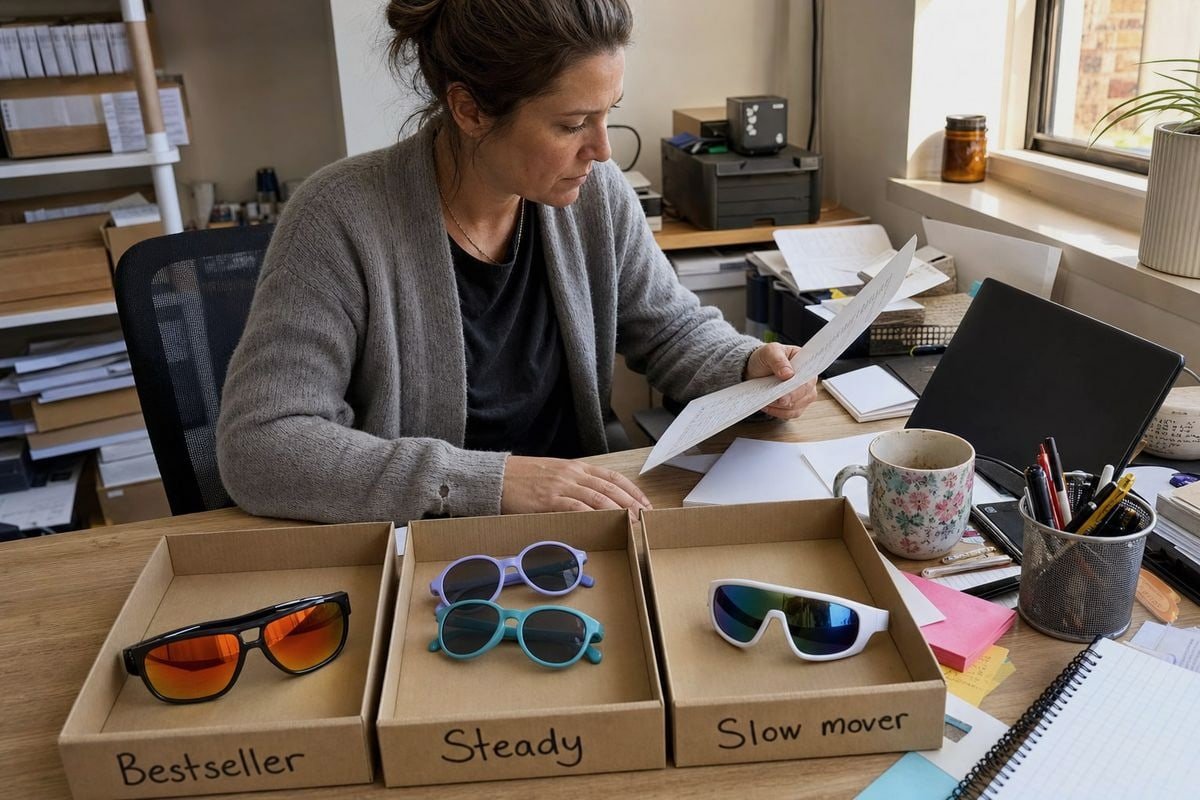
Calculate safety stock using this formula: (maximum daily sales × maximum lead time) minus (average daily sales × average lead time). Then tier the result: A-grade bestsellers get 2–4 weeks of cover, B-grade styles get 1–2 weeks, and C-grade slow movers get minimal or zero buffer.
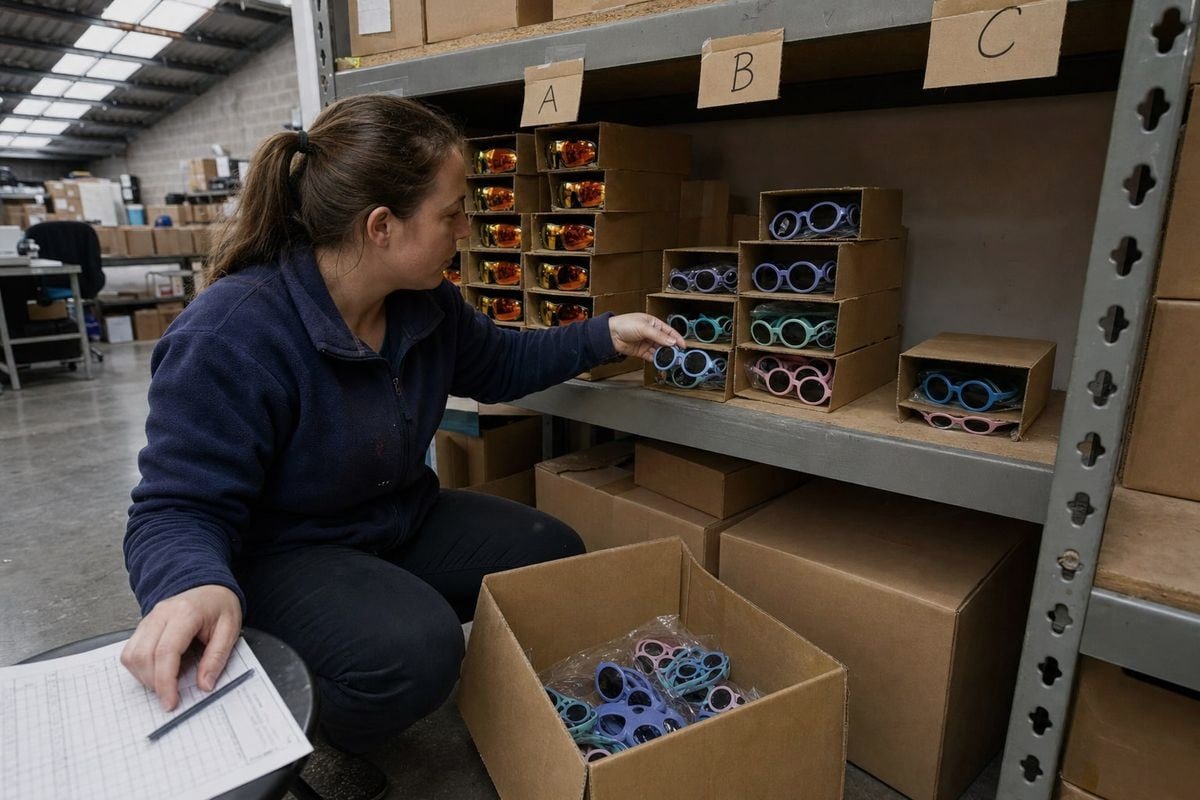
Safety stock is simply the extra inventory you hold above expected demand during your supply chain lead time. It protects you from two risks at once: a sudden demand spike and a supplier delay. If either one happens without a buffer, you face a stockout. If both happen together, you lose weeks of sales on your best styles.
Start with your sales velocity
First, pull your average daily sales per SKU from your store analytics. Use a window of 30 to 90 days. A shorter window reacts faster to trends. A longer window smooths out noise. For kids sunglasses, I suggest comparing a recent 30-day window against the same period last year. That comparison exposes seasonality that a single window hides.
Tier your SKUs before setting buffers
One buffer rule for every style is the most common mistake we see among new brand buyers. Some advisers push a lean approach with only 1–2 units of buffer per SKU, and I understand the appeal — lower inventory carrying costs 4 feel safer for a small brand. But that logic breaks on your A items. A stockout on your hero style during July costs far more than the carrying cost of four extra weeks of inventory. The right move is service level optimization by tier, not one blanket rule.
| SKU Tier | Share of Sales | Safety Stock Target | Stockout Risk Tolerance |
|---|---|---|---|
| A — bestsellers | Top ~20% of SKUs, ~70% of revenue | 2–4 weeks of average sales | Muy bajo |
| B — steady sellers | Middle ~30% of SKUs | 1–2 weeks of average sales | Moderado |
| C — long tail | Bottom ~50% of SKUs | 0–1 week, reorder only when low | High, acceptable |
One more nuance we flag for ecommerce clients: track net sales velocity, not gross. Kids sunglasses see sizing-related returns, and a unit in the return mail is out of circulation for 14–21 days. If your return rate is meaningful, add a small return-cycle buffer to A items.
What lead times should I expect from my manufacturer when planning restock frequency?
Every quotation our sales team sends out includes a production timeline, because lead time is half of the reorder point formula. Buyers who skip that line in the quote usually come back to us in a panic later, asking whether we can compress a schedule that was never realistic.
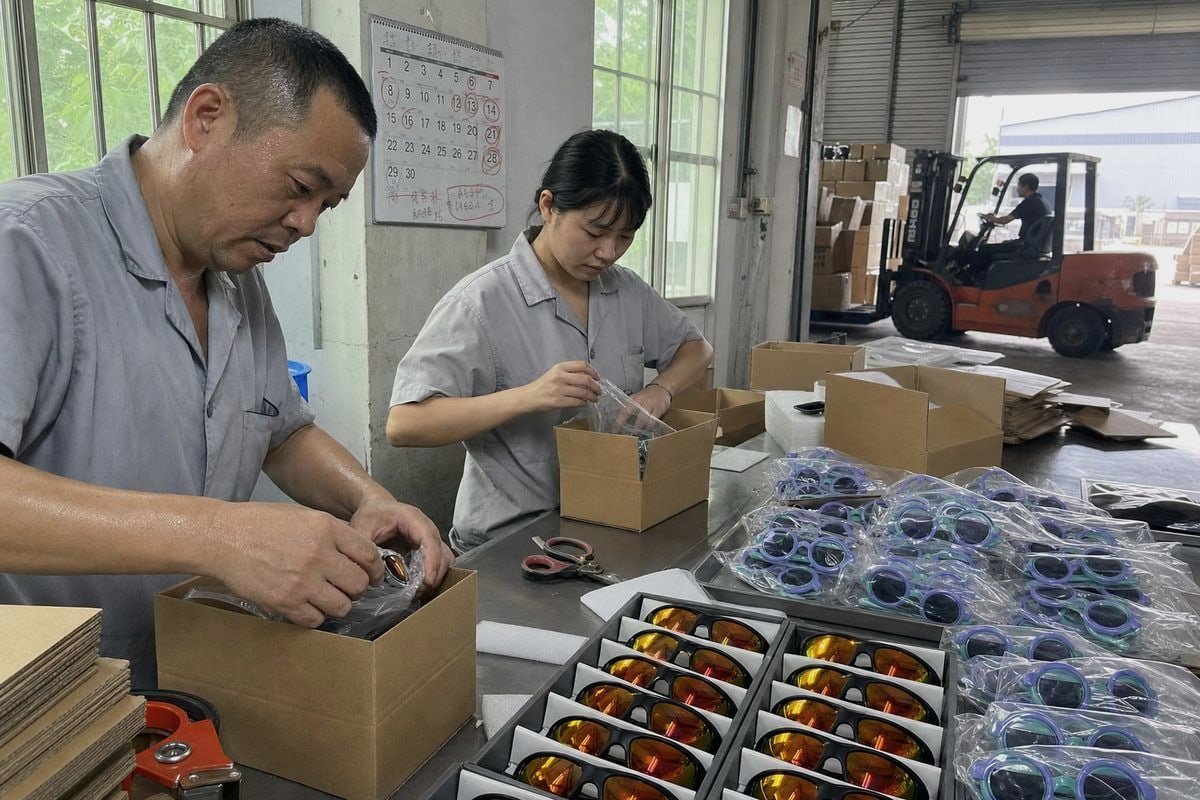
Expect 30–45 days production for custom OEM kids sunglasses orders, plus 25–40 days for sea freight, or 5–10 days by air. Stock-style orders from existing molds ship faster, often in 15–25 days. Always plan restock frequency around your total door-to-door lead time, not factory time alone.
Lead time demand is the number of units you will sell while you wait for a new order to arrive. The formula is simple: average daily sales × total lead time in days. If a style sells 3 units per day and your true door-to-door lead time is 40 days, you will sell 120 units before the container lands. Your reorder point must fire before your stock drops below that number plus safety stock.
Break lead time into its real components
Most buyers underestimate total lead time because they only count production. In our experience exporting to 20+ countries, the full chain looks like this:
| Lead Time Component | Rango Típico | Notas |
|---|---|---|
| Order confirmation and sampling | 3–10 days | Faster when choosing from existing styles |
| Production | 15–45 days | Custom colors, logos, and packaging add time |
| Quality control and inspection | 2–5 days | Lens UV400 checks and safety re-inspection |
| Sea freight and customs | 25–40 days | Varies heavily by destination port |
| Air freight alternative | 5–10 días | Costly; reserve for emergencies |
Why kids products carry extra lead-time risk
Children's eyewear has quality gates that adult sunglasses do not. Lens safety re-inspections, material compliance checks, and packaging requirements 5 for kids products can each add days. This is one reason we run a taller gestionado con 5S 6 with in-house QC: catching a lens defect before shipment is annoying; catching it after customs clearance destroys your season. When you plan restock frequency, add a reliability buffer for these steps. A supplier with variable lead times justifies a larger safety stock than a supplier who hits dates consistently. That is also a strong argument for choosing from a manufacturer's existing style library — our roughly 800 open styles skip mold development entirely, which shortens the front end of every reorder.
How can I use seasonal demand patterns to forecast restock timing for children's eyewear?
Our production calendar in Taizhou tells its own seasonal story: orders for Northern Hemisphere summer peak on our lines between January and March. Buyers who place summer orders in May are already too late for sea freight, and they pay for that delay in air-freight surcharges or empty shelves.
Use seasonal demand forecasting to raise safety stock 30–50% before your peak months and place bulk orders 3–4 months ahead of the season. Tighten reorder reviews to weekly during summer, back-to-school, and holiday travel windows, then loosen buffers and clear seasonal colors afterward.
Kids sunglasses do not sell like diapers or snacks. Demand is weather-driven, holiday-driven, and gift-driven. Parents buy before beach vacations, at the start of summer, before ski trips, and around back-to-school. That lumpiness makes a flat, calendar-based restock schedule weak. Your plan needs a seasonal overlay.
Map your demand calendar first
Here is a simplified planning calendar for a Northern Hemisphere kids eyewear brand. Flip it six months for Australia or New Zealand — a detail our Australian clients plan around every year.
| Period | Demand Pattern | Restock Action |
|---|---|---|
| Jan–Mar | Low retail sales, high planning value | Place bulk summer orders; lock production slots |
| Apr–Jun | Demand ramps sharply upward | Raise safety stock 30–50%; review A items weekly |
| Jul–Aug | Peak plus back-to-school | Fast replenishment cycles; air freight only for true winners |
| Sep–Oct | Demand cools | Loosen buffers; start clearance on seasonal colorways |
| Nov–Dec | Holiday gifting and winter-sun travel | Modest buffer on core styles; wraparound sport styles for ski trips |
Refine timing with smarter signals
Beyond the calendar, two forward-looking tactics work well. First, weather-linked restocking: a forecasted stretch of high-UV weather in your main shipping zones reliably lifts sunglasses demand, so triggering reorders roughly two weeks ahead of such periods keeps you covered. Second, age-cohort transition forecasting: your CRM can show when a customer segment will outgrow toddler sizes and graduate to junior frames. Shifting stock allocation 7 toward the next size band about six months ahead of that transition keeps repeat buyers on your site instead of a competitor's. Finally, remember that sport-style shield sunglasses — like the wraparound gradient-lens styles we produce — carry a second mini-peak in winter for ski and snow holidays. Seasonal does not always mean summer-only.
Which inventory data should I track to avoid stockouts or overstocking on my best-selling styles?
A European importer we have supplied for years once showed me their dashboard: five numbers per SKU, reviewed every Monday morning. Their reorders were boringly predictable, their clearance bins nearly empty. That discipline, more than any clever forecast, is what separates healthy inventories from chaotic ones.
Track five metrics per SKU: average daily sales, days of supply remaining, reorder point status, inventory turnover ratio, and weeks since last sale. Review A items weekly, B items monthly, and audit slow movers quarterly to catch both stockout risk and dead stock early.
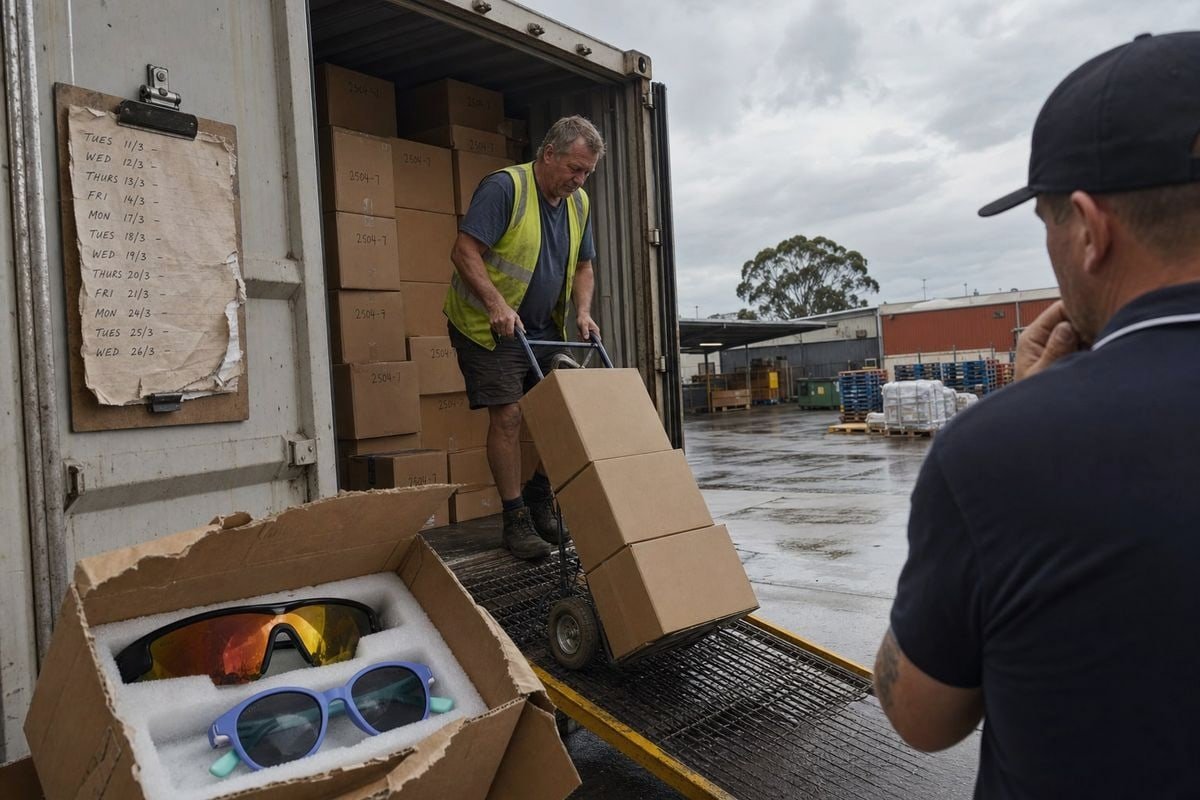
Data beats intuition in this category, because colorful styles fool the eye. A rack of periwinkle-and-mint round frames can look like a bestseller while quietly gathering dust, and a plain black sport shield can be your true hero SKU. Only the numbers tell you which is which.
The core health metrics
Two formulas verify whether your whole policy is healthy. Inventory turnover ratio 8 equals cost of goods sold divided by average inventory value. Days of supply equals 365 divided by that ratio. A general benchmark of 5–10 turns per year — roughly a one-to-two-month sell-and-replenish cycle — is a reasonable target, though your A items should turn faster and seasonal styles will swing around it. If turnover drops well below that range, you are overstocked and carrying costs are eating margin. If it runs far above, you are probably flirting with stockouts.
Track at variant level, not style level
Kids sunglasses demand variant-level tracking. Age-based sizes — roughly 0–2, 3–5, and 6–10 years — sell at different velocities, and colorways within one style can differ by multiples. A style-level view hides the fact that your 3–5 size in black sold out while the 0–2 in yellow sits still. Two related practices matter here. First, sibling-sync reordering: if you sell multi-child bundles, replenish complementary sizes together so one out-of-stock size does not break the bundle offer. Second, quarterly SKU rationalization: review every variant with zero or near-zero sales, mark it for clearance, and free that cash for winners. You can also apply an economic order quantity mindset to batch sizes — order enough to earn better unit pricing and spread freight cost, but not so much that a seasonal color outlives its season.
A worked example
Suppose your best-selling wraparound style sells 3 units per day on average. Your total lead time is 21 days door to door. You want 10 days of safety stock heading into summer. Your reorder point is (3 × 21) + 30 = 93 units. When on-hand stock touches 93, you order — no debate, no shelf-walking, no guessing.
Conclusión
Stockouts kill summer revenue; overstock kills cash flow. The fix is a no-guess policy: tiered safety stock, honest lead times, seasonal buffers, and weekly data reviews. Having watched hundreds of brands run this playbook with our frames, I can say the math is simple — the discipline is everything. Start with one worked reorder point today, then refine it after each peak season.
Notas al pie
1. Authoritative definition of buffer inventory used to mitigate risks of stockouts during supply chain fluctuations. ↩︎
2. Standard accounting definition for the direct costs of producing goods sold. ↩︎
3. Wikipedia’s comprehensive definition of lead time in supply chain and manufacturing. ↩︎
4. Wikipedia’s explanation of the various costs associated with holding inventory. ↩︎
5. Authoritative overview of US safety and documentation standards for children’s products. ↩︎
Más artículos que te podrían gustar

1 de agosto de 2026
¿Debería la fábrica encargarse del embalaje y etiquetado de las gafas de sol para niños, o utilizar un proveedor designado?

1 de agosto de 2026
Almacén propio vs. Cumplimiento directo del proveedor: ¿Qué reduce los costos de devolución para las marcas de gafas de sol para niños?

1 de agosto de 2026
Directo al almacén del puerto o staging en el extranjero: ¿Cuál ahorra más en el envío de gafas de sol para niños?
¿Buscas un socio confiable en gafas para niños?
Explore más de 800 estilos listos y soporte OEM/ODM completo adaptado a su marca.
Ponte en contacto English
  Español de México
  Deutsch
  Français
  日本語
日本語  العربية
  Português do Brasil