How Does Single vs Dual Factory Production Affect Kids’ Sunglasses Quality and Delivery?
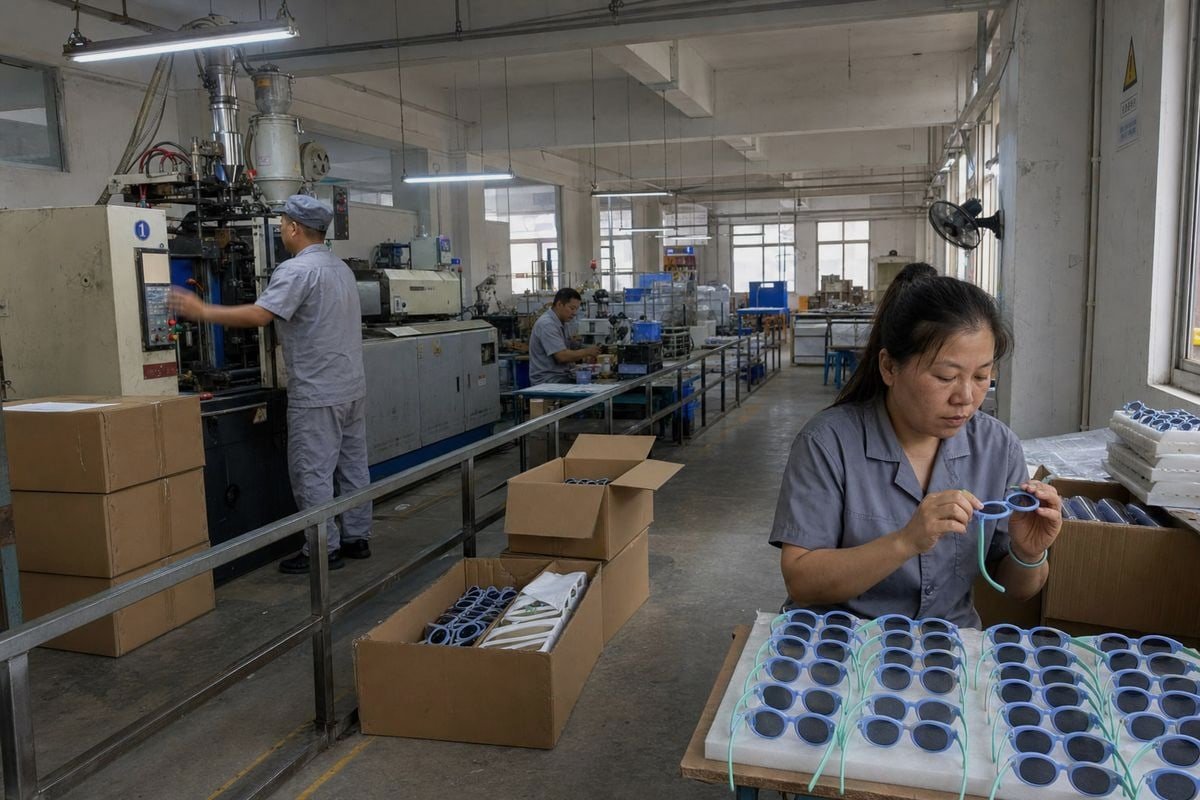
Single vs dual factory production quietly decides whether your kids’ sunglasses arrive consistent and on time — a question buyers rarely ask us until a batch goes wrong.
Single factory production gives kids’ sunglasses tighter quality control consistency, identical materials, and simpler traceability, while dual factory production adds delivery resilience and capacity but raises batch-to-batch variation risk. Choose one controlled facility for quality; add a second only with strict shared standards.
Let me break this down properly. I will show you how to spot outsourcing, why splitting orders creates risk, and exactly what to ask your supplier.
How can I tell if my supplier is using a single factory or outsourcing part of my order?
During a factory visit last year, a European buyer told me his previous "factory" turned out to be a trader splitting his kids' sunglasses order across three workshops. He never knew.
Ask for a factory audit report, business license, workshop photos with timestamps, and a live video tour of injection, assembly, and QC lines. If a supplier cannot show frame injection and lens fitting under one roof, part of your order is likely outsourced.
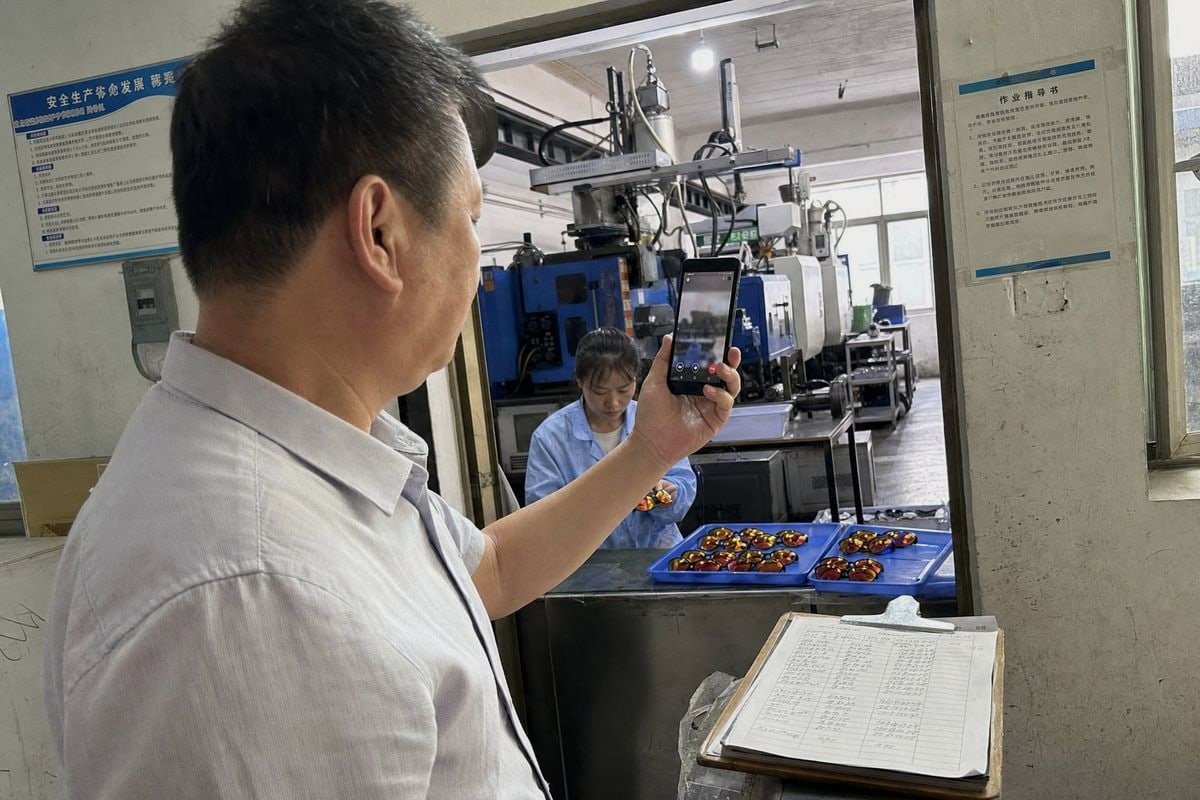
Many suppliers look identical on paper. The difference shows up when you dig into who actually controls production. In our 15 years of OEM eyewear manufacturing, we have seen buyers burned because they trusted a polished website instead of verifying the workshop. Here is how to tell the difference in practice.
Signals that reveal the real production model
A genuine single-facility supplier can answer detailed process questions instantly. A trader or a supplier quietly outsourcing will hesitate, deflect, or give vague answers. Watch for these signals:
| Verification Method | Single Factory Signal | Outsourcing Signal |
|---|---|---|
| Live video tour | Shows injection, polishing, assembly, QC in one walk | Only shows a showroom or "the office" |
| Process questions | Names the machine, cycle time, and operator role | Says "our team handles that" without detail |
| Batch traceability | Can trace a defect to a line, worker, or date | Cannot say which site made which units |
| Lead time answers | Gives a schedule tied to their own capacity | Quotes lead times that shift week to week |
| Sample requests | Provides samples from different production batches | Only offers one polished golden sample |
Why traceability is the ultimate test
Ask this one question: "If I find a hinge defect in carton 47, can you tell me which line and which day produced it?" At our Taizhou workshop, our 5S-managed floor 1 and batch records let us answer that in minutes. A supplier juggling hidden subcontractors simply cannot. Real-time batch traceability 2 — some brands now even link per-unit QR codes to factory test records — is only possible when one facility owns the whole process. That matters even more for children's products, where CPSIA compliance certification and material safety documentation must map to specific batches, not just a brand name.
Why does dual factory production increase my risk of quality inconsistencies between batches?
One trade-off we weigh constantly: adding outside capacity would let us quote faster delivery, but every second site introduces variables that children's eyewear cannot tolerate.
Dual factory production means two sets of molds, dye lots, operators, and inspection habits. Even small differences in TPEE flexibility, Pantone color matching, lens tinting, or polishing create visible batch-to-batch variation — unless both sites follow identical, documented standards enforced by the brand.
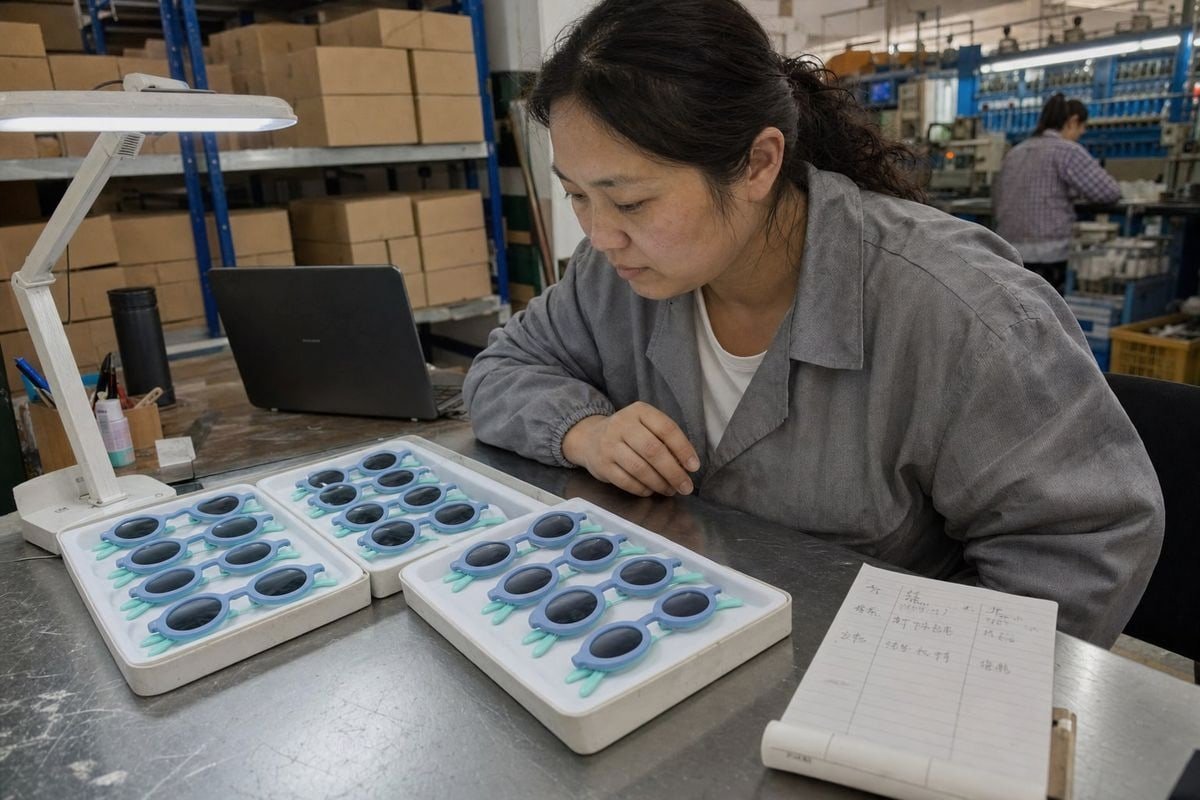
Kids' sunglasses are a consistency problem, not just a fashion product. Parents buy a second pair expecting it to feel exactly like the first. Retailers pull SKUs when color drifts between shipments. So where exactly does dual-site variation creep in?
The four variation points that hurt most
First, tooling. Two factories rarely run truly identical molds. A "matched" mold can still produce slightly different temple curves or nose bridge fits. On a soft TPEE frame material designed to flex safely on a child's face, a small tooling difference changes how the frame feels and how it survives bending.
Second, materials and color. Dye lots differ between suppliers. A periwinkle-blue front frame from Site A may sit two shades off the mint-teal pairing from Site B. Pantone matching 3 across two facilities requires shared color masters and disciplined incoming inspection — most split arrangements skip this.
Third, lens performance. protección UV400 4 are the safety baseline, but tint darkness does not prove UV blocking. Consumer testing in South Korea found children's sunglasses that all passed UV requirements still varied in visible light transmittance, and some showed measurable refraction issues. Two lens sources double that variability. The same applies to impact resistant lenses: coating thickness and curing differ between labs.
Fourth, inspection culture. One site may reject a rough hinge edge; the other may pass it. Without a shared master sample and identical QC thresholds, one facility quietly drifts from the approved standard.
When dual sourcing can still work
To be fair, some buyers raise a valid objection: component-specialized dual sourcing — a dedicated optical lab for lens coating, a plastics specialist for injection — can access equipment an all-in-one factory lacks. That is true, but only for brands with strict written specifications, retained samples at both sites, and multi-stage QC oversight. Most small and mid-size kids' brands do not have that infrastructure. For them, a single controlled facility remains the safer path.
Can splitting production across two factories cause delays in my delivery timeline?
A distributor in Australia once asked us to rush a split order after his other supplier's second site fell three weeks behind — the two halves could not ship together.
Yes. Splitting production doubles approval cycles, duplicates QC steps, and forces both sites to finish before consolidated shipping. If either factory slips, the whole order waits. Dual factories only shorten lead times when both run flawlessly and ship independently.
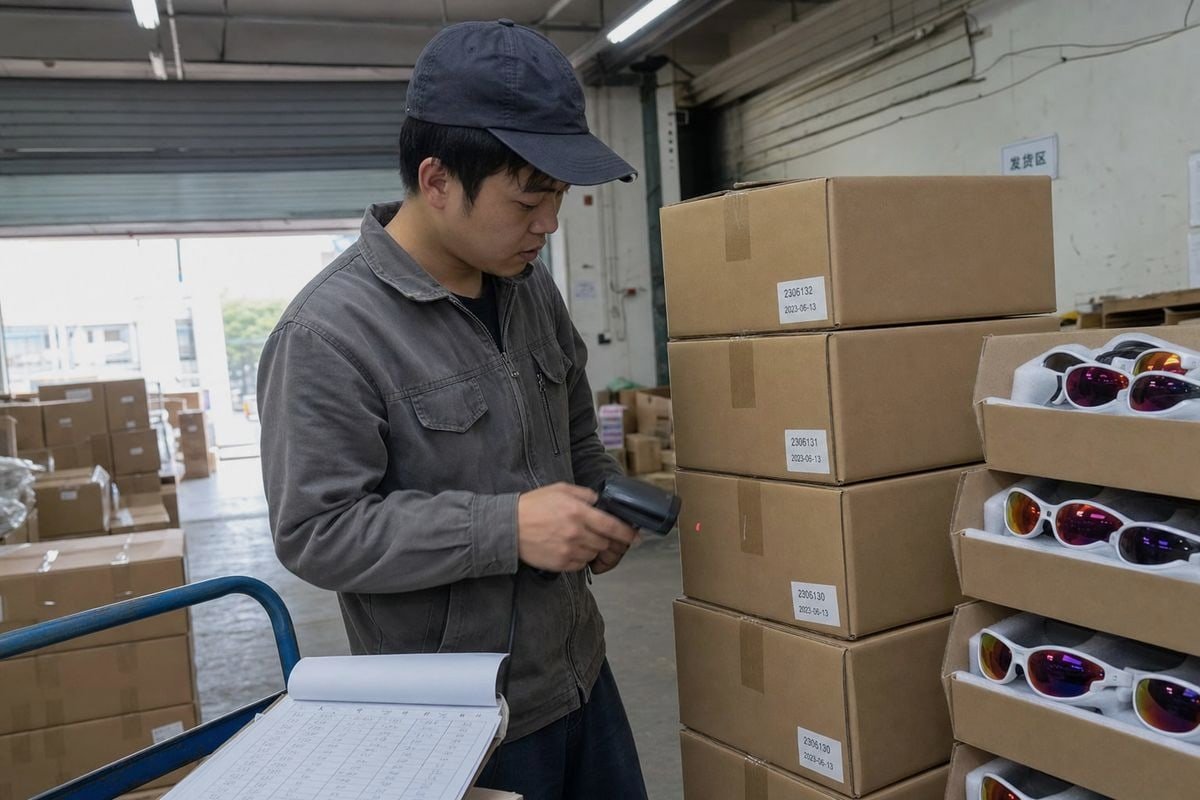
The delivery argument for dual sourcing sounds compelling: logistical load balancing during the back-to-school rush, protection from regional power quotas or labor shortages, and supply chain resilience 5 against tariff shifts. These benefits are real. But they come with coordination costs that buyers rarely see until they hit a deadline.
Where dual-site timelines break down
| Timeline Stage | Single Factory | Dual Factory |
|---|---|---|
| Sample approval | One cycle, one golden sample | Two cycles; both sites must match the sample |
| Material procurement | One purchase, better MOQ leverage | Two smaller buys, weaker pricing, staggered arrivals |
| Production scheduling | One production capacity management plan | Two schedules that must be synchronized |
| Inspección previa al envío | One random sampling visit | Two inspections, doubled cost and time |
| Consolidation | Ships when done | Waits for the slower site |
There is also a hidden factor: information decay. Design feedback passed through two management teams gets diluted. A logo placement correction reaches Site A on Monday and Site B — maybe — on Thursday. In our experience exporting to 20+ countries, communication lag causes more delays than machines ever do.
The honest counterargument
Single-factory buyers face a real risk too: if that one facility suffers machine downtime or a regional disruption, the entire order stalls. That is why vendor diversification strategy 6 exists. The practical middle path we recommend to our brand clients is simple: run core SKUs through one controlled facility, and qualify a second source as pre-approved overflow — with matched tooling standards and identical QC documentation — before you ever need it. Lead time optimization comes from planning, not from splitting orders reactively under pressure.
What should I ask a manufacturer to confirm my kids' sunglasses are made in one controlled facility?
The sharpest procurement managers we work with never ask "do you have a factory?" They ask questions a trader cannot fake — and our engineers respect them for it.
Ask who performs frame injection, lens fitting, assembly, and final QC; request batch inspection records, master sample retention policy, CPSIA and UV400 test reports tied to specific batches, and a live tour. Verifiable, process-level answers confirm single-facility control.
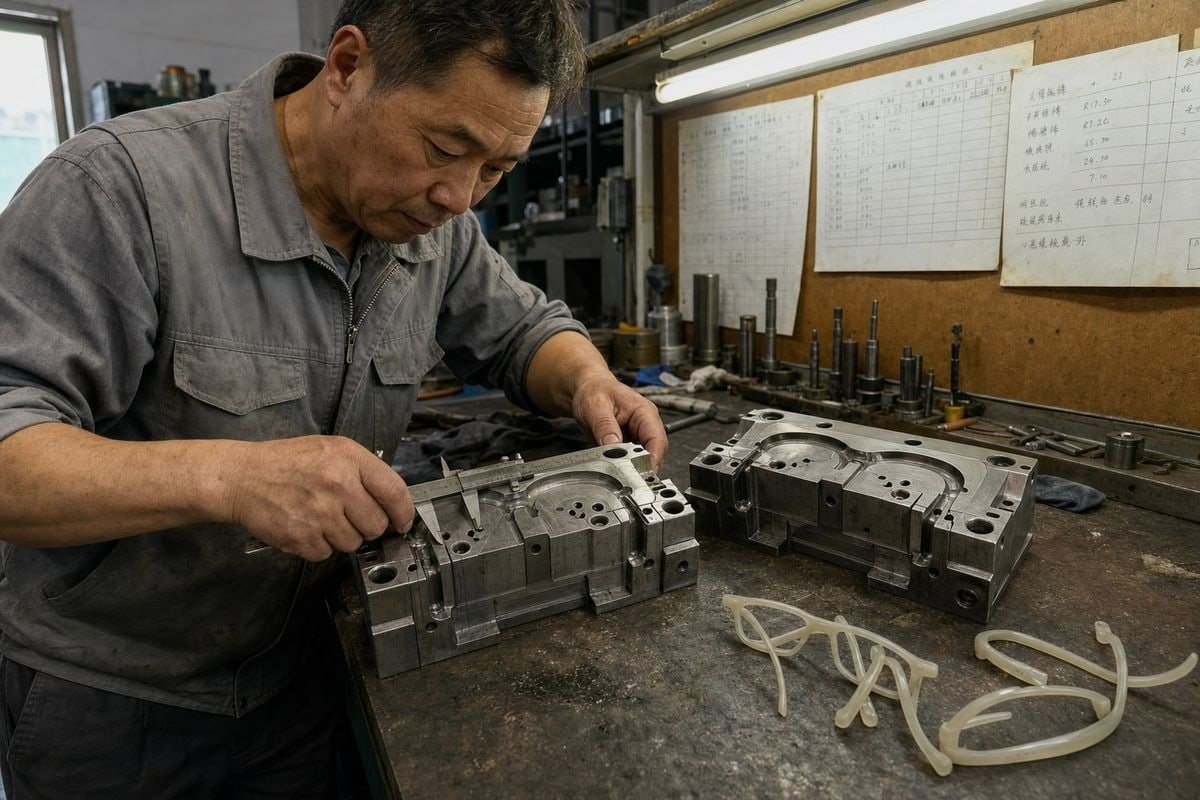
A good question list does two jobs. It verifies the production model, and it tests whether the supplier's quality system would protect you even if they ever did add a second site. Here is the checklist I would use if I were sitting on your side of the table.
The ten questions that expose the truth
- Which production stages happen inside your own building, and which are subcontracted?
- Can I do a live video walkthrough of injection, assembly, and QC — today, unannounced?
- How do you retain master samples, and for how long after my order ships?
- If I report a defect in one carton, how do you trace it to a line and date?
- What are your in-process inspection points, not just final inspection?
- Can you show UV400 and impact resistance test reports linked to my batch, not a generic certificate?
- What is your minimum order quantity per color, and why is it set at that level?
- Who mixes and verifies frame colors against the approved Pantone reference?
- What happens to my schedule if one machine goes down — what is your backup within the facility?
- Can I order pre-production samples from two different batches, not one golden sample?
How to read the answers
| Question Topic | Strong Answer | Weak Answer |
|---|---|---|
| Subcontracting | Names each in-house stage specifically | "Everything is handled by our partners" |
| Traceability | Describes batch codes and line records | "We rarely have defects" |
| Pruebas | Batch-linked reports on request | One old certificate PDF |
| Samples | Offers multi-batch samples willingly | Pushes back or charges heavily |
When buyers put these questions to us, we welcome them. Our ~800 existing styles mean a new brand can launch without heavy mold investment, but the styles only matter if every reorder matches the first shipment. Manufacturing scalability 7 without quality control consistency is just a faster way to disappoint parents. Full OEM support — custom colors, logos, lenses, and retail-ready packaging — only holds value when one facility owns the result end to end.
Conclusión
Choosing between one factory or two shapes every batch you sell. Verify single-facility control, demand traceable QC, and treat dual sourcing as a planned backup — never an untested shortcut.
Notas al pie
1. Background on the 5S workplace organization methodology cited as a quality control practice. ↩︎
2. Comprehensive Wikipedia overview of traceability standards and systems used in global manufacturing supply chains. ↩︎
3. Background on the color-matching system referenced for cross-factory frame color consistency. ↩︎
4. EPA sun-safety guidance supports the UV protection baseline claim for children’s sunglasses. ↩︎
5. Authoritative Wikipedia entry defining supply chain resilience and its strategic importance in manufacturing. ↩︎
6. Background concept explaining why manufacturers pursue vendor diversification against disruption risk. ↩︎
7. Alibaba.com represents the manufacturing/trade sourcing context relevant to scalability claims. ↩︎
Más artículos que te podrían gustar
1 de agosto de 2026
¿Debería la fábrica encargarse del embalaje y etiquetado de las gafas de sol para niños, o utilizar un proveedor designado?
1 de agosto de 2026
Almacén propio vs. Cumplimiento directo del proveedor: ¿Qué reduce los costos de devolución para las marcas de gafas de sol para niños?
1 de agosto de 2026
Directo al almacén del puerto o staging en el extranjero: ¿Cuál ahorra más en el envío de gafas de sol para niños?
¿Buscas un socio confiable en gafas para niños?
Explore más de 800 estilos listos y soporte OEM/ODM completo adaptado a su marca.
Ponte en contacto English
  Español de México
  Deutsch
  Français
  日本語
日本語  العربية
  Português do Brasil