How to Calculate Break-Even Point Between Sea and Air Freight for Kids’ Sunglasses Stockouts?

Every summer, buyers call our Taizhou factory in a panic: the break-even point between sea and air freight suddenly matters because their kids’ sunglasses are about to stock out terminal exams 1. Wait five weeks for the ocean, and shelves sit empty during peak season. Panic-pay for air, and margins evaporate. The good news? This decision is not a guess — it is a calculation you can run in ten minutes.
To calculate the break-even point between sea and air freight for kids’ sunglasses stockouts, compare the incremental air landed cost against the lost contribution margin: multiply weekly units sold by margin per pair by weeks of stockout avoided. If lost profit exceeds the air premium, fly the goods.
That is the core formula. But the real numbers hide in the details — chargeable weight 2, landed cost, seasonal timing, and your true stockout exposure. Let me walk you through each piece, using kids’ sunglasses as the working example.
How do I calculate the true cost difference between sea and air freight for my kids' sunglasses order?
During a recent replenishment for a European kids' brand, our shipping team compared two freight forwarder quotes side by side — and the "obvious" answer flipped once we added local fees and duties Duplica un estilo existente sin una audiencia clara 3. Headline rates almost never tell the full story.
Calculate the true cost difference by comparing full landed cost per unit, not freight quotes. Add freight, duties, insurance, terminal fees, and last-mile delivery for both modes, then divide by units shipped. The gap between air and sea landed cost per pair is your air premium.
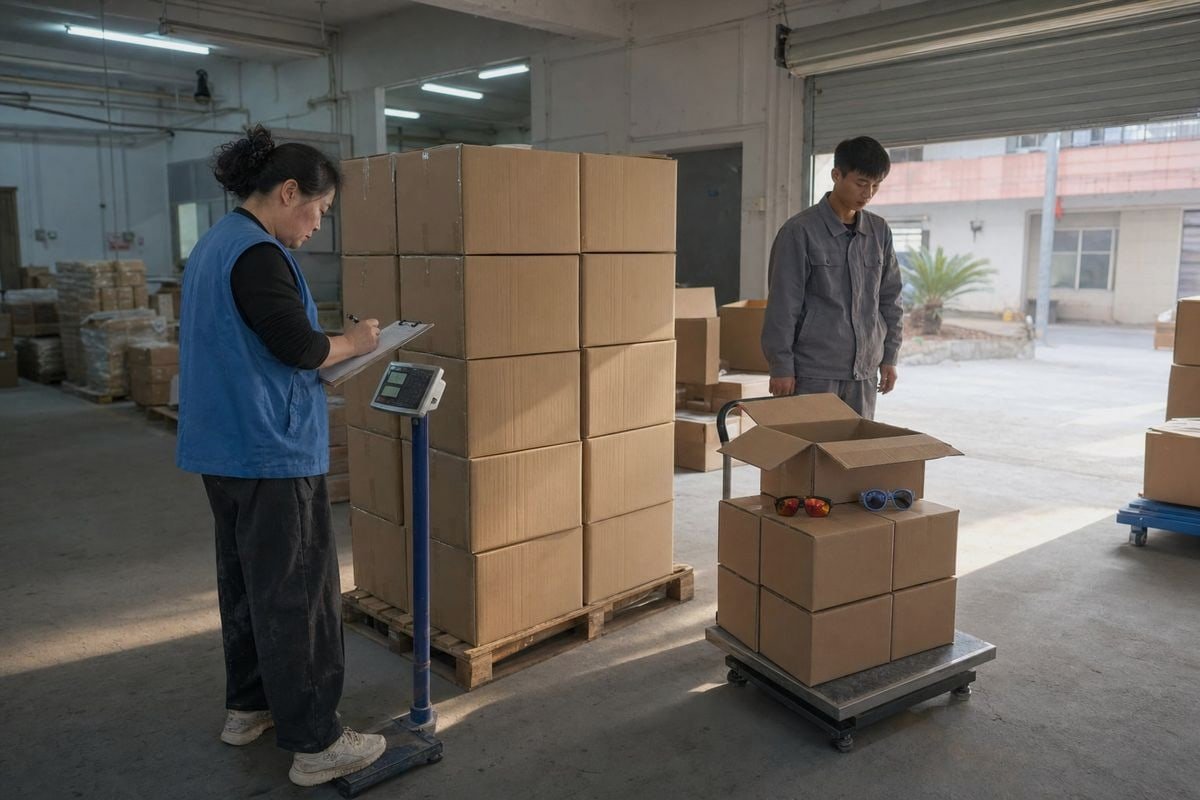
The first mistake buyers make is comparing a sea quote to an air quote and stopping there. A proper landed cost calculation 4 includes everything that touches the shipment before it reaches your warehouse. Sea freight carries heavy fixed charges — documentation, terminal handling, customs brokerage, destination fees — that hit hard on small shipments. Air freight has fewer fixed fees but a punishing rate per kilogram.
Chargeable weight: where sunglasses get tricky
Air freight bills you on chargeable weight — the greater of actual weight and volumetric weight, using a divisor of 6000 for centimeters. Kids' sunglasses are light, but their retail packaging can be bulky. A pair of our TR90 frames with TPEE temples weighs under 30 grams, yet a gift box with a hard case can triple the volumetric footprint. Sea freight uses a 1:1000 divisor, so bulk matters far less on the ocean.
Here is a realistic comparison for a 1,000-pair replenishment order:
| Elemento de costo | Sea freight (LCL) | Transporte aéreo |
|---|---|---|
| Base freight quote | $280 | $1,450 |
| Origin + terminal fees | $220 | $95 |
| Customs brokerage | $150 | $150 |
| Duties and taxes | $310 | $310 |
| Destination delivery | $180 | $120 |
| Total landed freight cost | $1,140 | $2,125 |
| Cost per pair | $1.14 | $2.13 |
In this example, the air premium is roughly $985, or about $0.99 per pair. That number — not the scary headline quote — is what you weigh against your stockout risk. Notice how sea's fixed charges shrink its price advantage on small orders. This is why lightweight, compact cargo like kids' sunglasses often sits closer to the air/sea crossover than buyers expect.
Rules of thumb — and their limits
Industry guides cite crossover points around 100–150 kg, or 150–300 kg for dense cargo, or 550–700 lbs on the China-to-US East Coast lane. These conflict because every route, density, and fee structure differs. Treat them as sanity checks, never as your answer. Model your own lane.
What stockout risks should I weigh before choosing air freight to cover a shipping gap?
One lesson our export team learned the hard way: a client once saved $900 by choosing sea, then lost an entire back-to-school window when a port delay stretched transit by two weeks. The freight saving was real. The revenue loss was ten times bigger.
Weigh four stockout risks: lost contribution margin on missed sales, wasted marketing and customer acquisition spend, marketplace ranking penalties that outlast the stockout, and seasonal window loss. For kids' sunglasses, missing a peak-season week often costs far more than the air premium.

The opportunity cost of stockouts is almost always undercounted. Most buyers tally lost unit sales and stop. But the damage compounds in three additional ways.
The four layers of stockout cost
First, the direct loss: weekly sell-through multiplied by gross margin per unit. If you sell 400 pairs a week at $6 contribution each, one week dark costs $2,400. Second, wasted acquisition spend: your ads keep running, shoppers click, and they hit an out-of-stock page. That budget buys nothing. Third, marketplace penalties: platforms like Amazon demote listings that stock out, and the ranking recovery can take weeks after inventory returns. Fourth — and most brutal for our product category — seasonal decay.
Why timing changes everything for kids' sunglasses
Kids' sunglasses demand is not flat. It spikes around spring break, early summer, holiday travel, and back-to-school. A stockout in these windows is not "delayed sales" — it is lost sales, because a parent who needs sunglasses for next week's beach trip buys a competitor's pair today. The stockout cost curve is non-linear: the closer you are to a peak window, the lower your air freight break-even drops.
There is also an offsetting factor buyers forget. Sea transit means 30-plus extra days of capital tied up in goods on the water. Those inventory carrying costs — financing, insurance, risk — quietly shrink sea's apparent advantage, especially for orders funding a whole season.
One more risk specific to children's products: compliance holds. Kids' eyewear entering the US must satisfy CPSIA requirements 5, and sea shipments flagged for terminal exams can lose another 7–14 days. Air shipments typically clear faster, which matters when your supply chain lead time is already stretched thin. In our fifteen years shipping children's eyewear to buyers in 20-plus countries, the shipments that hurt clients most were never the expensive ones — they were the late ones.
How can I work out the break-even order quantity that justifies paying for air freight?
Numbers settle arguments faster than opinions do. When a distributor asks us whether to fly a replenishment order, we open a simple spreadsheet together and let the math decide. Here is that exact framework.
Divide the total air freight premium by your contribution margin per pair to find break-even lost units. If your expected stockout during the sea transit time differential would lose more units than that number, air freight pays for itself.
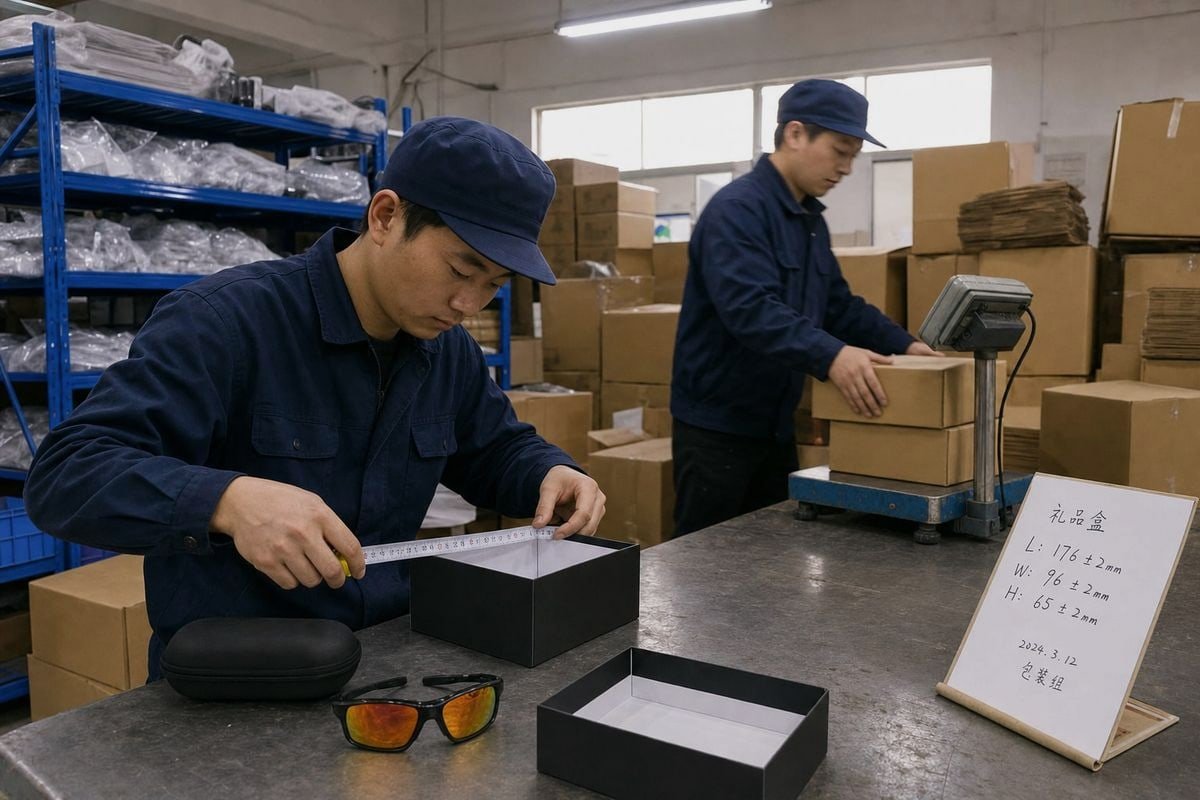
The logic runs in four steps. You can build it in any spreadsheet in minutes.
The four-step break-even calculation
- Find the air premium. Air landed cost minus sea landed cost for the full shipment. From our earlier table: $2,125 − $1,140 = $985.
- Find the transit time differential. Sea takes 35 days door-to-door on this lane; air takes 7. The difference is 28 days — four weeks of exposure.
- Estimate stockout weeks. Check current stock against weekly sell-through. If you hold two weeks of inventory, sea leaves you dark for roughly two weeks; air closes the gap entirely.
- Compare avoided loss to premium. Weekly sales × gross margin per unit × stockout weeks avoided, versus the $985 premium.
A worked example: 1,000 pairs of kids' sunglasses
| Entrada | Valor |
|---|---|
| Cantidad del pedido | 000 pares |
| Weekly sell-through | 400 pairs |
| Contribution margin per pair | $6.00 |
| Sea transit (door-to-door) | 35 days |
| Air transit (door-to-door) | 7 days |
| Current stock cover | 14 días |
| Expected stockout via sea | ~2 weeks |
| Air freight premium | $985 |
Lost contribution via sea: 400 pairs × $6.00 × 2 weeks = $4,800. Against a $985 air premium, air freight wins by a wide margin — nearly five to one. The break-even threshold itself is simple: $985 ÷ $6.00 = 165 pairs. If a stockout would cost you fewer than 165 lost sales, ship by sea. More than that, fly.
Don't ignore the counterargument
Some buyers argue sea should always be the default and air is only for true emergencies. That discipline has merit — habitual air freighting destroys margin on routine replenishment. But the formula-driven view resolves the tension: sea is usually cheaper on pure freight, air is rational when stockout loss exceeds the premium, and the only reliable answer is to calculate the threshold for your specific SKU and lane. A useful secondary check is the 15% rule: if total air shipping stays under roughly 15% of the cargo's retail value during a time-sensitive window, air is generally defensible.
The hybrid split-shipment option
You rarely need to choose all-or-nothing. Air-freight 15–20% of the order to bridge the gap, and let the remaining 80% travel by sea. In the example above, flying 200 pairs might cost a $400 premium while protecting the full $4,800 at risk. We prepare split shipments regularly at our factory — same batch, same QC, two departure documents.
What steps can I take with my manufacturer to avoid facing this sea vs. air freight decision again?
A procurement manager from Australia once told me she never wanted to see another air freight invoice. We restructured her ordering calendar together, and two seasons later she has not paid for a single emergency shipment. Prevention beats calculation every time.
Prevent emergency freight decisions by setting a reorder point formula tied to sea transit time, holding seasonal safety stock, booking peak-season production early, choosing existing styles to cut sampling lead time, and agreeing on split-shipment terms with your manufacturer in advance.
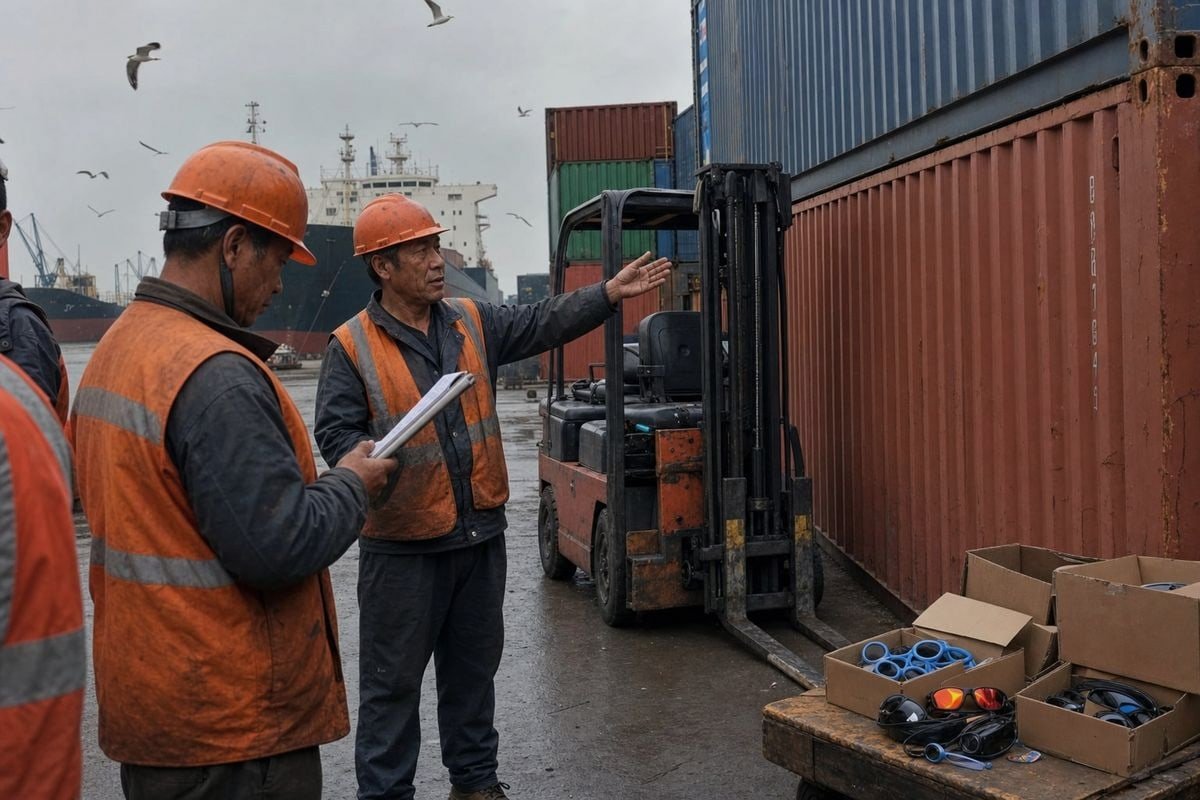
The sea-versus-air dilemma is usually a symptom, not the disease. The disease is a reorder trigger that ignores real supply chain lead time. Fix the trigger and the emergency rarely arrives.
Build a reorder point that respects the ocean
El reorder point formula 6 is straightforward: average weekly demand × total lead time in weeks, plus safety stock. The mistake is using freight transit alone as lead time. Real lead time includes production, QC, booking, sailing, customs, and inland delivery. For our kids' sunglasses, typical production runs 25–35 days depending on customization depth, before the vessel even loads. Your reorder point must cover the whole chain.
| Planning lever | What to agree with your manufacturer | Impact on stockout risk |
|---|---|---|
| Reorder point | Trigger POs at full lead-time demand + buffer | Removes the emergency entirely |
| Safety stock levels | Hold 3–6 extra weeks before peak season | Absorbs demand spikes and port delays |
| Early seasonal booking | Confirm summer orders in Q4/Q1 | Locks capacity before the rush |
| Existing style selection | Choose from catalog styles instead of new molds | Cuts development weeks from lead time |
| Pre-agreed split shipments | Standing option to air 10–20% of any order | Caps worst-case exposure cheaply |
| Demand signal sharing | Share sell-through data monthly | Lets the factory pre-position materials |
Where your factory choice matters
Lead time is partly a manufacturer decision. Because we keep around 800 existing styles ready for customization — from flexible TPEE toddler frames 7 to sporty wraparound shields with mirrored UV400 lenses — a brand can skip mold development entirely and shave weeks off the calendar. Custom colors, logos, lenses, and retail-ready packaging 8 still fit inside that shorter window. We also flag long-lead components early, like polarized lenses or custom gift boxes, so a packaging delay never becomes a freight emergency.
Finally, agree on communication rhythms. When our buyers share sell-through trends, we can hold raw materials for their repeat colorways before the PO lands. That single habit has prevented more air freight bills than any spreadsheet.
Conclusión
The break-even point between sea and air freight is a calculation, not a coin flip: compare the air premium to the margin at risk, decide with data, then fix your reorder planning so the emergency never repeats.
Notas al pie
1. Inspection processes conducted by customs authorities to ensure cargo compliance and security. ↩︎
2. IATA sets the industry standard for calculating chargeable weight in air cargo. ↩︎
3. Standard for eyewear providing nearly 100% protection against harmful ultraviolet radiation. ↩︎
4. US Dept of Commerce trade resource explains landed cost components like duties and fees. ↩︎
5. Federal law establishing safety standards for children’s products in the United States. ↩︎
6. Essential inventory management calculation to determine when to place new orders. ↩︎
7. Durable and flexible material commonly used in children’s eyewear for safety and comfort. ↩︎
8. Packaging design
Más artículos que te podrían gustar

1 de agosto de 2026
¿Debería la fábrica encargarse del embalaje y etiquetado de las gafas de sol para niños, o utilizar un proveedor designado?

1 de agosto de 2026
Almacén propio vs. Cumplimiento directo del proveedor: ¿Qué reduce los costos de devolución para las marcas de gafas de sol para niños?

1 de agosto de 2026
Directo al almacén del puerto o staging en el extranjero: ¿Cuál ahorra más en el envío de gafas de sol para niños?
¿Buscas un socio confiable en gafas para niños?
Explore más de 800 estilos listos y soporte OEM/ODM completo adaptado a su marca.
Ponte en contacto English
  Español de México
  Deutsch
  Français
  日本語
日本語  العربية
  Português do Brasil