How to Ask Suppliers for Courier-Ready Retail Packaging for Kids Sunglasses?
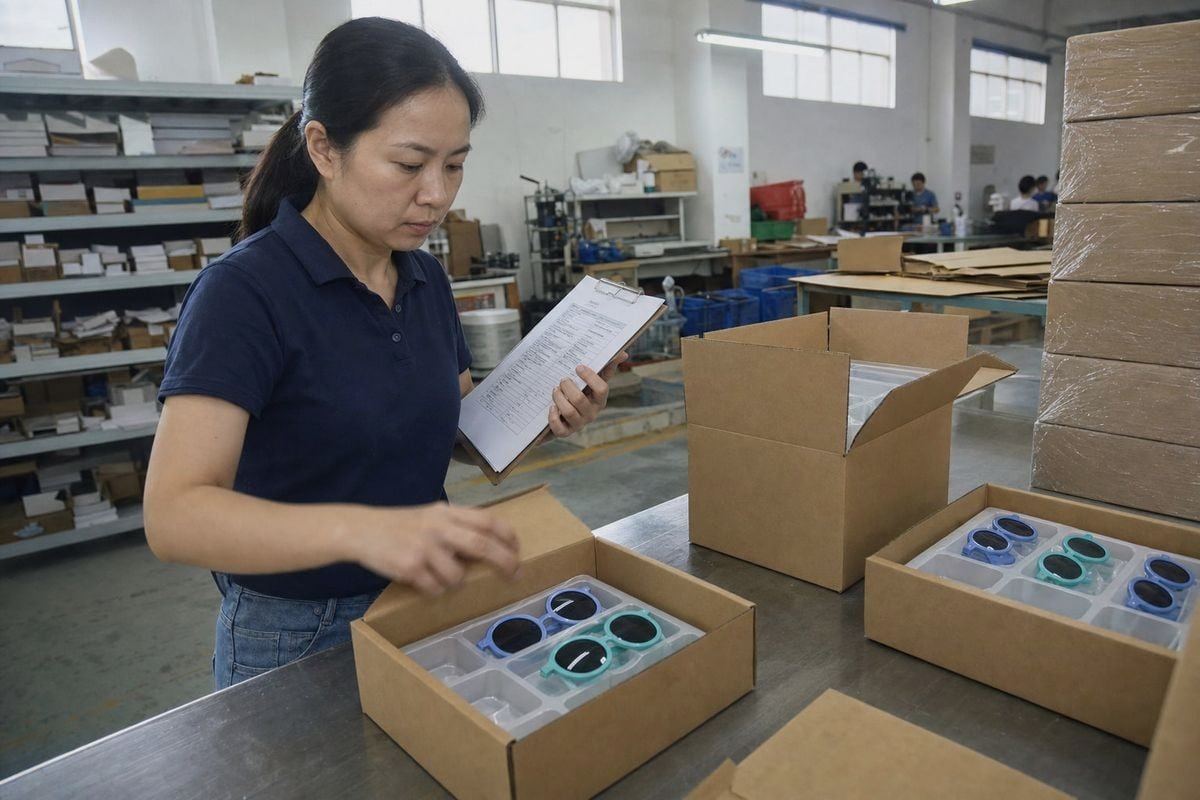
Requesting courier-ready retail packaging for kids sunglasses sounds simple until quotes arrive wrong, samples disappoint, and shipments land crushed export cartons 1. On our production line, vague briefs cause most of those failures.
Ask suppliers for courier-ready retail packaging for kids sunglasses by sending a written brief covering product dimensions, SKU quantities, packaging structure, branding files, barcode and safety labeling, destination market, and delivery deadline — then request samples, MOQ options, drop-test details, and a formal packaging specification sheet before confirming production.
That is the short version. Below, I will break down exactly what to include in your request, how to vet suppliers, which details protect sunglasses in transit, and how to add branding without delaying your order.
What Should I Include in a Packaging Request to Avoid Damaged Shipments?
A buyer from Australia once sent us one line: "please quote packaging." We had to ask eleven follow-up questions before we could price anything. That back-and-forth cost her two weeks.
Include product dimensions and weight, quantity per SKU, the packaging format you want, inner protection layers, branding artwork, barcode and labeling requirements, destination country, shipping method, and a hard delivery date. A complete brief lets the supplier quote accurately once, without revision cycles that delay production.
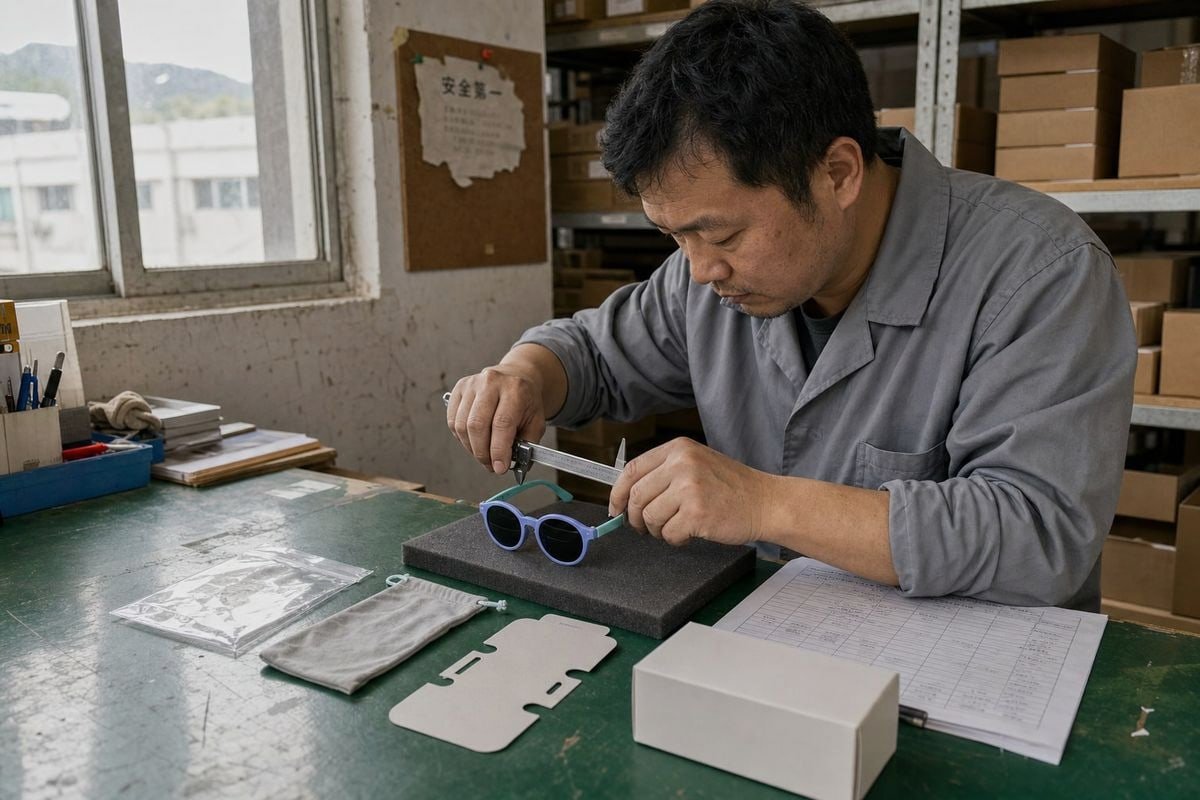
The core problem is that "packaging" means different things to different factories. To some, it means a polybag. To others, it means a full retail-ready packaging system with an insert, a case, and a printed carton. If you do not define it, the supplier will guess — usually toward the cheapest option, because that keeps the quote competitive.
The fields your brief should cover
In our experience quoting for kids' brands across 20+ countries, the briefs that get accurate pricing the first time always contain the same fields:
| Brief Field | Por qué importa |
|---|---|
| Frame and lens dimensions, weight | Determines box size, insert fit, and dimensional weight optimization 2 |
| Quantity per SKU and colorway count | Affects MOQ, print setup, and unit cost |
| Desired packaging format | Box, sleeve, mailer, or case — each prices differently |
| Inner protection layers | Microfiber pouch, polybag, insert, or molded case |
| Branding files (vector logo, colors) | Prevents artwork delays and reprints |
| Barcode, age-grading, warning labels | Required for children's products in most markets |
| Destination country and channel | Compliance marks and retailer rules differ |
| Shipping method and deadline | Courier parcels need stronger structures than palletized freight |
One more point I always stress: give a date, not a duration. "Delivery by 15 March in Sydney" is actionable. "Within 30 days" invites drift. When our team receives a fixed date and a destination port or city, we can plan carton prep, labels, and booking early — which is exactly what courier-ready means in practice.
Also state your budget range. It feels uncomfortable, but it lets the supplier propose the strongest structure your budget allows, instead of quoting three rounds of options blindly.
How Do I Know If a Supplier Can Handle Custom Retail-Ready Packaging?
There is a trade-off I weigh with every new client: full custom packaging looks impressive, but it demands tooling, higher MOQs, and a supplier who can actually execute it consistently.
Verify capability by asking for MOQ tiers on custom versus stock packaging, physical samples of past retail-ready work, a documented quality control process, references from similar kids' product projects, and confirmation they can prepare barcodes, cartons, and labels in-house before shipment.
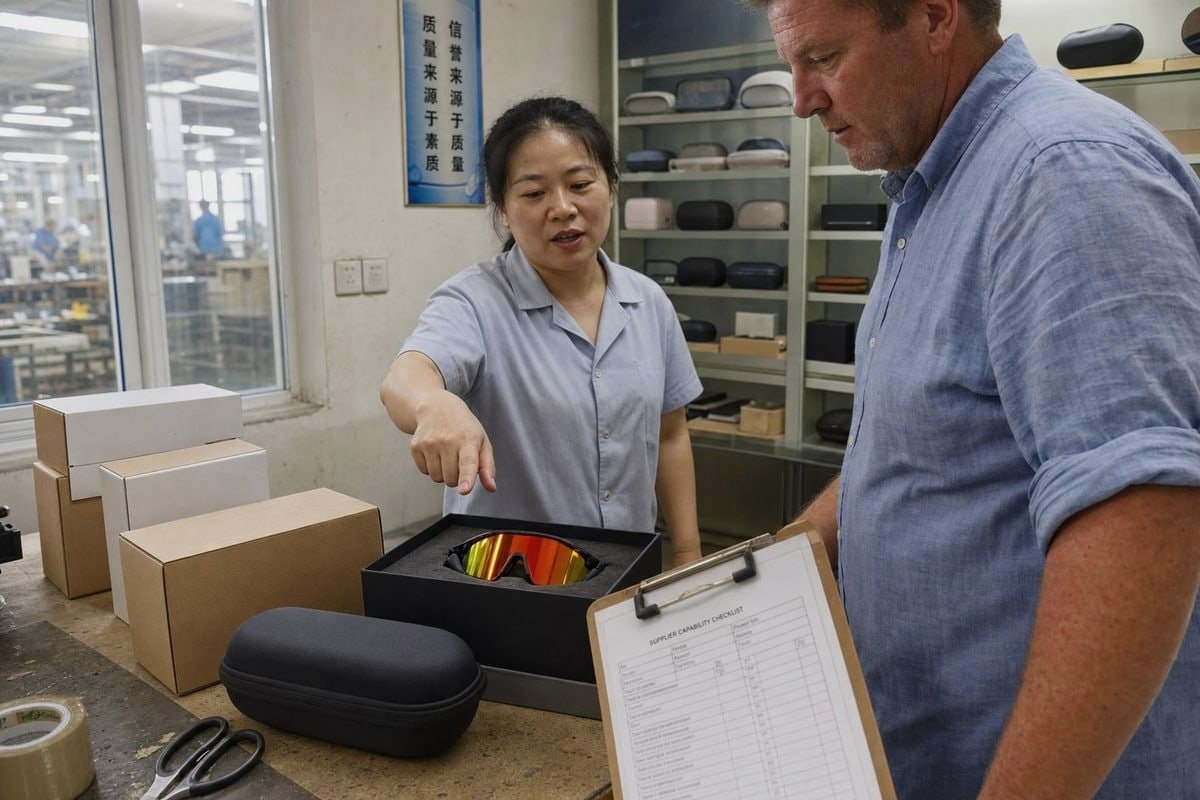
A supplier's answers reveal more than their catalog does. Over fifteen years running our eyewear factory in Taizhou, I have seen brands burned by traders who promised custom mailer boxes and then outsourced them to a print shop with no eyewear experience. The boxes arrived beautiful — and two millimeters too small for the frames.
Questions that separate capable suppliers from resellers
Ask these directly, in writing:
- What is your MOQ for fully custom packaging versus logo-only printing on stock structures?
- Can I see photos or physical samples of retail-ready packaging you produced for similar products?
- Do you offer molded protective eyewear cases, sleeves, inserts, and microfiber cleaning pouches in-house or through fixed partners?
- What is your lead time for packaging alongside the eyewear order?
- Can you provide 2–3 random production samples, not hand-picked ones?
- What is your quality control process for print color, box fit, and assembly?
- Can you prepare shipping labels, barcodes 3, and export cartons early?
- Do you offer sustainable packaging materials 4 as alternatives?
Reading the answers
A factory doing genuine fabricación de etiqueta privada 5 will answer with specifics: gsm figures, tooling costs, proof approval steps. A middleman will answer with "yes, no problem" to everything. That uniform agreeableness is a warning sign, not reassurance.
One practical shortcut we recommend to smaller brands: ask whether the supplier's stock molds and stock box structures can carry your logo. Because we keep roughly 800 existing styles with matching packaging options, a new brand can launch with branded, professional packaging at a fraction of the MOQ that full customization requires. That lowers your risk while you test the market — and you can move to fully custom structures once volumes justify tooling.
What Packaging Details Matter Most for Kids Sunglasses During Courier Transit?
A returned parcel taught us the most here. Years ago, a batch of our TR90 frames survived transit perfectly — but the mirrored lenses arrived micro-scratched because the pouch spec had been quietly downgraded.
Prioritize a layered system: a microfiber pouch against the lens, a snug insert or molded case preventing movement, and a rigid outer box of at least 350gsm board that passes drop-test standards. Add climate-stable tolerances for flexible frames and right-sized dimensions to control courier costs.
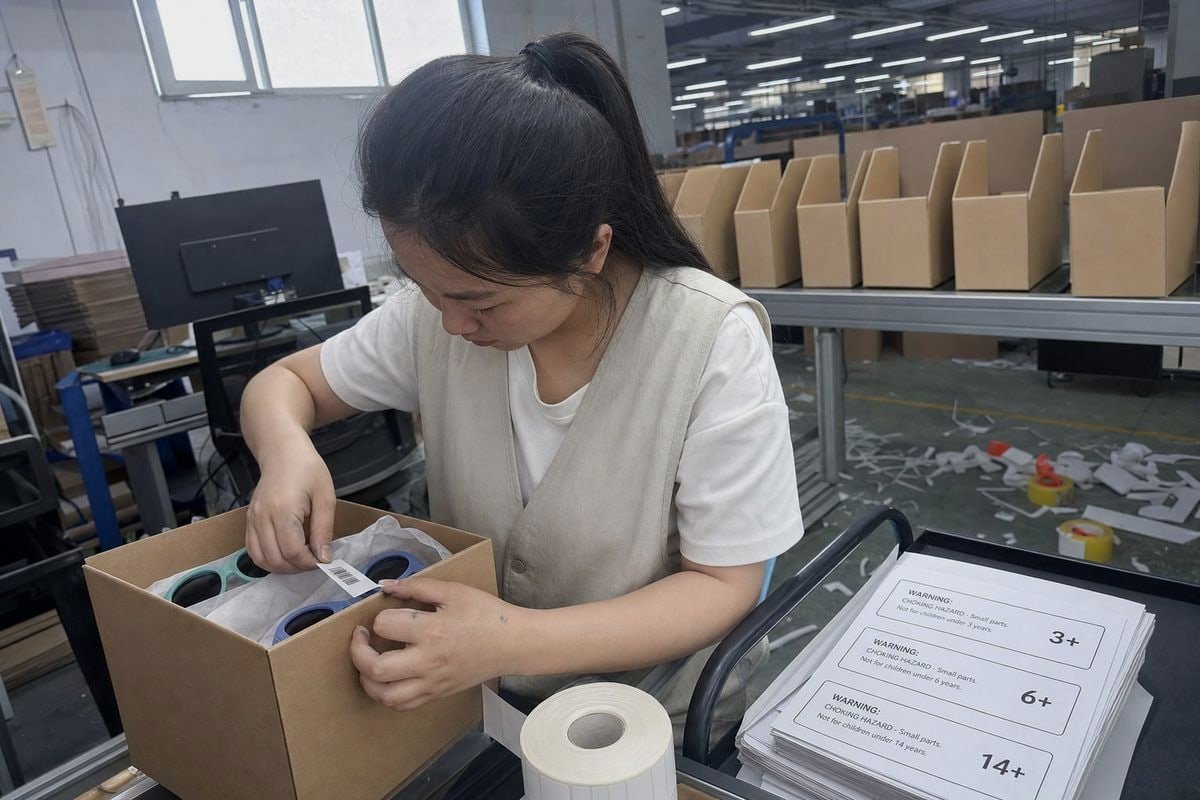
Kids sunglasses are small, lightweight, and easy to crush. In e-commerce fulfillment packaging, a parcel may be dropped, thrown, stacked, and left in a hot courier van. Each threat needs a different layer of defense.
The three-layer protection logic
| Capa | Componente | Threat It Blocks |
|---|---|---|
| Contact layer | Microfiber pouch or soft sleeve | Lens scratches and dust |
| Structural layer | Molded case, tray, or die-cut insert | Movement, frame twisting, hinge stress |
| Transit layer | Rigid box or corrugated mailer, 350gsm minimum for cartons | Crushing, drops, punctures |
Some brands skip the middle layer to save cost. I push back on that. A loose pair rattling inside a pouch inside a box will still arrive with a stressed hinge. The insert is what turns three components into a system.
Details buyers forget to specify
Heat matters more than most buyers expect. Flexible frames — like the TPEE temples we build for active kids — tolerate heat well, but any eyewear packed under compression in a hot van can take a set. Ask your supplier to confirm climate-stable packing tolerances so frames are held, not squeezed.
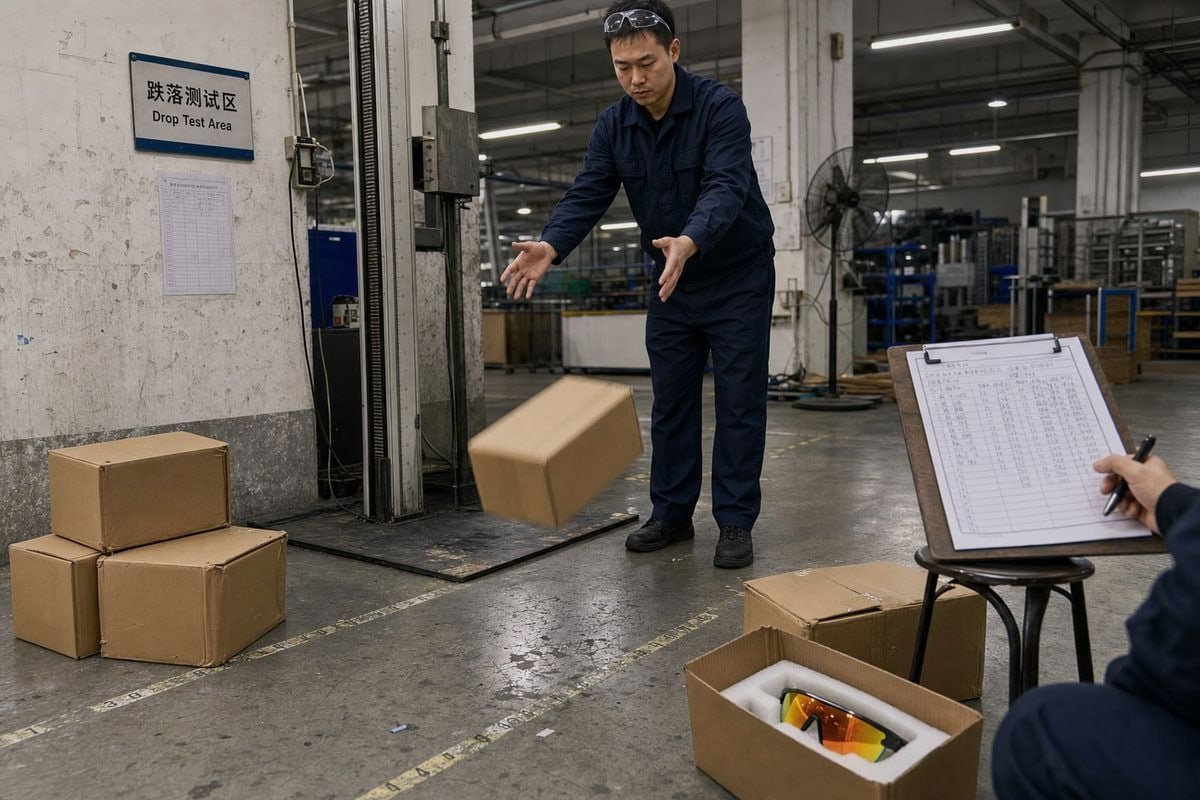
Drop-test performance matters too. If your retail box will ship directly as a standalone parcel, ask whether it has passed drop-test standards 6 without an over-box. If it has not, plan a two-layer system: retail box inside a shipping mailer.
Finally, watch dimensional weight optimization. Couriers charge by volume as much as by weight. A box that is 15mm too generous in every direction can add real cost across thousands of parcels. Right-sizing the box saves freight and reduces void fill — a quiet win for both budget and sustainability.
How Can I Communicate My Branding Needs Without Slowing Down Production?
A lesson I learned early in our OEM/ODM 7 work: branding rarely delays production. Late, incomplete, or wrongly formatted branding files delay production.
Send print-ready vector artwork, exact color codes, and logo placement instructions with your first inquiry. Approve a digital proof, then one physical pre-production mockup, and lock the design in a formal packaging specification sheet. Front-loading these steps keeps branding off the critical path.
The pattern behind almost every packaging delay we have handled is the same: eyewear production finishes on schedule, while artwork revisions are still bouncing between the brand's designer and the factory. The frames then sit in our warehouse waiting for boxes. You can prevent this entirely with sequencing.
A parallel workflow that protects your timeline
- Send artwork files with your initial brief — vector logo, Pantone or CMYK codes, and any fonts.
- Approve the digital proof within days, not weeks. Assign one decision-maker on your side.
- Request one physical pre-production mockup of the fully assembled courier-ready unit. Check logo alignment, box fit, and how easily your fulfillment team can assemble it.
- Sign off on the packaging specification sheet — structural drawings, material grammage, closure type, and packing format.
- Let packaging print run in parallel with eyewear production, so both finish together.
What to lock in the specification sheet
| Elemento de especificación | What to Define |
|---|---|
| Estructura | Dieline drawing, closure type, tamper-evident but frustration-free opening |
| Materiales | Board grammage, coating, sustainable packaging materials if required |
| Colors, finish, logo position tolerances | |
| Extras | QR code placement, inserts, hang tabs, second-life design features |
| Packing format | Units per inner box, per export carton, carton markings |
Two small additions cost almost nothing when planned early but are painful to retrofit: a QR code on the inner flap linking to care instructions or a digital unboxing experience, and a second-life structure that folds into a glasses stand. Both delight parents. Both must be in the dieline from day one.
Budget for two revision rounds on structure before tooling locks. In our workshop, we treat the third revision as a signal that the brief was incomplete — so invest in the brief, and the revisions shrink.
Conclusión
Vague packaging requests cause damaged shipments, wrong quotes, and missed launch dates. A precise brief, verified supplier capability, layered protection, and early branding files prevent all three — and win better packaging the first time.
Notas al pie
1. International Trade Centre provides guidance on export packaging and carton compliance for global shipping. ↩︎
2. Explains how couriers calculate shipping costs based on volume, relevant to box sizing. ↩︎
3. GS1 sets global barcode standards essential for retail packaging compliance mentioned in the checklist. ↩︎
4. Authoritative EPA guide on sustainable packaging and materials management. ↩︎
5. Background concept explaining the private label manufacturing model referenced for genuine factories. ↩︎
6. ISO develops packaging testing standards including drop-test and durability requirements for transit. ↩︎
7. Clarifies the OEM/ODM manufacturing arrangement mentioned in the branding communication section. ↩︎
Más artículos que te podrían gustar
¿Buscas un socio confiable en gafas para niños?
Explore más de 800 estilos listos y soporte OEM/ODM completo adaptado a su marca.
Ponte en contacto English
  Español de México
  Deutsch
  Français
  日本語
日本語  العربية
  Português do Brasil