How to Arrange Pre-Shipment Inspection for Kids Sunglasses: Self, Supplier, or Third Party?
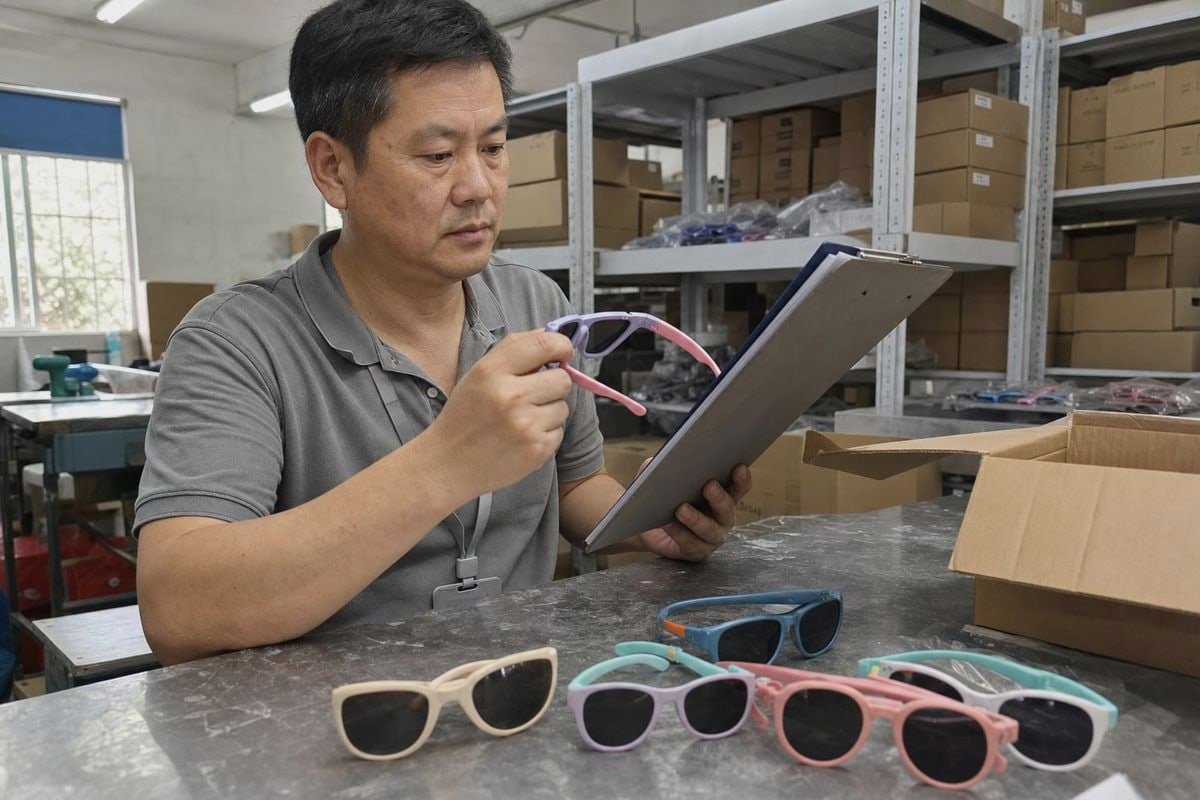
Pre-shipment inspection for kids sunglasses is where I have seen good orders go wrong. Skip it, and one bad batch can trigger returns, refunds, and lost retail trust. Our Taizhou production line taught us that early.
You can arrange pre-shipment inspection for kids sunglasses three ways: inspect yourself, rely on your supplier’s internal QC, or hire a third-party inspector. For first orders, new factories, or high-value shipments, independent third-party inspection is the safest choice; supplier QC works as a baseline for trusted repeat orders.
Each option has real trade-offs. Below, I break down all three, share a practical safety checklist, and explain how to pick the right path for your order.
What are the pros and cons of self-inspection versus hiring a third-party inspector for my kids' sunglasses order?
A buyer from Australia once asked me to hold a shipment so her own agent could inspect it. That request made sense for her situation, but it is not the right call for everyone.
Self-inspection gives you maximum control and lower cost, but demands product expertise and local presence. Third-party inspection costs more and needs scheduling lead time, yet delivers unbiased, documented results — the safer option for children's eyewear where safety and compliance carry real consequences.
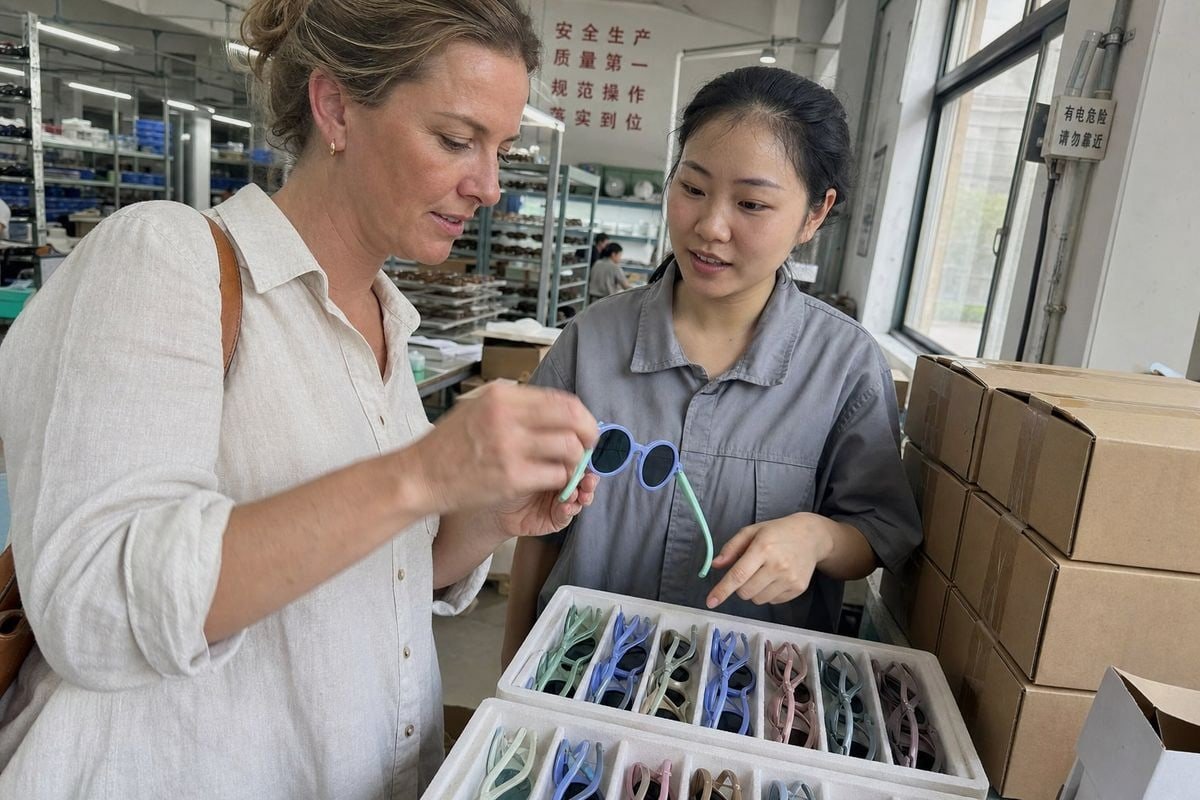
Let me lay out the comparison the way I explain it to buyers who visit our workshop. Neither option is "wrong." The right choice depends on your risk, your team, and your distance from the factory.
Quick Comparison at a Glance
| Factor | Self-Inspection | Inspección de Terceros |
|---|---|---|
| Costo de herramienta único | Low direct cost (travel or staff time) | Service fee per man-day |
| Independencia | Depends on who inspects | High — inspector has no stake in shipment |
| Velocidad | Fast if you have local staff | Needs booking lead time |
| Expertise | Only as good as your team | Trained inspectors, AQL Sampling Standards 1 |
| El próximo Pasaporte Digital de Producto de la UE requerirá un registro de transparencia escaneable para EPP. Las marcas que solo tienen informes de prueba en papel tradicionales, comunes en las cadenas de suministro centradas en Australia, deberían comenzar a estructurar archivos de cumplimiento digital ahora. | Informal notes and photos | Formal report usable in disputes |
| Lo mejor para | Repeat orders, local presence | First orders, large orders, compliance-sensitive goods |
When Self-Inspection Works
Self-inspection shines when you already have trusted staff or a sourcing agent in China. You control exactly what gets checked. Feedback is fast. You skip the service fee. In our experience hosting buyer visits over fifteen years, importers who inspect in person also learn the product deeply. That knowledge pays off later.
But there are limits. Your inspector must understand children's eyewear. Small hinge play, temple tension, and lens coating flaws are easy to miss without training. And if your agent works closely with the supplier, independence quietly erodes.
When Third-Party Wins
Third-party inspection produces an objective report with photos, defect counts, and pass/fail results against agreed criteria. That report matters. Some Letters of Credit and insurance arrangements even require independent quality assurance documentation. For kids' products headed to strict markets like the EU, Japan, or Australia, that paper trail is worth the fee. One rejected container costs far more than one inspection man-day.
What safety and quality checkpoints should I include in a pre-shipment inspection checklist for children's eyewear?
There is one trade-off we weigh on every kids' order at our factory: speed versus thoroughness. A rushed final check saves a day but can miss a loose hinge screw that ends up near a child's eye.
A kids' eyewear checklist must cover frame flexibility and breakage safety, UV400 protection verification, lens impact resistance, hinge function, lead and phthalate compliance, correct labeling, dimensions against the approved sample, packaging condition, and carton quantity counts — checked against AQL sampling before shipment.
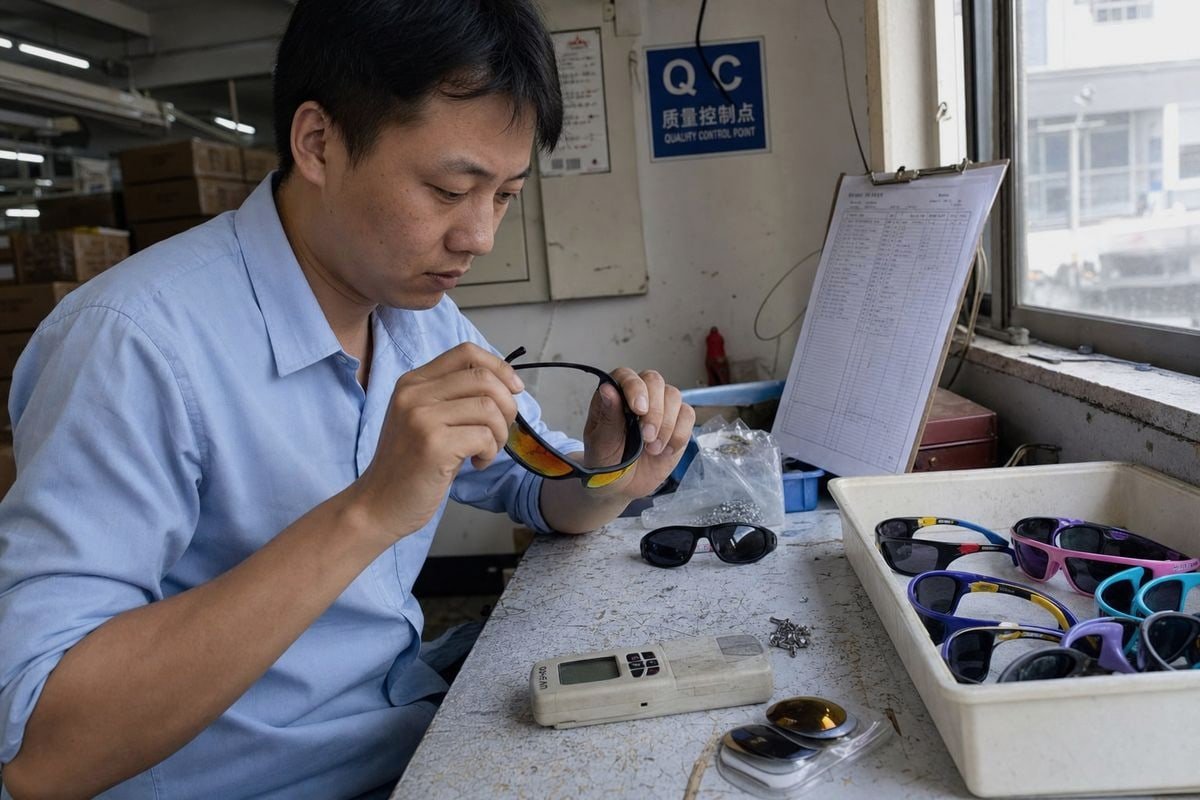
Children's sunglasses look simple. They are not. In many markets, sunglasses are regulated as los dispositivos médicos de Clase I 2, and kids' products face extra scrutiny under Cumplimiento de CPSIA 3 rules in the US and REACH in Europe. Your quality control checklist should reflect that reality, not just cosmetic standards.
The Core Checkpoint Table
| Categoría | Qué verificar | Por qué importa para los niños |
|---|---|---|
| Frame safety | Flex TPEE/TR90 4 frames; confirm no snapping into sharp fragments | Active kids drop, sit on, and bend their sunglasses |
| Lens performance | Normas de protección UV400 5 verified with a UV meter | Children's eyes are more vulnerable to UV damage |
| Resistencia al impacto | Documentation for the FDA Drop Ball Test 6 where required | Needed for US customs clearance and import regulations |
| Seguridad química | Lead and phthalate test reports on file | CPSIA and REACH 7 set strict limits for children's products |
| Hinges and screws | Open/close cycles, screw tightness, no loose parts | Small loose parts are pinch and safety hazards |
| Fit and dimensions | Measure against approved sample | Kids' head sizes leave little tolerance for error |
| Etiquetado | Safety statements, care instructions, country of origin | Wrong labels can block customs or trigger recalls |
| Empaque | Retail-ready condition, barcode accuracy, quantity count | Damaged packaging kills sell-through at retail |
Material Checks Deserve Extra Attention
Our engineers work with TPEE and TR90 daily, and I can tell you material substitution is a real risk in this industry. A quick on-site flex test tells you a lot. Genuine flexible material bends and returns. Cheap substitutes stress-whiten or crack. If you specified premium materials, ask your inspector to spot-check them, because a substituted frame changes both safety and skin-contact properties.
Sampling, Not 100% Checking
Remember that pre-shipment inspection is a random sample check, usually under ISO 2859-1 8. Common practice for eyewear is AQL 2.5 for major manufacturing defects and 4.0 for minor ones. Agree on those thresholds with your supplier in writing before the inspection, not after.
How do I choose a reliable third-party inspection company for my kids' sunglasses shipment?
A procurement manager from Japan once told me she picked her inspection firm purely on price — and got a two-page report with blurry photos. She switched firms on the next order. Choosing an inspector is a real decision, not a checkout click.
Choose an inspection company with eyewear or children's product experience, coverage near your factory, clear AQL-based reporting with photos, on-site testing capability such as UV meters, fast report turnaround, and a reputation for independence. Established firms and specialized agencies both work if these boxes are ticked.
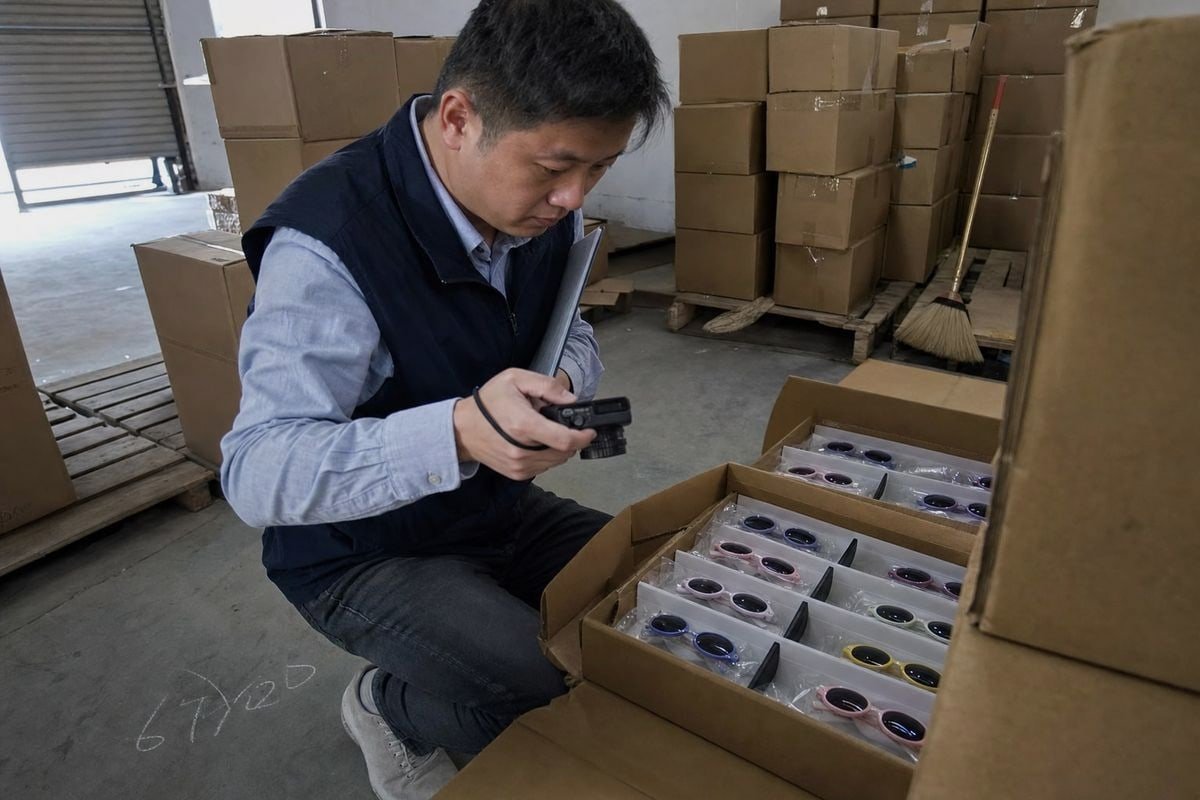
We host third-party inspectors in our Taizhou workshop almost every week, so I have seen the good and the mediocre from the factory side. Here is what actually separates them.
Six Selection Criteria That Matter
- Product-category experience. Ask if they have inspected eyewear or children's products before. An inspector who knows hinge tolerances and lens coatings catches more than a generalist.
- Testing capability on site. Good firms bring UV meters and calipers. For hybrid indoor-outdoor lenses, some can even bring portable spectrometers to verify blue-light filtration claims that standard UV meters cannot detect.
- Report quality. Request a sample report first. Look for defect photos, measurements, AQL results, and clear pass/fail logic — not vague summaries.
- Coverage and speed. A firm with inspectors near Taizhou or your supplier's city can often attend within two to three working days and issue reports within 24 hours.
- Independence policies. Reputable agencies rotate inspectors and enforce anti-bribery rules. Ask how they handle this.
- Communication. You want an English-speaking coordinator who confirms your checklist, your approved sample, and your defect classifications before the visit.
Big Agency or Specialist?
| Opción | Debilidades | Precauciones |
|---|---|---|
| Global firms (SGS, Bureau Veritas, TUV SUD) | Brand recognition, accepted by banks and insurers | Higher fees, less flexible scheduling |
| Specialized QC agencies (e.g., QIMA-type services) | Fast booking, competitive pricing, digital reports | Verify eyewear experience per inspector |
| Local independent inspectors | Cheapest, flexible | Independence and skill vary widely |
One more tip from our side of the table: send the inspector your approved golden sample and your quality control checklist at least a few days early. When we receive a clear checklist from a buyer's inspection firm, the inspection runs smoothly and disputes almost never happen. Some buyers also ask for a broader informe de auditoría de fábrica before the first order — a sensible step that pairs well with pre-shipment inspection.
What should I expect from my supplier's internal quality control before goods are ready for inspection?
Early in our fifteen years of making children's eyewear, we learned a hard lesson: catching defects at final packing is too late. That is why our 5S-managed workshop now checks quality at multiple stages, not just at the end.
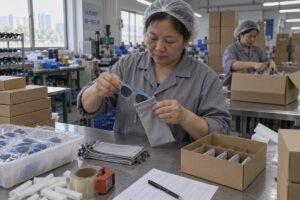
A capable supplier should run multi-stage internal QC: incoming material checks, in-process inspection at molding and assembly, lens verification, and a final 100% visual check before packing. Goods should reach the 80/100 stage — fully produced, at least 80% packed — before pre-shipment inspection.
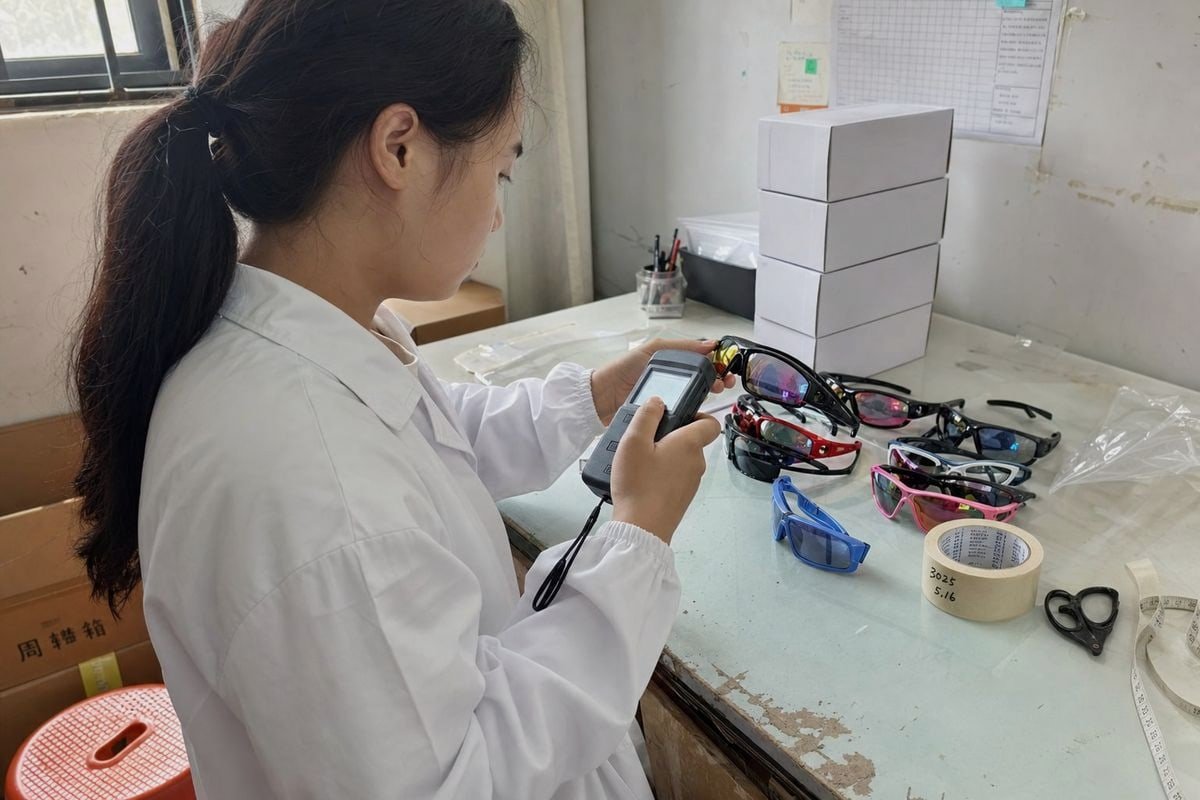
Supplier QC is your first line of defense. It is not a substitute for independent verification, but a factory without real internal QC will fail external inspections again and again. Here is what to expect — and what to demand.
The Stages of Proper Factory QC
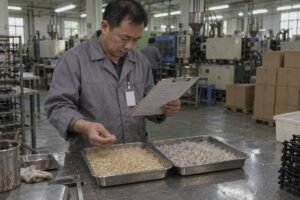
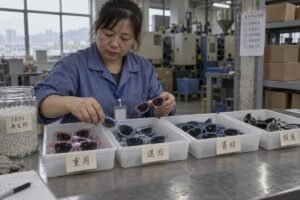
A serious eyewear factory checks quality at four points. First, incoming materials: raw TPEE and TR90 pellets, lenses, screws, and packaging are verified against specifications, and material safety documents are kept on file to support product safety certification needs. Second, in-process checks: operators inspect frames at injection molding for short shots, flow marks, and warping, and again at assembly for hinge alignment and screw torque. Third, lens verification: UV protection and coating consistency get checked by batch. Fourth, a final full visual inspection before packing catches cosmetic manufacturing defects like scratches, sink marks, and color mismatch.
What You Should Ask For
Before booking any external inspection, confirm these with your supplier:
- Written confirmation that 100% of the order is produced and at least 80% is packed — the industry's 80/100 Rule.
- Their internal inspection records for your order, not just a verbal "all good."
- Retention of your approved sample on the production line for comparison.
- Batch traceability. Some buyers now request laser-etched batch codes inside the temple, so a problem lot can be recalled surgically instead of scrapping a whole shipment.
- Test documentation on file: UV400 verification, impact resistance, and chemical compliance reports relevant to your market's import regulations.
At our factory, we welcome these requests. In my experience, suppliers who resist showing internal QC records are telling you something important. A confident factory treats your third-party inspection as a formality it expects to pass — because the internal work was already done.
Conclusión
Skipping inspection on kids’ sunglasses invites returns, customs holds, and damaged trust — risks no growing brand can afford. The fix is simple: treat pre-shipment inspection as risk control, not paperwork. Use supplier QC as your baseline, self-inspection when you have trusted local eyes, and third-party inspection whenever the order is new, large, or compliance-sensitive. From our production floor in Taizhou, I can tell you the buyers who inspect consistently are the ones who build lasting kids’ eyewear brands. Choose your option deliberately, agree on AQL thresholds early, and your shipments will arrive retail-ready.
Notas al pie
1. Explains the acceptable quality limit concept referenced throughout the inspection checklist. ↩︎
2. FDA classification reference explaining regulatory status of sunglasses as medical devices. ↩︎
3. Official source for CPSIA rules governing children’s product safety compliance in the US. ↩︎
4. Background on the nylon-based polymer material used in eyewear frame construction. ↩︎
5. Background on sunglasses UV protection standards referenced in the checklist table. ↩︎
6. FDA guidance on impact resistance testing requirements for eyewear sold in the US. ↩︎
7. Official EU regulation source for chemical compliance limits mentioned for children’s eyewear. ↩︎
8. Stable Wikipedia overview of the ISO 2859-1 sampling standard. ↩︎
Más artículos que te podrían gustar
¿Buscas un socio confiable en gafas para niños?
Explore más de 800 estilos listos y soporte OEM/ODM completo adaptado a su marca.
Ponte en contacto English
  Español de México
  Deutsch
  Français
  日本語
日本語  العربية
  Português do Brasil