Which Specifications Matter Most for Everyday School Kids Eyewear?
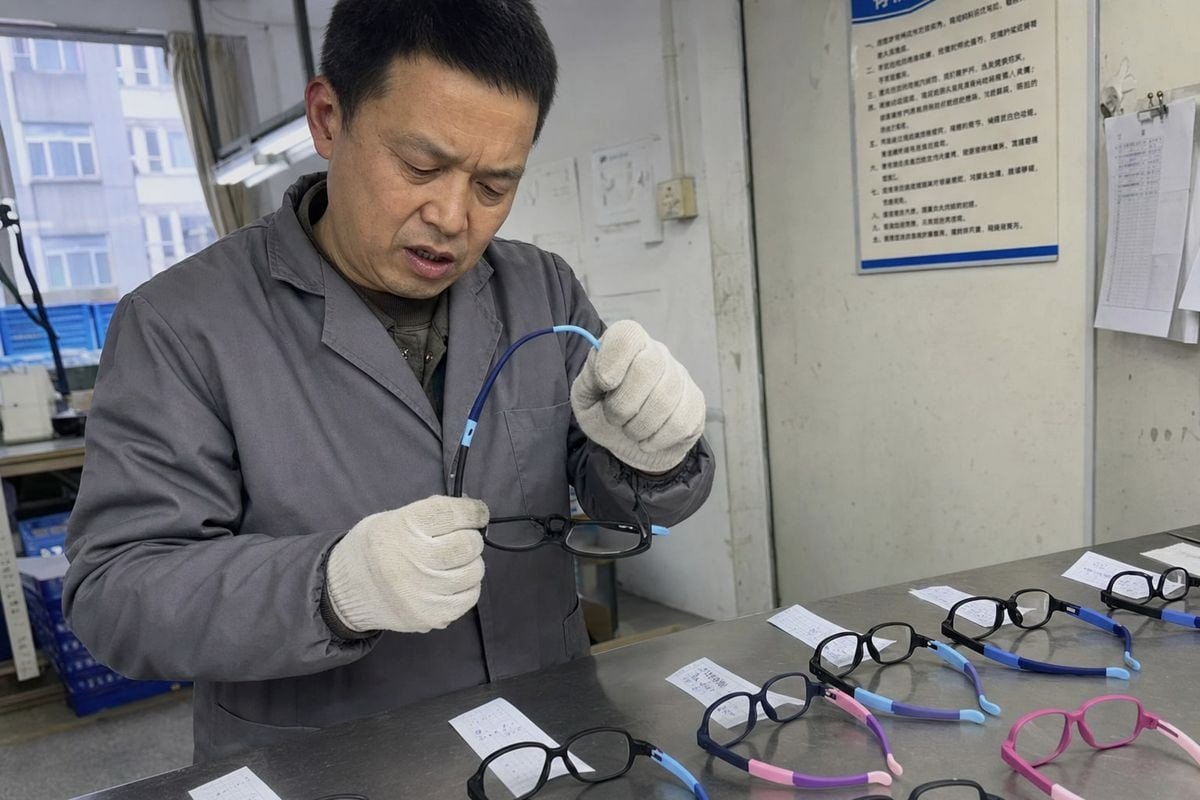
School kids eyewear fails for one simple reason: the child stops wearing it Pupillenabstand 1. On our production line in Taizhou, I have seen how the wrong specs quietly kill a product.
The most important specifications for everyday school kids eyewear are proper child-specific fit, impact-resistant polycarbonate or Trivex lenses, lightweight flexible frame materials like TR90 or TPEE, spring hinges, UV400 protection, and scratch-resistant coatings — because these keep glasses safe, comfortable, and worn all day.
Those specs sound simple. But the details behind each one decide whether a pair survives a school year. Let me walk you through them, one by one.
What Frame Materials Keep School Kids' Eyewear Comfortable All Day Long?
A few years back, I watched a QC colleague twist a TR90 temple almost 180 degrees during an incoming inspection. It snapped back perfectly. That test taught me more than any datasheet.
The best frame materials for all-day school kids eyewear are flexible, lightweight plastics such as TR90 and TPEE, plus soft rubberized or silicone components. These materials bend instead of snapping, put minimal pressure on the nose and ears, and stay comfortable through long classroom hours.

Comfort is not a luxury feature in children's glasses. It is a compliance feature. A frame that pinches behind the ears or presses on the nose gets pulled off by lunchtime. Once that habit forms, the prescription stops working, and the parent blames the product.
That is why flexible frame materials dominate this category. In our workshop we build most kids' optical frames 2 in TR90, often paired with TPEE temples. TR90 gives structural memory, so the frame returns to shape after twisting. TPEE adds a softer, grippier touch where the frame contacts skin. The combination is light enough that a child forgets the glasses are on.
Wie die Hauptmaterialien im Vergleich abschneiden
| Material | Gewicht | Flexibilität | Best Use for School Kids |
|---|---|---|---|
| TR90 | Sehr leicht | Hoch, mit Formgedächtnis | Alltägliche optische Rahmen |
| TPEE | Sehr leicht | Very high, soft touch | Temples and full flexible frames |
| Acetat | Mäßig | Niedrig bis moderat | Style-focused older kids |
| Memory metal / titanium | Leicht | Hoch | Pre-teens, premium lines |
| Standard-Spritzgusspolymer | Leicht | Gering, spröde | Vermeiden Sie für aktive Kinder |
Small Material Details That Matter
Texture matters too. One of our popular styles uses embossed circular textures on the temple arms. It looks playful, but the real purpose is grip. Slightly textured, rubberized surfaces reduce slipping when a child sweats at recess. Rounded edges with no sharp corners protect skin during falls. And because many of our buyers run children's brands in Europe and Australia, we use environmentally friendly material formulations that pass strict chemical safety requirements — a spec parents never see, but one your compliance team will thank you for.
How Do I Choose Lens Specifications That Protect My Young Customers' Eyes?
One buyer from Japan once asked me why we refused to quote glass lenses for a kids' line. My answer was blunt: glass and playgrounds do not mix, and I would rather lose the order than the trust.
Choose polycarbonate lenses as the default for school kids eyewear, or Trivex lenses as a premium alternative. Both offer high impact resistance and low weight. Add UV400 protection, a scratch-resistant coating, and verify the lenses are cut to the child's correct pupillary distance.

The lens is the single biggest safety decision in children's eyewear. A ball to the face, a collision at recess, a drop onto concrete — the lens takes the hit. That is why Polycarbonatgläser 3 are the standard recommendation for children across the optical industry. They resist impact far better than standard plastic, and traditional glass should simply be avoided for kids.
Some optical professionals go further and say polycarbonate is the only lens type that should be prescribed to children unless an ophthalmologist advises otherwise. I understand that stance, but in our experience Trivex-Gläser 4 deserve equal consideration. Trivex matches the impact resistance, offers slightly sharper optics, and weighs even less. The trade-off is cost. For most everyday school lines, polycarbonate wins on value; for premium positioning, Trivex is a strong upgrade story.
Lens Specs Checklist for Buyers
- Schlagfestigkeit — polycarbonate or Trivex, never glass.
- UV400-Schutz — polycarbonate has built-in UV blocking, but always verify UV400 if you spec another material.
- Kratzfeste Beschichtung — school lenses live in backpacks and on desks. This coating protects clarity and reduces warranty claims.
- Correct pupillary distance — the optical center must align with the child's pupils, or the prescription performs poorly.
- Optional blue light coating — with tablets now standard in classrooms, many of our brand customers add a blue light coating as a marketable comfort feature, though it should never replace the core safety specs.
One nuance worth separating: myopia management 5 lens technologies are growing fast in school-age eyewear. They are a prescription-level decision made with eye care professionals, but as a brand you should ensure your frames are compatible with these thicker lens designs.
Which Fit and Safety Features Should I Prioritize for Active School-Age Children?
The trade-off I weigh most often in product development is this: a bridge design that fits a six-year-old will not fit a twelve-year-old, and pretending one frame serves both ages leads to returns.
Prioritize a child-specific bridge size and saddle-style bridge, correct temple length, spring hinges, and rounded edge-free construction. For younger or very active children, add cable temples or elastic straps. For sports, specify separate ASTM F803-rated protective eyewear, not everyday frames.

Fit matters more than fashion. Children's noses and facial structures 6 are still developing, so most kids lack the defined nose bridge that adult frames assume. When the bridge size is wrong, glasses slide down, and the child looks over the lenses instead of through them. At that point the prescription is decorative.
Here is where I push back on a common assumption. Some sources recommend adjustable nose pads for every child. In our experience shipping to brands in 20+ countries, adjustable nose pads work well for older kids and certain face shapes, but they can be uncomfortable or unstable on young noses without a developed bridge. A molded saddle bridge in soft TPEE often grips better and feels gentler. The right answer is matching the bridge style to the child’s anatomy, not applying one universal design.
Fit Priorities by Age Group
| Altersgruppe | Bridge Design | Retention Features | Key Priority |
|---|---|---|---|
| Toddlers / preschool | Soft molded saddle bridge | Elastic strap or cable temples | Maximum security and soft materials |
| Elementary school | Saddle bridge or low-profile pads | Spring hinges, grippy temple tips | Lightweight all-day comfort |
| Pre-teens | Adjustable nose pads possible | Federscharniere | Fit plus style for compliance |
Spring hinges deserve special mention. Kids pull glasses off with one hand, constantly. Spring hinges flex outward and absorb that abuse instead of transferring stress to the frame front. They are a small spec that prevents a large share of breakage.
Finally, keep everyday glasses and sports eyewear separate in your line planning. Everyday frames with schlagfeste Gläser 7 handle normal school activity. But for organized sports, the correct product is a sports goggle built to the ASTM F803 standard. Selling one product as both creates liability you do not want.
What Durability Standards Should I Require From My Kids Eyewear Manufacturer?
A lesson I learned early in my fifteen years in this industry: the hinge is where children's glasses die. After we started reinforcing hinge zones and stress-testing every new mold, our defect claims from distributors dropped noticeably.
Require documented flex and twist testing on frames, reinforced or spring hinges, secure lens retention, scratch-resistant lens coatings, chemical safety compliance for children's products, and consistent batch-level quality control. Also confirm warranty terms, spare parts availability, and drop-test verification before placing volume orders.

Durability is not one spec. It is a chain of specs, and the chain breaks at its weakest link. When buyers audit our 5S-managed workshop, I encourage them to look past the finished sample and ask how durability is verified batch after batch. A beautiful golden sample means little if production tolerances drift.
The Durability Requirements I Recommend Putting in Writing
| . Schlagfestigkeitsprüfungen sind eine separate Verpflichtung von CPSIA-Prüfungen. Viele Importeure müssen sich auch bei der FDA als Erstimporteur registrieren und das Produkt als medizinische Klasse-I-Gerät auflisten, um eine Beschlagnahmung der Sendung an der Grenze zu vermeiden. | Was es verifiziert | Why It Matters for School Use |
|---|---|---|
| Frame flex / twist test | Material elasticity and recovery | Survives one-handed removal and backpack crushing |
| Hinge cycle test | Spring hinges and screw retention | Flexible Federscharniere oder einteilige Flex-Konstruktion |
| Lens retention check | Lenses stay seated under impact | Prevents pop-outs during falls |
| Coating adhesion test | Scratch-resistant coating durability | Maintains clarity across a school year |
| Chemical safety compliance | Skin-safe, non-toxic materials | Required for children's product markets |
| Falltest | Whole-frame impact resistance | Simulates real desk-height drops |
Practical Extras That Reduce Total Cost
Beyond testing, ask about repairability and warranty structure. Modular thinking helps here: temples and screws that can be replaced easily extend product life and reduce returns. We keep spare components available for our roughly 800 existing styles, which lets our brand customers offer parents a repair path instead of a refund. Many of our distributor clients also bundle a backup-pair offer, because kids' glasses go missing far more often than adult pairs.
One more point on sourcing risk. New brands often assume durability requires custom molds and heavy tooling investment. It does not. Choosing from proven, already-tested existing styles lets you launch with validated durability, then invest in custom OEM/ODM development — colors, logos, lenses, packaging — once the market responds.
Schlussfolgerung
Great school kids eyewear comes down to fit, impact-resistant lenses, lightweight flexible materials, and tested durability. Get those specs right, and children actually wear the glasses — which is the whole point.
Fußnoten
1. Medical definition and importance of pupillary distance measurement. ↩︎
2. Clinical guidance on dispensing and fitting eyewear for children. ↩︎
3. Authoritative safety recommendation for children’s lens materials. ↩︎
4. Technical specifications and history of Trivex material. ↩︎
5. Authoritative medical source from the American Academy of Ophthalmology covering myopia management options. ↩︎
<span
Weitere Artikel, die Ihnen gefallen könnten
Auf der Suche nach einem zuverlässigen Partner für Kinderbrillen?
Entdecken Sie über 800 sofort verfügbare Modelle und umfassenden OEM/ODM-Support, der auf Ihre Marke zugeschnitten ist.
Kontakt aufnehmen English
  Español de México
  Deutsch
  Français
  日本語
日本語  العربية
  Português do Brasil