Welche Sicherheitsdetails sollten Eltern bei Sonnenbrillen für Kinder beachten?
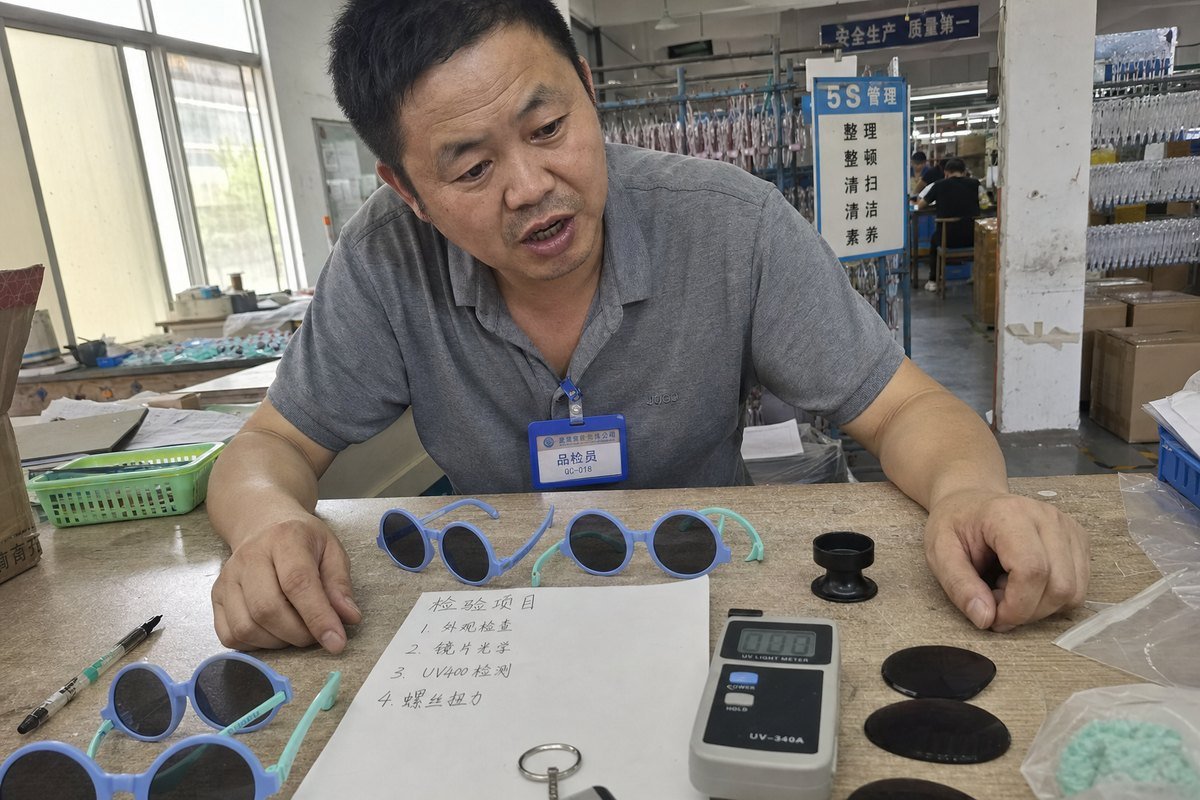
Sicherheitsdetails bei Sonnenbrillen für Kinder werden leicht übersehen. An unserer Produktionslinie in Taizhou habe ich gesehen, wie winzige Spezifikationsunterschiede echte Augenschutz von [riskanten Spielzeugen](https://okayeyewear.com/there-safety-hazards-kids-sunglasses-are-with/) trennen.
Eltern sollten vier Sicherheitsdetails bei Sonnenbrillen für Kinder beachten: verifizierten UV400-Schutz, der 100% der UVA- und UVB-Strahlen blockiert, schlagfeste Polycarbonatgläser, flexible BPA-freie Rahmenmaterialien wie TPEE oder TR90 und eine eng anliegende, altersgerechte Passform ohne lose Kleinteile.
Jedes dieser Details ist leicht zu überprüfen, sobald man weiß, worauf man achten muss. Lassen Sie mich sie nacheinander durchgehen, beginnend mit den Gläsern.
Welche Brillenglasmerkmale sollte ich beachten, um einen echten UV-Schutz bei Sonnenbrillen für Kinder zu gewährleisten?
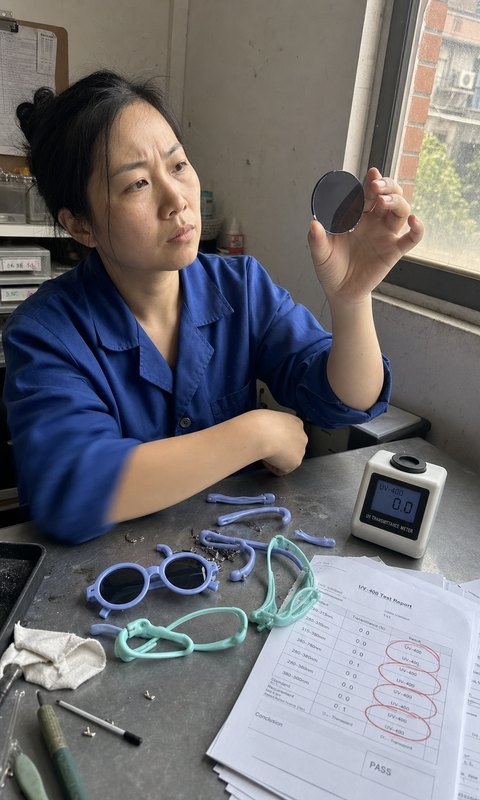
Während einer Qualitätsprüfung im letzten Jahr testete unser Team eine Charge billiger Moden-Sonnenbrillen, die uns ein Käufer zum Vergleich geschickt hatte. Die dunklen Gläser blockierten fast keinen UV-Schutz. Dieser Test prägt immer noch, wie ich die Gläsersicherheit erkläre.
Echter UV-Schutz erfordert Gläser mit der Kennzeichnung UV400 oder 100% UVA/UVB-Schutz, verifiziert durch Prüfberichte des Lieferanten. Allein die Dunkelheit der Gläser blockiert keine UV-Strahlen. Eltern sollten auch auf gleichmäßige Tönung, optische Klarheit und keine Kratzer oder Verformungen achten, die die Sicht eines Kindes beeinträchtigen.
Der gefährlichste Mythos überhaupt Brillen für Kinder 1 ist, dass dunklere Gläser stärkere Schutz bedeuten. Die Wahrheit ist in einigen Fällen das Gegenteil. Eine dunkle Linse ohne richtigen UV-Filter lässt die Pupille sich erweitern und lässt noch mehr schädliche Strahlung auf die sich entwickelnde Netzhaut gelangen. Deshalb konzentrieren sich die Empfehlungen von Kinderaugenärzten konsequent auf den UV-Filter, nicht auf die Tönung.
UV400 ist die Basis, kein Bonus
UV400-Schutz bedeutet, dass das Glas alle Lichtwellenlängen bis zu 400 Nanometer blockiert und das gesamte UVA- und UVB-Spektrum abdeckt. Mehrere Branchenquellen behandeln 99–100% UVA/UVB-Blockierung als Mindeststandard für Kinder. Kinder erhalten weit mehr jährliche Sonneneinstrahlung 2 als Erwachsene, und ihre jungen Linsen übertragen mehr UV-Strahlung auf die Netzhaut. Das ist also nicht verhandelbar.
Polarisiert ist Komfort, kein Schutz
Polarisierte Blendreduzierung ist eine wirklich nützliche Funktion in der Nähe von Wasser, Sand oder Schnee. Aber es ist eine Komfortfunktion, keine UV-Sicherheitsfunktion. Bei der Beschaffung unserer Gläser bieten wir sowohl reine UV400- als auch polarisierte UV400-Optionen an, da die beiden Funktionen getrennt sind.
| Glasmerkmal | Was es tatsächlich tut | Ist es eine Sicherheitsanforderung? |
|---|---|---|
| UV400-Filter | Blockiert 100% der UVA/UVB-Strahlen | Ja — unerlässlich |
| Polarisierung | Reduziert reflektierte Blendung von flachen Oberflächen | Nein — optionales Komfort-Upgrade |
| Dunkle Tönung | Reduziert nur die sichtbare Helligkeit | Nein — bedeutungslos ohne UV-Filter |
| Spiegelbeschichtung | Kosmetische Reflexion, geringe Helligkeitsreduzierung | Nein — Stilmerkmal |
| HEV/Blaulichtfilterung | Reduziert intensives Sonnenlicht-Blaulicht | Hilfreiche Ergänzung für sich entwickelnde Netzhäute |
Überprüfen Sie auch die Glasqualität. Billige Gläser zeigen oft Wellen, Blasen oder ungleichmäßige Tönung. Diese Defekte verursachen visuelle Verzerrungen 3 und Augenermüdung, was dazu führt, dass Kinder die Sonnenbrille abnehmen. Ein gutes Glas sollte gleichmäßig aussehen, wenn Sie es an einer geraden Linie, wie einem Türrahmen, hochhalten und langsam drehen.
Wie kann ich feststellen, ob das Rahmenmaterial sicher und flexibel genug für aktive Kinder ist?
Ein Käufer aus Australien bog einmal eine unserer TPEE-Bügelproben während eines Videoanrufs zu einer vollen Schleife, halb erwartend, dass sie brechen würde. Sie sprang sofort zurück. Dieser Moment verkaufte die Bestellung schneller als jedes Datenblatt.
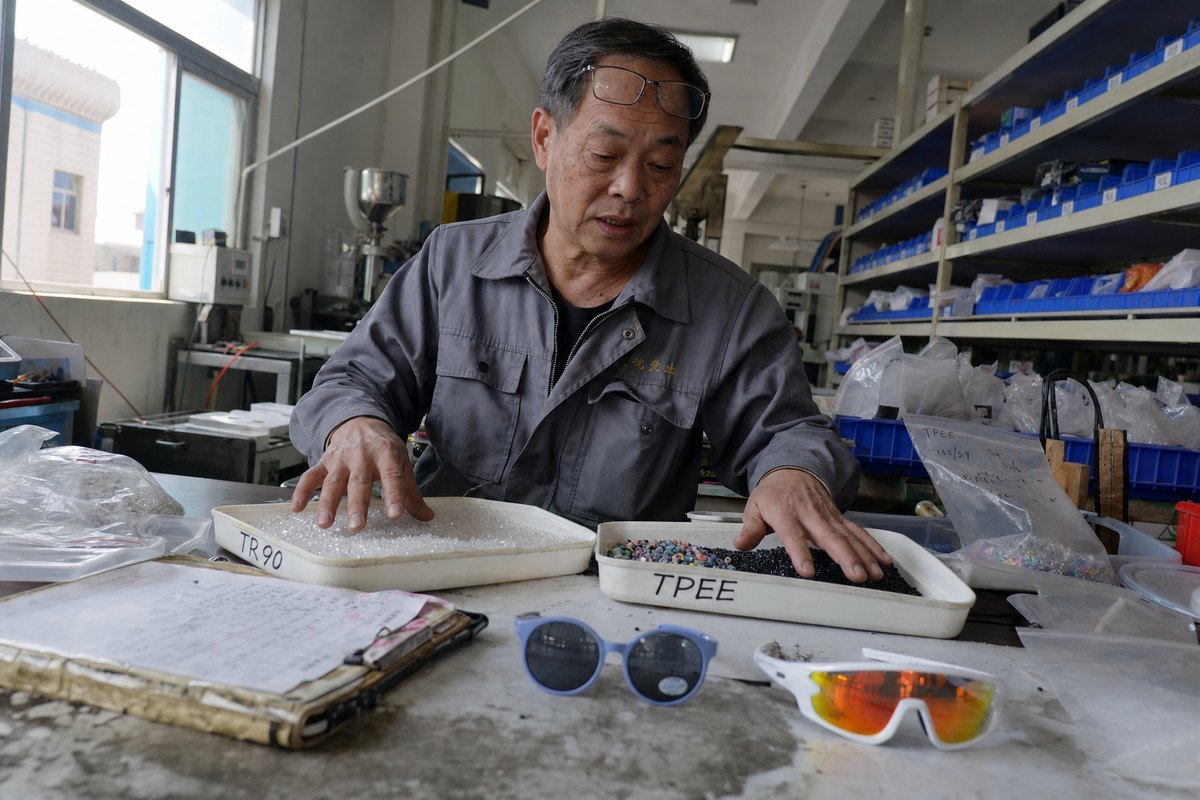
Sichere Kinderbrillen sollten aus flexiblen, BPA-freien Materialien wie TPEE oder TR90 gefertigt sein, die sich biegen lassen, ohne zu brechen. Testen Sie, indem Sie den Rahmen vorsichtig verdrehen – er sollte sich biegen und in seine Form zurückkehren. Vermeiden Sie starre, spröde Kunststoffe mit scharfen Kanten oder freiliegenden Metallteilen im Gesichtsbereich.
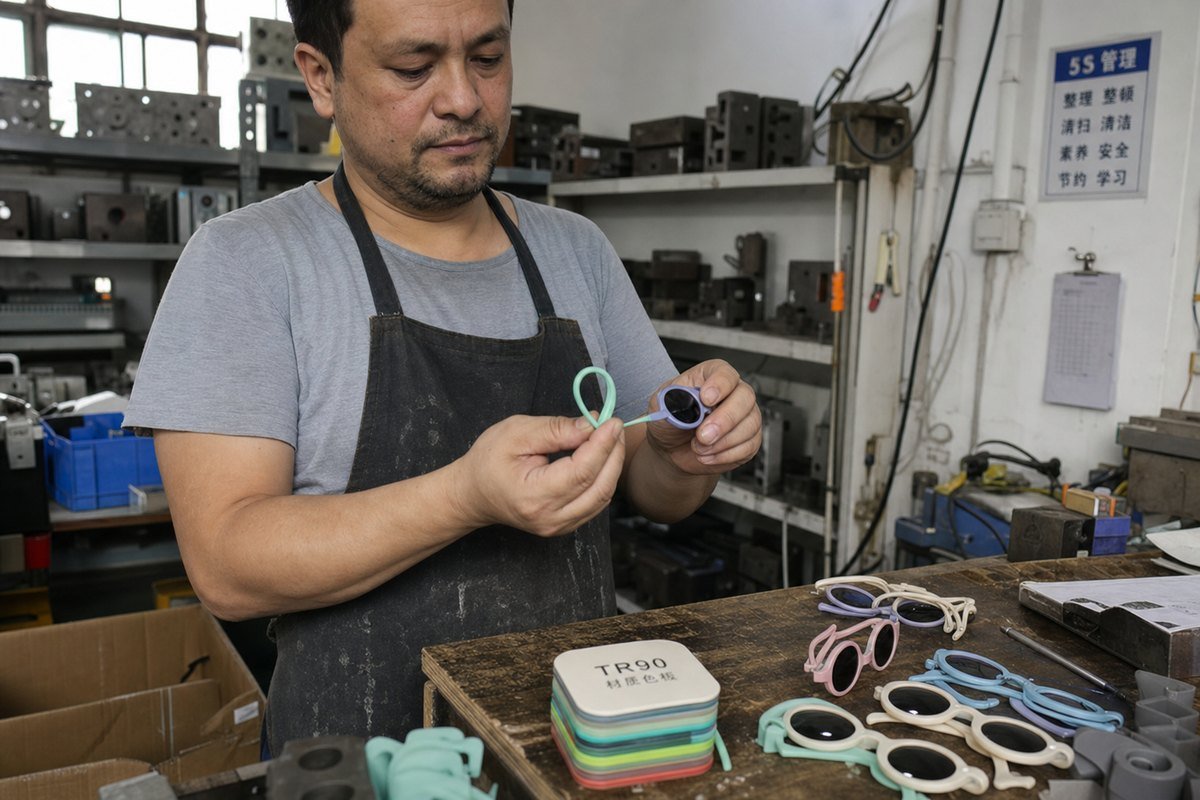
Das Rahmenmaterial ist aus einem einfachen Grund genauso wichtig wie das Glas: Kinder fallen auf ihr Gesicht. Ein starrer Rahmen, der beim Aufprall bricht, erzeugt scharfe Kunststoffkanten direkt neben dem Auge. Ein flexibler Rahmen absorbiert die Kraft und bleibt intakt. Nach fünfzehn Jahren der Herstellung von Kinderbrillen behandeln unsere Ingenieure Flexibilität zuerst als Sicherheitsmerkmal und dann als Haltbarkeitsmerkmal.
Die Material-Shortlist
Hier sind die gängigen Rahmenmaterialien für aktive Kinder im Vergleich:
| Rahmenmaterial | Flexibilität | Gewicht | Chemische Sicherheit | Am besten geeignet für |
|---|---|---|---|---|
| TPEE | Ausgezeichnet — verdreht sich und federt zurück | Sehr leicht | BPA-freie, kautschukfeste Optionen | Babys, Kleinkinder, aktive Kinder |
| TR90 | Sehr gut — hohe Rückstellkraft | Leicht | BPA-freie Qualitäten verfügbar | Kinder ab 3 Jahren, optische Fassungen |
| Standard-PC/Acryl-Kunststoff | Schlecht — kann brechen oder splittern | Leicht | Variiert je nach Lieferant | Ältere Kinder, nur vorsichtige Benutzung |
| Metall | Starr — verbiegt sich dauerhaft | Schwerer | Risiko von Nickel oder Blei in billigen Legierungen | Nicht empfohlen für kleine Kinder |
Wir bauen viele Stile als TR90-Fronten 4 mit TPEE-Bügeln. Die Front hält die Gläser in einer stabilen Form, während sich die Bügel frei biegen, wenn ein Kleinkind die Brille seitlich reißt. Diese Kombination übersteht das Verdrehen, Draufsitzen und Rucksackzerquetschen, das echte Kinder täglich erleben.
Einfache praktische Prüfungen
Eltern und Käufer können drei schnelle Tests durchführen. Drehen Sie zuerst den Rahmen vorsichtig an beiden Bügeln; er sollte sich biegen und zurückfedern. Zweitens fahren Sie mit einem Finger über jede Kante, um nach Graten oder scharfen Gussnähten zu fühlen. Drittens überprüfen Sie den Scharnierbereich – Federscharniere oder scharnierlose flexible Designs reduzieren das Einklemmen und Haareziehen, was auch Kindern mit sensorischen Empfindlichkeiten hilft. Bei Babys bestätigen Sie, dass das Material BPA-frei und phthalatfrei ist, da kleine Kinder die Bügel in den Mund nehmen und darauf herumkauen werden. BPA-freie TPEE-Rahmen wurden genau für diese Realität entwickelt.
Welche Zertifizierungen oder Sicherheitstests sollte ich meinen Lieferanten bitten zu überprüfen?
Anforderungsdokumentationen sind das Erste, worauf ich achte, wenn eine neue Marke unser Verkaufsteam kontaktiert. Ernsthafte Käufer fragen vor der Preisgestaltung nach Testberichten. Diese einzelne Gewohnheit filtert die meisten Beschaffungsfehler aus, bevor sie auftreten.
Bitten Sie Lieferanten, UV400-Prüfberichte, CE-Sicherheitskennzeichen-Konformität für Europa, ANSI Z80.3-Zertifizierungsstandards für die USA, Fallprüfungen auf Schlagfestigkeit und Dokumentation zur chemischen Sicherheit, die BPA-freie, phthalatfreie und bleifreie Materialien bestätigt, zu überprüfen. Seriöse Fabriken stellen diese Dokumente ohne zu zögern zur Verfügung.
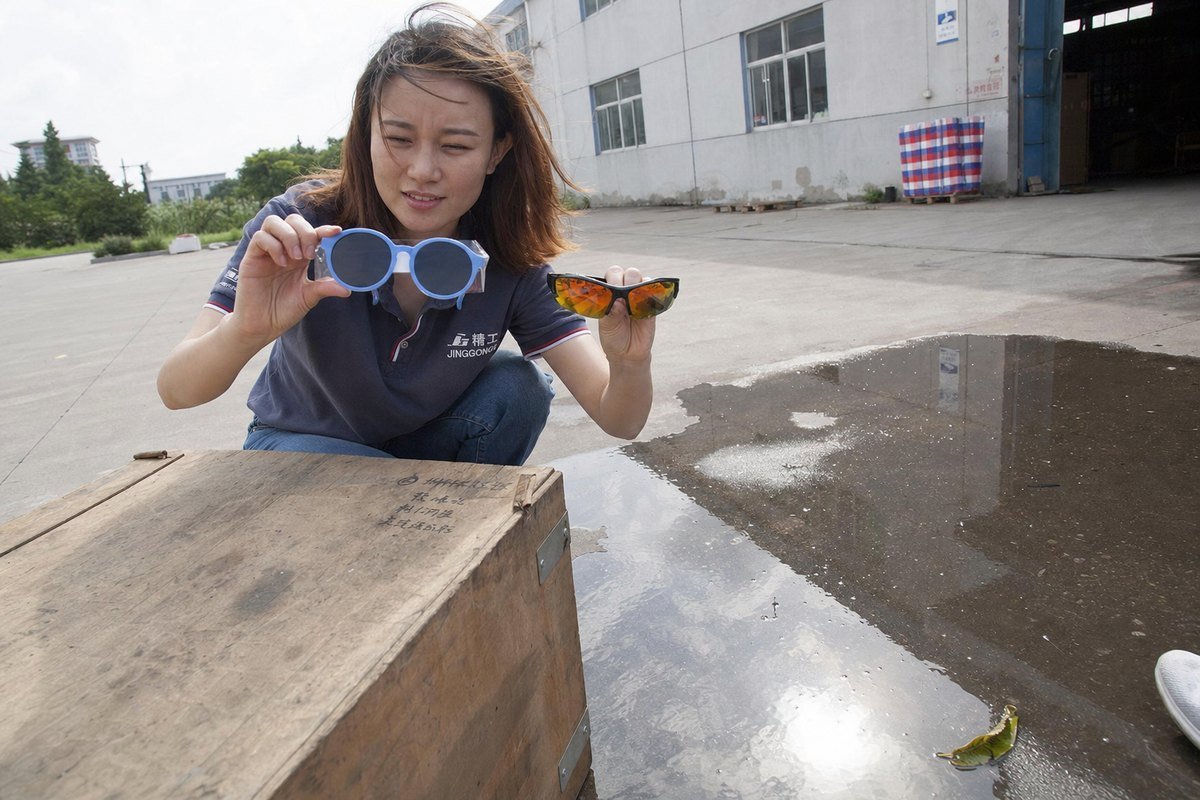
Zertifizierungen existieren, weil das Aussehen nichts aussagt. Zwei identisch aussehende Kinder-Sonnenbrillen können unter einem UV-Spektrometer völlig unterschiedlich funktionieren. Der einzige Weg, wie ein Elternteil oder ein Einkaufsmanager einem Produkt vertrauen kann, ist durch dokumentierte Tests. Nach unserer Erfahrung im Export an Käufer in über zwanzig Ländern unterscheiden sich die Papieranforderungen je nach Markt, daher ist es hilfreich zu wissen, welcher Standard wo gilt.
Die wichtigsten Standards nach Markt
| Standard / Kennzeichen | Region | Was es abdeckt |
|---|---|---|
| CE-Sicherheitskennzeichen (EN ISO 12312-1) | Europa | UV-Filterung, Glaskategorien, mechanische Sicherheit |
| ANSI Z80.3-Zertifizierung | Vereinigte Staaten | UV-Durchlässigkeit, Schlagfestigkeit, optische Qualität |
| AS/NZS 1067 | Australien / Neuseeland | Strenge UV- und Brillenglas-Kategorienanforderungen |
| Spielzeugsicherheitsnormen (EN 71 / ASTM F963) | EU / USA | Chemische Sicherheit und Kleinteile für Babybrillen |
| REACH / CPSIA chemische Konformität | EU / USA | Grenzwerte für BPA, Phthalate, Blei, Cadmium |
Was ein guter Lieferant übergeben sollte
Fordern Sie mindestens drei Dinge an. Erstens einen UV-Durchlässigkeitsbericht eines anerkannten Labors, der die UV400-Angabe belegt. Zweitens ein Ergebnis eines Schlag- oder Falltestes, das die bruchsichere Brillenglastechnologie 5 Leistung zeigt. Drittens chemische Testberichte für das Rahmenmaterial. Da wir eine 5S-verwaltete Werkstatt mit interner Qualitätskontrolle betreiben, halten wir diese Berichte für unsere Standard-Glas- und Materialkombinationen vor und arrangieren externe Tests, wenn der Markt eines Käufers ein bestimmtes Zertifikat verlangt.
Eine praktische Warnung: Wenn ein Lieferant zögert, verschwommene Dokumente sendet oder behauptet, "alle unsere Produkte bestehen alles" ohne Papierkram, gehen Sie weg. Echte Fabriken behandeln Testberichte als Routine, nicht als Gefallen.
Welche Passform- und Komfortdetails helfen, das Zerbrechen von Sonnenbrillen für Kinder zu verhindern oder Verletzungen zu vermeiden?
Größentoleranzen haben mir früh in meiner Karriere eine harte Lektion beigebracht. Wir haben einmal die Bügellänge nach Kundenfeedback um nur wenige Millimeter angepasst, und die Rücksendungen wegen rutschender Fassungen sanken in der nächsten Saison merklich. Passform ist messbar, kein Rätselraten.
Suchen Sie nach einem eng anliegenden Wrap-Around-Rahmendesign, das Seitenlicht blockiert, gummierten Bügelgriffen, verstellbaren Kopfriemen für Babys und Kleinkinder, sicheren Scharnieren ohne lose Schrauben und einer leichten Konstruktion. Eine richtige Passform hält die Sonnenbrille beim Spielen an und verhindert Stürze, Brüche und Gesichtsverletzungen.
Passform ist das Sicherheitsdetail, das Eltern am meisten unterschätzen. Sonnenbrillen, die von der Nase rutschen, hinterlassen eine Lücke über dem Glas, durch die Sonnenlicht direkt ins Auge dringt. Sonnenbrillen, die drücken, werden in den Sandkasten geworfen. In beiden Fällen verliert das Kind den Schutz. Die besten Kinder-Sonnenbrillen sind ganz einfach die, die ein Kind tatsächlich tragen wird.
Abdeckung stoppt das Lichtlecks
A Wrap-Around-Rahmendesign 6 oder ein eng anliegendes großes Glas ist wichtig, da UV-Strahlung nicht nur von vorne kommt. Reflektiertes Licht von Wasser, Sand und Asphalt dringt von den Seiten und von unten ein. Wraparound-Shield-Stile – wie die sportlichen Einzelscheiben-Designs, die wir für aktive ältere Kinder produzieren – minimieren dieses periphere Lichtlecks und halten gleichzeitig Staub und Schmutz beim Radfahren oder Spielen am Strand fern.
Alter ändert alles
Passformanforderungen ändern sich dramatisch je nach Alter, daher empfehle ich Käufern, in drei Stufen zu denken:
- Babys und Kleinkinder (0–3): Weiche, vollständig flexible BPA-freie Fassungen, verstellbare Kopfriemen oder Gummibänder, keine abnehmbaren Verzierungen und kaufsichere Bügelspitzen. Riemen müssen so konstruiert sein, dass sie bei unbeaufsichtigtem Gebrauch keine Strangulationsgefahr darstellen.
- Kleinkinder (4–7): Leichte TR90- oder TPEE-Fassungen mit gummierten Bügelgriffen, gebogenen Bügelenden und Feder- oder flexiblen Scharnieren. Optionaler Riemen für Sport.
- Ältere Kinder (8+): Sport-Wraparound-Stile mit Polycarbonat-Schlagfestigkeit, sicheren Nasenpads und schlanken gummierten Bügeln für Helmkompatibilität.
Kleinteile, große Risiken
Überprüfen Sie abschließend jede angebrachte Komponente. Scharnierschrauben, Nasenpads, Anhänger und Clip-ons müssen fest sitzen. Lose Kleinteile sind eine Erstickungsgefahr 7 für jüngere Geschwister, auch wenn der Träger älter ist. Polycarbonatgläser – bis zu zehnmal schlagfester als Standardkunststoff – sollten fest im Rand sitzen, ohne zu klappern. Bei unserer abschließenden Qualitätskontrolle schütteln, verdrehen und ziehen wir jeden ausgewählten Rahmen genau aus diesem Grund. Komfort hält Brillen auf Gesichtern; sichere Konstruktion hält Teile aus Mündern.
Schlussfolgerung
Unsichere Kinder-Sonnenbrillen sehen auf einem Regal identisch mit sicheren aus. Überprüfen Sie UV400-Schutz, flexible BPA-freie Rahmen, echte Zertifizierungen und sicheren Sitz – und fordern Sie die Dokumente an, die dies belegen.
Fußnoten
Expertenrat der American Academy of Ophthalmology zu Sonnenschutz und Brillen für Kinder. ↩︎
Umweltschutzrichtlinien bezüglich der Gesundheitsrisiken im Zusammenhang mit kumulativer Sonneneinstrahlung. ↩︎
Technische Erklärung optischer Abweichungen, die zu visuellen Beschwerden und Augenermüdung führen können. ↩︎
Wissenschaftlicher Überblick über Hochleistungs-Polyamide, die bei der Herstellung haltbarer, flexibler Brillen verwendet werden. ↩︎
Offizielle FDA-Vorschriften bezüglich der Schlagfestigkeitsprüfanforderungen für alle in den Vereinigten Staaten verkauften Sonnenbrillen. ↩︎
Maßgeblicher AAO-Leitfaden, der Wrap-Around-Sonnenbrillen zur Blockierung peripherer UV-Strahlen empfiehlt. ↩︎
Offizielle Bundesvorschrift (16 CFR 1501), die Kleinteile identifiziert, die eine Erstickungsgefahr bei Kinderprodukten darstellen. ↩︎
Weitere Artikel, die Ihnen gefallen könnten

September 2026
Können TR90 & TPEE Kinder-Sonnenbrillen recycelte oder biobasierte Materialien verwenden?
September 2026
Sind TR90 & TPEE Kinder-Sonnenbrillen recycelbar? Entsorgungstipps erklärt?
September 2026
Wie vermeidet man Verformungen und Kratzer beim Versand von TR90 & TPEE Kinder-Sonnenbrillen?
Auf der Suche nach einem zuverlässigen Partner für Kinderbrillen?
Entdecken Sie über 800 sofort verfügbare Modelle und umfassenden OEM/ODM-Support, der auf Ihre Marke zugeschnitten ist.
Kontakt aufnehmen English
  Español de México
  Deutsch
  Français
  日本語
日本語  العربية
  Português do Brasil