ما هي تفاصيل السلامة التي يجب على الآباء التحقق منها في نظارات الأطفال الشمسية؟
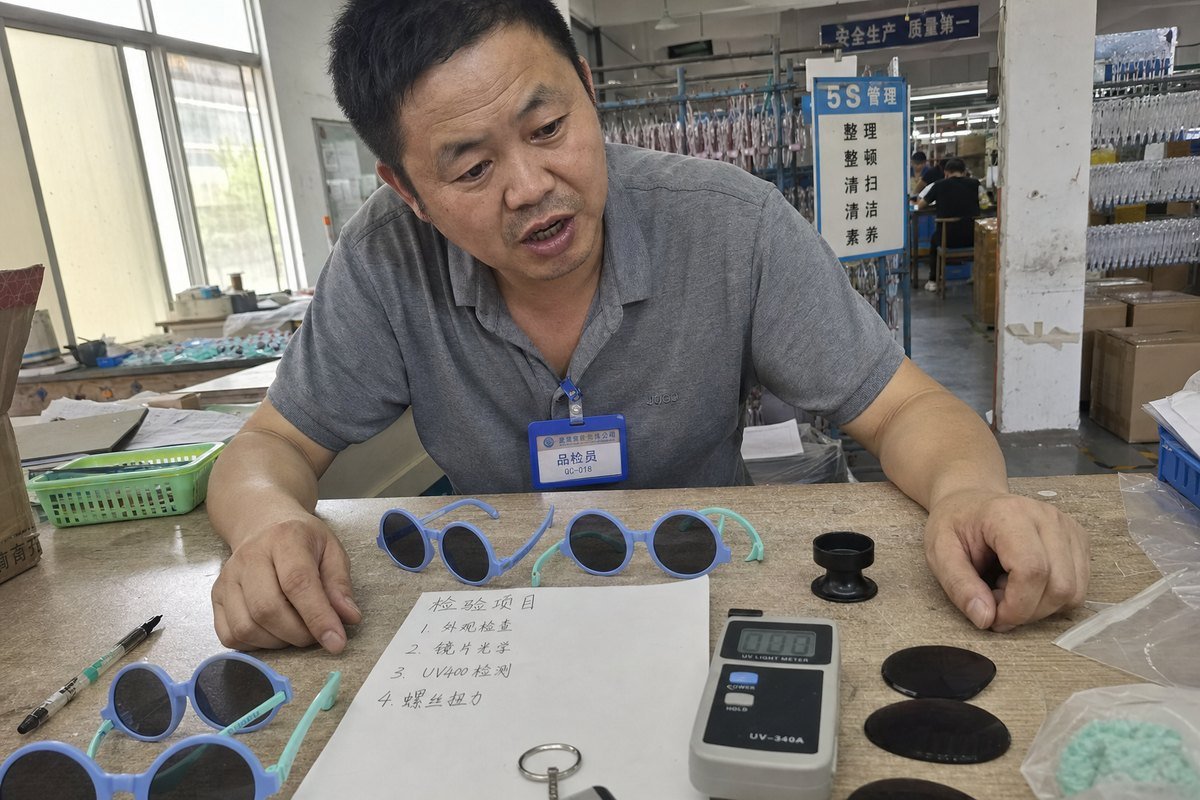
تفاصيل السلامة في نظارات الأطفال الشمسية يسهل تفويتها. على خط الإنتاج الخاص بنا في تايتشو، رأيت كيف تفصل فروق المواصفات الصغيرة بين الحماية الحقيقية للعين و [ألعاب مبتكرة محفوفة بالمخاطر](https://okayeyewear.com/there-safety-hazards-kids-sunglasses-are-with/).
يجب على الآباء التحقق من أربعة تفاصيل سلامة في نظارات الأطفال الشمسية: حماية UV400 معتمدة تحجب 100٪ من أشعة UVA و UVB، وعدسات بولي كربونات مقاومة للصدمات، ومواد إطار مرنة خالية من BPA مثل TPEE أو TR90، ومقاس مناسب للعمر ومحكم دون أجزاء صغيرة فضفاضة.
كل من هذه التفاصيل يسهل التحقق منه بمجرد معرفة ما تبحث عنه. دعني أشرحها واحدة تلو الأخرى، بدءًا بالعدسات.
ما هي ميزات العدسة التي يجب أن أبحث عنها لضمان حماية حقيقية من الأشعة فوق البنفسجية في نظارات الأطفال الشمسية؟
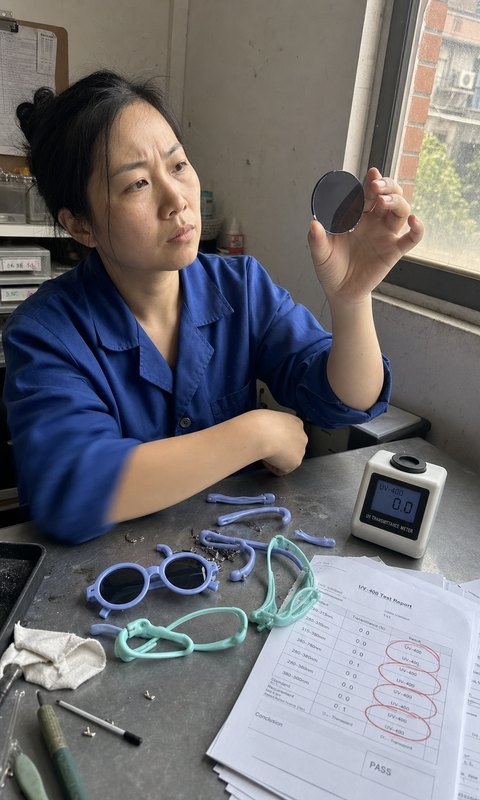
خلال تدقيق جودة العام الماضي، اختبر فريقنا دفعة من النظارات الشمسية المبتكرة الرخيصة التي أرسلها لنا مشترٍ للمقارنة. العدسات الداكنة لم تحجب تقريبًا أي أشعة فوق بنفسجية. لا يزال هذا الاختبار يشكل كيف أشرح سلامة العدسة.
الحماية الحقيقية من الأشعة فوق البنفسجية تتطلب عدسات تحمل علامة UV400 أو حجب الأشعة فوق البنفسجية UVA/UVB بنسبة 100%، ويتم التحقق من ذلك من خلال تقارير اختبار المورد. لا تحجب قتامة العدسة وحدها الأشعة فوق البنفسجية. يجب على الآباء أيضًا التحقق من التدرج اللوني الموحد، والوضوح البصري، وعدم وجود خدوش أو تشوهات تشوه رؤية الطفل.
الأسطورة الأكثر خطورة في نظارات الأطفال 1 هي أن العدسات الداكنة تعني حماية أقوى. الحقيقة هي العكس في بعض الحالات. العدسة الداكنة بدون مرشح UV مناسب تسبب اتساع حدقة العين، مما يسمح بوصول المزيد من الإشعاع الضار إلى الشبكية النامية. لهذا السبب تركز توصيات أطباء عيون الأطفال باستمرار على مرشح UV، وليس على اللون.
UV400 هو الحد الأدنى، وليس مكافأة إضافية
حماية UV400 تعني أن العدسة تحجب جميع أطوال موجات الضوء حتى 400 نانومتر، مما يغطي طيف UVA و UVB بالكامل. تعتبر مصادر صناعية متعددة حجب 99-100٪ من UVA/UVB الحد الأدنى القياسي للأطفال. يتلقى الأطفال تعرضًا أكبر بكثير لأشعة الشمس سنويًا من البالغين، وتمر عدساتهم الشابة المزيد من الأشعة فوق البنفسجية إلى الشبكية. لذا فهذا أمر غير قابل للتفاوض. 2 الاستقطاب هو الراحة، وليس الحماية.
تقليل الوهج المستقطب ميزة مفيدة حقًا بالقرب من الماء أو الرمال أو الثلج. لكنها ميزة راحة، وليست ميزة سلامة للأشعة فوق البنفسجية. في مصادر العدسات لدينا، نقدم خيارات UV400 فقط وخيارات UV400 مستقطبة، لأن الوظيفتين منفصلتان.
ماذا يفعل حقًا.
| ما يتغير حسب العمر | هل هو متطلب للسلامة؟ | مرشح UV400 |
|---|---|---|
| يحجب 100٪ من أشعة UVA/UVB | نعم - ضروري | يقلل الوهج المنعكس من الأسطح المستوية |
| استقطاب | لا - ترقية راحة اختيارية | يقلل سطوع الضوء المرئي فقط |
| لون داكن | لا - لا معنى له بدون مرشح UV | انعكاس تجميلي، تخفيض طفيف للسطوع |
| طلاء مرآة | لا - ميزة أسلوب | ترشيح ضوء HEV/الأزرق |
| يقلل من ضوء الشمس الأزرق المكثف | ميزة إضافية مفيدة للشبكية النامية | افحص أيضًا جودة العدسة. غالبًا ما تظهر العدسات الرخيصة تموجات أو فقاعات أو لونًا غير متساوٍ. هذه العيوب تسبب |
تشوهًا بصريًا وإجهادًا للعين، مما يجعل الأطفال يخلعون النظارات الشمسية. يجب أن تبدو العدسة الجيدة موحدة عندما ترفعها مقابل خط مستقيم، مثل إطار باب، وتدورها ببطء. 3 يمكن لعدسة شفافة أو ذات لون فاتح أن توفر حماية كاملة من الأشعة فوق البنفسجية بنسبة 100٪.
كيف يمكنني معرفة ما إذا كانت مادة الإطار آمنة ومرنة بما يكفي للأطفال النشطين؟
مادة الإطار مهمة بقدر العدسة لسبب بسيط: الأطفال يسقطون على وجوههم. الإطار الصلب الذي ينكسر عند الاصطدام يخلق حواف بلاستيكية حادة بجوار العين. الإطار المرن يمتص القوة ويبقى سليمًا. بعد خمسة عشر عامًا من تصنيع نظارات الأطفال، يعامل مهندسونا المرونة كميزة سلامة أولاً وميزة متانة ثانياً.
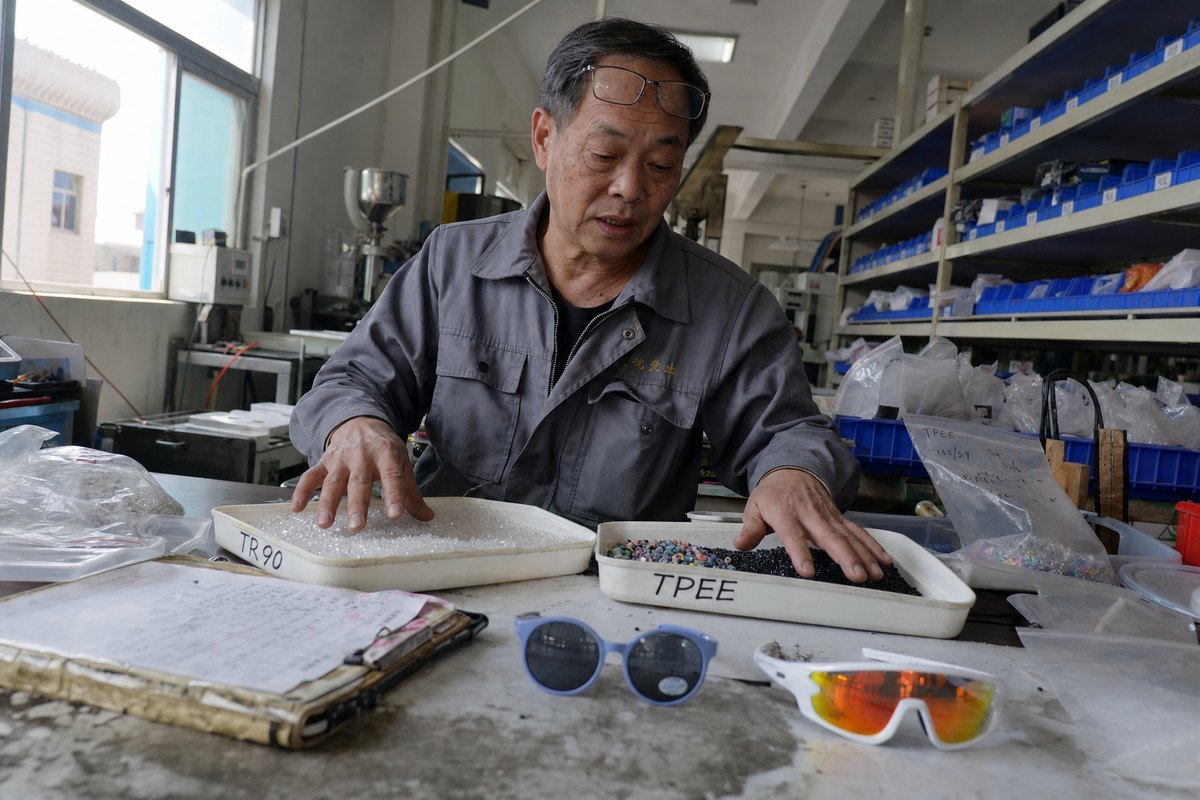
يجب أن تُصنع إطارات الأطفال الآمنة من مواد مرنة وخالية من BPA مثل TPEE أو TR90 التي تنثني دون أن تنكسر. اختبر عن طريق لف الإطار بلطف - يجب أن ينثني ويعود إلى شكله. تجنب البلاستيك الصلب الهش ذي الحواف الحادة أو الأجزاء المعدنية المكشوفة بالقرب من الوجه.
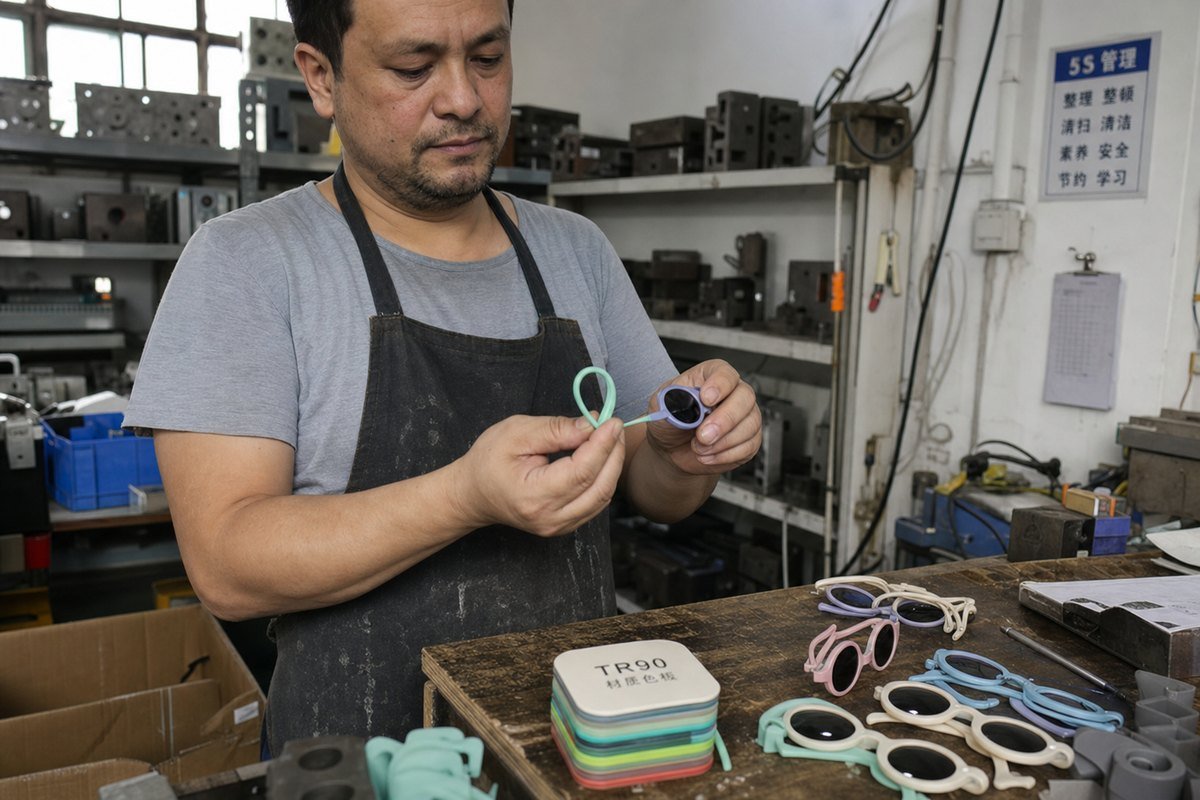
قائمة المواد المختصرة.
إليك كيف تقارن مواد الإطار الشائعة للأطفال النشطين:
السلامة الكيميائية
| مادة الإطار | المرونة | الوزن | ممتاز - يلتوي ويرتد | الأفضل لـ |
|---|---|---|---|---|
| TPEE | خيارات خالية من BPA وآمنة للمضغ | خفيف جدا | الأطفال الرضع والأطفال الصغار والأطفال النشطون | جيد جدًا - مرونة ذاكرة عالية |
| TR90 | درجات خالية من BPA متاحة | خفيف | الأطفال 3+، إطارات بصرية | بلاستيك PC/أكريليك قياسي |
| ضعيف - يمكن أن يتشقق أو ينكسر | يختلف حسب المورد | خفيف | الأطفال الأكبر سنًا، الاستخدام الحذر فقط | الأطفال الأكبر سنًا، استخدام حذر فقط |
| معدن | صلب - ينحني بشكل دائم | أثقل | خطر النيكل أو الرصاص في السبائك الرخيصة | غير موصى به للأطفال الصغار |
نحن نبني العديد من الأساليب كـ واجهات TR90 4 مع معابد TPEE. يحمل الجزء الأمامي العدسات في شكل مستقر، بينما تنثني المعابد بحرية عندما يسحب الطفل النظارات جانبًا. هذا المزيج ينجو من الالتواء والجلوس والسحق في حقيبة الظهر التي يقدمها الأطفال الحقيقيون يوميًا.
فحوصات يدوية بسيطة
يمكن للآباء والمشترين إجراء ثلاثة اختبارات سريعة. أولاً، قم بلف الإطار بلطف عند كلا المعبدين؛ يجب أن ينثني ويستعيد شكله. ثانيًا، قم بتمرير إصبع على كل حافة للشعور بالنتوءات أو خطوط القولبة الحادة. ثالثًا، تحقق من منطقة المفصل - المفصلات الزنبركية أو التصميمات المرنة الخالية من المفصلات تقلل من القرص وتشابك الشعر، مما يساعد أيضًا الأطفال الذين يعانون من حساسية حسية. بالنسبة للرضع، تأكد من أن المادة خالية من BPA والفثالات، لأن الأطفال الصغار سيمضغون المعابد ويمضغونها. تم تصميم إطارات TPEE الخالية من BPA خصيصًا لهذه الحقيقة.
ما هي الشهادات أو اختبارات السلامة التي يجب أن أطلب من المورد الخاص بي التحقق منها؟
طلبات التوثيق هي أول شيء أنظر إليه عندما تتصل علامة تجارية جديدة بفريق المبيعات لدينا. يطلب المشترون الجادون تقارير الاختبار قبل التسعير. هذه العادة الواحدة تستبعد معظم أخطاء المصادر قبل حدوثها.
اطلب من الموردين التحقق من تقارير اختبار UV400، والامتثال لعلامة السلامة CE لأوروبا، ومعايير شهادة ANSI Z80.3 للولايات المتحدة، واختبار مقاومة الصدمات بالكرة المتساقطة، ووثائق السلامة الكيميائية التي تؤكد خلوها من BPA والفثالات والرصاص. تقدم المصانع ذات السمعة الطيبة هذه المستندات دون تردد.
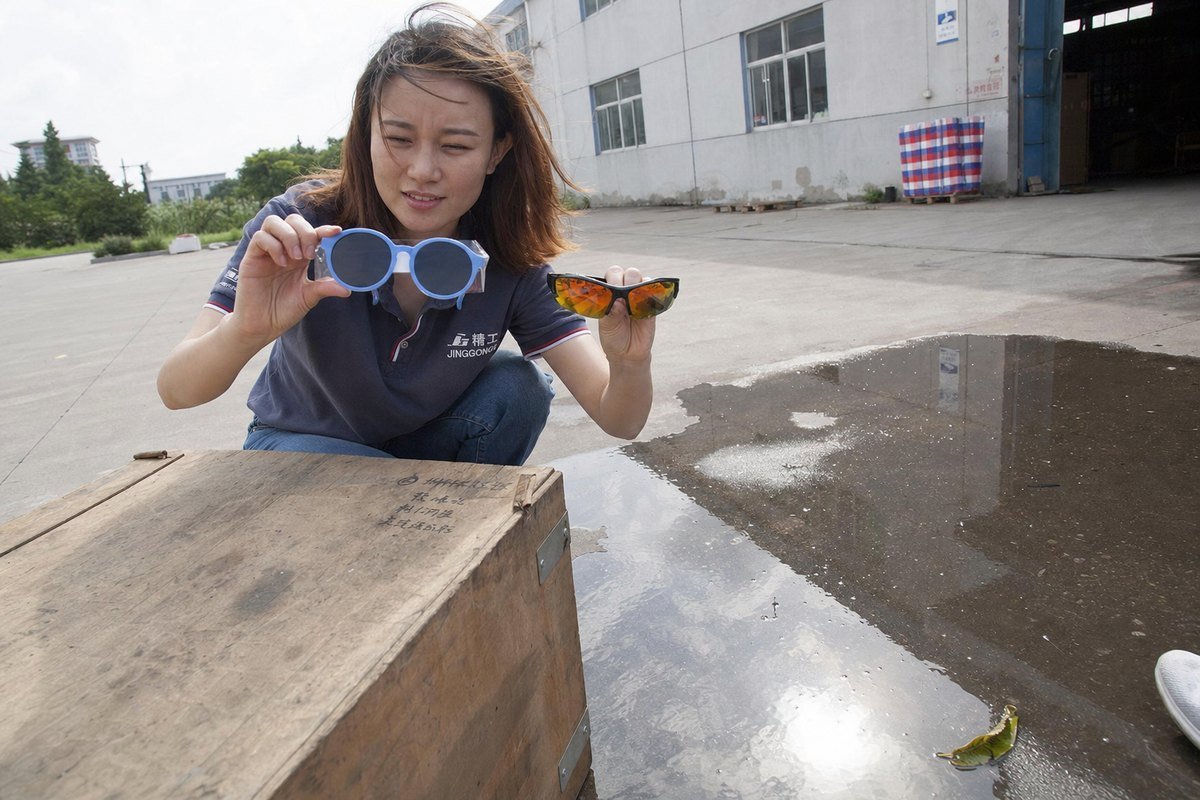
توجد الشهادات لأن المظهر لا يخبرك شيئًا. يمكن أن يؤدي زوجان متطابقان من النظارات الشمسية للأطفال إلى أداء مختلف تمامًا تحت مطياف الأشعة فوق البنفسجية. الطريقة الوحيدة التي يمكن للوالد أو مدير المشتريات الوثوق بها في منتج هي من خلال الاختبار الموثق. في تجربتنا في التصدير إلى مشترين في أكثر من عشرين دولة، تختلف متطلبات الأوراق حسب السوق، لذا من المفيد معرفة المعيار الذي ينطبق في كل مكان.
المعايير الرئيسية حسب السوق
| المعيار / العلامة | المنطقة | ما يغطيه |
|---|---|---|
| علامة السلامة CE (EN ISO 12312-1) | أوروبا | ترشيح الأشعة فوق البنفسجية، فئات العدسات، السلامة الميكانيكية |
| شهادة ANSI Z80.3 | الولايات المتحدة | نفاذية الأشعة فوق البنفسجية، مقاومة الصدمات، الجودة البصرية |
| AS/NZS 1067 | أستراليا / نيوزيلندا | متطلبات صارمة للأشعة فوق البنفسجية وفئة العدسة |
| معايير سلامة الألعاب (EN 71 / ASTM F963) | الاتحاد الأوروبي / الولايات المتحدة الأمريكية | السلامة الكيميائية والأجزاء الصغيرة لنظارات الأطفال |
| الامتثال الكيميائي REACH / CPSIA | الاتحاد الأوروبي / الولايات المتحدة الأمريكية | حدود BPA، الفثالات، الرصاص، الكادميوم |
ما يجب أن يقدمه المورد الجيد
كحد أدنى، اطلب ثلاثة أشياء. أولاً، تقرير نفاذية الأشعة فوق البنفسجية من مختبر معترف به يثبت ادعاء UV400. ثانيًا، نتيجة اختبار الصدمات أو إسقاط الكرة تظهر تقنية عدسة مقاومة للكسر 5 الأداء. ثالثًا، تقارير الاختبار الكيميائي لمادة الإطار. نظرًا لأننا ندير ورشة عمل مدارة بنظام 5S مع مراقبة جودة داخلية، فإننا نحتفظ بهذه التقارير في الملفات لمجموعات العدسات والمواد القياسية لدينا، ونقوم بترتيب اختبارات الطرف الثالث عندما يتطلب سوق المشتري شهادة محددة.
تحذير عملي واحد: إذا تردد المورد، أو أرسل مستندات ضبابية، أو ادعى "جميع منتجاتنا تجتاز كل شيء" بدون أوراق، فابتعد. المصانع الحقيقية تتعامل مع تقارير الاختبار كروتين، وليس كخدمة.
ما هي تفاصيل المقاس والراحة التي تساعد على منع نظارات الأطفال الشمسية من الكسر أو التسبب في إصابة؟
علمتني تفاوتات التحجيم درسًا قاسيًا في وقت مبكر من مسيرتي المهنية. لقد قمنا ذات مرة بتعديل طول المعبد ببضعة ملليمترات فقط بعد ملاحظات المشتري، وانخفضت المرتجعات من الإطارات المنزلقة بشكل ملحوظ في الموسم التالي. الملاءمة قابلة للقياس، وليست تخمينًا.
ابحث عن تصميم إطار محكم يلتف حول الوجه ويحجب الضوء الجانبي، ومقابض صدغ مطاطية، وأشرطة رأس قابلة للتعديل للأطفال الصغار، ومفصلات آمنة بدون براغي مفكوكة، وهيكل خفيف الوزن. يضمن المقاس المناسب بقاء النظارات الشمسية في مكانها أثناء اللعب ويمنع السقوط والكسر والإصابات الوجهية.
الملاءمة هي تفصيل السلامة الذي يقلل الآباء من تقديره. النظارات الشمسية التي تنزلق على الأنف تترك فجوة فوق العدسة حيث يتسلل ضوء الشمس مباشرة إلى العين. النظارات الشمسية التي تضغط يتم رميها في صندوق الرمل. في كلتا الحالتين، يفقد الطفل الحماية. أفضل النظارات الشمسية للأطفال هي ببساطة تلك التي سيستمر الطفل في ارتدائها بالفعل.
التغطية توقف تسرب الضوء
A تصميم إطار ملتف 6 أو أن العدسة الكبيرة ذات المقاس الضيق مهمة لأن الأشعة فوق البنفسجية لا تأتي فقط من الأمام. يدخل الضوء المنعكس من الماء والرمل والرصيف من الجانبين والأسفل. أنماط الدرع الواقي - مثل التصميمات الرياضية ذات العدسة الواحدة التي ننتجها للأطفال الأكبر سنًا النشطين - تقلل من تسرب الضوء المحيطي هذا مع إبقاء الغبار والحطام بعيدًا أثناء ركوب الدراجات أو اللعب على الشاطئ.
العمر يغير كل شيء
تتغير متطلبات الملاءمة بشكل كبير حسب العمر, ، لذلك أوصي المشترين بالتفكير في ثلاث مراحل:
- الرضع والأطفال الصغار (0-3): إطارات ناعمة ومرنة بالكامل وخالية من BPA، وأشرطة رأس قابلة للتعديل أو أربطة مطاطية، وزخارف غير قابلة للفصل، وأطراف معابد آمنة للمضغ. يجب تصميم الأشرطة بحيث لا تشكل خطر الاختناق عند تركها دون رقابة.
- الأطفال الصغار (4-7 سنوات): إطارات خفيفة الوزن من TR90 أو TPEE مع مقابض معابد مطاطية، وأطراف معابد منحنية، ومفصلات زنبركية أو مرنة. حزام اختياري للرياضة.
- الأطفال الأكبر سنًا (8 سنوات فما فوق): أنماط رياضية واقية مع مقاومة للصدمات من البولي كربونات، ووسادات أنف آمنة، ومعابد رفيعة مغطاة بالمطاط لتوافق الخوذة.
أجزاء صغيرة، مخاطر كبيرة
أخيرًا، تحقق من كل مكون مرفق. يجب تثبيت براغي المفصلات ووسادات الأنف والتمائم والمشابك بإحكام. الأجزاء الصغيرة السائبة هي خطر الاختناق 7 للأشقاء الأصغر سنًا حتى لو كان مرتديها أكبر سنًا. يجب أن تكون عدسات البولي كربونات - التي تصل مقاومتها للصدمات إلى عشرة أضعاف مقاومة البلاستيك القياسي - مثبتة بإحكام في الحافة دون أن تصدر صوتًا. أثناء فحص مراقبة الجودة النهائي لدينا، نقوم بهز ولف وسحب كل إطار تم اختياره لهذا السبب بالضبط. الراحة تبقي النظارات على الوجوه؛ البناء الآمن يبقي الأجزاء خارج الفم.
الخلاصة
تبدو النظارات الشمسية غير الآمنة للأطفال متطابقة مع النظارات الآمنة على الرف. تحقق من الحماية من الأشعة فوق البنفسجية، والإطارات المرنة الخالية من BPA، والشهادات الحقيقية، والملاءمة الآمنة - واطلب المستندات التي تثبت ذلك.
ملاحظات ختامية
إرشادات الخبراء من الأكاديمية الأمريكية لطب العيون حول سلامة الشمس والنظارات للأطفال. ↩︎
مبادئ توجيهية للحماية البيئية فيما يتعلق بالمخاطر الصحية المرتبطة بالتعرض التراكمي للإشعاع الشمسي. ↩︎
شرح تقني للانحرافات البصرية التي يمكن أن تؤدي إلى عدم الراحة البصرية وإجهاد العين. ↩︎
نظرة عامة علمية على البولي أميدات عالية الأداء المستخدمة في تصنيع النظارات المتينة والمرنة. ↩︎
لوائح إدارة الغذاء والدواء الأمريكية الرسمية المتعلقة بمتطلبات اختبار مقاومة الصدمات لجميع النظارات الشمسية المباعة في الولايات المتحدة. ↩︎
دليل AAO الموثوق الذي يوصي بالنظارات الشمسية ذات التصميم الملفوف لحجب الأشعة فوق البنفسجية الطرفية. ↩︎
لائحة فيدرالية رسمية (16 CFR 1501) تحدد الأجزاء الصغيرة التي تشكل خطر الاختناق في منتجات الأطفال. ↩︎
مقالات أخرى قد تعجبك

هل تبحث عن شريك موثوق به للنظارات للأطفال؟
استكشف أكثر من 800 نمط جاهز ودعم OEM/ODM كامل مصمم خصيصًا لعلامتك التجارية.
اتصل بنا English
  Español de México
  Deutsch
  Français
  日本語
日本語  العربية
  Português do Brasil