Welche Glasbeschichtungen gibt es für Kinderbrillen und wie erkennt man gefälschte?
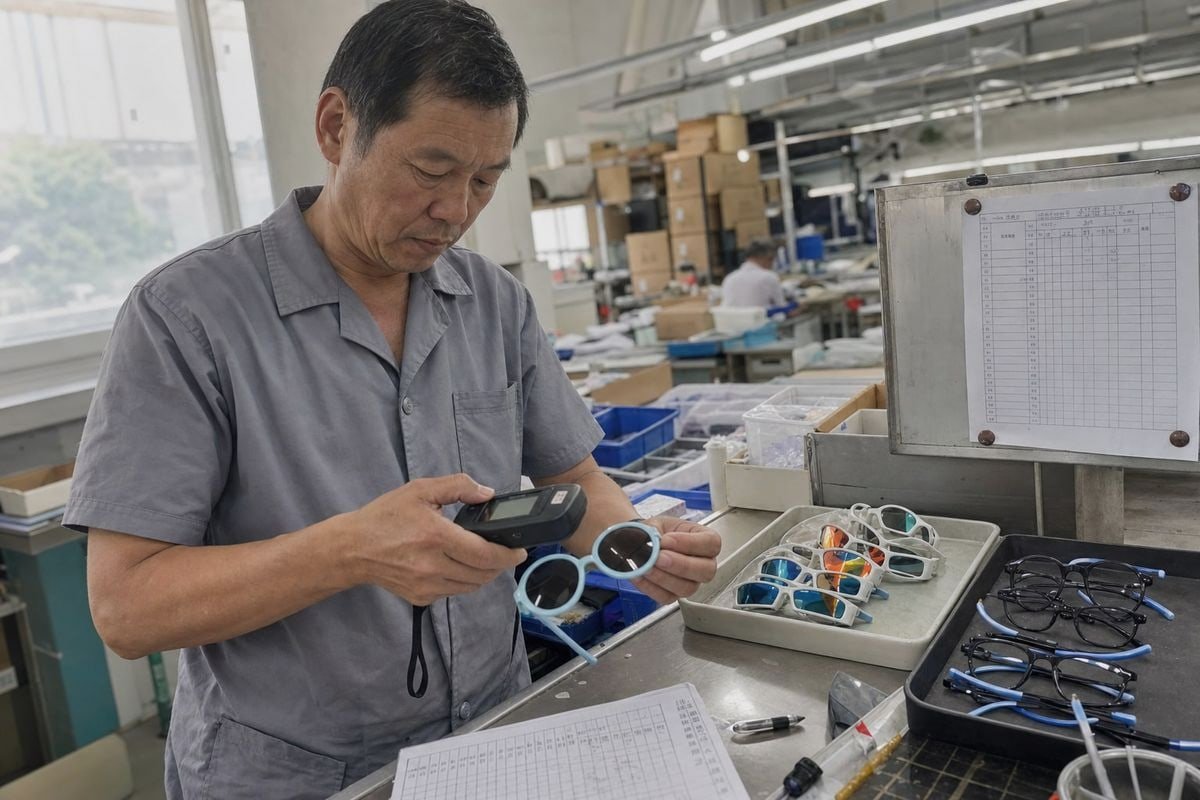
Glasbeschichtungen für Kinderbrillen können Ihre Produktlinie ausmachen oder brechen Bureau Veritas 1. An unserer Produktionslinie in Taizhou habe ich erlebt, wie Käufer ganze Einzelhandelsprogramme verloren haben, weil ein Lieferant Gläser mit gefälschten UV400-Angaben geliefert hat. Das Kind trägt die Sonnenbrille, die Eltern vertrauen dem Etikett, und der Schutz ist einfach nicht vorhanden. Das ist ein rechtliches Risiko, ein Markenrisiko und ehrlich gesagt ein Versagen der Kindersicherheit. Die gute Nachricht ist, dass die Überprüfung von Beschichtungen nicht kompliziert ist, sobald man genau weiß, wonach man fragen und wie man das Gelieferte testen muss.
Zu den Glasbeschichtungen für Kinderbrillen gehören UV400-Schutz, kratzfeste Hartbeschichtungen, Antireflexbeschichtung, polarisierte Folien, Blaulichtfilter und hydrophobe Schichten. Um Fälschungen zu erkennen, fordern Sie Testberichte von Drittanbietern an, führen Sie einen UV-Meter- oder Lichtreflexionstest an Mustern durch und überprüfen Sie die Zertifizierungen, bevor Sie bestellen.
Im Folgenden werde ich jede Beschichtungsoption, die Verifizierungstests, die wir in unserer eigenen Fabrik durchführen, die Dokumente, die Sie verlangen sollten, und wie Sie die Haltbarkeit von Beschichtungen im realen Gebrauch gewährleisten können, erläutern.
Welche Glasbeschichtungsoptionen sollte ich Käufern anbieten, die Kinder-Sonnenbrillen beziehen?
Wenn wir eine neue Serie aus unserer Bibliothek von rund 800 bestehenden Modellen entwickeln, ist das Glasbeschichtungspaket normalerweise die erste Spezifikation, nach der ein ernsthafter Käufer fragt. Es beeinflusst Kosten, Positionierung und Sicherheitsangaben.
Bieten Sie UV400-Schutz als nicht verhandelbare Basis, fügen Sie dann eine kratzfeste Behandlung, polarisierte Gläser für Outdoor-Linien, eine Antireflexbeschichtung für optische Rahmen und hydrophobe oder Blaulichtfilterbeschichtungen als Premium-Upsells hinzu. Passen Sie jedes Beschichtungspaket an das Alter und den Anwendungsfall des Kindes an.
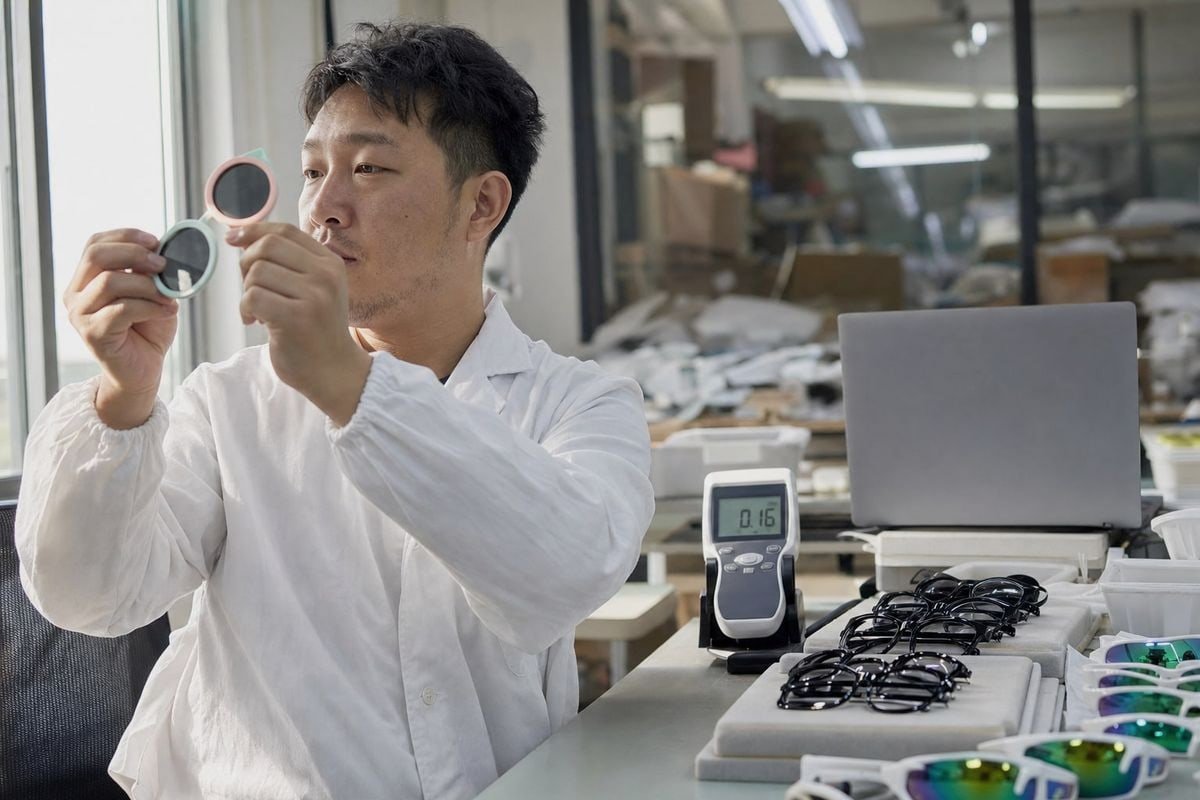
Zum schnellen Vergleich, hier ist, wie ich die Hauptoptionen für Käufer, die eine Kinderbrillenlinie aufbauen, darstelle:
| Beschichtung / Behandlung | Was es tut | Priorität für Kinder | Typischer Anwendungsfall |
|---|---|---|---|
| UV400-Schutz | Blockiert UVA/UVB bis 400 nm | Wesentlich | Alle Kinder-Sonnenbrillen |
| Kratzfeste Hartbeschichtung | Widersteht Abrieb durch Stürze und grobe Reinigung | Wesentlich | Alle Kinderbrillen |
| Polarisationsfolie | Reduziert reflektierende Blendung von Wasser, Straßen, Schnee | Hoch für Outdoor-Linien | Strand-, Sport-, Reise-Modelle |
| Antireflexbeschichtung | Reduziert Reflexionen von Bildschirmen und Klassenlicht | Oft lohnenswert | Optische Fassungen, Demo-Gläser |
| Blaulichtfilter 2 | Filtert energiereiches sichtbares Licht von Geräten | Optional | Optische Bereiche für Bildschirmzeit |
| Hydrophobe Beschichtung | Weist Wasser und Schlieren ab für einfache Reinigung | Nice-to-have | Premium-Pakete |
| Spiegel-/Verlaufsbeschichtung | Reflektierende kosmetische Schicht, zusätzliche Lichtreduzierung | Situationsabhängig | Sport-Schutzbrillen |
Beginnen Sie mit dem Glasmaterial, dann schichten Sie Beschichtungen
Beschichtungen funktionieren nur so gut wie das darunterliegende Glas. Deshalb empfehlen wir Polycarbonatgläser 3 für die meisten Kinder-Modelle. Polycarbonat bietet inhärente Schlagfestigkeit und blockiert UV-Strahlen natürlich, was Ihnen eine Sicherheitsmarge gibt, noch bevor Beschichtungen aufgetragen werden. Billigere Acrylgläser benötigen eine ordnungsgemäße UV400-Beschichtung, und genau hier versagen Lieferanten, die sparen.
Passen Sie Beschichtungen an den Produkttyp an
Eine runde pastellfarbene Sonnenbrille für Kleinkinder benötigt UV400 und eine Hartbeschichtung, nichts weiter. Eine sportliche Wraparound-Schutzbrille mit einem verspiegelten Verlaufsglas benötigt eine ordnungsgemäß haftende Spiegelschicht, damit sie nicht abblättert. Eine TR90 optische Fassung mit Demo-Gläsern profitiert von einer Antireflexbeschichtung, damit das Produkt gut fotografiert und im Einzelhandel als Premium wahrgenommen wird. Eine Einschränkung, die ich Käufern immer gebe: Blaulichtfilterung ist die marketinggetriebenste Kategorie. Die Beweise für Kinder sind dünner, als die Verpackung vermuten lässt, daher positionieren Sie sie als Komfortmerkmal, nicht als medizinische Behauptung.
Wie kann ich feststellen, ob eine UV400- oder polarisierte Beschichtungsangabe echt ist, bevor ich eine Bestellung aufgeben?
Ein Käufer aus Australien schickte uns einmal Konkurrenzmuster mit der Kennzeichnung UV400, die auf unserem UV-Meter sofort versagten. Dieses Treffen änderte, wie sie jeden Lieferanten danach qualifizierte, und es lehrte mich, dass die Verifizierung vor der Anzahlung erfolgen muss, nicht nachdem die Ware angekommen ist.
Testen Sie physische Muster vor der Bestellung. Verwenden Sie ein UV-Messgerät oder Spektrophotometer, um den UV400-Schutz zu bestätigen, zwei polarisierte Gläser um 90 Grad zu kreuzen, um zu prüfen, ob sie sich schwarz färben, und führen Sie einen Lichtreflexionstest an AR-Beschichtungen durch. Verlassen Sie sich niemals allein auf Aufkleber oder mündliche Zusagen.
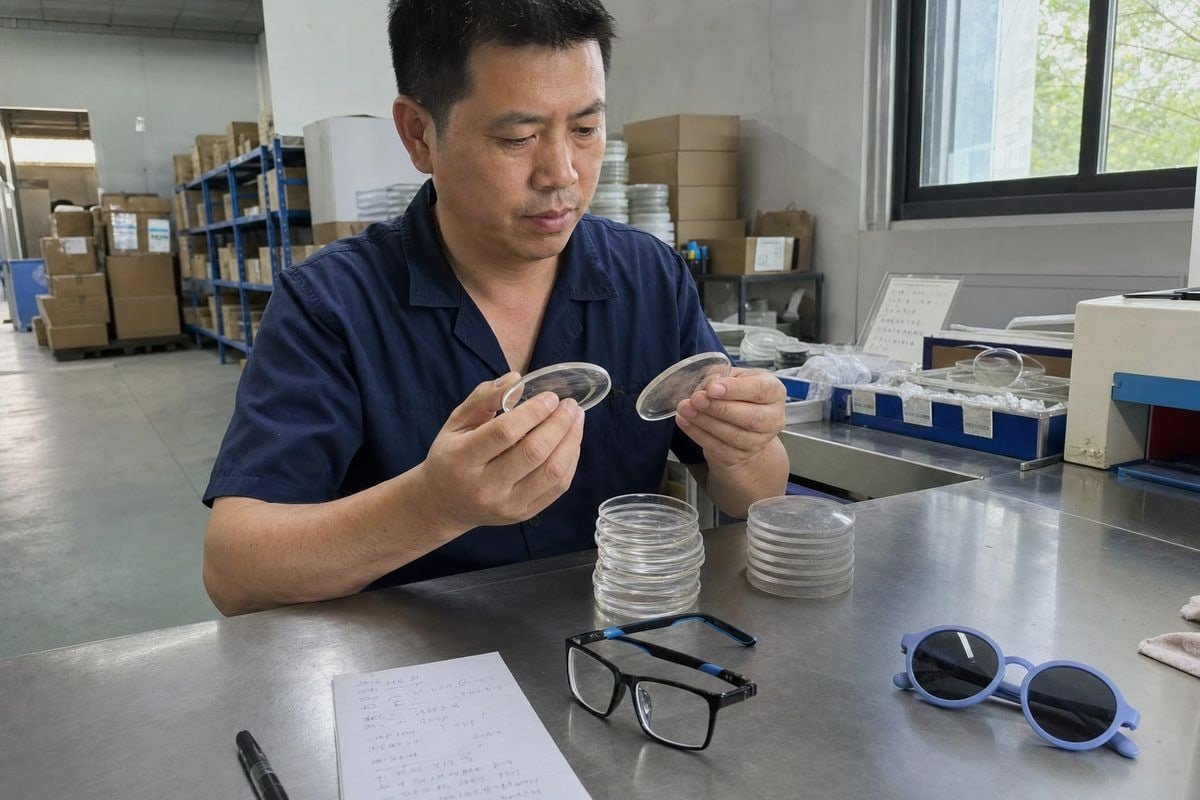
Hier ist die praktische Vorgehensweise, die ich jedem Einkaufsmanager empfehle. Sie kostet fast nichts und fängt die meisten Fälschungen ab.
Schritt 1: Die UV-Durchlässigkeitsprüfung
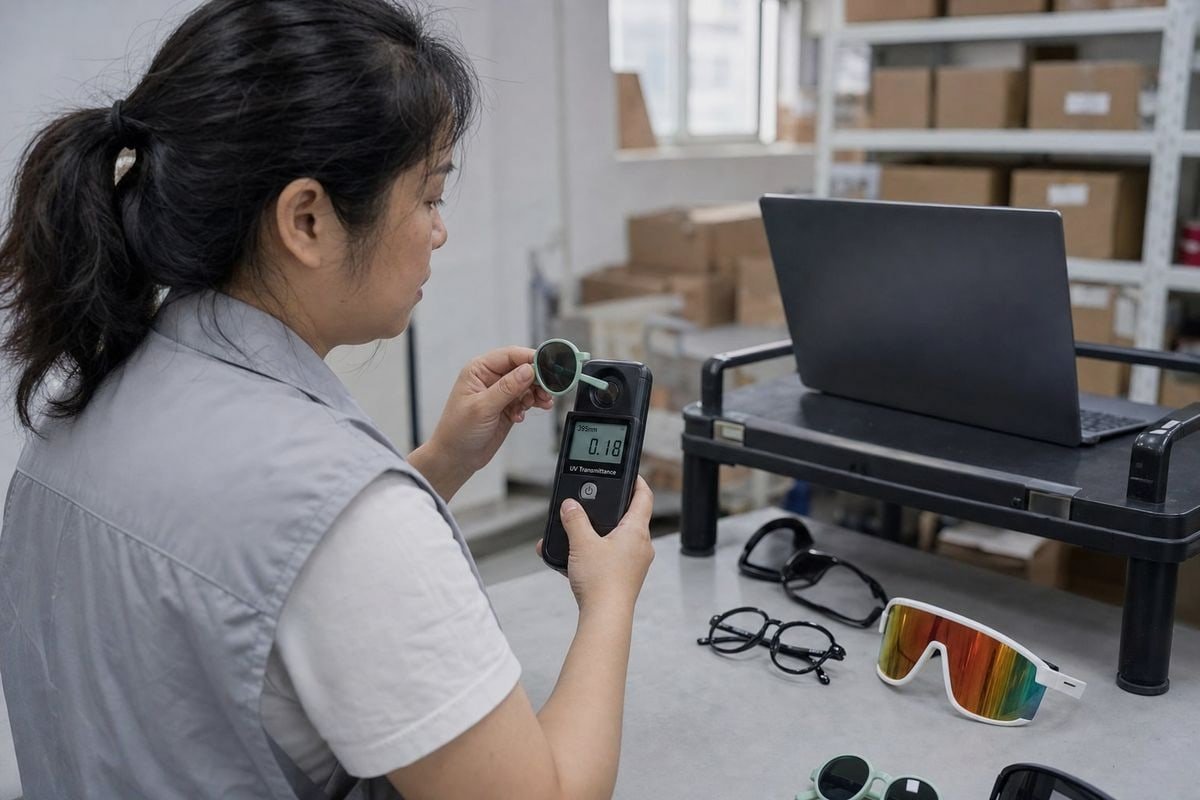
Bitten Sie Ihren Lieferanten, die Gläser auf einem UV-Durchlässigkeitsmessgerät zu demonstrieren, idealerweise in einem Videoanruf, damit Sie die Messung live verfolgen können. Ein echtes UV400-Glas zeigt eine nahezu Null-Transmission unter 400 nm. In unserem Showroom führen wir diesen Test auf Anfrage durch, da wir wissen, dass ehrliche Zahlen langfristiges Vertrauen aufbauen. Wenn eine Fabrik zögert oder behauptet, das Messgerät sei kaputt, betrachten Sie das als Ihre Antwort.
Schritt 2: Der gekreuzte Polarisator-Test
Polarisierte Beschichtungen sind leicht zu überprüfen. Halten Sie zwei polarisierte Gläser 4 zusammen und drehen Sie eines um 90 Grad. Echte polarisierte Gläser werden an der gekreuzten Position fast schwarz. Sie können auch einen LCD-Bildschirm durch das Glas betrachten und ihn drehen; ein echtes polarisiertes Glas verdunkelt den Bildschirm in bestimmten Winkeln. Gefälschte "polarisierte" Gläser, die oft nur getönt sind, zeigen überhaupt keine Veränderung.
Schritt 3: Der Lichtreflexionstest für AR-Beschichtungen
Neigen Sie die Linse zu einer Lichtquelle. Eine echte Antireflexbeschichtung zeigt eine schwache grüne, blaue oder violette Restreflexion. Eine blanke Linse reflektiert reines weißes Licht wie ein Spiegel. Dies ist kein Test in Laborqualität, aber er entlarvt zuverlässig Gläser, die als AR-beschichtet verkauft werden und nie eine Beschichtungskammer gesehen haben.
Schritt 4: Der Wassertropfentest
Bei Behauptungen über hydrophobe Beschichtungen geben Sie Wasser auf die Linse. Bei einer echten Beschichtung bilden sich straffe, kugelförmige Tropfen, die abrollen. Auf blankem Kunststoff breitet es sich aus und verschmiert. Das Verhalten bei Fingerabdrücken erzählt eine ähnliche Geschichte für oleophobe Schichten.
| Schnelltest | Echtes Ergebnis | Falsches oder fehlendes Ergebnis |
|---|---|---|
| UV-Messgerät-Messung | Nahezu 0% Transmission unter 400 nm | Erhebliches UV-Licht dringt durch |
| Gekreuzte Polarisatoren | Gläser schwärzen sich bei 90° | Keine Verdunkelung, nur Tönung |
| Lichtreflexionstest | Grüner/blauer/violetter Schimmer | Reiner weißer spiegelähnlicher Glanz |
| Wassertropfentest | Straffe Tropfen rollen ab | Wasser breitet sich aus und verschmiert |
Eine ehrliche Warnung: Heimtests filtern offensichtliche Fälschungen heraus, aber sie ersetzen keine Laborüberprüfung 5. Kombinieren Sie sie mit der Dokumentation, die im nächsten Abschnitt behandelt wird.
Welche Beschichtungszertifikate oder Testberichte sollte ich von meinem Hersteller anfordern?
Anfragen nach Dokumentation sind der Punkt, an dem ich innerhalb einer E-Mail normalerweise einen erfahrenen Importeur von einem Erstkäufer unterscheiden kann. Nach fünfzehn Jahren der Belieferung von Kindermarken in mehr als zwanzig Ländern hält unser Team ein standardmäßiges Dokumentenpaket bereit, da ernsthafte Käufer immer danach fragen.
Fordern Sie einen UV400-Prüfbericht eines Drittanbieters gemäß ISO 12312-1 oder dem Standard Ihres Marktes, einen EN 71- oder CPSIA-Sicherheitsbericht für Kinderprodukte, einen FDA-Fallball-Aufpralltest für die USA und ein chargengebundenes Echtheitszertifikat vom Werk an.
Die genaue Papierarbeit hängt von Ihrem Zielmarkt ab. Hier ist der Rahmen, den ich Käufern zeige:
| Markt | Wichtige Standards | Was der Bericht abdecken sollte |
|---|---|---|
| Zweck | EN ISO 12312-1, EN 71, CE/UKCA | UV-Transmission, Kategoriebewertung, chemische Sicherheit |
| USA | ANSI Z80.3, FDA 21 CFR 801.410, CPSIA | UV-Behauptungen, Fallschlagfestigkeit, Blei/Phthalate |
| Australien / Neuseeland | AS/NZS 1067.1 | Linsen-Kategorie, UV-Durchlässigkeit, Kennzeichnung |
| Japan | JIS T 7333 oder anerkannte ISO-Äquivalente | Optische Qualität, UV-Transmission |
Bestehen Sie auf Berichten von Drittanbietern, nicht nur auf Werksdaten
Ein interner QC-Datensatz ist nützlich, aber kein unabhängiger Beweis. Fordern Sie Berichte von anerkannten Laboren wie SGS, TÜV, Intertek 6, oder Bureau Veritas an. Überprüfen Sie dann den Bericht selbst: Überprüfen Sie die Berichtsnummer beim Labor, stellen Sie sicher, dass das getestete Produkt mit Ihrer SKU übereinstimmt, und überprüfen Sie das Datum. Ein häufiger Trick in dieser Branche ist das Recycling eines alten Berichts von einer anderen Linsencharge. Wir stellen chargengebundene Dokumentation für unsere UV400 und polarisierte Glasoptionen genau so aus, dass Käufer einen Bericht auf ihre tatsächliche Sendung zurückverfolgen können.
Fragen Sie, was das echte Produkt identifiziert
Legitime Beschichtungs- und Linsenpakete tragen normalerweise spezifische Produktnamen, keine vagen Bezeichnungen wie "Premium-Schutz". Einige High-End-Gläser tragen auch Lasergravuren oder dezente Markierungen, die den Linsenlieferanten identifizieren. Einige zukunftsorientierte Programme experimentieren sogar mit QR-verknüpfter digitaler Authentifizierung, die an Laborchargen gebunden ist. Sie brauchen keine Blockchain, um sicher zu kaufen, aber Sie brauchen eine Papierspur: eine Bestellung, die jede Beschichtung namentlich spezifiziert, einen übereinstimmenden Testbericht und ein Echtheitszertifikat, das die Produktionscharge abdeckt. Wenn Ihr Lieferant nicht beschreiben kann, wie eine Beschichtung aufgetragen wird, in welcher Anlage und mit welcher Dicke, existiert die Beschichtung möglicherweise nur im Verkaufsgespräch.
Wie stelle ich sicher, dass die Beschichtungen auf der Brille meiner Kinder auch nach wiederholtem Gebrauch haltbar bleiben?
Haltbarkeit ist ein Kompromiss, den ich bei fast jedem ODM-Projekt abwäge. Ein flexibles TPEE-Bügel übersteht, dass ein Kleinkind ihn nach hinten biegt, aber die Linsenbeschichtung muss etwas Härterem standhalten: zweihundertmal auf einem sandigen T-Shirt abgewischt zu werden.
Geben Sie eine gehärtete, kratzfeste Behandlung an, die auf die Linse aufgebracht und nicht aufgesprüht wird, wählen Sie Beschichtungen, die mit Polycarbonatgläsern kompatibel sind, fordern Sie Ergebnisse von Abrieb- und Haftungstests an und validieren Sie die Haltbarkeit selbst durch Tragetests an Mustern vor dem Versand über mehrere Wochen.
Kinder behandeln Brillen schlechter als jeder Erwachsene es je tun wird. Gestelle fallen auf Spielplätzen herunter, werden in Schultaschen gestopft und mit jedem Stoff gereinigt, der gerade zur Hand ist. Daher ist die Haltbarkeit der Beschichtung bei Kinderprodukten kein Premium-Extra. Es ist Kerntechnik.
Geben Sie an, wie die Beschichtung aufgetragen wird
Nicht alle Hartbeschichtungen sind gleich. Eine ordnungsgemäß tauchbeschichtete oder vakuumabgeschiedene kratzfeste Behandlung 7 haftet an der Linsenoberfläche und härtet zu einer harten Schale aus. Eine billige Sprühschicht liegt obenauf und nutzt sich innerhalb weniger Wochen ab. Branchenangaben zufolge können Premium-Hartbeschichtungen die Kratzfestigkeit um das Vier- bis Sechsfache gegenüber einer unbeschichteten Linse verbessern. Betrachten Sie dies als Behauptung des Lieferanten, bis es getestet wurde, aber die Richtung stimmt: Die Anwendungsmethode ist wichtiger als der Marketingname.
Testen Sie die Haltbarkeit vor der Massenproduktion
Hier ist die Validierungsprozess, den wir empfehlen, und den, den wir intern befolgen:
- Fordern Sie die Abriebtestdaten des Lieferanten an, wie z. B. Stahlwolle- oder Bayer-Abriebtestergebnisse, sowie Haftungstests wie einen Kreuzschraffur-Klebebandtest.
- Führen Sie Ihren eigenen Verschleißtest durch. Geben Sie Vorserienmuster drei bis vier Wochen lang an echte Familien weiter und prüfen Sie auf Trübung, Abblättern oder Kantenabhebung.
- Prüfen Sie die Kompatibilität von Beschichtung und Material. Beschichtungen müssen sich mit der Linse biegen; eine starre Beschichtung auf einer flexiblen Linse reißt bei Aufprall.
- Überprüfen Sie dieselben Punkte vor dem Versand: Gleichmäßigkeit der Beschichtung, keine Orangenschalenstruktur, keine Trübung an den Linsenrändern.
Achten Sie auf die Warnzeichen für frühes Versagen
Eine echte Qualitätsbeschichtung verschlechtert sich langsam und gleichmäßig. Eine falsch dargestellte versagt schnell: fleckiges Abblättern in der Nähe der Ränder, Trübung nach normaler Reinigung oder eine hydrophobe Schicht, die das Perlen von Wasser innerhalb weniger Tage stoppt. Und seien Sie skeptisch gegenüber jedem Lieferanten, der "kratzfeste" Gläser verspricht. Keine Beschichtung ist kratzfest. Kratzfest bedeutet bessere Beständigkeit, niemals Immunität, und ehrliche Fabriken sagen das offen.
Schlussfolgerung
Gefälschte Beschichtungsansprüche gefährden Kinder und bringen Marken vor Gericht. Überprüfen Sie UV400- und polarisierte Ansprüche mit Stichprobentests, fordern Sie Berichte von Drittanbietern an und arbeiten Sie mit einer Fabrik zusammen, die Überprüfungen begrüßt.
Fußnoten
Unabhängige Zertifizierungsstelle zur Validierung von Konformitätsansprüchen für Kinderbrillen. ↩︎
NIH-Augengesundheitsbehörde, die für die Bewertung von Ansprüchen zur Blaulichtexposition bei Kindern relevant ist. ↩︎
Erklärt Materialeigenschaften, die Polycarbonatgläser inhärente UV-Blockierung und Schlagfestigkeit verleihen. ↩︎
Hintergrund zu Polarisationsfiltern unterstützt den beschriebenen Verifizierungstest mit gekreuzten Gläsern. ↩︎
Internationale Laborakkreditierungsstelle, die glaubwürdige Testberichte von Drittanbietern unterstützt. ↩︎
Weitere Artikel, die Ihnen gefallen könnten

Auf der Suche nach einem zuverlässigen Partner für Kinderbrillen?
Entdecken Sie über 800 sofort verfügbare Modelle und umfassenden OEM/ODM-Support, der auf Ihre Marke zugeschnitten ist.
Kontakt aufnehmen English
  Español de México
  Deutsch
  Français
  日本語
日本語  العربية
  Português do Brasil