What Do Polarized Lenses Do in Kids’ Sunglasses—When Are They Worth It?
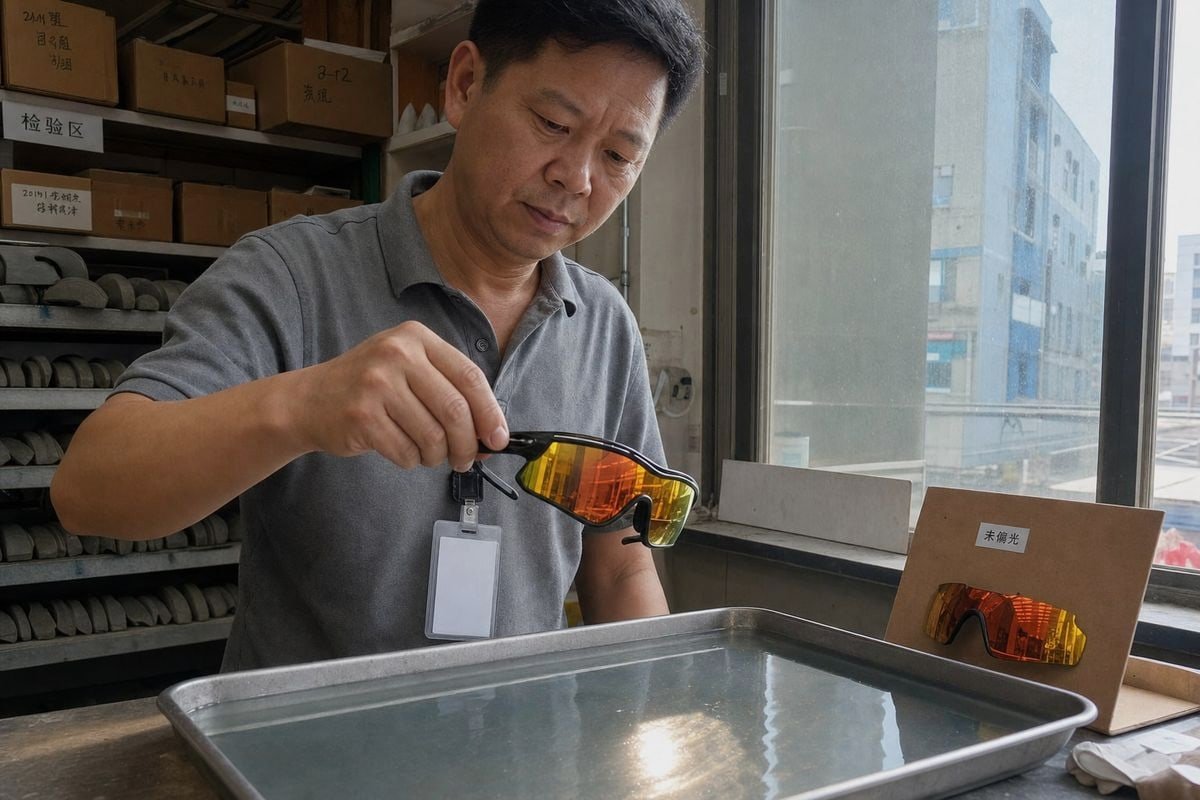
Buyers ask me about polarized lenses in kids’ sunglasses almost weekly. Many overpay for polarization on every SKU, or skip it where it truly sells. On our production line, we see both mistakes hurt margins.
Polarized lenses in kids’ sunglasses block horizontally reflected glare from water, snow, sand, and roads, improving comfort and visual clarity. They do not add UV protection. They are worth it for high-glare use cases like beach, ski, and travel lines—not for every everyday style.
That short answer hides a lot of nuance. Below, I break down what polarization really does, what it costs, and where it earns its place in a kids’ eyewear line.
How do I know if polarized lenses are actually necessary for my kids' sunglasses line?
A distributor from Australia once asked us to polarize her entire 24-style order. After we mapped her retail channels together, only nine styles genuinely needed it. Necessity depends on use case, not fashion.
Polarized lenses are necessary when your kids' sunglasses target high-glare environments—beaches, boats, snow, or long car rides. For everyday playground or fashion styles, a quality UV400 tinted lens is sufficient. Audit each SKU's real-world use case before deciding.
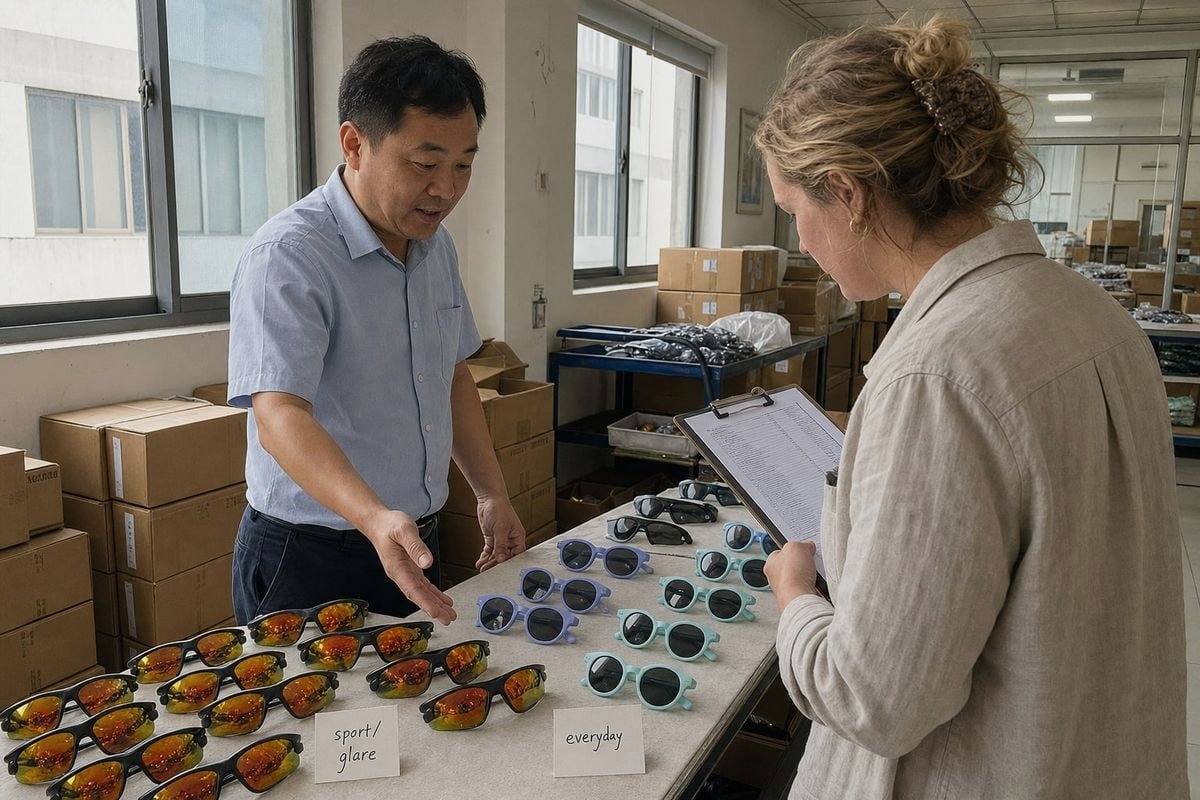
The core question is not "are polarized lenses good?" They are. The question is whether each style in your line faces enough reflective glare to justify the added lens cost. In our fifteen years making children's eyewear in Taizhou, we have learned that polarization sells best when the product story matches a glare-heavy environment.
Start with a use-case audit
Walk through your line style by style. Ask one simple question for each: where will this child actually wear these sunglasses? A sport wraparound shield—like the glossy black frame with the orange-to-gold mirrored lens we produce—is built for cycling, skiing, and open outdoor sports. Glare is constant there. Polarization fits. A soft, round, periwinkle-and-mint frame aimed at toddlers going to daycare? Glare exposure is low. A dark UV400 lens does the job.
, stimmt das Dokument nicht mit Ihrer rechtlichen Rolle überein. CPSC oder Zoll können Ihre Sendung als unzertifiziert behandeln.
| Frage | If YES | If NO |
|---|---|---|
| Is the style marketed for water, snow, or sport? | Polarize it | Consider standard tint |
| Will the child face reflective surfaces daily? | Polarize it | UV400 tint is enough |
| Is your retail price point above entry level? | Polarization justifies it | Protect margin first |
| Do competitors in this niche offer polarization? | Match or lose the sale | Differentiate on fit instead |
We often suggest a split line: polarized lenses on sport and beach SKUs, standard UV400 on everyday fashion SKUs. This keeps the collection affordable while giving retailers a clear good-better story. Because we hold around 800 existing styles, buyers can test this split without any mold investment, then scale whichever tier sells.
What real benefits do polarized lenses offer children compared to standard UV400 tinted lenses?
During lens testing at our factory, we hold two identical frames over a light table—one polarized, one tinted. The difference in reflected glare is immediate, and it explains everything about the comparison.
Compared to standard UV400 tinted lenses, polarized lenses cut horizontally reflected glare, reduce squinting and eye strain, and improve visual clarity and contrast. UV protection is identical if both lenses are UV400 rated; polarization adds comfort and sharper vision, not extra UV blocking.
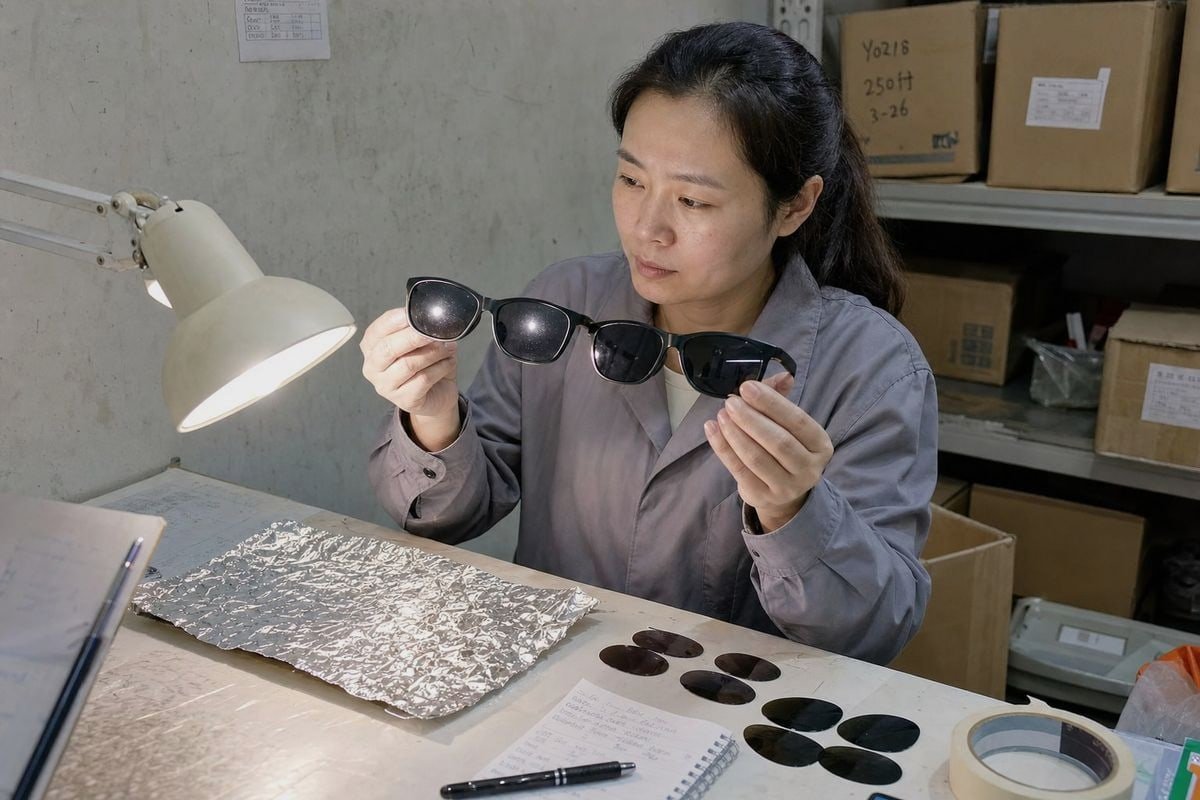
Here is the honest non-polarized comparison, laid out the way I explain it to procurement managers:
| Merkmal | Polarized UV400 Lens | Standard UV400 Tinted Lens |
|---|---|---|
| UV-Schutz | 100% (from UV rating) | 100% (from UV rating) |
| Horizontal glare reduction | Starkes | Minimal |
| Visual clarity and contrast | Enhanced | Dimmed evenly |
| Squinting and eye strain prevention | Erheblich | Mäßig |
| Seeing through water surfaces | Ja | Nein |
| LCD screen visibility | Can appear dark or distorted | Normal |
| Relative lens cost | Höher | Niedriger |
How polarization actually works
A Polarisationsfilter 1 is laminated inside the lens with vertically aligned molecules. Light bouncing off flat reflective surfaces—water, snow, wet pavement, car hoods—travels mostly horizontally. The filter blocks that horizontal wave and lets useful vertical light through. A tinted lens, by contrast, simply darkens everything equally. The child sees a dimmer scene, but the glare is dimmed right along with it, still washing out detail.
Why this matters more for children
Children's eyes transmit more light to the retina than adult eyes, and their pupils are larger. Constant glare forces the ciliary muscles 2 to make endless micro-adjustments, which contributes to the after-play fatigue and headaches some parents report. Reducing that load supports die Augengesundheit von Kindern 3 during long outdoor days. Better contrast also aids Tiefenwahrnehmung 4—useful when a child judges a ball, a wave, or a curb. Quality polarized filters often reduce some High-Energy Visible blue light as well, a secondary benefit for developing eyes.
The one real drawback: polarized filters can black out tablets and dashboard LCD screens at certain angles. For a travel-focused SKU where kids watch screens in the car, mention this on packaging so parents are not surprised.
Are polarized lenses safe and durable enough for active kids without adding excessive costs?
Drop tests are part of our routine QC in the 5S workshop 5. Polarized polycarbonate lenses go through the same twist, impact, and hinge cycles as our standard lenses—because kids will not treat them gently either way.
Yes. Modern polarized lenses laminated into polycarbonate are impact-resistant, lightweight, and safe for active children, and they meet the same standards as non-polarized lenses. The cost increase is modest at factory level and manageable when applied selectively across a line.
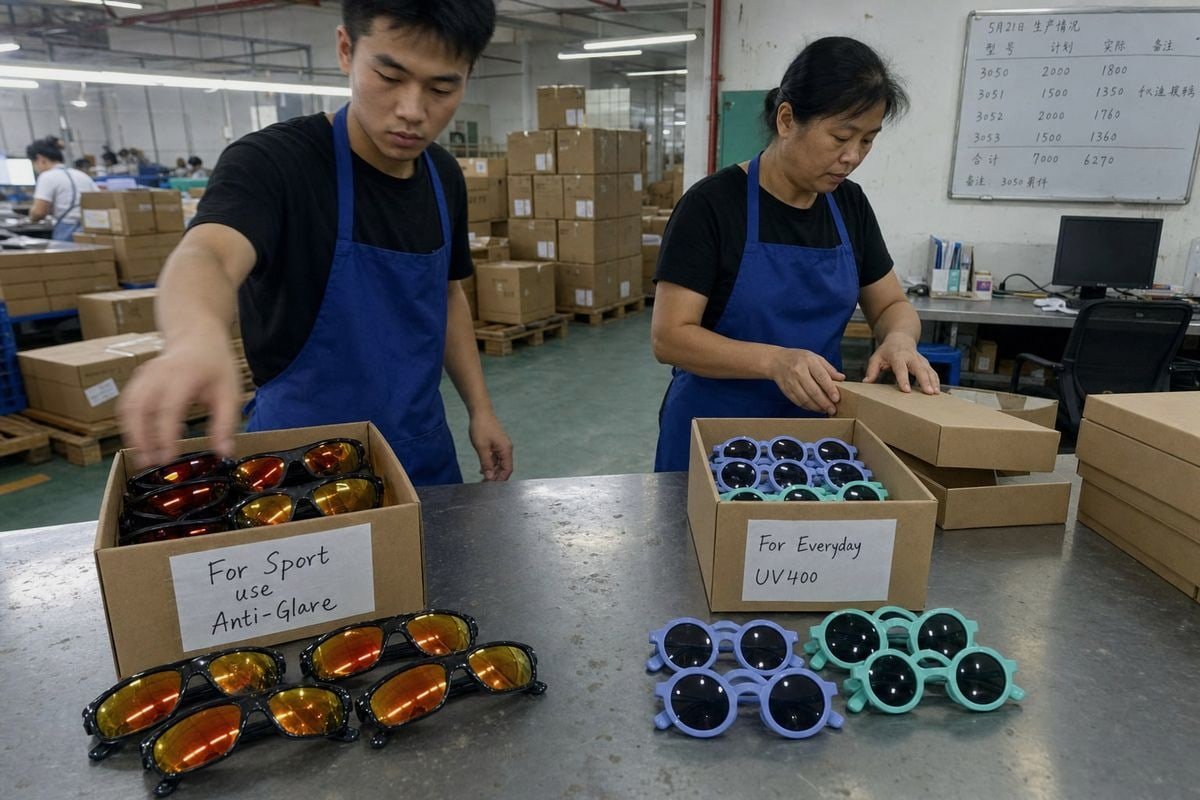
Safety in children's eyewear comes from the whole system, not just the lens film. In our experience exporting to brands in more than 20 countries, three elements decide whether a polarized kids' style survives real use.
The three durability pillars
- Lens substrate. Polycarbonate lens durability 6 is the baseline for children. It resists impact far better than acrylic, and the polarizing film sits protected inside the laminate, so scratches on the surface do not peel the filter.
- Frame material. We build most children's frames in TR90, often paired with TPEE-Bügel 7. These flexible materials bend instead of snapping, which prevents the sharp break points that rigid frames create near a child's face. Flexibility also means the frame absorbs the twisting that kids inflict daily.
- Retention and fit. A wraparound sport silhouette, like our single-shield shield styles, hugs the face and keeps the lens aligned during running or cycling. Loose frames slide, get grabbed, and get dropped.
What polarization really adds to cost
At the factory level, polarization adds a moderate per-unit increment to the lens, not a doubling of product cost. The bigger cost mistakes we see are elsewhere: unnecessary custom molds, over-specified packaging, or polarizing low-price SKUs where the retail channel cannot carry the markup. Selective polarization on the right styles typically supports a higher retail price that more than covers the difference. Because material safety matters as much as price, we keep our TPEE and TR90 compounds environmentally friendly and comfortable for long wear—durability should never come from harder, heavier plastic.
Which product categories or use cases make polarized lenses worth the investment for my brand?
A Japanese baby-brand buyer taught me a useful lesson: she polarized only her beach capsule collection first, tested sell-through for one season, then expanded. That staged approach became my standard recommendation.
Polarized lenses are worth the investment for beach and water collections, snow and ski lines, travel and car-ride styles, sport wraparounds, and eyewear for light-sensitive children. Everyday fashion and toddler basics usually perform well with standard UV400 tinted lenses instead.
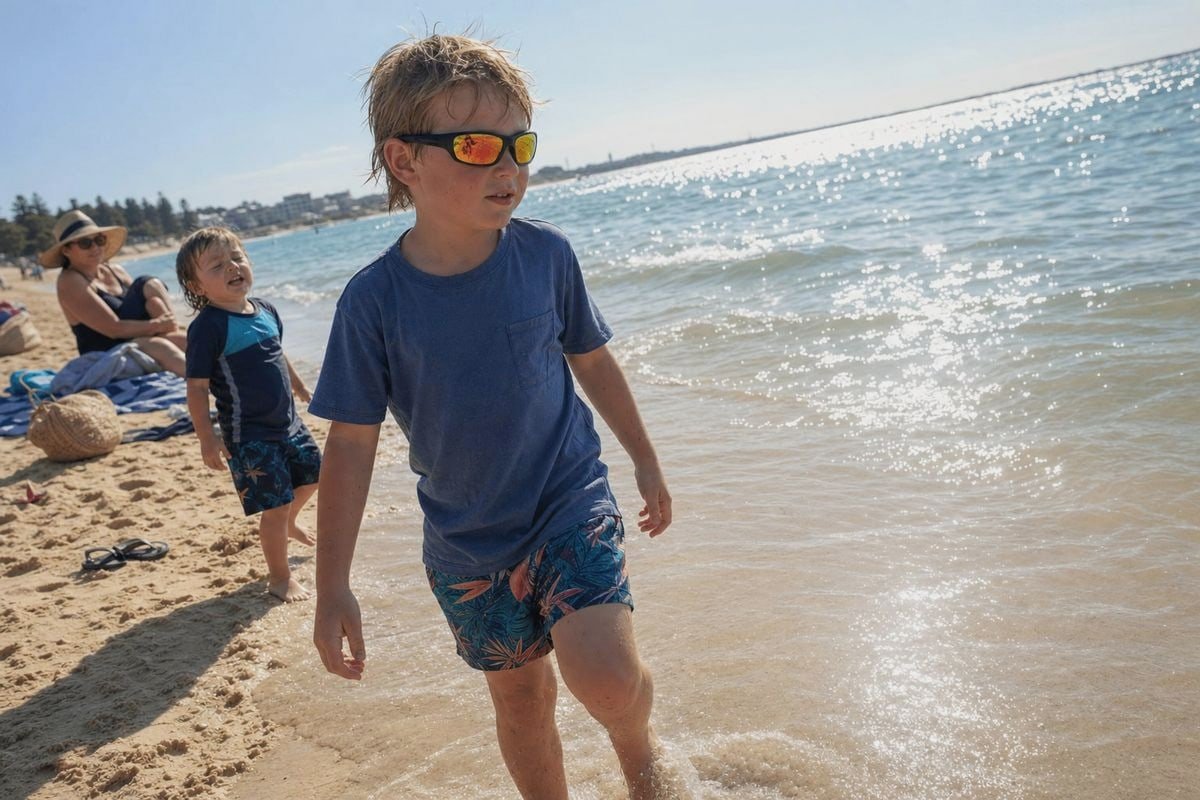
Let me map this concretely, using the kinds of styles that move through our line every season.
High-value categories for polarization
| Kategorie | Why polarization wins | Example style direction |
|---|---|---|
| Beach and water | Water and sand are intense reflective surfaces; kids can see through surface reflections | Bright, playful frames with polarized gray or brown lenses |
| Snow and ski | Snow reflects most sunlight upward into the eyes | White wraparound shield with iridescent mirrored polarized lens |
| Sport and cycling | Horizontal glare reduction sharpens contrast and depth perception at speed | Black aerodynamic shield, mirrored gradient lens, flexible temple tips |
| Travel and road trips | Wet pavement, windshields, and car hoods create long-duration glare | Mid-size frames with comfort-first TPEE temples |
| Light-sensitive kids | Acts as a visual filter that reduces overwhelming stimuli, including for sensory-sensitive children | Full-coverage fit with softer tint density |
Where standard UV400 is usually enough
Everyday fashion rounds—like a two-tone periwinkle and mint frame for preschoolers—live in playgrounds, strollers, and school runs. Glare there is intermittent. Parents in this segment buy on fit, safety, and color, so a durable UV400 tinted lens keeps the price accessible without sacrificing protection or eye strain prevention in normal conditions.
A staged rollout plan
Start with one polarized capsule tied to a clear story: summer water, winter snow, or sport. Use existing frame tooling to avoid mold costs, add your logo and packaging, and measure sell-through. If the polarized tier outsells expectations, extend it. If not, you have risked one capsule, not a whole line. Our OEM/ODM team supports exactly this path—custom colors, lens choices, and retail-ready packaging on proven frames—so brands can test polarization with low risk and scale with confidence.
Schlussfolgerung
Polarized lenses solve glare, not UV. Prioritize UV400 protection, flexible fit, and durability first; add polarization where water, snow, roads, or sport make glare a daily reality.
Fußnoten
1. Explains the optical science behind how polarizing filters block horizontal glare. ↩︎
2. Provides background on the eye anatomy affected by glare-induced strain in children. ↩︎
3. CDC resource on vision health supports claims about children’s eye comfort and protection. ↩︎
4. National Eye Institute source explains visual processes like contrast and depth perception. ↩︎
5. Background on the 5S lean manufacturing method referenced in factory quality control. ↩︎
6. Authoritative medical source from the American Academy of Ophthalmology detailing polycarbonate’s impact resistance. ↩︎
7. Reliable overview of thermoplastic elastomers used in the construction of flexible eyewear frames. ↩︎
Weitere Artikel, die Ihnen gefallen könnten

Auf der Suche nach einem zuverlässigen Partner für Kinderbrillen?
Entdecken Sie über 800 sofort verfügbare Modelle und umfassenden OEM/ODM-Support, der auf Ihre Marke zugeschnitten ist.
Kontakt aufnehmen English
  Español de México
  Deutsch
  Français
  日本語
日本語  العربية
  Português do Brasil