What Do Cat.0-Cat.4 Lens Categories Mean for TR90 Kids Sunglasses?
Buyers often send us tint samples with no spec. Then Cat.0-Cat.4 lens categories for TR90 kids sunglasses get confused with UV rating, and wrong lenses ship. Spec sheets prevent that.
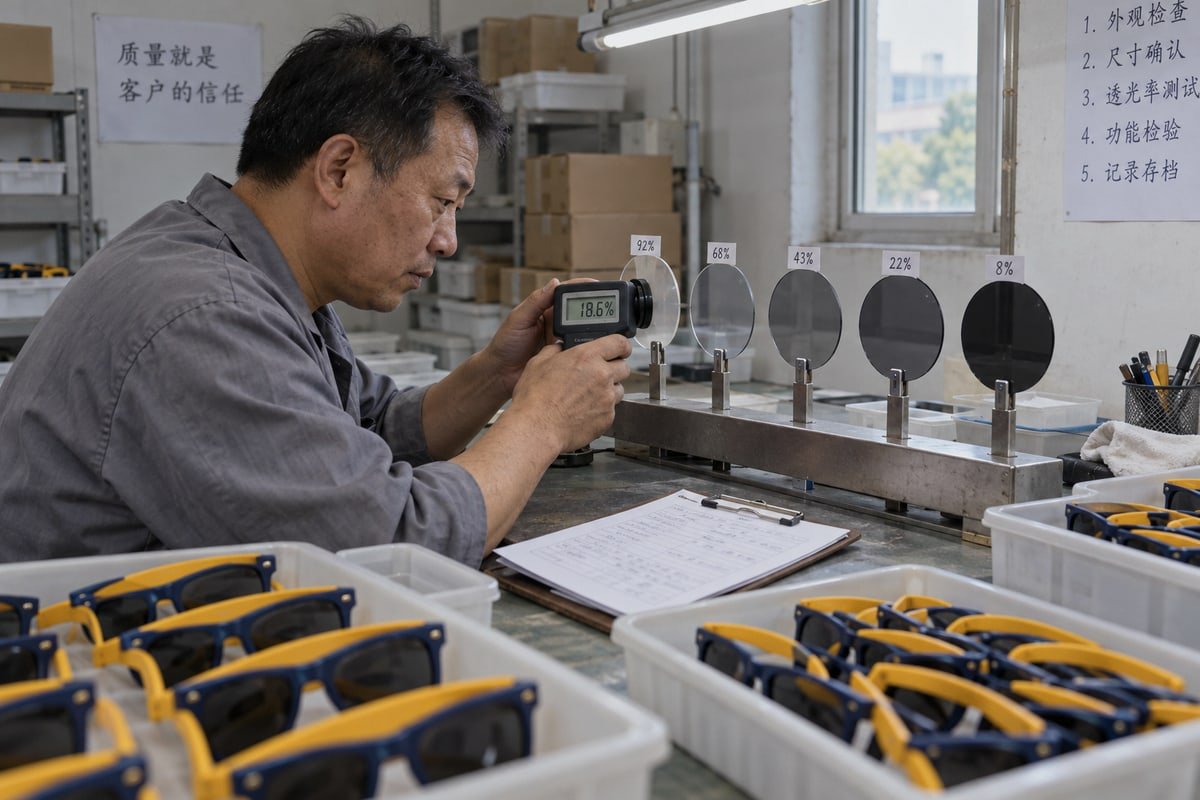
Cat.0-Cat.4 lens categories for TR90 kids sunglasses describe Visible Light Transmission, not UV protection. Cat.0 passes 80–100% of light, Cat.1 43–80%, Cat.2 18–43%, Cat.3 8–18%, and Cat.4 3–8%. Cat.3 suits most children’s outdoor play; Cat.4 is for snow and glaciers only.
That is the short answer. The rest of this article explains how to use it. I will separate three things that buyers often blend together: the lens category, the UV400-Bewertung 1, and the TR90 frame material. Then I will show which category to request for each use case, and why the category number matters for compliance in your market.
How Do I Choose the Right Lens Category for My Kids' Sunglasses Collection?
Last year a European buyer approved a Cat.2 sample under our showroom lights. Outdoors in July, it looked too light. That one lesson shaped how we present tints now.
Choose Cat.3 as the core of a kids' sunglasses collection, because 8–18% Visible Light Transmission suits most bright outdoor play. Add Cat.2 for cloudy climates or toddlers, Cat.1 for overcast markets, and treat Cat.0 as fashion or blue-light frames rather than sun protection.
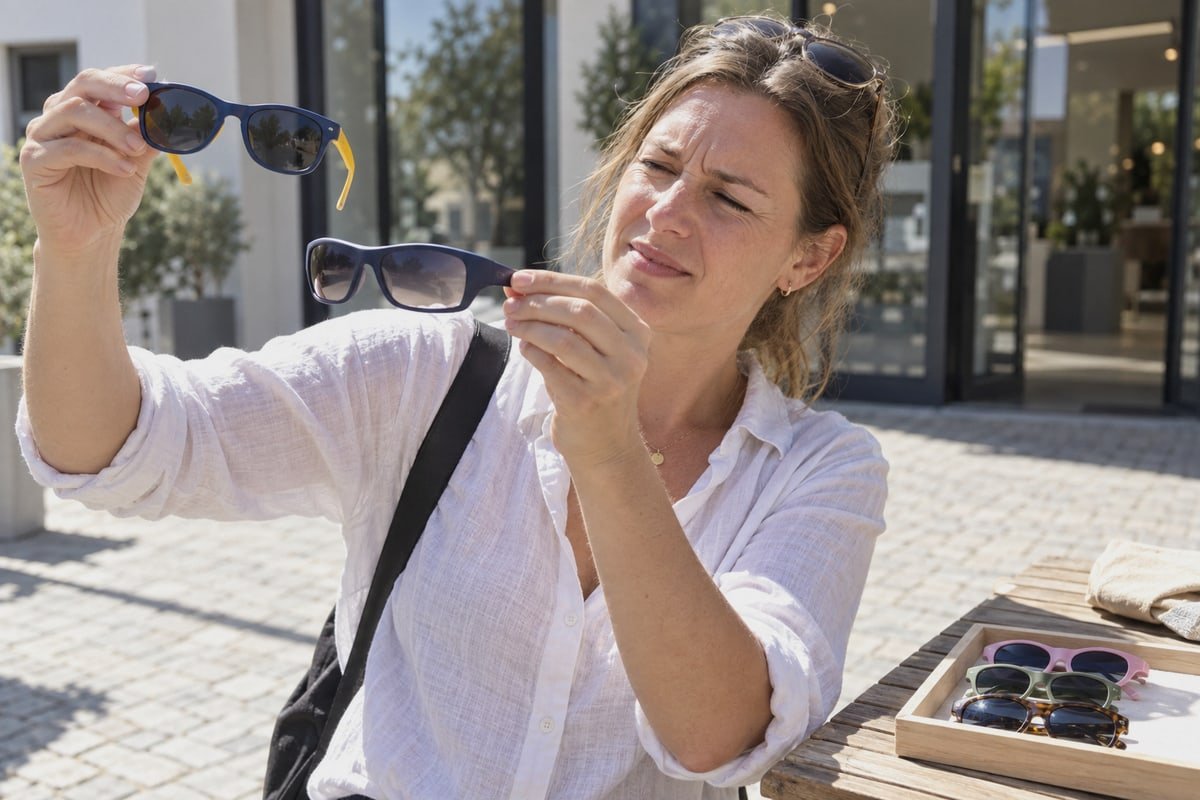
The category system is simple once you see it as a brightness scale. Each number maps to a VLT percentage. A lower VLT means a darker lens. That is all the number tells you. It does not tell you about UV blocking, impact resistance, or lens quality.
Start with the VLT percentage, not the color
| Kategorie | VLT percentage | Light conditions | Role in a kids' collection |
|---|---|---|---|
| Cat.0 | 80–100% | Indoor, night, low light | Clear or blue-light frames; not sun protection |
| Cat.1 | 43–80% | Overcast, weak light | Rainy northern markets, wind and dust cover |
| Cat.2 | 18–43% | General daylight, moderate glare | Cloudy climates, toddlers, gradient styles |
| Cat.3 | 8–18% | Bright sunlight | Core everyday SKU for most markets |
| Cat.4 | 3–8% | Glaciers, snow, desert | Specialist SKU only |
Here is the objection I hear most often: "A higher number must be better, so let's go Cat.4." It is not better. It is only darker. A Cat.3 lens made from poor material can still shatter. A Cat.1 lens made from good polycarbonate with UV400 is safer than that. Darkness and safety are different questions.
Some consumer guides also say Cat.0 and Cat.1 "are not sunglasses." I partly agree. They reduce very little glare. But they still belong in a kids' collection as fashion frames, blue-light frames, or wind protection. The rule is simple: do not market them as sun protection.
Keep lens category separate from TR90
TR90 ist ein thermoplastisches Material 2, often called a memory plastic. It bends, gets sat on, and returns to its original shape. It is light, flexible, and strong. Those are frame properties. TR90 does not make a lens darker or lighter, and it does not block UV. On our line, the same navy TR90 wayfarer frame can be fitted with a solid gray Cat.3 lens or a gradient Cat.2 lens. The frame does not change. Only the lens spec changes.
Build the mix from existing styles
Most of the brands we work with pick from our roughly 800 existing styles. Lens category is one of the last variables they lock. A typical first order looks like this: a bold two-tone wayfarer and a compact black oval in solid Cat.3 gray for daily wear, plus a matte navy wraparound with a Cat.2 gradient for softer light. That mix covers most climates without any mold investment.
Can I Combine UV400 Protection with Different Cat.0-Cat.4 Tint Levels?
Every tint run forces one decision on our line: how dark to dye the lens. UV400-Schutz is a separate step, and the two get confused constantly.
Yes. UV400 protection blocks 99–100% of UVA and UVB rays and can be built into any tint level from Cat.0 to Cat.4, because UV filtering comes from the lens material or coating, not from darkness. A clear Cat.0 lens can be UV400; a dark lens may not be.
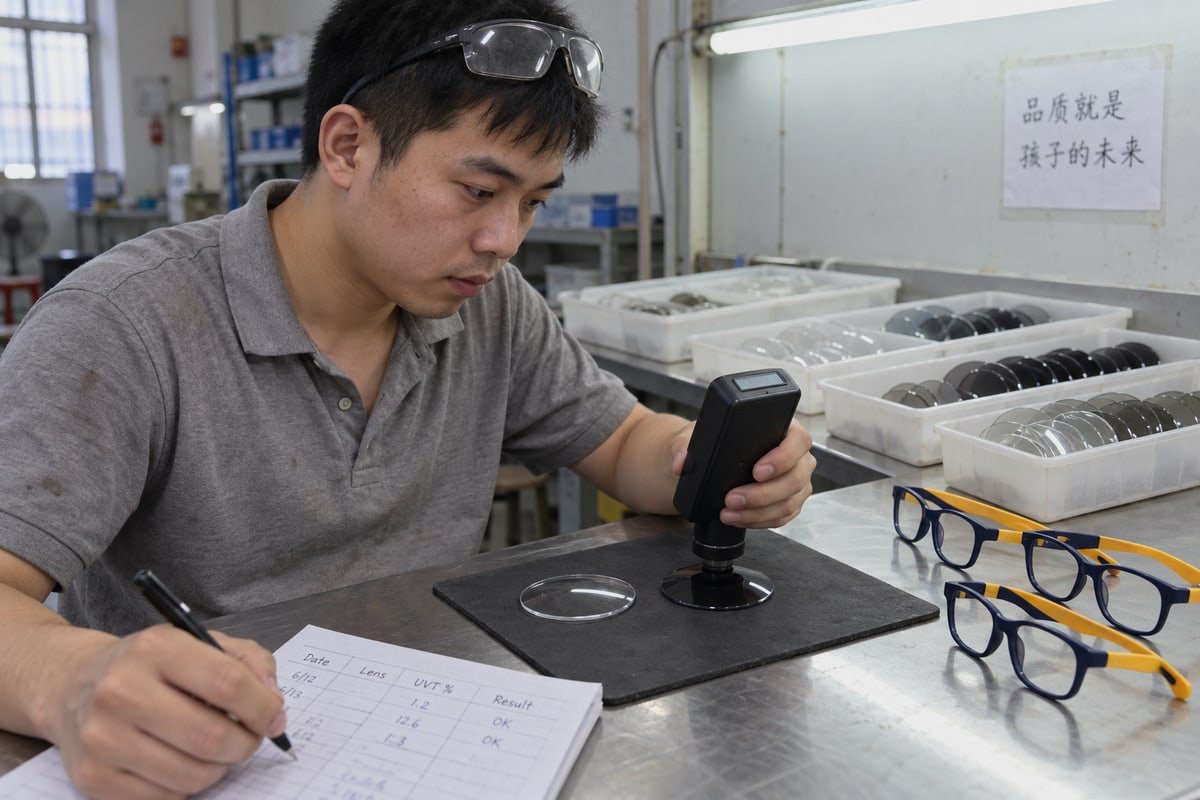
This is the point I want every buyer to remember. The tint is what you see. The UV filter is what you cannot see. They are made in different ways, and one does not guarantee the other.
Why the two specs get confused
A dark lens looks protective. That is the trap. Behind a dark lens, a child's pupil opens wider. If that lens has no UV filter, more ultraviolettes Licht 3 reaches the eye than with no glasses at all. Children's eyes are more vulnerable here. Their kristalline Linsen 4 are clearer than adult lenses, so more radiation reaches the retina. This is why we treat UV400 as non-negotiable across every category we ship, including clear Cat.0 lenses.
How UV400 protection is added
UV blocking comes from an absorber in the lens material or from a coating. The dye that sets the category is added separately. Our QC team checks incoming lens lots with a UV transmission meter before any lens, tinted or clear, goes into a frame. The tint is judged afterwards, by eye and against a reference sample in daylight.
| Tint level | UV400 possible? | Best pairing | Note for buyers |
|---|---|---|---|
| Cat.0 clear | Ja | Blue-light or indoor frames | Still specify UV400 if the child may wear them outside |
| Cat.1 | Ja | Overcast climates | Low glare reduction, full UV protection |
| Cat.2 gradient | Ja | Cloudy days, toddlers | Gradient lenses are rated by their darkest zone |
| Cat.3 | Ja | Everyday sun, polarized option | The standard combination for kids |
| Cat.4 | Ja | Snow, glaciers, high altitude | UV400 is essential at altitude |
Polarized, photochromic, and modular options
Polarized lenses are another layer, not another category. They cut reflected glare from water and roads. A polarized lens still has a VLT percentage, and most sit in Cat.3. Do not confuse the two on your spec sheet.
Photochromic lenses shift between categories as light changes, often from Cat.1 indoors to Cat.3 in sun. They suit active families who move between shade and open ground.
Modular TR90 systems go one step further. The frame accepts a Cat.0 blue-light lens for screen time and a Cat.3 sun lens for outdoor play. One frame, two lenses, one product story. We support this as a full OEM/ODM option with custom colors, logos, and retail-ready packaging.
What Lens Category Should I Request for Everyday Versus High-Glare Outdoor Use?
An Australian outdoor brand once asked us for Cat.4 across their whole range. We asked where the kids would wear them: beaches and playgrounds. We suggested Cat.3 instead.
Request Cat.3 lenses for everyday use, including school runs, playgrounds, beaches and summer travel. Reserve Cat.4 for high-glare environments such as glaciers, high mountains, snow sports, and open water. Cat.4 passes only 3–8% of light and can limit a child's contrast perception in normal daylight.
The right way to pick a category is to start from the scene, not from the lens. Ask where the child will actually be. Then work backwards.
| Szenario | Recommended category | Useful add-ons |
|---|---|---|
| School run, playground, park | Cat.3, or Cat.2 in cloudy climates | UV400, flexible TR90 frame |
| Beach, pool, lake | Cat.3 | Polarized lenses for glare reduction off water |
| Summer holidays and travel | Cat.3 | Wraparound geometry for side coverage |
| Snow sports, glacier, high altitude | Cat.4 | UV400, close-fitting wraparound, side protection |
| Indoor screen time | Cat.0 | Blue-light filter; UV400 if worn outdoors |
A six-step spec request
- Name the scenario the product is sold for.
- Pick the category from the table above.
- Confirm UV400 protection in writing.
- Decide if polarized lenses are needed for reflected glare.
- Choose the frame shape. The matte navy wraparound in our range gives more peripheral coverage than the flat-front wayfarer.
- Ask for the category number to be marked on the inner temple.
Why Cat.4 is the wrong everyday choice
Cat.4 is built for intense reflected light: snow, ice, sand, and open sea. In a normal playground it blocks too much. A child's Kontrastempfindlichkeit 5 and spatial awareness are still developing. Restricting light to 3–8% in ordinary daylight can hinder both. It also makes shaded areas hard to read, which is a real trip hazard for small children.
Where TR90 earns its place
High-glare products get used in extreme temperatures. A pair left on a hot car dashboard is a common failure point. Cheap frames expand with heat, the lens groove opens, and the lens pops out during play. TR90 has strong thermal stability, so the lens stays seated. Its low density also allows true wraparound frame geometry without heavy pressure points behind the ears or on the nose. That matters for a child wearing glasses on a mountain all day.
Why Do Lens Categories Matter for Safety Compliance in My Target Market?
One thing fifteen years of exporting has taught us: the category number printed on the temple is a legal claim, not a marketing label. Regulators read it that way.
Lens categories matter because eye safety standards such as ISO 12312-1 define each category by its VLT percentage and set labeling rules. A mislabeled category is a non-compliant product. Cat.4 lenses are not permitted for driving in the EU, and only Cat.0 to Cat.3 are considered road-suitable.
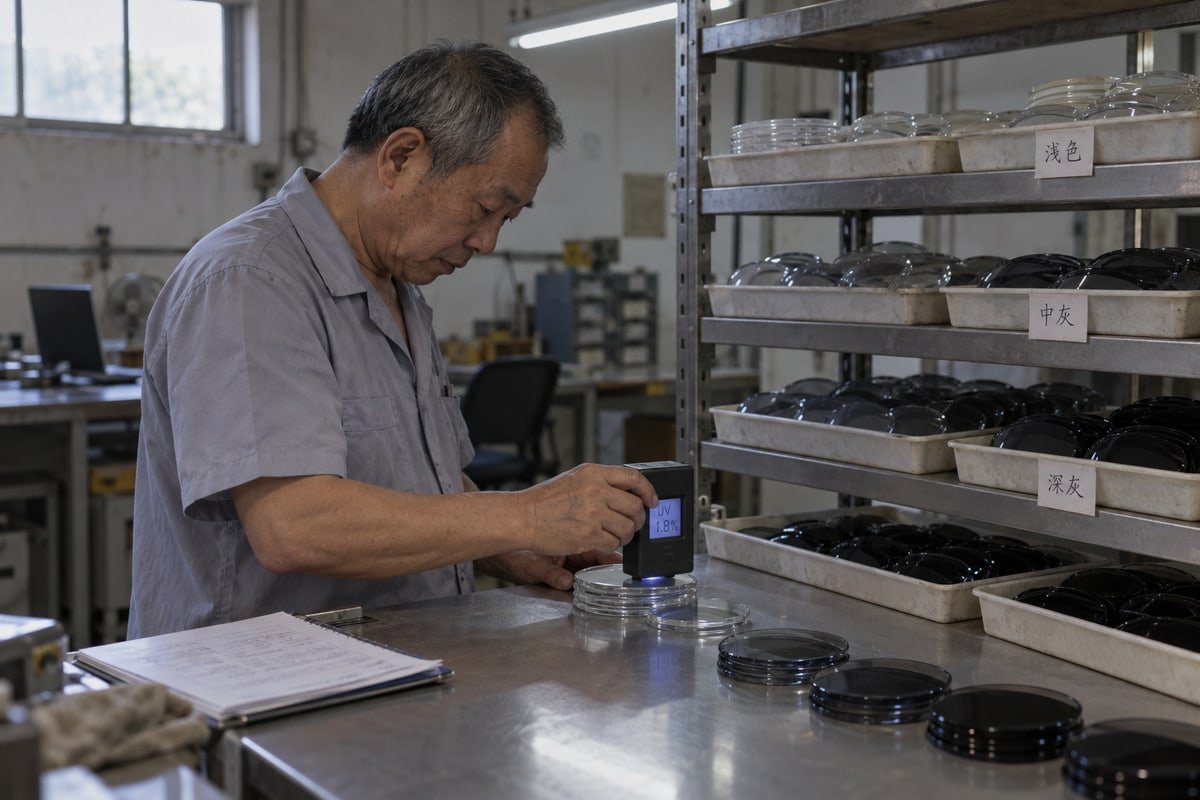
Compliance is where the technical detail turns into commercial risk. A children's brand cannot afford a recall or a customs hold. So let me break the topic into the items an inspector or importer will actually check.
The compliance items behind the category number
| Compliance item | What is checked | What to specify to your factory |
|---|---|---|
| Category marking | Measured VLT must fall inside the band for the marked category under the ISO 12312-1 standard | Category number on the temple and a matching test report |
| UV400-Anspruch | UVA and UVB blocking at 99–100% | UV check on every lens lot |
| Driving suitability | Cat.4 is not permitted for driving in the EU; Cat.0–Cat.3 are road-suitable | Cat.4 products must carry the not-for-driving symbol |
| Schlagfestigkeit | Lens and frame robustness under the standard's tests | Polycarbonate lenses in a flexible TR90 frame |
| Materialsicherheit | Skin contact and restricted substances | Hypoallergenic frames in TR90 or TPEE |
Two objections, resolved
First: "Some product pages say Cat.2 is fine for driving, so which is it?" Cat.2 is fine. So are Cat.0, Cat.1, and Cat.3. The only restriction is Cat.4. Kids do not drive, but a Cat.4 product still needs the correct warning symbol, and a parent may borrow the glasses.
Second: "Our market is not the EU, so does the category matter?" Yes. Australia and New Zealand have their own sunglass standard with mandatory category labeling. Japan and North America have their own eye safety standards too. The category bands are broadly aligned across these systems, so specifying the VLT percentage correctly protects you everywhere.
What this means for your spec sheet
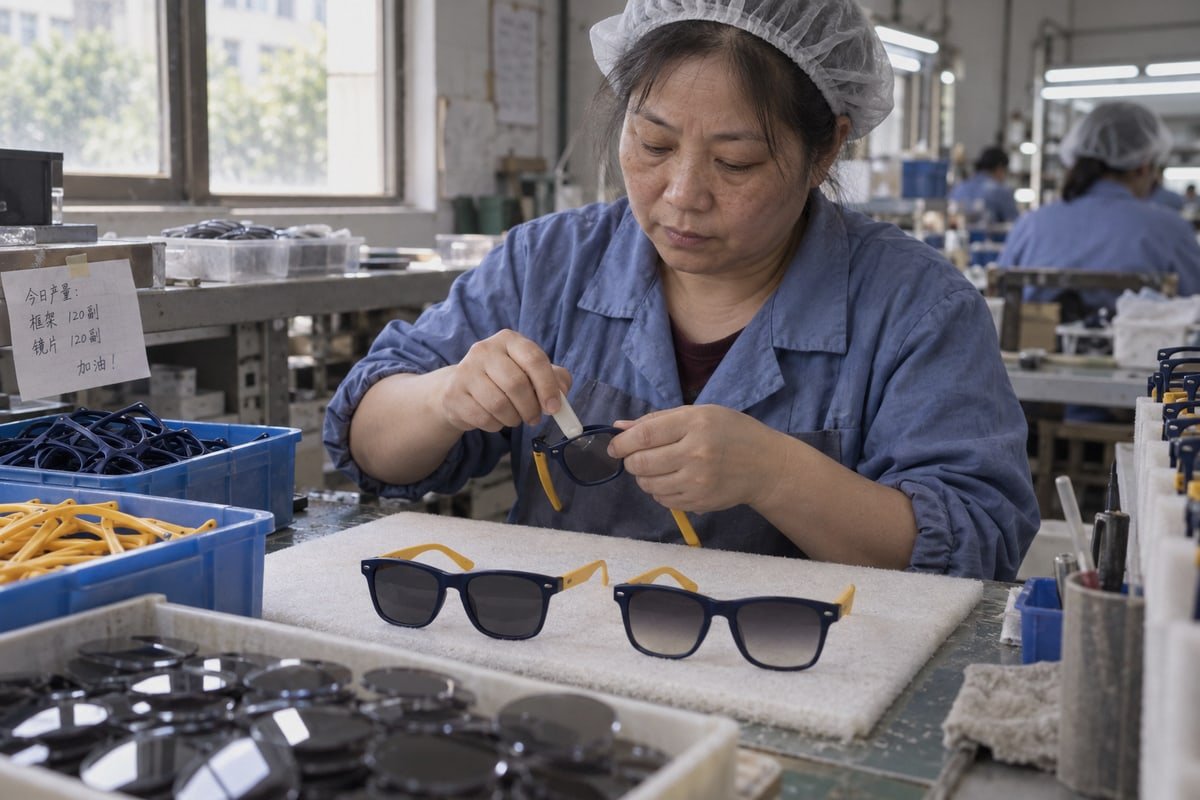
Do not write "dark lens" or "smoke lens." Write the category, the UV400 requirement, and the target market. Our 5S-managed workshop works from that sheet. The lens lot is checked, the category is confirmed against the reference, and the marking goes on the temple. That is how a spec turns into a product that passes inspection.
Schlussfolgerung
Confusing tint with UV protection puts children at risk and buyers out of compliance. Specify category, UV400, and frame material separately, and your TR90 kids sunglasses will sell with confidence.
Interested in sourcing the products mentioned in this article? See details and request a quote here:
Fußnoten
1. Official government guidelines on sunglasses and medical devices that define UV protection standards. ↩︎
2. Technical encyclopedia entry defining the properties and applications of thermoplastic materials used in eyewear. ↩︎
3. Global health authority providing information on the risks and protection measures against ultraviolet radiation. ↩︎
4. Medical resource explaining the physiological differences in children’s eyes that increase vulnerability to UV radiation. ↩︎
5. Scientific research overview regarding the development of visual contrast sensitivity in children. ↩︎
Weitere Artikel, die Ihnen gefallen könnten


Auf der Suche nach einem zuverlässigen Partner für Kinderbrillen?
Entdecken Sie über 800 sofort verfügbare Modelle und umfassenden OEM/ODM-Support, der auf Ihre Marke zugeschnitten ist.
Kontakt aufnehmen English
  Español de México
  Deutsch
  Français
  日本語
日本語  العربية
  Português do Brasil