Is a Plastic Smell Normal in New TPEE Kids Sunglasses?
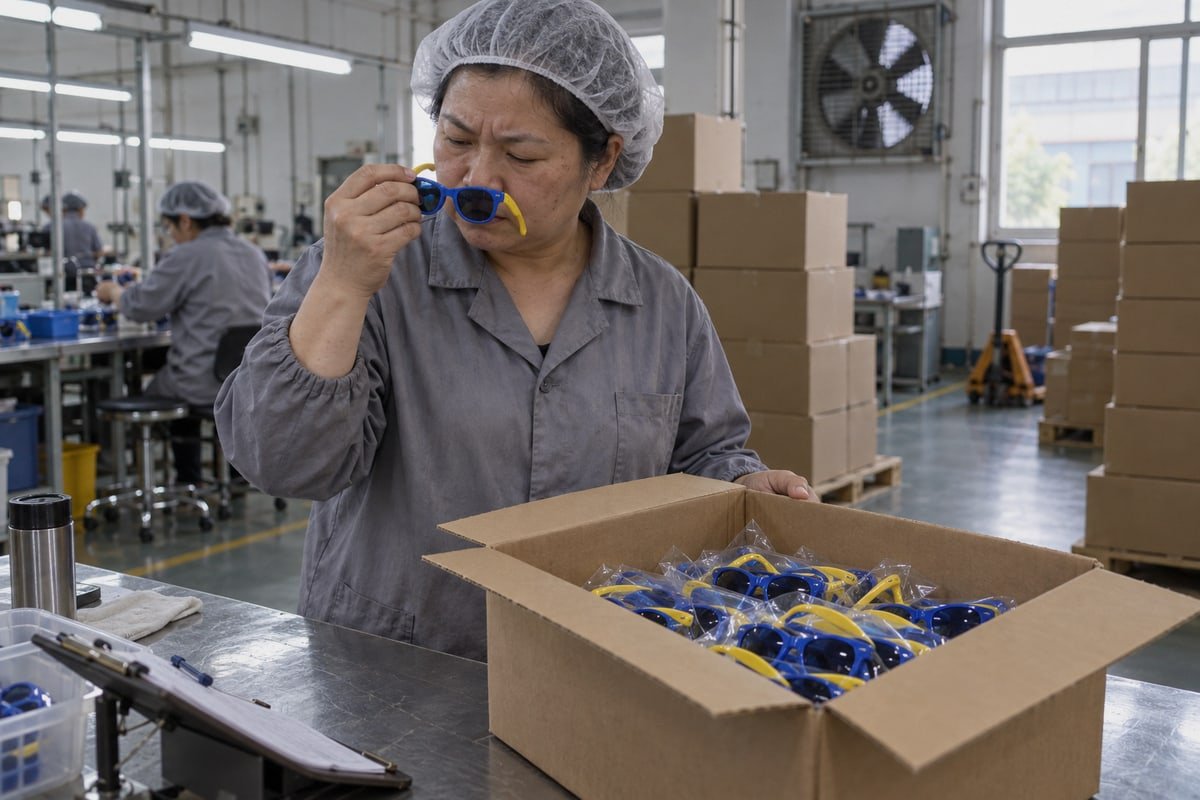
A buyer once emailed our Taizhou factory in a panic: her new TPEE kids sunglasses samples “smelled like plastic.” Was the shipment ruined? Was the material unsafe? Neither, as it turned out — but her worry was completely understandable, and it deserves a proper answer.
Yes, a mild plastic or rubbery smell is normal in new TPEE kids sunglasses. Fresh Thermoplastic Polyester Elastomer releases trace Volatile Organic Compounds from molding and sealed packaging. The odor typically fades within 24–72 hours of airing. A strong, persistent chemical smell, however, signals a quality problem.
The real question is not whether the smell exists. It is whether the smell is normal off-gassing or a warning sign. Let me walk you through how we judge that on our own production line, and how you can judge it as a buyer.
What causes a plastic smell in new TPEE kids sunglasses, and should I be concerned?
When our engineers pull freshly molded TPEE temples off the injection machine, there is always a faint rubbery scent in the workshop. After 15 years of making children's eyewear, we consider it a signature of the material itself.
The smell comes from trace Volatile Organic Compounds, processing oils used during injection molding, and odors concentrated inside airtight shipping bags. In properly made TPEE frames, this is routine off-gassing, not a toxicity signal. Concern is only warranted if the odor is sharp, persistent, or paired with residue.
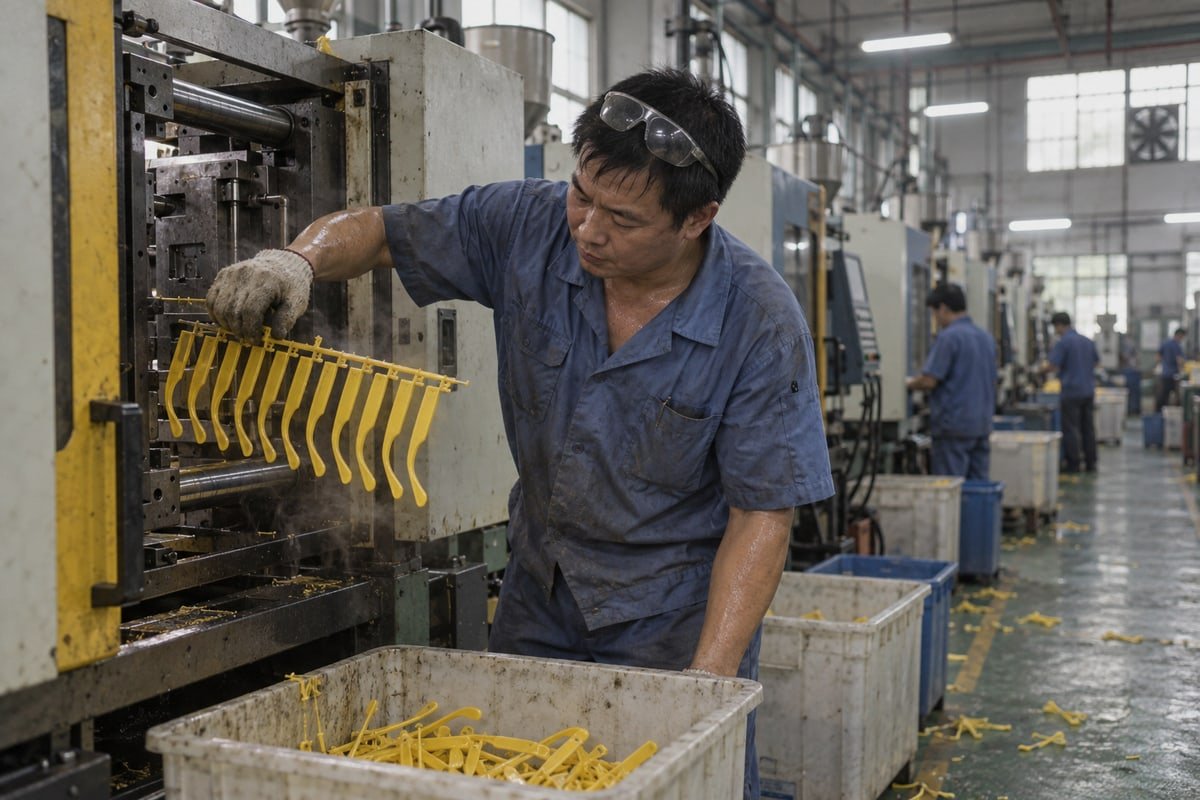
TPEE — Thermoplastic Polyester Elastomer 1 — is a hybrid material. It combines the flexibility of rubber with the durability of rigid plastic, which is exactly why we chose it for children's frames. Kids drop, bend, twist, and sit on their sunglasses. A rigid frame cracks; a TPEE frame bounces back. But that same elastomer chemistry means the material carries a more noticeable "rubbery" scent than hard acetate or polycarbonate would. It is a trade-off we accept deliberately, because a slightly stronger new-product smell is far less risky for a child than a snapped frame with sharp edges.
Where the odor actually comes from
There are three main sources, and each behaves differently:
| Odor Source | Was es ist | How It Behaves |
|---|---|---|
| Residual VOCs | Trace vapors trapped in the polymer after molding | Dissipates naturally in 24–72 hours of fresh air |
| Processing oils | Lubricants used during injection molding | Washes off with mild soap and lukewarm water |
| Packaging concentration | Airtight bags trap and intensify scent during shipping | Seems overwhelming at unboxing, fades fast once opened |
One factor buyers rarely know about is the "regrind" issue. Some low-cost workshops mix a high percentage of recycled TPEE into new material. Regrind has already been through multiple heat cycles, which degrades the polymer and increases odor intensity. This is why two "identical" absorbieren die gleiche Kraft, indem sie sich verformen und zurückfedern. TR90, ein leichter thermoplastischer Kunststoff, bietet eine ähnliche Memory-Flex-Eigenschaft mit einem etwas festeren Gefühl, weshalb wir oft TR90-Fronten mit TPEE-Bügeln bauen – die Front hält die Gläser stabil, während die Bügel die tägliche Biegung aufnehmen. from different suppliers can smell completely different. On our line, we control regrind ratios tightly precisely because we serve children's brands where material integrity matters more than shaving a few cents per unit.
Storage also plays a role. TPEE contains ester bonds that can undergo minor hydrolysis in high-humidity warehouses, producing a faint sour-sweet secondary odor. That smell tells you more about the supplier's storage discipline than about the polymer's safety.
How long should I expect the smell to fade before I can approve a shipment?
Before any container leaves our facility, our QC team does an unboxing smell check on random cartons — a habit we built after a European client asked us to document odor levels alongside dimensional tolerances.
Expect a faint TPEE odor to fade within 24–72 hours once frames are removed from sealed packaging and aired in a ventilated space. Heavier cases may need several days to two weeks. If a strong smell persists beyond that window, hold the shipment and investigate.
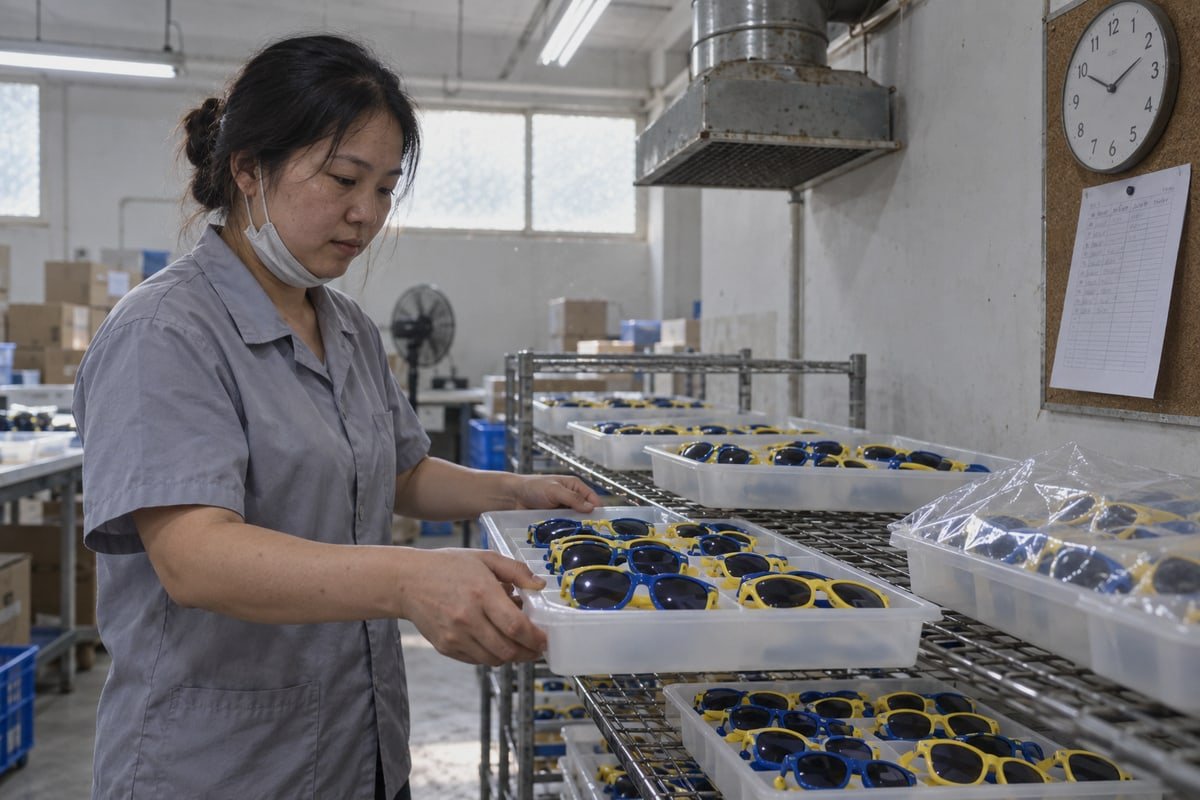
The off-gassing process follows a fairly predictable curve, and understanding it helps you set a realistic inspection protocol instead of rejecting good product or approving bad product on gut feeling.
A practical odor timeline for shipment inspection
| Timeframe | What Is Normal | What Is a Red Flag |
|---|---|---|
| At unboxing | Noticeable rubbery or "new plastic" scent, concentrated by the airtight polybag | Eye-watering chemical sharpness, oily film on frames |
| 24–72 hours aired | Odor drops noticeably; barely detectable at arm's length | No improvement at all after airing |
| 3–14 days | Faint scent only when frame is held to the nose | Strong smell persists; sticky residue appears |
| Beyond 2 weeks | Effectively odorless in normal use | Any persistent chemical odor — reject or escalate |
A few practical notes from our export experience. First, always judge the smell after airing, not at the moment of unboxing. Airtight shipping bags prevent ventilation, so weeks of accumulated scent hit you all at once when the seal breaks. That first impression exaggerates the true odor level. Second, remember that thermal reactivation exists: even fully off-gassed frames can briefly re-emit a plastic scent if left in a hot closed car or a sun-baked container. That temporary re-emission is not a defect. Third, humidity during transit matters. If your goods sat in a humid port warehouse, a faint sour-sweet note from minor ester hydrolysis may appear — annoying, but it airs out.
For shipment approval, we recommend a simple protocol: pull samples from three random cartons, air them for 48 hours in a ventilated room, then assess. Build this 48-hour window into your inspection timeline so odor never becomes a last-minute dispute.
What tests can I request to confirm the material is safe for children despite the odor?
A procurement manager from Australia once told me she trusted her nose less than a lab report — and she was right to. Odor is subjective; test data is not. We encourage every children's brand we work with to verify, not assume.
Request third-party testing for CPSIA safety standards compliance, phthalate-free certification, BPA-free materials verification, heavy metals screening, and VOC emission levels. Combine these with EN ISO 12312-1 or ANSI Z80.3 optical testing and UV400 verification to confirm both material and lens safety.
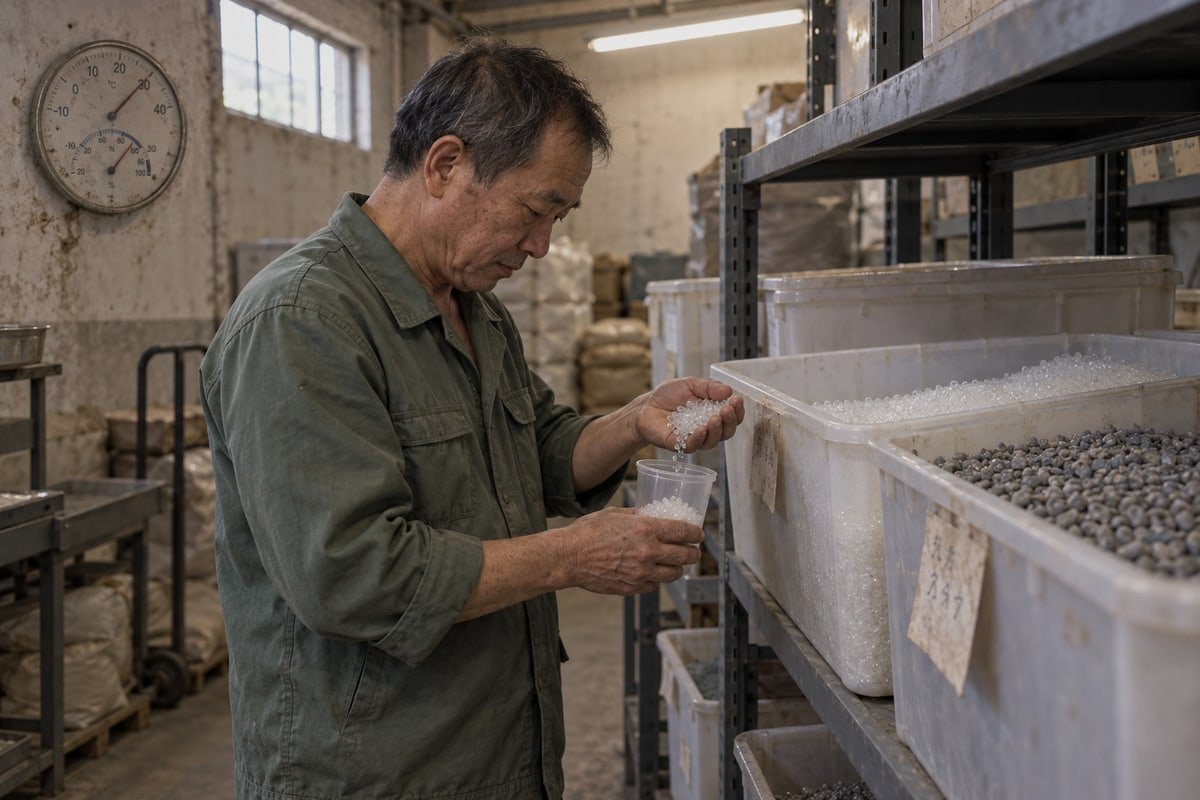
The good news is that TPEE has a strong baseline reputation. It is widely used as a BPA-free, hypoallergenic material 2, and certain grades even meet food-grade plastic safety requirements. But baseline reputation is not the same as batch-level proof. A material can be safe in principle and still be compromised by cheap additives, excessive regrind, or manufacturing chemical residue 3 at a specific factory. Testing closes that gap.
The core test panel we recommend for kids eyewear
| Test Category | Was es verifiziert | Relevant Standard or Method |
|---|---|---|
| Heavy metals & lead | No lead or cadmium in frames or coatings | CPSIA safety standards (US market) |
| Phthalate | Plasticizers absent — phthalate-free certification | CPSIA / EN 71-3 approaches |
| BPA screening | Confirms BPA-free materials claim | Third-party lab analysis |
| VOC emissions | Quantifies off-gassing rather than guessing by smell | Chamber or headspace testing |
| UV-Schutz | Lenses genuinely block to UV400 | EN ISO 12312-1 / ANSI Z80.3 |
| Skin contact safety | Supports hypoallergenic eyewear positioning | Cytotoxicity / skin irritation screening |
Two pieces of buyer advice from our side of the table. First, ask for reports tied to your actual production batch, not a generic material datasheet from the resin supplier. A datasheet proves what the raw polymer 4 can be; a batch report proves what your frames are. Second, be careful with absolute language in your own marketing. The honest, defensible claim is "tested compliant with CPSIA and phthalate-free 5," backed by documents — not a vague "100% non-toxic" slogan. Non-toxic flexible frames are a legitimate selling point for TPEE, but the credibility comes from paperwork, and serious retailers in Europe, Japan, and Australia will ask to see it.
If a supplier hesitates when you request this panel, treat that hesitation as data. Any factory genuinely built around children's products will have most of these reports ready or will run them without friction.
How can I work with my manufacturer to reduce or eliminate this smell in future orders?
Years ago, we redesigned our packing process after a Japanese client noted that even mild odor felt off-brand for her premium baby line. That single piece of feedback changed how we handle post-molding rest, ventilation, and bagging — proof that odor is a manageable production variable, not fate.
Ask your manufacturer to use virgin or low-regrind TPEE, extend post-molding ventilation before packing, wash frames to remove processing oils, control warehouse humidity, and switch to breathable packaging. Agree on a written odor acceptance standard so both sides inspect against the same benchmark.
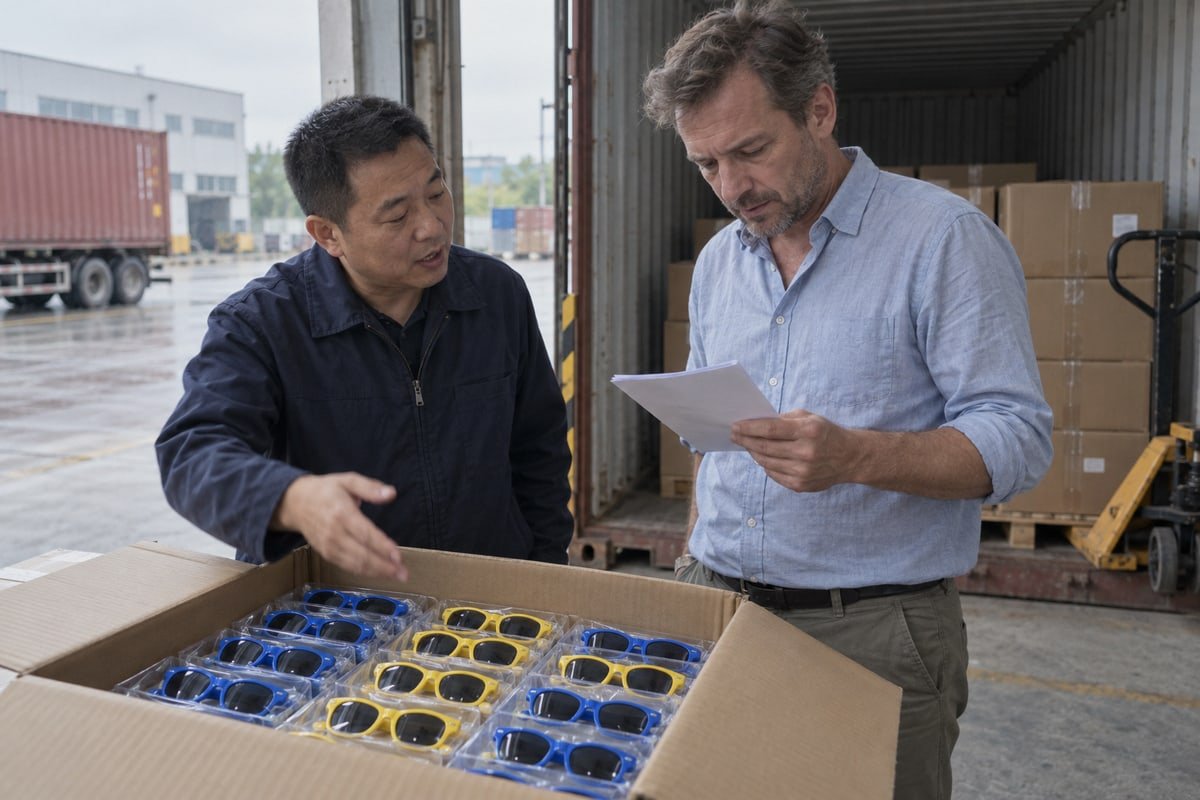
Odor control is really a chain of small decisions across the production cycle. When a buyer raises it with us, we walk through the chain step by step rather than promising a magic fix.
A step-by-step odor-reduction plan to discuss with your supplier
- Specify the raw material grade. Request virgin TPEE or a documented low-regrind ratio. Recycled content that has endured repeated heat cycles is the single biggest driver of harsh, lingering smells.
- Add a post-molding rest period. Frames that rest in a ventilated area for several days before bagging complete most of their off-gassing process at the factory, not in your customer's living room.
- Require a cleaning step. A wash with mild, non-citrus soap and lukewarm water removes residual processing oils from frame surfaces before packing. This is cheap and highly effective.
- Control storage humidity. Dry, ventilated warehousing prevents the ester hydrolysis that creates sour secondary odors. Ask how finished goods are stored before loading.
- Rethink the packaging. Micro-perforated polybags or breathable pouches stop scent from concentrating during a four-week sea voyage. For retail-ready programs, we often pair this with branded boxes that allow minimal airflow.
- Write odor into the QC agreement. Define an inspection method — for example, "after 48 hours of airing, odor must be undetectable at 30 cm" — so acceptance is objective, not a debate.
There is one honest trade-off to acknowledge. Extra rest time, washing, and upgraded packaging add days and cost to production. A supplier competing purely on price will resist these steps. That is where the perceived disagreement between "TPEE odor is harmless" and "persistent odor signals poor quality" resolves itself: both are true, depending on the factory. A disciplined process yields a faint, fast-fading scent. A corner-cutting process yields the harsh, stubborn smell that damages your brand. Since you sell to parents of young children, the modest premium for a controlled process is usually the cheapest insurance you will ever buy.
Schlussfolgerung
A faint smell in new TPEE kids sunglasses is normal off-gassing, not danger. Judge odor after 48 hours of airing, verify safety with batch testing, and partner with a factory that controls materials, ventilation, and packaging.
Interested in sourcing the products mentioned in this article? See details and request a quote here:
Fußnoten
1. Scientific database entry detailing the chemical properties and structure of polyester elastomers. ↩︎
2. Updated NIEHS health topic page for Bisphenol A (BPA). ↩︎
3. World Health Organization fact sheet on chemical hazards and safety in consumer materials. ↩︎
4. ISO standard for the nomenclature and terminology of thermoplastic elastomers and raw polymers. ↩︎
5. Official CPSC overview of the Consumer Product Safety Improvement Act. ↩︎
Weitere Artikel, die Ihnen gefallen könnten
Auf der Suche nach einem zuverlässigen Partner für Kinderbrillen?
Entdecken Sie über 800 sofort verfügbare Modelle und umfassenden OEM/ODM-Support, der auf Ihre Marke zugeschnitten ist.
Kontakt aufnehmen English
  Español de México
  Deutsch
  Français
  日本語
日本語  العربية
  Português do Brasil