Wie man die UV-Schutzwirkung von Kinder-Sonnenbrillengläsern testet?
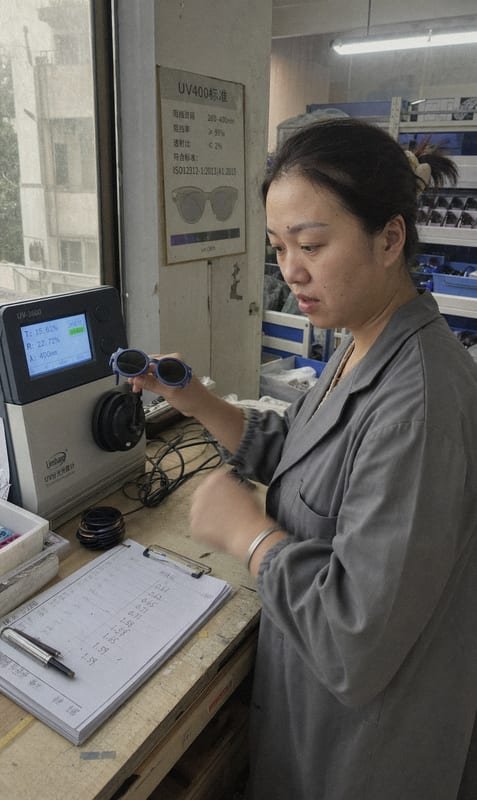
Das Testen der UV-Schutzwirkung von Kinder-Sonnenbrillengläsern ist etwas, das unser QC-Team täglich tut, weil ich gesehen habe, dass dunkle Gläser schlecht versagen.
Um die UV-Schutzwirkung von Kinder-Sonnenbrillengläsern zu testen, messen Sie die UV-Transmission mit einem Spektrophotometer oder einem UV-Messgerät im Optikergeschäft, verlangen Sie eine UV400-Zertifizierung und Chargen-Analysenzertifikate und überprüfen Sie die Einhaltung der ANSI Z80.3-, ISO 12312-1- oder EN ISO-Standards vor dem Versand.
Das ist die kurze Antwort. Die längere Antwort ist wichtiger, wenn Sie eine echte Bestellung aufgeben. Lassen Sie mich Ihnen zeigen, wie wir das in unserer eigenen Fabrik handhaben und was Sie von jedem Lieferanten verlangen sollten.
Welche UV-Prüfnormen sollte ich von meinem Linsenlieferanten verlangen, bevor ich eine Bestellung aufgeben?
Ein Käufer aus Australien fragte mich einmal, warum mein Angebot drei verschiedene Standards erwähnte. Meine Antwort dauerte zwanzig Minuten, weil die Landschaft der Standards Erstkäufer wirklich verwirrt.
Fordern Sie Ihren Linsenlieferanten auf, UV400-Schutz zu zertifizieren und die ANSI Z80.3 für den US-Markt, ISO 12312-1 oder EN ISO 12312-1 mit CE-Kennzeichnung für Europa und AS/NZS 1067 für Australien einzuhalten, gestützt auf Berichte von Drittanbietern über Spektralphotometertests.

Standards sind nicht austauschbar. Jeder Zielmarkt hat seine eigenen Regeln, und eine Fabrik, die nur einen davon kennt, wird Ihnen Kopfschmerzen am Zoll oder, schlimmer noch, nach einem Produktrückruf bereiten. In unseren fünfzehn Jahren des Exports von Kinderbrillen an Käufer in mehr als zwanzig Ländern haben wir gelernt, zuerst eine Frage zu stellen: Wo werden diese Sonnenbrillen verkauft?
Die wichtigsten Standards, die Sie kennen sollten
Hier ist eine schnelle Referenztabelle, die wir neuen Käufern vor der Bestellung zur Verfügung stellen:
| Standard | Region | Wichtige UV-Anforderung |
|---|---|---|
| ANSI Z80.3 | Vereinigte Staaten | Mindestens 99% UVB- und 95% UVA-Schutz |
| Europa (CE-Kennzeichnung) | UV-Transmissionsgrenzwerte, die an die Glaskategorie gebunden sind | Strenge UV-Grenzwerte; Kennzeichnung der Glaskategorie erforderlich |
| AS/NZS 1067 | Australien / Neuseeland | UV400 (Angabe) |
| Globaler Verbraucherbegriff | Blockiert Wellenlängen bis zu 400 nm, einschließlich UVA- und UVB-Strahlen | UV400 ist eine Angabe, kein eigenständiger formeller Standard. Es bedeutet, dass das Glas Licht bis zu 400 Nanometern blockiert. Das deckt sowohl UVA- als auch UVB-Strahlen ab, was zum Schutz der sich entwickelnden Augen eines Kindes beiträgt und die Prävention von photokeratitis unterstützt. Aber die Angabe ist nur dann aussagekräftig, wenn ein anerkannter Standard und echte Testdaten dahinter stehen. |
Fragen Sie also Ihren Lieferanten drei Dinge, bevor Sie eine Bestellung aufgeben. Erstens, welchen Standard erfüllt das Glas für Ihren spezifischen Markt? Zweitens, können sie einen aktuellen Testbericht von Drittanbietern vorlegen, nicht nur eine Werksaussage? Drittens, werden sie schriftlich zustimmen, dass jede Lieferung diesem Standard entsprechen muss? Eine seriöse Fabrik wird alle drei ohne zu zögern beantworten. Ein Händler, der unbekannte Gläser weiterverkauft, kann das normalerweise nicht. Ein weiterer Punkt aus unserer eigenen Erfahrung. Das Glasmaterial ist für die Konformität wichtig. Polycarbonatgläser blockieren die meisten UV-Strahlen von Natur aus, während einige Acrylgläser nur auf eine Oberflächenbeschichtung angewiesen sind. Wir lenken Käufer zu substratbasiertem Schutz für Kinderstile, da er sich nicht abkratzt oder abbaut, wie es eine dünne Beschichtung kann. 1 UV400 bedeutet, dass das Glas Lichtwellenlängen bis zu 400 Nanometern blockiert, einschließlich UVA- und UVB-Strahlen.
Der 400-nm-Grenzwert liegt an der oberen Grenze des UVA-Bereichs, sodass ein echtes UV400-Glas das gesamte für die Augengesundheit relevante ultraviolette Spektrum filtert.
Eine CE-Kennzeichnung auf Kinder-Sonnenbrillen beweist, dass die Gläser im Labor auf UV-Schutz getestet wurden Die CE-Kennzeichnung basiert oft auf einer Selbsterklärung des Herstellers, so dass sie die beabsichtigte Konformität signalisiert, aber nicht dasselbe ist wie verifizierte Spektrophotometer-Testdaten für dieses spezifische Produkt. 2 Konsistenz ist, wo billige Lieferanten leise versagen. Früh in meiner Karriere sah ich, wie ein Kunde eines Konkurrenten feststellte, dass Charge drei seines Bestsellers einen anderen Glasbestand als die genehmigte Probe verwendete. Der Rückruf kostete sie die Marke.
Wie kann ich überprüfen, ob der UV-Schutz bei jeder Charge der von uns produzierten Gläser gleichbleibend ist?
Das genehmigte Glas wird durch Material, Dicke, Tönung, Sichtlichttransmissionskategorie und UV-Grenzwert definiert – schriftlich, angehängt an die Bestellung.
Chargenkonsistenz durch Anforderung einer eingehenden Linseninspektion mit einem UV-Transmissionsmessgerät, Stichprobenentnahme von Linsen aus jeder Produktionscharge gemäß einem AQL-Plan, Sperrung des Linsenlieferanten und der Materialspezifikation in Ihrem Vertrag und Anforderung chargenspezifischer Prüfprotokolle mit jeder Lieferung sicherstellen.
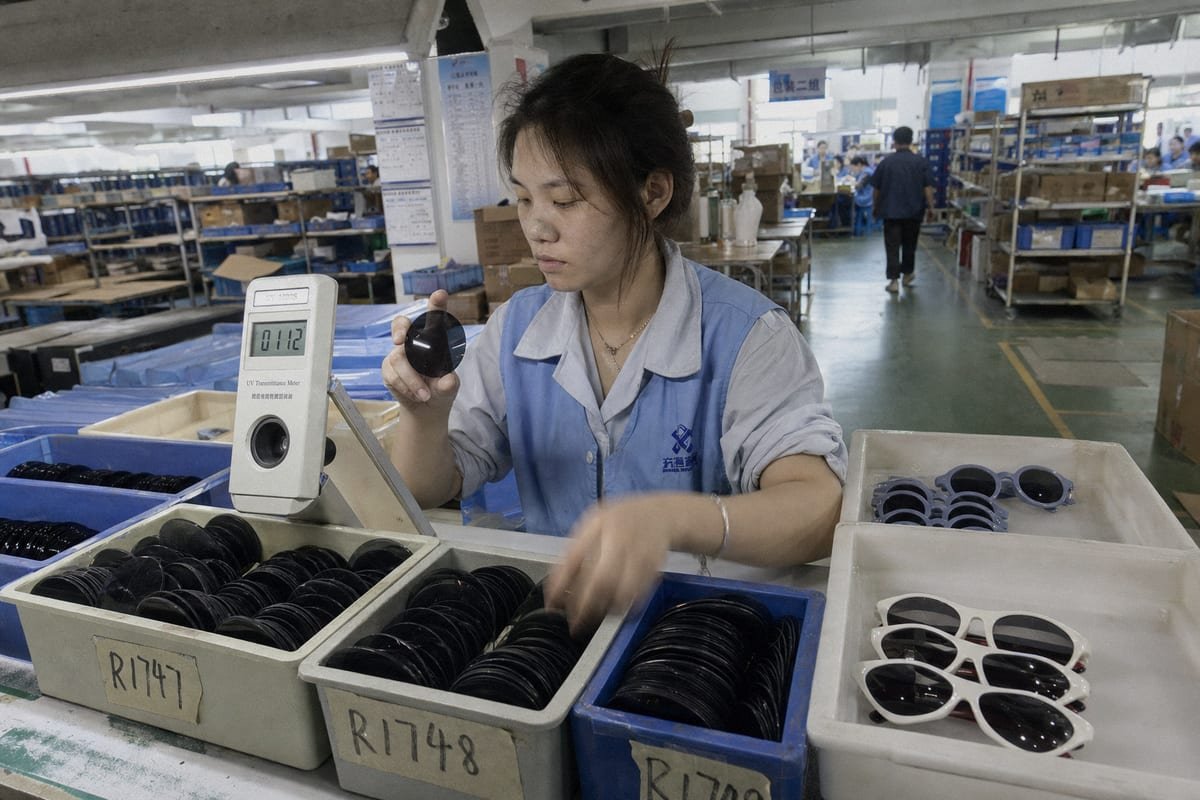
Eingehende Gläser inspizieren.
Jede eingehende Glascharge wird auf einem UV-Transmissionsmessgerät beprobt und geprüft, bevor sie in die Produktion geht. Fehlgeschlagene Chargen gehen zurück an den Glaslieferanten.
Während der Montage beproben.
- Die Qualitätskontrolle zieht fertige Sonnenbrillen in festgelegten Intervallen gemäß einem AQL-Stichprobenplan und prüft erneut die UV-Transmission, da Handhabung und Montage die Messung niemals ändern sollten – und wenn doch, ist etwas stromaufwärts falsch. Alles nach Charge aufzeichnen.
- Jede Produktionscharge wird mit ihrer Glaslosnummer und den Messergebnissen verknüpft, sodass jede zukünftige Frage in Minuten statt Wochen geklärt werden kann. Dem Käufer berichten.
- Chargenprüfprotokolle werden mit den Versanddokumenten übermittelt. Für Käufer ist die Vertragssprache genauso wichtig wie der Prozess. Legen Sie fest, dass Material und Lieferant des Glases nicht ohne schriftliche Genehmigung geändert werden dürfen. Legen Sie den Standard fest, den die Gläser erfüllen müssen. Legen Sie Ihr Recht auf zufällige Tests durch Dritte fest. Wenn wir OEM-Projekte mit Kindermarken entwickeln, begrüßen wir diese Klauseln sogar. Sie schützen beide Seiten und filtern Lieferanten aus, die nie beabsichtigt hatten, die Spezifikation einzuhalten.
- Eine Nuance: Merkmale wie die Vorteile von polarisierten Gläsern – reduzierte Blendung auf Wasser und Schnee – müssen separat überprüft werden. Die Konsistenz der Polarisation und die Konsistenz der UV-Strahlung sind zwei verschiedene Prüfungen, und eine Charge kann die eine bestehen und die andere nicht. Die UV-Leistung kann zwischen den Chargen schwanken, auch wenn die Gläser visuell identisch aussehen.
- UV-Absorber sind für das menschliche Auge unsichtbar, daher kann eine Änderung des Harzlieferanten oder der Beschichtungschemie den Schutz reduzieren, ohne dass sich die Tönung oder das Aussehen ändern. Wenn die Vorserienmuster die UV-Prüfung bestanden haben, wird jede Produktionscharge automatisch bestanden.
Materialsubstitutionen und Prozessvariationen treten in realen Lieferketten auf, weshalb Chargen-Eingangskontrollen und AQL-Stichproben existieren. OEM-Projekte 3 Bei Kindermarken begrüßen wir solche Klauseln sogar. Sie schützen beide Seiten und filtern Lieferanten aus, die nie die Absicht hatten, die Spezifikation einzuhalten.
Eine Nuance: Merkmale wie die Vorteile polarisierter Gläser – reduzierte Blendung auf Wasser und Schnee – müssen separat überprüft werden. Die Konsistenz der Polarisation und die UV-Konsistenz sind zwei verschiedene Prüfungen, und eine Charge kann die eine bestehen und die andere nicht.
Welche Labortests oder Zertifikate sollte ich anfordern, um die UV400-Konformität zu bestätigen?
Papierkram ist, wo ich mit neuen Käufern unverblümt sein muss. Ein Aufkleber mit der Aufschrift "UV400" kostet einen Bruchteil eines Cents. Ein Spektraltransmissionsdiagramm eines akkreditierten Labors ist etwas ganz anderes.
Fordern Sie einen spektralen Transmissionsbericht eines Drittanbieters an, der eine nahezu Null-Transmission unter 400 nm zeigt, ein chargenspezifisches Analysezertifikat, einen akkreditierten Labortest gemäß ANSI Z80.3 oder ISO 12312-1 und eine Konformitätserklärung zur Unterstützung einer CE-Kennzeichnung.
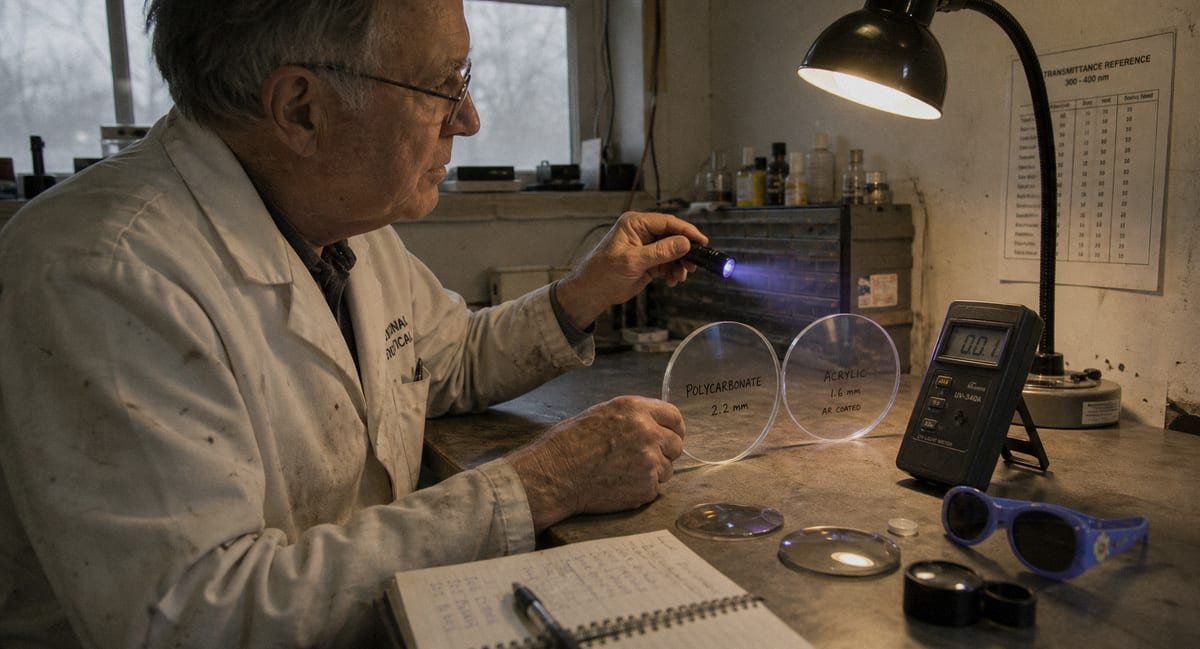
Nicht alle Dokumente haben das gleiche Gewicht. Wenn unser Verkaufsteam Compliance-Pakete für Optikfirmen und Kindermarken vorbereitet, sortieren wir die Unterlagen in Stufen ein, und ich empfehle Ihnen, die Unterlagen der Lieferanten auf die gleiche Weise zu bewerten.
Die Beweise vom schwächsten zum stärksten ordnen
| Dokument | Was es tatsächlich beweist | Gewicht |
|---|---|---|
| "UV400"-Aufkleber oder Anhänger | Nur eine Marketingaussage | Sehr schwach |
| Selbsterklärungsschreiben der Fabrik | Die Fabrik sagt, dass sie konform ist | Schwach |
| Konformitätserklärung (CE) | Rechtliche Aussage über die Erfüllung der EU-Anforderungen | Mäßig |
| Fremdlaborbericht (akkreditiert) | Unabhängig Spektrophotometrische Prüfung 4 gemäß einem benannten Standard | Starkes |
| Chargenspezifisches Analysezertifikat | Diese Charge wurde getestet und bestanden | Am stärksten |
Das einzige nützlichste Dokument ist das Spektraltransmissionsdiagramm. Es zeigt, wie viel Licht bei jeder Wellenlänge durch die Linse dringt. Für eine echte UV400-Linse, sollte die Kurve im gesamten UVA- und UVB-Bereich bei oder nahe Null Transmission liegen und dann im sichtbaren Spektrum 5 gemäß der Linsen-Kategorie ansteigen. Wenn ein Lieferant dieses Diagramm nicht vorlegen kann, hat er seine Linsen nie wirklich gemessen.
Überprüfen Sie drei Details auf jedem Laborbericht. Erstens die Akkreditierung des Labors – ein ISO/IEC 17025 6 akkreditiertes Labor hat wirkliche Autorität. Zweitens das Berichtsdatum – ein Bericht von vor fünf Jahren sagt wenig über den aktuellen Bestand aus. Drittens die Produktidentifikation – der Bericht muss die exakte Linse in Ihrer Bestellung beschreiben, nicht ein vage ähnliches Modell.
Speziell für Kinderbrillen empfehlen wir außerdem, nach der Kategorie der Transmission des sichtbaren Lichts. zu fragen. Kinderlinsen sollten dunkel genug für Komfort sein, aber niemals so dunkel, dass sie die Sicht beim Spielen beeinträchtigen. Und wenn Ihre Marke die HEV-Blaulichtfiltration als zusätzlichen Vorteil vermarktet, fragen Sie auch nach Transmissionsdaten in diesem Bereich, anstatt die Aussage im Glauben anzunehmen.
Kann ich visuellen oder Preisinformationen vertrauen, um den UV-Schutz zu beurteilen, oder benötige ich laborgeprüfte Daten?
Es gibt eine Demonstration, die ich auf Messen gebe und die Käufer immer wieder überrascht. Ich lege zwei Linsen auf ein UV-Messgerät: eine fast klare Polycarbonatlinse, eine sehr dunkle Acryllinse von einem Billiganbieter. Die klare Linse blockiert UV vollständig. Die dunkle Linse lässt es durch.
Nein, Sie können sich nicht auf visuelle oder Preisinformationen verlassen. Die Dunkelheit der Gläser, Spiegelbeschichtungen, Polarisationsfilter und der Preis sagen Ihnen nichts Zuverlässiges über den UV-Schutz. Eine dunkle Linse ohne UV-Filter ist tatsächlich gefährlicher, da erweiterte Pupillen mehr Strahlung hereinlassen. Nur im Labor überprüfte Übertragungsdaten bestätigen den Schutz.
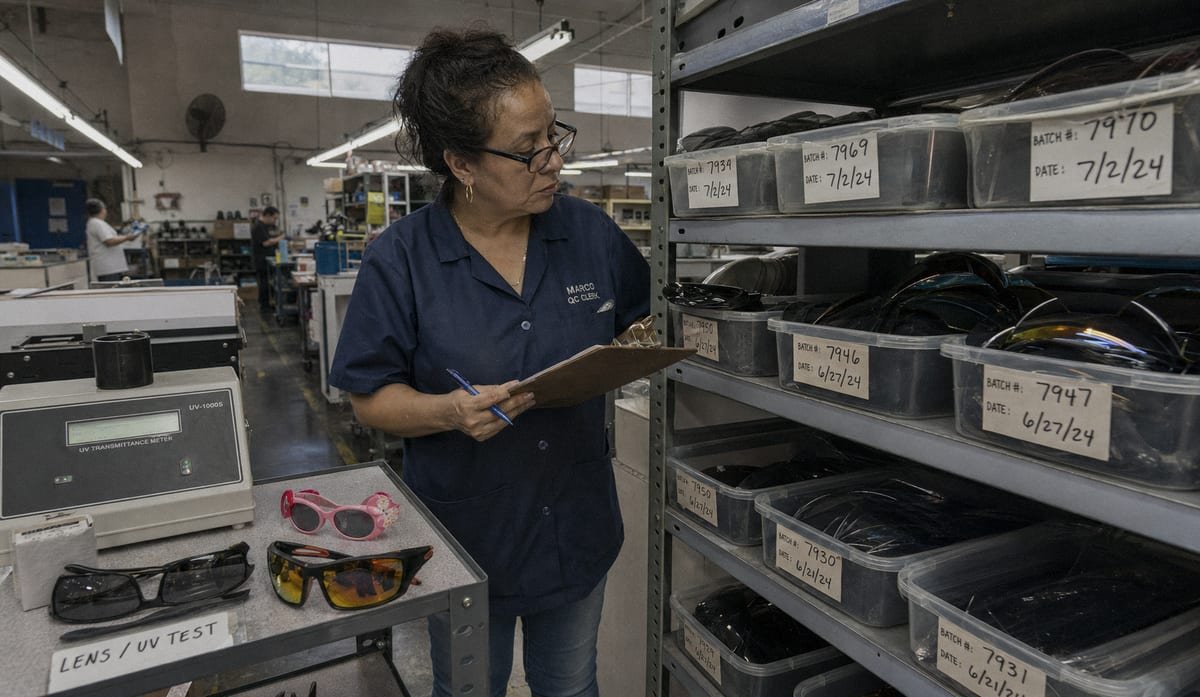
Die Physik hier ist es wert, verstanden zu werden, denn sie erklärt, warum dunkle Linsen ohne UV-Schutz schlechter sind als gar keine Sonnenbrille. Tönung reduziert sichtbares Licht. Die Pupillen eines Kindes reagieren, indem sie sich erweitern, um mehr Licht hereinzulassen. Wenn die Linse nicht auch UVA- und UVB-Strahlen blockiert, lässt die erweiterte Pupille nun mehr ultraviolette Strahlung herein als bei hellem, unbeschattetem Sonnenlicht. Die Sonnenbrille ist zu einem UV-Trichter geworden. Deshalb hängt die Prävention von Photokeratitis von der tatsächlichen UV-Filterung ab, nicht davon, wie dunkel die Linse aussieht.
Was jede Angabe wirklich aussagt
| Angabe | Was Käufer annehmen | Was es tatsächlich anzeigt |
|---|---|---|
| Dunkle Tönung | "Starker Schutz" | Nur Reduzierung des sichtbaren Lichts; UV-Schutz ist separat |
| Spiegelbeschichtung | "Premium, sicher" | Kosmetische Reflexion; keine garantierte UV-Daten |
| Polarisierung | "Voller Schutz" | Nur Blendungsreduzierung; UV-Filterung ist eine eigene Eigenschaft |
| Hoher Preis | "Muss getestet worden sein" | Oft Markenaufschlag; kein Beweis für Tests |
| Verkauft in einer Kinderabteilung | "Reguliert und sicher" | Platzierung, nicht Konformität |
Wo schnelle Überprüfungen hineinpassen
Siebwerkzeuge haben ihren legitimen Platz, solange Sie ihre Grenzen kennen. Eine UV-Taschenlampe, die durch eine Linse auf einen fluoreszierenden Banknotenstreifen 7 gerichtet wird, kann eine offensichtlich schlechte Linse aufdecken – wenn der Streifen immer noch leuchtet, lässt die Linse UV durch. Ein UV-Messgerät im Optikgeschäft liefert in Sekundenschnelle einen schnellen Transmissionsprozentsatz, und viele Optiker führen es kostenlos durch. Phototrope Gläser bieten sogar eine eingebaute Anzeige, da sie sich nur verdunkeln, wenn UV-Strahlung sie tatsächlich erreicht.
Aber das sind Stellvertreter, keine Beweise. Sie kennzeichnen Fehler; sie zertifizieren keine Konformität. Bei einer Bestellung von zehn- oder fünftausend Einheiten muss die Entscheidung auf akkreditierten Spektralphotometertests und Chargendokumentationen beruhen. Nach unserer Erfahrung bei der Belieferung von Kindermarken in Europa, Japan und Australien haben die Käufer, die auf Labor-verifizierte Daten bestehen, die reibungslosesten Markteinführungen – und die wenigsten schlaflosen Nächte.
Schlussfolgerung
Das Testen der UV-Schutzwirkung beruht auf Messung, nicht auf Aussehen: Verlangen Sie anerkannte Standards, Chargen-spezifische Spektralphotometerdaten und echte Zertifikate – und arbeiten Sie dann mit einer Fabrik zusammen, die jede Charge dokumentiert.
Fußnoten
Expertenrat zum Schutz der Kinderaugen vor UV-Strahlung. ↩︎
Technische Informationen über das Linsenmaterial, das auf seine inhärenten UV-Eigenschaften hin untersucht wurde. ↩︎
Maßgebliche Wikipedia-Eintragung, die Original Equipment Manufacturer (OEM) definiert. ↩︎
Informationen des National Institute of Standards and Technology zur Kalibrierung und Prüfung von Spektralphotometern. ↩︎
Wissenschaftliche Definition des Lichtspektrums im Zusammenhang mit der Linsenübertragung. ↩︎
Offizielle Seite für den Standard der Laborakkreditierung. ↩︎
Offizielle Regierungsseite, die Sicherheitsmerkmale wie fluoreszierende Streifen erklärt, die auf UV-Licht reagieren. ↩︎
Weitere Artikel, die Ihnen gefallen könnten

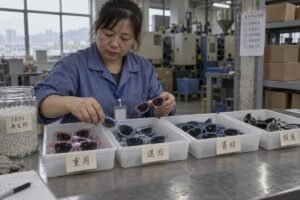

Auf der Suche nach einem zuverlässigen Partner für Kinderbrillen?
Entdecken Sie über 800 sofort verfügbare Modelle und umfassenden OEM/ODM-Support, der auf Ihre Marke zugeschnitten ist.
Kontakt aufnehmen English
  Español de México
  Deutsch
  Français
  日本語
日本語  العربية
  Português do Brasil