Wie man die Beschichtungsqualität für Kinderbrillen testet?
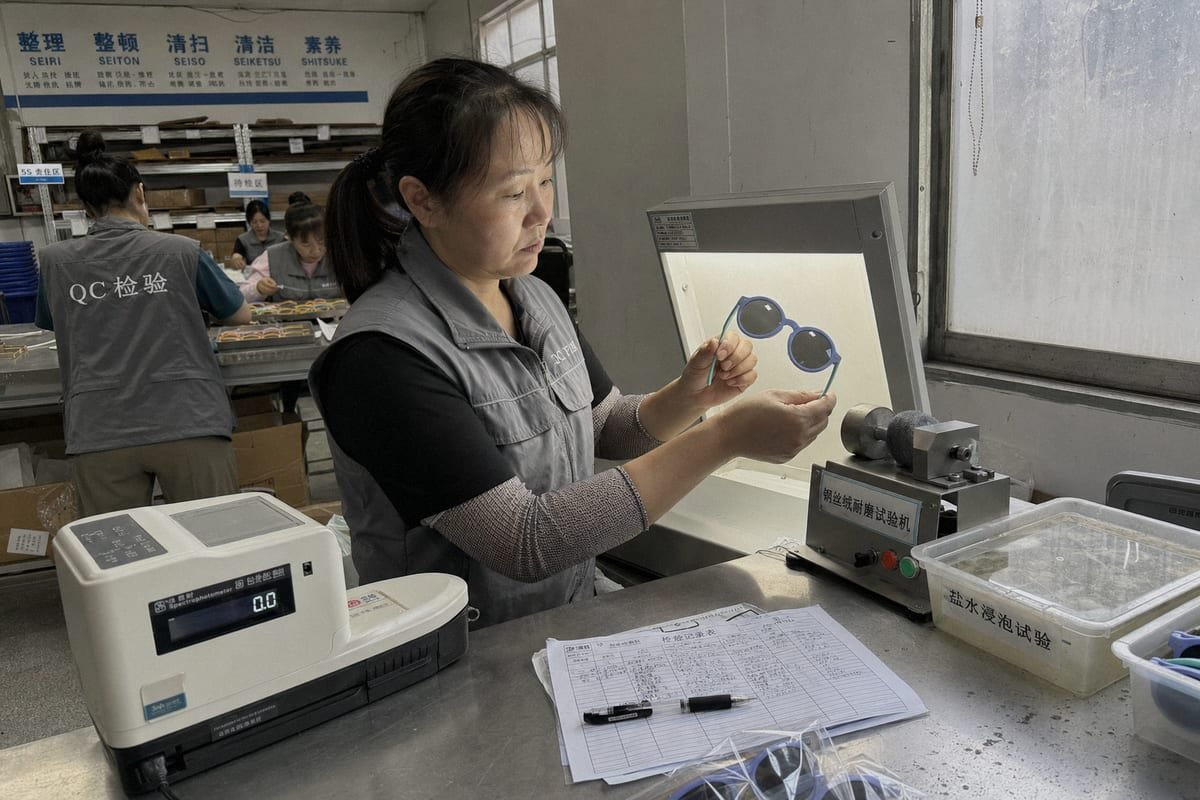
Die Beschichtungsqualität für Kinderbrillen ist der Punkt, an dem ich die meisten Bestellungen schiefgehen gesehen habe nur ISO 12312-1 1. Eine Lieferung kann am ersten Tag perfekt aussehen, dann aber innerhalb eines Monats nach echtem Gebrauch abblättern, trüben und verschmieren. An unserer Produktionslinie in Taizhou haben wir früh gelernt, dass eine Spiegelschicht, die auf einem Foto blendet, nichts bedeutet, wenn sie in einer Strandtasche abplatzt. Die Lösung ist im Prinzip einfach: Hören Sie auf, Beschichtungen nach dem Aussehen zu beurteilen, und beurteilen Sie sie stattdessen anhand einer Reihe wiederholbarer Tests.
Um die Beschichtungsqualität für Kinderbrillen zu testen, kombinieren Sie die visuelle Inspektion im Lichtkasten, einen Gitterschnitt-Haftungstest, einen Stahlwoll- oder Bayer-Abriebtest, eine Umweltalterung wie Salzwasser-Kochen und trockene Hitze sowie Spektralphotometer-Prüfungen auf UV400 und sichtbare Lichttransmission. Das Bestehen aller fünf bestätigt langlebige, sichere Beschichtungen.
Diese Antwort klingt technisch, aber jede Prüfung ist leicht zu verstehen. Im Folgenden erläutere ich, was vor der Genehmigung von Großhandelswaren zu prüfen ist, welche Labortests wichtig sind, wie der Prozess eines Werks auditiert wird und welche Haltbarkeitstests für aktive Kinder geeignet sind.
Welche Beschichtungsfehler sollte ich vor der Genehmigung einer Großbestellung beachten?
Während einer Vorversandkontrolle für eine europäische Kindermarke im letzten Frühjahr zog unser QC-Team einen pastellfarbenen runden Rahmen von der Linie und entdeckte eine schwache Spiegelbeschichtungswolke, die nur in einem 45-Grad-Winkel sichtbar war. Dieser eine Fang rettete die gesamte Bestellung.
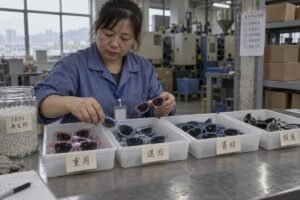
Bevor Sie eine Großbestellung genehmigen, prüfen Sie die Linsen unter einem Lichtkasten in mehreren Winkeln auf Kratzer, Nadellöcher, abblätternde Kanten, beschlagene Beschichtungen, Orangenhauttextur, Einspritzmarkierungen, ungleichmäßige Spiegelgradienten und Farbunterschiede zwischen den Linsen. Lehnen Sie Einheiten ab, die Delamination, Trübung oder sichtbare Beschichtungsgrenzen aufweisen, und überprüfen Sie beide Linsenoberflächen.
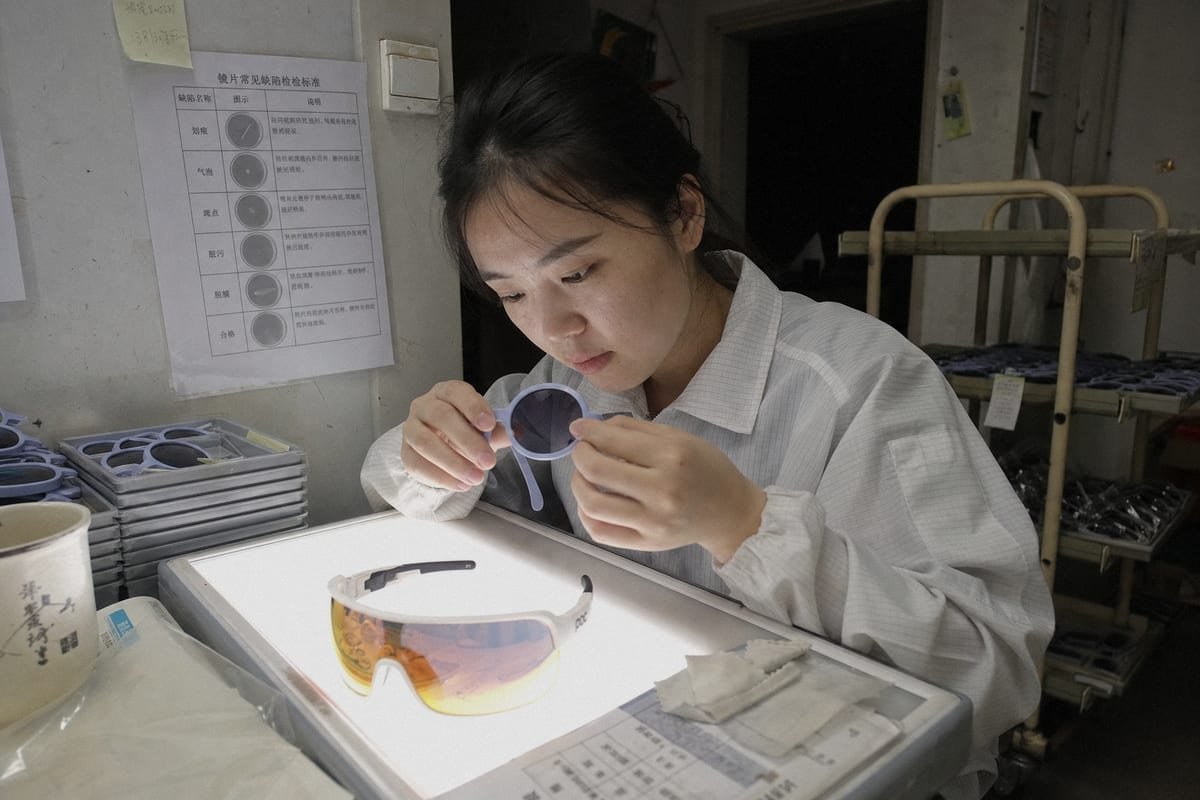
Die visuelle Inspektion ist das schnellste und billigste Tor in der gesamten Qualitätskette. Aber sie funktioniert nur, wenn man weiß, was man sieht. In unserer 5S-verwalteten Werkstatt rotieren die Inspektoren jedes Glas unter starker Beleuchtung und prüfen es gegen einen dunklen und einen hellen Hintergrund. Unterschiedliche Fehler treten unter verschiedenen Bedingungen auf. Trübungen erscheinen vor dunklen Hintergründen. Nadellöcher erscheinen vor hellen.
Die von uns verwendete Fehlercheckliste
Hier ist die praktische Checkliste, die ich Käufern empfehle, in ihre Inspektionsanweisungen:
| aufzunehmen | Art des Mangels | Warum es für Kinder wichtig ist |
|---|---|---|
| Fehler | Abblättern oder Abplatzen | Abgehobene Beschichtung an den Glasrändern |
| Verschlechtert sich schnell bei der Handhabung; erzeugt visuelle Artefakte | Nadellöcher | Winzige helle Punkte in der Spiegelschicht |
| Zeichen schlechter Vakuumabscheidekontrolle | Trübung oder Dunst | Milchige Flecken in einem Winkel |
| Reduziert die Klarheit; ablenkend für junge Augen | Orangenhaut | Unebene, holprige Oberflächenstruktur |
| Zeigt schlechte Aushärtung der Hartbeschichtung an | Farbabweichung | Linkes und rechtes Glas haben unterschiedliche Tönungen |
| Ungleichmäßiges Färben oder Mischen von Beschichtungschargen | Beschichtungsgrenzen | Sichtbarer Rand, wo die Beschichtung endet |
Schlampige Maskierung während der Beschichtung
Warum ein Winkel nie ausreicht.
Eine verspiegelte Verlaufslinse, wie die orange-bis-türkisfarbenen Schildgläser, die wir für Sportmodelle herstellen, kann Trübungen verbergen, wenn sie gerade betrachtet wird. Daher inspizieren wir immer in mindestens drei Winkeln. Wir prüfen auch die Rückseite. Eine rückseitige Antireflexbeschichtung mit Fehlern verursacht Streulichtreflexionen, die Kinder mehr bemerken als Erwachsene, da sie selten anpassen, wie sie ihre Brillen tragen.
Welche Labortests können die Leistung von UV400- und kratzfester Beschichtung bestätigen?
Die visuelle Inspektion kann keine Haftfestigkeit oder Abriebfestigkeit messen, daher kann eine makellos aussehende Beschichtung ohne ordnungsgemäße Labortests innerhalb weniger Wochen delaminieren oder zerkratzen.
Ein Spektrophotometer bestätigt den UV400-Schutz, indem es eine Null-Transmission von UVA und UVB bis zu 400 nm verifiziert, während Stahlwolle oder der Bayer-Abriebtest die Haltbarkeit der kratzfesten Beschichtung quantifizieren. Ein Gitterschnitt-Haftungstest beweist dann, dass die Beschichtung auf dem Linsen-Substrat haftet.
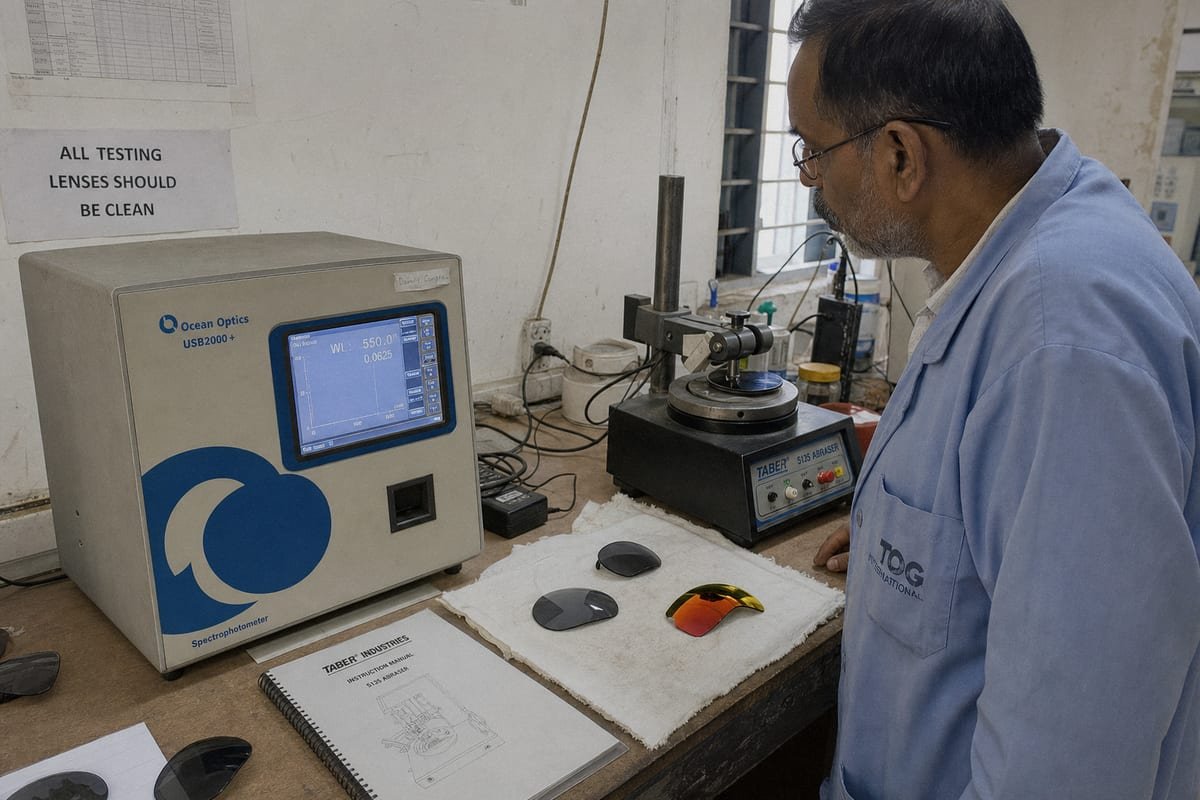
Ein Kompromiss, den wir ständig bei der Entwicklung abwägen: Eine härtere Anti-Kratz-Beschichtung widersteht Abrieb besser, aber wenn sie zu aggressiv ausgehärtet wird, wird sie spröde und bricht unter Belastung. Labordaten, nicht Intuition, sagen uns, wo der Sweet Spot liegt.
Ich werde jeden Test in einfachen Worten durchgehen, denn Käufer, die sie verstehen, verhandeln besser und auditieren intelligenter.
A Spektrophotometer 2 Spektralphotometer-Tests für UV400 und optische Leistung UV400-Schutz 3 lässt Licht durch die Linse und misst, was bei jeder Wellenlänge durchkommt. Für.
Standards muss die Messung effektiv null Transmission unter 400 nm zeigen. Das gleiche Instrument misst die Transmission des sichtbaren Lichts, die die Brillenkategorie bestimmt und ob die Sonnenbrille für Teenager im Fahreralter oder für Kleinkinder bei hellem Sonnenschein sicher ist. Es misst auch die Reflexion, die Ihnen sagt, ob eine Antireflexbeschichtung tatsächlich Blendung reduziert oder nur behauptet, dies zu tun.
Abrieb- und Kratzfestigkeitsprüfung.
| Zwei Methoden dominieren. Der Stahlwolltest reibt ein standardisiertes Pad unter festem Druck für eine festgelegte Anzahl von Zyklen über die Beschichtung und bewertet dann die Kratzer. Der Bayer-Abriebtest schüttelt die Linse in abrasivem Medium und vergleicht die Zunahme der Trübung mit einer unbeschichteten Referenz. Bayer liefert ein numerisches Verhältnis, das den Vergleich der Abriebfestigkeitsniveaus zwischen den Lieferanten vereinfacht. | Test | Typische Verwendung |
|---|---|---|
| Spektralphotometer | Was er misst | UV400 und optische Verifizierung |
| Stahlwoll-Abrieb | Oberflächenkratzfestigkeit | Schnelle Härteprüfung der Beschichtung |
| Bayer-Abrieb | Zunahme des Dunstes im Vergleich zur Referenzlinse | Quantifizierte Kratzfestigkeitsdauer |
| Kreuzgitter-Klebebandtest | Haftung der Beschichtung auf dem Substrat | Risiko der Delamination |
| Kolorimetrie | Farbverzerrung durch die Linse | Ampel- und Farbtreueprüfungen |
Haftung: Der Test, den Käufer vergessen
Der Kreuzgitter-Haftungstest ist einfach. Eine Klinge schneidet ein Gitter von Mikroinzisionen durch die Beschichtung. Klebeband wird aufgepresst und abgezogen. Wenn Beschichtungsquadrate mit dem Klebeband abgehen, ist die Bindung schwach. Nach unserer Erfahrung sagt dieser einzelne Test Feldabblätterungsbeschwerden besser voraus als jeder andere. Er trennt Oberflächenverschleiß, der normal ist, von Delamination, die ein Prozessfehler ist. Für polarisierte Linsenoptionen überprüfen wir auch die Polarisationseffizienz nach der Beschichtung, da einige Beschichtungsprozesse den darunter liegenden Polarisationsfilm beeinträchtigen können.
Wie weiß ich, ob der Beschichtungsprozess einer Fabrik internationale Sicherheitsstandards erfüllt?
Eine Einkaufsmanagerin aus Australien stellte mir einmal eine Frage, die ich liebte: "Zeigen Sie mir nicht Ihre Zertifikate – zeigen Sie mir, woher sie stammen." Wir führten sie Schritt für Schritt durch unseren Beschichtungs- und Qualitätskontrollablauf, und diese Transparenz besiegelte die Partnerschaft.
Eine Fabrik erfüllt internationale Standards, wenn ihre beschichteten Gläser unabhängige Tests nach ISO 12312-1 und ANSI Z80.3 bestehen, einschließlich UV-Durchlässigkeitsgrenzen, Fallkugel-Schlagfestigkeitsprüfungen und Anforderungen an die optische Klarheit, und wenn die Fabrik dokumentierte In-Prozess-Kontrollen, Chargenrückverfolgbarkeit und aktuelle gültige Testberichte vorlegen kann.
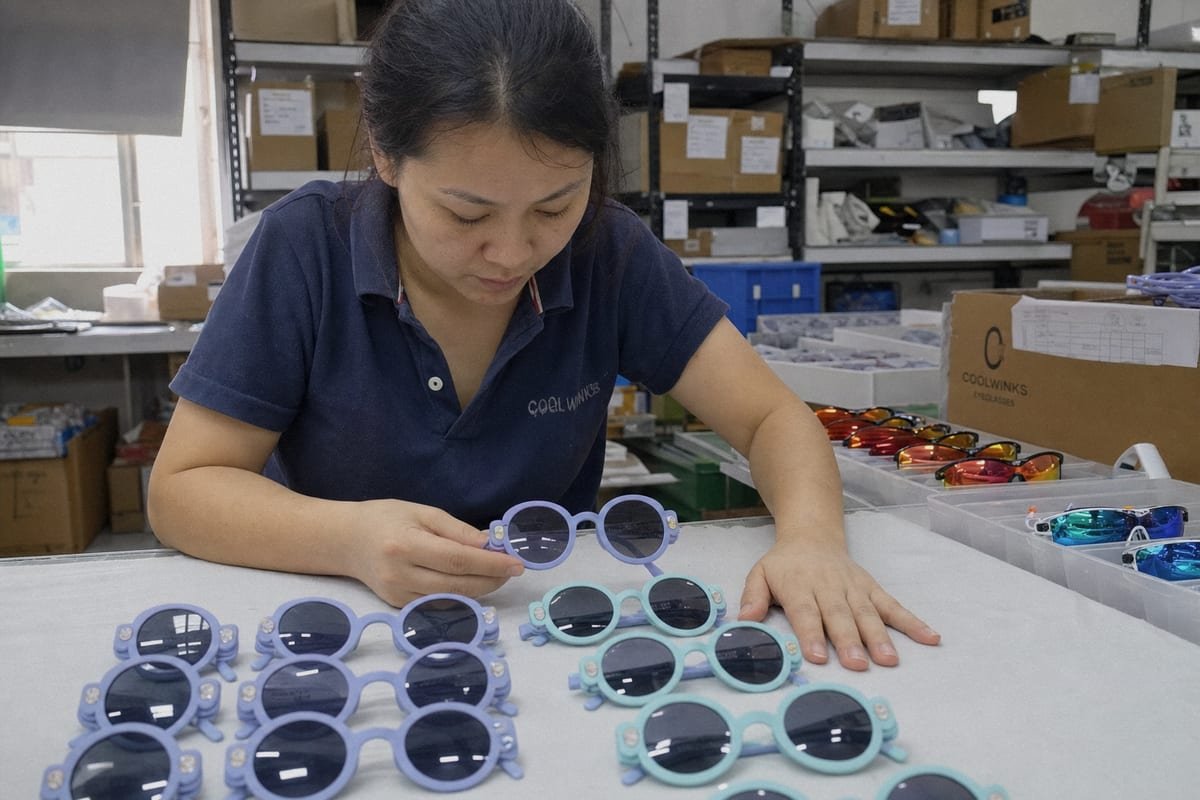
Die Einhaltung von Standards ist kein Aufkleber. Es ist ein Prozess, den Sie prüfen können. Hier ist, wie ich Käufern vorschlage, ihn zu überprüfen, basierend auf dem, was ernsthafte Kunden überprüfen, wenn sie unsere Fabrik besuchen.
Die beiden wichtigsten Standards
nur ISO 12312-1 4 Konformität regelt Sonnenbrillen, die in Europa und weiten Teilen des asiatisch-pazifischen Raums verkauft werden. Sie umfasst UV-Transmission, Kategorien der sichtbaren Lichttransmission, Brechkraft und Robustheit. ANSI Z80.3 ist das US-Äquivalent und beinhaltet den Fallkugeltest 5, bei dem eine Stahlkugel auf die Linse fallen gelassen wird, um zu bestätigen, dass sie nicht zerbricht. Für Kinderprodukte ist die Schlagfestigkeitsprüfung nicht verhandelbar. Polycarbonatlinse 6 Qualität ist hier wichtig: PC absorbiert Stöße weitaus besser als Acryl, was einer der Gründe ist, warum wir es für aktive Kinderstile spezifizieren.
Eine praktische Prüfliste
- Fordern Sie Prüfberichte an, die innerhalb der letzten zwölf Monate von einem anerkannten Drittlabor ausgestellt wurden und der genauen Linsen- und Beschichtungsspezifikation entsprechen, die Sie bestellen.
- Fordern Sie den Prozessflussdiagramm der Beschichtung an. Eine fähige Fabrik kann Reinigungs-, Hartbeschichtungs-, Tauch- oder Sprüh-, Härtungs- und Vakuumabscheidungsschritte ohne Zögern erklären.
- Überprüfen Sie die In-Prozess-Qualitätskontrollaufzeichnungen. Beschichtungsdicke, Härtungstemperatur und Haftungsprüfungen sollten pro Charge und nicht pro Saison protokolliert werden.
- Überprüfen Sie die Chargenrückverfolgbarkeit. Wenn ein Beschichtungsfehler auftritt, sollte die Fabrik ihn auf ein Produktionsdatum und einen Beschichtungslauf zurückführen können.
- Bestätigen Sie die chemische Sicherheitsdokumentation für Rahmen- und Beschichtungsmaterialien, da Kinder ihre Sonnenbrillen ständig in den Mund nehmen und anfassen.
Wir führen auch Salzsprühkorrosionstest 7 Zyklen an Metallscharnierkomponenten durch, da eine rostende Scharnierschraube neben der Schläfe eines Kindes ein Sicherheitsproblem darstellt, an das niemand denkt, bis es passiert. Wenn eine Fabrik diese Detailtiefe anbietet, signalisiert dies normalerweise eine echte Qualitätskultur und keine Papierkram-Theater.
Welche Haltbarkeitstests für Beschichtungen sollte ich für die aktive, tägliche Nutzung durch Kinder anfordern?
Jahrelanges Garantie-Feedback hat uns eine harte Lektion gelehrt: Haltbarkeitsstandards für Erwachsene reichen für Kinder nicht aus. Kinder-Sonnenbrillen leben in sandigen Rucksäcken, heißen Autos, chlorierten Pools und kleinen, verschwitzten Händen. Unsere TPEE- und TR90-Rahmen biegen sich, um diesem Missbrauch standzuhalten, und die Linsenbeschichtungen müssen mithalten.
Umwelt-Alterungstests anfordern: Salzwasser-Kochen, Trockenhitzeeinwirkung, Temperatur- und Feuchtigkeitswechsel und beschleunigte UV-Alterung mit Xenonbogen, jeweils gefolgt von Adhäsions- und visuellen Nachprüfungen. Ergänzen Sie Schweiß- und Speichelbeständigkeit, hydrophobe Tests im Wischzyklus und Adhäsionsprüfungen nach dem Biegen, um die tatsächliche, aktive Nutzung durch Kinder zu simulieren.

Die Kernidee ist Stress-dann-Verifizieren. Jede Beschichtung besteht einen Klebebandtest, wenn sie frisch ist. Die Frage ist, ob sie nach simulierten Monaten des Missbrauchs immer noch besteht. Deshalb sollte jeder Umwelttest von einer wiederholten Kreuzgitter-Haftungsprüfung und einer visuellen Überprüfung auf Rissbildung gefolgt werden, dem feinen Mikrorissbildung, das auftritt, wenn sich Beschichtungen ausdehnen und zusammenziehen, mit unterschiedlichen Raten als die Linse.
Tests an reale Kinderszenarien anpassen
| Reale Szenario | Angeforderter Labortest | Fehlerzeichen |
|---|---|---|
| Sonnenbrillen im heißen Auto liegen gelassen | Trockenhitze-Test, dann erneute Haftungsprüfung | Rissbildung, Blasenbildung, Kantenabhebung |
| Strand- und Pooltage | Salzwasser-Kochtest | Beschichtungsnebel, Delamination |
| Jahrelange Sonneneinstrahlung | Xenonbogen-Beschleunigte Alterung | UV-Abschneide-Drift, Farbverblassen |
| Schweißgesichter, Mundrahmen | Synthetischer Schweiß- und Speicheltest | Verfärbung, chemische Auslaugung |
| Tägliche Reinigung des Hemdkragens | Wischzyklus plus Kontaktwinkeltest | Verlust der Schmutzabweisung |
| Rahmenbiegung und Stürze | Flex-Zyklus, dann Haftprüfung | Beschichtungsrisse nahe dem Linsenrand |
Die Tests, die Käufer am häufigsten überspringen
Zwei Tests verdienen besondere Erwähnung. Erstens, die Messung des hydrophoben Kontaktwinkels vor und nach mehreren tausend Wischzyklen. Flecken sind die häufigste tägliche Beschwerde von Eltern, und eine leicht zu reinigende Schicht, die nach zwei Wochen Reinigung abstirbt, ist schlimmer als keine, da sie ein Verkaufsargument auf der Verpackung war. Zweitens, Haftprüfungen nach dem Biegen. Flexible Rahmen sind wunderbar für die Sicherheit, aber sie übertragen Spannungen auf den Linsenrand. In unserer Linie biegen wir montierte Rahmen im Zyklus und testen dann die Haftung der Beschichtung am Linsenrand erneut, da dort die Risse beginnen. Wenn Sie Ihren Testplan schreiben, ist die Reihenfolge wichtig: zuerst Alterung, dann Belastung, dann Verifizierung. Ein Haltbarkeitsbericht, der den Schritt der erneuten Verifizierung überspringt, sagt Ihnen fast nichts.
Schlussfolgerung
Beschichtungsqualität ist ein Bündel von Tests, kein Aussehen. Visuell inspizieren, Haftung und Abrieb prüfen, UV400 per Instrument bestätigen, und vor der Freigabe altern lassen. Fordern Sie diese Sorgfalt, und Ihre Kinder-Sonnenbrillen werden das Vertrauen der Eltern gewinnen.
Fußnoten
Die offizielle ISO-Standardseite verifiziert die genauen Anforderungen an die Sicherheit von Sonnenbrillen. ↩︎
NIST liefert maßgebliche Hintergrundinformationen zu optischen Messgeräten, die für UV-Tests verwendet werden.
Weitere Artikel, die Ihnen gefallen könnten

September 2026
Können TR90 & TPEE Kinder-Sonnenbrillen recycelte oder biobasierte Materialien verwenden?
September 2026
Sind TR90 & TPEE Kinder-Sonnenbrillen recycelbar? Entsorgungstipps erklärt?
September 2026
Wie vermeidet man Verformungen und Kratzer beim Versand von TR90 & TPEE Kinder-Sonnenbrillen?
Auf der Suche nach einem zuverlässigen Partner für Kinderbrillen?
Entdecken Sie über 800 sofort verfügbare Modelle und umfassenden OEM/ODM-Support, der auf Ihre Marke zugeschnitten ist.
Kontakt aufnehmen English
  Español de México
  Deutsch
  Français
  日本語
日本語  العربية
  Português do Brasil