كيفية اختبار جودة الطلاء للنظارات الشمسية للأطفال؟
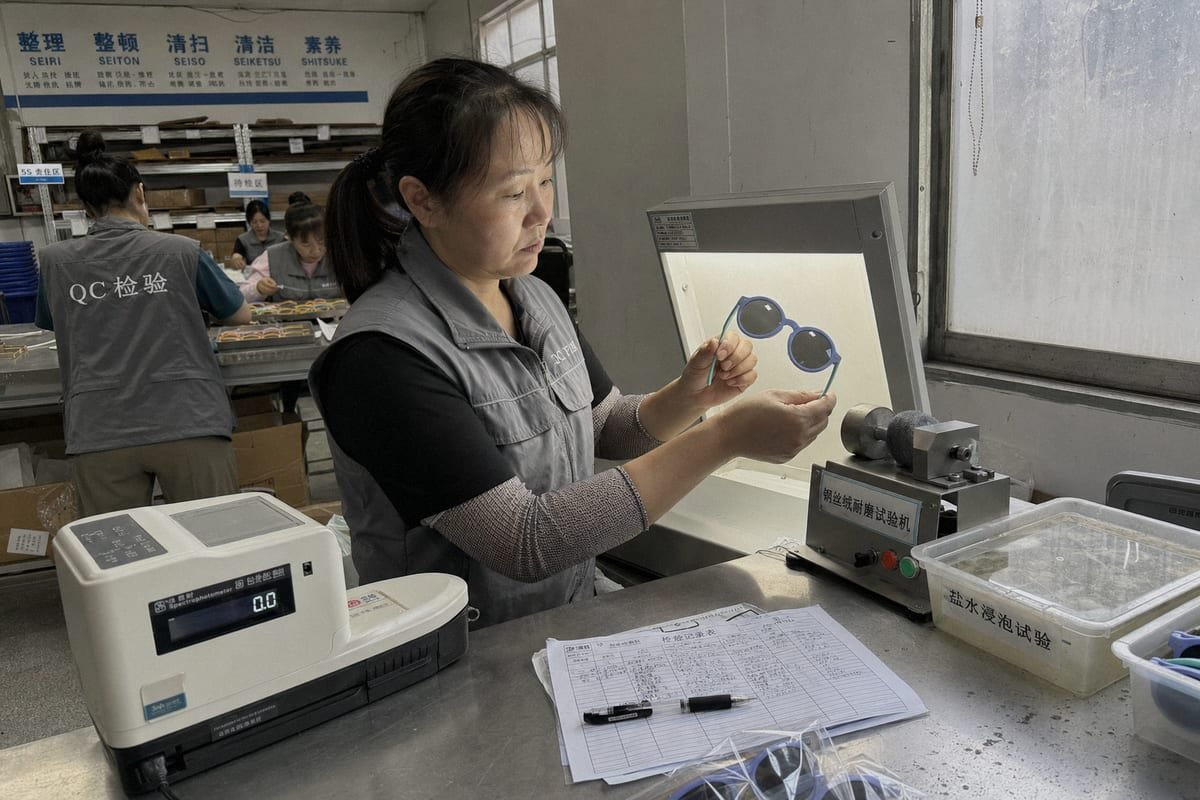
جودة الطلاء للنظارات الشمسية للأطفال هي المكان الذي رأيت فيه معظم الطلبات تسوء ISO 12312-1 1. يمكن للشحنة أن تبدو مثالية في اليوم الأول، ثم تتشقق وتتغيم وتلطخ في غضون شهر من الاستخدام الفعلي. في خط الإنتاج لدينا في تايتشو، تعلمنا مبكرًا أن الطلاء المرآتي الذي يبهر في صورة لا يعني شيئًا إذا تقشر في حقيبة الشاطئ. الحل بسيط من حيث المبدأ: توقف عن الحكم على الطلاءات بالمظهر، وابدأ في الحكم عليها بمجموعة من الاختبارات المتكررة.
لاختبار جودة الطلاء للنظارات الشمسية للأطفال، اجمع بين الفحص البصري في صندوق الإضاءة، واختبار الالتصاق بالتشابك، واختبار التآكل بالصوف الصلب أو باير، والتقادم البيئي مثل الغليان في الماء المالح والحرارة الجافة، وفحوصات مقياس الطيف الضوئي لـ UV400 ونقل الضوء المرئي. اجتياز جميع الاختبارات الخمسة يؤكد الطلاءات المتينة والآمنة.
يبدو هذا الجواب تقنيًا، لكن كل فحص سهل الفهم. أدناه، سأفصل ما يجب فحصه قبل الموافقة على البضائع بالجملة، وما هي اختبارات المختبر المهمة، وكيفية تدقيق عملية المصنع، وما هي اختبارات المتانة المناسبة للأطفال النشطين.
ما هي عيوب الطلاء التي يجب أن أبحث عنها قبل الموافقة على طلب بالجملة؟
خلال فحص ما قبل الشحن لإحدى العلامات التجارية الأوروبية للأطفال في الربيع الماضي، سحب فريق مراقبة الجودة لدينا إطارًا دائريًا بلون الباستيل من الخط واكتشف تشوشًا خفيفًا في الطلاء المرآتي لا يظهر إلا بزاوية 45 درجة. هذا الاكتشاف الواحد أنقذ الطلب بأكمله.
قبل الموافقة على طلب بالجملة، افحص العدسات تحت صندوق إضاءة بزوايا متعددة بحثًا عن الخدوش، الثقوب الدقيقة، الحواف المتقشرة، تعتيم الطلاء، ملمس قشر البرتقال، علامات الحقن، تدرجات المرآة غير المتساوية، وعدم تطابق الألوان بين العدسات. ارفض الوحدات التي تظهر انفصال الطبقات، أو الضباب، أو حدود الطلاء المرئية، وتحقق من كلا سطحي العدسة.
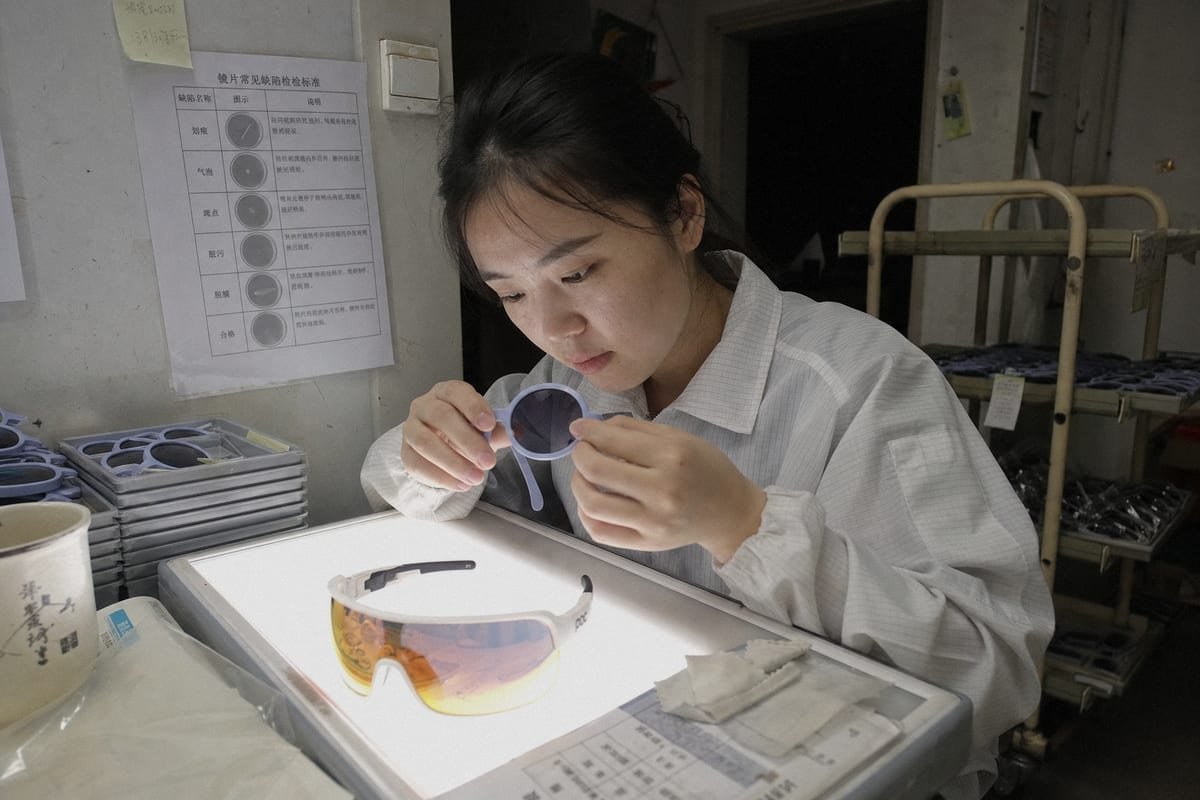
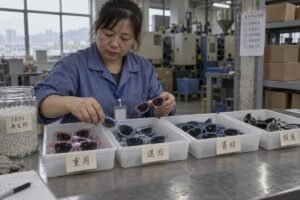
الفحص البصري هو أسرع وأرخص بوابة في سلسلة الجودة بأكملها. لكنه يعمل فقط إذا كنت تعرف ما الذي تبحث عنه. في ورشة العمل التي نديرها بنظام 5S، يقوم المفتشون بتدوير كل عدسة تحت إضاءة قوية ويفحصونها مقابل خلفية داكنة وخلفية فاتحة. تظهر العيوب المختلفة في ظل ظروف مختلفة. يظهر التشوش مقابل الخلفيات الداكنة. تظهر الثقوب الدقيقة مقابل الخلفيات الفاتحة.
قائمة التحقق من العيوب التي نستخدمها
إليك قائمة التحقق العملية التي أوصي بها للمشترين لكتابتها في تعليمات الفحص الخاصة بهم:
| عيب | ما يبدو عليه | لماذا هو مهم للأطفال |
|---|---|---|
| تقشر أو تفتت | طلاء مرتفع عند حواف العدسة | يزداد سوءًا بسرعة مع التعامل؛ يخلق تشوهات بصرية |
| ثقوب دقيقة | نقاط ساطعة صغيرة في الطلاء المرآتي | علامة على ضعف التحكم في ترسيب الفراغ |
| تشوش أو ضبابية | بقع حليبية بزاوية | يقلل الوضوح؛ مشتت لعيون الصغار |
| قشر البرتقال | نسيج سطح خشن وغير متساوٍ | يشير إلى ضعف معالجة الطلاء الصلب |
| عدم تطابق اللون | لون العدسة اليسرى واليمنى مختلف | صبغ غير متساوٍ أو خلط دفعات الطلاء |
| خطوط حدود الطلاء | حافة مرئية حيث يتوقف الطلاء | قناع غير مرتب أثناء الطلاء |
لماذا زاوية واحدة لا تكفي أبدًا
يمكن لعدسة متدرجة مرآتية، مثل عدسات الدرع البرتقالية إلى الزرقاء التي ننتجها للأنماط الرياضية، إخفاء التشوش عند النظر إليها مباشرة. لذلك نقوم دائمًا بالفحص بثلاث زوايا على الأقل. نتحقق أيضًا من الجانب الخلفي. يسبب طلاء مضاد للانعكاس على الجانب الخلفي وهجًا مرتدًا، والذي تلاحظه الأطفال أكثر من البالغين لأنهم نادرًا ما يعدلون كيفية ارتداء إطاراتهم.
أخيرًا، ضع خطة أخذ عينات AQL واضحة قبل بدء الإنتاج. اتفق على ما يعتبر عيبًا حرجًا أو رئيسيًا أو ثانويًا. المعايير الغامضة تسبب نزاعات؛ المعايير المكتوبة تمنعها.
ما هي اختبارات المعمل التي يمكنها تأكيد أداء طلاء UV400 المقاوم للخدش؟
أحد المقايضات التي نزنها باستمرار في التطوير: طلاء مضاد للخدش أكثر صلابة يقاوم التآكل بشكل أفضل، ولكن إذا تم معالجته بقوة شديدة يصبح هشًا ويتشقق تحت الانثناء. بيانات المختبر، وليس الحدس، تخبرنا أين تكمن النقطة المثلى.
جهاز قياس الطيف الضوئي يؤكد حماية UV400 عن طريق التحقق من عدم انتقال الأشعة فوق البنفسجية UVA و UVB حتى 400 نانومتر، بينما تحدد اختبارات خدش الصوف الفولاذي أو اختبار التآكل من باير متانة الطلاء المقاوم للخدش. ثم يثبت اختبار الالتصاق بالشبكة المتقاطعة أن الطلاء يبقى ملتصقًا بالعدسة.
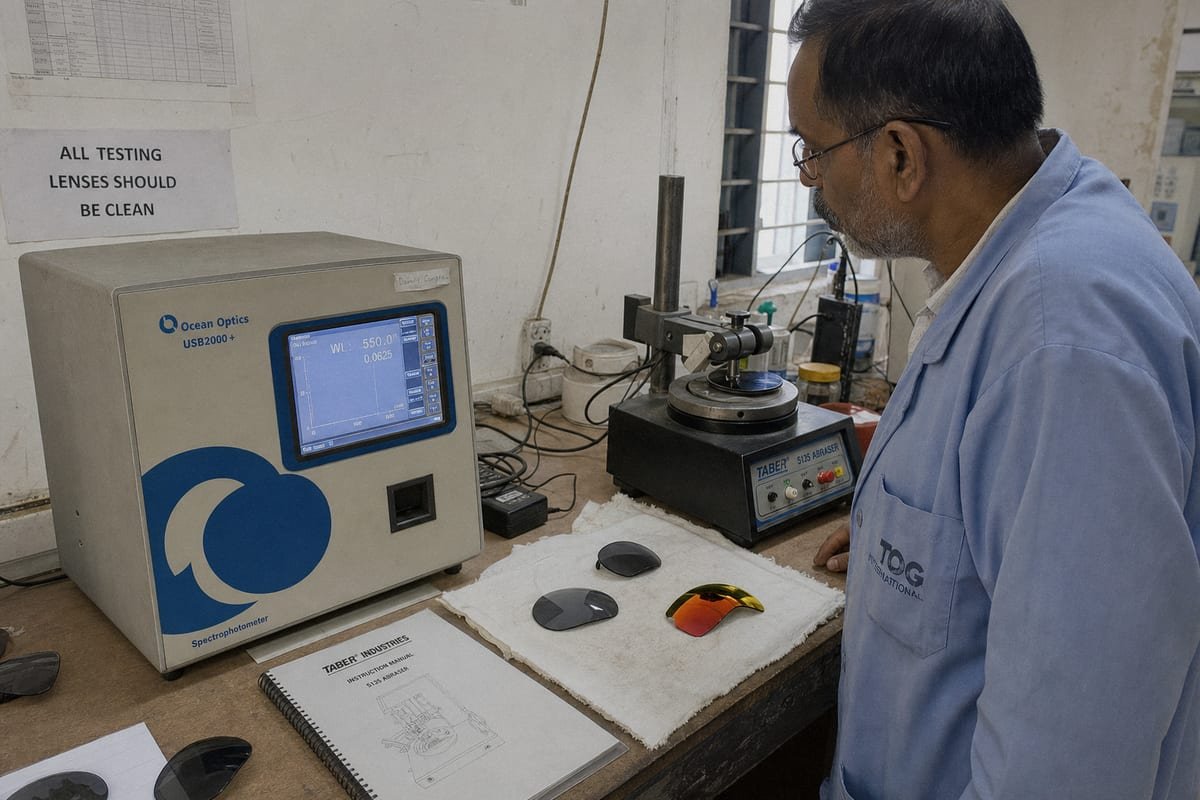
دعني أشرح كل اختبار بعبارات واضحة، لأن المشترين الذين يفهمونها يتفاوضون بشكل أفضل ويدققون بشكل أذكى.
اختبار مقياس الطيف الضوئي لـ UV400 والأداء البصري
A جهاز قياس الطيف الضوئي الخاص بنا 2 يمرر الضوء عبر العدسة ويقيس ما يمر عبر كل طول موجي. ل حماية UV400 3 المعايير، يجب أن يُظهر القراءة صفر انتقال فعال أقل من 400 نانومتر. يقيس نفس الجهاز نقل الضوء المرئي، والذي يحدد فئة العدسة وما إذا كانت النظارات الشمسية آمنة للاستخدام من قبل المراهقين في سن القيادة أو الأطفال الصغار في ضوء الشمس الساطع. كما يقيس الانعكاس، والذي يخبرك ما إذا كان الطلاء المضاد للانعكاس يقلل الوهج بالفعل أم أنه يدعي ذلك فقط.
اختبار التآكل والخدش
تهيمن طريقتان. يفرك اختبار الصوف الصلب وسادة قياسية عبر الطلاء تحت ضغط ثابت لعدد محدد من الدورات، ثم يصنف الخدش. يهز اختبار التآكل باير العدسة في وسط كاشط ويقارن زيادة الضباب بنسبة مرجعية غير مطلية. يعطي باير نسبة رقمية، مما يجعل مقارنة مستويات مقاومة التآكل بين الموردين أمرًا سهلاً.
| اختبار | ما يقيسه | الاستخدام النموذجي |
|---|---|---|
| مقياس الطيف الضوئي | قطع الأشعة فوق البنفسجية، نقل الضوء المرئي، الانعكاس | UV400 والتحقق البصري |
| أقمشة تنظيف خشنة، أكمام | مقاومة خدش السطح | فحص سريع لصلابة الطلاء |
| اختبار باير للتآكل | زيادة الضباب مقابل العدسة المرجعية | متانة مقاومة الخدش المقاسة |
| اختبار الشريط المتصالب | التصاق الطلاء بالركيزة | خطر التقشر |
| قياس الألوان | تشويه اللون عبر العدسة | فحوصات إشارات المرور ودقة الألوان |
الالتصاق: الاختبار الذي ينساه المشترون
يعد اختبار الالتصاق المتصالب بسيطًا. يقوم شفرة بقطع شبكة من الشقوق الدقيقة عبر الطلاء. يتم الضغط على شريط لاصق وإزالته. إذا انفصلت مربعات الطلاء مع الشريط، فإن الرابط ضعيف. في تجربتنا، يتنبأ هذا الاختبار الفردي بشكاوى التقشير الميدانية بشكل أفضل من أي اختبار آخر. إنه يفصل تآكل السطح، وهو أمر طبيعي، عن التقشر، وهو فشل في العملية. بالنسبة لخيارات العدسات المستقطبة، نتحقق أيضًا من كفاءة الاستقطاب بعد الطلاء، لأن بعض عمليات الطلاء يمكن أن تقلل من جودة الفيلم المستقطب الموجود تحته.
كيف أعرف ما إذا كانت عملية الطلاء في المصنع تلبي معايير السلامة الدولية؟
سألني مدير مشتريات من أستراليا ذات مرة سؤالًا أحببته: "لا تعرض علي شهاداتك - بل أرني من أين أتت." لقد قمنا بإرشادها خلال عملية الطلاء ومراقبة الجودة خطوة بخطوة، وأدى هذا الشفافية إلى إغلاق الشراكة.
مصنع يفي بالمعايير الدولية عندما تجتاز عدساته المطلية اختبارات جهة خارجية وفقًا لمعايير ISO 12312-1 و ANSI Z80.3، بما في ذلك حدود انتقال الأشعة فوق البنفسجية، واختبارات مقاومة الصدمات عند سقوط الكرة، ومتطلبات الوضوح البصري، وعندما يمكن للمصنع إظهار ضوابط موثقة أثناء العملية، وإمكانية تتبع الدُفعات، وتقارير اختبار صالحة حديثة.
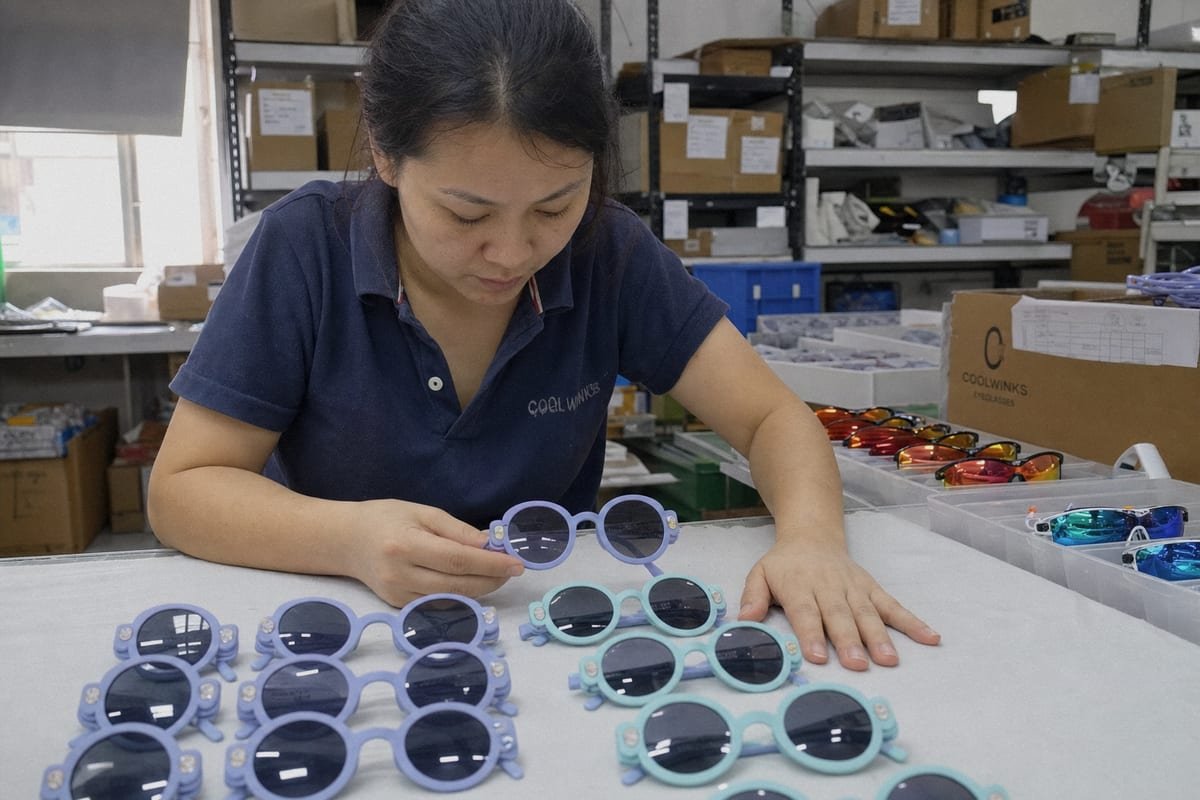
الامتثال للمعايير ليس ملصقًا. إنها عملية يمكنك تدقيقها. إليك كيف أقترح على المشترين التحقق منها، بناءً على ما يتحقق منه العملاء الجادون عند زيارة مصنعنا.
المعياران الأكثر أهمية
ISO 12312-1 4 يحكم الامتثال النظارات الشمسية المباعة في أوروبا ومعظم دول آسيا والمحيط الهادئ. ويشمل انتقال الأشعة فوق البنفسجية، وفئات انتقال الضوء المرئي، وقوة الانكسار، والمتانة. ANSI Z80.3 هو المكافئ الأمريكي ويتضمن اختبار الكرة الساقطة 5, ، حيث يتم إسقاط كرة فولاذية على العدسة للتأكد من أنها لن تتكسر. بالنسبة لمنتجات الأطفال، يعد اختبار مقاومة الصدمات أمرًا ضروريًا. عدسة البولي كربونات 6 الجودة مهمة هنا: يمتص البولي كربونات الصدمات بشكل أفضل بكثير من الأكريليك، وهو أحد الأسباب التي تجعلنا نحدده لأنماط الأطفال النشطين.
قائمة تدقيق عملية
- اطلب تقارير الاختبار الصادرة في الأشهر الاثني عشر الماضية من مختبر طرف ثالث معترف به، مطابقة لمواصفات العدسة والطلاء الدقيقة التي تطلبها.
- اطلب مخطط تدفق عملية الطلاء. يمكن للمصنع الماهر شرح خطوات التنظيف، والغمس أو الرش بالطلاء الصلب، والمعالجة، والترسيب الفراغي دون تردد.
- تحقق من سجلات مراقبة الجودة أثناء العملية. يجب تسجيل سمك الطلاء ودرجة حرارة المعالجة وفحوصات الالتصاق لكل دفعة، وليس لكل موسم.
- تحقق من إمكانية تتبع الدُفعات. إذا ظهر عيب في الطلاء، يجب على المصنع تتبعه إلى تاريخ الإنتاج ودورة الطلاء.
- تأكيد وثائق السلامة الكيميائية لمواد الإطار والطلاء، حيث يضع الأطفال النظارات الشمسية في أفواههم ويتعاملون معها باستمرار.
نقوم أيضًا بإجراء اختبار تآكل رذاذ الملح 7 دورات على مكونات المفصلات المعدنية، لأن برغي المفصلة الصدئ بجوار صدغ الطفل يمثل مشكلة تتعلق بالسلامة لا يفكر فيها أحد حتى تحدث. عندما يتطوع المصنع بهذا المستوى من التفاصيل، فإنه يشير عادةً إلى ثقافة جودة حقيقية بدلاً من مسرحية ورقية.
ما هي اختبارات متانة الطلاء التي يجب أن أطلبها للاستخدام النشط اليومي للأطفال؟
علمتنا سنوات من ملاحظات الضمان درسًا قاسيًا: مواصفات متانة البالغين ليست كافية للأطفال. تعيش النظارات الشمسية للأطفال في حقائب الظهر الرملية، والسيارات الساخنة، وحمامات السباحة المكلورة، والأيدي الصغيرة المتعرقة. تتكيف إطارات TPEE و TR90 الخاصة بنا للبقاء على قيد الحياة من هذا الإساءة، ويجب أن تواكب طلاءات العدسات ذلك.
طلب اختبارات التقادم البيئي: غليان الماء المالح، والتعرض للحرارة الجافة، ودورات درجة الحرارة والرطوبة، والتقادم بالأشعة فوق البنفسجية المتسارع بقوس الزينون، يتبع كل منها بفحوصات التصاق وإعادة فحص بصري. أضف مقاومة العرق واللعاب، واختبارات كارهة للماء لدورة المسح، وفحوصات الالتصاق بعد الانثناء لمحاكاة الاستخدام الفعلي والنشط للأطفال.

الفكرة الأساسية هي الإجهاد ثم التحقق. أي طلاء يجتاز اختبار الشريط عندما يكون طازجًا. السؤال هو ما إذا كان لا يزال يجتاز بعد أشهر محاكاة من الإساءة. لهذا السبب يجب أن يتبع كل اختبار بيئي اختبار التصاق متصالب متكرر وفحص بصري للتكسير، وهو التشقق الدقيق الذي يظهر عندما تتمدد الطلاءات وتنكمش بمعدلات مختلفة عن العدسة.
مطابقة الاختبارات لسيناريوهات الأطفال الحقيقية
| سيناريو واقعي | اختبار معملي لطلبه | علامة الفشل |
|---|---|---|
| النظارات الشمسية المتروكة في سيارة ساخنة | اختبار الحرارة الجافة، ثم إعادة فحص الالتصاق | تكسير، فقاعات، رفع الحواف |
| أيام الشاطئ وحمامات السباحة | اختبار الغليان بالماء المالح | تعتيم الطلاء، تقشر |
| سنوات من التعرض للشمس | شيخوخة متسارعة بقوس الزينون | انحراف قطع الأشعة فوق البنفسجية، بهتان اللون |
| الوجوه المتعرقة، وضع الإطارات في الفم | اختبار العرق واللعاب الاصطناعي | تغير اللون، تسرب المواد الكيميائية |
| تنظيف حافة القميص اليومي | اختبار دورة المسح بالإضافة إلى زاوية التلامس | فقدان مقاومة البقع |
| انحناء الإطار والقطرات | دورة الانثناء، ثم اختبار الالتصاق | تشققات الطلاء بالقرب من حافة العدسة |
الاختبارات التي يتخطاها المشترون في أغلب الأحيان
يستحق اختباران ذكراً خاصاً. أولاً، قياس زاوية التلامس الكارهة للماء قبل وبعد عدة آلاف من دورات المسح. البقع هي الشكوى اليومية الأولى من الآباء، وطبقة سهلة التنظيف تموت بعد أسبوعين من التنظيف أسوأ من عدم وجودها، لأنها كانت نقطة بيع على العبوة. ثانياً، فحوصات الالتصاق بعد الانثناء. الإطارات المرنة رائعة للسلامة، لكنها تنقل الإجهاد إلى حافة العدسة. على خط الإنتاج الخاص بنا، نقوم بتدوير الإطارات المجمعة ثم نعيد اختبار التصاق الطلاء عند حافة العدسة، حيث تبدأ الشقوق. عند كتابة خطة الاختبار الخاصة بك، فإن التسلسل مهم: العمر أولاً، الإجهاد ثانياً، التحقق ثالثاً. تقرير المتانة الذي يتخطى خطوة إعادة التحقق لا يخبرك بشيء تقريباً.
الخلاصة
جودة الطلاء هي مجموعة من الاختبارات، وليست مظهراً. افحص بصرياً، وتحقق من الالتصاق والتآكل،, تأكيد UV400 بواسطة الأداة, ، والتقادم قبل الموافقة. اطلب هذه الصرامة، وستكسب نظارات أطفالك الشمسية ثقة الآباء.
ملاحظات ختامية
صفحة معيار ISO الرسمي تتحقق من متطلبات سلامة النظارات الشمسية الدقيقة المشار إليها. ↩︎
يوفر NIST خلفية موثوقة حول أدوات القياس البصري المستخدمة في اختبار الأشعة فوق البنفسجية.
مقالات أخرى قد تعجبك


هل تبحث عن شريك موثوق به للنظارات للأطفال؟
استكشف أكثر من 800 نمط جاهز ودعم OEM/ODM كامل مصمم خصيصًا لعلامتك التجارية.
اتصل بنا English
  Español de México
  Deutsch
  Français
  日本語
日本語  العربية
  Português do Brasil