How to Negotiate After-Sales Warranty Terms for Kids’ Sunglasses with Suppliers?
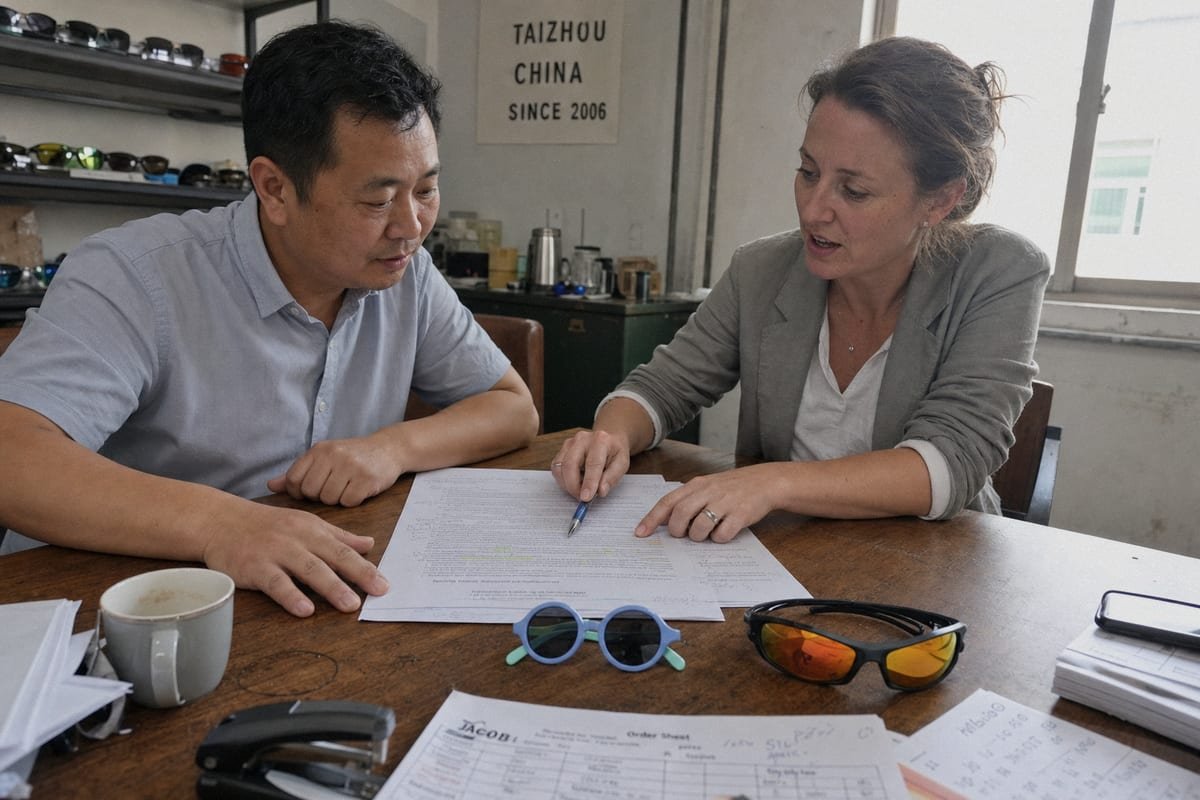
Negotiating after-sales warranty terms for kids’ sunglasses is where I see buyers lose the most money. On our production line in Taizhou, weak warranty wording turns small defects into big disputes — and one bad batch can sink a launch.
To negotiate after-sales warranty terms for kids’ sunglasses, define covered defects precisely, start the warranty at retail sale rather than shipment, narrow exclusions to provable misuse, agree on photo-based claims with 48–72 hour response times, and set a batch failure trigger for shipment-wide defects.
That single sentence hides a lot of moving parts. Below, I break each part down, using what we see every week when brands from Australia, Japan, and Europe negotiate terms with us.
What Warranty Terms Should I Expect from a Reliable Kids' Sunglasses Manufacturer?
A buyer from a European baby brand once told me she had signed a warranty that covered "all defects" — and then discovered it covered almost nothing. We rewrote it together in our showroom, term by term.
A reliable kids' sunglasses manufacturer should offer at least 12 months of coverage on frame hinges, lens coatings, and material delamination, a clear replacement policy for manufacturing defects, defined exclusions for abuse, and a stated defective rate allowance with batch testing reports available on request.
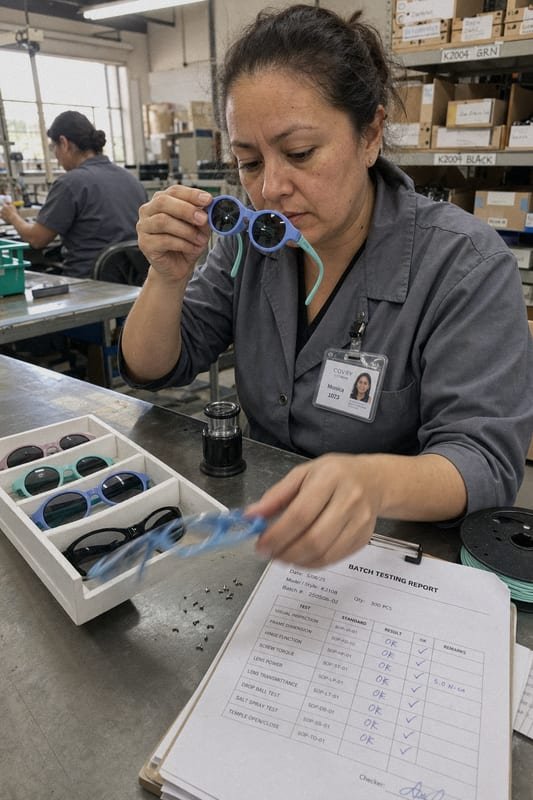
A children's eyewear warranty is not a fashion accessory warranty. It is a small-batch consumer product quality agreement. Kids drop glasses, sit on them, and chew on temple tips. So the terms must separate what the factory controls from what the child does. In our fifteen years making TR90 and TPEE frames, the disputes almost always cluster around five failure points: frame cracking, hinge failure, lens scratching, coating delamination, and UV-protection nonconformance. Your warranty should name each one.
The Four Dials Every Supplier Can Adjust
Suppliers rarely say a flat yes or no. Instead, they trade across four dials. Understand them, and you can negotiate instead of argue.
| Dial | What It Controls | Strong Buyer Position |
|---|---|---|
| Aktuelle Produktionscharge | Which parts and failures are covered | Frames, hinges, screws, lens coatings, cases, straps |
| Dauer | How long coverage lasts | Minimum 12 months from retail sale |
| Ausschlüsse | What voids a claim | Only provable misuse or modification |
| Claim process | How claims are filed and paid | Photo evidence, credit or replacement, fast deadlines |
Tie the Warranty to the Product Promise
If a supplier markets flexible TR90-Rahmen 1 und Aufprallschutzprüfung 2 on lenses, the warranty should reflect that promise. When we quote UV400 or polarized lens options, we expect buyers to ask for coating durability coverage — and we can back it with batch testing reports. A supplier who claims durability but refuses to warrant it is telling you something. Also confirm the supplier holds Produkt-Haftpflichtversicherung 3 and can provide CPSIA compliance certification 4 for your market. A warranty without regulatory backing is only half a safety net.
How Do I Handle Defect Claims and Returns Without Delaying My Product Launch?
Timing pressure is the trade-off I weigh most often with new brand clients. A slow claims process during launch week can cost more than the defective units themselves — in reviews, refunds, and retailer trust.
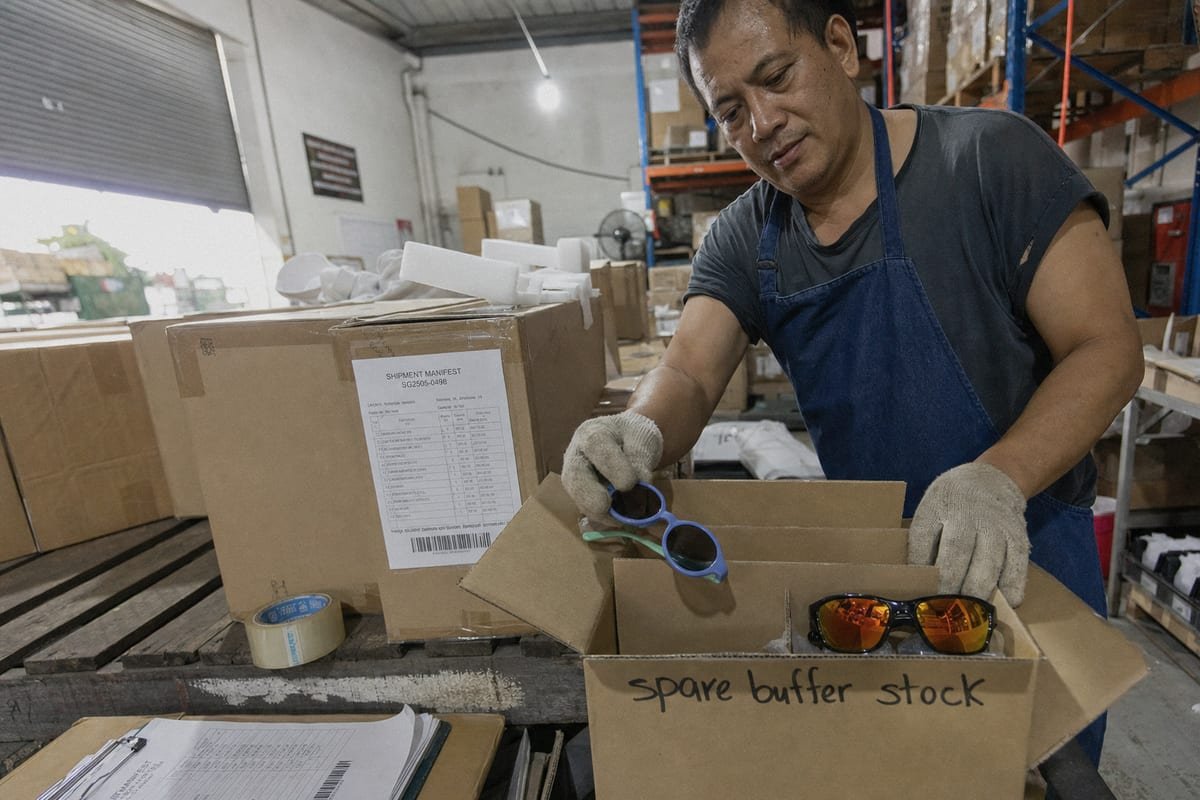
Handle defect claims without launch delays by agreeing on photo or video evidence instead of physical returns, a 48–72 hour claim response SLA, credit or replacement as the default remedy, and a 3–5% spare parts provision or buffer stock shipped with every order.
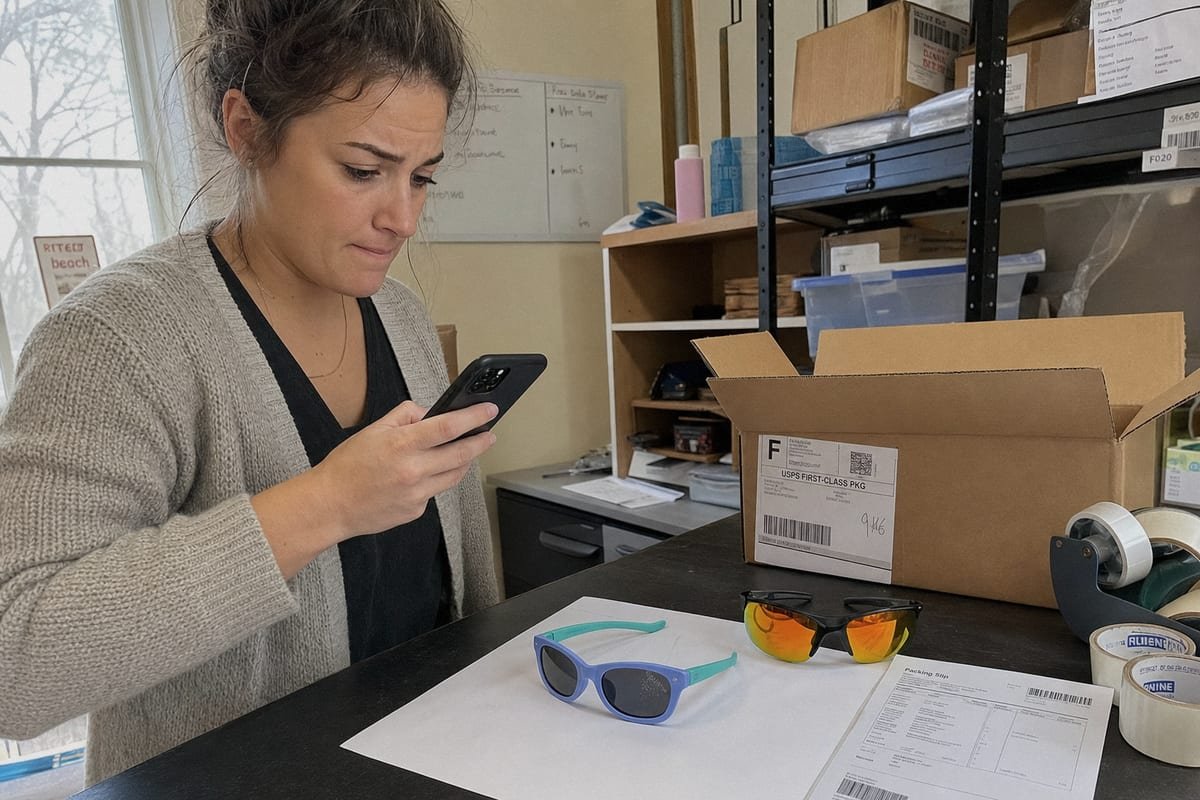
Shipping a broken pair of kids' sunglasses back to China can cost more than the unit itself. That is why the smartest buyers negotiate an evidence protocol upfront. Digital photos or short videos should be sufficient proof for low-value claims. We accept photo-based claims for most of our overseas clients, and it removes weeks of dead time from the process.
A Practical Claims Workflow
Here is the numbered process we recommend writing into the agreement:
- Buyer documents the defect with photos or video within an agreed window.
- Buyer submits the claim with batch number and order reference.
- Supplier approves or rejects within 48–72 hours under a written SLA.
- Approved claims are settled by replacement in the next shipment or credit on the next order.
- Defective units are destroyed locally or held as samples — not shipped back.
The After-Sales Buffer
The single best launch protection is an after-sales buffer: 3–5% extra stock included in every shipment. Your customer service team can replace a broken pair the same day, with no claim paperwork, and you reconcile totals with the supplier quarterly. Return shipping liability should also be assigned in writing. If physical returns are ever required — say, for a suspected batch-wide issue — the supplier should cover freight for confirmed manufacturing defects. Never leave this cost ambiguous, because ambiguity always favors whoever is holding the money.
What Questions Should I Ask Before Signing a Supplier's Warranty Agreement?
The hardest lesson I learned early in our export business was that the questions buyers do not ask cost them the most. One importer skipped a single question about the warranty start date — and lost four months of coverage to shelf time.
Before signing, ask when the warranty clock starts, what the defective rate allowance is, whether claims can be batch-level, who pays return shipping, what evidence is required, whether coverage transfers through your distribution channel, and whether third-party quality inspection is permitted pre-shipment.
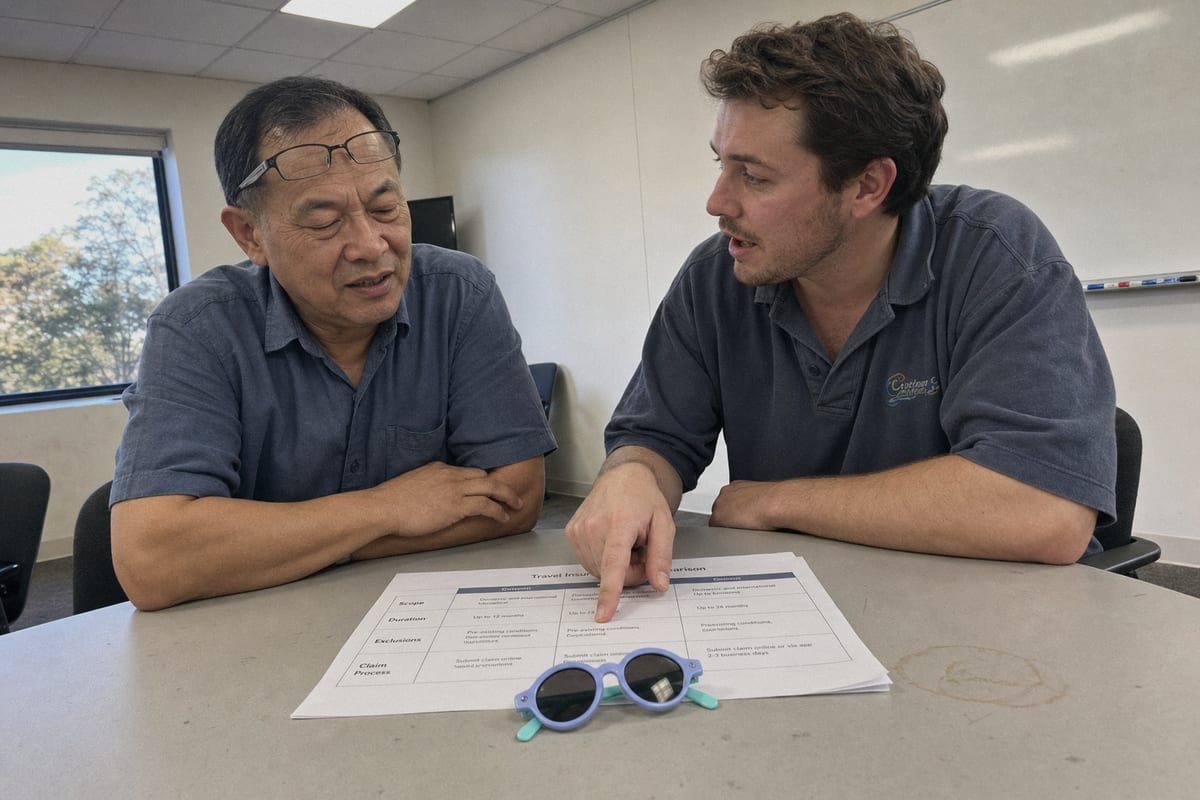
The start-date question deserves the most attention. Many contracts start the warranty at factory shipment. But your goods spend weeks at sea, more weeks in a warehouse, and months on a retail shelf. A 12-month warranty starting at shipment can leave the end customer with only three or four usable months. Push for the clock to start at retail sale or receipt by the end customer. If the supplier resists, a compromise is delivery to your warehouse plus an extended total period.
Questions That Expose Weak Agreements
| Frage | Warum es wichtig ist | Rote-Flaggen-Antwort |
|---|---|---|
| When does the warranty clock start? | Channel delay eats coverage | "At factory shipment" |
| What is the defective rate allowance? | Sets the threshold for claims | "We don't track defect rates" |
| Are batch-level claims allowed? | One shipment-wide flaw shouldn't need 500 claims | "Each unit individually" |
| Who pays return shipping liability? | Freight can exceed unit value | "Buyer pays all freight" |
| Can I run third-party quality inspection? | Independent verification before shipment | "Nicht notwendig" |
| Does coverage transfer to retailers and end customers? | Channel structure affects usable time | "Original buyer only" |
| Do you carry product liability insurance? | Protects your brand from downstream risk | Silence or vagueness |
Documentation Before Signing
Ask for material specs, impact resistance testing results, and recent batch testing reports. In markets like the United States, confirm CPSIA compliance certification and, where lenses are involved, FDA-Registrierung 5 for eyewear as an impact-resistant device category. We keep these documents ready for our clients precisely because serious buyers always ask. If a supplier cannot produce them quickly, the warranty behind them is probably just as thin.
How Can I Protect My Brand When Negotiating Warranty Coverage for Children's Eyewear?
When we developed our TR90 frames with TPEE temples, a Japanese kids' brand pushed us hard on one point: their brand name would be on the box, so their reputation carried every claim we might reject. They were right to push.
Protect your brand by negotiating a batch failure trigger above a 5% defect rate, narrowing exclusions to provable abuse, adding a regulatory evolution clause for changing children's safety standards, confirming product liability insurance, and trading value — forecasts, volume, clean evidence — for stronger terms.
Your customers do not know your supplier. They know your logo. So warranty negotiation is really brand-risk negotiation. The supplier's classic pushback is that children's eyewear invites misuse, so broad coverage would flood them with claims. The counter is simple: exclude genuine abuse, but cover defects that appear during ordinary child use, because ordinary child use is exactly what the supplier designs and manufactures for. A kids' frame that cracks when a kid wears it is a design failure, not a customer failure.
Trade Value Instead of Just Demanding More
Suppliers move furthest when you offer something back. Here is what each side can concede:
| You Offer | Supplier Offers in Return |
|---|---|
| Longer forecast visibility | Extended warranty duration |
| Clean, standardized claim evidence | Faster credit settlement |
| Larger or repeat order commitments | Lower defective rate allowance threshold |
| Accepting a paid extended plan on select SKUs | Free base coverage on core failure points |
Clauses That Shield the Brand Itself
Three clauses matter most for children's products. First, the batch failure trigger: if defects exceed 5% in one shipment, the supplier replaces the batch, not units one by one. Second, the regulatory evolution clause: if children's material standards — lead limits 6, BPA rules 7 — change during the warranty period, nonconforming stock gets replaced. Third, a clear replacement policy for manufacturing defects that names remedies and deadlines. Some buyers now also negotiate a sustainability buy-back, where broken frames returned for material recycling earn a small per-unit credit. It signals shared responsibility, and it plays well with eco-conscious parents.
Schlussfolgerung
Weak warranty terms turn every defect into a dispute. Negotiate scope, start date, exclusions, and claims process precisely — and document everything before you sign.
Fußnoten
1. TR90 is a nylon-based polymer; background reference clarifies the material used in frames. ↩︎
2. Standard governing impact resistance testing for eyewear, supporting the documentation requirement. ↩︎
3. Background concept explaining supplier liability coverage referenced as a negotiation point. ↩︎
4. Official U.S. regulation governing children’s product safety compliance referenced in the article. ↩︎
5. Official FDA guide for medical device establishment registration and product listing procedures. ↩︎
6. CPSC guidance on lead content limits in children’s products, matching the regulatory clause discussed. ↩︎
7. FDA’s official page on BPA regulation, directly tied to the material standards mentioned. ↩︎
Weitere Artikel, die Ihnen gefallen könnten



Auf der Suche nach einem zuverlässigen Partner für Kinderbrillen?
Entdecken Sie über 800 sofort verfügbare Modelle und umfassenden OEM/ODM-Support, der auf Ihre Marke zugeschnitten ist.
Kontakt aufnehmen English
  Español de México
  Deutsch
  Français
  日本語
日本語  العربية
  Português do Brasil