How to Ask Suppliers for Replacement Parts and After-Sales Support for Kids’ Sunglasses?
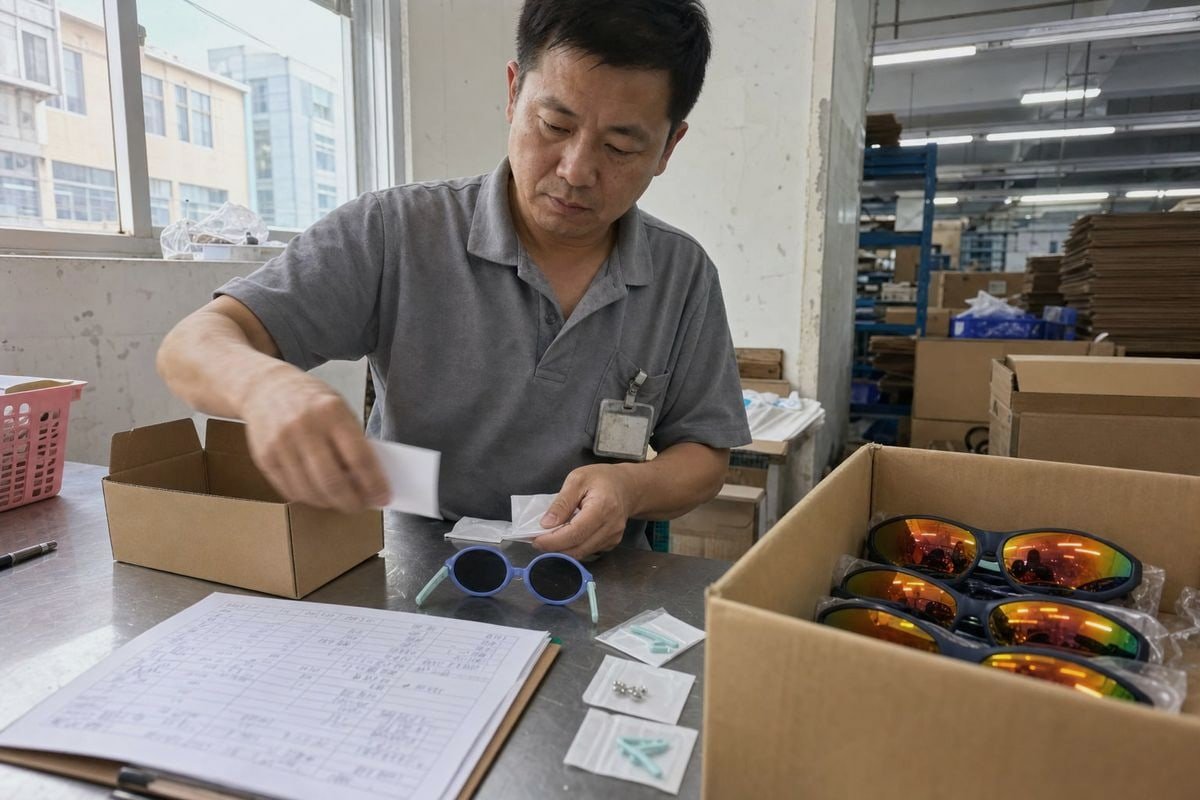
Requesting replacement parts and after-sales support for kids’ sunglasses feels awkward for many buyers BPA-free and lead-free components 1. In our Taizhou factory, we see vague requests stall orders, frustrate parents, and quietly damage brand reputations every season.
Ask suppliers for replacement parts and after-sales support by sending a short, specific request that includes the exact model number, the part needed, purchase details, defect photos, and safety documentation questions. Confirm warranty terms, spare-part availability, lead times, and response-time commitments before placing any bulk order.
That is the short answer. Below, I will break it down step by step, from choosing the right spare parts to locking after-sales terms into your contract.
What Replacement Parts Should I Request to Extend My Kids' Sunglasses' Lifespan?
Last spring, a European buyer asked us for "some extra bits" with her order. Our team spent three emails just figuring out which bits. Specific part names would have saved everyone a week.
Request nose pads, hinge screws, temple arms, temple tips, and spare lenses as your core replacement parts. Children damage these components most often through drops, twisting, and rough handling. Ask for a small spare-parts kit bundled with your bulk order to reduce future after-sales requests.
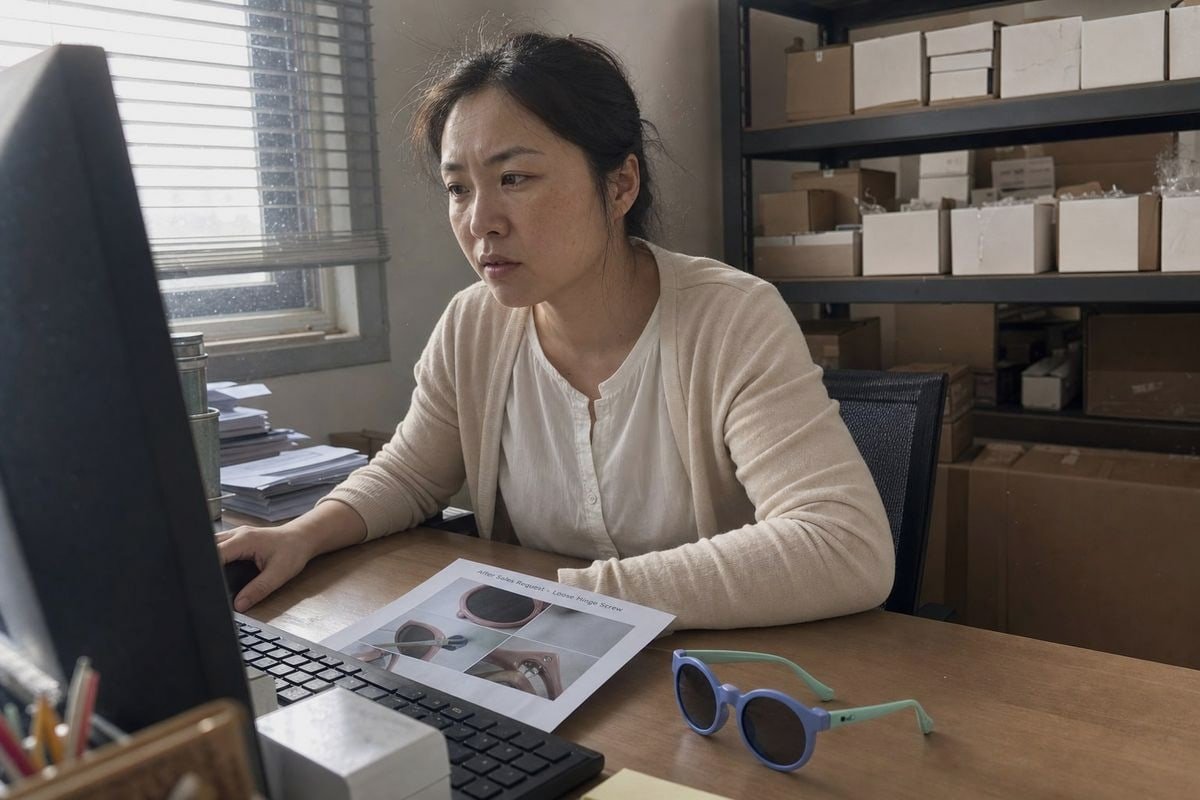
Kids' sunglasses fail in predictable ways. After fifteen years of making Brillen für Kinder 2, we can almost rank the failure points before a sample even ships. Children sit on frames. They pull temples outward. They drop sunglasses lens-first onto playgrounds. So your spare-parts strategy should match real-world wear, not guesswork.
The Most Common Failure Points
Flexible materials change the picture. Our TR90-Rahmen 3 with TPEE temples bend instead of snapping, so buyers who source flexible frames order fewer replacement temples. But small hardware still wears out. Screws loosen with daily folding. Rubberized temple tips, like the grip tips on sport wraparound styles, can slide off after months of sweaty use.
Here is how we rank the parts worth stocking:
| Replacement Part | Failure Frequency | Why It Fails | Worth Stocking? |
|---|---|---|---|
| Scharnierschrauben | Sehr hoch | Loosen with repeated folding | Ja, immer |
| Nasenpads | Hoch | Sweat, sunscreen, and pulling | Ja |
| Bügelenden | Hoch | Kids chew or tug them | Ja |
| Gläser | Mittel | Scratches from drops | Yes, for premium lines |
| Bügel | Mittel | Twisting and sitting on frames | Only for rigid frames |
| Cases and straps | Niedrig | Lost more than broken | Optional |
Ask for a Spare-Parts Kit Upfront
The smartest buyers we work with negotiate a standing spare-parts kit with the initial bulk order. A small bag of extra screws, nose pads, and temple tips per hundred units costs very little at production time. Ordering the same parts later, in a separate shipment, costs far more in freight and delay. One request line in your purchase order solves months of future headaches.
How Do I Approach a Supplier for After-Sales Support Without Delaying My Order?
A distributor in Japan once sent us a single photo, a model code, and one sentence: "Fifty units need this hinge screw." We shipped replacements with his next order. No back-and-forth, no delay.
Send one structured message containing your order number, exact model and color code, the specific part needed, clear defect photos, and your requested resolution. Specific requests let suppliers act immediately, while vague complaints trigger slow clarification emails that delay both support and production.
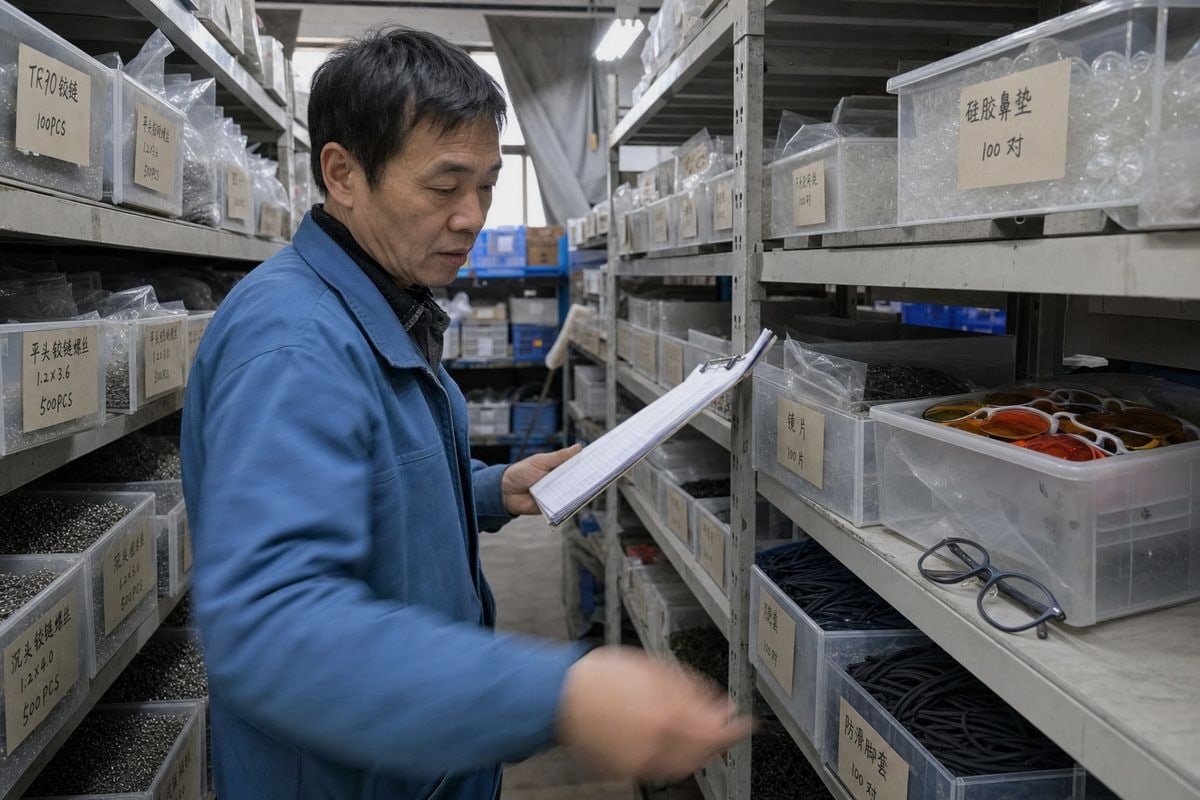
Speed depends on you as much as the supplier. When our sales team receives a complete request, we can check stock, confirm pricing, and reply the same day. When we receive "some glasses broke, can you help?", we must ask which style, which batch, which part, and how many. Each question adds a day. With 800 existing styles in our catalog, "the blue round ones" could mean thirty different frames.
Write the Request Like a Purchase Order
Structure beats politeness alone. A good after-sales message answers five questions in one pass: what product, what part, how many, what proof, and what outcome you want.
Here is a template our fastest buyers use:
- Subject line: Replacement part request — kids' sunglasses model [code], PO [number]
- Intro: One sentence stating who you are and which order this concerns.
- Product details: Model number, color code, size, and batch or lot number.
- Part needed: Exact component and quantity.
- Evidence: Photos or a short video of the defect.
- Questions: Availability, unit price, lead time, shipping cost, and warranty status.
- Closing: Your deadline and contact details.
Where to Find the Model Information
Most eyewear carries a model code printed inside the temple arm. Ask your supplier where they mark it before your first shipment arrives. For recurring or pattern defects, request a video call with the supplier's QC team 4 instead of trading photos for weeks. We do these calls from our workshop floor, and a ten-minute inspection on camera usually resolves what twenty emails cannot.
What Warranty and Support Terms Should I Confirm Before Placing a Bulk Order?
Early in my export career, I watched a buyer discover — after shipment — that his contract said nothing about defect thresholds. He absorbed the whole cost. That lesson shaped how we now draft every proforma invoice.
Confirm the defect rate threshold, warranty period, who pays replacement shipping, proof-of-purchase requirements, and a written response-time SLA before ordering. Also verify safety compliance documents like CPSIA, EN71, and UV400 test reports, since replacement parts must preserve certification for children's products.
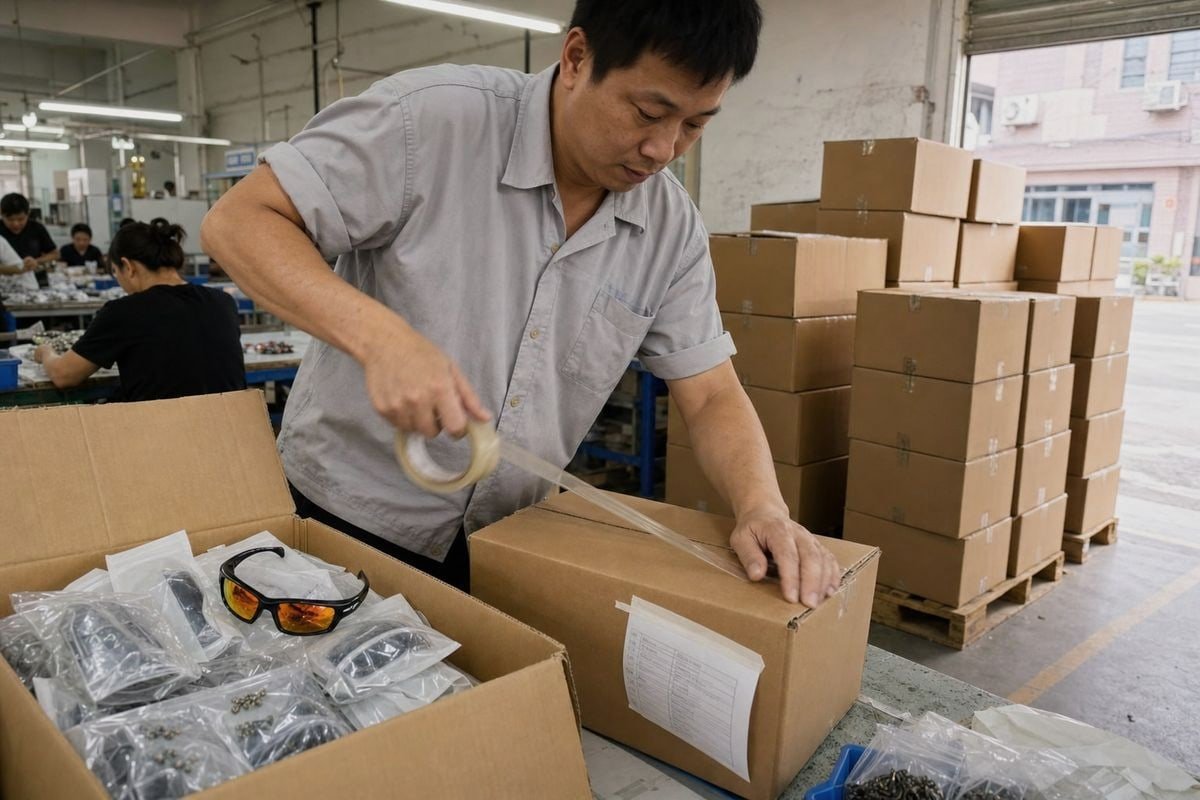
Warranty terms only protect you if they exist in writing. Verbal assurances feel reassuring during negotiation, but they vanish when a claim arrives. So put every after-sales term into the purchase order or contract, not just the email thread.
Warranty Claim vs. Paid Spare Part
Buyers often confuse two different requests. A warranty claim 5 covers manufacturing defects and requires proof of purchase plus defect evidence. A paid spare-parts order covers normal wear and only requires model details plus payment. Know which one you are making before you write, because suppliers process them through different channels.
| Term to Confirm | Was zu fragen ist | Warum es wichtig ist |
|---|---|---|
| Defect rate threshold | What percentage of defects triggers free replacement? | Defines when the supplier pays, not you |
| Warranty period | How long after delivery are claims accepted? | Kids' products get returned months after retail sale |
| Shipping responsibility | Who pays freight on replacement parts? | Small parts can carry big courier costs |
| Response SLA | Will you commit to a 48–72 hour reply time in writing? | Enforces accountability during disputes |
| Compliance continuity | Do replacement parts keep CPSIA/EN71/UV400 compliance? | Non-compliant parts void your legal protection |
| Spare-part MOQ | Is there a minimum quantity for spare-part orders? | Affects your after-sales cost model |
Safety Documentation Is Non-Negotiable
Children's eyewear carries extra obligations. Ask for written UV400-Prüfberichte 6, material declarations covering BPA-free and lead-free components, and small-parts inspection procedures for choking hazards. When a defect touches safety — a loose hinge, a cracked lens — referencing these certificates in your claim usually accelerates the supplier's response, because compliance failures carry real consequences for both sides.
How Can I Choose a Manufacturer That Offers Reliable Long-Term After-Sales Service?
One question separates our serious buyers from casual ones during factory visits: they ask to see how we track spare parts across our 800 styles, not just our showroom. Systems reveal more than samples do.
Choose a manufacturer with a documented spare-parts catalog, written warranty terms, fast structured responses to test inquiries, verifiable safety certifications, and factory-direct production. Test them before ordering by requesting a sample part quote and measuring their response speed and completeness.
After-sales reliability is built into how a factory operates, long before your first claim. A trader reselling from multiple workshops cannot guarantee that the hinge screw on your reorder matches the one from last year. A factory that molds its own frames can. That is why we keep component records for every style in our catalog — when a buyer in Australia needs temple tips for a frame she ordered two years ago, we pull the exact spec, not a lookalike.
Test the Supplier Before You Commit
You can audit after-sales quality with a simple pre-order test. Send a detailed spare-part inquiry for one of their existing models. Then score the reply.
| Signal | Strong Supplier | Weak Supplier |
|---|---|---|
| Reaktionszeit | Within 24–48 hours | A week or silence |
| Part identification | Asks for model and color code systematically | Guesses or asks vague questions |
| Dokumentation | Shares warranty terms and test reports in writing | Offers verbal promises only |
| Spare-parts channel | Has a catalog or clear service process | No process, handles ad hoc |
| Compliance | Provides CPSIA/EN71/UV400 reports on request | Deflects or delays |
Red Flags That Predict Future Pain
Watch for suppliers who cannot explain their own model numbering, who refuse to share Konformitätsdokumente 7 for children's products, or who answer "no problem" to every question without specifics. These behaviors predict exactly how they will handle your first real defect claim. In our experience exporting to buyers in more than twenty countries, the suppliers who document everything upfront are the ones still answering emails five years later. Long-term partnership, not the lowest unit price, is what keeps your after-sales costs predictable.
Schlussfolgerung
Vague requests waste weeks and money. Ask like a buyer, document like a warranty claimant, and verify like a parent — then your supplier can actually deliver reliable support.
Fußnoten
1. FDA outlines safety concerns around BPA and lead in consumer products for children. ↩︎
2. CDC provides guidance on children’s vision health and eyewear safety. ↩︎
3. TR90 is a nylon-based co-polymer; background on this common eyewear material. ↩︎
4. Explains quality control processes referenced when suppliers inspect defective parts. ↩︎
5. Background on warranty concepts underlying manufacturer defect claims discussed here. ↩︎
6. WHO explains UV radiation risks that justify UV400 sunglasses testing requirements. ↩︎
7. CPSC details required safety certification documents for children’s products sold in the US. ↩︎
Weitere Artikel, die Ihnen gefallen könnten

Auf der Suche nach einem zuverlässigen Partner für Kinderbrillen?
Entdecken Sie über 800 sofort verfügbare Modelle und umfassenden OEM/ODM-Support, der auf Ihre Marke zugeschnitten ist.
Kontakt aufnehmen English
  Español de México
  Deutsch
  Français
  日本語
日本語  العربية
  Português do Brasil