Wie beeinflusst der Brechungsindex der Gläser die Dicke bei Kinderbrillen?
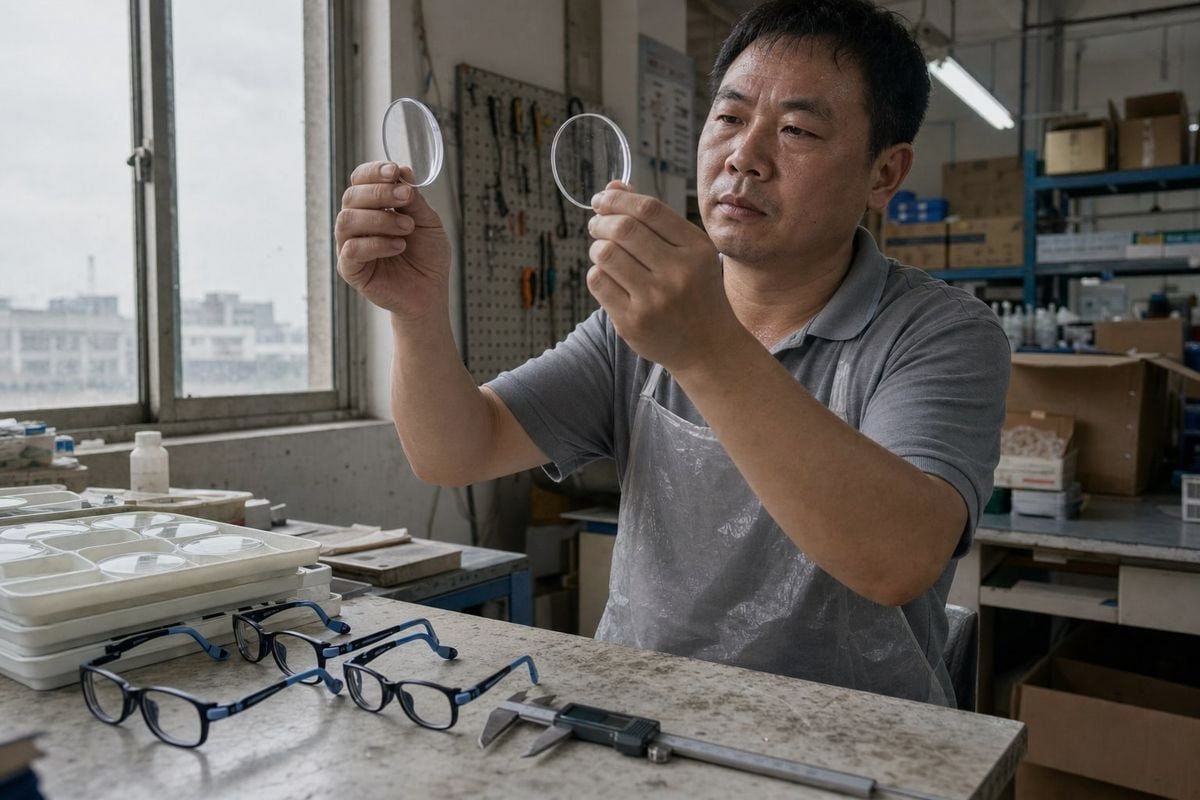
Linse Brechungsindex 1 ist die Frage, die ich von Käufern am häufigsten höre, wenn sie Kinder-Optikfassungen in unserer Produktion spezifizieren. Dicke Gläser sehen klobig aus, fühlen sich schwer an und Kinder weigern sich, sie zu tragen.
Der Brechungsindex der Gläser beeinflusst die Dicke bei Kinderbrillen, da höherbrechende Materialien Licht effizienter bündeln, sodass weniger Material die gleiche Dioptrienzahl erreicht. Ein 1,67er Glas kann 25–35 % dünner sein als Standard-1,50er Kunststoff, wobei der größte Unterschied bei stärkeren Dioptrien besteht.
Das ist die kurze Antwort. Aber der Index ist nur ein Faktor. Die Stärke der Dioptrien, die Größe der Fassung und das Glasmaterial beeinflussen das Endergebnis. Lassen Sie mich Ihnen jedes Detail erklären.
Welchen Brechungsindex sollte ich für die optischen Brillengläser meiner Kinder wählen?
Bei einer kürzlichen Musterrunde für eine europäische Optikmarke haben wir dieselbe TR90-Kinderfassung mit drei Gläsern mit unterschiedlichem Brechungsindex ausgestattet. Der Käufer war überrascht, wie gering der sichtbare Unterschied bei niedrigen Dioptrien war.
Wählen Sie den Brechungsindex basierend auf der Stärke des Rezepts: Standard 1,50–1,59 für Rezepte unter ±4,00 Dioptrien, High-Index 1,60 für ±4,00 bis ±6,00, High-Index 1,67 für ±6,00 bis ±8,00 und 1,74 nur für Rezepte über ±8,00.
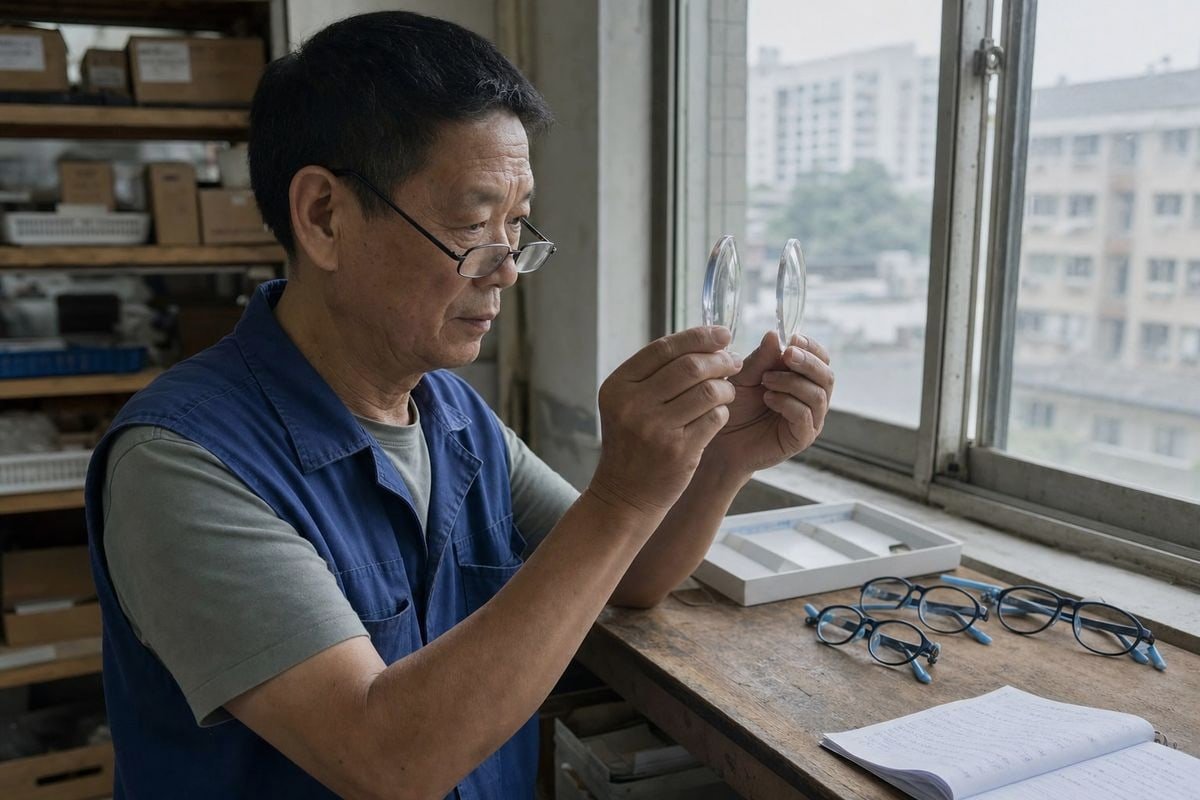
Die Kernwissenschaft ist einfach. Ein Glas bricht Licht, um das Sehvermögen zu korrigieren. Ein Material mit einem höheren Brechungsindex bricht das Licht pro Millimeter Material stärker. Es benötigt also weniger Material, um die gleiche optische Leistung zu erzielen. Deshalb ist ein 1,67er Glas bei gleicher Dioptrienzahl dünner als ein 1,50er Glas.
Aber hier ist die Nuance, die die meisten Eltern und sogar einige Käufer übersehen. Der Vorteil eines höheren Index skaliert mit der Stärke der Dioptrien. Bei -1,50 Dioptrien ist der Unterschied zwischen einem 1,50er und einem 1,67er Glas kaum sichtbar. Bei -7,00 Dioptrien ist er dramatisch.
Ein praktischer Indexleitfaden für Kinder
| Brechungsindex | Typischer Dioptrienbereich | Ungefähre Dickenreduzierung gegenüber 1,50 | Am besten geeignet für |
|---|---|---|---|
| 1,50 (Standardkunststoff) | Unter ±2,00 | Basis | Milde Dioptrien, Budget-Konstruktionen |
| 1,53 (Trivex) | Unter ±4,00 | ~10% | Sicherheitsorientierte Kinderbrillen |
| 1,59 (Polycarbonat) | Unter ±4,00 | ~15% | Aktive Kinder, Aufprallschutz |
| 1,60 (High-Index) | ±4,00 bis ±6,00 | 15–25% | Moderate Dioptrien |
| 1,67 (High-Index) | ±6,00 bis ±8,00 | 25–35% | Starke Dioptrien 2s |
| 1,74 (Ultra-High) | Über ±8,00 | 35–45% | Sehr starke Dioptrien |
Minus- vs. Plus-Dioptrien
Die Dicke zeigt sich an verschiedenen Stellen. Minusgläser für Kurzsichtigkeit sind an den Rändern am dicksten, daher reduziert ein höherer Index die Randdicke des Glases. Plusgläser für Weitsichtigkeit sind in der Mitte am dicksten, daher dünnt ein höherer Index die Mitte aus. Beide Arten von Dioptrien treten bei Kindern auf, und die sichtbare Dicke unterscheidet sich zwischen ihnen.
Noch ein klinischer Hinweis. Myopie-Management-Glasdesigns, wie z. B. solche mit integrierten Mikrolinsen, erfordern oft spezifische Indizes, um ihre optische Struktur zu berücksichtigen. Wenn Ihre Marke diesen Markt bedient, wird der Index zu einer klinischen Wahl, nicht nur zu einer ästhetischen.
Wie kann ich die Dicke der Brillengläser reduzieren, ohne die Sicherheit meines Kindes zu beeinträchtigen?
Ein Käufer aus Australien bat uns einmal, das dünnste mögliche Glas in eine Kleinkindfassung einzubauen. Wir haben uns dagegen ausgesprochen. Unsere fünfzehnjährige Erfahrung in der Herstellung von Kinderbrillen hat uns gelehrt, dass Schlagfestigkeit muss für junge Träger an erster Stelle stehen.
Reduzieren Sie die Glasdicke sicher, indem Sie eine kleinere Fassung, ein schlagfestes Material wie Polycarbonat oder Trivex und ein asphärisches Glasdesign kombinieren. Kleinere Fassungsabmessungen schneiden die dicksten Glasbereiche weg und entsprechen oft dem Verdünnungseffekt eines höheren Index allein.
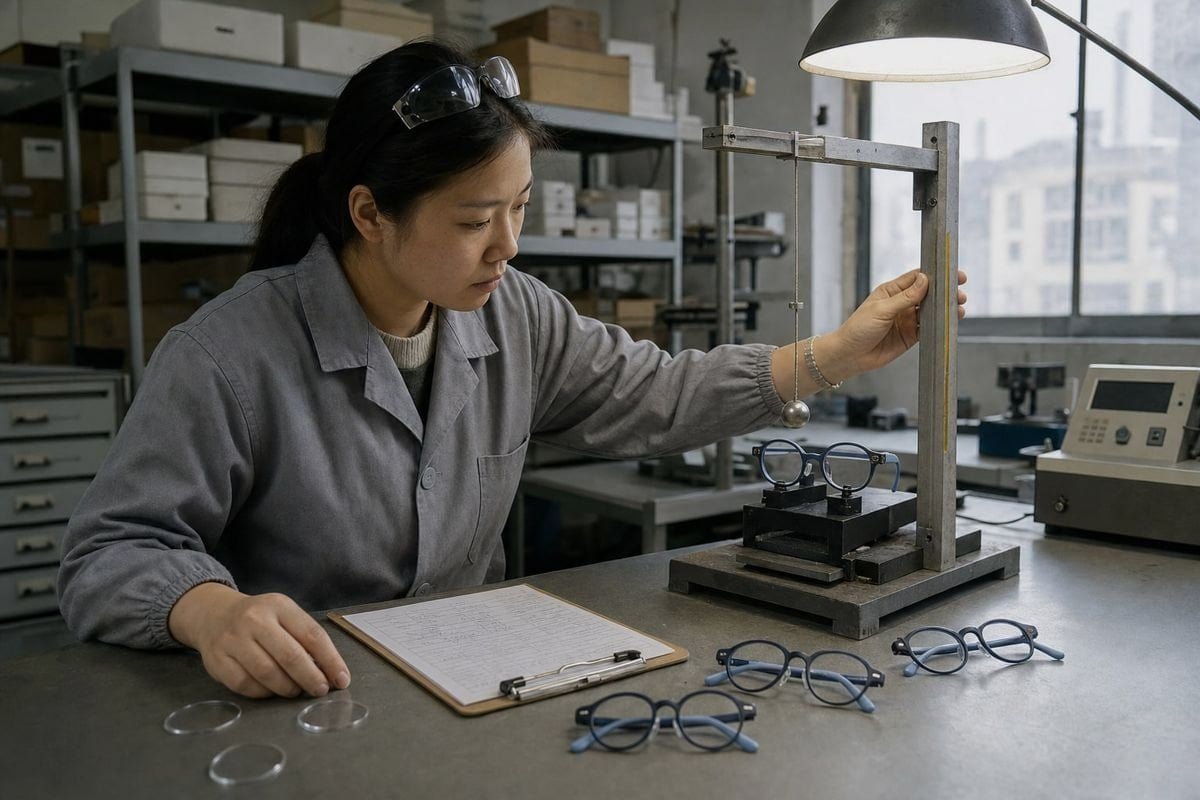
Die Dicke wird nicht allein durch den Index bestimmt. Die Dioptrienzahl, der Glasdurchmesser, der Pupillenabstand, die Fassungsform, Basis-Kurve, und optisches Zentrum 3 Dezentration beeinflussen alle das Endergebnis. Das gibt Ihnen mehrere Möglichkeiten, bevor Sie für Ultra-High-Index bezahlen.
Beginnen Sie mit der Fassung, nicht mit dem Glas
Die Fassung ist der günstigste Dickenreduzierer. Ein Minusglas wird dicker, je weiter man sich von seinem optischen Zentrum entfernt. Eine kleinere, abgerundete Fassung schneidet einfach die dicksten äußeren Teile 4 des Glasrohlings ab. Dies ist ein natürlicher Vorteil bei Kinderbrillen, da Kinderfassungen bereits kompakt sind. Wenn wir unsere TR90-Optikfassungen entwerfen, halten wir die Glasformen abgerundet und die Augenpartie aus genau diesem Grund moderat.
Dezentration ist ebenfalls wichtig. Wenn der Pupillenabstand eines Kindes deutlich schmaler ist als das optische Layout der Fassung, muss das Labor das optische Zentrum nach innen verschieben. Diese Verschiebung drückt mehr dickes Glasmaterial an den äußeren Rand. Eine gut proportionierte Kinderfassung minimiert dieses Problem.
Eine sichere Dickenreduzierungssequenz
- Wählen Sie eine Fassung mit kleinerer Fassung 5 Abmessungen und einer abgerundeten Glasform.
- Passen Sie die Fassungsbreite an den Pupillenabstand des Kindes an, um die Dezentration zu begrenzen.
- Wählen Sie Polycarbonat oder Trivex wegen ihrer Schlagfestigkeit.
- Fügen Sie ein asphärisches Design hinzu, um das Glasprofil abzuflachen und den klaren "Sweet Spot" zu erweitern."
- Erst dann erhöhen Sie den Index, wenn die Stärke ±4,00 D oder stärker ist.
Asphärische Designs verdienen eine besondere Erwähnung für Kinder. Sie reduzieren die periphere "Fischaugen"-Verzerrung, die aktive Kinder als desorientierend empfinden, und sie flachen die Glaswölbung ab, was die Dicke reduziert, ohne das Material zu verändern.
Der Sicherheitsaspekt kann nicht genug betont werden. Ein dünneres Glas aus einem spröden Material ist auf einem Spielplatz ein Risiko. Das dünnste Glas ist nicht das sicherste Glas. Für Kinder ist die richtige Antwort eine Balance zwischen beidem.
Warum kostet ein höherer Brechungsindex bei meinen Kinderbrillenbestellungen mehr?
Kostenbesprechungen kommen bei fast jedem Angebot vor, das wir für Optikunternehmen und Importeure erstellen. Wenn ein Käufer den Preissprung von einem 1,56er Glas zu einem 1,67er Glas sieht, ist die erste Frage immer dieselbe: Wofür bezahle ich eigentlich?
Höherer Brechungsindex kostet mehr, da die Rohstoffe Spezialpolymere sind, deren Herstellung teurer ist, eine präzisere Formgebung und Oberflächenbearbeitung erfordern, erstklassige Antireflexbeschichtungen benötigen, um die höhere Oberflächenreflexion zu bewältigen, und in geringeren Mengen als Standard-Linsenmaterialien verkauft werden.
Der Preisunterschied ist real, und es lohnt sich zu verstehen, woher er kommt, bevor Sie entscheiden, ob Sie ihn an Ihre Kunden weitergeben.
Woher die zusätzlichen Kosten kommen
| Kostentreiber | Warum es die Kosten erhöht | Auswirkungen auf Kinderbestellungen |
|---|---|---|
| Rohmaterial | Hochbrechungsindex-Monomere sind Spezialchemikalien | Höherer Grundpreis für Gläser |
| Fertigungspräzision | Dünnere Gläser tolerieren weniger Oberflächenfehler | Strengere Qualitätskontrolle, mehr Ausschuss |
| Beschichtungsanforderungen | Höherer Index bedeutet mehr Oberflächenreflexion, daher ist eine Entspiegelungsbeschichtung fast zwingend erforderlich | Beschichtungskosten standardmäßig hinzugefügt |
| Geringerer Abbe-Wert | Mehr chromatische Aberration 6 muss durch Design gemanagt werden | Bessere Designs kosten mehr |
| Skaleneffekte | 1,67 und 1,74 werden in geringeren Mengen verkauft als 1,50/1,59 | Weniger Skalierung, höherer Stückpreis |
Lohnt sich der Aufpreis für Kinder?
Hier ermutige ich Käufer, kritisch nachzudenken. Kinderverordnungen können sich schnell ändern, manchmal innerhalb eines Jahres. Einen hohen Aufpreis für ein 1,74er Glas 7 zu zahlen, das in zwölf Monaten ersetzt wird, ist bei leichten Verordnungen schwer zu rechtfertigen. Dieses Geld ist oft besser in einer strapazierfähigen, flexiblen Fassung und einer kratzfesten Beschichtung angelegt.
Es gibt jedoch einen berechtigten Grund für den Aufpreis. Für ein Kind mit einer starken Verordnung bedeuten dünnere Gläser leichtere Brillen, weniger Druck auf den sich entwickelnden Nasenrücken und weniger von der "Cola-Flaschen"-Vergrößerung, die die Augen für Klassenkameraden verzerren kann. Selbstwertgefühl ist ein echter Produktvorteil. Mehrere unserer Markenkunden positionieren Hochbrechungsindex-Optionen aus genau diesem Grund als Komfort- und Selbstvertrauens-Upgrade, und es verkauft sich gut, wenn es ehrlich dargestellt wird.
Das Fazit für Ihre Sortimentsplanung: Bieten Sie Standard- und mittlere Indizes als Standard für Kinder an und reservieren Sie den Hochbrechungsindex 1,67 als klar erklärentes Upgrade für stärkere Verordnungen.
Welches Brillenglasmaterial bietet die beste Balance zwischen Dicke, Gewicht und Haltbarkeit für die Brillen meiner Kinder?
Die Gewichtstoleranz ist etwas, das unsere Ingenieure besessen testen. Wenn wir TR90-Fronten mit flexiblen TPEE-Bügeln kombinieren, ist der Sinn der Sache eine Fassung, die leicht genug ist, dass ein Kind vergisst, dass es sie trägt. Das Glas darf diese Arbeit nicht zunichtemachen.
Trivex und Polycarbonat bieten die beste Balance aus Dicke, Gewicht und Haltbarkeit für Kinder. Trivex ist das leichteste Material nach Volumen mit exzellenter Optik und Schlagfestigkeit; Polycarbonat ist etwas dünner und hochgradig schlagfest. High-Index 1.67 eignet sich nur für starke Verordnungen.
Hier ist ein häufiges Missverständnis, das es wert ist, geklärt zu werden: dünner bedeutet nicht automatisch leichter. Hochbrechungsindex-Materialien sind dichter als Standardkunststoffe. Ein 1,74er Glas verwendet weniger Material, aber jeder Kubikmillimeter wiegt mehr. Bei kleineren Kinderglasgrößen ist ein Trivex-Glas oft leichter als ein 'dünneres" Hochbrechungsindex-Glas, da Trivex das geringste spezifische Gewicht der gängigen Glasmaterialien hat.
Materialvergleich für Kinderbrillen
| Material | Index | Schlagfestigkeit | Optische Klarheit (Abbe) | Gewicht | Urteil für Kinder |
|---|---|---|---|---|---|
| Standardkunststoff (CR-39) | 1.50 | Niedrig | Ausgezeichnet | Mäßig | Für aktive Kinder vermeiden |
| Trivex | 1.53 | Ausgezeichnet | Sehr gut | Leichteste | Bester Allrounder |
| Polycarbonat | 1.59 | Ausgezeichnet | Mäßig | Sehr leicht | Bestes Preis-Leistungs-Verhältnis für aktive Kinder |
| Hochbrechend | 1.67 | Mäßig | Mäßig bis gering | Mäßig | Nur für starke Verglasungen |
| Ultrahochbrechend | 1.74 | Mäßig | Niedrigste | Dicht | Nur für sehr starke Verglasungen |
Der Abbe-Wert-Kompromiss
Der Abbe-Wert misst, wie stark ein Material Licht in Farben aufspaltet. Ein niedrigerer Abbe-Wert bedeutet mehr chromatische Aberration, die sich als Farbsaum an den Linsenrändern zeigt. Kinder, die Sport treiben und ihre Augen schnell über die Linse bewegen, bemerken diesen Farbsaum möglicherweise stärker als Erwachsene. Trivex hat hier einen klaren Vorteil und liefert eine schärfere periphere Sicht als Polycarbonatgläser bei ähnlichem Sicherheitsniveau.
Passende Linse zu Fassung
Die Fassung vervollständigt die Gleichung. Eine flexible TR90- oder TPEE-Fassung absorbiert Stöße und biegt sich, anstatt zu brechen, was eine schlagfeste Linse ergänzt. Leichte Brillen funktionieren nur als System: Eine schwere Linse in einer leichten Fassung rutscht auf der Nase herunter, und eine leichte Linse in einer steifen Fassung zerbricht trotzdem auf dem Spielplatz. Wenn unsere Kunden aus unseren bestehenden Kinderstilen auswählen, fragen wir immer, welches Linsenpaket eingebaut wird, damit das angepasste Gewicht richtig auf einem kleinen Gesicht balanciert.
Schlussfolgerung
Dicke, schwere Gläser lassen Kinder ihre Brillen aufgeben. Die Lösung ist nicht immer ein höherer Brechungsindex: Passen Sie den Brechungsindex an die Dioptrien der Verglasung an, wählen Sie kleinere Fassungen und bevorzugen Sie schlagfeste Materialien wie Trivex und Polycarbonat.
Fußnoten
Wissenschaftliche Erklärung, wie Materialien mit unterschiedlichen Brechungsindizes Licht brechen. ↩︎
Maßgebliche NIH-Quelle zu Myopie, die oft hochbrechende Gläser erfordert. ↩︎
Erklärt den Punkt auf einer Linse, an dem Licht ohne Ablenkung hindurchtritt. ↩︎
Maßgebliche Wikipedia-Seite über Korrektionsglaseigenschaften und Herstellung aus Rohlingen. ↩︎
Maßgebliche Anleitung zu Fassungsmessungen und deren Auswirkungen auf die Linsenpassform. ↩︎
Maßgebliche Wikipedia-Seite, die das optische Phänomen der chromatischen Aberration erklärt. ↩︎
Technische Details zu ultrahochbrechenden Linsenmaterialien und ihren Eigenschaften. ↩︎
Weitere Artikel, die Ihnen gefallen könnten

Auf der Suche nach einem zuverlässigen Partner für Kinderbrillen?
Entdecken Sie über 800 sofort verfügbare Modelle und umfassenden OEM/ODM-Support, der auf Ihre Marke zugeschnitten ist.
Kontakt aufnehmen English
  Español de México
  Deutsch
  Français
  日本語
日本語  العربية
  Português do Brasil