Wie man DIY-Tests für Brillengläser für Kinder auf Schlagfestigkeit durchführt?

Fragen Sie sich, wie Sie Brillengläser für Kinder selbst auf Schlagfestigkeit testen können Polycarbonat und Trivex-Material 1? In unserer Produktionslinie fragen Käufer dies vor jeder Großbestellung – denn eine zerbrochene Linse kann eine Marke ruinieren.
Sie können DIY-Tests für Brillengläser für Kinder mit einer Heimversion des FDA-Fallkugeltests durchführen: Lassen Sie eine 5/8-Zoll-Stahlkugel aus 50 Zoll auf die Mitte des Glases fallen und prüfen Sie auf Brüche. DIY-Tests screenen jedoch nur Stichproben; die offizielle Konformität erfordert eine Prüfung durch ein akkreditiertes Labor gemäß den Standards 21 CFR 801.410, ANSI Z87.1 oder EN.
Ich führe Sie durch die Werkzeuge, die Standards, die Grenzen von Heimtests und warum ein guter Fabrikpartner immer noch wichtig ist. Ich werde alles praktisch und ehrlich halten.
Welche Werkzeuge und Methoden kann ich verwenden, um die Schlagfestigkeit von Gläsern vor einer Großbestellung selbst zu testen?
Ein Käufer aus Australien ließ einmal eines unserer TR90-Mustergestelle auf seinen Lagerboden fallen und trat darauf. Es überlebte. Diese grobe Prüfung sagte ihm etwas, aber nicht alles, also zeigten wir ihm eine bessere Routine.
Verwenden Sie eine 5/8-Zoll-Stahlkugel (ca. 16 Gramm), ein 50-Zoll-Fallrohr und eine gepolsterte Linsenhalterung, um den FDA-Fallkugeltest zu simulieren. Fügen Sie eine visuelle Inspektion bei hellem Licht, einen Linsenhaltetest und eine Rahmenflexibilitätsprüfung hinzu, um Proben zu prüfen, bevor Sie eine Großbestellung aufgeben.
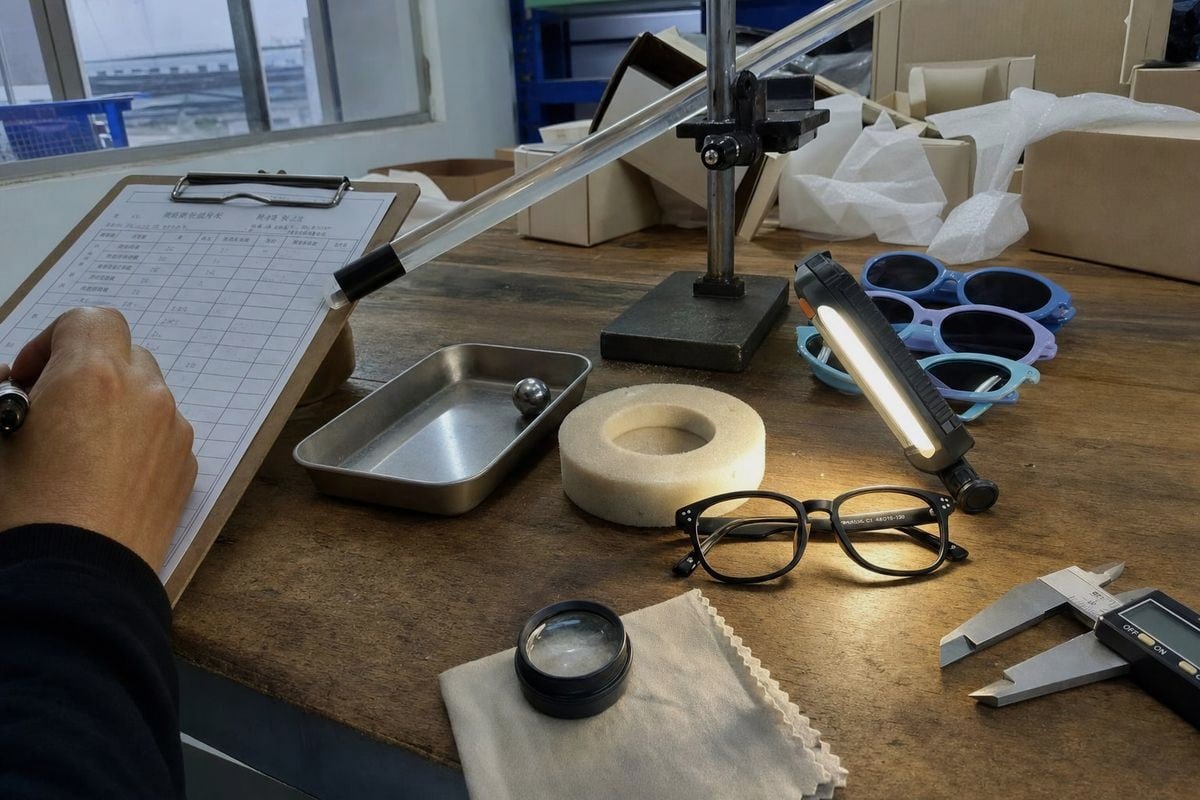
Bevor Sie Tausende von Einheiten bestellen, möchten Sie sicher sein, dass die Gläser in den Händen eines Kindes nicht zerbrechen. Ein strukturiertes DIY-Screening gibt Ihnen diese erste Vertrauensschicht. Hier ist das Kit, das ich Käufern empfehle, die unsere Fabrik in Taizhou besuchen und selbst an ihrem Schreibtisch Stichproben testen möchten.
Das grundlegende DIY-Test-Toolkit
| Werkzeug | UV-Transmissionsbericht (akkreditiertes Labor) | Ungefähre Kosten |
|---|---|---|
| 5/8-Zoll-Stahlkugel (~0,56 oz / 16 g) | Simuliert den FDA-Fallkugelaufprall | Sehr niedrig |
| Klares Rohr oder Führung, 50 Zoll hoch | Hält die Fallhöhe und das Ziel konstant | Niedrig |
| Schaumstoff- oder Neopren-Linsenstützring | Hält die Mitte des Glases frei, die Ränder gestützt | Niedrig |
| Helle LED-Lampe oder Taschenlampe | Zeigt Risse, Absplitterungen, Haarrisse, Delaminationen an | Niedrig |
| Digitaler Messschieber | Prüft die Mittendicke (streben Sie mindestens 2,0 mm bei Korrektionsgläsern an) | Mäßig |
| Lupe oder Vergrößerungsglas | Untersucht Kanten und Beschädigungen der Beschichtung nach dem Aufprall | Niedrig |
Eine einfache Fünf-Schritte-Methode
- Untersuchen Sie das Glas zuerst unter hellem Licht. Kratzer und Gruben wirken als Spannungskonzentratoren und schwächen die Schlagfestigkeit, bevor Sie überhaupt beginnen.
- Montieren Sie das Glas auf der gepolsterten Halterung mit der Vorderseite nach oben.
- Lassen Sie die Stahlkugel aus 50 Zoll auf die geometrische Mitte des Glases fallen.
- Untersuchen Sie das Glas auf Risse durch die gesamte Dicke, abgetrennte Teile oder abgelöste Materialien. Jedes davon bedeutet einen Fehler.
- Drücken Sie fest mit dem Daumen auf die Rückseite des Glases. Ein sicherer Rahmen sollte eine Linsenrückhalteschräge haben, die verhindert, dass das Glas nach innen zum Auge springt.
Eine Vorsichtsmaßnahme, die ich Käufern immer gebe: Wiederholen Sie Falltests nicht viele Male an demselben Glas als Validierungsmethode. Kumulative Ermüdung kann interne Spannungsrisse verbergen, und wiederholte Treffer duplizieren ohnehin nicht die regulierte Einrichtung. Testen Sie einige dedizierte Stichproben, zeichnen Sie die Ergebnisse auf und halten Sie die getesteten Gläser von Ihrem verkaufsfähigen Bestand fern. Testen Sie auch kalte Muster, wenn Ihr Markt Wintersport umfasst – thermische Versprödung kann selbst zähe Materialien bei Minusgraden spröder machen.
Welche Schlagfestigkeitsstandards sollte ich für Brillengläser für Kinder wie ANSI oder EN prüfen?
In unseren fünfzehn Jahren des Exports von Kinderbrillen in mehr als 20 Länder ist die häufigste Verwechslung, die wir sehen, dass Käufer alltägliche Brillenregeln mit Standards für Sportschutz verwechseln. Sie sind nicht dasselbe.
Für die USA müssen alltägliche Kinderbrillengläser den FDA-Fallballtest gemäß 21 CFR 801.410 bestehen. Sportbrillen benötigen ASTM F803 und Schutzbrillen benötigen den ANSI Z87.1 Hochgeschwindigkeitsschlagtest. In Europa prüfen Sie EN ISO 12312-1 für Sonnenbrillen und EN 166 für Schutzbrillen.
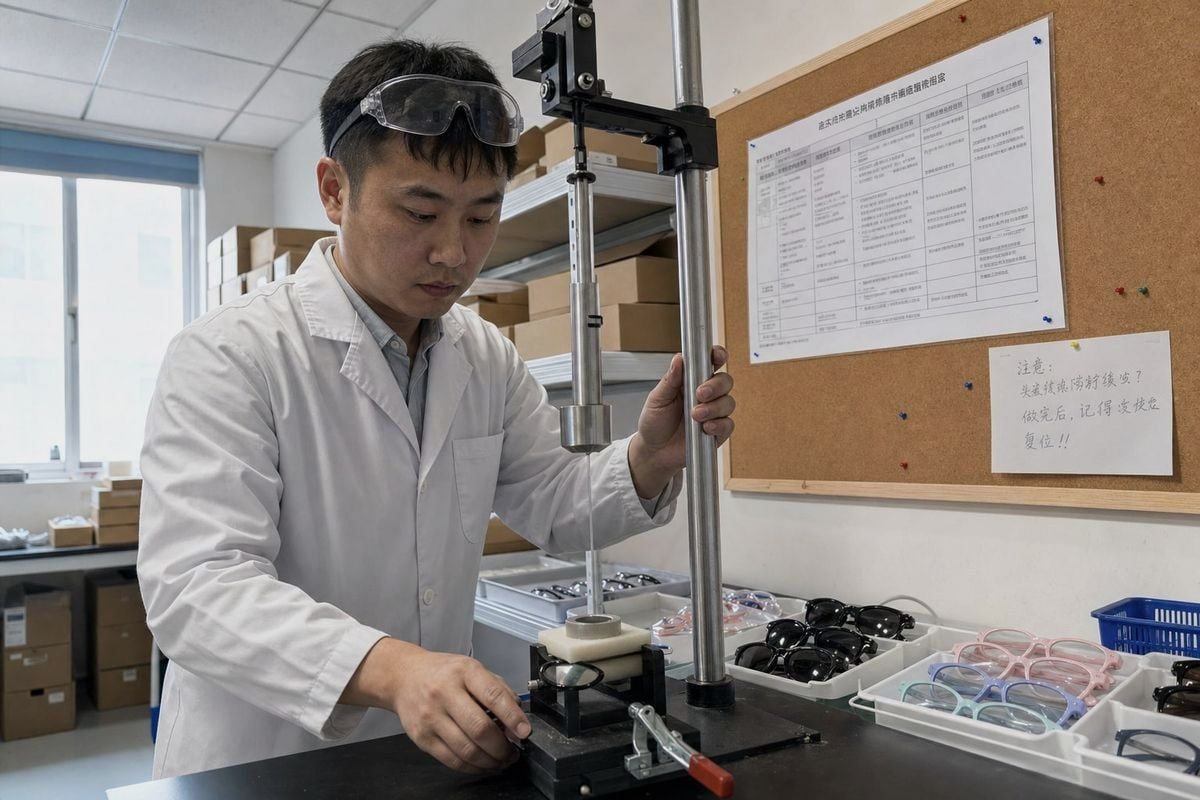
Zu wissen, welcher Standard für Ihr Produkt gilt, ist die halbe Miete. Ein Paar alltägliche optische Fassungen, eine modische Sonnenbrille und ein Sportschild unterliegen jeweils unterschiedlichen Regeln. Wenn Sie dies falsch machen, geben Sie entweder zu viel für Tests aus, die Sie nicht benötigen, oder Sie schützen die Kinder, die Ihr Produkt tragen, nicht ausreichend.
Die wichtigsten Standards im Überblick
| Standard | Region | Gilt für | Kern-Schlagtest |
|---|---|---|---|
| FDA 21 CFR 801.410 | USA | Alle alltäglichen Brillengläser | 5/8-Zoll-Stahlkugel aus 50 Zoll fallen gelassen; das Glas darf nicht brechen |
| ANSI Z87.1 2 | USA | Sicherheits-/Schutzbrillen | Hochmasse-Aufprall plus Hochgeschwindigkeits-Aufprall (Projektil mit bis zu 150 Fuß/Sekunde für einige Tests) |
| ASTM F803 3 | USA | Sportbrillen | Sportartspezifische Projektilaufprälle bei realistischen Spielgeschwindigkeiten |
| EN ISO 12312-1 | Europa | Sonnenbrillen | Robustheit und optional erweiterte Schlagfestigkeitsanforderungen |
| EN 166 4 | Europa | Persönlicher Augenschutz | Abgestufte Aufprallstufen, einschließlich Hochgeschwindigkeits-Partikel |
So lesen Sie die Unterschiede
Das FDA-Fallballtest 5 ist eine Basislinie. Es bestätigt, dass ein Glas für den täglichen Gebrauch ausreichend bruchsicher ist – nichts weiter. ANSI Z87.1 geht mit Hochmasse-Aufprall- und Hochgeschwindigkeits-Aufpralltests viel weiter, weshalb Z87+-Markierungen ein wirklich widerstandsfähigeres Produkt signalisieren. ASTM F803 ist wieder anders: Es ist sportspezifisch und testet Brillen gegen Bälle und Aufprälle bei Geschwindigkeiten, die im Schlägersport oder Basketball üblich sind.
Hier ist der Einwand, den ich oft höre: "Polycarbonat 6 Gläser sind unzerbrechlich, daher ist jeder Standard in Ordnung." Ich widerspreche dem jedes Mal. Polycarbonat und Trivex-Material 7 sind ausgezeichnete Wahlmöglichkeiten für aktive Kinder – weitaus robuster als CR-39 oder Glas – aber allein das Material bedeutet keine sporttaugliche Schutzwirkung. Die Fassung der Gläser, die Geometrie des Rahmens und die zentrale Dicke spielen alle eine Rolle. Ein Polycarbonatglas in einem schwachen Rahmen kann immer noch ins Auge gedrückt werden. Deshalb muss der Standard, gegen den Sie zertifizieren, dem tatsächlichen Anwendungsfall entsprechen und nicht nur dem Glasmaterial auf der Rechnung.
Achten Sie auch auf dauerhafte Markierungen. Z87+ oder ASTM F803 Gravuren auf dem Glas oder dem Rahmen zeigen an, dass das Produkt Hochgeschwindigkeitstests bestanden hat und nicht nur die grundlegende Fallkugel-Anforderung erfüllt.
Wie weiß ich, ob meine DIY-Testergebnisse zuverlässig genug sind, um sie für die Einhaltung von Sicherheitsvorschriften zu verwenden?
Es gibt einen Kompromiss, den wir in unserer 5S-verwalteten Werkstatt jede Woche abwägen: schnelle interne Überprüfung versus langsame formale Verifizierung. Beides hat seinen Platz, aber nur eines hält stand, wenn ein Einzelhändler oder eine Aufsichtsbehörde nach einem Nachweis fragt.
DIY-Testergebnisse sind für die Vorauswahl zuverlässig, aber niemals für die Sicherheitskonformität. Ihnen fehlen kalibrierte Geräte, standardisierte Halterungen, kontrollierte Bedingungen und statistisch signifikante Stichprobengrößen. Betrachten Sie ein DIY-Bestehen als Erlaubnis, mit der akkreditierten Laborprüfung fortzufahren – nicht als Ersatz dafür.
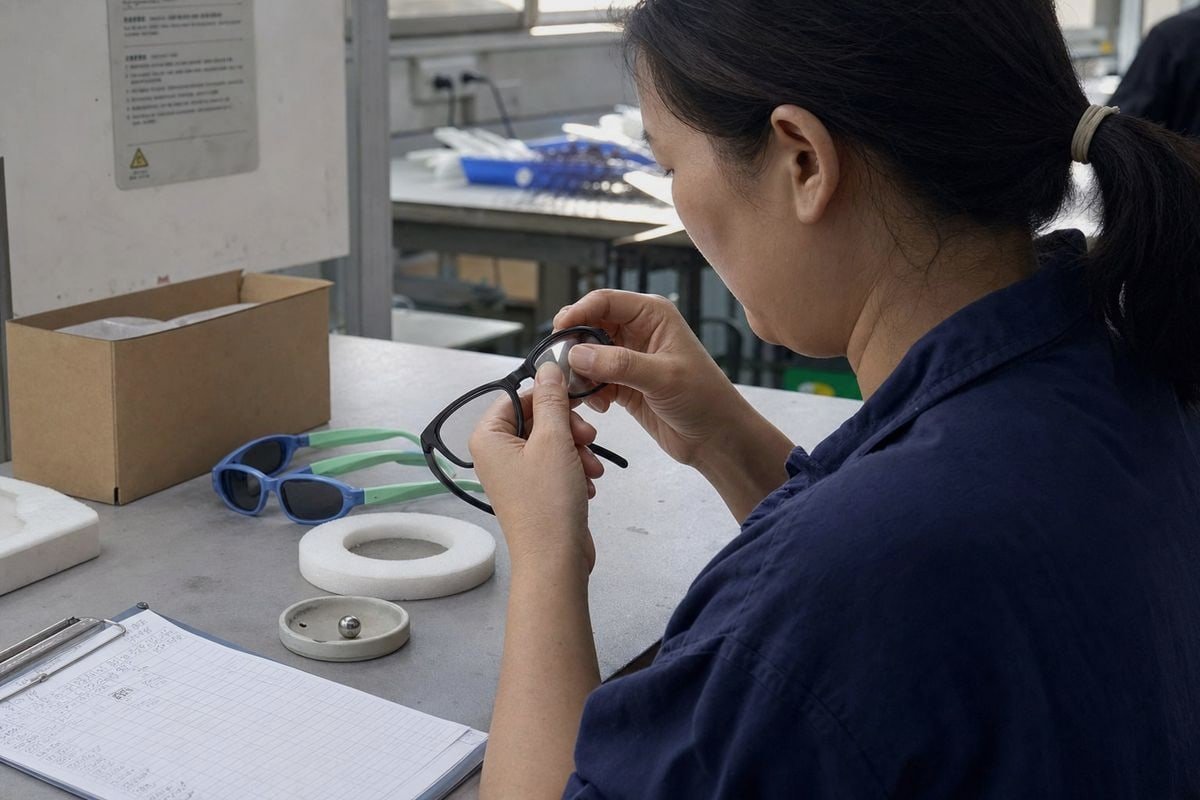
Lassen Sie mich direkt sagen, was Ihr Küchentischtest Ihnen sagen kann und was nicht. Diese Ehrlichkeit ist wichtig, denn ich habe Käufer gesehen, die einen glücklichen DIY-Erfolg als grünes Licht betrachten und die Laborverifizierung überspringen. Das ist ein Risiko, das keine Kindermarke eingehen sollte.
Wo DIY-Tests versagen
| Faktor | DIY-Test | Geprüfter Konformitätstest |
|---|---|---|
| Gewicht und Abmessungen des Balls | Ungefähr | Kalibriert auf Spezifikation |
| Genauigkeit der Fallhöhe | Präzision eines Maßbandes | Festes, verifiziertes Gerät |
| Halterung für das Glas | Improvisierter Schaumstoff oder Gummi | Standardisierte Geometrie gemäß der Regel |
| Stichprobengröße | Ein oder zwei Gläser | Statistisch signifikante Stichprobe für anwendbare Glastypen |
| Umweltkontrolle | Raumbedingungen variieren | Kontrolliert und dokumentiert |
| Dokumentation | Informelle Notizen | Nachvollziehbare Testberichte, die von Aufsichtsbehörden akzeptiert werden |
Signale, die die Zuverlässigkeit von DIY verbessern
Sie können den Wert der häuslichen Überprüfung steigern. Testen Sie mehrere Gläser, nicht nur eines. Testen Sie, nachdem die Gläser vollständig bearbeitet wurden – die FDA-Richtlinien selbst besagen, dass die Prüfung nach dem Schleifen und Beschichten erfolgen sollte, da die Bearbeitung die Festigkeit des Glases verändert. Messen Sie die zentrale Dicke mit Messschiebern; zu dünn geschliffene Gläser mit hoher Minus-Dioptrienzahl können selbst bei starken Materialien versagen. Achten Sie auf chemische Rissbildung durch Alkoholreiniger oder Haarspray, die mikroskopisch kleine Risse erzeugt, die dazu führen, dass ein "sicheres" Glas bei geringer Kraft versagt.
Hüten Sie sich auch vor dem Wort "bruchfest" auf Lieferantenpapieren. Es ist oft ein ungeregelter Marketingbegriff. "Schlagfest" in Verbindung mit einem benannten Standard – 21 CFR 801.410, ANSI Z87.1 oder ASTM F803 – ist das, was Gewicht hat. Wenn Ihr Ziel die gesetzliche Konformität oder eine Einzelhandelszulassung ist, ist die Antwort Dokumentation: Hersteller-Testberichte, dauerhafte Markierungen und Laborzertifikate. Ihre DIY-Ergebnisse sind ein nützlicher Filter, der Ihnen erspart, Laborgebühren für offensichtlich schlechte Muster zu zahlen. Nicht mehr und nicht weniger.
Warum sollte ich immer noch mit einer Fabrik für professionelle Labortests zusammenarbeiten, auch nach DIY-Tests?
Früh in unserer Exportgeschichte bat uns ein europäischer Distributor um Laborberichte für eine TR90-Optikfassung, die er selbst bereits einem Falltest unterzogen hatte. Seine DIY-Ergebnisse waren in Ordnung – aber seine Einzelhandelskette würde das Produkt ohne akkreditierte Dokumentation nicht führen. Diese Bestellung lehrte uns beiden, wo die eigentliche Hürde liegt.
Ein Fabrikpartner bietet akkreditierte Laborprüfungen durch Dritte, chargenbezogene Qualitätskontrolle, rückverfolgbare Dokumentation und gesetzlich anerkannte Konformität gemäß den FDA-, ANSI Z87.1- oder EN-Standards. DIY-Tests prüfen Stichproben; nur vom Hersteller unterstützte Laborberichte zufrieden die Regulierungsbehörden, Einzelhändler und Haftpflichtversicherer für Kinderbrillen.
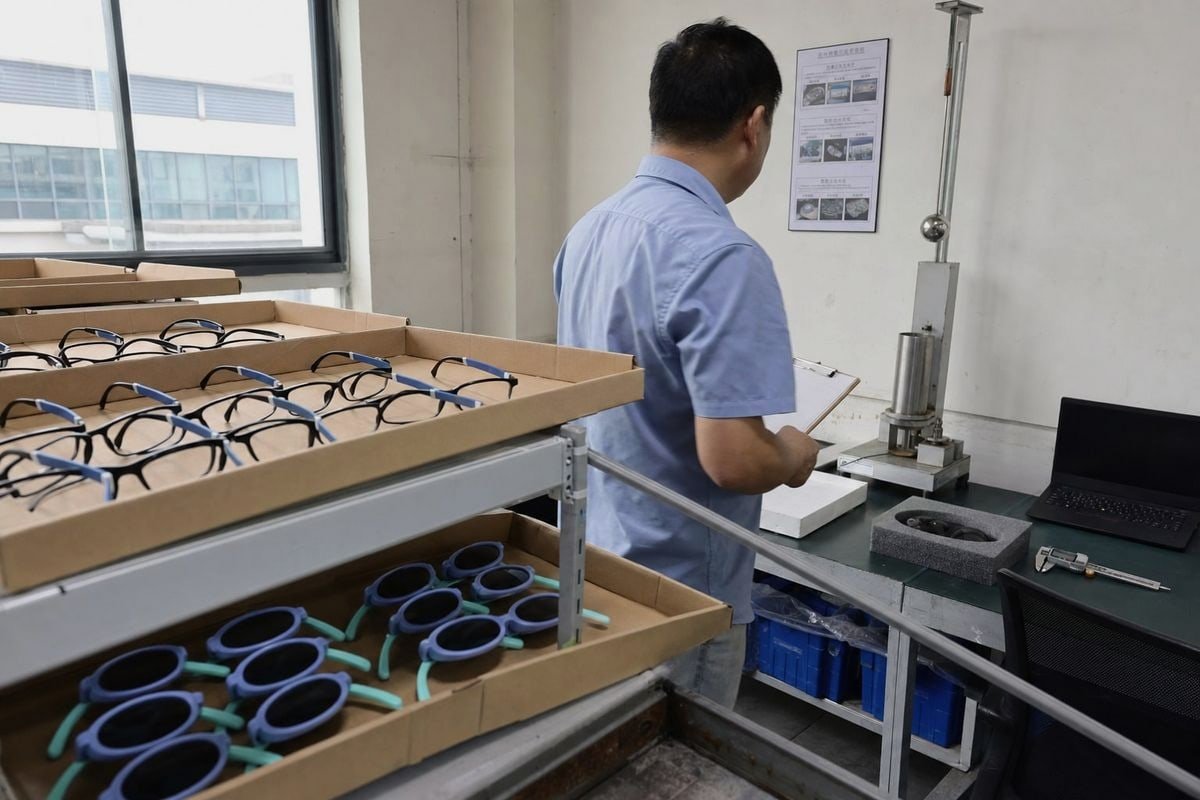
Im Rahmen des FDA-Systems liegt die Verantwortung für Aufpralltests ausdrücklich beim Hersteller. Das ist keine Formalität – es bestimmt, wer das Risiko trägt. Wenn wir eine Charge von Kinder-Optikfassungen oder UV400-Sonnenbrillen in unserer Anlage in Taizhou produzieren, testen wir die Gläser nach der vollständigen Bearbeitung und bewahren Aufzeichnungen auf, die mit der Produktionscharge verknüpft sind. Wenn jemals eine Frage vom Zoll, einem Einzelhändler oder einem Elternteil kommt, schützt diese Papierspur Ihre Marke.
Was eine echte Fabrikpartnerschaft über das Testen hinaus bietet
Erstens, Stichprobendisziplin. Die Konformitätsprüfung für viele Glastypen verwendet eine statistisch signifikante Stichprobe aus jeder Charge, nicht ein einzelnes Glücksglas. Eine Fabrik mit ordnungsgemäßer Qualitätskontrolle – unsere betreibt eine 5S-verwaltete Werkstatt mit rund 120 Mitarbeitern – integriert diese Stichproben in den Produktionsfluss, sodass die Konsistenz nicht dem Zufall überlassen wird.
Zweitens, Materialkontrolle. Wir arbeiten mit TPEE und TR90, weil flexible Materialien Aufprall und Biegung auf Kindergesichtern weitaus besser standhalten als starre Budget-Kunststoffe. Aber Materialspezifikationen ändern sich, wenn niemand die Lieferanten beobachtet. Eine engagierte Fabrik überprüft jedes Mal den eingehenden Harz- und Glasbestand, sodass das Produkt, das Sie im ersten Monat getestet haben, mit dem Produkt übereinstimmt, das im zwölften Monat versendet wird.
Drittens, geringeres Einführungsrisiko. Mit rund 800 verfügbaren Stilen kann eine neue Marke bewährte, vorab validierte Designs auswählen, anstatt in Formen zu investieren und von Grund auf neu zu testen. Sie können immer noch Farben, Logos, Gläser und Verpackungen über OEM/ODM 8, anpassen, während Sie auf Fassungen aufbauen, deren Aufprallverhalten bereits bekannt ist.
Schließlich ehrliche Beratung zu Standards. Wenn Ihr Käufer Alltagsbrillen benötigt, stimmen wir die Dokumentation auf den FDA-Fallkugeltest oder die relevante EN-Regel ab. Wenn er Sportschutz benötigt, sagen wir Ihnen klar, dass gewöhnliche Fassungen nicht die Lösung sind und das Produkt für ASTM F803 gebaut und zertifiziert werden muss. Diese Klarheit – zu wissen, wann man Nein sagen muss – ist es, was Ihnen ein langfristiger Fertigungspartner schuldet.
Schlussfolgerung
DIY-Tests mit einem Stahlball, hellem Licht und Messschiebern prüfen die Brillengläser von Kindern gut. Aber echte Sicherheitskonformität erfordert den richtigen Standard, akkreditierte Labore und einen Fabrikpartner, der alles dokumentiert.
Fußnoten
Hintergrundreferenz zu den Polymereigenschaften, die diesen Linsenmaterialien Schlagfestigkeit verleihen. ↩︎
Hintergrund zum Sicherheitsbrillenstandard, der als alternativer Konformitätsweg erwähnt wird. ↩︎
Erläutert die Normungsorganisation hinter dem als Referenz genannten Sportbrillen-Aufpralltest. ↩︎
ISO-Referenz für Normen für persönlichen Augenschutz, die auf europäischen Märkten verwendet werden. ↩︎
5. Links directly to the official federal regulation defining this mandatory impact test. ↩︎
6. Background on the impact-resistant lens material discussed as superior to CR-39. ↩︎
7. Explains the alternative lightweight impact-resistant lens material named in the article. ↩︎
8. Clarifies the manufacturing partnership model referenced for custom eyewear production. ↩︎
Weitere Artikel, die Ihnen gefallen könnten
Auf der Suche nach einem zuverlässigen Partner für Kinderbrillen?
Entdecken Sie über 800 sofort verfügbare Modelle und umfassenden OEM/ODM-Support, der auf Ihre Marke zugeschnitten ist.
Kontakt aufnehmen English
  Español de México
  Deutsch
  Français
  日本語
日本語  العربية
  Português do Brasil