كيفية مطابقة حجم إطار TR90 و TPEE للأطفال مع المسافة بين الحدقتين وتجنب عدم التطابق؟

مطابقة حجم إطار TR90 و TPEE للأطفال مع المسافة بين الحدقتين هي المكان الذي تبدأ فيه معظم شكاوى الملاءمة مع عينات المصنع لدينا. الإطارات المتينة التي تزيل مركز العدسات لا تزال ترهق عيون الشباب.
قم بمطابقة حجم إطار TR90 و TPEE للأطفال مع المسافة بين الحدقتين عن طريق إضافة عرض العدسة وعرض الجسر للحصول على المسافة بين الحدقتين للإطار، ثم إبقائها في حدود 2-3 مم لكل عين من المسافة بين الحدقتين المقاسة للطفل، مع تأكيد ملاءمة الجسر وطول الصدغ وموضع الحدقة على الوجه الفعلي.
هذا هو الإصدار المختصر. يوضح لك باقي هذا المقال كيفية قياس المسافة بين الحدقتين، وكيفية قراءة أرقام الإطار، وما الذي يحدث خطأ عندما لا تتوافق، وكيفية تأمين الملاءمة مع مصنعك قبل الالتزام بالإنتاج.
كيف أقيس المسافة بين بؤبؤي طفلي بدقة قبل اختيار مقاس الإطار؟
أثناء فحص العينات في ورشة عملنا في تايتشو العام الماضي، أعطت مسطرتان مسافتين مختلفتين بين الحدقتين لنفس الرأس التجريبي. علمتنا تلك الفجوة أن نوحد.
قم بقياس المسافة بين بؤبؤي الطفل باستخدام مقياس بؤبؤي رقمي عند الإمكان، أو مسطرة مليمترية على مستوى العين بينما ينظر الطفل إلى هدف بعيد، خذ ثلاث قراءات، سجل القيم الأحادية لكل عين، واقبل النتيجة فقط عندما تتفق التكرارات في حدود 1 مم.
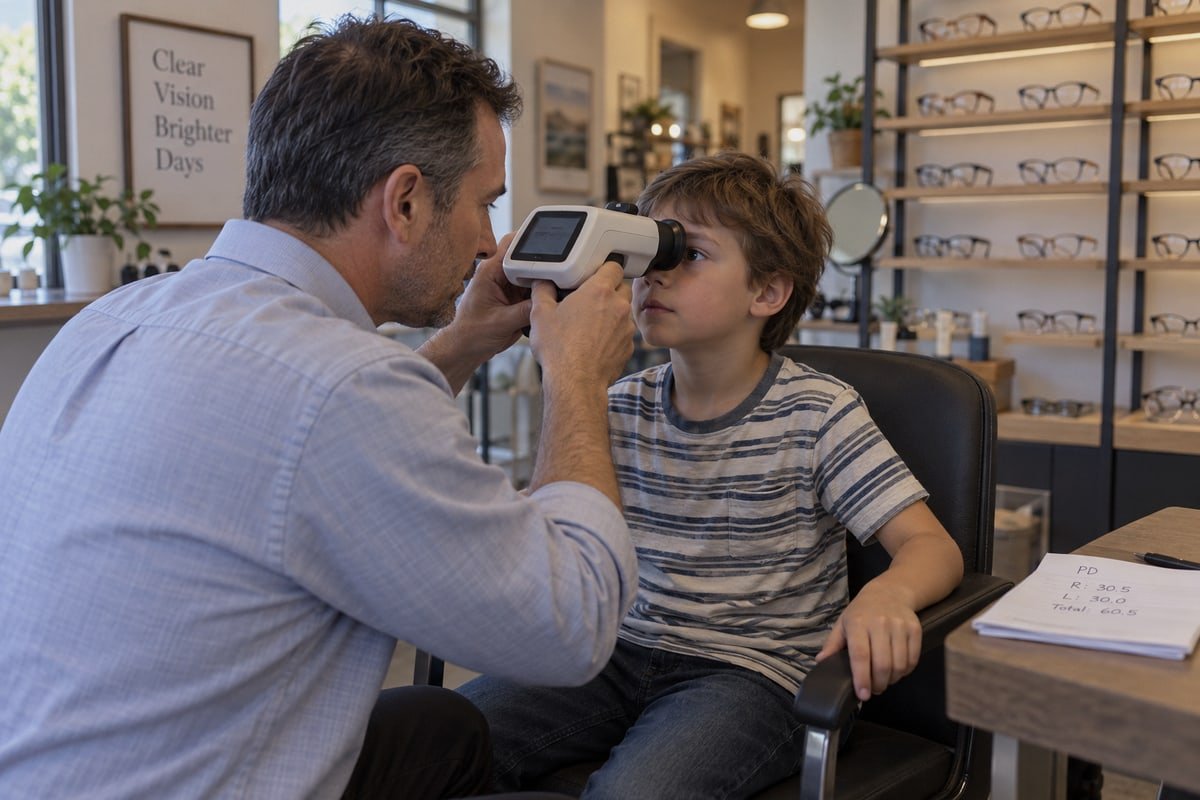
المسافة بين الحدقتين، أو PD، هي المسافة بين مركزي الحدقتين. تخبرك بمكان يجب أن يجلس فيه المركز البصري لكل عدسة. كل شيء آخر في ملاءمة نظارات الأطفال يبنى على هذا الرقم الواحد. إذا كان الرقم خاطئًا، فسيكون اختيار الإطار خاطئًا أيضًا، بغض النظر عن مدى جودة الإطار.
لماذا تقرأ المسطرة غالبًا ضيقًا جدًا
ينظر الأطفال إلى أي شيء قريب. عندما يمسك الوالد مسطرة على بعد بضعة سنتيمترات من وجه الطفل، يركز الطفل على المسطرة أو على أنف الوالد. تتجه العينان إلى الداخل. وهذا ما يسمى التقارب القريب. القراءة تكون أضيق من المسافة الحقيقية بين حدقتي الطفل. مقياس بؤبؤي رقمي يتجنب هذا لأنه يعطي الطفل هدف تركيز بعيد 1 داخل الجهاز. في تجربتنا، يمكن أن تختلف قراءة المسطرة وقراءة مقياس البؤبؤ على نفس الطفل بأكثر من خطأ 2 مم الذي تحذر منه الأدلة من أنه سيؤثر بشكل ملحوظ على الرؤية والراحة.
عملية بسيطة تعمل في المنزل أو في المتجر
- اجلس الطفل واجلس على نفس مستوى العين.
- اطلب من الطفل النظر إلى شيء بعيد، خلف كتفك.
- ضع المسطرة المليمترية على جسر الأنف.
- أغلق عينك اليمنى وقم بمحاذاة علامة الصفر مع مركز بؤبؤ الطفل الأيمن.
- أغلق عينك اليسرى واقرأ العلامة عند مركز بؤبؤ الطفل الأيسر.
- كرر ثلاث مرات. احتفظ بالنتيجة فقط إذا اتفقت القراءات عن كثب.
- اكتب إجمالي المسافة بين الحدقتين، وإذا استطعت، المسافة من مركز الأنف إلى كل بؤبؤ.
| الطريقة | الأداة المطلوبة | الدفع الآمن عبر المنصة | إطارات TPEE / TR90 المرنة |
|---|---|---|---|
| مسطرة ملليمترية | مسطرة مسافة بين الحدقتين بلاستيكية | فحوصات منزلية سريعة، تقدير أولي | التقارب القريب يعطي مسافة بين الحدقتين ضيقة بشكل خاطئ |
| مقياس بؤبؤي رقمي | جهاز بصري محمول باليد | القياس النهائي قبل الطلب | التكلفة، ويجب على الطفل أن يظل ثابتًا |
| تطبيق هاتف | كاميرا هاتف ذكي وبطاقة مرجعية | التسوق عبر الإنترنت عندما لا يتوفر شيء آخر | أخطاء القياس وإمالة الرأس |
المسافة بين الحدقتين الأحادية مهمة للأطفال
العديد من الأطفال ليسوا متماثلين تمامًا. إذا كان لدى الطفل انحراف في العين، أو إذا بدت المسافتان النصفيان غير متساويتين، فقم بتسجيل المسافة بين الحدقتين الأحادية لكل عين. يؤكد دليل توزيع نظارات الأطفال على هذا لأنه قد تحتاج كل عين إلى اهتمام منفصل عند قطع العدسات. رقم إجمالي واحد يخفي هذه التفاصيل.
قياسات الوجه تتغير بسرعة
المسافة بين الحدقتين المقاسة في سن الرابعة لن تناسب في سن السابعة. تنتقل وجوه الأطفال المتنامية البؤبؤ إلى الخارج، ويرتفع جسر الأنف. نوصي بأن تذكر العلامات التجارية الآباء بإعادة فحص المسافة بين الحدقتين عند كل زيارة لوصفة طبية ومرة واحدة على الأقل سنويًا بينهما. قد يؤدي إطار جيد كان مناسبًا العام الماضي إلى إزاحة مركز العدسات هذا العام.
ما هي نطاقات أحجام إطارات TR90 و TPEE التي تعمل بشكل أفضل لقياسات المسافة بين الحدقتين المختلفة للأطفال؟
المقايضة التي نزنها على كل تصميم للأطفال بسيطة: عدسة أوسع تعطي مجال رؤية أكبر، لكنها تدفع المسافة بين الحدقتين للإطار بعيدًا عن الوجوه الصغيرة.
تعمل أحجام إطارات TR90 و TPEE للأطفال بشكل أفضل عندما يكون عرض العدسة زائد عرض الجسر ضمن 2-3 مم لكل عين من المسافة بين الحدقتين للطفل: حوالي 39-43 مم عدسات للأطفال الصغار، 44-46 مم للأعمار من 5-8 سنوات، 47-50 مم للأعمار من 9-12 سنة، و 50-54 مم للمراهقين.
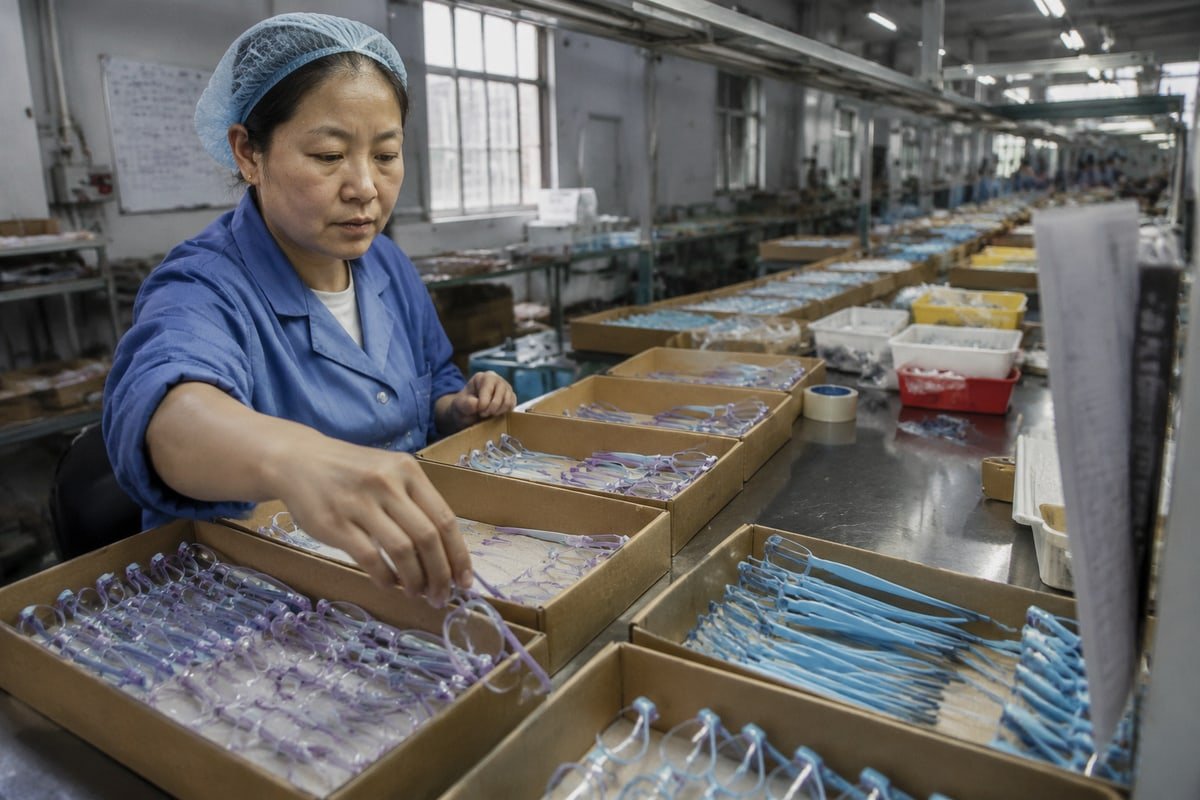
ابدأ بالجدول أدناه، ثم انتقل بسرعة إلى الأرقام الفعلية. نطاقات الأعمار تأتي من أدلة التحجيم الحالية. تعرض الأعمدة الموجودة على اليمين ما يجب عليك تأكيده قبل أن تثق بالنطاق.
| فئة العمر | Lens width heuristic | ما يجب تأكيده | لماذا هو مهم |
|---|---|---|---|
| Toddlers (about 1–4) | 39-43 ملم | Frame bridge width and nose bridge fit | Flat, low bridges let frames slide and drop the المراكز البصرية 2 |
| Ages 5–8 | 44-46 ملم | Frame PD versus measured PD | Decentration should stay within 2–3 mm per eye |
| Ages 9–12 | 47-50 ملم | Temple length and face width | Temples should run straight back to the ear point |
| المراهقون | 50-54 ملم | Prescription strength and lens design | Higher powers need tighter lens centration |
The boxing system formula
Every optical frame carries two key numbers. The first is the lens width, often called the A measurement. The second is the bridge width, the distance between the lenses. Add them together and you get the frame PD. This is the boxing system formula 3 that opticians use.
Frame PD = lens width + bridge width.
Now compare frame PD to the child's measured PD. Divide the difference by two, and you get the decentration per eye. Consumer guides accept up to 3–4 mm per eye, or a frame PD no more than 8 mm wider than the child's PD. Professional dispensing guidance is stricter and aims for 2–3 mm per eye. We side with the stricter number for any prescription above a mild one. The looser number is a starting point for buyers, not a target for children who wear glasses all day.
Bridge first, lens second
Children have flatter nasal bridges than adults. A frame that fits the lens width but floats on the nose will slide down. When it slides, the optical centers drop below the pupils, and the careful PD work is lost. So we ask buyers to check the frame bridge width before they debate lens width. On our واجهات TR90 4, a snug nose bridge fit with a soft contact area does more for lens centration than a millimeter of lens width ever will.
Which material for which prescription
TR90 is a flexible memory plastic, but it is stiffer than TPEE. For higher prescriptions, we recommend TR90 fronts, because the rigid rim holds the lens's optical axis in place. TPEE is softer. When a child wears a full-TPEE frame, the front can stretch slightly across the face. We call this TPEE splay. It widens the effective bridge gap and pushes the optical centers outward. For that reason our most popular kids' optical construction is a TR90 front with معابد TPEE 5: a stable rim for the lenses and a soft, flexible temple for comfort. If the lab uses high-index aspheric lenses with a TR90 front, the flatter base curve suits the flatter injection-molded rim, and the optical center alignment stays consistent across the lens.
Do not size up for growth
Parents often ask for one size larger so the frame lasts longer. This backfires. An oversized frame widens the frame PD, increases decentration, and adds peripheral distortion that a developing visual system 6 may struggle to fuse. It is better to choose the right size now and replace it later.
ما المشاكل التي يمكنني تجنبها عن طريق مطابقة حجم الإطار بشكل صحيح مع المسافة بين الحدقتين؟
A procurement manager from Australia once asked us why her bestselling frame drew complaints about headaches. The frame was fine. The lens centers were 4 mm out.
مطابقة حجم الإطار لمسافة بؤبؤ العين بشكل صحيح يمنع تأثير المنشور غير المرغوب فيه، والصداع، والتشوه المحيطي، وحواف العدسة السميكة غير المتساوية، وانزلاق الإطارات، وضعف التطور البصري، لأن المركز البصري لكل عدسة يقع أمام بؤبؤ العين بدلاً من إجبار الطفل على النظر من خلال مناطق العدسة خارج المحور.
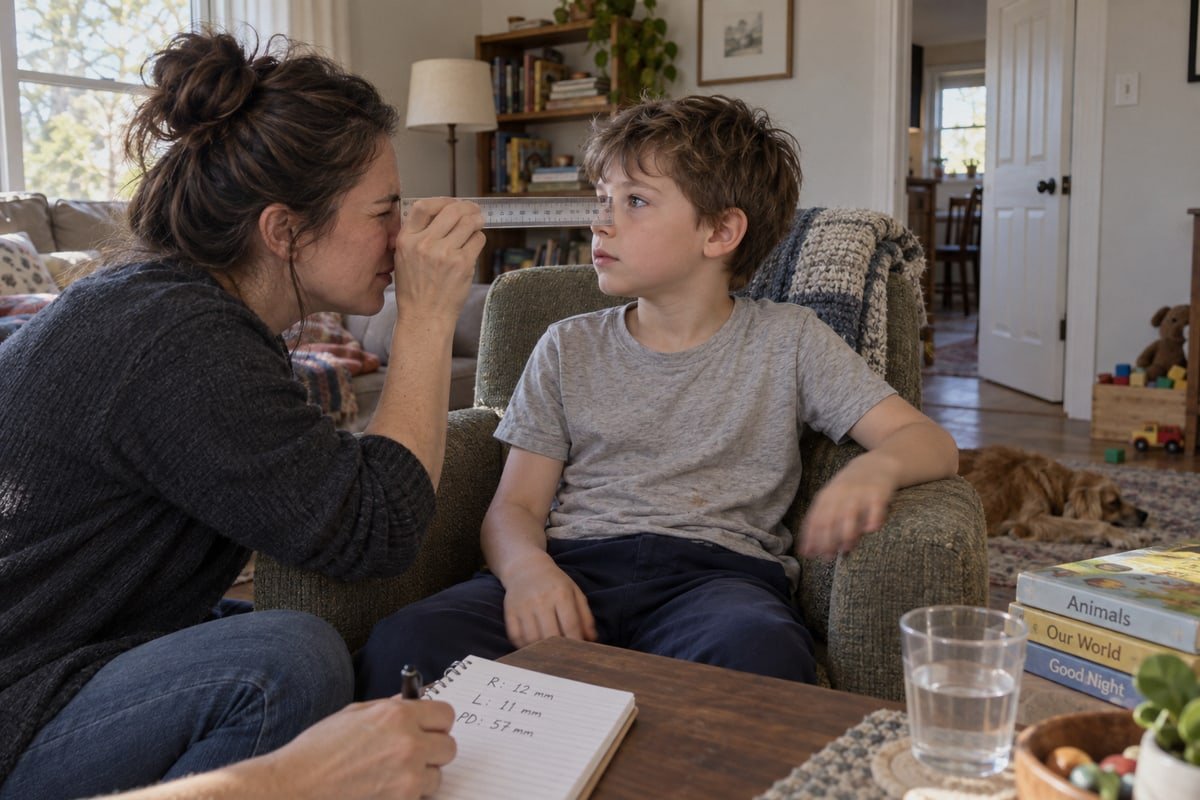
A frame that is too wide or a PD that is wrong makes the child look through the wrong part of the lens. That sounds small. In practice it changes the prescription the child actually experiences. Here are the signs we tell brand partners to look for, and what usually sits behind each one.
| Symptom you can see | السبب المحتمل | ما يجب التحقق منه أولاً |
|---|---|---|
| Red marks or pressure lines on the nose | Bridge too narrow or too high for the nose bridge fit | Frame bridge width and pad contact |
| ينزلق الإطار لأسفل أثناء اللعب | Bridge too wide or temple length too long | Bridge fit, then temple curve behind the ear |
| Pupils sit inside or outside the lens center | Frame PD much wider than measured PD | Boxing system calculation |
| One lens edge thicker than the other | Uneven monocular PD or decentered lens cutting | Monocular PD values on the order |
| Child complains of headaches or tilts head | Induced prism effect from decentration | Decentration per eye against a 2–3 mm limit |
| Child pushes glasses up all day | Temples splayed by a face that is too wide for the frame | Overall frame width and temple angle |
The prism effect in plain words
A lens bends light. The optical center is the one point where light passes straight through. Move the pupil away from that point, and the lens acts like a small prism. The image shifts. The two eyes receive images that are not where they should be. The child's brain works to pull them together. That extra work shows up as eye strain, headaches, or a dislike of wearing the glasses. Keep decentration under 2–3 mm per eye and this effect stays small.
Flexible does not mean forgiving
Buyers sometimes assume that impact-resistant materials solve fit problems. They do not. TPEE and TR90 give you frames that bend instead of snap. So-called unbreakable frames survive being sat on. That is a real benefit for active kids. But a frame that flexes back into shape can still hold the lenses 4 mm off center every single day. Durability protects the frame. PD matching protects the vision.
There is also a shape question. Round and oval lenses are often better for high prescriptions because they keep edge thickness even. A rectangular lens may look more modern, like the translucent rounded-rectangle fronts many of our buyers choose. Both can work. The frame still has to fit the face, and the frame PD still has to sit close to the child's PD.
Test the fit in motion
Because TPEE has no metal core, an optician cannot bend it to correct the fit. The frame's wrap-around tension is the main thing holding the lenses in place. So we ask buyers to run a dynamic fit test. Watch the child walk, run, and look down at a book. The frame should stay put, the pupils should remain on or just above the horizontal center line, and they should sit just inside the vertical center line of each lens. If the frame drops or the temples flare, the centering will not survive a school day.
كيف يمكنني العمل مع الشركة المصنعة الخاصة بي لتخصيص مقاس الإطار لملاءمة دقيقة لمسافة بين الحدقتين (PD)؟
Fifteen years of molding kids' frames taught us one lesson: fix the frame PD on paper before the tool is cut, because steel does not stretch.
اعمل مع الشركة المصنعة الخاصة بك عن طريق مشاركة نطاقات PD المستهدفة الخاصة بك، وطلب PD للإطار، وعرض الجسر، وطول الصدغ في كل ورقة مواصفات، والاختيار من القوالب الموجودة أولاً، وطلب عينات اختبار الارتداء على أطفال حقيقيين، وتحديد تسامح الانحراف قبل الموافقة على الألوان أو الشعارات أو التعبئة والتغليف.
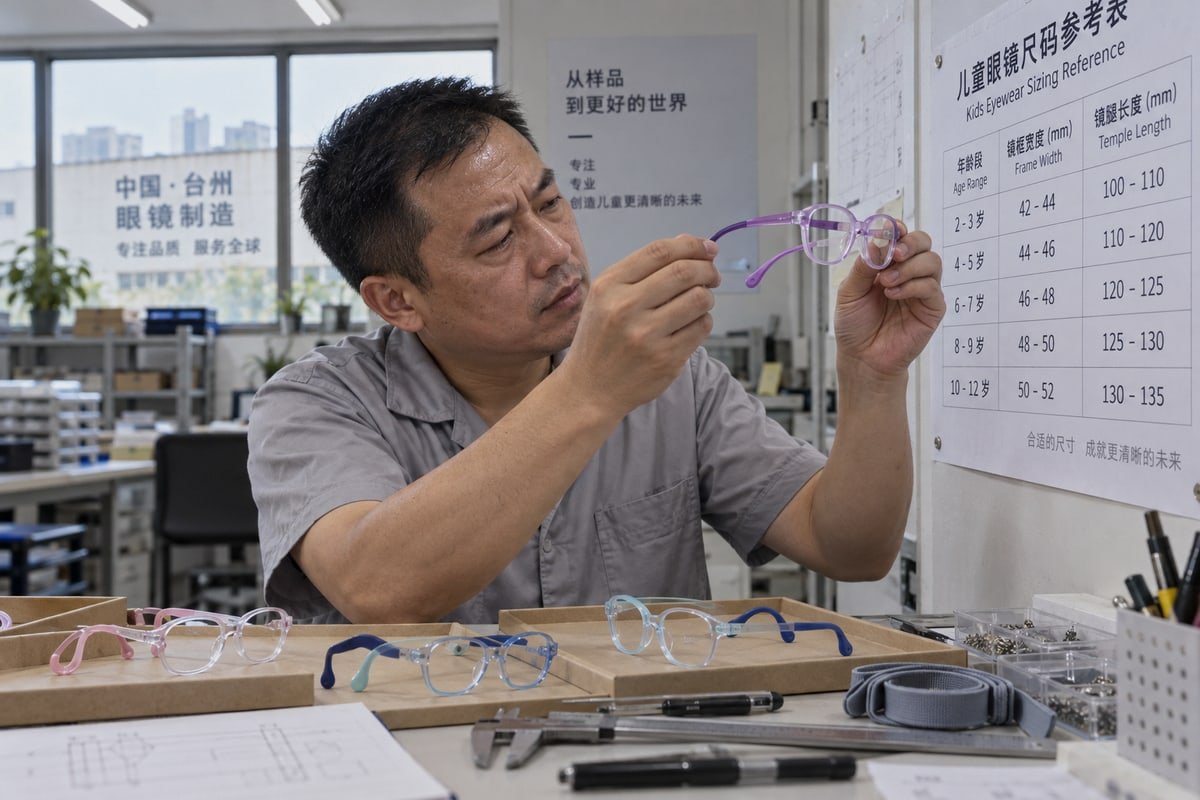
Most sizing mistakes happen before production starts. A buyer picks a style from a photo, approves a color, and only later learns that the frame PD is 8 mm wider than the children it is meant for. You can avoid this with a short, disciplined process. Here is the one we use with our OEM and ODM partners.
A five-step sizing workflow
- Define your child. Tell us the age range, the market, and whether you sell for prescription lenses or plano demo lenses. A kids' optical brand in Japan and an outdoor brand in Europe rarely need the same bridge.
- Share PD targets. Give us the PD range you want each size to cover. We then shortlist styles from our library of roughly 800 existing molds whose lens width plus bridge width falls within 2–3 mm per eye of that range. This lets a new brand launch without paying for a fresh tool.
- Read the spec sheet, not the render. Every quotation we send lists lens width, bridge width, frame PD, temple length, and lens height. Ask any factory for the same.
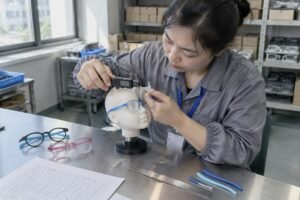
- Wear-test samples. Put samples on real children in your target age band. Check nose bridge fit, temple length, pupil position, and the dynamic fit test from the previous section. Send us photos. Our engineers adjust the bridge or temple curve at the sample stage, when changes are still cheap.
- Approve the fit, then the look. Colors, logos, lens tints, and packaging come after the geometry is signed off. Fit first, decoration second.
| Spec sheet field | لماذا تحتاجه | Typical action if it is off |
|---|---|---|
| عرض العدسة (A) | Half of the frame PD calculation | Choose a neighboring size in the same style family |
| عرض الجسر (DBL) | Controls nose bridge fit and the other half of frame PD | Request a bridge variant or a different mold |
| Frame PD (A + DBL) | Direct comparison with measured PD | Reject if decentration exceeds your tolerance |
| طول الذراع الجانبي | Keeps the frame anchored behind the ear | Adjust the TPEE temple length or hook shape |
| Lens height (B) | Sets vertical pupil position | Confirm pupils sit in the upper part of the lens |
| Material of front and temple | TR90 rigidity for lens stability, TPEE softness for comfort | Specify TR90 front with TPEE temples for higher prescriptions |
Small customizations that protect the fit
Full custom molds are not always necessary. Within an existing style, we can often offer a second bridge width, a shorter temple, or a different ear hook. The looped ear hooks on many of our toddler styles, for example, hold a frame in place without extra tension on the nose. Custom colors, gradient temples, and logo placement do not change the geometry, so they never affect PD. Custom lens curves might, so we discuss base curve with your lab before cutting.
Helping parents who buy online
Online sales push parents to self-measure, while clinical sources urge a professional recheck. Both sides have a point. We resolve this for brand partners by adding a PD measurement card and a simple fit checklist inside the retail packaging. The parent gets a clear method, and the card reminds them to confirm PD with an optician before ordering prescription lenses. It costs very little and cuts returns.
Quality control you can verify
Our workshop runs under 5S management with about 120 workers, and we check frame PD against the drawing at incoming inspection, after molding, and before packing. TR90 and TPEE both carry hypoallergenic properties and are environmentally friendly materials, but we still test every new color batch for surface finish and flex recovery. Ask your factory how they hold these tolerances. A partner who cannot answer will struggle to keep your second order identical to the first.
الخلاصة
Durable TR90 & TPEE frames survive rough play, but only correct PD matching protects a child's vision. Measure, calculate frame PD, test on real faces, then order.
هل أنت مهتم بتوريد المنتجات المذكورة في هذه المقالة؟ انظر التفاصيل واطلب عرض أسعار هنا:
ملاحظات ختامية
1. Professional guidance on using a digital pupillometer to provide a far-focus target for accurate measurements. ↩︎
2. Scientific overview of how lens decentration and shifting optical centers create unwanted prism effects. ↩︎
3. International standards for the boxing system formula used to calculate frame dimensions. ↩︎
4. Technical details on the Grilamid TR-90 material used in high-quality eyewear fronts. ↩︎
5. Technical properties of thermoplastic polyester elastomers used in flexible TPEE temples. ↩︎
6. Information on how proper vision correction supports a healthy developing visual system in children. ↩︎
مقالات أخرى قد تعجبك

هل تبحث عن شريك موثوق به للنظارات للأطفال؟
استكشف أكثر من 800 نمط جاهز ودعم OEM/ODM كامل مصمم خصيصًا لعلامتك التجارية.
اتصل بنا English
 Español de México
 Deutsch
 Français
 日本語
 العربية
 Português do Brasil