Which Kids’ Sunglasses Specs Can You Downgrade to Save Cost?
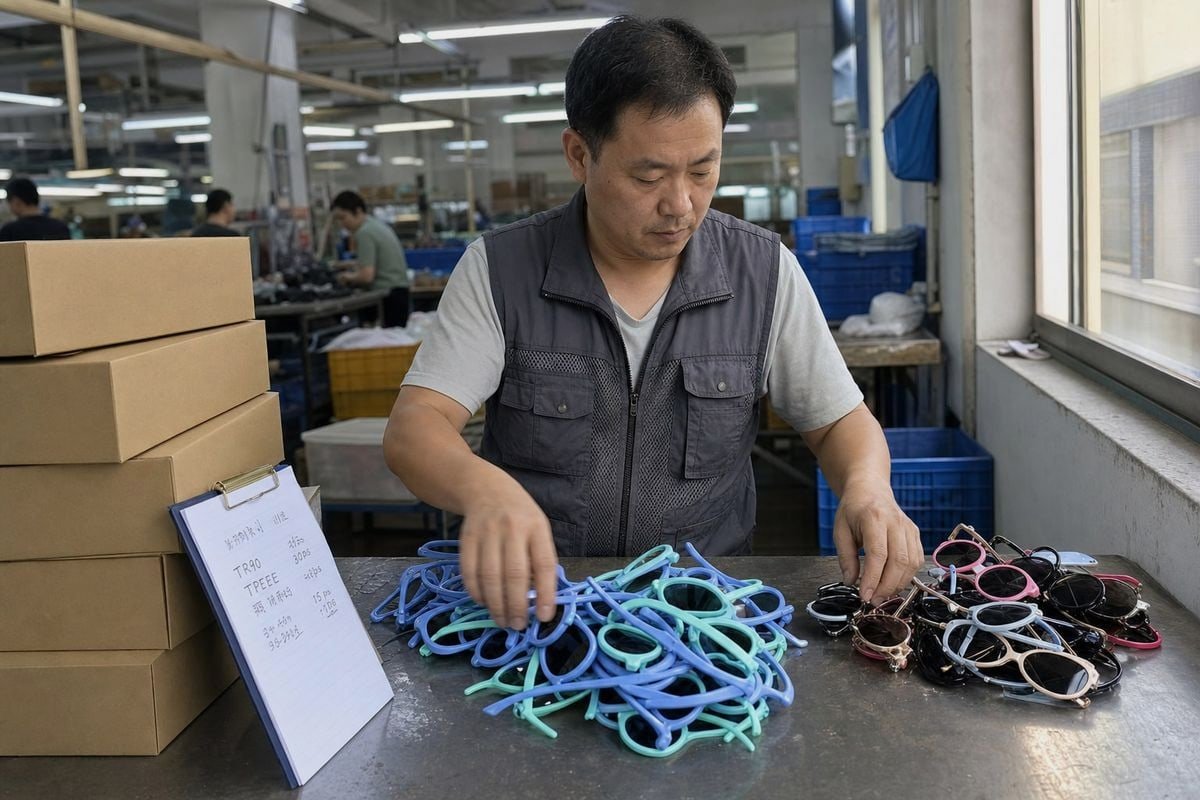
Buyers ask me about kids’ sunglasses specs almost weekly on our Taizhou production line photochromic lenses 1. Cut the wrong spec, and returns spike. Cut the right one, and margins grow safely.
You can safely downgrade brand licensing, polarization, mirror coatings, high-index lenses, specialty tints, and premium packaging on kids’ sunglasses. Never downgrade UV400 protection, impact-resistant polycarbonate lenses, flexible frame materials like TR90 or TPEE, or proper fit — these are non-negotiable child safety specs.
The line between “safe to cut” and “never cut” is clearer than most buyers think. Below, I break it down spec by spec, using what we see on our own factory floor.
Which Material Upgrades Are Worth Keeping Even If I Need to Cut Costs Elsewhere?
A procurement manager from Australia once asked us to swap TPEE temples for rigid PC to save a few cents per unit. We showed her our twist test, and she changed her mind on the spot.
Keep flexible frame materials like TR90 and TPEE, UV400 polycarbonate lenses, and rubberized temple tips even on a tight budget. These specs directly protect children during falls and rough play. Cut cosmetic material upgrades instead, such as metal accents, premium hinges, or titanium components.
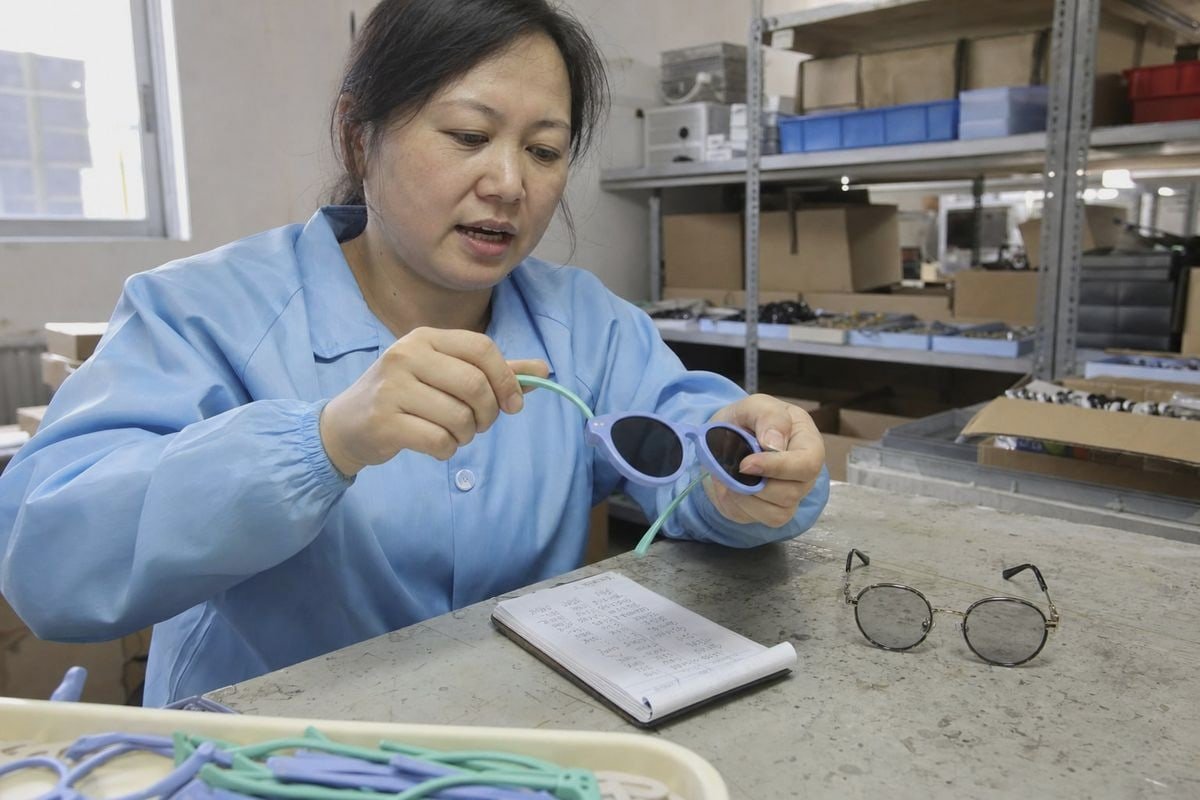
Material choice is where safety and cost collide hardest. In our fifteen years of making children's eyewear, we have learned one rule: the frame must survive the child, not the other way around. Kids sit on their glasses. They throw them in bags. They bend the temples backward just to see what happens. A rigid, brittle frame fails all of these tests. A flexible one passes them.
That is why we build most of our styles in TR90 and TPEE. TR90 gives structural memory — the frame snaps back after bending. TPEE temples add soft-touch comfort and even more flex at the point where breakage happens most. These are not luxury upgrades. They are the core of a product that survives real use.
What You Can Cut on Materials
Metal hinges with spring mechanisms, decorative metal inlays, and titanium or acetate builds add cost without adding child-relevant safety. A well-molded plastic hinge on a flexible frame outperforms a fancy hinge on a brittle one.
| Material Spec | Keep or Cut? | لماذا |
|---|---|---|
| TR90 / TPEE flexible frame | Keep | Survives bending, twisting, and drops |
| البولي كربونات 2 UV400 lens | Keep | Impact-resistant, blocks 100% UVA/UVB |
| أطراف معبد مطاطية | Keep | Grip and comfort for active kids |
| Spring hinges | Cut | Flexible frames make them redundant |
| Metal or acetate frames | Cut | Heavier, more brittle, higher cost |
| Decorative metal accents | Cut | Pure cosmetics, zero safety value |
The honest math: flexible materials cost slightly more per unit but slash your defect returns and warranty complaints. For a brand, that trade almost always pays for itself.
Can I Reduce Lens Quality Without Compromising My Brand's Safety Standards?
There is a trade-off we weigh on every quotation we send from Taizhou: which lens features carry real safety weight, and which ones only carry marketing weight. The gap between the two is bigger than most buyers expect.
Yes — you can drop polarization, mirror coatings, photochromic technology, and specialty tints without touching safety. UV400 protection and impact-resistant polycarbonate are the only two lens specs that define child eye safety. Everything else is a comfort or style upgrade.
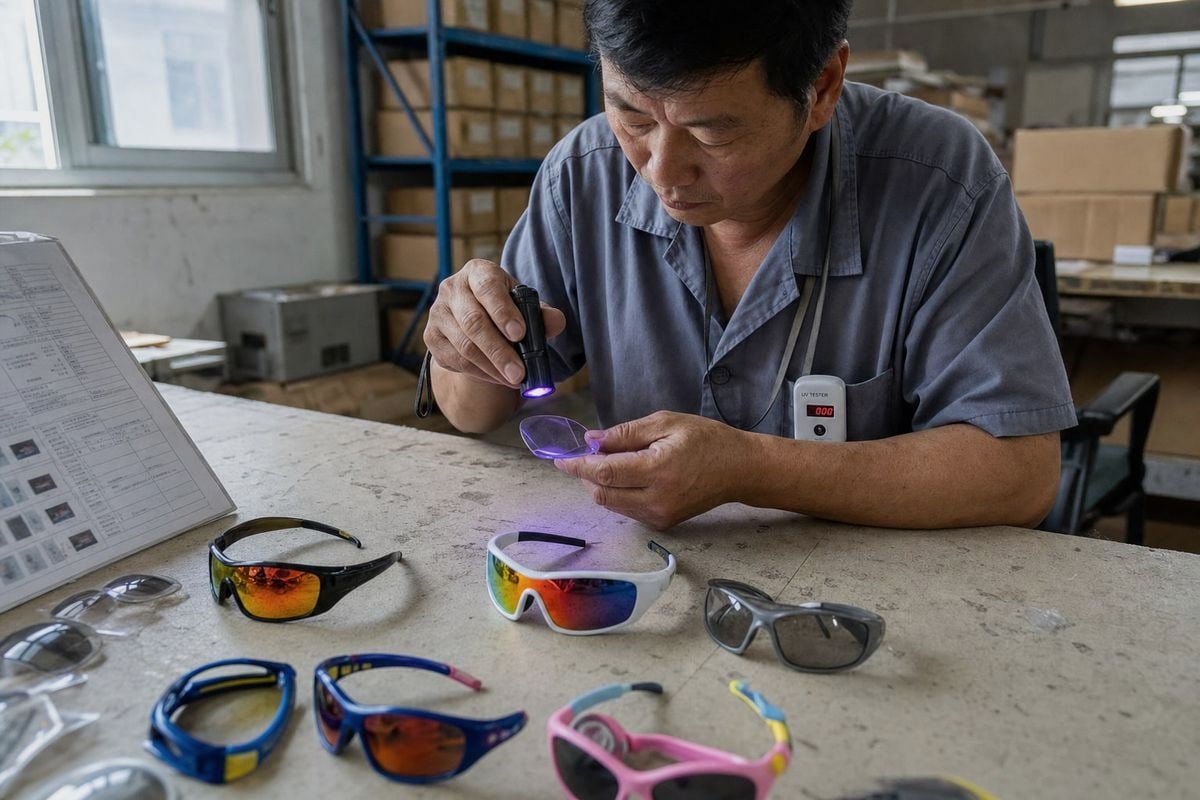
Let me be blunt about what actually protects a child's eyes. Two things: full UVA/UVB blocking 3, and a lens that will not shatter into fragments on impact. UV400 polycarbonate delivers both at a very reasonable base cost. That is your floor. Never go below it, no matter what a supplier offers you.
Above that floor sits a stack of optional upgrades, and each one adds cost:
- Polarization — cuts glare from water and snow. Great for beach or ski lines. Unnecessary for everyday playground wear.
- Mirror or gradient coatings — like the orange-to-teal shield lenses in our sport styles. Pure visual appeal. Kids and parents love them, but they add nothing to UV protection.
- Photochromic lenses — a premium feature for very specific use cases.
- Anti-reflective coatings — mainly relevant for optical lenses, marginal for tinted sunglasses.
- Specialty color tints — standard gray or brown performs just as well for daily use.
A Smart Tiering Strategy
Here is what we recommend to brands building a range. Do not put every feature on every SKU. Tier your line instead.
| Product Tier | Lens Build | Target Retail Position |
|---|---|---|
| Entry | UV400 polycarbonate, solid gray tint | Everyday value pair |
| Mid | UV400 + basic mirror coating | Trend-driven impulse buy |
| ممتاز | UV400 + polarized + gradient mirror | Beach, snow, sport line |
This way, polarization becomes a premium story you charge for, not a cost you absorb across the whole range. Our polarized lens options exist for exactly this reason — as an upsell tool, not a baseline requirement.
What Packaging Changes Can I Make to Lower Costs Without Hurting My Retail Presentation?
Last year, our team reworked a packaging quote for a European kids' accessory brand three times. Each round, we stripped cost without stripping shelf appeal. The final unit cost dropped meaningfully — and their retail buyer never noticed a downgrade.
Downgrade rigid gift boxes to printed folding cartons, swap magnetic-closure cases for soft microfiber pouches, and reduce insert layers. Keep strong brand printing, a protective pouch or case, and a hang tag with UV400 certification claims — these drive retail trust and shelf conversion.
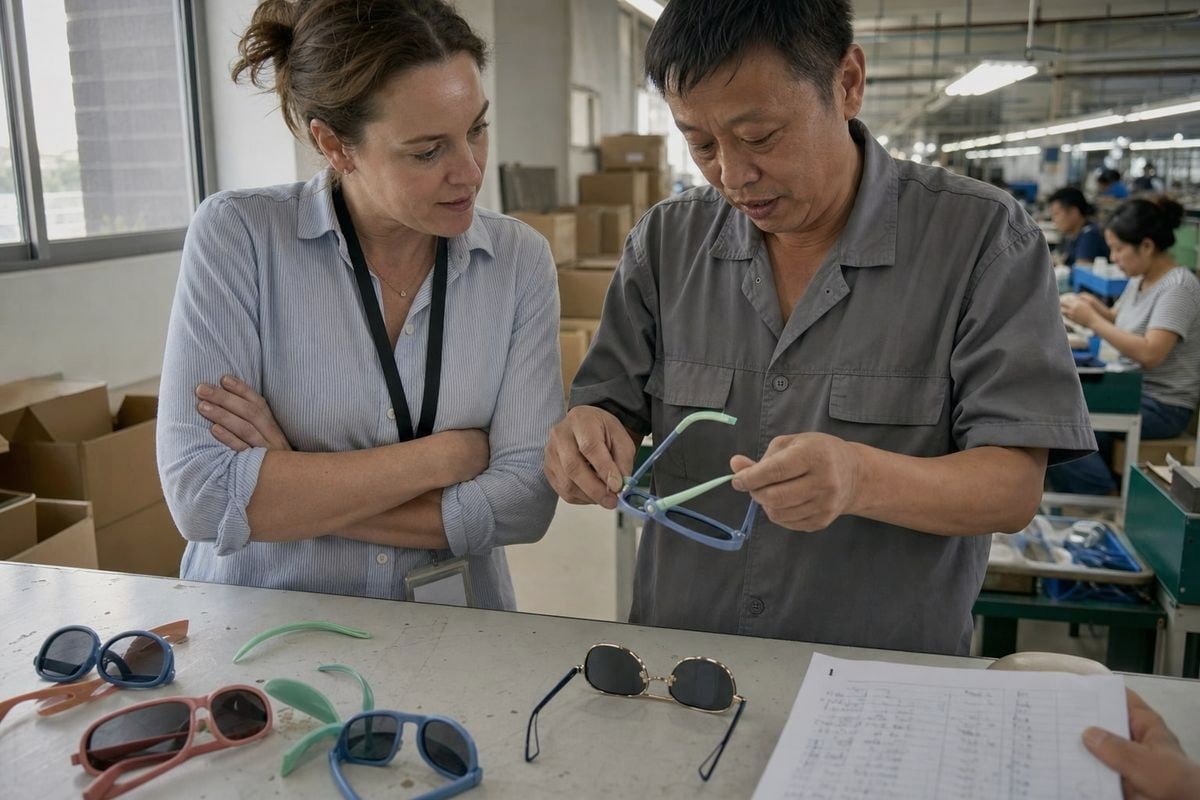
Packaging is the easiest place to save money, because parents judge the product on the shelf for seconds but use it for months. The trick is knowing which packaging elements do real retail work and which ones just add grammage.
What Packaging Actually Does at Retail
Three jobs matter: protect the product in transit, communicate safety claims (UV400, materials), and look credible next to competitors. Everything beyond that is optional theater.
From our OEM/ODM packaging 4 projects, here is how the common changes stack up:
| Packaging Element | Downgrade Option | Retail Impact |
|---|---|---|
| Rigid two-piece gift box | Printed folding carton | Minimal — print quality matters more than box structure |
| Magnetic hard case | Microfiber drawstring pouch | Low — pouch doubles as a cleaning cloth, parents like it |
| Foam or molded insert | Simple card cradle | Minimal if the pouch protects the frame |
| Full-color hang tag with UV400 claim | Keep as is | High — this is where parents check safety |
| Spot UV / foil logo finish | Standard CMYK print | Low at kids' price points |
| Individual polybag | Keep for transit protection | Required for scratch-free delivery |
One caution: do not cut the safety messaging. A hang tag that clearly states حماية UV400 5 and flexible, child-safe materials does heavy lifting at the point of sale. We print these claims for our brand clients precisely because parents scan for them before checking the price. Cheap-looking packaging with strong safety claims beats beautiful packaging with vague ones.
How Do I Know Which Specs My Customers Will Actually Notice If I Downgrade Them?
Early in our export history, we learned a hard lesson: a spec sheet and a parent's hands disagree constantly. A buyer once trimmed the temple tip rubber to save cost, and complaint emails about slipping frames started within weeks.
Customers notice specs they touch, feel, and test daily: frame flexibility, weight, fit, and lens scratching. They rarely notice absent polarization, missing coatings, generic hinges, or simplified packaging. Downgrade invisible specs first, and protect anything a parent feels in the first ten seconds.
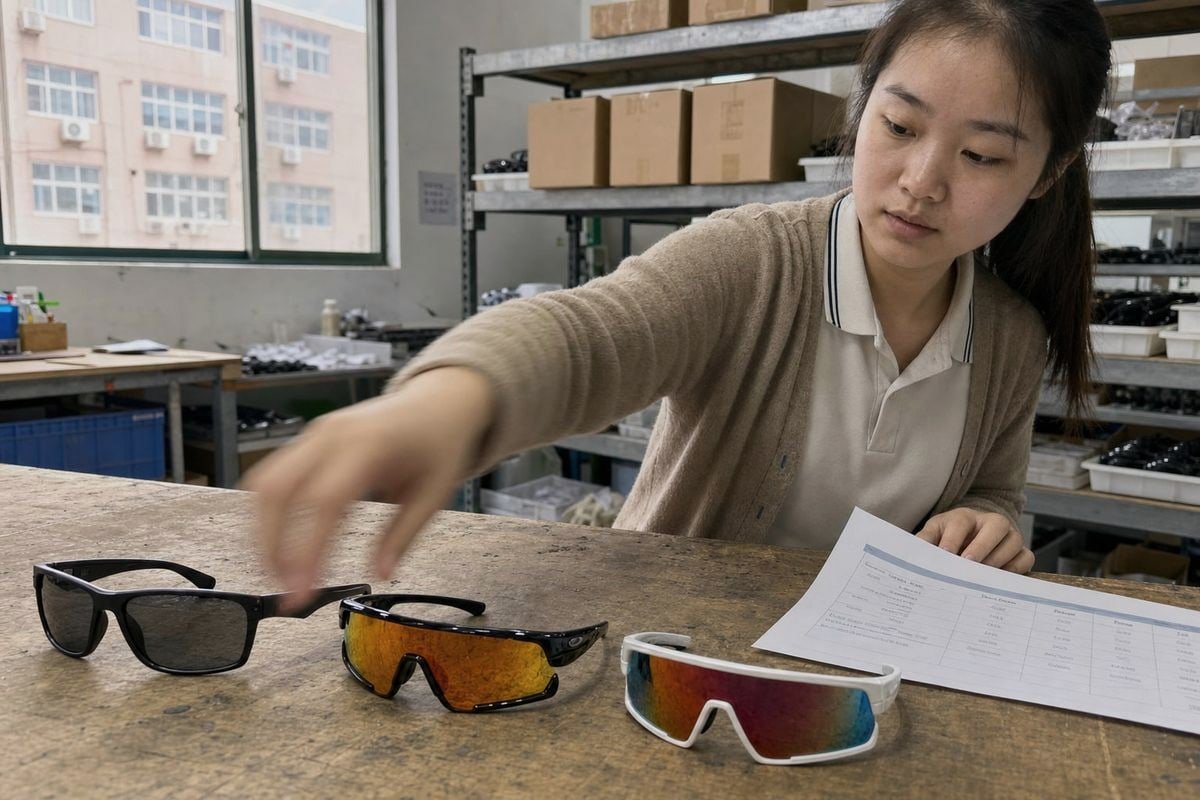
The best filter I can give you is the "first-touch test." Picture a parent picking up your sunglasses in a store or unboxing them at home. What do they do? They bend the temples. They check the weight. They put them on the child and watch whether the frame slips. Those moments decide your reviews.
Specs Ranked by Customer Perception
Think of every spec in three buckets:
- Felt immediately — flexibility, weight, nose fit, temple grip, lens clarity. Never downgrade these. This is where TR90 frames with TPEE temples earn their keep.
- Discovered over time — scratch resistance, hinge durability, color fastness. Downgrade cautiously; failures here show up as one-star reviews at month two.
- Never perceived — polarization on a playground, anti-reflective coating on a tinted lens, brand-name hinge hardware, high-index lens material at low prescriptions. Cut these first and confidently.
Use Reviews as Your Spec Audit
Read your own product reviews and your competitors'. Count the complaints. In children's eyewear, the pattern is remarkably stable: broken frames, slipping fit, and scratched lenses dominate. Almost nobody complains about missing mirror coatings. That review data is a free, honest map of which kids’ sunglasses specs your market actually values — and it usually points straight back to materials and fit, not extras.
الخلاصة
Cutting the wrong spec costs you a brand reputation. Cutting the right one funds your growth. Keep UV400, مقاومة الصدمات 6, flexible materials, and fit — trim everything else with confidence.
ملاحظات ختامية
1. Wikipedia background on photochromic lens technology mentioned as an optional premium feature. ↩︎
2. Background reference explaining polycarbonate material properties relevant to impact-resistant lenses. ↩︎
3. FDA resource on UV radiation categories supports claims about full UVA/UVB blocking for kids. ↩︎
4. Alibaba represents manufacturing/trade sourcing context relevant to OEM/ODM packaging projects mentioned. ↩︎
5. EPA authority on UV radiation risks supports UV400 protection claims for children’s eyewear. ↩︎
6. Provides background on industry impact-resistance standards referenced for children’s sunglasses lenses. ↩︎
مقالات أخرى قد تعجبك
August 1, 2026
هل يجب على المصنع التعامل مع تغليف ووضع ملصقات نظارات الأطفال الشمسية، أم استخدام مورد مخصص؟
August 1, 2026
مستودع خاص مقابل الوفاء المباشر من المورد: أيهما يقلل تكاليف الإرجاع لعلامات نظارات الأطفال الشمسية؟

August 1, 2026
مباشر إلى ميناء المستودع أو التخزين الخارجي: أيهما يوفر أكثر على شحن نظارات الأطفال الشمسية؟
هل تبحث عن شريك موثوق به للنظارات للأطفال؟
استكشف أكثر من 800 نمط جاهز ودعم OEM/ODM كامل مصمم خصيصًا لعلامتك التجارية.
اتصل بنا English
  Español de México
  Deutsch
  Français
  日本語
日本語  العربية
  Português do Brasil