What Are the Market Access and Compliance Differences: US vs Europe for Kids’ Sunglasses?

The market access and compliance differences for kids’ sunglasses between the US and Europe confused me too, until our Taizhou factory shipped its first dual-market order and hit two very different rulebooks.
The US regulates kids’ sunglasses through an FDA-led pathway using ANSI Z80.3, impact resistance testing, and CPSIA rules. Europe treats them as Category I PPE under Regulation 2016/425, requiring CE marking, EN ISO 12312-1 testing, and a Declaration of Conformity.
That short answer hides a lot of detail. Each market asks for different tests, different documents, and different labels. I will walk you through each difference below, in plain terms, so you can plan one product launch that clears both borders.
What Safety Certifications Do I Need for Kids' Sunglasses in the US and Europe?
A few years back, one of our European distributors asked me why his US retail partner rejected paperwork that German customs had accepted without question. That moment taught our team how differently the two systems think.
For the US, you need FDA medical device registration for sunglasses, ANSI Z80.3 compliance, CPSIA testing at a third-party lab, and a Children's Product Certificate. For the EU, you need CE marking under PPE Regulation 2016/425, EN ISO 12312-1 test reports, and a Declaration of Conformity.
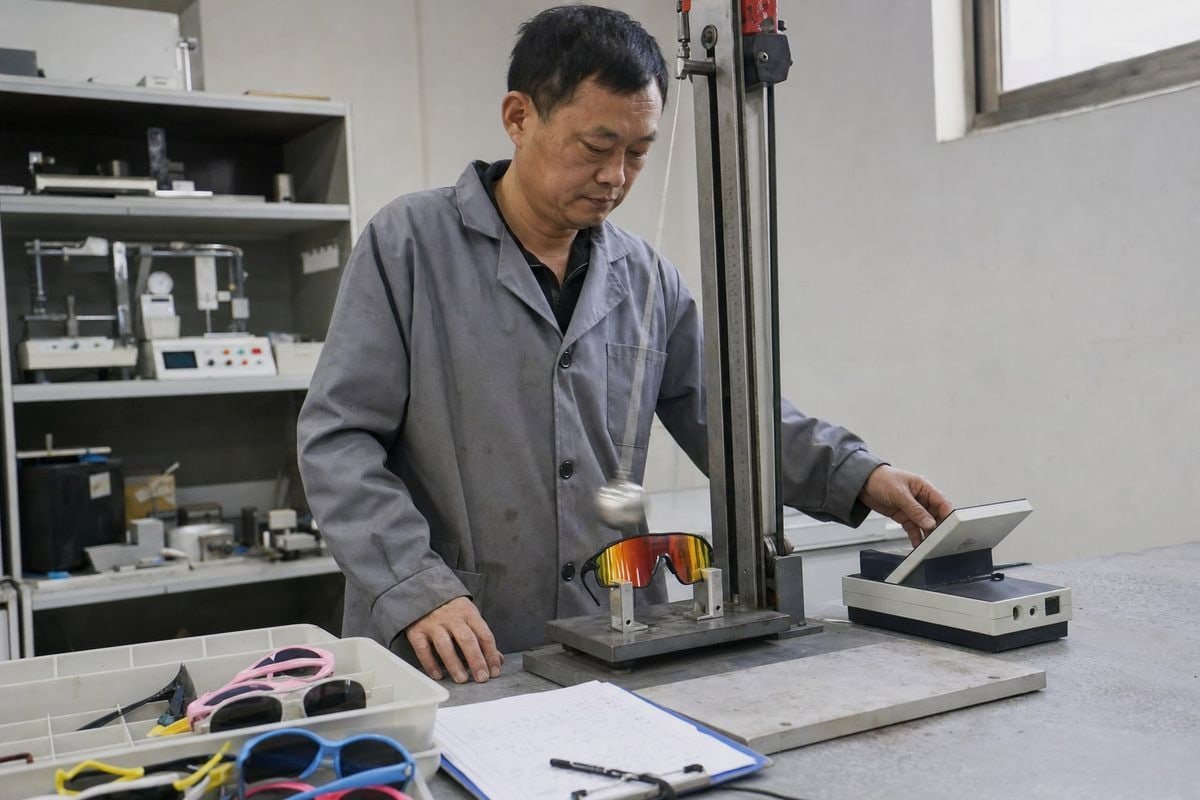
The two markets start from different legal ideas. The US treats sunglasses as a Class I medical device 1 under FDA oversight. Europe treats them as Category I personal protective equipment. This classification difference drives everything else, so let us break it down.
The US Certification Stack
In the US, three layers apply at once. First, the FDA layer covers device listing 2, establishment registration, and impact resistance rules. Second, the CPSIA layer 3 applies because the product is made for children. It requires third-party lab testing for lead and phthalates, plus a Children's Product Certificate (CPC). Third, ANSI Z80.3 sets the voluntary but expected performance benchmark that most US retailers demand.
The EU Certification Stack
In Europe, one framework does most of the work. PPE Regulation 2016/425 places sunglasses in Category I 4, which allows self-declaration. You still need real test evidence against the EN ISO 12312-1 standard 5, a Technical File, and a signed Declaration of Conformity. REACH chemical restrictions apply on top, covering Substances of Very High Concern in frames and lens coatings.
| المتطلب | الولايات المتحدة | الاتحاد الأوروبي |
|---|---|---|
| Legal classification | Class I medical device (FDA) | Category I PPE (Regulation 2016/425) |
| المعيار الأساسي | ANSI Z80.3 | EN ISO 12312-1 |
| Children's chemical rules | CPSIA (lead, phthalates) | REACH SVHC restrictions |
| الشهادة الرئيسية | شهادة منتجات الأطفال | إعلان المطابقة |
| Mark on product | ملصق التتبع | CE mark on temple |
One nuance worth stating: some buyers assume the EU route is easier because Category I allows self-declaration. In our experience, it is not easier — it simply shifts the burden. You must still hold valid lab reports and a complete Technical File, because market surveillance authorities can request them at any time.
How Do UV400 and Lens Testing Requirements Differ Between US and EU Regulations?
When we develop a new mirrored shield lens — like the orange-gradient sport style on our line right now — our lab runs it against two separate test protocols before we quote any dual-market buyer.
The EU tests lenses under EN ISO 12312-1, focusing on UV transmittance, filter categories, and optical quality, with mechanical robustness checks. The US emphasizes impact resistance through the FDA drop ball test under 21 CFR 801.410, plus ANSI Z80.3 transmittance and labeling requirements.
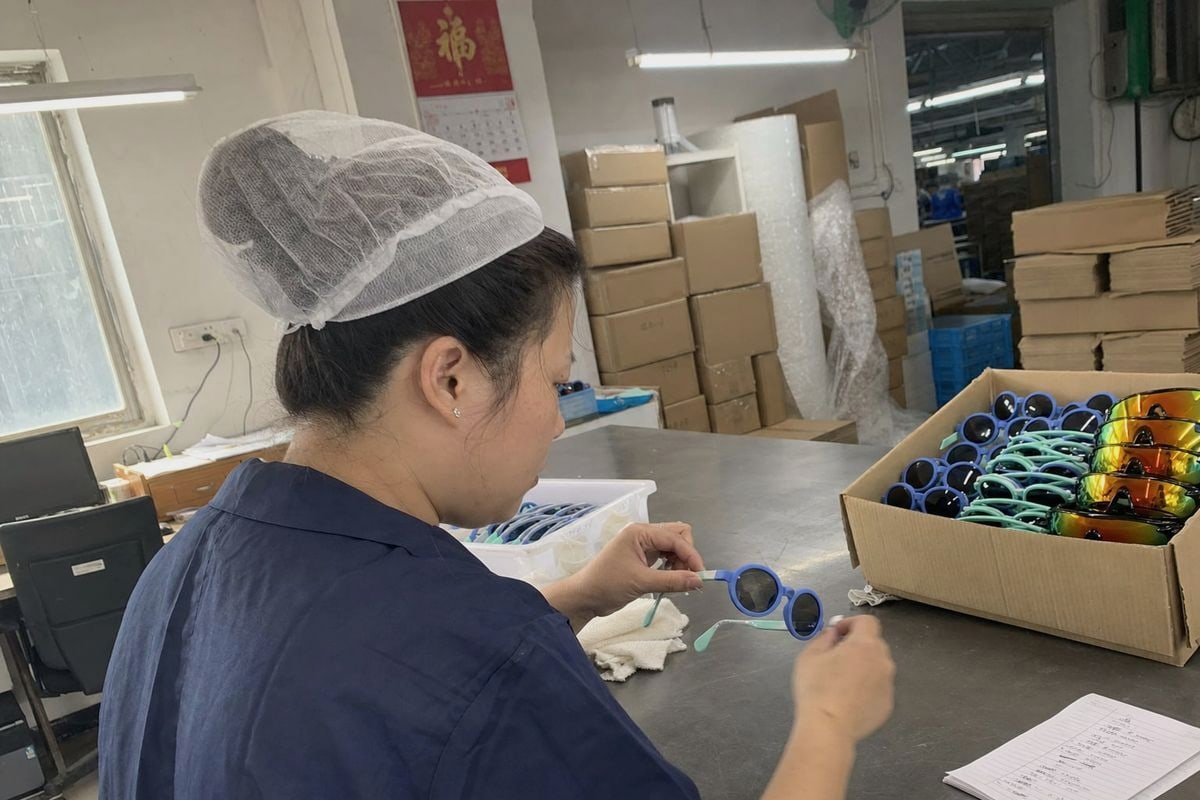
UV400 is a marketing-friendly term, but the legal tests behind it differ by region. UV400 protection standards mean the lens blocks wavelengths up to 400 nanometers. Both markets accept this level of protection, yet they verify it differently.
Europe: Optical Performance First
EN ISO 12312-1 sorts lenses into filter categories 6 from 0 to 4 based on how much visible light they block. Our dark gray kids' lenses typically land in category 3. The standard also checks refractive power, prism imbalance, and scattered light. For children's frames, mechanical robustness matters, but the emphasis stays on UV and optical quality. In practice, EU buyers ask us for spectral transmittance curves before anything else.
United States: Impact Resistance First
The US flips the priority. The FDA drop ball test drops a steel ball onto the lens from a set height. The lens must not crack or shatter. ANSI Z80.3 then adds transmittance requirements, and the 2025 revision tightened expectations around spectral transmittance claims and UV attenuation labeling. So a lens that passes EU optics can still fail US entry if impact resistance testing was skipped.
| Test Focus | US Approach | EU Approach |
|---|---|---|
| تظل رؤية شاشات LCD طبيعية. | ANSI Z80.3 transmittance limits | EN ISO 12312-1 UV transmittance |
| Impact | Drop ball test (21 CFR 801.410) | Mechanical robustness test |
| Lens grading | Cosmetic / general / special purpose | Filter categories 0–4 |
| Claim rules | Updated spectral claims in ANSI Z80.3-2025 | Category marking per standard |
There is also a newer wrinkle. Hybrid "blue-light-plus-UV" children's lenses face growing scrutiny in the EU. If a lens claims a therapeutic benefit, regulators may push it out of the simple Category I self-declaration tier. We advise buyers to keep claims strictly protective, not medical, unless they are ready for a heavier compliance route.
What Labeling and Documentation Do I Need to Clear Customs in Both Markets?
Documentation is where I have seen the most shipments stall. One importer came to us after a previous supplier's container sat in Rotterdam for three weeks over a missing Declaration of Conformity — an avoidable, expensive lesson.
US customs clearance requires a Children's Product Certificate, CPSIA tracking labels, FDA compliance records, and importer identification. EU clearance requires the CE mark on the frame, a Declaration of Conformity, a Technical File held by the responsible party, and EU-address labeling on packaging.
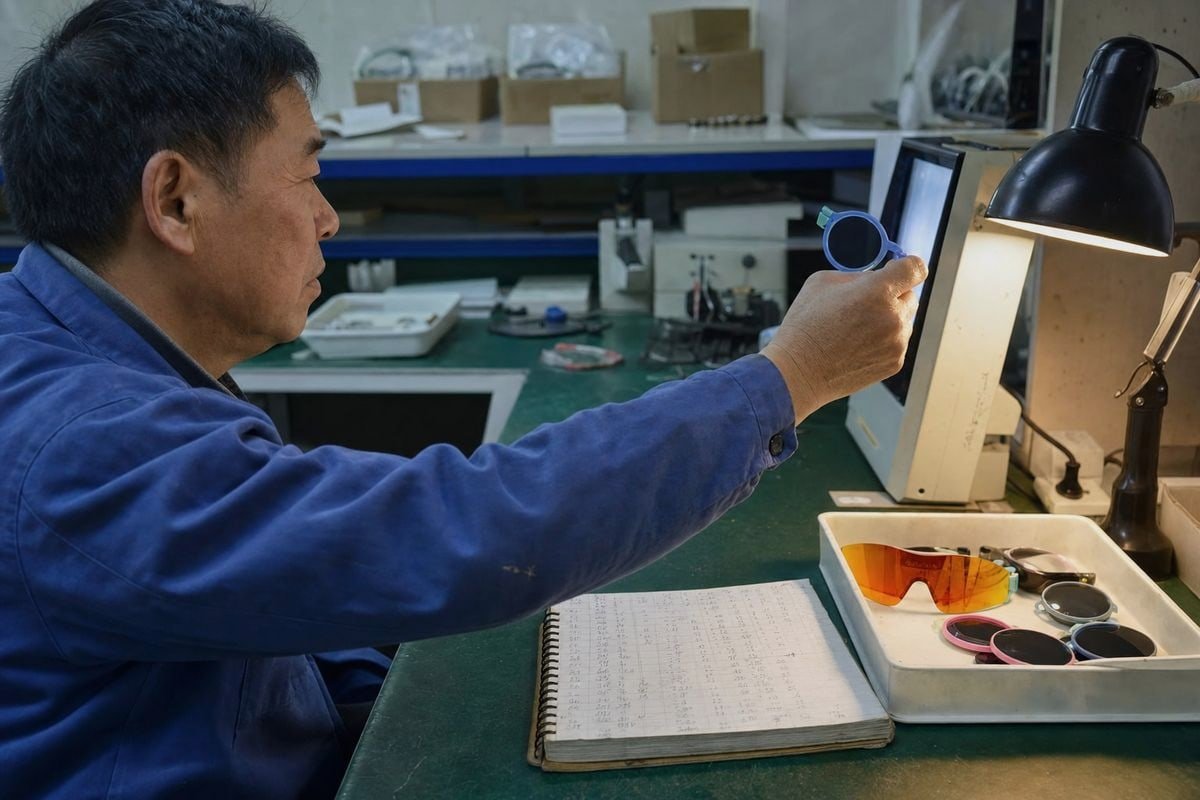
Think of documentation in two layers: what travels on the product, and what sits in a file ready for inspection. Both layers must match, or you invite questions at the border.
On-Product and Packaging Labels
For the EU, the CE mark must appear on the product itself — typically molded or printed on the frame temple. Packaging needs the filter category, care instructions in local languages, and the name and address of the EU importer or manufacturer. For the US, CPSIA demands a permanent tracking label showing manufacturer identity, production date, and batch information, so any unit can be traced back through the supply chain.
The Paper Trail Behind the Shipment
Here is a practical checklist we prepare for dual-market buyers:
- EN ISO 12312-1 test report from an accredited lab (EU).
- Signed Declaration of Conformity naming the EU responsible party.
- Technical File with design drawings, material data, and risk assessment.
- CPSIA third-party test report and Children's Product Certificate (US).
- Drop ball test records and FDA registration details.
- REACH and chemical compliance statements for frames and coatings.
One legal point deserves emphasis. Under the EU framework, if you import from outside the EU, the importer can be treated as the legal manufacturer for compliance purposes. That shifts real liability onto your EU entity. In the US, responsibility centers on federal product compliance and correct import documentation. Also worth planning for: emerging EU Ecodesign rules point toward a جواز سفر المنتج الرقمي 7, which will require material and supply chain transparency. And major online marketplaces now enforce super-compliance protocols, asking for ISO 17025 accredited lab reports that exceed legal minimums. Getting documentation right is no longer just a customs issue — it decides whether your listing goes live at all.
Can My Manufacturer Help Me Meet Both US and EU Compliance Without Separate Production Runs?
The trade-off we weigh on every dual-market project is simple: build one product to the stricter combined specification, or run two cheaper regional versions. After fifteen years of making children's eyewear, we almost always recommend the first path.
Yes. An experienced factory can design one product that satisfies both ANSI Z80.3 and EN ISO 12312-1, run combined lab testing, and then localize only labels, packaging, and paperwork per region — avoiding duplicate molds, duplicate production runs, and duplicate inventory risk.
The engineering logic is straightforward. If your lens passes the FDA drop ball test and meets EN ISO 12312-1 transmittance and optical limits, the same lens works everywhere. If your frame material clears both CPSIA testing and REACH chemical restrictions, one material specification serves both markets. Only the surface-level items — CE mark position, tracking labels, language on packaging — need regional variants, and those are cheap to change late in production.
How We Structure a Dual-Compliance Project
At our Taizhou facility, a typical dual-market development follows this sequence. First, we start from one of our roughly 800 existing styles, which lets a brand launch without heavy mold investment. Second, we lock the material specification — usually TR90 frames with flexible TPEE temples, chosen because soft, flexible materials reduce injury risk on active children's faces. Third, we send golden samples to an accredited lab for the combined test package: UV400 verification, impact resistance testing, mechanical robustness, and chemical screening. Fourth, we split only the finishing stage: CE-marked temples and EU packaging for one destination, tracking-labeled units and CPC-backed cartons for the other.
Where Material Choice Meets Compliance
Flexible materials add one special consideration. Ultra-soft TPEE toddler frames need torque and tension testing to confirm small parts like hinge screws cannot detach and become choking hazards. This is exactly the kind of detail a general-purpose sunglasses factory misses and a children's specialist builds into routine QC.
| Production Element | Shared Across Markets? | Regional Variant Needed |
|---|---|---|
| Lens (UV400, impact-tested) | نعم | لا شيء |
| Frame material (TR90/TPEE) | نعم | لا شيء |
| Mold and tooling | نعم | لا شيء |
| CE mark on temple | لا | EU units only |
| ملصق التتبع | لا | US units only |
| Packaging language and addresses | لا | Per destination |
| Test reports and certificates | Partially | Region-specific documents |
The commercial payoff is real. Europe held roughly a third of the global children's sunglasses market in recent estimates, and the US market alone is valued around a billion dollars. With e-commerce claiming a fast-growing share of sales, one well-documented product that both regions accept is the lowest-risk way to serve both.
الخلاصة
The market access and compliance differences for kids' sunglasses come down to FDA-led rules in the US versus CE and PPE rules in Europe. Design once to both standards, localize the paperwork, and both borders open.
ملاحظات ختامية
1. FDA resource explaining the classification of medical devices, including Class I items like sunglasses. ↩︎
2. Official FDA guide on the mandatory registration and listing process for medical device manufacturers and importers. ↩︎
3. Official CPSC page for the Consumer Product Safety Improvement Act, governing children’s product safety in the US. ↩︎
4. Official EU legislation defining Category I personal protective equipment, which includes products like sunglasses. ↩︎
5. Official ISO page for the international standard specifying requirements for sunglasses and related eyewear. ↩︎
6. Authoritative Wikipedia entry detailing the ISO 0-4 sunglasses filter categories. ↩︎
7. European Commission page detailing the Ecodesign regulation and the implementation of Digital Product Passports. ↩︎
مقالات أخرى قد تعجبك
August 1, 2026
هل يجب على المصنع التعامل مع تغليف ووضع ملصقات نظارات الأطفال الشمسية، أم استخدام مورد مخصص؟

August 1, 2026
مستودع خاص مقابل الوفاء المباشر من المورد: أيهما يقلل تكاليف الإرجاع لعلامات نظارات الأطفال الشمسية؟

August 1, 2026
مباشر إلى ميناء المستودع أو التخزين الخارجي: أيهما يوفر أكثر على شحن نظارات الأطفال الشمسية؟
هل تبحث عن شريك موثوق به للنظارات للأطفال؟
استكشف أكثر من 800 نمط جاهز ودعم OEM/ODM كامل مصمم خصيصًا لعلامتك التجارية.
اتصل بنا English
  Español de México
  Deutsch
  Français
  日本語
日本語  العربية
  Português do Brasil