Do Silicone Parts on Kids’ Sunglasses Release Harmful Odors or VOCs?
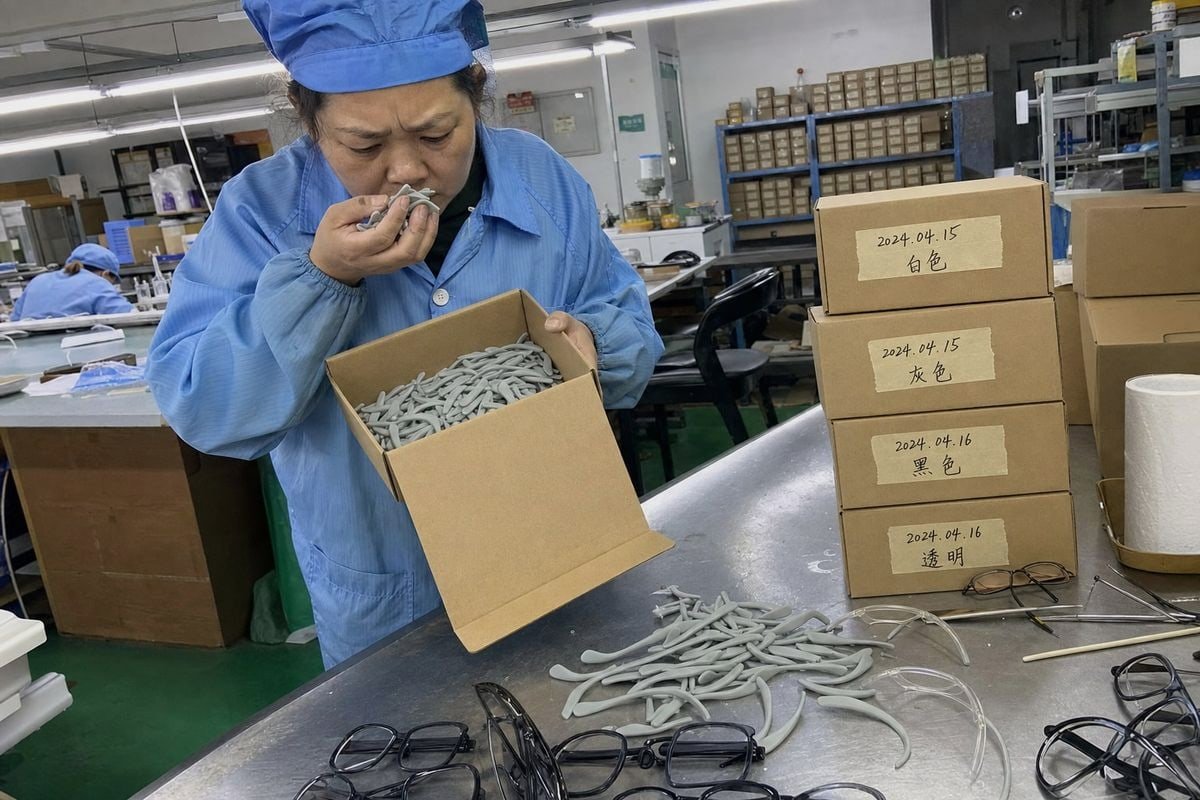
Buyers ask me about silicone parts on kids’ sunglasses almost weekly OEM/ODM 1. One strong chemical smell out of the box can trigger returns, bad reviews, and lost retailer trust overnight.
Silicone parts on kids’ sunglasses can release faint odors and trace volatile compounds, mainly from residual curing byproducts. Properly cured, high-quality silicone is not considered harmful at normal exposure levels, but a strong, persistent chemical smell signals low-grade material or incomplete curing and should be avoided.
The real question is not whether silicone is toxic current test reports 2. It is how the part was made, cured, and tested. Let me walk you through what actually matters.
How can I tell if silicone parts on kids' sunglasses are truly safe and odor-free?
A few years back, our QC team rejected an entire batch of soft temple tips from a sub-supplier. The reason was simple: they smelled wrong straight out of the carton.
Safe silicone parts on kids' sunglasses have little or no smell after 24–48 hours of airing, pass third-party chemical tests, and come with material documentation. A faint new-product scent that fades quickly is normal; a sharp, lingering chemical odor is a warning sign of poor curing or impurities.
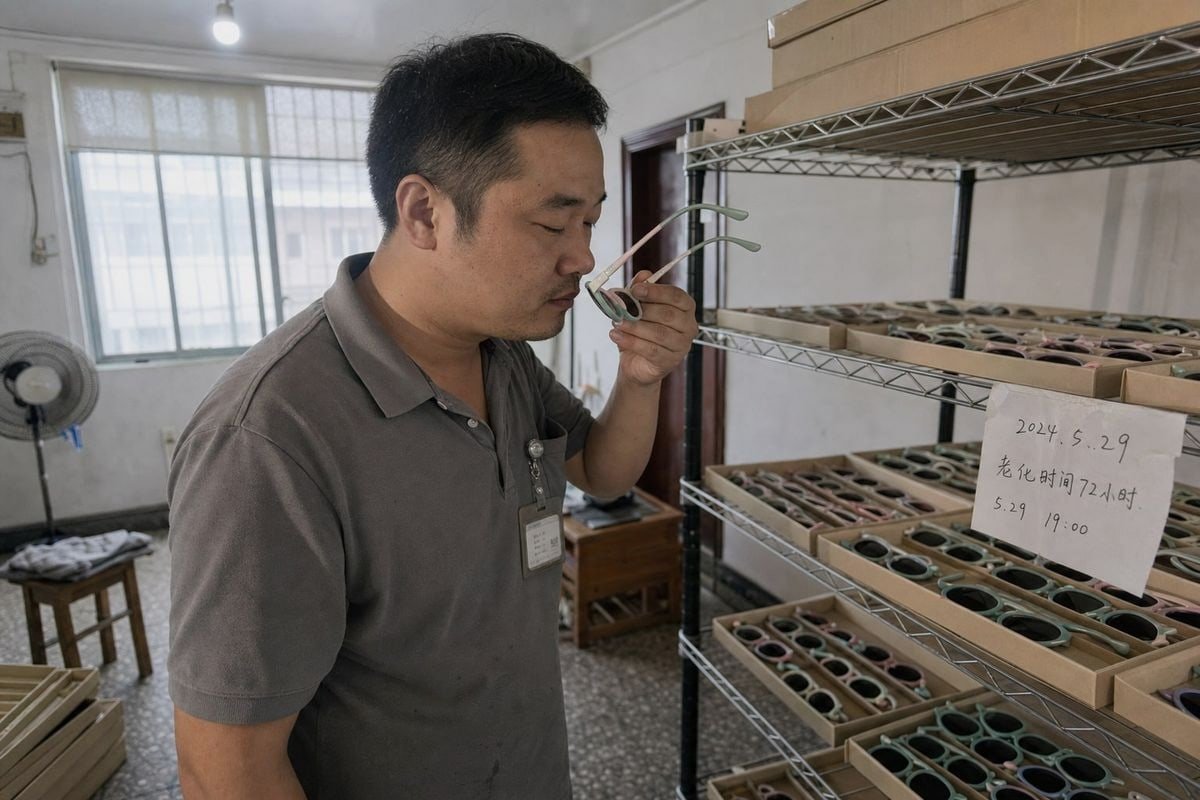
Odor alone is not a perfect safety test. Many VOCs have no smell at all, and many smells are not highly toxic. So you need to combine your nose with a few simple checks. In our workshop, we run incoming soft parts through a short inspection routine before they ever touch a child-facing product. You can adapt the same logic as a buyer or a parent.
A simple three-step check
- The sniff test after airing. Unpack the sunglasses and leave them in a ventilated room for one to two days. Quality silicone loses most of its new-product smell in that window. If the odor stays strong, question the material.
- The touch and stress test. Good silicone feels smooth, not greasy or sticky. An oily film or a surface that leaves residue on your fingers often points to uncured compounds migrating outward.
- The paperwork test. Ask for a material declaration, test reports, or a Safety Data Sheet 3. A supplier who cannot show any documentation is asking you to take the risk on their behalf.
Normal smell versus warning sign
| Observation | السبب المحتمل | What to do |
|---|---|---|
| Faint rubbery scent, fades in 1–3 days | Normal residual volatiles from curing | Air out, wash with mild soap, use normally |
| Strong chemical smell that persists for weeks | Incomplete curing or low-grade filler | Reject the batch or return the product |
| Oily or sticky surface film | Uncured oligomers migrating to the surface | Reject; this indicates poor process control |
| No smell, clean documentation | Well-cured, tested material | Acceptable for children's use |
Children wear sunglasses right against the nose and temples. Even a mild odor sits centimeters from their airways for hours. That is why the practical concern is usually irritation and comfort, not acute toxicity. Sensitive kids may complain about a smell adults barely notice. When a child refuses to wear the product, the safety debate becomes irrelevant anyway. The product has already failed. This is one reason our own designs lean on TPEE و TR90 4 rather than cheap soft compounds: flexible comfort without gambling on unknown formulations.
What causes that chemical smell in some children's eyewear, and how do I avoid it?
There is a trade-off every factory faces: fully post-curing soft parts costs time and energy, while shipping them fast keeps the price low. Cheap suppliers usually choose fast.
The chemical smell in children's eyewear comes from residual curing byproducts, cyclic siloxane oligomers such as D4, D5, and D6, plasticizer migration, or contamination during molding. Incomplete curing, peroxide-cured silicone without post-cure baking, and low-grade recycled fillers are the most common root causes.
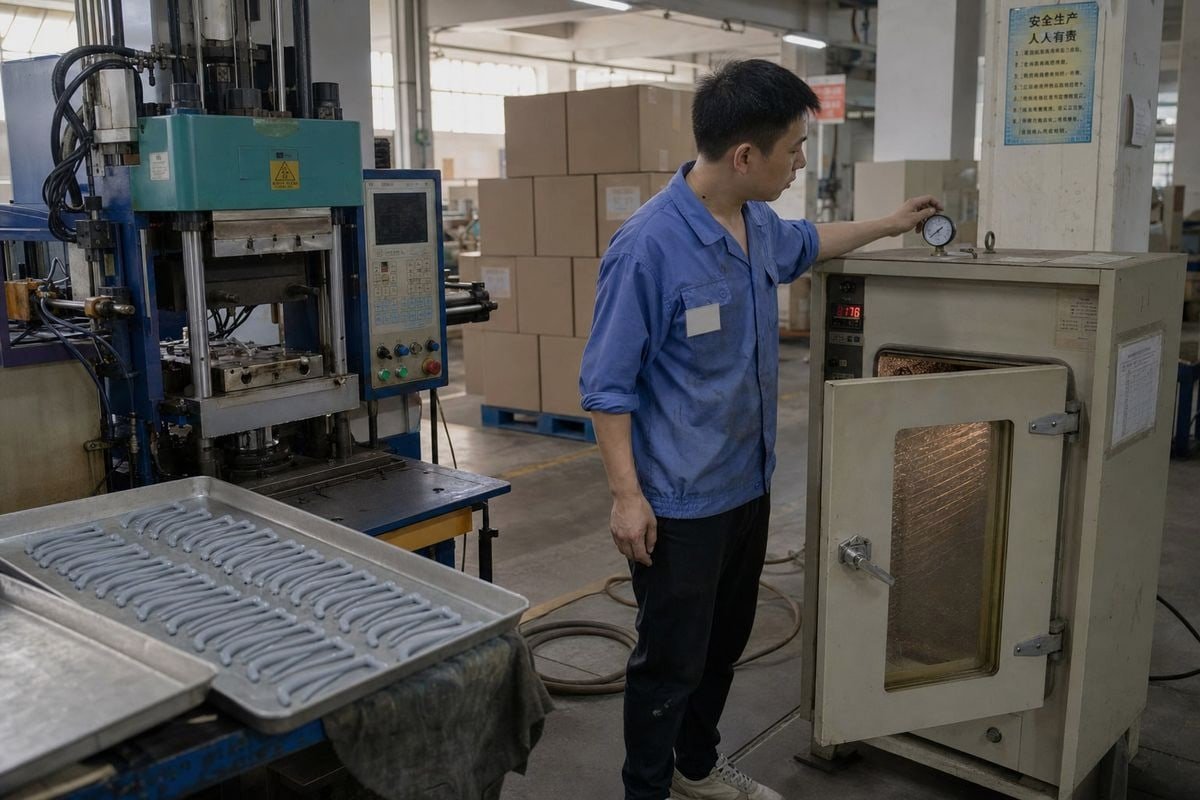
Soft polymers, as a category, emit broader VOC profiles 5 than rigid plastics. That is basic material science, and it explains why a flexible nose pad smells more than a hard lens frame. But the gap between a barely noticeable scent and an offensive chemical odor comes down to formulation and process discipline.
The main culprits, ranked
| Source of odor | What it is | How avoidable is it? |
|---|---|---|
| Residual cyclic siloxanes (D4/D5/D6) | Low-molecular-weight compounds trapped during curing | Highly avoidable with post-cure baking |
| Peroxide curing residues | Reactive byproducts of peroxide-cured silicone | Avoidable by specifying platinum-cured silicone 6 |
| Cheap fillers and recycled content | Impurities blended in to cut cost | Avoidable by auditing the material source |
| Mold release agents | Sprays used to eject parts from molds | Reduced by washing and proper process control |
| Heat exposure in transit or retail | Hot containers and sunny shelves accelerate off-gassing | Managed through packaging and storage guidance |
Curing method matters more than the word silicone
Platinum-cured silicone produces far fewer volatile byproducts than peroxide-cured silicone. Peroxide curing is cheaper, but it leaves reactive residues that need an extra post-cure baking step to burn off. Skip that step, and the smell ships with the product. When we source any soft component, we specify the curing method in writing. A vague answer from a sub-supplier is itself an answer.
Heat is the other factor buyers underestimate. A container crossing the equator, or a pair of sunglasses left on a car dashboard, can reheat trapped volatiles and temporarily intensify odor. Well-cured material has little left to release. Poorly cured material becomes noticeably smelly again. So a product that stinks after a hot day is telling you something about how it was made, not just how it was stored.
Which certifications should I ask my supplier for to confirm low-VOC silicone materials?
A procurement manager from Europe once emailed me a supplier's glossy brochure and asked one sharp question: where are the actual test reports? That instinct saved her brand.
Ask for FDA food-grade or medical-grade silicone documentation, EN71 and CPSC/CPSIA compliance for children's products, phthalate and BPA test reports, a Safety Data Sheet, and ideally third-party VOC emission testing such as ISO 16000-6 chamber results. Marketing claims alone prove nothing.
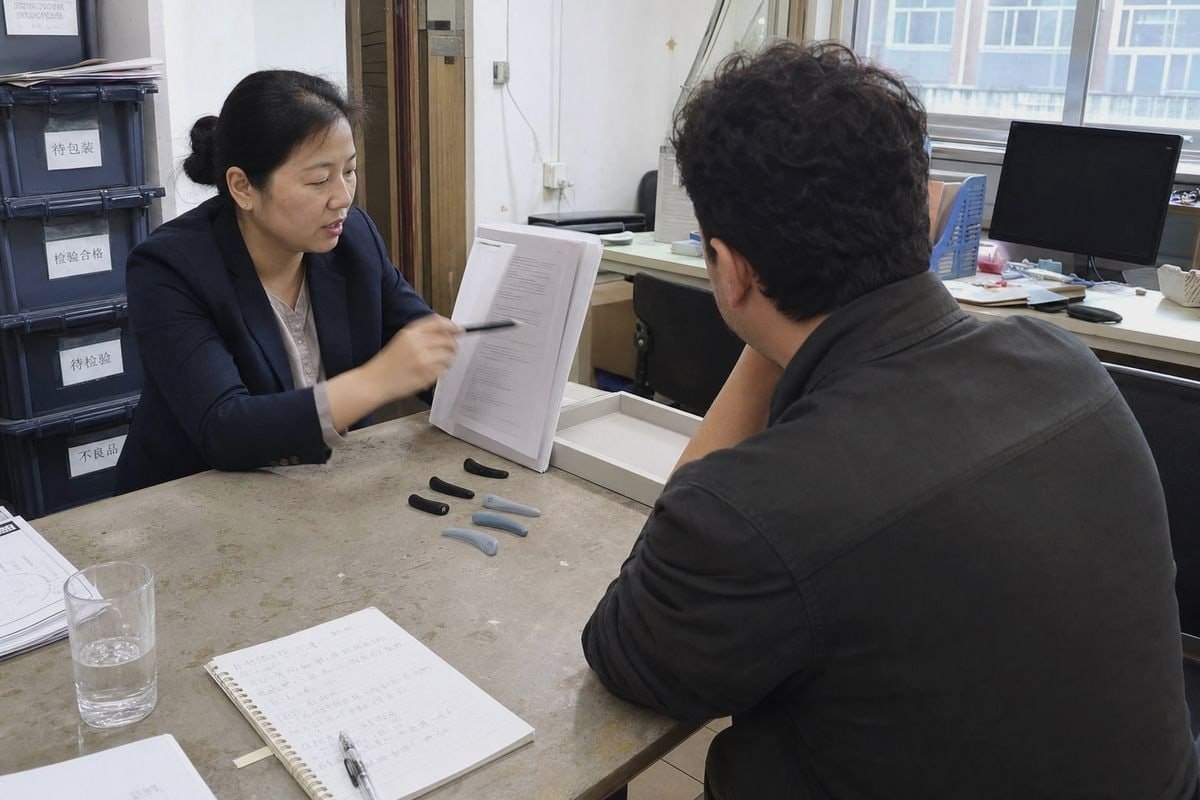
Certifications exist on different levels, and buyers often mix them up. Some cover the raw material. Some cover the finished product. Some cover emissions specifically. A trustworthy supplier can explain which document answers which question. In our fifteen years supplying children's eyewear brands across more than twenty countries, the buyers who ask for documents early always have smoother launches.
The document checklist, by purpose
| وثيقة | What it actually proves | Level |
|---|---|---|
| FDA food-grade / medical-grade silicone declaration | Raw material meets skin-contact or ingestion-contact purity standards | Raw material |
| EN71 (Parts 1–3) test report | Finished product meets EU children's product safety rules, including heavy metals | Finished product |
| CPSC / CPSIA compliance | Meets US children's product requirements, including lead and phthalate limits | Finished product |
| Phthalate & BPA test report | Specific restricted substances are below legal thresholds | Finished product |
| Safety Data Sheet (SDS) | Discloses chemical composition and known hazards of the material | Raw material |
| ISO 16000-6/9 chamber test | Measures actual VOC emissions from the product over time | Emissions |
How to read the reports, not just collect them
Check three details on every certificate. First, the date: reports older than a year or two may not reflect current production. Second, the applicant name: the report should match your supplier, not a random third company. Third, the tested item: a report for a different product line tells you nothing about your order. We keep our own testing current for exactly this reason, because serious buyers verify rather than trust. If a supplier hesitates, delays, or offers only a scanned logo instead of a full report, treat that hesitation as your answer. Claims like خالية من BPA 7 are easy to print on packaging. Chamber-tested emission data is much harder to fake.
How do I choose a manufacturing partner I can trust to deliver safe, odorless kids' sunglasses?
Early in our factory's history, we learned an expensive lesson: one uncontrolled sub-supplier can undo years of careful work. Since then, material traceability has been non-negotiable on our production line.
Choose a partner with proven children's eyewear experience, documented material sourcing, in-house quality control, current third-party test reports, and transparent communication. A real factory that specializes in kids' products and answers technical questions directly is far safer than the cheapest quote.
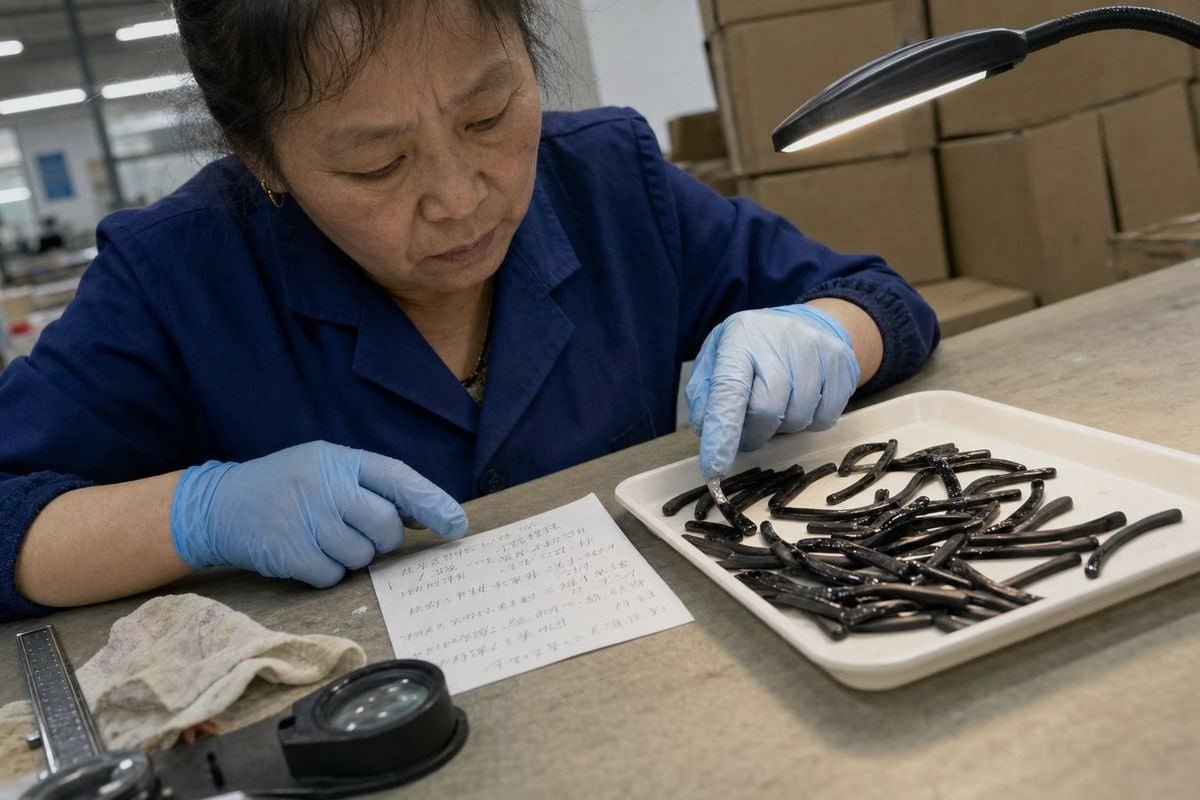
Price tells you very little about safety. Process tells you almost everything. A factory that runs a disciplined workshop, controls its materials, and tests its output will rarely ship a smelly product. A trader reselling from unknown workshops cannot make that promise, no matter what the quote says.
Questions that separate real partners from resellers
- What exact materials do you use, and why? We work primarily in TPEE and TR90 because they give children flexible, safe, comfortable frames without relying on questionable soft compounds. A good partner explains material choices; a weak one dodges.
- Can I see current test reports before ordering? The answer should be yes, quickly, with documents that match the supplier's own name.
- هل أنتم مصنع أم تاجر؟ Ask for workshop photos, worker counts, and process descriptions. Our roughly 120-person, 5S-managed facility in Taizhou is something we show buyers openly, because transparency is the point.
- Can I start without heavy tooling investment? A partner with a deep existing catalog — we maintain around 800 styles — lets a new brand test the market before committing to custom molds.
- How do you handle OEM/ODM details? Custom colors, logos, lenses, and retail-ready packaging should come with clear QC checkpoints, not vague reassurances.
Red flags worth walking away from
Watch for suppliers who cannot name their curing process, who quote dramatically below market, or who answer safety questions with marketing language instead of data. Also be wary of anyone unwilling to send pre-production samples. We always encourage buyers to smell, flex, and wear-test samples for a week. A confident factory welcomes scrutiny. An evasive one is telling you where the corners were cut. Long-term, the partner who invests in safe materials protects your brand reviews, your retailer relationships, and ultimately the children wearing your product.
الخلاصة
Silicone odor rarely means danger, but persistent smell means poor process. Verify curing methods, demand real test reports, and partner with a transparent children's eyewear factory — your brand depends on it.
ملاحظات ختامية
1. Clarifies manufacturing arrangement terminology referenced when vetting eyewear production partners. ↩︎
2. ISO oversees the testing standards buyers should request to verify material safety claims. ↩︎
3. OSHA’s hazard communication page defines Safety Data Sheets referenced
مقالات أخرى قد تعجبك

August 1, 2026
هل يجب على المصنع التعامل مع تغليف ووضع ملصقات نظارات الأطفال الشمسية، أم استخدام مورد مخصص؟

August 1, 2026
مستودع خاص مقابل الوفاء المباشر من المورد: أيهما يقلل تكاليف الإرجاع لعلامات نظارات الأطفال الشمسية؟

August 1, 2026
مباشر إلى ميناء المستودع أو التخزين الخارجي: أيهما يوفر أكثر على شحن نظارات الأطفال الشمسية؟
هل تبحث عن شريك موثوق به للنظارات للأطفال؟
استكشف أكثر من 800 نمط جاهز ودعم OEM/ODM كامل مصمم خصيصًا لعلامتك التجارية.
اتصل بنا English
  Español de México
  Deutsch
  Français
  日本語
日本語  العربية
  Português do Brasil