Are Kids Sunglasses Suitable for Children with Myopia or Astigmatism?
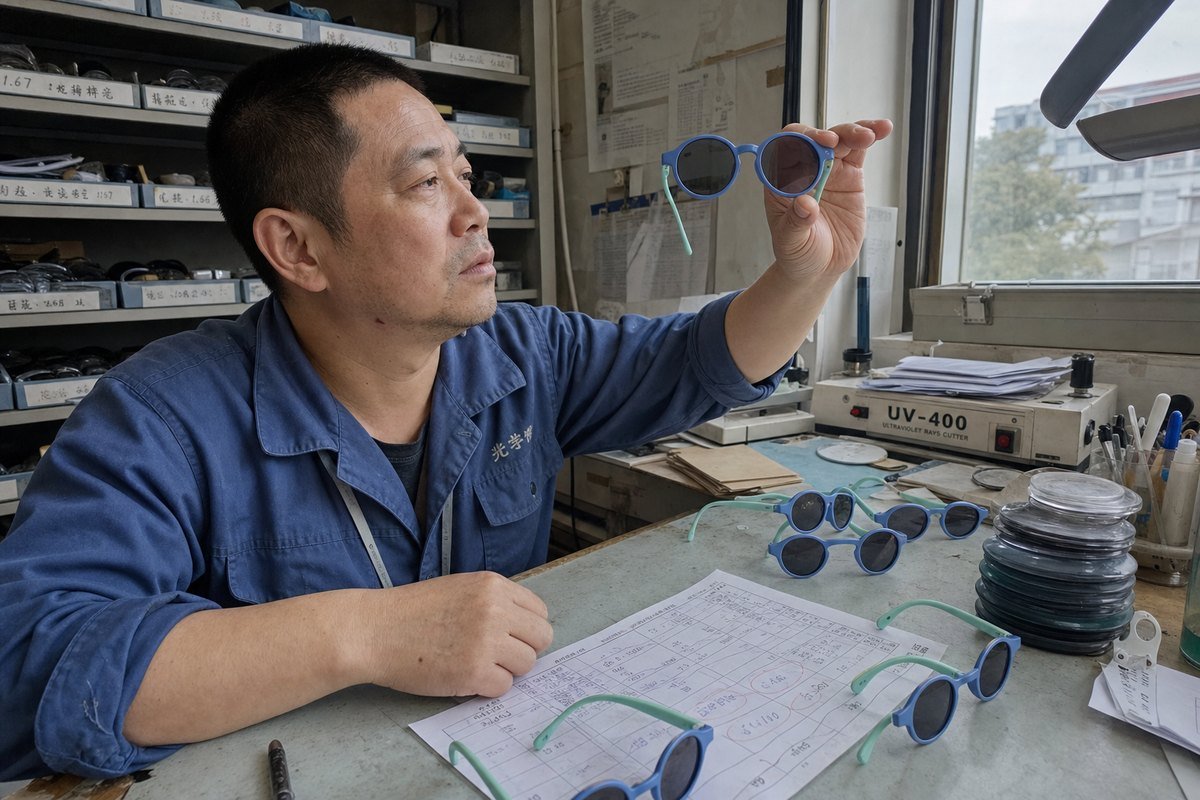
Kids sunglasses for children with myopia or astigmatism come up constantly in buyer calls at our Taizhou factory, and the confusion I hear worries me.
Kids sunglasses are suitable for children with myopia or astigmatism only when they carry the child’s correct prescription or are worn over prescribed corrective lenses. Standard tinted sunglasses provide UV protection but cannot fix blurry distance vision or astigmatism, so prescription-ready designs are essential.
That short answer hides a lot of practical detail. Let me walk you through what actually matters, from lens options to sourcing.
Can Kids Sunglasses Be Made with Prescription Lenses for Myopia or Astigmatism?
A brand founder from Australia once asked me, half-joking, whether her tiny customers could ever get "real glasses" in a sunglass frame. Our production team gets this question every season.
Yes, kids sunglasses can be made with prescription lenses that correct myopia, astigmatism, or both. Optical labs cut tinted or photochromic prescription lenses into suitable frames, so a child sees clearly outdoors while also receiving full UV400 protection in one pair.
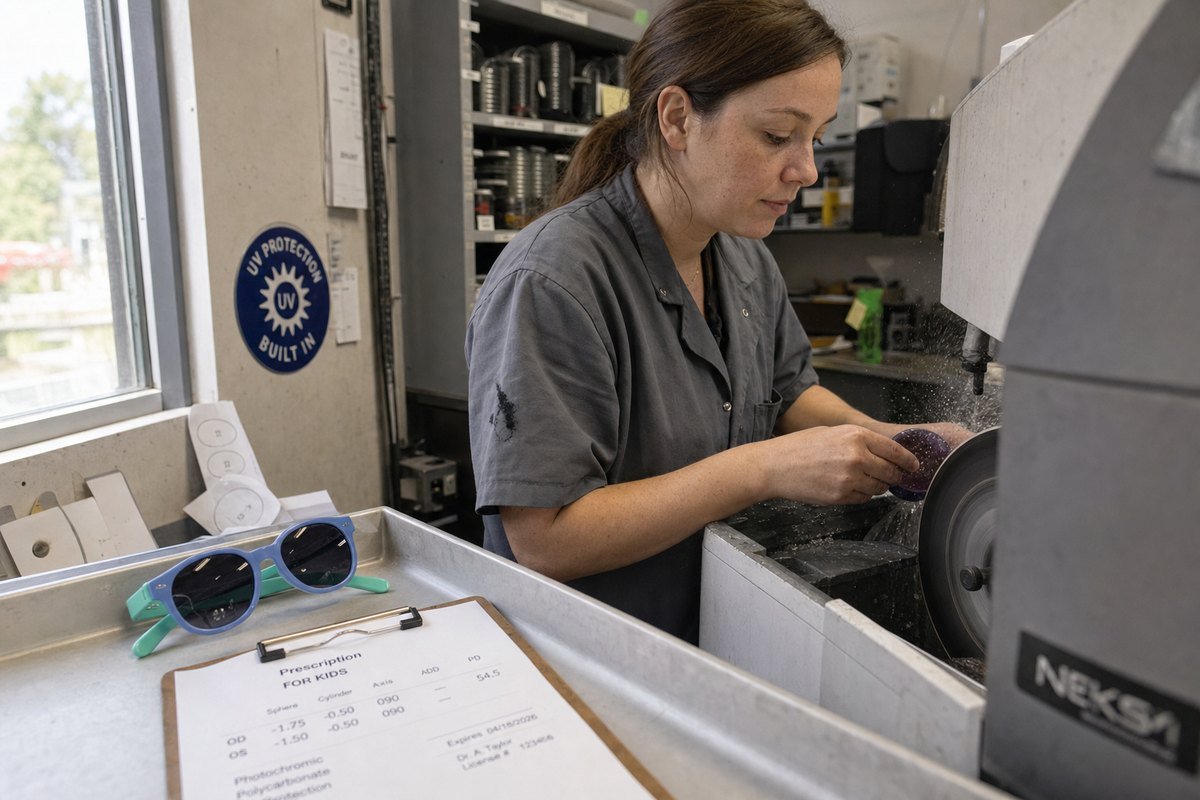
The technical side is straightforward. Myopia and astigmatism are both refractive errors. Light does not focus correctly on the retina, so distant objects look blurry or distorted. A prescription lens bends light back to the right focal point. That same lens can be tinted, mirrored, or made photochromic. Nothing about sun protection prevents vision correction, and nothing about vision correction prevents sun protection.
What matters is the frame. Not every kids sunglass frame accepts prescription lenses 1 well. At our factory, we design many TR90 optical-ready frames with a proper lens groove depth and a stable rim shape. A very flat toy-style frame or an extreme wraparound shield can distort a prescription. Our round pastel styles, for example, use a moderate base curve, which makes them friendly to prescription glazing.
What Parents and Brands Should Understand First
Sunglasses solve two separate problems. Parents often merge them into one, and that leads to poor purchases.
| Function | ما تفعله | What It Cannot Do |
|---|---|---|
| تظل رؤية شاشات LCD طبيعية. | Blocks harmful UVA/UVB rays with UV400 lenses | Cannot sharpen blurry vision |
| Vision correction | Focuses light correctly for myopia or astigmatism | Does not block UV unless the lens is treated |
| Combined prescription sunglasses | Delivers both in one frame | Costs more and needs an optician |
One more nuance matters. Some children now wear specialized myopia-control spectacle lenses. These correct vision and slow myopia progression 2, and certain designs are authorized for children ages six to twelve, with or without astigmatism. Ordinary tinted sunglasses do not replace those lenses. A pediatric ophthalmologist should always guide the correction plan; the sunglass frame is the delivery vehicle, not the treatment.
Will My Child's Astigmatism Affect How Well Sunglasses Fit and Perform?
During a QC review last year, we rejected a wraparound sample batch because the curve was too aggressive for optical use. That decision taught our buyers why astigmatism and frame curvature must be considered together.
Astigmatism can affect sunglass performance when high prescriptions are placed into strongly curved frames, causing peripheral distortion. Choosing moderate base curves, digitally surfaced lenses, and stable frames minimizes this, so most children with astigmatism can wear well-designed prescription sunglasses comfortably.
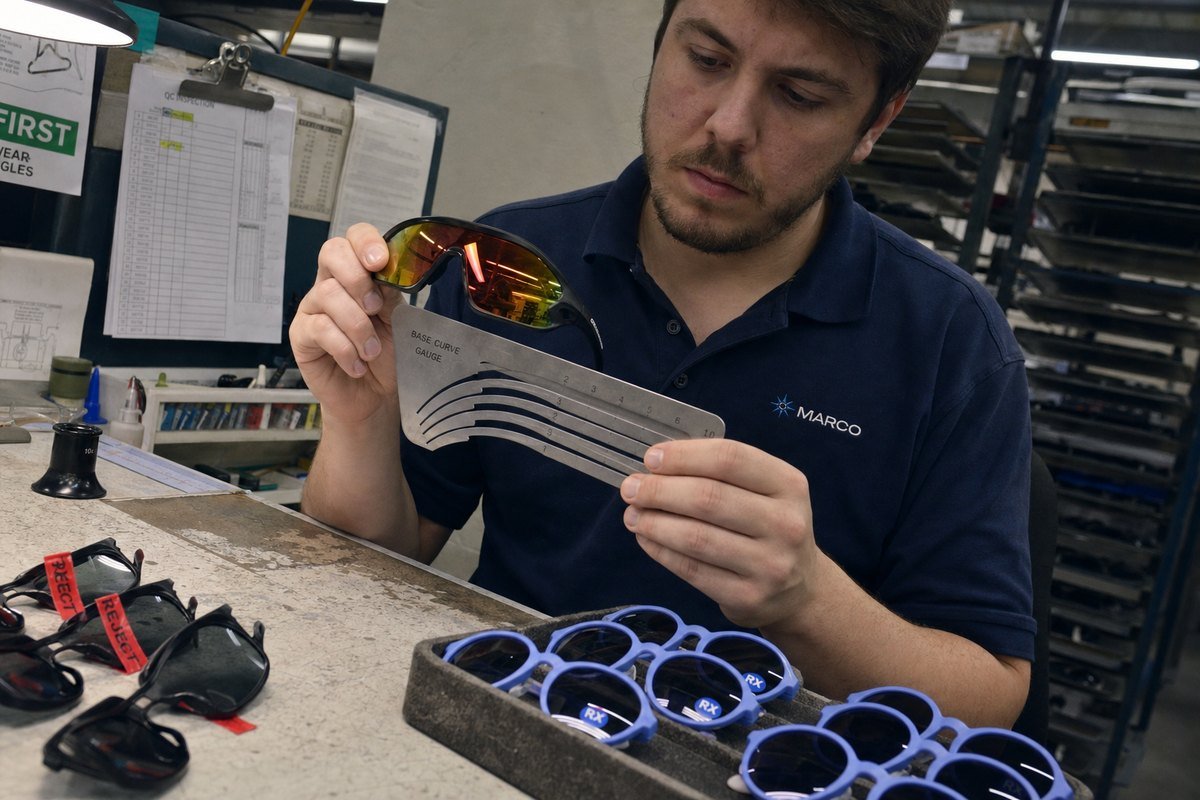
Astigmatism means the cornea or lens 3 is not perfectly round. Light focuses at more than one point, so vision blurs or stretches. Correction requires a cylindrical component in the lens, and that component is direction-sensitive. This has two practical consequences for sunglasses.
First, the frame must hold the lens in a stable position. If the frame twists, slides, or rotates on the child's face, the cylinder axis shifts and vision degrades. This is where flexible-material engineering earns its keep. Our TR90 fronts with TPEE temples flex safely during rough play but return to shape, keeping the lens aligned. A frame that permanently bends out of shape is a real problem for astigmatism correction, not just a comfort issue.
Second, the base curve matters. Sporty wraparound shields 4 look great, but a high-cylinder prescription in a steeply curved lens can create a "fishbowl" effect at the edges. Modern digital surfacing compensates for much of this, yet it adds cost.
Frame Style vs. Astigmatism Prescription
| Frame Style | Low Astigmatism | Moderate to High Astigmatism |
|---|---|---|
| Round or oval, flat base curve | ممتازة | ممتازة |
| Slightly curved lifestyle frame | جيد جدًا | Good with digital lenses |
| Sport wraparound shield | Acceptable | Needs base curve optimization; consult an optician |
There is also visual development to consider. A young child's brain is still learning to interpret images, so consistent, accurate correction matters more than in adults. If astigmatism correction only works while lenses are worn, the sunglasses your brand sells should encourage all-day comfort, not fight against it.
What Lens Options Should I Choose for Kids Who Need Vision Correction Outdoors?
Weighing lens options is a trade-off exercise I go through with importers almost weekly. Budget, climate, and the child's daily routine all pull the decision in different directions.
Choose impact-resistant polycarbonate lenses as the base, then add the child's prescription plus UV400 protection. Photochromic lenses suit school-age kids moving between indoors and outdoors, while polarized prescription lenses work best for beach, water, and bright-glare environments.
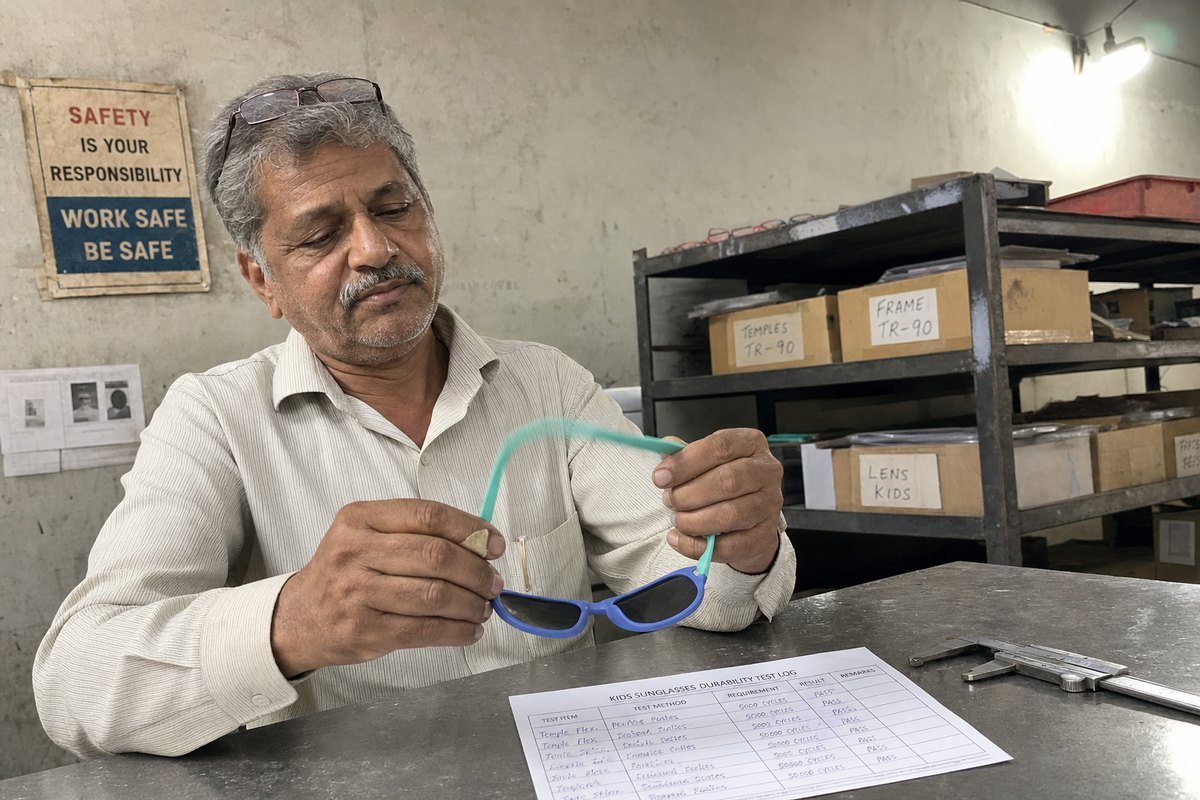
Start with the material. For children, safety comes before everything else. Polycarbonate lenses offer outstanding مقاومة الصدمات 5, low weight, and inherent UV blocking. Trivex behaves similarly with slightly better optics. Glass is out of the question for active kids. In fifteen years of building children's eyewear, I have never recommended anything fragile for a playground.
Then decide how the lens handles light. Here is how I frame the main options for buyers:
- Tinted prescription lenses. A fixed grey or brown tint with حماية UV400 6. Simple, affordable, and reliable. Best as a dedicated outdoor pair alongside clear everyday glasses.
- Photochromic lenses. These darken in sunlight and clear up indoors. They are extremely convenient for school-age children who will not remember to swap glasses. One pair does everything, which parents love.
- Polarized lenses. These cut reflected glare from water, sand, and roads. Polarized prescription lenses are ideal for coastal markets and outdoor sports brands.
- Clip-on sunglasses. A magnetic or clip-on sun layer over the child's regular optical frame. This is a cost-effective route when the child already wears prescription glasses daily.
- Fit-over styles. Larger sunglasses worn over existing glasses. Functional, but children often find them bulky.
Quick Comparison for Buyers
| خيار | Convenience | Glare Control | Typical Cost Level |
|---|---|---|---|
| Tinted prescription | Medium (two pairs needed) | جيد | معتدل |
| Photochromic | Highest (one pair) | جيد | أعلى |
| Polarized prescription | متوسط | ممتازة | أعلى |
| Clip-on sunglasses | High for existing wearers | Good to excellent | منخفض |
One extra detail we specify on quality lenses: a back-surface anti-reflective treatment. It stops UV rays 7 from bouncing off the rear of the lens into the eye, which matters more in wide, open frame designs. Also remember that sun damage accumulates over a lifetime, so building the habit early protects children long-term.
How Do I Source Custom Optical Sunglasses for Children with Different Prescriptions?
A German distributor once assumed he had to ship us hundreds of individual prescriptions. The relief on his face when I explained how the supply chain actually splits was memorable.
Source frames from a specialized children's eyewear factory, then have prescriptions glazed locally by optical labs or retail partners. The factory supplies optical-ready frames, plano UV400 or polarized lenses, custom branding, and packaging, while individual correction happens close to the end customer.
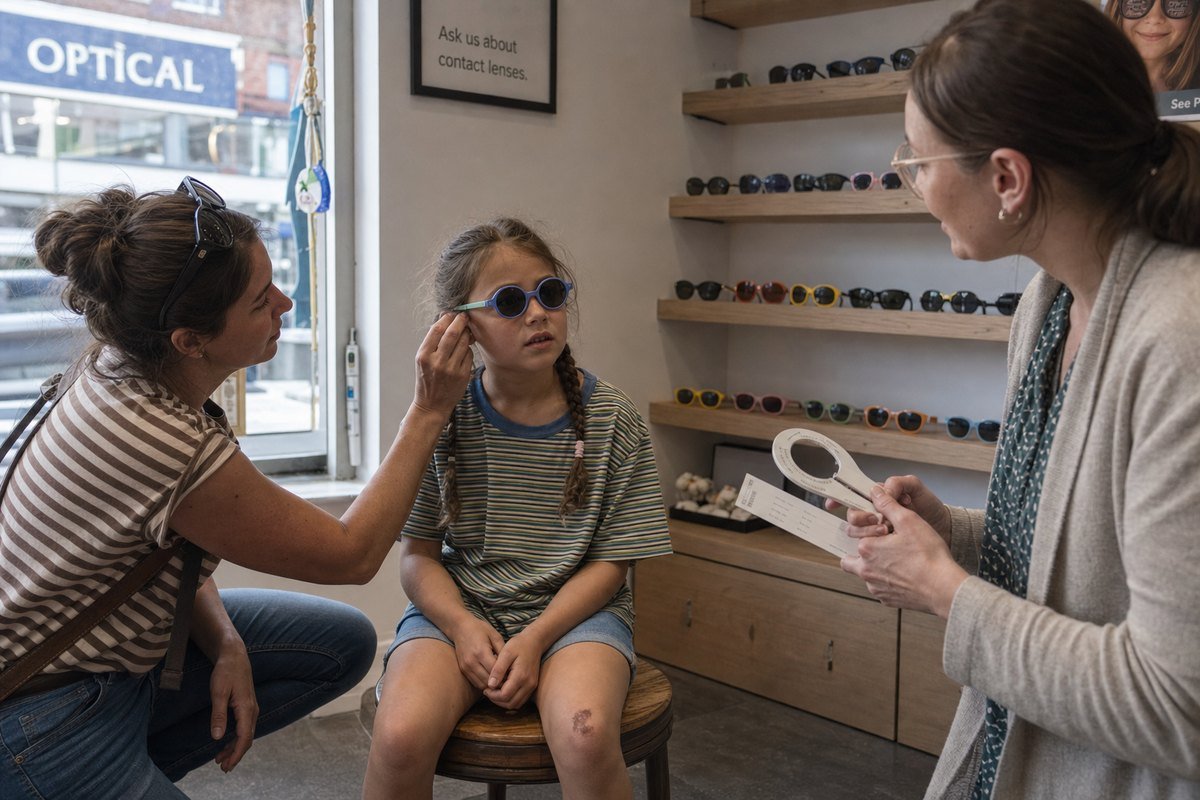
This division of labor is the industry standard, and it works well. No factory can pre-cut thousands of unique prescriptions economically. Instead, your manufacturing partner delivers frames engineered to accept prescription lenses, and your local optical network handles the personal correction. Your job as a brand is to choose a partner who understands both sides.
Here is the sourcing process we typically run with new B2B buyers:
- Define the product line. Decide the mix: plano UV400 sunglasses, optical-ready sunglass frames, clip-on systems, or TR90 kids optical frames.
- Select from existing styles. We keep roughly 800 existing styles, so brands can launch and test the market without heavy mold investment. This dramatically lowers risk for a first collection.
- Confirm materials and safety. For children, we recommend TR90 frames with flexible TPEE temples. They bend, they bounce back, and they stay comfortable on small faces. Environmentally friendly material options are available too.
- Customize. Colors, logos, lens tints, mirror coatings, packaging, and accessories are all adjustable under OEM/ODM programs. Retail-ready presentation matters enormously to kids' brands.
- Sample and validate. Check hinge strength, groove depth for glazing, fit on real children's head sizes, and impact resistance of the lens.
- Order and quality control. A disciplined workshop with consistent QC protects your brand from returns and safety complaints.
Questions to Ask Any Potential Supplier
Ask whether the frame groove supports prescription glazing, whether the base curve is documented for opticians, and whether lens options include photochromic and polarized upgrades. Ask about lead times, tooling, and small-batch flexibility. A factory that answers these questions clearly is a factory that has done this before. A supplier who only talks price probably has not.
الخلاصة
Kids sunglasses absolutely suit children with myopia or astigmatism, but only when correction and UV400 protection work together. Leaving vision uncorrected outdoors fails both the child's eyes and your brand's promise. The solution is deliberate design: optical-ready frames, safe polycarbonate or photochromic lenses, stable flexible construction, and a manufacturing partner who understands children's faces. That is exactly the eyewear our team has spent fifteen years refining, and it is what I would want on my own child.
ملاحظات ختامية
1. Explains industry standards for lens processing and the technology used to create corrective prescription lenses. ↩︎
2. Provides authoritative medical information on managing and slowing myopia progression in pediatric patients. ↩︎
3. Defines the anatomical structures of the eye that are typically affected by astigmatism and refractive errors. ↩︎
4. Describes the design and functional characteristics of wraparound sunglass styles in the context of eye protection. ↩︎
5. Details the physical properties and safety benefits of polycarbonate materials, specifically their high impact resistance. ↩︎
6. Official FDA consumer update on choosing sunglasses with proper UV protection. ↩︎
7. Explains the nature of ultraviolet radiation and the importance of protecting eyes from harmful UV exposure. ↩︎
مقالات أخرى قد تعجبك

August 1, 2026
هل يجب على المصنع التعامل مع تغليف ووضع ملصقات نظارات الأطفال الشمسية، أم استخدام مورد مخصص؟

August 1, 2026
مستودع خاص مقابل الوفاء المباشر من المورد: أيهما يقلل تكاليف الإرجاع لعلامات نظارات الأطفال الشمسية؟

August 1, 2026
مباشر إلى ميناء المستودع أو التخزين الخارجي: أيهما يوفر أكثر على شحن نظارات الأطفال الشمسية؟
هل تبحث عن شريك موثوق به للنظارات للأطفال؟
استكشف أكثر من 800 نمط جاهز ودعم OEM/ODM كامل مصمم خصيصًا لعلامتك التجارية.
اتصل بنا English
  Español de México
  Deutsch
  Français
  日本語
日本語  العربية
  Português do Brasil