Are Kids’ Sunglasses Straps a Strangulation Risk? Safety Tips?
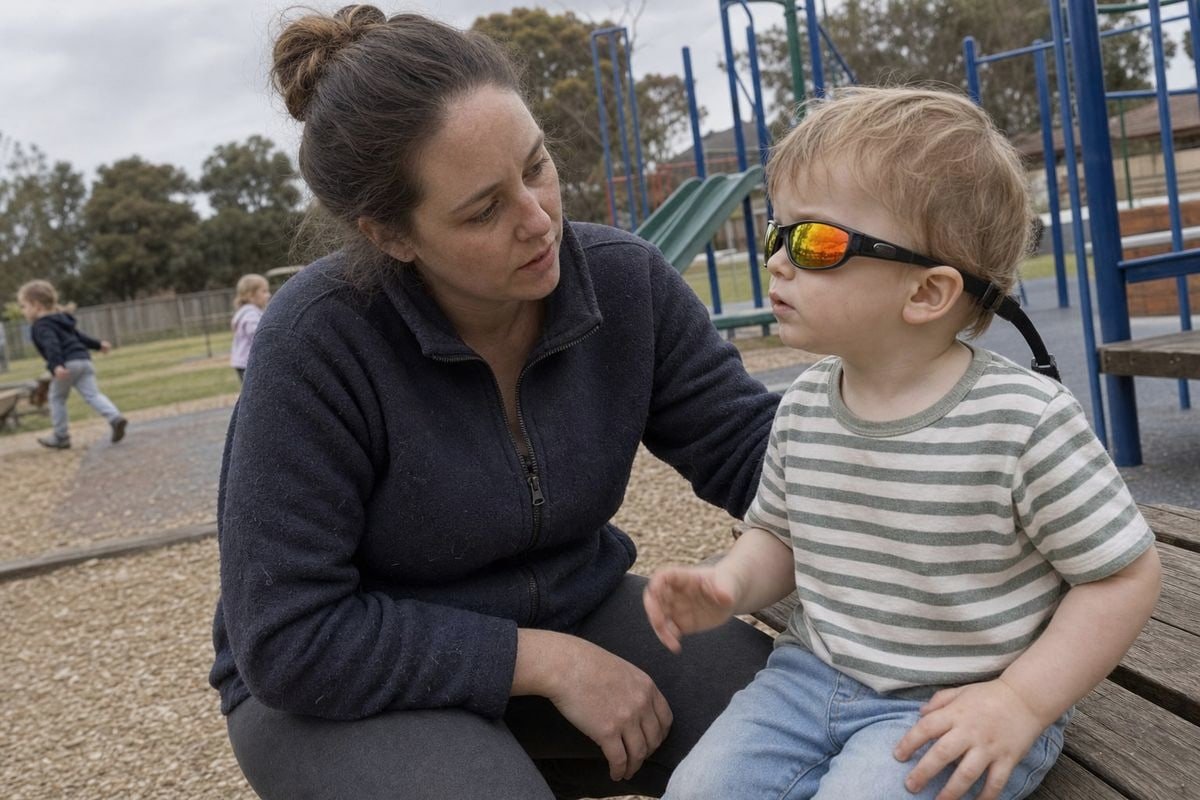
Kids’ sunglasses straps come up constantly on our production line in Taizhou. Buyers ask for them. Parents worry about them. One snagged loop can turn a helpful accessory into a serious hazard.
Yes, kids’ sunglasses straps can pose a strangulation risk, especially for babies and toddlers under three. Fixed neck loops can snag on cribs, playgrounds, or car seats and tighten. Choose breakaway or quick-release designs, avoid straps during sleep, and supervise young children closely.
The danger is not the sunglasses. It is the strap when it forms a loop around the neck. Below, I break down the standards, designs, materials, and manufacturing steps that manage this risk properly.
What safety standards should I check before choosing a strap style for kids' sunglasses?
A procurement manager from Australia once sent me a strap sample and asked one simple question: which standard covers this? The honest answer surprised her — no single standard does, so you have to combine several.
Check CPSC guidance on cords and straps, ASTM F963 requirements for cords on children's products, EN 71 for the EU, and drawstring safety rules like ASTM F1816. No single standard covers sunglasses straps directly, so buyers should apply cord and loop hazard principles across all of them.
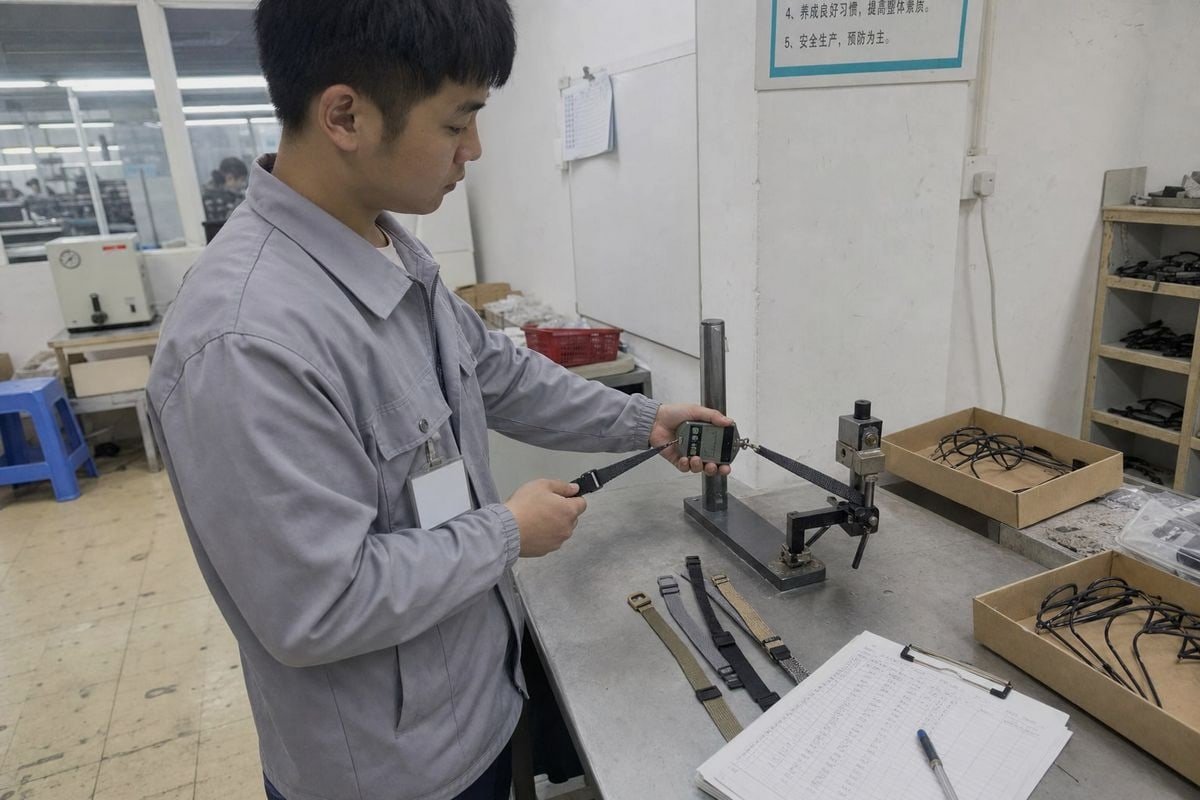
Sunglasses straps sit in a regulatory gray area. They are not toys, not clothing, and not always classed as children's jewelry. But the hazard they create — a loop around a young child's neck — is well documented in adjacent product categories. Regulators consistently warn about cords, drawstrings, lanyards, and necklaces for young children. CPSC incident data 1 on toy straps and cords involves mostly children under age three, and safety guidance notes that even a few pounds of force on the neck can cause strangulation. So the smart approach is to borrow requirements from the closest applicable standards.
The standards map for B2B buyers
| Standard / Guidance | Region | What it tells you about straps |
|---|---|---|
| CPSC cord & strap guidance | الولايات المتحدة الأمريكية | Warns against neck loops for children under 3; basis for recalls |
| ASTM F963 | الولايات المتحدة الأمريكية | Limits on cords, loops, and elastic on toys and toy-like products |
| ASTM F1816 | الولايات المتحدة الأمريكية | Drawstring safety logic — no free-hanging neck cords for young kids |
| EN 71-1 | الاتحاد الأوروبي | Cord length and loop restrictions for children's products |
| ANSI Z80.3 / EN ISO 12312-1 | USA / EU | Sunglasses lens and frame safety — does not cover strap hazards |
Notice the last row. Many buyers assume sunglasses standards cover the whole product. They do not. Lens standards address UV protection and impact 2, not entanglement. In our fifteen years of eyewear manufacturing, the buyers who audit us most rigorously are the ones who treat the strap as a separate children's product with its own risk assessment. That is the mindset I recommend. Ask your supplier which cord and loop requirements the strap was designed against, and ask for the release-force logic behind any breakaway feature. If they cannot answer, that is your answer.
How can I tell if a sunglasses strap design is genuinely safe for babies and toddlers?
During a QC review last year, our team rejected a strap sample that looked perfectly fine on paper. The breakaway clasp 3 released cleanly on a bench pull, but when the cord twisted first, it jammed. That test changed how I evaluate every design.
A genuinely safer strap releases under low tension from any pull angle, cannot be adjusted into a tight closed loop, has no excess slack, and shows no snag-prone hardware. For babies and toddlers under three, the safest option is usually no neck strap at all.
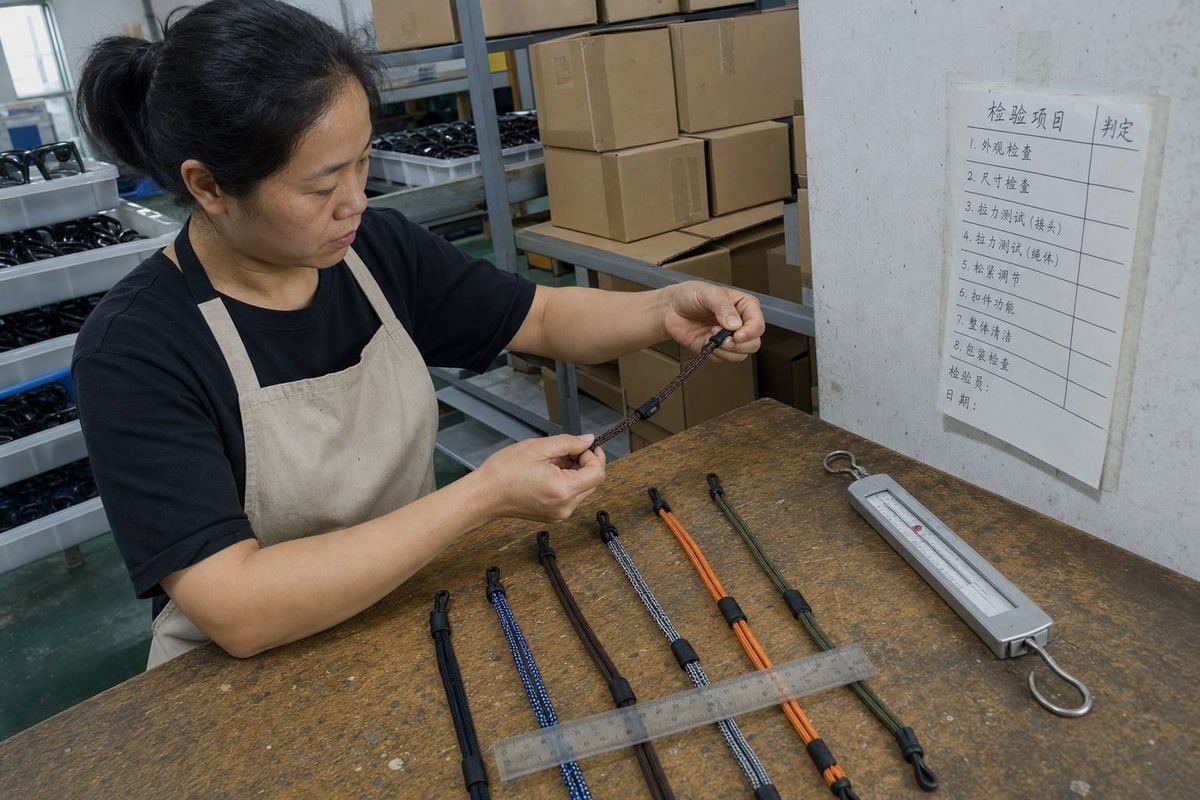
The core question is simple: what happens when the strap catches on something? A child climbs a play structure. The strap hooks on a rail. The child's weight loads the loop. If the strap holds, it acts like a ligature. Young children usually cannot untwist or free themselves, which is why safety guidance flags infants and toddlers as the highest-risk group. So a genuine safety evaluation tests the failure mode, not the marketing claim.
A practical five-point inspection
- Pull the breakaway from multiple angles. A clasp that only releases on a straight pull can jam when twisted. Test it twisted, sideways, and loaded slowly.
- Check for closed-loop potential. Adjustable sliders are convenient, but if a slider can lock the strap into a tight fixed loop, the breakaway becomes irrelevant.
- Measure the slack. Excess length is the main entanglement trigger. A strap that hangs well below the chin is a strap that can catch.
- Hunt for snag points. Metal clips, decorative charms, and rigid buckles all give playground equipment something to grab.
- Match design to age. For children under two, we steer buyers toward strapless solutions: wraparound frames with flexible TPEE temples 4 that grip gently, or soft head bands that sit above the neck line entirely.
That last point matters most. When we develop baby styles at our factory, the goal is a frame that stays on by fit — flexible temples, correct head circumference sizing, lightweight materials — so the strap becomes unnecessary. A strap that never goes around the neck is the only strap with zero strangulation risk.
What strap materials and closures should I look for when sourcing safer kids' eyewear?
Material selection is where I spend a lot of my sampling time. A Japanese baby-brand buyer once asked us why we quoted soft silicone-blend straps at a higher price than thin nylon cords. The answer sits at the heart of safe sourcing.
Look for soft, non-toxic, BPA-free silicone or neoprene straps with adjustable, child-sized lengths and low-force breakaway or hook-and-loop closures. Avoid thin drawstring-style cords, fixed metal clips, and elastic loops that stretch, recoil, and hold tension around the neck.
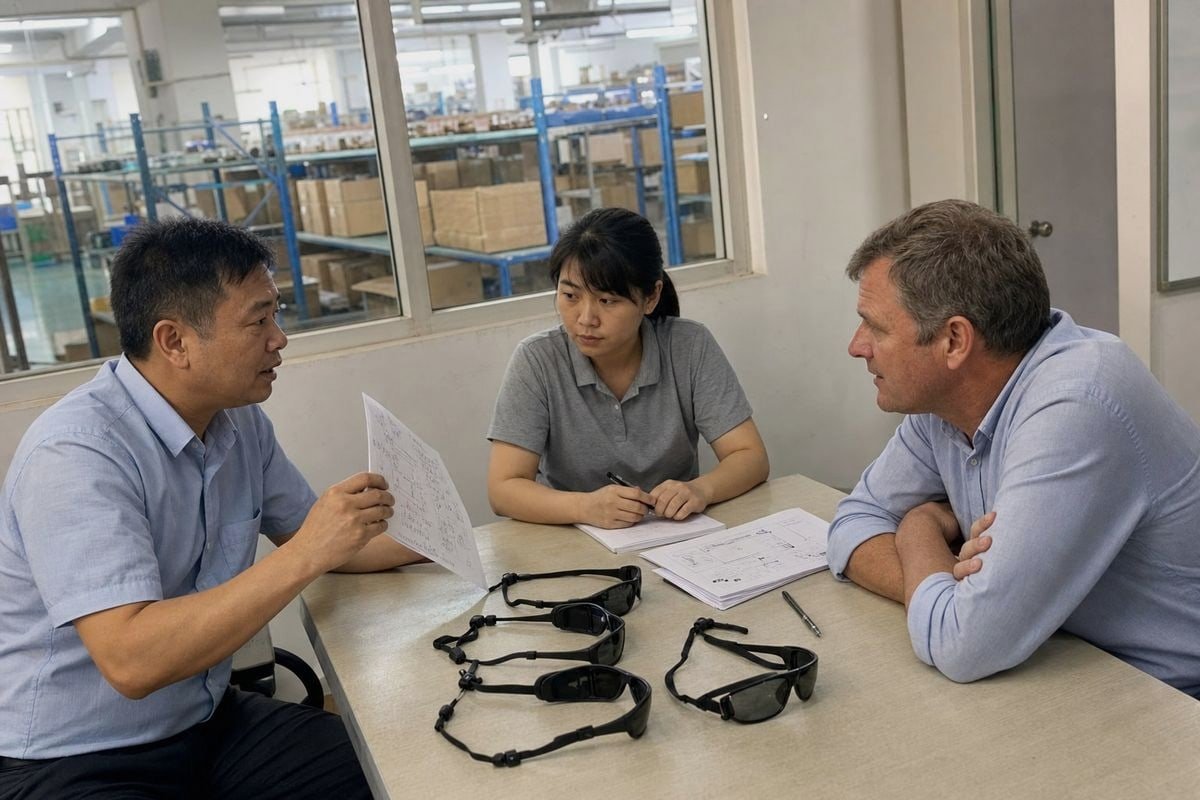
Material and closure choices change both the probability and the severity of an entanglement event 5. Thin cords cut in and concentrate force. Wide, soft bands distribute pressure and are easier for hardware to release. Elastic materials are especially tricky: they stretch to catch on objects, then recoil and hold tension. Here is how the common options compare.
Strap material comparison
| المواد | Feel & Weight | Safety Notes | Best Use |
|---|---|---|---|
| Silicone (BPA-free) | Soft, grippy, washable | Wide profile, low snag; verify food-grade compliance | Toddler and kids' lines |
| Neoprene | Soft, padded, floats | Bulky but gentle; good for water activities | Beach and outdoor brands |
| Woven nylon cord | Thin, light, cheap | Highest concern; drawstring-like, cuts in under load | Avoid for under 7 |
| Elastic band | Stretchy, snug fit | Recoils and holds tension; stretch masks true slack | Use cautiously, older kids only |
| TPEE-integrated designs | Flexible, integrated | Strap function built into temple flexibility, no neck loop | Babies and under-3 styles |
Closure comparison
| Closure Type | Release Behavior | Verdict |
|---|---|---|
| Breakaway clasp | Opens under defined low tension | Best choice if tested from all angles |
| Hook-and-loop (Velcro) | Peels open under moderate pull | Good, but weakens with washing and wear |
| Fixed sewn loop | Never releases | Not acceptable for young children |
| Metal spring clip | Rarely releases; hard snag point | Avoid on kids' products |
At our workshop, we pair these choices with the same environmental-material philosophy we apply to our TR90 and TPEE frames. Safe chemistry matters as much as safe mechanics — children chew straps. Ask your supplier for material composition documentation, not just a verbal assurance, and request closure release testing on aged and washed samples, because a Velcro strap that worked at delivery may not release six months later.
How do I work with my manufacturer to reduce strangulation risk in custom eyewear designs?
The best safety outcomes I have seen came from projects where the buyer raised strap risk at the very first design call, not at pre-shipment inspection. One European kids' brand did exactly that with us, and the process we built together is worth sharing.
Raise strap hazards at the design brief stage. Require documented cord and loop risk assessments, specify breakaway release behavior, request aged-sample testing, define age grading and warning labels, and add strap checks to your pre-shipment inspection criteria before approving production.
Custom projects give you real leverage. When you control the specification, you control the hazard. But that only works if safety requirements are written down early. In our OEM and ODM work across twenty-plus countries, the projects that go smoothly follow a repeatable sequence.
A six-step collaboration process
- Define the age grade first. Everything flows from this. A product for babies under two should probably have no neck strap at all — we often propose flexible TPEE temple designs or head bands instead.
- Write strap requirements into the spec sheet. State the closure type, release behavior, maximum length, adjustment limits, and material compliance. Vague briefs produce vague products.
- Review the risk assessment together. Ask your factory to walk you through snag scenarios: car seats 6, strollers, cribs, playgrounds. A good engineering team can show you how the design responds to each.
- Test golden samples hard. Pull the breakaway at angles. Wash the Velcro ten times and pull again. Check that sliders cannot form a fixed tight loop. Approve only what passes.
- Lock packaging and warnings. Retail-ready packaging should carry age guidance and instructions to remove straps during sleep, car travel, and unsupervised play. We build this into our custom packaging service because it protects the brand as much as the child.
- Add strap checks to final QC. Our ورشة عمل مدارة بنظام 5S 7 includes strap and closure verification in pre-shipment inspection when the spec calls for it. Your inspection checklist should demand the same.
One more practical tip: if you are launching a new line, starting from an existing tested style is lower-risk than tooling a new design blind. We keep roughly 800 existing styles precisely so brands can validate fit, comfort, and strap concepts in the market before investing in custom molds.
الخلاصة
Kids' sunglasses straps can strangle when loops snag. Manage the risk: skip straps for babies, demand tested breakaways, specify safe materials, and partner with a factory that engineers safety in from day one.
ملاحظات ختامية
1. Official U.S. consumer safety agency data on cord and strap strangulation incidents involving young children. ↩︎
2. EPA guidance on UV protection standards relevant to children’s eyewear safety criteria. ↩︎
3. CPSC business guidance on breakaway and drawstring closures for reducing child strangulation hazards. ↩︎
4. Background on thermoplastic elastomer materials used for flexible, gentle-fit eyewear temples. ↩︎
5. Background on strangulation mechanics relevant to understanding strap entanglement hazards. ↩︎
6. NHTSA safety information on car seats, a common snag point cited for strap entanglement risk. ↩︎
7. Explains the 5S manufacturing methodology referenced for organized quality control processes. ↩︎
مقالات أخرى قد تعجبك
August 1, 2026
هل يجب على المصنع التعامل مع تغليف ووضع ملصقات نظارات الأطفال الشمسية، أم استخدام مورد مخصص؟

August 1, 2026
مستودع خاص مقابل الوفاء المباشر من المورد: أيهما يقلل تكاليف الإرجاع لعلامات نظارات الأطفال الشمسية؟

August 1, 2026
مباشر إلى ميناء المستودع أو التخزين الخارجي: أيهما يوفر أكثر على شحن نظارات الأطفال الشمسية؟
هل تبحث عن شريك موثوق به للنظارات للأطفال؟
استكشف أكثر من 800 نمط جاهز ودعم OEM/ODM كامل مصمم خصيصًا لعلامتك التجارية.
اتصل بنا English
  Español de México
  Deutsch
  Français
  日本語
日本語  العربية
  Português do Brasil