Are Kids’ Sunglasses Recyclable? What Eco-Friendly Materials Are Available?
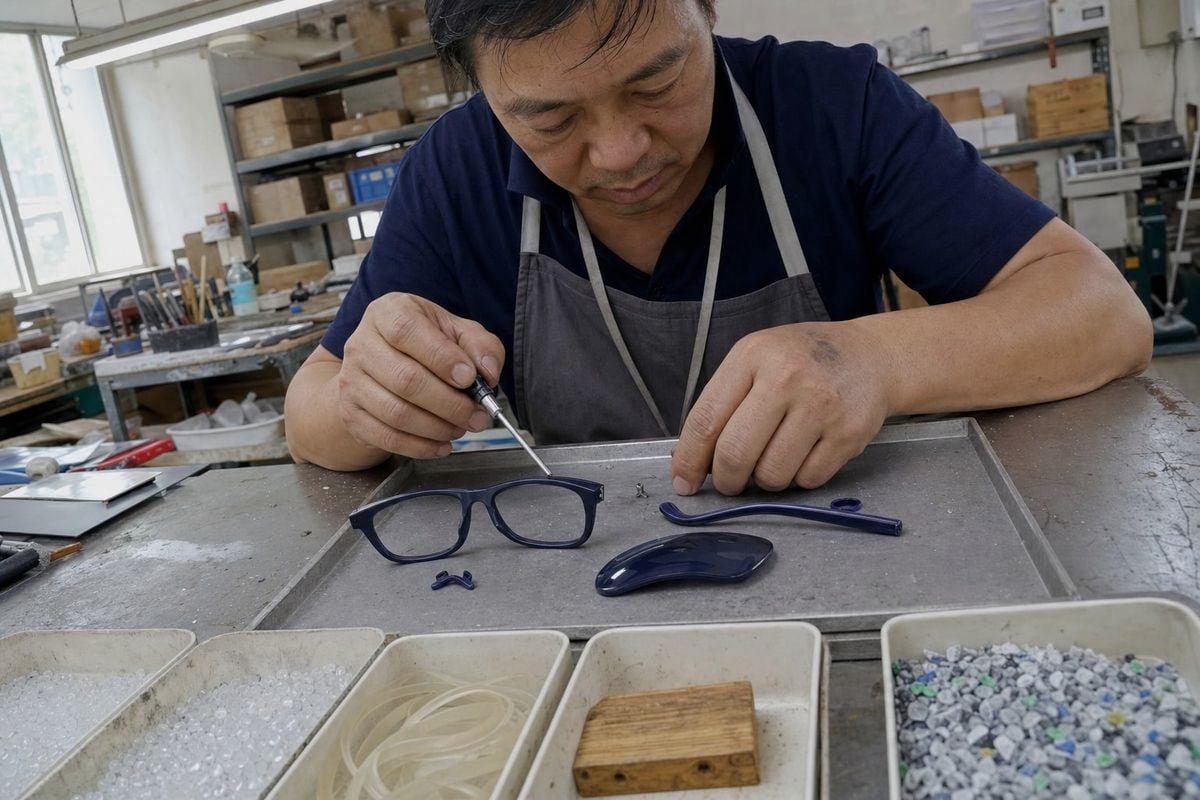
Buyers ask me whether kids’ sunglasses are recyclable almost every week, and on our production line in Taizhou, I see exactly why the answer frustrates so many brands.
Most kids’ sunglasses are not recyclable through curbside programs because they mix plastics, metal hinges, and coated lenses. However, eco-friendly options exist: recycled plastics, recycled polycarbonate, bio-acetate, TR90, TPEE, bamboo, and frames designed for easy disassembly or take-back recycling.
The real story sits in the details. Let me walk you through what materials actually work, when recycling is possible, and how to verify green claims before you order.
Which materials do you use to make kids' sunglasses more eco-friendly?
A procurement manager from Australia once asked me to justify every gram of material in one of our frames. That conversation changed how I explain eco-friendly eyewear to buyers.
**Eco-friendly kids' sunglasses typically use TR90 nylon, TPEE elastomer, recycled polycarbonate, recycled PET plastics, bio-acetate, bio-nylon from castor beans, or renewable bamboo and wood. The most sustainable frames combine safe, durable, low-toxicity materials with long product life and minimal material mixing.
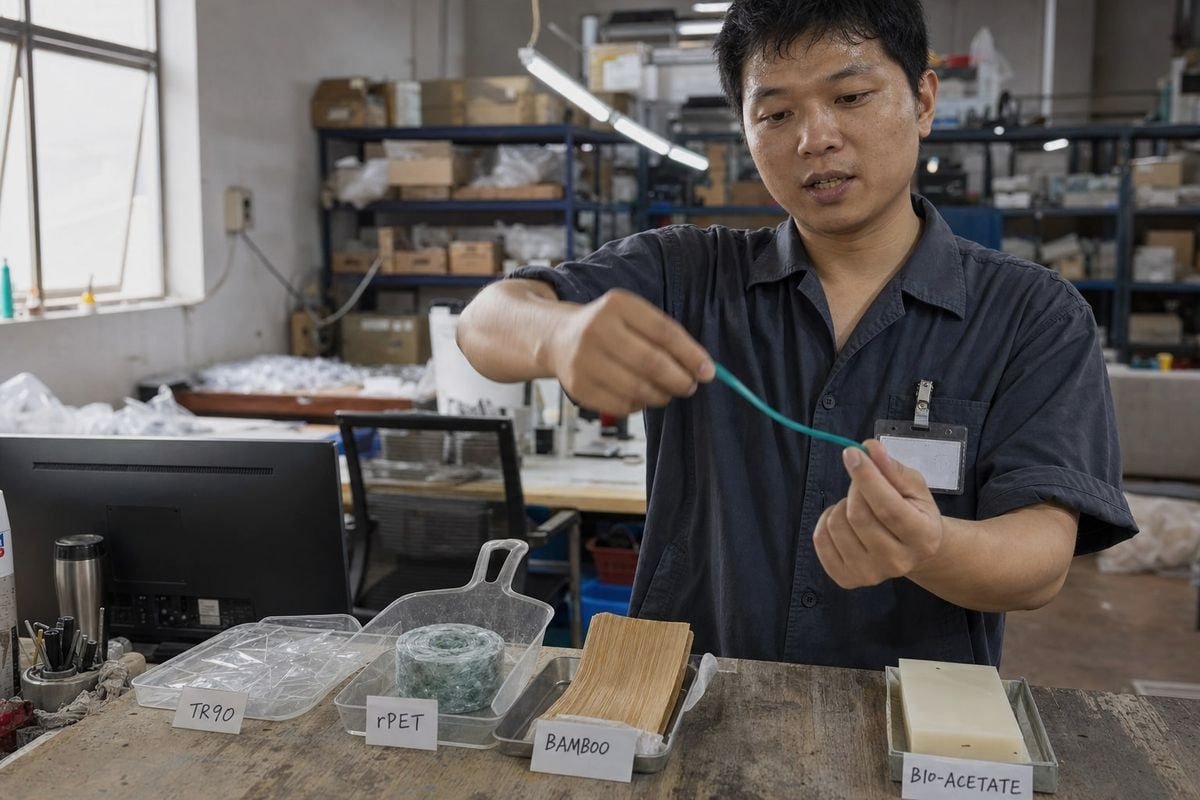
At our factory, we work mainly with TR90 and TPEE. Both are environmentally friendlier choices than cheap mixed plastics, and both matter for a reason many buyers overlook: durability is sustainability. A frame that survives two active kids and a hand-me-down cycle creates far less waste than a "green" frame that snaps in a month.
The main material options compared
Here is how the common eco-friendly choices stack up for children's eyewear:
| المواد | Eco advantage | Durability for kids | Recycling reality |
|---|---|---|---|
| TR90 nylon | Lightweight, long-lasting, low material use | Excellent — flexible and impact-resistant | Specialty recycling only |
| TPEE elastomer | Soft, safe, durable, extends product life | Excellent — bends without breaking | Specialty recycling only |
| Recycled PET plastic | Uses post-consumer waste like bottles | جيد | Rarely curbside as finished eyewear |
| Recycled polycarbonate | Reuses production scrap and recovered material | Very good for sport frames | Depends on program and design |
| Bio-acetate / bio-nylon | Plant-derived, reduces petroleum use | جيد | Limited; not compostable in practice |
| Bamboo / wood | Renewable, natural raw material | Moderate — can crack under stress | Coatings and hardware limit recycling |
Why we favor flexible materials for children
Kids sit on their sunglasses. They chew the temples. They drop them from bikes. In our fifteen years of eyewear production, we have learned that a flexible TPEE temple paired with a TR90 front absorbs abuse that would destroy a rigid bamboo frame 1. Small parts also matter: sunglasses need only small pieces of material, so production scrap can be reground into pellets and fed back into new frames. That regrind loop is one of the most practical eco wins in our workshop, and it does not compromise safety or UV400 lens performance at all.
Can kids' sunglasses be recycled once they reach the end of their life?
During a factory audit last year, a European buyer picked up one of our frames and asked what happens to it in ten years. I gave her the honest answer, and I will give it to you too.
**Kids' sunglasses can rarely be recycled curbside because frames, lenses, hinges, and coatings are fused mixed materials. Recycling is possible through specialized eyewear take-back programs, brand mail-in schemes, and charity collections. Donation and reuse are usually the better first options.
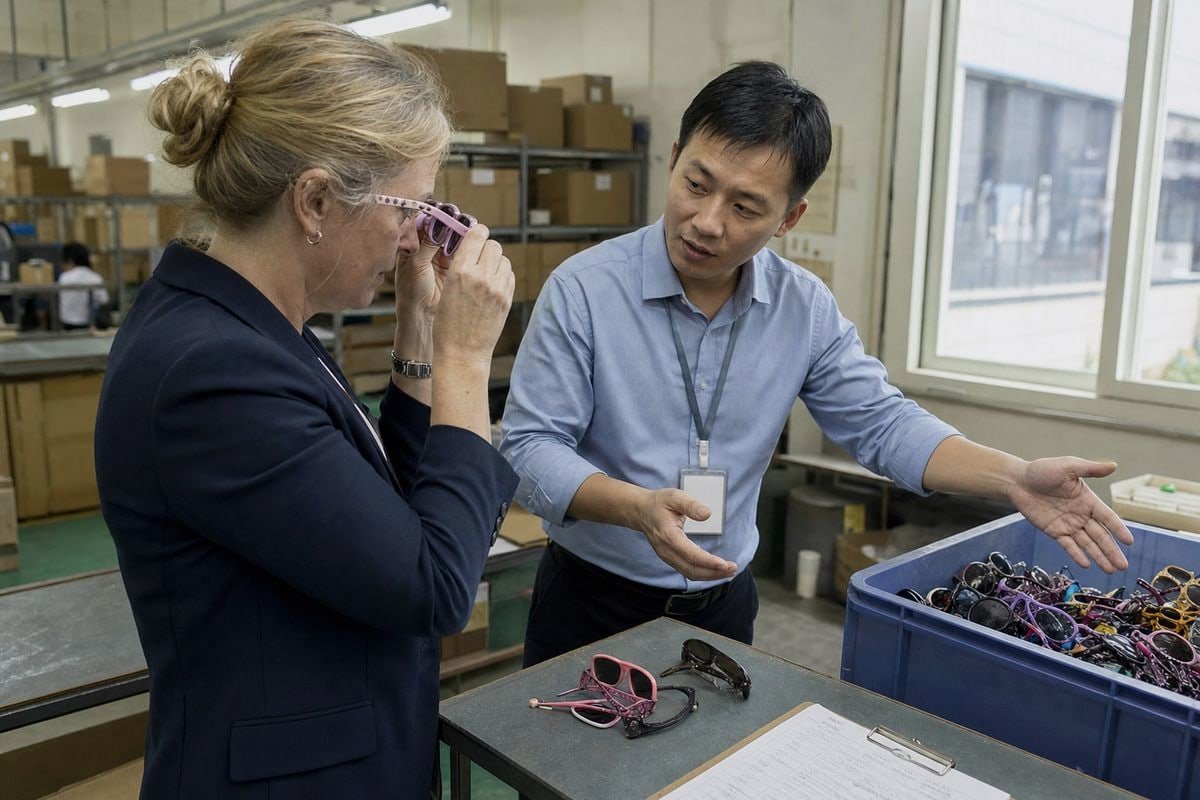
The core problem is material mixing. A typical budget pair contains a plastic frame, polycarbonate lenses 2, a metal hinge screw, and sometimes rubber nose pads or temple grips. Curbside systems sort single-material packaging. They cannot pull apart a fused product. That is why many municipal recycling guides explicitly tell households not to put eyeglasses or sunglasses in the bin.
The realistic end-of-life pathways
From what I have seen across our export markets, the practical options rank like this:
- Reuse or hand down. If the sunglasses still fit and protect, pass them to a sibling or friend. Reuse preserves more value than any recycling process.
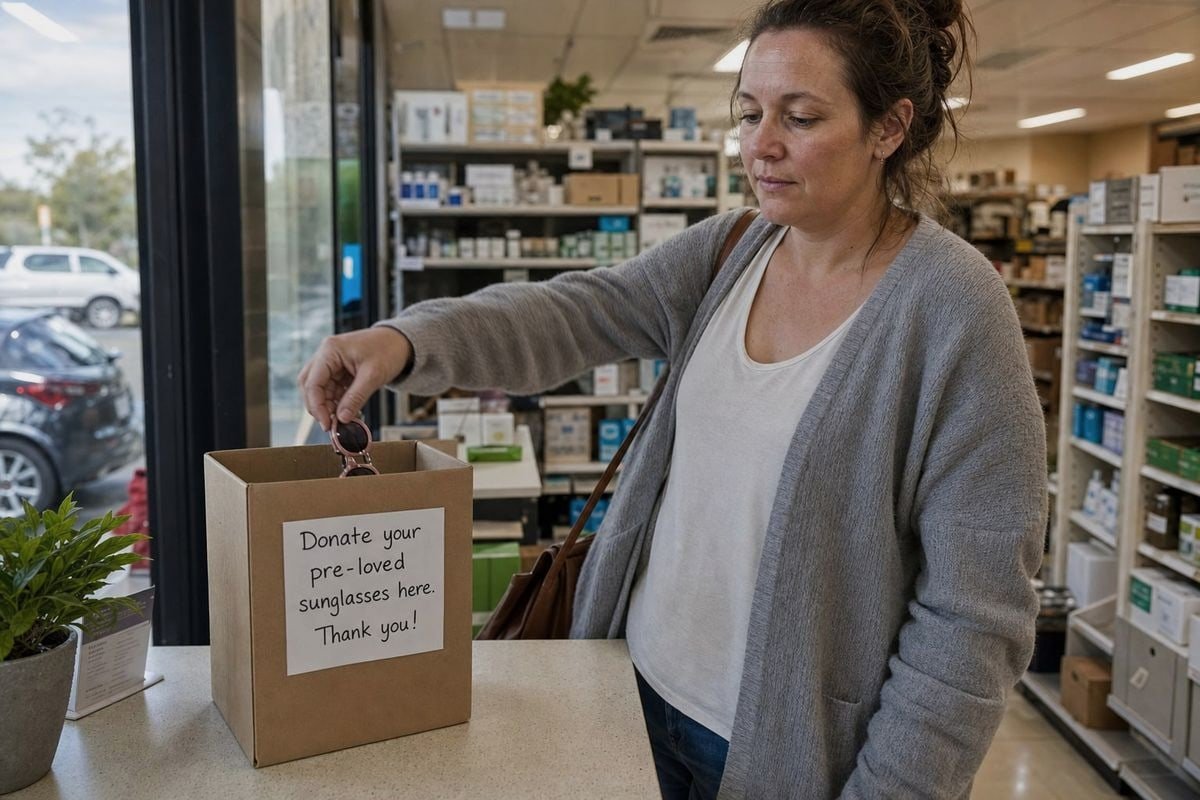
- Donate. Charitable programs such as Lions Clubs International 3 collect used eyewear and redistribute wearable pairs.
- Brand or retailer take-back. A growing number of eyewear brands run mail-in programs that disassemble frames and route each material to a specialized processor.
- Specialty recyclers. Some processors separate frames, metal components, and occasionally lenses by material type.
- Responsible disposal. If no program exists locally, mixed-material pairs go to general waste — which is exactly why buying better upfront matters.
Why lenses are the hardest part
Lenses carry anti-scratch layers, UV400 treatments 4, and mirror coatings. These chemical layers complicate recycling even when the base polycarbonate is technically recyclable. In our lens sourcing, we accept this trade-off knowingly: UV protection for a child's developing eyes 5 is non-negotiable, so the smarter fix is designing the rest of the frame for longevity and easier separation.
How can I choose a sustainable supplier without sacrificing safety or quality?
One lesson from fifteen years of exporting: the cheapest "eco" quote usually hides the biggest compromise. I have watched brands learn this the expensive way after a failed safety test.
**Choose a supplier that proves both sides: documented material safety and UV400 compliance, plus verifiable eco practices like recycled content, regrind loops, and durable flexible materials. Ask for factory evidence — QC processes, test reports, and existing style ranges — not just marketing claims.
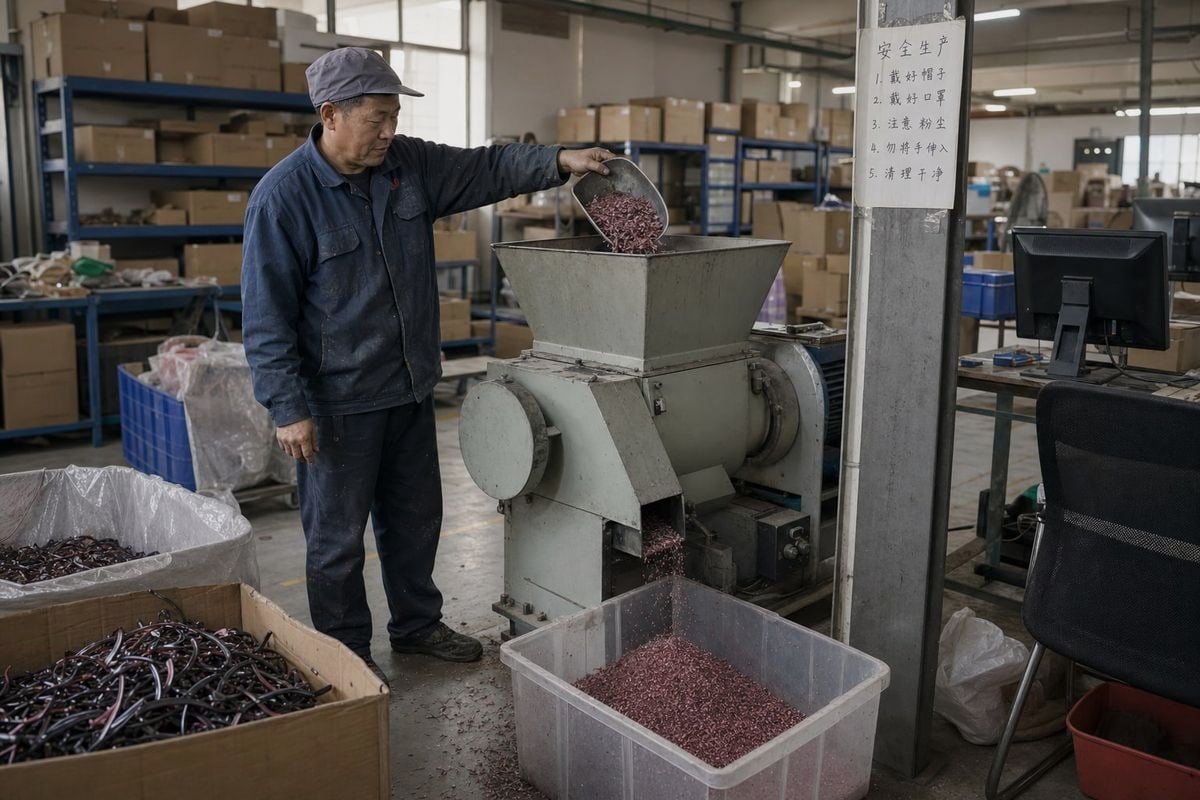
Sustainability and child safety are not opposites, but they compete for budget in a poorly run factory. In our ورشة عمل مدارة بنظام 5S 6, with around 120 workers, we treat them as one system. A safe frame is a comfortable frame. A comfortable frame gets worn longer. A frame worn longer wastes less. That chain only holds if quality control is real.
Questions that separate real suppliers from traders
When buyers visit us in Taizhou, I encourage them to ask hard questions. Use the same ones with any supplier:
| سؤال لطرحه | What a strong answer looks like |
|---|---|
| هل أنتم مصنع أم تاجر؟ | Verifiable factory address, workshop photos, audit access |
| What materials do you use for kids' frames? | Specific answers: TR90, TPEE, recycled polycarbonate — with safety rationale |
| How do you handle production scrap? | Regrind and reuse loops for suitable materials, documented waste handling |
| Can I start without mold investment? | An existing style library — we offer around 800 styles for low-risk launches |
| How do you verify lens safety? | UV400 testing, impact standards, batch-level QC records |
| Can you support custom eco packaging? | OEM/ODM options for recycled or reduced packaging, retail-ready presentation |
The trade-off you should weigh deliberately
Here is a tension I discuss openly with clients. Highly durable children's frames — flexible TPEE temples, unbreakable-style constructions — are harder to recycle than simple rigid plastics. But they last dramatically longer on an active child. For most kids' brands, durability wins the sustainability math. A supplier who can explain this trade-off clearly, instead of promising everything, is a supplier who understands the product. Our position has always been long-term partnership over lowest price, and this is exactly the kind of decision where that mindset pays off for your brand reputation.
What certifications should I look for to verify eco-friendly claims?
A Japanese client once sent me a competitor's listing claiming "100% eco frames" with zero documentation. We spent an afternoon unpacking why that claim was meaningless — and what real proof looks like.
**Look for GRS (Global Recycled Standard) for recycled content, FSC certification for wood and bamboo, and recognized bio-based or compostable material labels. Pair these with safety documentation like UV400 test reports, since eco claims without safety proof are red flags for kids' eyewear.
Greenwashing thrives on vague language. Words like "eco," "green," and "natural" have no legal definition in most markets. Certifications exist to close that gap, but you need to know which certificate verifies which claim. Matching the right document to the right claim is half the battle.
Matching claims to proof
| Claim on the product | Certification or proof to request |
|---|---|
| Made with recycled plastic | GRS (Global Recycled Standard) or RCS chain-of-custody documents |
| Sustainable wood or bamboo | FSC certification 7 for the raw material source |
| Bio-based or plant-derived plastic | Bio-based content test reports from recognized labs |
| Compostable material | Certified compostability labels — rare and often misused for eyewear |
| تظل رؤية شاشات LCD طبيعية. | UV400 test reports from accredited third-party labs |
| Safe for children | Relevant market safety standards and batch QC records |
How to read the paperwork, not just the logo
A certificate is only as good as its scope. Check three things. First, does the certificate name the actual factory, not a trading company two steps removed? Second, does it cover the specific material in your frame, not a different product line? Third, is it current — certifications expire. When we prepare documentation packages for our OEM clients, we tie every claim on their packaging back to a specific document, because their brand carries the legal risk in their home market, not ours. Also remember the vocabulary distinctions: renewable, recycled, recyclable, and compostable are four different claims. A frame can honestly be one without being any of the others. Precise language on your packaging protects you from greenwashing accusations and builds real trust with parents.
الخلاصة
Kids' sunglasses rarely belong in the recycling bin, but smart choices upfront — durable TR90 and TPEE frames, recycled content, verified certifications, and take-back options — make sustainability real, not just marketed.
ملاحظات ختامية
1. Background on bamboo as a renewable material referenced for eco-friendly frames. ↩︎
2. Explains the plastic material used in sunglasses lenses and its recycling limitations. ↩︎
3. Official site of the charity named as a real-world eyewear donation program. ↩︎
4. EPA sun safety resource supports the UV protection claims for children’s lenses. ↩︎
5. NIH eye institute resource supports the emphasis on UV protection for children’s vision. ↩︎
6. Defines the 5S manufacturing methodology mentioned for factory quality control. ↩︎
7. Explains the forestry certification body referenced for sustainable wood and bamboo sourcing. ↩︎
مقالات أخرى قد تعجبك
August 1, 2026
هل يجب على المصنع التعامل مع تغليف ووضع ملصقات نظارات الأطفال الشمسية، أم استخدام مورد مخصص؟
August 1, 2026
مستودع خاص مقابل الوفاء المباشر من المورد: أيهما يقلل تكاليف الإرجاع لعلامات نظارات الأطفال الشمسية؟
August 1, 2026
مباشر إلى ميناء المستودع أو التخزين الخارجي: أيهما يوفر أكثر على شحن نظارات الأطفال الشمسية؟
هل تبحث عن شريك موثوق به للنظارات للأطفال؟
استكشف أكثر من 800 نمط جاهز ودعم OEM/ODM كامل مصمم خصيصًا لعلامتك التجارية.
اتصل بنا English
  Español de México
  Deutsch
  Français
  日本語
日本語  العربية
  Português do Brasil