Are Kids’ Sunglasses Frames Made From Recyclable Materials?
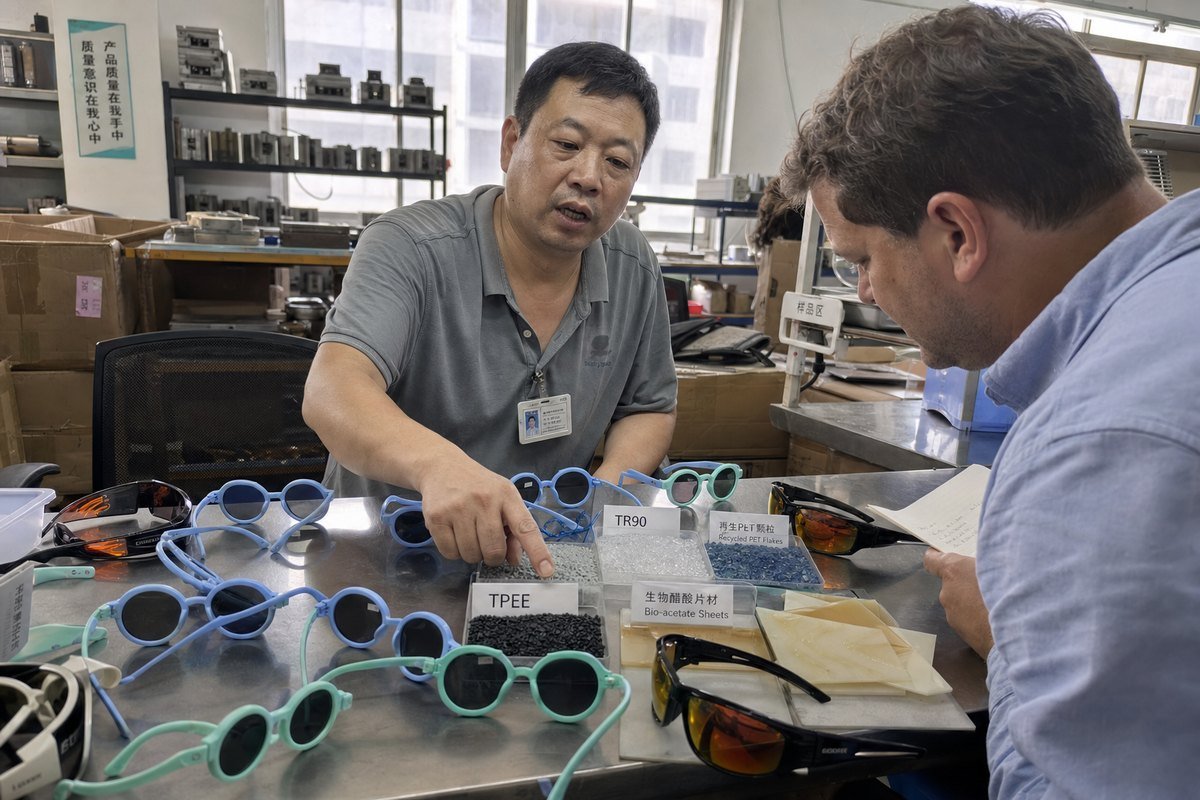
Buyers ask me about recyclable kids’ sunglasses frames almost every week now. On our production line in Taizhou, “eco” claims get tested daily. Vague answers cost brands trust — and returns. Here is what actually holds up.
Some kids’ sunglasses frames are made from recyclable materials such as TPEE, TR90, recycled PET, recycled nylon, and bio-acetate. However, not all frames are recyclable, and “recyclable” does not automatically mean “made from recycled content.” Buyers must verify each claim separately with their supplier.
That distinction matters more than most product pages admit. Let me walk you through the materials, the safety checks, the durability trade-offs, and the packaging options — from a factory perspective.
What materials do you use to make eco-friendly kids' sunglasses frames?
A procurement manager from Australia once sent me three "eco" frame samples from other suppliers. Two of them were ordinary plastic with green marketing. In our workshop, we start with the material sheet, not the story.
**Eco-friendly kids' sunglasses frames are commonly made from TPEE and TR90 thermoplastic elastomers, recycled PET from plastic bottles, recycled nylon from fishing nets, bio-acetate derived from wood pulp, and plant-based plastic composites. TPEE and TR90 lead for children because they combine flexibility, safety, and recyclability.
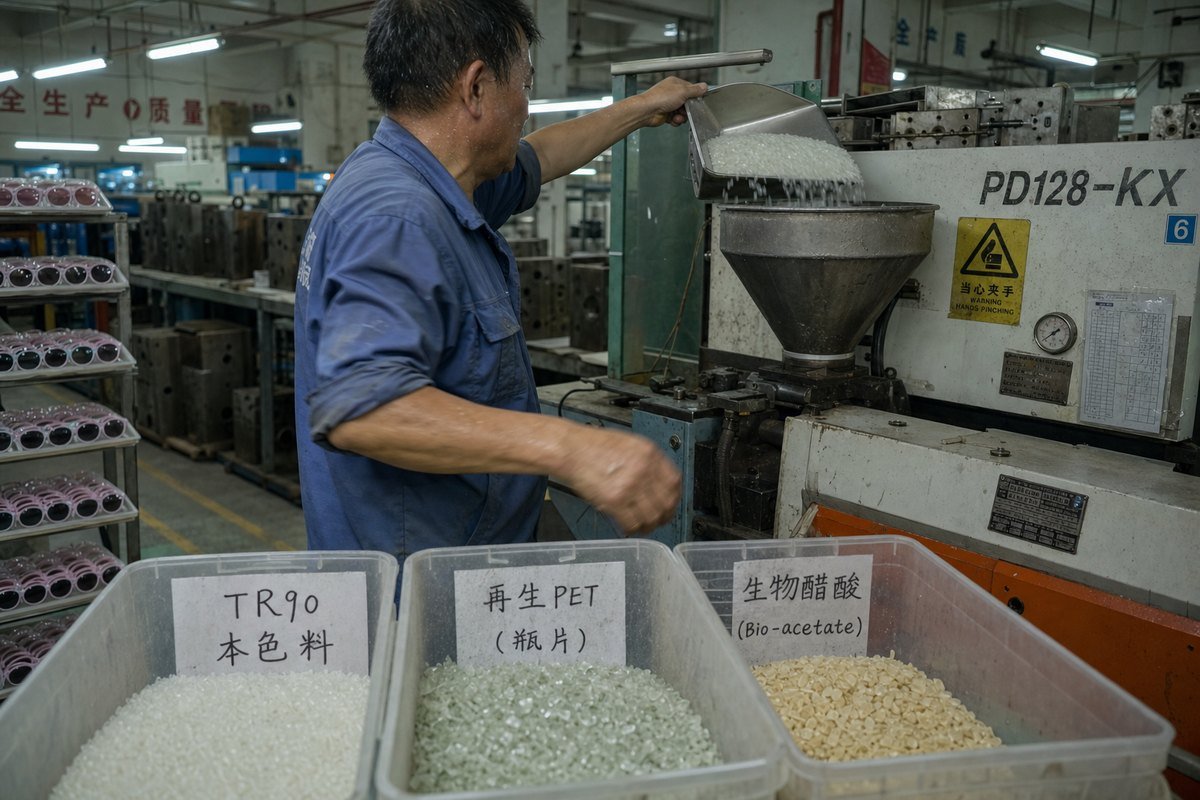
After 15 years of making children's eyewear, our team has worked with most of these materials. Each one behaves differently on the injection molding machine 1, and each one carries a different environmental claim. Here is how they compare in practice.
The main material options at a glance
| المواد | Source | Recyclable? | الأفضل لـ |
|---|---|---|---|
| TPEE (thermoplastic elastomer) | Petroleum-based, mono-material | Yes, highly recyclable | Flexible, "unbreakable" toddler frames |
| TR90 | Nylon-based polymer | Yes, in dedicated streams | Lightweight optical and sun frames |
| Recycled PET 2 | Post-consumer plastic bottles | نعم | Budget-friendly eco lines |
| Recycled nylon | Ocean-bound plastic, fishing nets | نعم | Sport and wraparound styles |
| Bio-acetate frames | Wood pulp, cotton linters | Industrially compostable, limited recycling | Premium fashion-forward lines |
| Bamboo / wood | Renewable plant material | Biodegradable, not conventionally recyclable | Niche natural aesthetics |
Why we lead with TPEE and TR90
Our factory focuses on TPEE and TR90 for a simple reason: children destroy eyewear. A frame that snaps is both a safety risk and a warranty claim. TPEE bends nearly flat and springs back. TR90 is featherlight and resists impact. Both are thermoplastic elastomers, which means they can be melted down and remolded. That is a genuine recyclability advantage over thermoset materials.
We also practice closed-loop habits inside our 5S-managed workshop. Sprues, runners, and rejected shots from injection molding can be reground into pellets and reused where quality allows. That is eco-conscious manufacturing at the process level, not just the material level. Many of our roughly 800 existing styles — including the soft two-tone round frames and sporty wraparound shields buyers often pick for kids' outdoor lines — are built on these flexible material platforms.
Recycled and bio-based options for premium positioning
For brands that want a stronger sustainability story, recycled PET and recycled nylon frames turn waste bottles and discarded fishing nets into raw material. Bio-acetate frames offer a plant-based plastic alternative, though they suit fashion styles more than rough toddler play.
How can I verify my supplier's recycled materials are safe for children?
A lesson we learned early: one bad batch of resin can undo years of reputation. That is why every incoming material lot at our factory gets checked before it touches a mold — no exceptions, even from long-term resin partners.
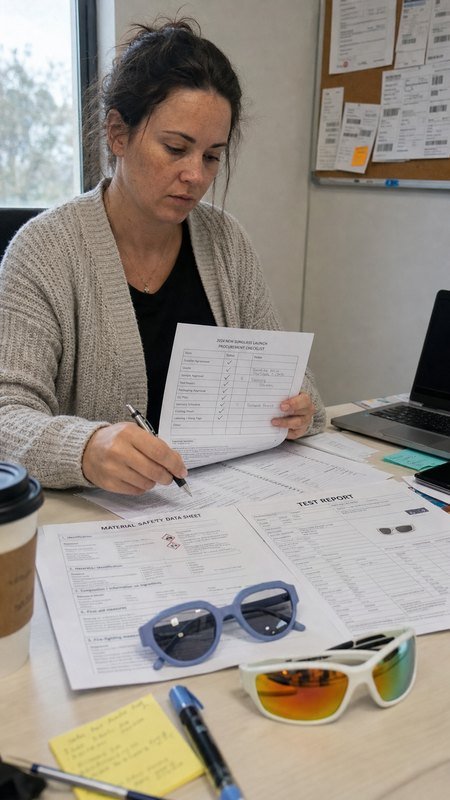
Verify safety by requesting material safety data sheets, third-party test reports against standards like EN 71 and FDA requirements, and confirmation that materials are BPA-free. Then order pre-production samples, commission independent lab testing, and audit the factory's incoming material inspection process.
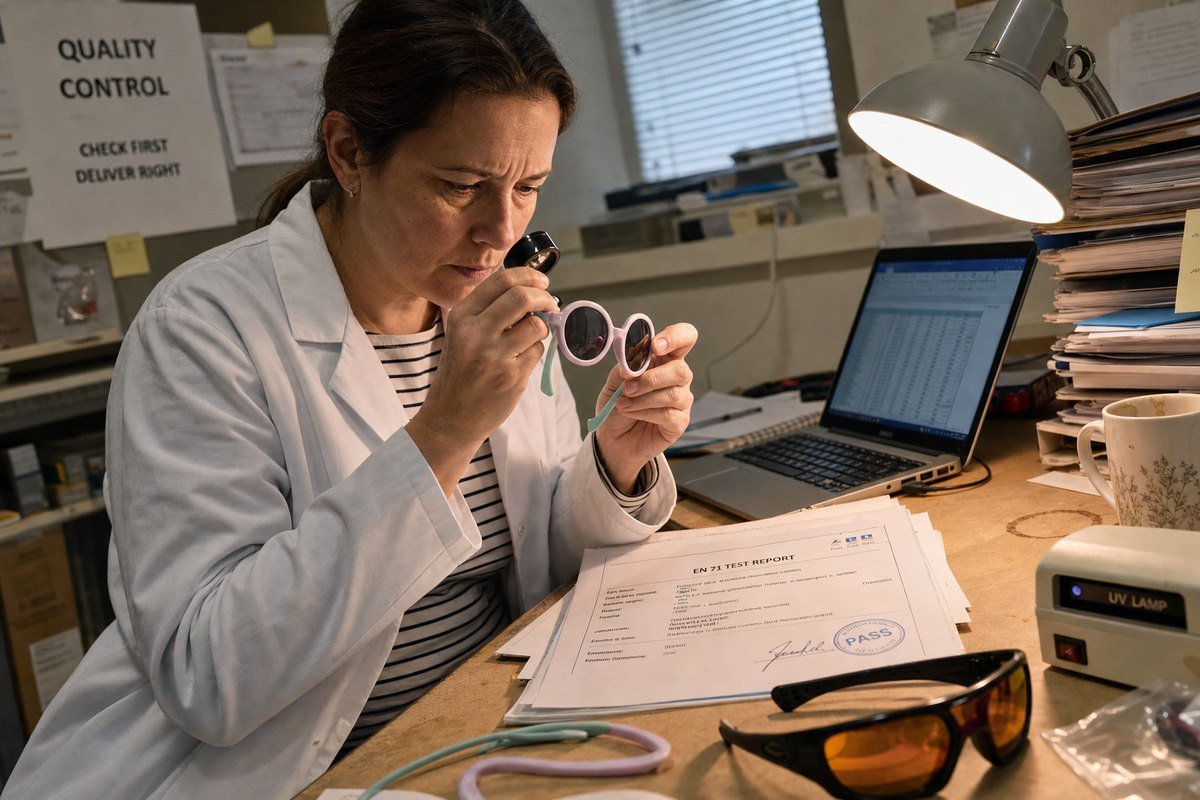
Recycled content adds one extra risk layer compared with virgin resin: feedstock variability. Post-consumer plastic can carry contaminants if the recycler's process is weak. So your verification process needs to be more rigorous, not less. Here is the checklist we recommend to the brand buyers we work with across 20-plus countries.
A practical five-step verification process
- Request documentation first. Ask for the material data sheet, the recycled-content certificate from the resin supplier, and proof the material is BPA-free and free of restricted phthalates and heavy metals.
- Match tests to your market. European buyers need EN 71 and REACH compliance 3; US buyers need CPSIA; Australian buyers should check AS/NZS sunglasses standards. Do not accept a generic "passed testing" claim.
- Test the finished frame, not just the pellet. Coatings, paints, and hinge metals matter. We often recommend uncoated or minimally coated finishes for kids' lines, which also keeps the material purer for future recycling.
- Send samples to an independent lab. SGS, Intertek, TÜV, or Bureau Veritas 4 can test the exact production sample. This costs a few hundred dollars and removes all guesswork.
- Audit or video-inspect the factory. A real factory can show you incoming inspection records 5, material storage, and quality control stations. We regularly host these checks and treat them as a sales advantage, not a burden.
Key documents to request from any supplier
| وثيقة | ما يثبته | علامة حمراء في حالة عدم وجودها |
|---|---|---|
| Material Safety Data Sheet | Chemical composition and handling safety | Supplier may not know its own material source |
| Recycled-content certificate | The claimed recycled percentage is real | Possible greenwashing |
| EN 71 / CPSIA test report | Child-safety compliance for your market | Frames may fail customs or retail audits |
| UV400 protection lens report | Lenses block UVA and UVB as claimed | Core product function is unverified |
One more point from our export experience: safety and sustainability claims 6 must travel together. A recycled frame with a UV400 protection lens report and a child-safety certificate is a sellable product. A recycled frame with only a marketing story is a liability.
Will choosing recyclable frames affect the durability of my kids' sunglasses line?
Durability is the trade-off question I weigh with buyers most often. Early in our TPEE development, we bent sample temples thousands of times on a flex tester before we trusted the material for toddlers. That habit never left us.
Choosing recyclable frames does not have to reduce durability. TPEE and TR90 are both recyclable and among the most flexible, impact-resistant materials in children's eyewear. Durability drops only when brands choose brittle biodegradable plastics or low-grade recycled resin without proper testing.
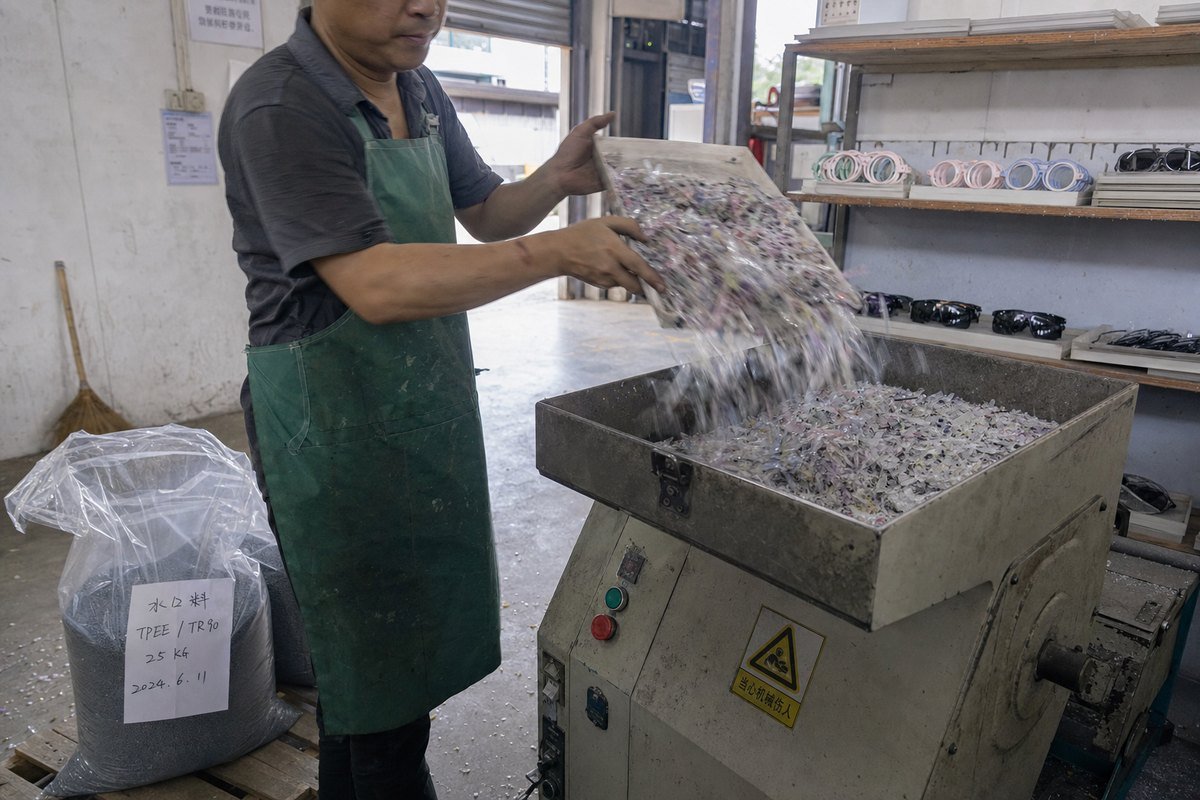
The assumption that "eco equals fragile" comes from early biodegradable sunglasses, which were often brittle. The market has moved on. Today the real question is not "recyclable or durable" but "which recyclable material matches which durability requirement."
Durability comparison by material
| المواد | Flex Resistance | مقاومة الصدمات | الوزن | Typical Lifespan With Kids |
|---|---|---|---|---|
| TPEE | Excellent — bends flat | ممتازة | خفيف | Longest; often outlasts the child's size |
| TR90 | جيد جدًا | جيد جدًا | خفيف جدا | Long |
| Recycled nylon | Good to very good | جيد | خفيف | Good with quality feedstock |
| Recycled PET | معتدل | معتدل | خفيف | Acceptable for casual use |
| Bio-acetate frames | Lower flexibility | معتدل | أثقل | Better for older kids, gentler use |
| Rigid biodegradable plastics | ضعيف | ضعيف | Varies | Shortest; prone to snapping |
How we protect durability in eco lines
Three practices matter in our experience. First, material pairing: we often combine a TR90 front with TPEE temples, putting the most flexible material exactly where kids grab, twist, and sit on their glasses. Second, resin quality control: recycled pellets get the same melt-flow and consistency checks as virgin material, because inconsistent feedstock is the real durability killer, not recycled content itself. Third, honest design limits: for sport wraparound styles with mirrored shield lenses, we keep wall thickness and hinge geometry robust rather than shaving grams to hit a marketing weight.
Newer bio-composites reinforced with flax or hemp fibers are also closing the gap between biodegradable materials and play-proof strength. We watch these developments closely, but for now, thermoplastic elastomers remain the safest durability bet for a children's line. The practical takeaway for your brand: specify the material grade and require flex and drop testing on production samples. Durability is engineered, not assumed.
Can I request custom eco-friendly packaging along with recyclable frame materials?
A Japanese kids' brand once told us their retail buyer rejected a sustainable frame line because it shipped in glossy plastic boxes. The lesson stuck with our packaging team: the story must be consistent from frame to box.
Yes, most OEM/ODM eyewear factories offer custom eco-friendly packaging alongside recyclable frames. Options include recycled kraft boxes, FSC-certified paper, soy-based inks, recycled PET pouches, cornstarch bags, and plastic-free hang tags — all customizable with your logo for retail-ready, sustainable eyewear brand presentation.
Packaging is where many eco stories fall apart at retail. Parents notice when a "green" product arrives wrapped in three layers of virgin plastic. Because we provide full OEM/ODM support — custom colors, logos, lenses, and packaging under one roof — we can align every touchpoint with your sustainability positioning.
Eco packaging options you can specify
- Recycled kraft paper boxes with soy-based or water-based ink printing, debossed or single-color logos.
- Microfiber pouches made from recycled PET, which double as lens cleaning cloths and reduce the need for a rigid case.
- FSC-certified paperboard inserts replacing molded plastic trays inside the box.
- Cornstarch or compostable polybags where a protective bag is unavoidable for transit.
- Plastic-free hang tags and stickers carrying your material story and care instructions.
How the customization process works with us
The process is straightforward. You share your brand guidelines and target retail format. Our team proposes packaging structures, material options, and printed sustainability messaging — for example, a short note explaining the recycled PET or ocean-bound plastic origin of the frame. We produce physical packaging samples alongside frame samples, so you approve the complete retail unit, not pieces in isolation. Minimums for تغليف مخصص are usually modest compared with custom frame molds, which is why many brands start their eco line by picking from our existing styles and investing their budget in branded packaging instead.
One honest note: eco packaging 7 sometimes costs slightly more per unit than standard options. But for the founders and product managers we serve, that small premium buys shelf credibility, consistent brand storytelling, and fewer awkward questions from eco-conscious parents.
الخلاصة
Recyclable kids' sunglasses frames are real, but claims vary wildly. Verify materials, demand safety testing, choose flexible thermoplastics, and align your packaging. Do that, and sustainability strengthens your brand instead of risking it.
ملاحظات ختامية
1. Explains the industrial process used to manufacture thermoplastic eyewear frames. ↩︎
2. Technical details on the properties and recycling process of PET plastics. ↩︎
3. Official EU source covering toy safety standards and chemical requirements. ↩︎
4. Global testing agency providing independent safety verification for consumer goods. ↩︎
5. International standard for quality management systems used to audit factory inspection processes. ↩︎
6. US Federal Trade Commission guidelines on environmental marketing and sustainability claims. ↩︎
7. Overview of environmental considerations and standards for sustainable product packaging. ↩︎
مقالات أخرى قد تعجبك
August 1, 2026
هل يجب على المصنع التعامل مع تغليف ووضع ملصقات نظارات الأطفال الشمسية، أم استخدام مورد مخصص؟
August 1, 2026
مستودع خاص مقابل الوفاء المباشر من المورد: أيهما يقلل تكاليف الإرجاع لعلامات نظارات الأطفال الشمسية؟
August 1, 2026
مباشر إلى ميناء المستودع أو التخزين الخارجي: أيهما يوفر أكثر على شحن نظارات الأطفال الشمسية؟
هل تبحث عن شريك موثوق به للنظارات للأطفال؟
استكشف أكثر من 800 نمط جاهز ودعم OEM/ODM كامل مصمم خصيصًا لعلامتك التجارية.
اتصل بنا English
  Español de México
  Deutsch
  Français
  日本語
日本語  العربية
  Português do Brasil