Are Kids’ Sunglasses Materials Compliant With Environmental Requirements?
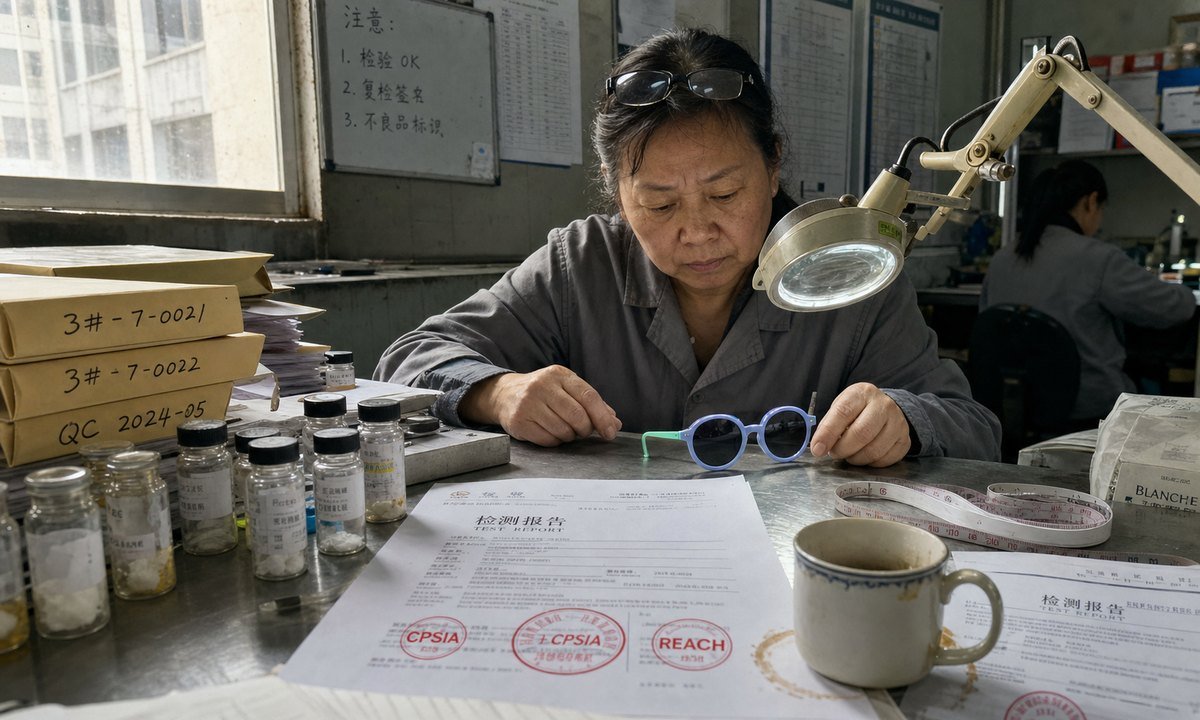
Kids’ sunglasses materials worry many buyers I meet BPA-free plastic materials 1. One bad test report can sink a whole shipment. After 15 years running our Taizhou eyewear factory, I know that pain — and how to avoid it.
Yes, kids’ sunglasses materials can comply with environmental requirements, but only when the frame, lenses, coatings, and packaging all pass chemical testing under CPSIA and REACH, and when eco-claims like recycled content or bio-based inputs are backed by third-party certifications, not just marketing language.
Compliance is not one single checkbox. It covers chemistry, sustainability, and safety at the same time REACH declaration of conformity 2. Let me walk you through each layer, the way I explain it to our B2B buyers.
Which environmental standards should I check when sourcing kids' sunglasses materials?
A procurement manager from Australia once sent me a two-page compliance checklist before her first order FSC certification 3. I was glad she did. Buyers who ask early avoid expensive surprises later, and our team prepares documents for exactly these requests.
Check CPSIA compliance for lead and phthalates in the US, REACH regulation for restricted substances in Europe, FDA 21 CFR 801.410 for impact-resistant lenses, and AS/NZS 1067.1:2016 for UV performance in Australia. Environmental claims should additionally reference GRS or ISCC certification.
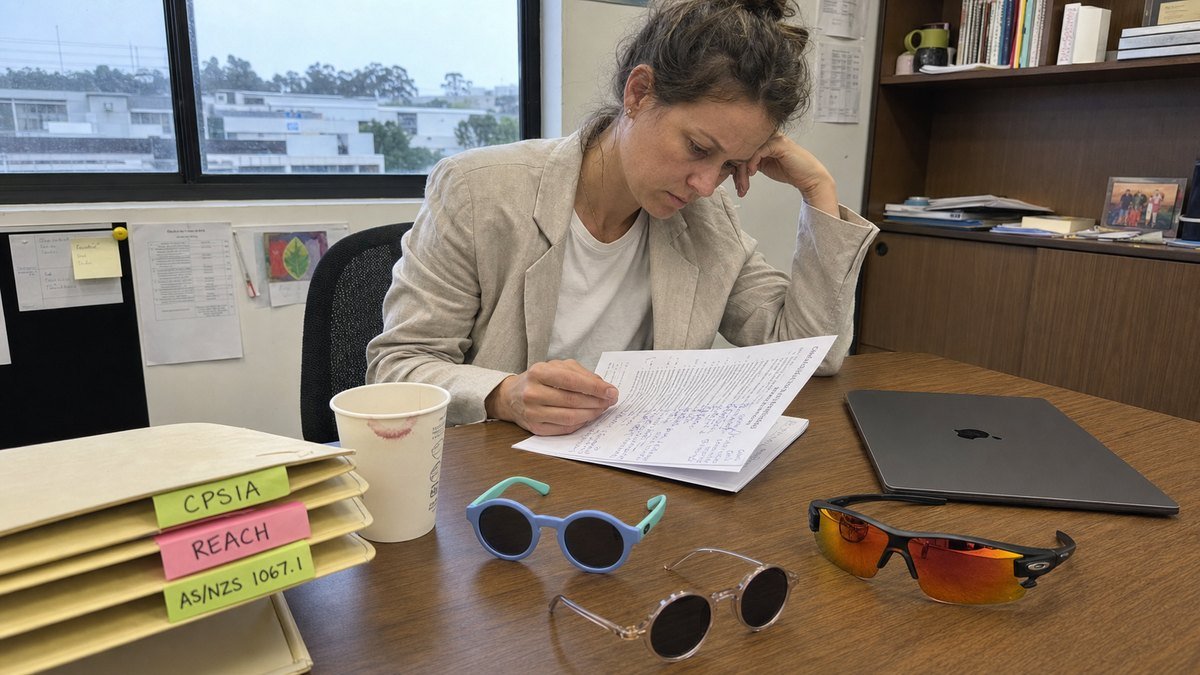
The first thing I tell new buyers is this: environmental compliance and child-safety compliance are two different tracks. A frame made from البلاستيك المعاد تدويره من المحيط 4 can still fail a phthalate test. A perfectly non-toxic frame can still carry a false "biodegradable eyewear 5" claim. You need to check both tracks.
The core regulations by market
Different destination markets trigger different mandatory rules. Here is the map I share with clients in 20+ countries.
| السوق | Standard / Regulation | ما يغطيه |
|---|---|---|
| الولايات المتحدة الأمريكية | قانون تحسين سلامة المنتجات الاستهلاكية | Lead, phthalates, third-party testing for children's products |
| الولايات المتحدة الأمريكية | هيئة الغذاء والدواء 21 CFR 801.410 | Impact resistance of sunglass lenses |
| الاتحاد الأوروبي | REACH regulation | Restricted substances: cadmium, azo dyes, plasticizers |
| الاتحاد الأوروبي | EN ISO 12312-1 | Sunglass UV filtering and optical performance |
| أستراليا/نيوزيلندا | AS/NZS 1067.1:2016 | Mandatory sunglasses standard, including children's UV protection |
Environmental standards on top of safety rules
Once the mandatory layer is covered, buyers building an eco-positioned brand add voluntary standards. The المعيار العالمي للمواد المعاد تدويرها 6 (GRS) verifies recycled content, such as rPET from ocean-bound plastics. ISCC verifies bio-based feedstocks. Neither is legally required, but retailers increasingly demand them before accepting sustainability claims on packaging.
In practice, we advise buyers to build a simple document stack: mandatory safety test reports first, then chemical screening for non-toxic materials, then any voluntary sustainability certificates. When a customs officer or a retail auditor asks questions, that stack answers them in order. Skipping the first layer to chase the green label is the most common sourcing mistake I see.
Are TPEE and TR90 safe, eco-friendly materials for children's eyewear?
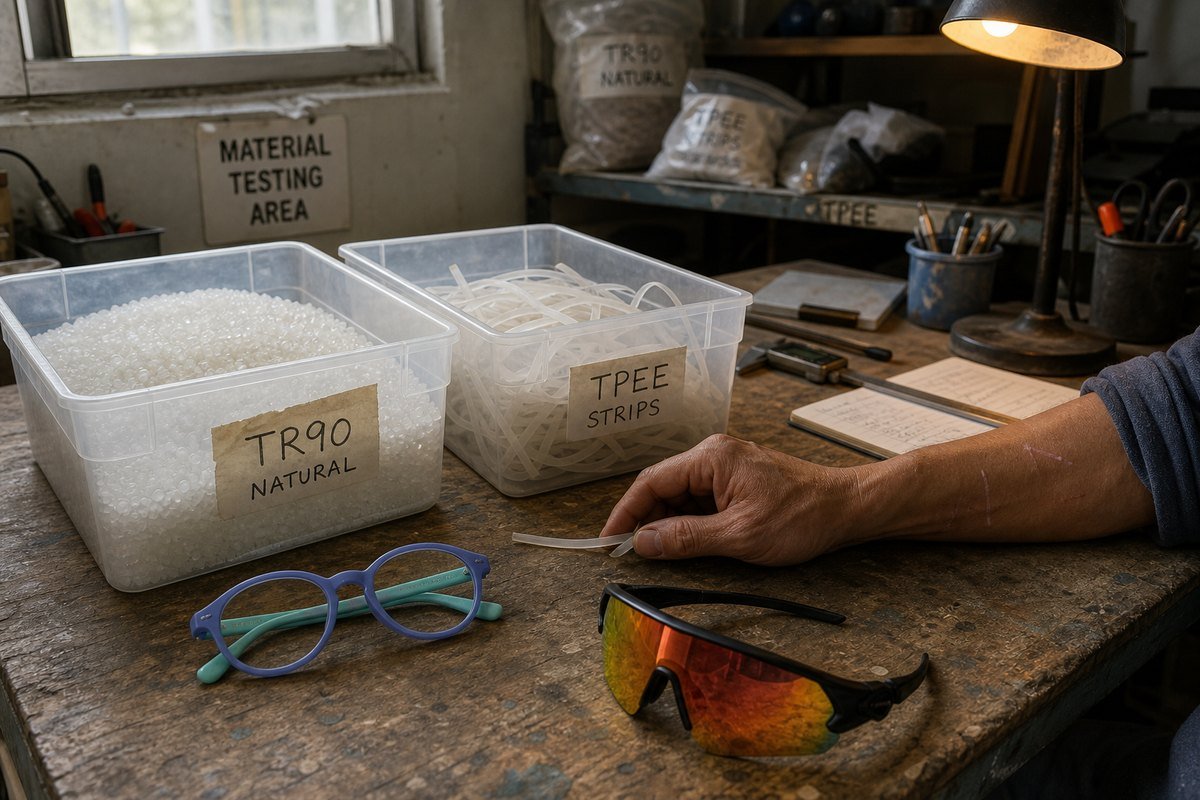
Flexibility was the trade-off that pushed us toward these two materials years ago. Rigid frames snapped on active kids, creating sharp edges and waste. Our engineers settled on TR90 fronts with TPEE flexible frames and temples, and we have refined that combination ever since.
Yes, TPEE and TR90 are among the safest mainstream options for children's eyewear. Both are BPA-free plastic materials, lightweight, and highly flexible, so they resist snapping. TPEE is recyclable and requires lower production energy, while TR90 offers proven durability — though each batch still needs chemical testing.
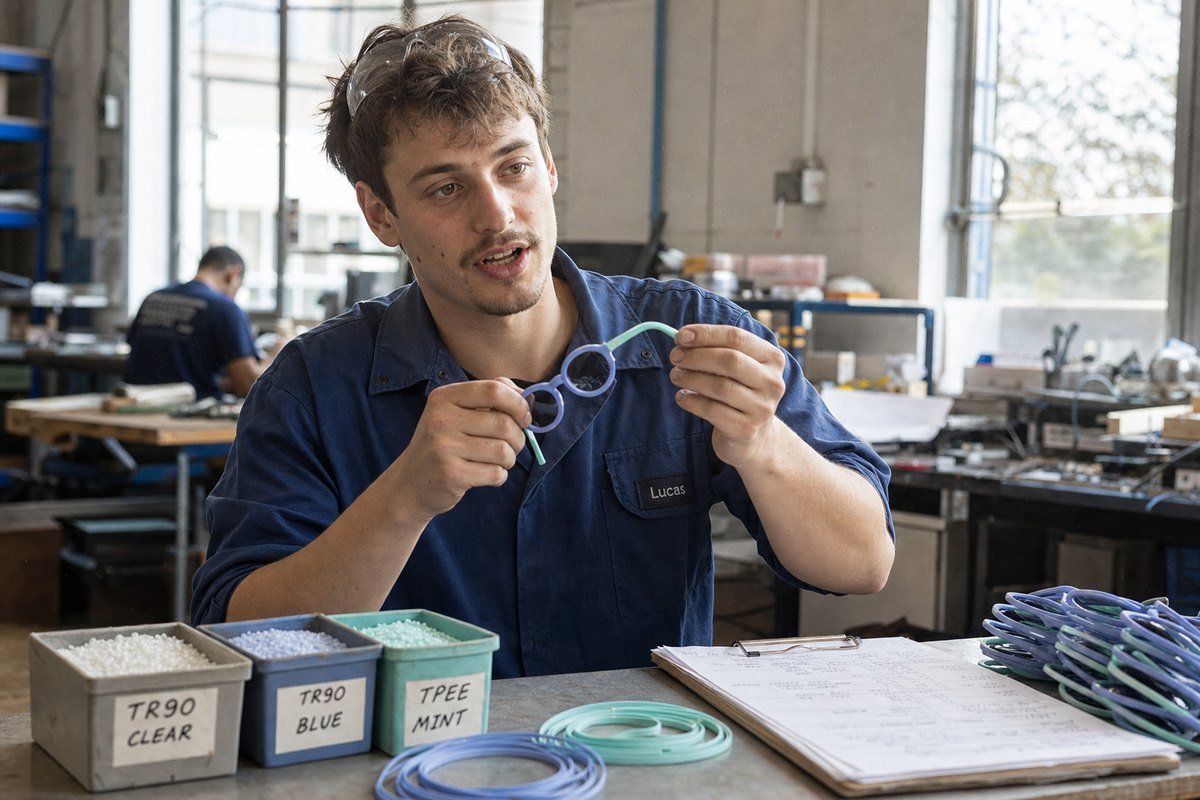
Let me be direct about why these materials matter for young wearers. Children pull, twist, chew, and sit on their sunglasses. A brittle frame breaks into sharp fragments. A flexible one bends and returns to shape. That is a safety benefit and an environmental one, because a frame that survives a season does not end up in landfill after a week.
How the two materials compare
| خاصية | TPEE | TR90 |
|---|---|---|
| المرونة | Extremely high, rubber-like memory | High, bends without snapping |
| الوزن | خفيف جدا | خفيف جدا |
| خالية من BPA | نعم | نعم |
| Recyclability | Recyclable thermoplastic | Recyclable, but less commonly processed |
| أفضل استخدام | Temples, baby frames, full soft frames | Frame fronts, optical frames |
| Feel on skin | Soft, slightly rubberized | Smooth, matte |
The soft periwinkle-blue toddler frames on our line are a good example. The matte, slightly rubberized finish comes from the flexible polymer itself, not from a plasticizer coating. That matters, because phthalate-free components are exactly what CPSIA testing screens for. We formulate without added plasticizers, then verify with lab screening.
Where caution is still needed
I will not tell you TPEE is automatically green. Some suppliers claim recyclability or low-energy production without data. Treat those claims cautiously. Ask for material data sheets 7 and batch-level test reports. Also remember the toddler "mouthing" phase: any frame a two-year-old wears will end up in their mouth, so non-toxic materials and food-contact-minded formulations are worth discussing with your supplier before mass production.
Compared with alternatives like bio-acetate frames, TPEE and TR90 trade some "natural material" storytelling for superior durability. For children's products, I believe durability wins. A longer product life is a real environmental gain, not a marketing one.
How do I verify a manufacturer's material compliance before placing an order?
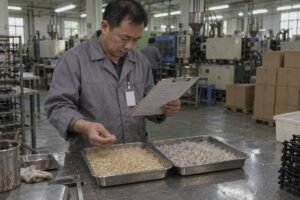
A Japanese buyer taught me a lesson early in my career: he refused our first sample set until we could trace the resin lot number back to the raw-material supplier. It felt strict then. Today, our 5S-managed workshop treats that traceability as standard practice.
Verify compliance by requesting recent third-party lab reports from SGS or Intertek, matching them to the exact model and material batch, auditing the factory directly or virtually, checking raw-material traceability, and testing pre-shipment samples independently before releasing final payment.
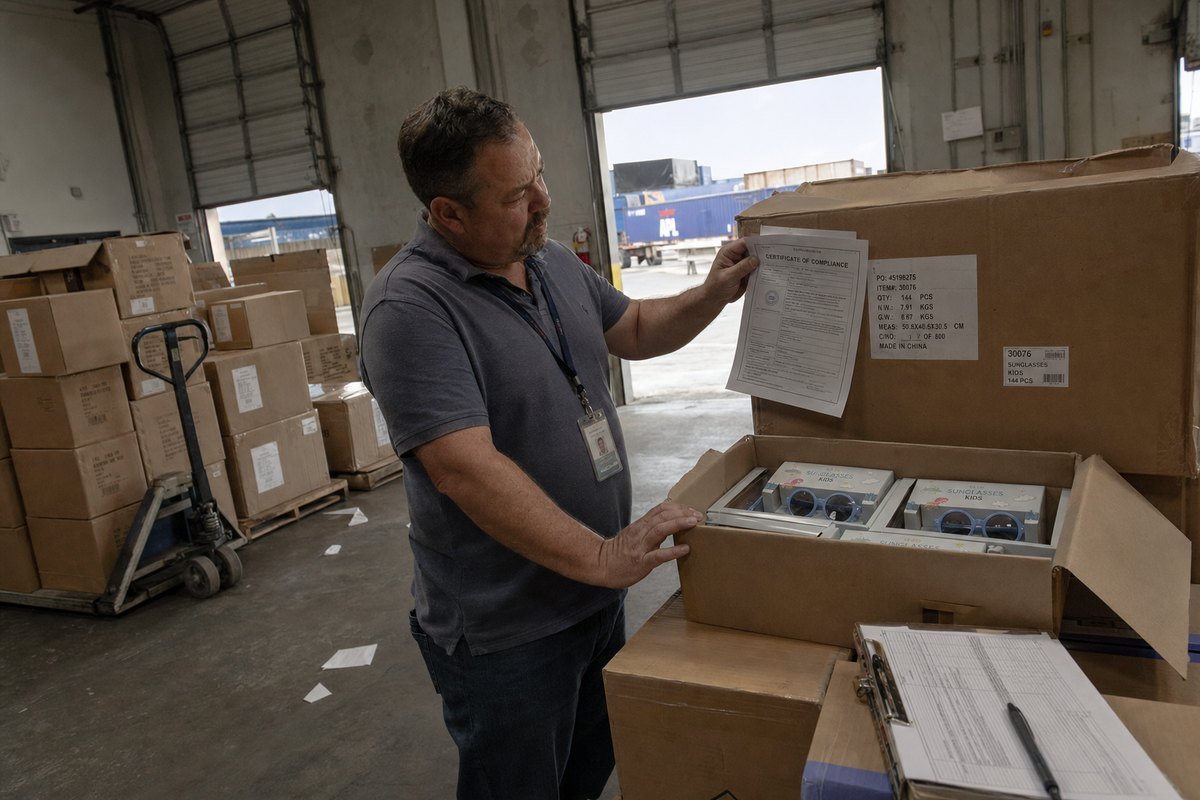
Paperwork can be faked. Verification is about connecting documents to physical reality. Here is the process I recommend to every founder or product manager, whether they buy from us or from anyone else.
عملية تحقق من خمس خطوات
- Request current test reports. Ask for CPSIA and REACH regulation reports issued within the last 12–24 months. Old reports may not reflect current resin formulations.
- Match reports to your actual product. A report for a black adult frame does not cover a pastel kids' frame. Colorants change chemistry. Check model numbers and material descriptions line by line.
- Audit the factory, not the trading company. We host buyer visits and video audits at our Taizhou facility because a trader's certificate tells you nothing about the real production floor. Ask to see raw-material storage and incoming QC.
- Trace the raw materials. A serious factory can show resin supplier names, lot numbers, and material data sheets. If they cannot, sustainable manufacturing claims are unverifiable.
- Test pre-shipment samples yourself. Pull random units from the production run, not golden samples, and send them to an independent lab. This is the single strongest protection you have.
Red flags I would walk away from
Vague answers about material composition. Reports with mismatched product photos. Refusal to allow batch sampling. Prices far below the market, which usually means recycled scrap of unknown origin blended into "virgin" resin. In our experience exporting to Europe and Australia, buyers who follow the five steps above almost never face a customs rejection.
What certifications should I request to confirm my kids' sunglasses meet environmental regulations?
Documentation requests have changed noticeably over the past few seasons. Five years ago, buyers asked us mainly for UV400 test data. Now, European kids' brands ask about recycled content verification and plastic-free packaging in the very first inquiry email.
Request CPSIA third-party test certificates, a REACH declaration of conformity, FDA drop-ball impact documentation, UV400 or EN ISO 12312-1 lens reports, plus GRS certification for any recycled-content claim and FSC certification for paper packaging. Each certificate must name your specific product.
Think of certifications in two groups: the ones you must have to sell legally, and the ones that prove your environmental story. Both belong in your supplier contract before you place a purchase order.
The certification checklist
| Certificate / Report | النوع | ما يثبته |
|---|---|---|
| CPSIA test certificate | Mandatory (US) | Lead and phthalate limits met for children's products |
| REACH declaration | Mandatory (EU) | Restricted substances controlled in plastics and metal hinges |
| FDA drop-ball test record | Mandatory (US) | Lenses are impact resistant |
| UV400 / EN ISO 12312-1 report | Mandatory (varies) | Genuine UV protection performance |
| GRS certificate | طوعي | Verified recycled content, e.g., recycled ocean plastic rPET |
| ISCC certificate | طوعي | Bio-based or circular feedstock claims |
| FSC packaging certificate | طوعي | Responsibly sourced paper boxes and inserts |
Beyond the frame itself
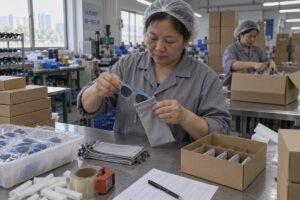
A common blind spot is that certificates often cover only the frame substrate. Lenses, mirror coatings, hinge screws, rubber temple grips, cases, and cleaning cloths each carry their own chemistry. When we build a retail-ready OEM package for a client — custom colors, logos, lenses, and packaging together — we scope the testing to cover the complete assembly, plus soy-based inks and plastic-free packaging where the brand requests it.
Also watch the frontier of this topic. Digital product passports, refurbishment programs for outgrown kids' frames, and 3D-printed low-waste production are all emerging. None replace the certificate stack above, but retailers may soon ask about them. Skepticism is healthy too: a "biodegradable eyewear" claim without a named standard and disposal condition is usually greenwashing, and phthalate-free components should be proven by lab data, not asserted on a hangtag.
الخلاصة
Unverified eco-claims can cost you a recall, a retail delisting, and your brand's trust. The fix is straightforward: demand tested, documented, durable materials from a transparent factory partner.
Kids' sunglasses materials can absolutely comply with environmental requirements — when brands treat compliance as a system, not a slogan. Check the mandatory standards for each market. Choose proven, flexible, BPA-free materials like TPEE and TR90. Verify your manufacturer with real audits and batch testing. Then back every environmental claim with GRS, FSC, or ISCC documentation. At our factory, this layered approach is how we help brands across 20+ countries launch children's eyewear that is safe, sustainable, and genuinely sellable. If you want a partner who already has roughly 800 tested styles and full OEM/ODM support ready to go, that conversation is exactly what we are here for.
ملاحظات ختامية
1. Authoritative information on the health effects and regulatory status of bisphenol A in consumer plastics. ↩︎
2. Official EU resource for understanding the chemical safety regulations applicable to consumer goods. ↩︎
3. Details the certification process for ensuring wood-based products come from responsibly managed forests. ↩︎
4. Explains the environmental impact of plastic waste and the context for ocean-bound recycling efforts. ↩︎
5. Provides scientific context on the standards and definitions for biodegradable materials in consumer products. ↩︎
6. Official site for the standard that verifies recycled content and social/environmental practices in manufacturing. ↩︎
7. Defines the technical documentation used to communicate chemical safety and handling procedures for materials. ↩︎
مقالات أخرى قد تعجبك
هل تبحث عن شريك موثوق به للنظارات للأطفال؟
استكشف أكثر من 800 نمط جاهز ودعم OEM/ODM كامل مصمم خصيصًا لعلامتك التجارية.
اتصل بنا English
  Español de México
  Deutsch
  Français
  日本語
日本語  العربية
  Português do Brasil