كيفية تحديد مقاس نظارات الأطفال حسب العمر ومحيط الرأس؟
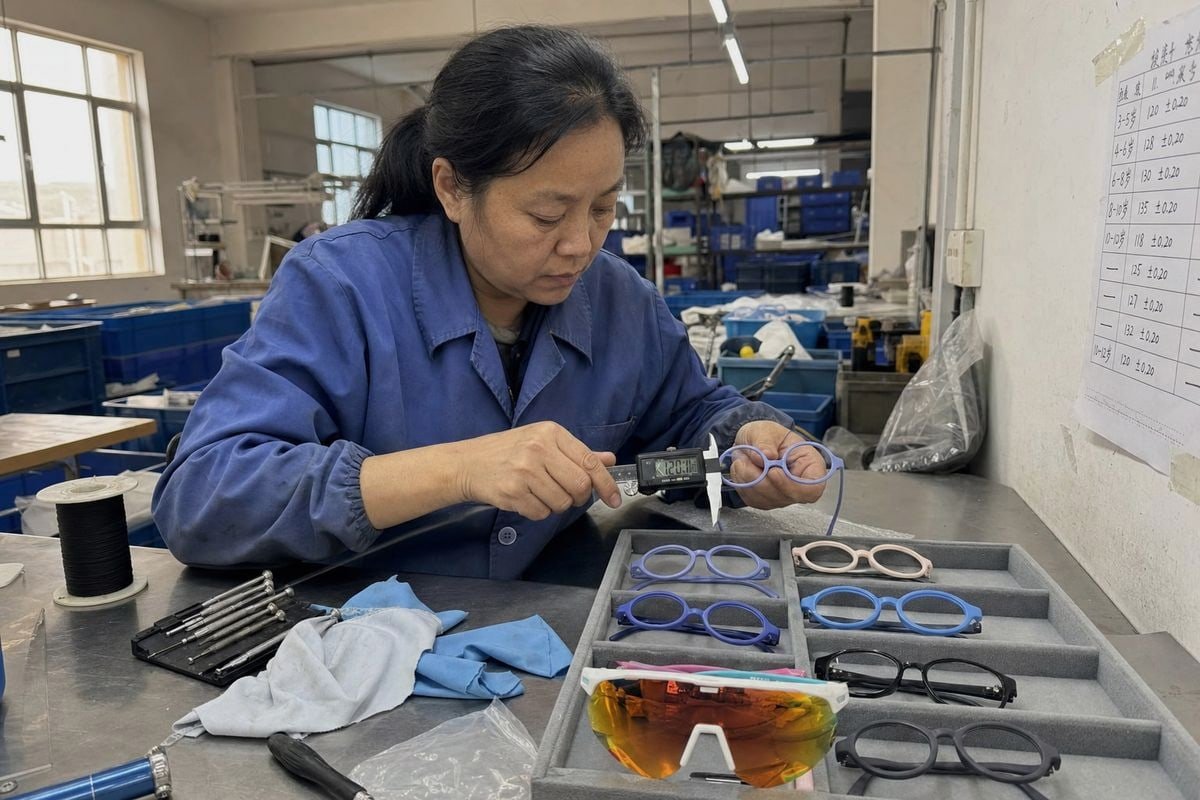
تحديد مقاس نظارات الأطفال حسب العمر و محيط الرأس 1 يبدو الأمر بسيطًا حتى تأتي دفعة “ضيقة جدًا”. في خط الإنتاج لدينا، نرى كيف يمكن لمليمتر واحد خاطئ أن يدمر عملية إطلاق منتج.
لتحديد مقاس نظارات الأطفال، استخدم نطاقات الأعمار لتضييق النطاق، ثم قم بالتأكيد باستخدام محيط الرأس وعرض الوجه من الصدغ إلى الصدغ. طابق هذه الأرقام مع عرض الإطار وعرض العدسة وعرض الجسر وطول الذراع. القياسات تتجاوز العمر دائمًا عندما يختلف الاثنان.
[مخططات الأعمار](https://okayeyewear.com/what-age-ranges-size-ratios-choose-kids-sunglasses/) هي نقطة انطلاق، وليست خط النهاية. أدناه، سأفصل الأرقام الدقيقة، وفحوصات الملاءمة، وخطوات التوريد التي تجعل تحديد المقاس موثوقًا به.
ما هي قياسات محيط الرأس التي يجب أن أستخدمها لكل فئة عمرية للأطفال؟
سألتني مشترية من أستراليا ذات مرة لماذا لم يتمكن مختبرو عمرها 4 سنوات من ارتداء الإطارات المسماة "3-8 سنوات". أجابت بيانات الملاءمة لدينا في مصنع تايتشو: نفس العمر، رؤوس مختلفة جدًا.
استخدم محيط رأس تقريبيًا 44-48 سم للأعمار من 6-24 شهرًا، و 48-52 سم للأعمار من 2-5 سنوات، و 50-54 سم للأعمار من 6-10 سنوات، و 53-56 سم للمراهقين. محيط الرأس مهم جدًا للرضع، الذين لا تستطيع جسور أنوفهم دعم الإطارات القياسية بعد.
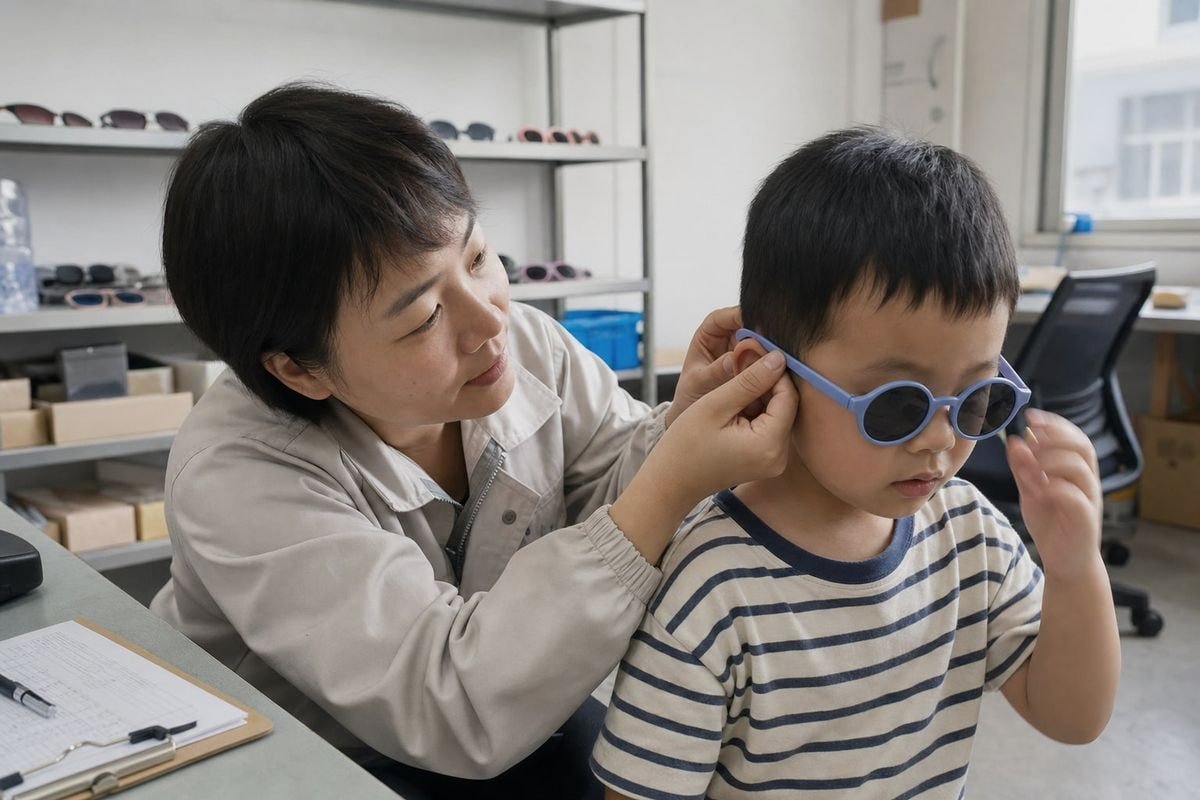
محيط الرأس هو المقياس الأكثر موثوقية للرضع الذين تقل أعمارهم عن 24 شهرًا. جسور أنوفهم مسطحة وغير متطورة، لذلك لا يمكن للإطار أن يرتكز على الأنف بالطريقة التي تفعلها نظارات البالغين. بدلاً من ذلك، تعتمد الملاءمة على شد التفاف الرأس، وغالبًا ما يكون حزام رأس قابل للتعديل. مع نمو الأطفال بعد سن الثانية، يصبح عرض الوجه عبر الصدغين هو الرقم الأكثر عملية، لأن هذا هو المكان الذي تستقر فيه أذرع الإطار فعليًا.
مرجع عملي للعمر إلى القياس
هذا هو المخطط المجمع الذي نشاركه مع مشتري العلامات التجارية. يجمع بين محيط الرأس وأرقام الإطار المهمة للطلب.
| الفئة العمرية | محيط الرأس (تقريبًا) | عرض العدسة | عرض الإطار | طول الذراع 2 |
|---|---|---|---|---|
| 0-1 سنوات | 44-47 سم | 35-37 ملم | 110-115 ملم | 105-110 ملم |
| 1-2.5 سنوات | 46-49 سم | 37-39 ملم | 115-120 ملم | 105-115 ملم |
| 5-4 سنوات | 48-51 سم | 2-5 سنوات (طفل صغير) | 120-128 ملم | 115-120 ملم |
| 4-7 سنوات | 50-53 سم | 4-7 سنوات (ناشئ) | 125-132 ملم | 118-125 ملم |
| 7-10 سنوات | 51-54 سم | 7-10 سنوات (أطفال) | 130-138 ملم | 122-128 ملم |
| 10-16 سنوات | 53-56 سم | 10-16 سنة (مراهق) | 135-145 ملم | 128-140 ملم |
هناك محاذير مهمة. أولاً، تأتي العديد من المخططات المنشورة من أبعاد إطارات النظارات الطبية للأطفال، وليس النظارات الشمسية على وجه التحديد، لذا تحقق دائمًا مقابل ورقة مواصفات النظارات الشمسية الفعلية. ثانيًا، يمر الأطفال بطفرات نمو غير متساوية. قد يحتاج طفل يبلغ من العمر 5 سنوات إلى نطاق 7-10 سنوات. لهذا السبب نقول للمشترين: العمر يضيق النطاق؛ القياس يؤكد الملاءمة.
كيف أعرف ما إذا كان مقاس الإطار سيناسب طفلي بشكل مريح وآمن؟
خلال تجارب الملاءمة لنمط جديد مستدير - النموذج باللون الأزرق البنفسجي والأخضر النعناعي في كتالوجنا الحالي - تعلمنا أن فشل الراحة يظهر في غضون الستين ثانية الأولى من الارتداء.
يناسب الإطار عندما يتطابق عرضه الإجمالي مع عرض وجه الطفل من الصدغ إلى الصدغ، ويستقر جسر الأنف بشكل مسطح دون انزلاق، وينحني الذراع خلف الأذن مباشرة، وتبقى النظارات الشمسية في مكانها عندما ينظر الطفل إلى الأسفل أو يهز رأسه.
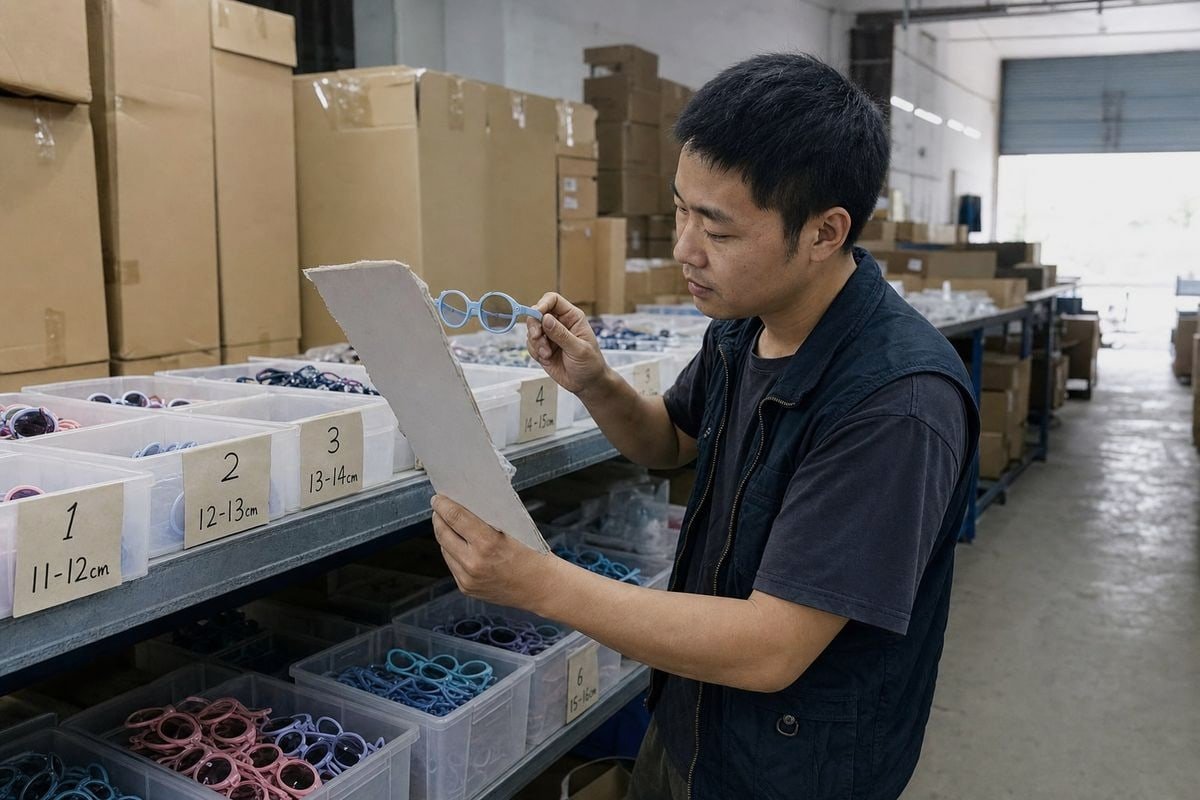
تعتمد الملاءمة على أربعة قياسات تعمل معًا. إذا فاتك قياس واحد، تفشل المجموعة بأكملها.
الأرقام الأربعة التي تحدد الملاءمة
عرض الإطار is the total front width. It should equal the child's face width across the temples, measured just below the eyes and above the cheekbones. If the child is not already wearing glasses, add about 5–10 mm to the measured face width when estimating. Too wide, and the frame slides; too narrow, and the arms bow outward and pinch.
عرض جسر الأنف is the primary determinant of vertical fit. For children, comfortable bridges usually land between 11 and 19 mm, with most kids in the 14–18 mm zone. A bridge that is too wide lets the lenses sit too low, which exposes the eyes to overhead UV — defeating the point of حماية UV400 3 entirely.
طول الذراع الجانبي should place the bend of the arm precisely behind the ear. That bend provides the leverage that keeps frames secure during running and jumping. Children also have more prominent mastoid bones 4 behind the ear, so we design zero-pressure temple tips to prevent tension headaches.
عرض العدسة drives coverage. Pediatric eye sizes generally fall between 31 and 53 mm; use that as a sanity check.
Quick Signs of a Bad Fit
| عرض | السبب المحتمل | إصلاح |
|---|---|---|
| تعديلات الإطار أو الاستبدال | Bridge too wide or frame too big | Smaller bridge width or head strap |
| Red marks at temples | Frame width too narrow | Go up one frame width band |
| Frame rests on cheeks | Insufficient cheekbone clearance | Choose a frame with a taller B-measurement |
| Falls off when looking down | Temple bend in wrong position | Adjust or lengthen temple length |
| Lenses fog quickly | Frame bottom touching skin | More cheekbone clearance |
One more point buyers often skip: even non-prescription lenses should align their optical centers close to the child's pupillary distance. A large mismatch creates a prism effect 5 that strains young eyes during long wear.
ما هي مواد الإطار التي تساعدني في الحصول على ملاءمة أفضل عبر أشكال الرأس المختلفة؟
There is a real trade-off we weigh on every new mold: a stiffer frame holds its shape on shelves, but a flexible frame fits more head shapes per SKU. After fifteen years of making children's eyewear, we almost always choose flexibility.
إطارات TPEE المرنة وإطارات TR90 تناسب أوسع نطاق من أشكال الرأس لأنها تتمدد للخارج تحت الضغط دون الضغط بشدة على الصدغين. هذا التكيف مع الضغط يستوعب تداخلات التحجيم بين الفئات العمرية، ويقلل من الكسر، ويبقي الضغط بعيدًا عن عظام الخشاء الحساسة لدى الأطفال.
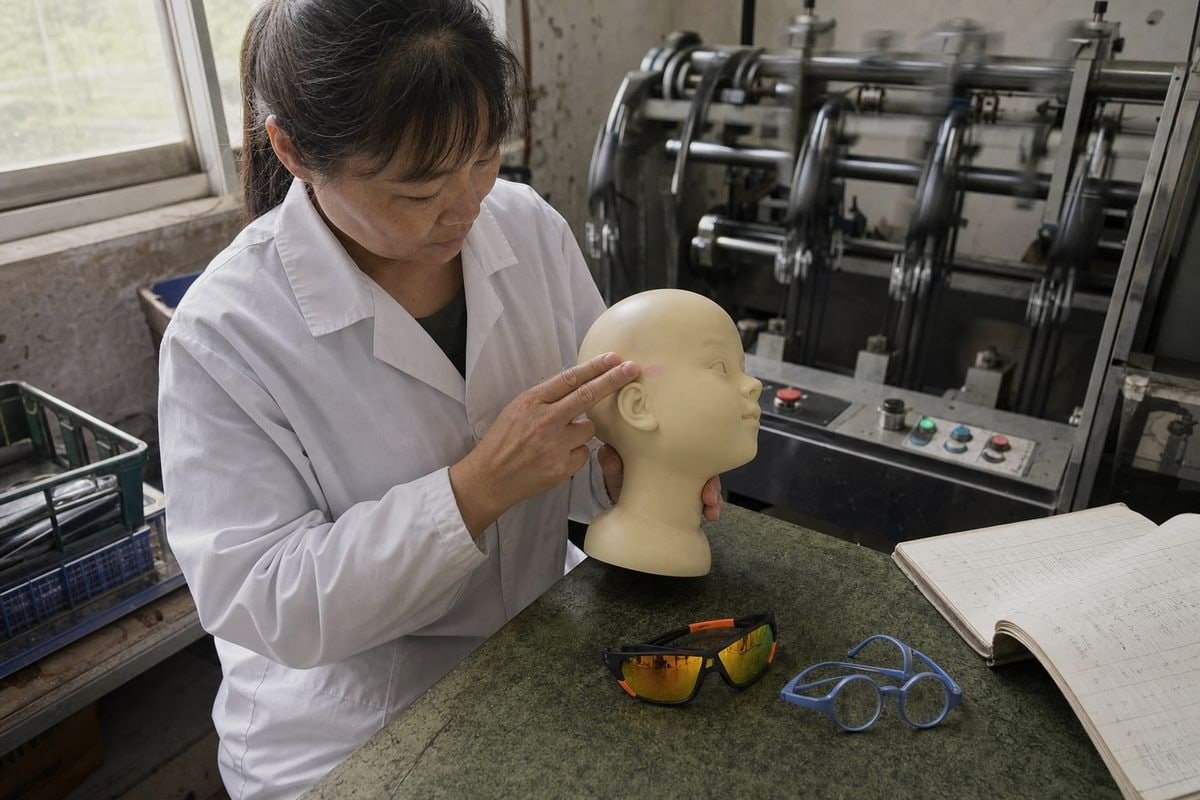
Material choice is really a fit strategy, not just a durability decision. A rigid frame fits one narrow band of head widths. A flexible one covers a spread. For brands selling online, where nobody can try before buying, that spread directly reduces returns.
كيف تقارن المواد الرئيسية
| المواد | المرونة | الوزن | الأفضل لـ | Fit Advantage |
|---|---|---|---|---|
| TPEE | Very high, near-unbreakable bend | خفيف جدا | Babies, toddlers | Tension-fit absorbs size overlap; safe if chewed or stepped on |
| TR90 | عالية، مرونة الذاكرة | خفيف | Preschool to teen | Springs back to shape; comfortable all-day wear |
| معابد TR90 + TPEE | Structured front, soft arms | خفيف | جميع الأعمار | Stable lens platform with gentle, zero-pressure grip |
| بلاستيك صلب قياسي | منخفض | متوسط | Older teens, adults | Cheap, but narrow fit window and higher breakage |
In our workshop, the TR90-front-with-TPEE-temples combination is the most requested build from optical companies and kids' brands. The TR90 front keeps the lenses stable — important when pairing with impact-resistant عدسات بولي كربونات 6 or polarized lenses — while the TPEE temples flex gently around wider heads.
Material Choices for Active and Sport Use
Sport shield styles, like our wraparound single-lens models with mirrored gradient lenses, add another consideration: helmet compatibility. Kids wearing bike or ski helmets need ultra-thin, flat temple arms that slide under the helmet's retention system without creating pressure points. Flexible materials make this possible without loosening the everyday fit. For babies, we pair soft TPEE frames with an adjustable head strap, because straps do the anchoring work the undeveloped nose bridge cannot.
كيف يمكنني بناء جدول مقاسات موثوق به عند الحصول على نظارات شمسية للأطفال من مصنع؟
Early in my export career, I let a client publish an age-only size label on their packaging. The return rate taught us both a lesson, and we rebuilt their chart around real frame measurements within one season.
قم ببناء مخطط المقاسات الخاص بك عن طريق إقران كل نطاق عمري بقياسات إطار معتمدة - عرض الإطار، وعرض العدسة، وعرض الجسر، وطول الذراع - مأخوذة من أوراق مواصفات الشركة المصنعة الخاصة بك. ثم تحقق من العينات المادية على أطفال حقيقيين قبل الانتهاء من صفحات التعبئة والتغليف والمنتج.
A reliable size chart is built in steps, not copied from a competitor. Here is the process we walk buyers through.
A Five-Step Sourcing Process
- Request full spec sheets, not just age labels. Every style should list lens width, bridge width, frame width, and temple length. If a supplier can only tell you "fits 3–8 years," that is a warning sign. Broad age ranges without measurements hide fit problems.
- Sample across the size spread. We keep around 800 existing styles in our catalog precisely so brands can test multiple sizes and shapes without paying for new molds. Order samples from at least two adjacent size bands.
- Run a real-child wear test. Put samples on children at the edges of each age band. Check the four fit points: temple width, bridge seat, temple bend position, and cheekbone clearance. Watch for fogging and sliding during play.
- Lock your chart with both age and measurement. Publish age as the shopping shortcut, then list frame width and temple length so careful parents can verify. This two-layer chart matches how the best-performing guides present sizing.
- Confirm safety specs alongside size. Fit and protection travel together. Verify UV400 protection on every lens, confirm impact-resistant polycarbonate where the market requires it, and check that عدسات مستقطبة 7 meet the intended use.
Some buyers push back: "Age-only labels are simpler for shoppers." True — and we do not remove age labels. We layer measurements underneath them. Others worry that measurement-based charts scare off casual buyers. In practice, the opposite happens: clear numbers reduce guessing, and returns drop. As an OEM/ODM partner, we also print the finalized chart directly onto custom packaging, so the sizing guidance ships with every retail-ready unit. And because children's faces change quickly, we advise brands to remind customers to re-measure each season rather than lean on "grow-with-me" claims.
الخلاصة
Wrong sizing means returns, complaints, and lost trust. The fix is simple: use age to narrow, measure to confirm, and validate samples before launch. That is how our factory helps brands size kids' sunglasses right.
ملاحظات ختامية
<span
مقالات أخرى قد تعجبك



هل تبحث عن شريك موثوق به للنظارات للأطفال؟
استكشف أكثر من 800 نمط جاهز ودعم OEM/ODM كامل مصمم خصيصًا لعلامتك التجارية.
اتصل بنا English
  Español de México
  Deutsch
  Français
  日本語
日本語  العربية
  Português do Brasil