How to Plan a Reverse Timeline for Sourcing Kids’ Sunglasses Before Peak Season?
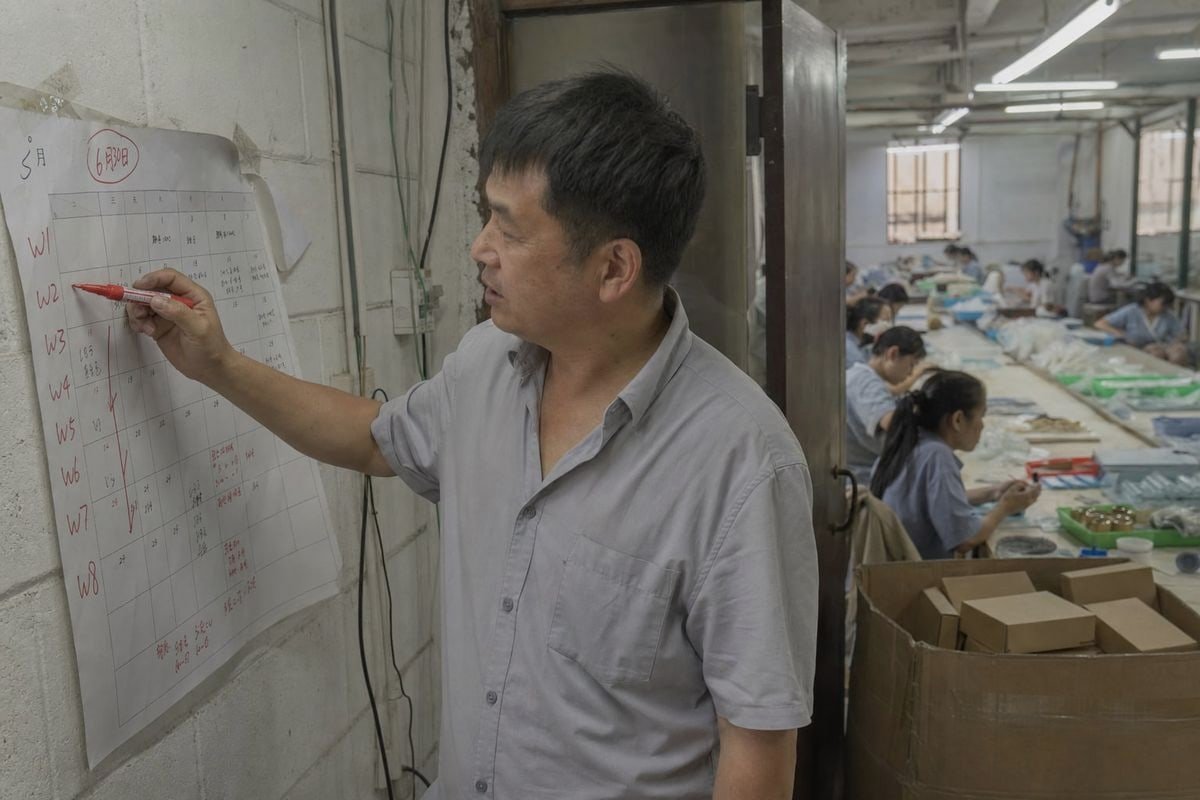
Every spring, our Taizhou production line fields the same panicked email: a buyer needs a reverse timeline for sourcing kids’ sunglasses — but summer is already six weeks away. By then, sampling, tooling, and freight math simply do not fit. Missing peak season means empty shelves, lost revenue, and a full year of waiting. The fix is planning backward from your shelf date, not forward from a purchase order.
To plan a reverse timeline for sourcing kids’ sunglasses, start from your retail shelf date and work backward: allow 4–6 weeks for freight, 4–6 weeks for production and QC, 2–4 weeks for sampling and approvals, and 2 weeks for briefing — roughly 12–16 weeks total, longer for custom tooling.
That is the short answer. Below, I break down each stage so you can build a schedule that actually holds up during peak season pressure.
How far in advance should I start planning my kids' sunglasses order before peak season hits?
A buyer from Australia once asked me why her April order could not land before Christmas trading in November — until we mapped the calendar together, she assumed production time was the whole timeline.
Start planning 12–16 weeks before your shelf date for stock or private label kids' sunglasses, and 24–26 weeks for fully custom programs with new molds. Peak season compresses factory capacity and freight space, so earlier starts protect both your quality and your launch window.
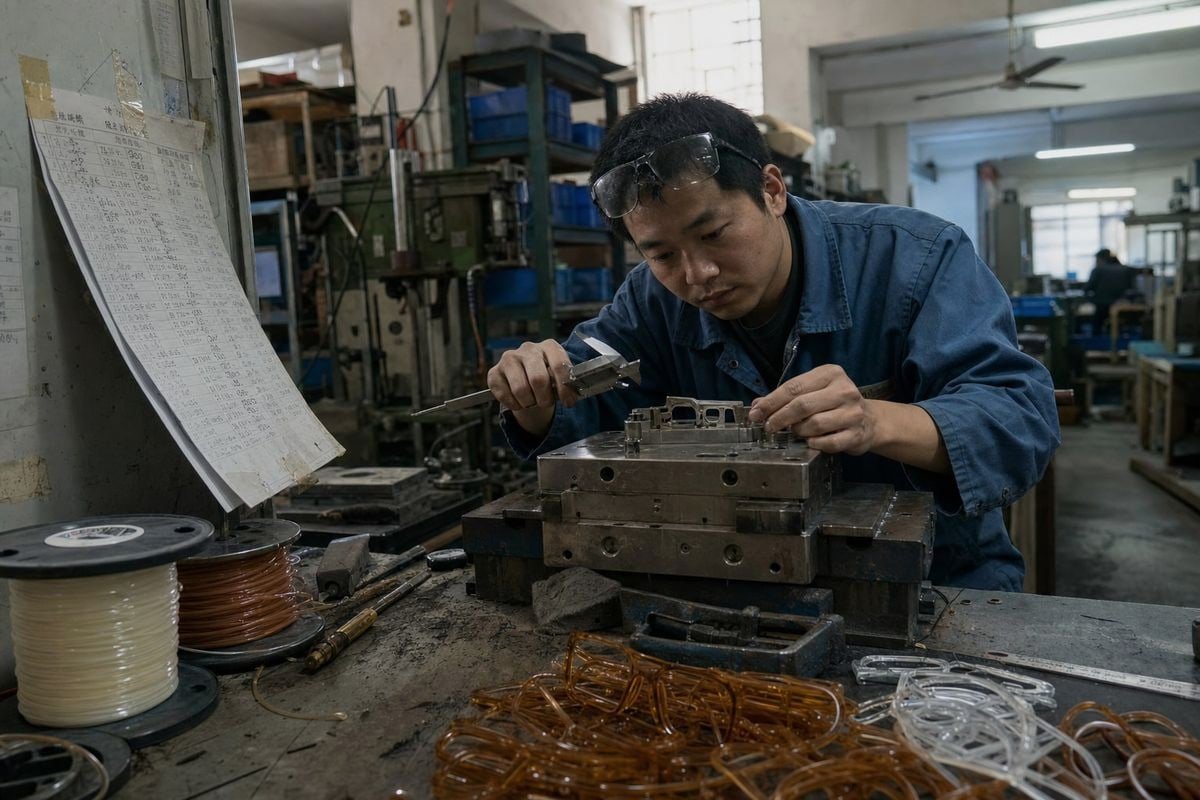
The honest answer depends on what you are ordering. Lead time management starts with knowing your order type, because the gap between ready stock and full custom development is enormous.
Lead times by order type
| نوع الطلب | Typical total lead time | What drives the timeline |
|---|---|---|
| Ready stock | 3–7 working days to ship | Only picking, packing, and freight |
| Private label (logo + packaging) | 7–30 days plus freight | Logo printing, custom packaging, artwork approval |
| OEM/ODM from existing molds | 25–45 days plus freight | Custom colors, lenses, sample production cycle |
| Fully custom (new tooling) | 45–90 days plus freight | Design, mold development, prototypes, revisions |
Now add the parts suppliers rarely quote: sampling, revisions, compliance checks, and shipping. Some of our long-term buyers begin conversations up to nine months before launch, especially when new tooling is involved. That sounds extreme, but new mold creation for TR90 or TPEE flexible frames alone can take 30–45 days.
There is also a hidden calendar trap. If your production window overlaps Lunar New Year 1, factories across China shut down for three to four weeks in total, counting the ramp-down and ramp-up. I always tell buyers targeting a Northern Hemisphere summer launch: your safest brief lands on my desk before December.
One practical shortcut we offer at our factory is our library of roughly 800 existing styles. Choosing an existing frame removes tooling from the timeline entirely, which can save one to two months. For a first-season test, that is usually the smarter path.
What key milestones do I need to map out when working backward from my launch date?
Whenever we onboard a new kids' brand, my first step is not a quotation — it is a shared milestone calendar, because a clear brief prevents more delays than any rush fee ever fixes.
Map seven milestones backward from launch: shelf date, warehouse arrival, freight departure, production completion with QC, pre-production sample approval, sample evaluation and revisions, and spec lock with the supplier brief. Assign each a hard calendar date, then build in buffers between stages.

Working backward forces discipline. Each milestone becomes a deadline you control, instead of a surprise you react to. Here is the framework I share with procurement managers, using a 16-week runway as the example.
The reverse milestone map
| Weeks before shelf date | معلم رئيسي | Key actions |
|---|---|---|
| 16 | Spec lock and brief | Finalize styles, target price, age range, compliance needs; send detailed brief |
| 14 | Sample request | Confirm sample production cycle; request fit and color samples |
| 12 | Sample evaluation | Test fit, hinge durability, lens quality; approve or revise |
| 10 | Pre-production approval | Sign off golden sample, packaging, labels, carton marks, barcodes |
| 8 | Production start | Confirm bulk manufacturing schedule and booked production slot |
| 5 | QC and packing | Final inspection, testing reports, packing to channel requirements |
| 4 | Freight departure | Book vessel or flights; prepare customs documents |
| 0–1 | Warehouse arrival | Inbound receiving, quality spot check, distribution to retail |
Two milestones deserve extra attention. First, spec lock. In our experience exporting to 20-plus countries, the projects that slip are almost always the ones where the buyer changes lens color or packaging after sampling has started. Every change restarts part of the clock.
Second, packaging and labeling approval. Retail-ready presentation — hang tags, display boxes, barcodes, carton markings — must be confirmed before mass production begins, not after. We schedule artwork approval alongside the pre-production sample so both lock at the same time. Tie your inventory forecasting to these dates too: if your forecast changes after the production slot is booked, quantities become very hard to adjust during peak season.
How much lead time should I build in for sampling, production, and quality checks?
Sampling is where I have watched the most schedules quietly die. A first sample that misses the brief costs two to three weeks per revision round — and peak season does not wait for round three.
Allow 7–15 days per sample round plus one revision round, 25–45 days for mass production depending on quantity and customization, and 3–7 days for final quality inspection. Combined, budget 6–10 weeks from sample request to goods ready for shipment.
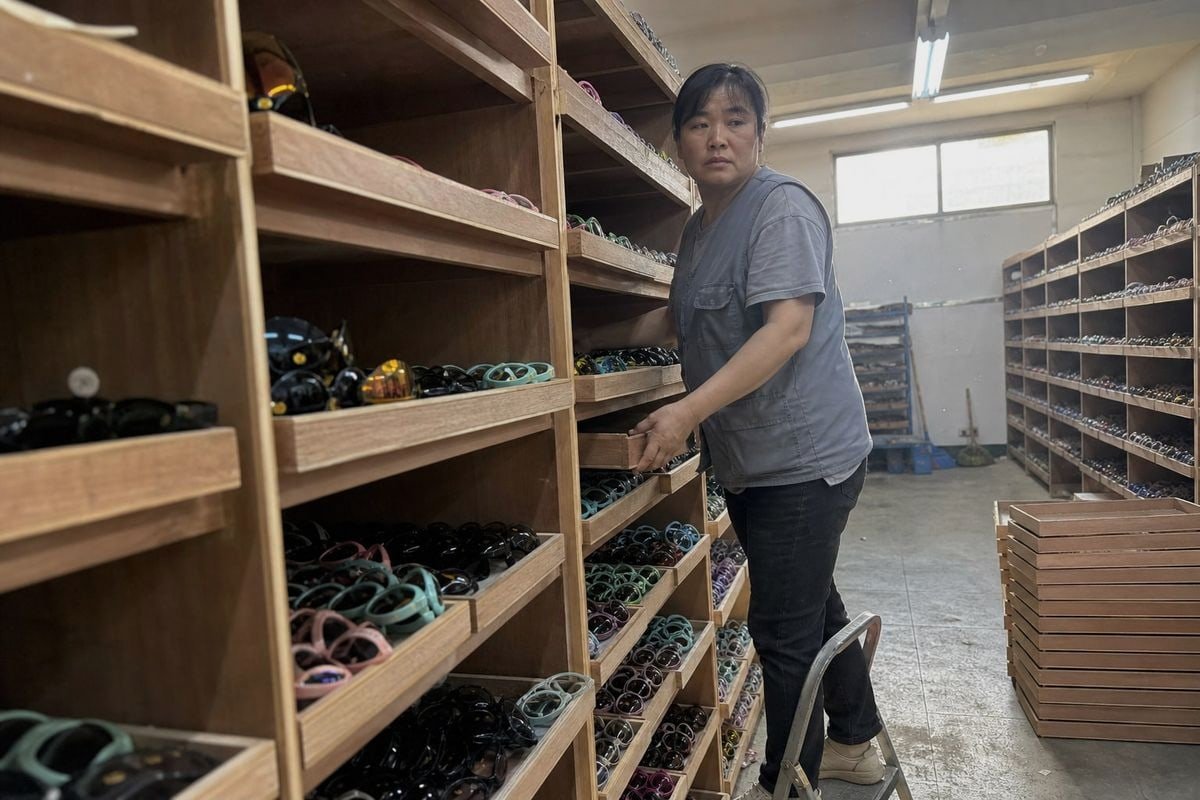
Let me break down each phase, because they behave very differently under pressure.
Sampling: the highest-risk phase
A standard sample from an existing mold takes us 7–15 days. A sample requiring new tooling takes 30–45 days before you even see the first physical piece. Plan for at least one revision round. Even experienced brands adjust temple length, nose bridge fit, or lens tint after handling the first sample. For children's eyewear, fit testing across age groups matters — a frame that suits a seven-year-old may pinch a four-year-old. Our TPEE flexible frames help here, because the material flexes rather than snaps, but sizing still needs physical verification.
Production: quantity and customization set the pace
For a typical minimum order quantity in kids’ sunglasses, mass production runs 25–35 days. Add time for complex work: multi-color frames, mirrored or عدسات مستقطبة 2, and custom-printed packaging each extend the bulk manufacturing schedule. Ask your factory for a stage-by-stage plan, not a single end date.
Quality checks: schedule them, don't squeeze them
Build QC into the timeline as fixed events, not afterthoughts:
- Incoming material inspection before assembly starts.
- A top-of-production check on the first finished units, so defects are caught before the full run.
- In-line checks during assembly at our ورشة عمل مدارة بنظام 5S 3.
- Final random inspection against your approved golden sample.
Compliance verification belongs early, not late. Confirm عملية تسوية نزاعات رسمية 4 و CPSIA compliance certification 5 requirements before production begins. If lab testing is needed for your market, samples must go to the lab weeks ahead. Factory quality control audits by third parties also need advance booking — inspection agencies get busy in peak season too.
What buffer should I add for shipping delays so I don't miss my peak season window?
The trade-off I weigh most often with buyers is speed versus cost on freight — and every peak season, someone learns the hard way that the cheapest vessel is also the least forgiving.
Add a 6–8 week logistics buffer for sea freight during peak season, covering transit, port congestion, customs clearance, and inland delivery. For critical launches, ship 15–20% of inventory by air to guarantee early-season availability while the bulk follows by sea.
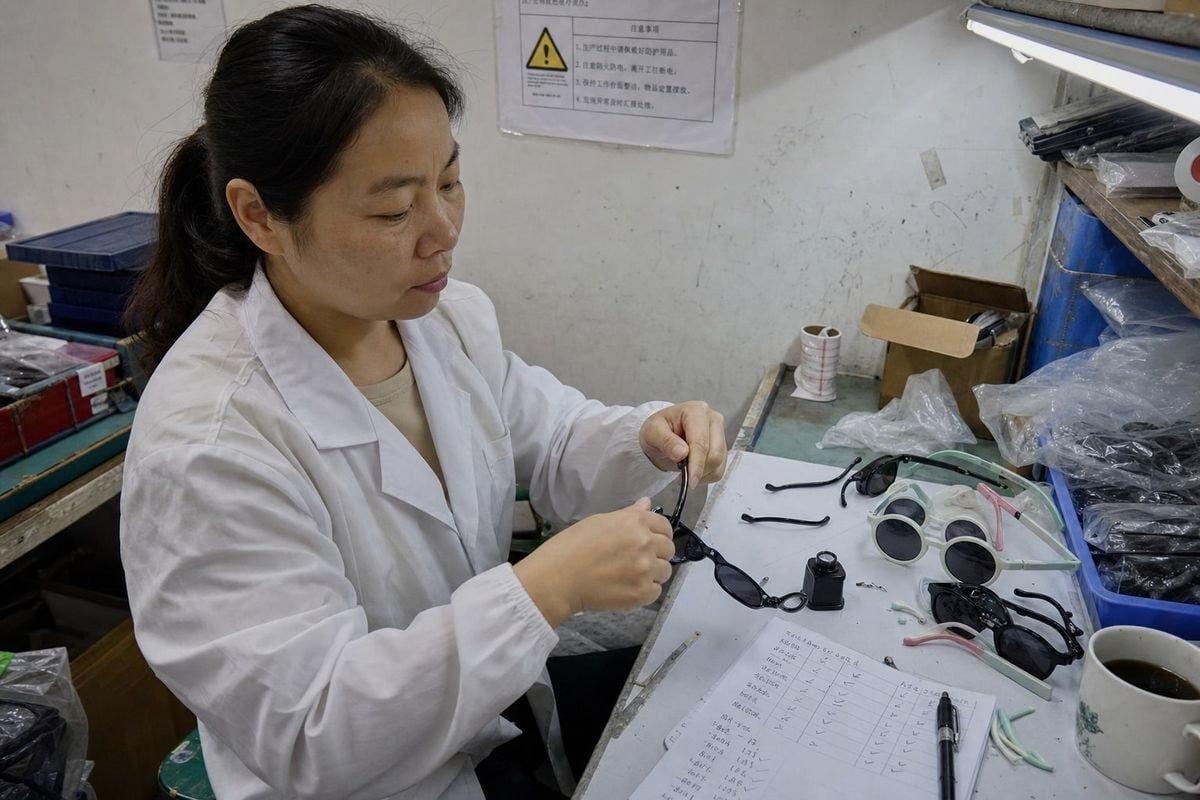
Freight and logistics planning is where good timelines survive or collapse, because it is the stage you control least. Production delays can sometimes be recovered with overtime. A missed vessel cannot.
Transit realities by mode
| Freight mode | Typical door-to-door time | Peak season risk | Best use |
|---|---|---|---|
| Sea freight (FCL/LCL) | 4–6 weeks to Europe/Australia; 3–5 to US West Coast | Rolled bookings, port congestion, +1–3 weeks | Bulk inventory, planned launches |
| الشحن الجوي | 5-10 أيام | Rate spikes, capacity squeeze | Urgent top-ups, early-season display stock |
| Rail (China–Europe) | 3–4 weeks | Border delays | Mid-cost balance for EU buyers |
| Hybrid (air + sea) | Split arrival | معتدل | Launch stock by air, replenishment by sea |
The hybrid model deserves a closer look. Several of our brand customers air-freight a small share of high-margin styles to hit early-season demand, then let the sea container land two to five weeks later for replenishment. It costs more per unit on the air portion, but it protects the launch date — and the launch date is what drives full-price sell-through.
Customs: prepare the paperwork early
Customs clearance 6 is a silent buffer-eater. Have your documentation ready before the goods sail: commercial invoice, packing list, test reports for children's products, and any eco-material certifications 7 if your brand claims recycled or environmentally friendly content. Missing paperwork can hold a container at port for days or weeks during peak congestion.
My working rule: whatever transit time your forwarder quotes in the off-season, add two weeks during peak season. If the goods arrive early, you gain a relaxed warehouse inbound. If they arrive on the buffer, you still make your shelf date. Either outcome beats an empty display in July.
الخلاصة
Build your reverse timeline from the shelf date backward: brief early, lock specs, protect sampling time, schedule QC, and buffer freight. Start 12–16 weeks out — or partner with us even earlier — and peak season becomes an opportunity, not a scramble.
ملاحظات ختامية
1. Background on the holiday causing the factory shutdown that disrupts sourcing timelines. ↩︎
2. Background on polarization technology referenced as a production customization option. ↩︎
3. Explains the workplace organization methodology mentioned for in-line quality checks during assembly. ↩︎
4. ISO standard for sunglasses UV protection, the technical benchmark buyers must verify before manufacturing. ↩︎
5. Official US regulation governing children’s product safety testing referenced in the compliance discussion. ↩︎
6. WTO resource on customs procedures, directly relevant to the documentation and clearance risks discussed. ↩︎
7. ISO environmental management standard relevant to recycled or eco-friendly material claims mentioned. ↩︎
مقالات أخرى قد تعجبك

August 1, 2026
هل يجب على المصنع التعامل مع تغليف ووضع ملصقات نظارات الأطفال الشمسية، أم استخدام مورد مخصص؟

August 1, 2026
مستودع خاص مقابل الوفاء المباشر من المورد: أيهما يقلل تكاليف الإرجاع لعلامات نظارات الأطفال الشمسية؟

August 1, 2026
مباشر إلى ميناء المستودع أو التخزين الخارجي: أيهما يوفر أكثر على شحن نظارات الأطفال الشمسية؟
هل تبحث عن شريك موثوق به للنظارات للأطفال؟
استكشف أكثر من 800 نمط جاهز ودعم OEM/ODM كامل مصمم خصيصًا لعلامتك التجارية.
اتصل بنا English
  Español de México
  Deutsch
  Français
  日本語
日本語  العربية
  Português do Brasil