How to Request White-Background and Detail Photos When Sourcing Kids’ Sunglasses?
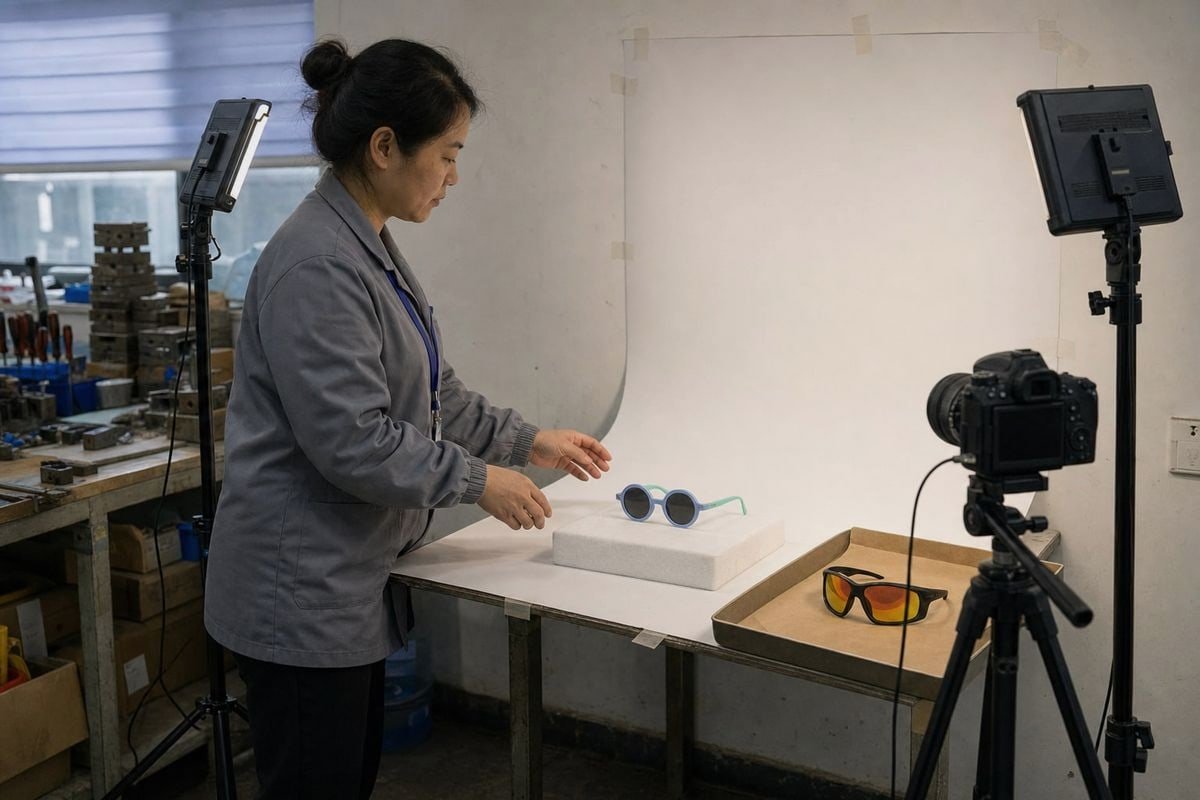
White-background and detail photos decide whether a sourcing order goes smoothly. On our production line in Taizhou, I have watched buyers order from one polished hero image, then dispute the shipment. Clear photo requests prevent that pain.
To request white-background and detail photos when sourcing kids’ sunglasses, send suppliers a fixed shot list: front, side, 45-degree, open-temple, hinge, lens, logo, and packaging views on a pure white background, in sharp high-resolution files with no filters or props.
That is the short answer. Below, I break down exactly what to ask for, why each shot matters, and how to check the images once they arrive.
How do I ask suppliers for proper white-background photos for my kids' sunglasses listings?
A buyer from Australia once told me she had received "more photos" from a previous supplier — twelve blurry lifestyle shots on a beach towel. None showed the actual frame color. Vague requests get vague results, and I learned to give our own clients a template instead.
Ask for a written shot list, not "more photos." Specify a pure white background (Hex #FFFFFF), centered product, same orientation and scale across all colorways, no props or filters, and original high-resolution files of at least 1600 pixels on the longest side.
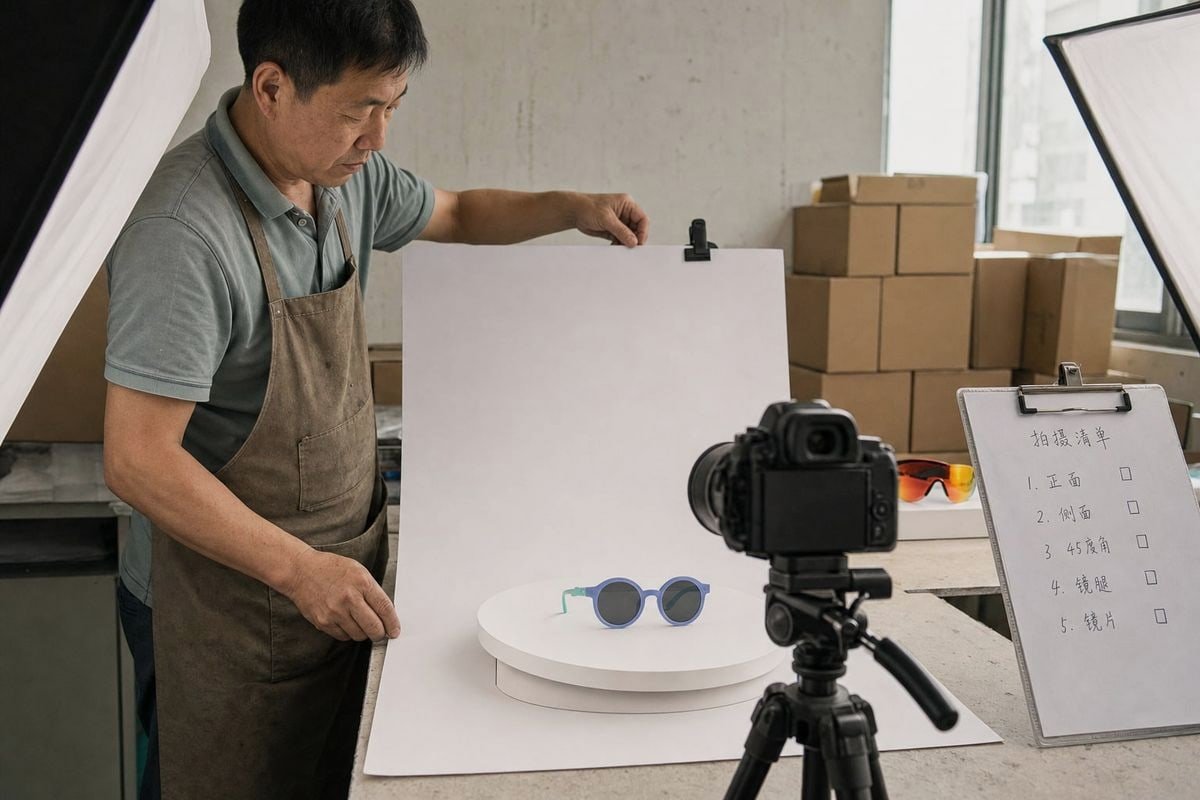
The biggest mistake I see in buyer emails is the phrase "please send real photos." Suppliers interpret that differently. Some send factory floor snapshots. Others send the same catalog renders you already saw. A precise supplier communication template removes the guesswork on both sides.
A copy-paste request that works
Here is wording our own customers use with us, and it answers itself in one round:
"Please send front, side, 45-degree, open-temple, hinge close-up, lens close-up, logo, and packaging photos of the kids' sunglasses on a pure white background, with sharp focus, even lighting, no shadows, no filters, and original high-resolution source files."
That single message covers angle, background, lighting, and file quality. It also signals that you are a professional buyer, which usually improves how carefully the factory handles your inquiry.
What each specification actually controls
| Specification | What it prevents |
|---|---|
| Pure white background (#FFFFFF) | Color distortion and marketplace rejection on Amazon or Google Shopping |
| Same orientation and scale per SKU | Misleading size impressions between colorways |
| No filters or beautification | Hidden scratches, tint shifts, and exaggerated gloss |
| Minimum 1600 px longest side | Blurry zoom views and unusable e-commerce assets |
| Original files, not compressed chat images | Pixelation that hides molding defects |
One more tip from our export experience: ask for both the raw shots and the cleaned white-background versions. The raw file lets you inspect the product honestly. The edited file meets e-commerce image requirements for your listings. Good factories can deliver both, because background removal 1 is now a low-friction, near one-click step in most product-photo workflows.
What detail shots should I request to check the quality of children's sunglasses before ordering?
During a quality control inspection 2 last spring, our QC team rejected a batch of hinge screws that looked fine from thirty centimeters away. Only a macro shot exposed the burrs. That is exactly why detail photos matter more for kids' eyewear than for almost any other accessory.
Request macro photography shots of the hinges, nose bridge, temple tips, and lens surface, plus a flex-test photo of the bent frame, a UV-meter verification shot for UV400 claims, and close-ups of any safety markings, materials labels, and packaging.
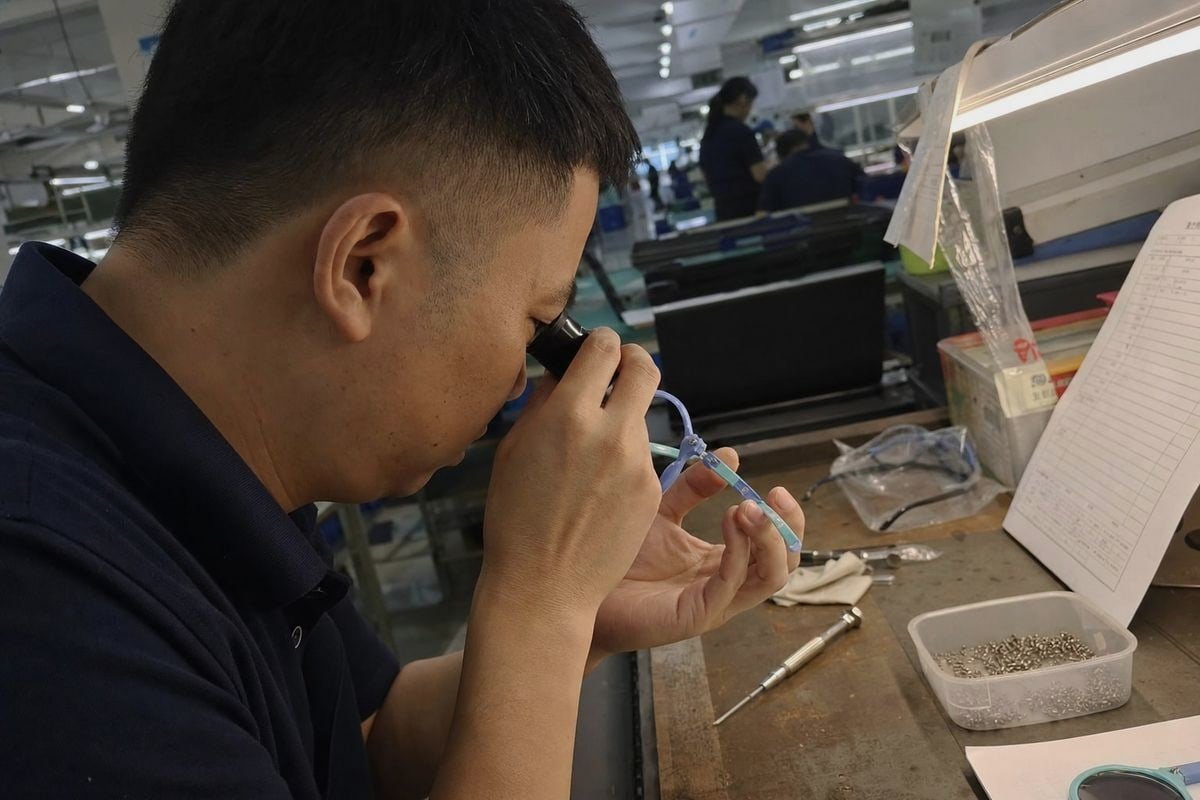
Children's sunglasses fail in small places. A rough temple tip scratches skin behind the ear. A loose hinge pinches little fingers. A cloudy lens strains young eyes. None of these show up in a hero image, so your detail-shot request has to target them directly.
The must-have detail shot list
| Detail shot | What it verifies |
|---|---|
| Hinge close-up (open and closed) | Screw quality, alignment, and pinch-point safety |
| Nose bridge macro | Comfort fit and mold finishing on a child's face |
| Temple tip close-up | Rounded, smooth ends with no sharp edges |
| Lens surface macro | Tint uniformity, coating quality, scratches, distortion |
| Flex-test photo (frame bent) | True flexibility of إطارات مرنة من TPEE 3 or TR90 material |
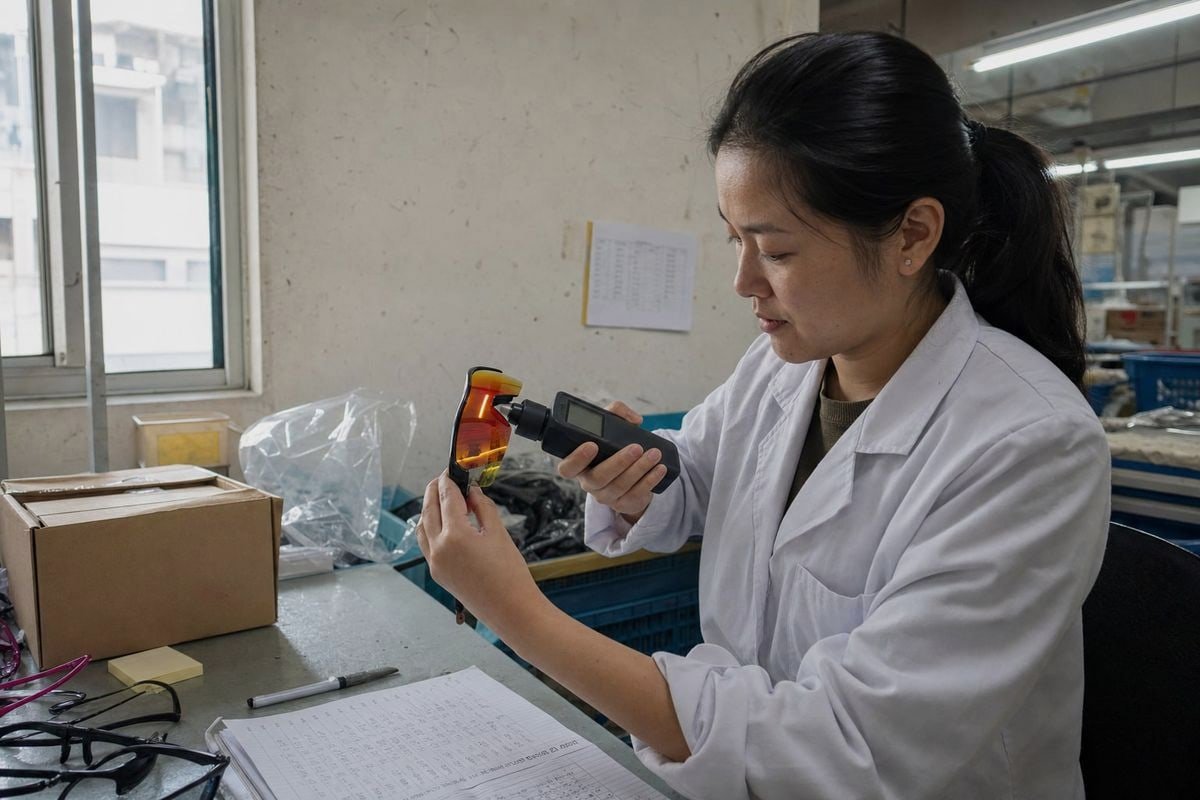
| UV-meter verification shot | The lens photographed next to a digital tester confirming the تصنيف حماية UV400 4 |
| Safety markings and labels | CE certification marks, material disclosures, and compliance text |
| Packaging, case, and cloth | Retail-ready presentation and the full value delivered to the parent |
Kids-specific checks most buyers forget
Two shots earn special attention for children's products. First, the flex-test photo. We routinely bend our TPEE temples nearly flat for buyers, because "flexible" is a claim that a picture proves instantly and a spec sheet never does. If a supplier refuses this shot, the frame is probably rigid injection plastic sold as flexible. Second, ask for a "safety-first" close-up showing rounded temple tips and the absence of small detachable parts. Parents worry about choking hazards 5, and your own retail customers will ask you the same question later. Getting photographic proof now protects you twice.
Why do I need both white-background and close-up photos when sourcing kids' eyewear?
There is a trade-off I explain to nearly every new client: lifestyle photos sell emotion, but they hide the product. A smiling child on a beach makes a great ad. It tells you nothing about hinge tolerance or lens clarity. You need both photo types because they answer different questions.
White-background photos let you compare shape, proportion, and true color across suppliers without distraction, while close-up photos expose build quality, coatings, and finishing. Together they confirm the product is genuinely child-sized, safe, and consistent with the listing before you commit money.
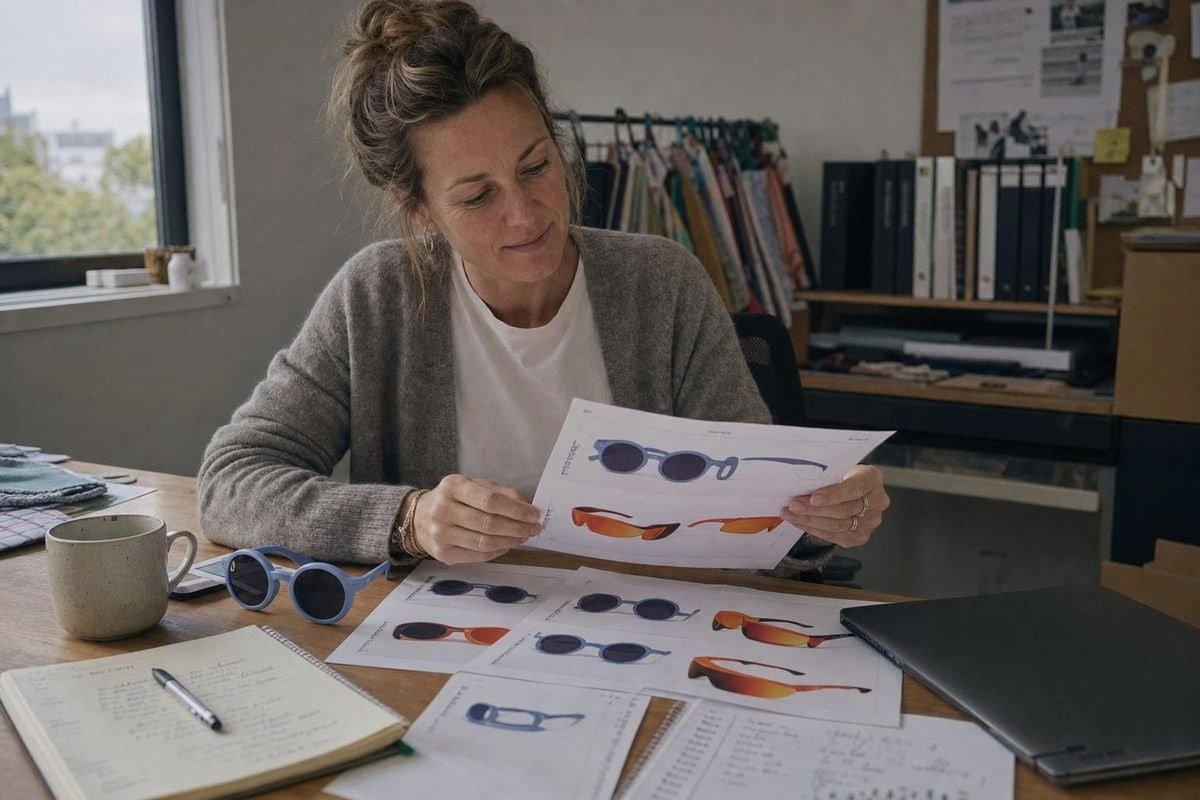
Some suppliers push back here. They argue lifestyle images sell better, so why bother with "sterile" pack shots? They are half right. Lifestyle images do sell better — to consumers. But you are not a consumer at the sourcing stage. You are running a risk assessment, and each image type carries a different job.
Three image types, three different jobs
- Lifestyle images show use-case and emotion. Keep them for marketing after you have verified the product.
- White-background product photos isolate the item with clean edges and even lighting, so you can judge shape, symmetry, and color honestly and compare quotes side by side.
- Detail and macro shots reveal what standard photos cannot: hinge machining, tint gradients, coating flaws, and mold lines.
Why kids' eyewear raises the stakes
Adult sunglasses that arrive slightly off-spec are an annoyance. Kids' sunglasses that arrive off-spec can be a safety issue and a brand-reputation issue. A common trap is the "scaled-down adult style" — a frame that looks child-sized in a cropped photo but sits wrong on a real child's narrow nose bridge. A white-background shot at consistent scale, paired with a nose-bridge macro, catches this before the deposit is paid. In our fifteen years making children's frames, the buyers who requested both photo types before sampling had dramatically fewer disputes than those who ordered from a single hero image. There is one more practical benefit: symmetry-perfect, front-on white-background assets can feed Virtual Try-On software later, so the same photo set serves quality control inspection today and AR marketing tomorrow.
How can I make sure the product photos truly match the sunglasses I'll receive from my supplier?
A hard lesson shaped how we handle this at our factory. Years ago, a European distributor approved photos of a periwinkle-blue frame, then received a batch shot under warm lighting that photographed noticeably darker. Nothing was "wrong" with the product — but the mismatch cost trust. Now we tie photos to process.
Match photos to reality by attaching the agreed shot list to your purchase order, requesting pre-shipment QC photos of actual production units, ordering a physical sample to compare against the images, and confirming that any editing preserved true colors and edges.
Photos are evidence only if they are tied to accountability. Here is the process I recommend, drawn from how we run مشاريع التصنيع الخاصة بنا for kids' brands in twenty-plus countries.
A four-step verification process
- Attach the shot list to the contract. Agree on exact angles and include the approved sample images with the purchase order. The photos become the quality reference, not just marketing material.
- Order a physical sample first. Hold the sample next to the white-background photo under daylight. Check frame color, lens tint, and hinge feel. Bright and translucent kids' plastics shift easily under different lighting, so this comparison catches rendering drift.
- Request in-production and pre-shipment QC photos. Ask for photos of actual units from your batch — not stock images — including labels, CE certification marks 6, and packaging. Reputable factories build this into their quality control inspection routine already.
- Check the editing, not just the shot. Background removal is fine; reshaping is not. Look for clean, natural edges. Sloppy masking can literally redraw a frame's silhouette and hide finishing defects.
Red flags in supplier photos
| Warning sign | What it may hide |
|---|---|
| Heavy shadows or dim lighting | Surface scratches and uneven color |
| Over-smoothed, filtered surfaces | Mold lines, dust, and orange-peel texture |
| Inconsistent scale between angles | A frame larger or smaller than claimed |
| Refusal to send raw source files | Reliance on edited or stock imagery |
| Only lifestyle images available | No real product on hand, or a trading company reselling |
If a supplier says studio photography costs extra, offer a compromise. A simple phone photo on a plain white sheet under a window meets basic product photography guidelines 7 well enough for evaluation. Modern editing tools handle the pure-white output afterward. A factory that cannot manage even that is telling you something about how it will handle the rest of your order.
الخلاصة
Never buy kids' sunglasses from one hero image. Request a standardized set — pure-white shots plus macro details — tie it to your order, and verify with a sample. That small discipline prevents costly surprises.
ملاحظات ختامية
1. Explains image editing techniques like background removal referenced in supplier photo checks. ↩︎
2. ISO 9001 outlines quality management principles underlying supplier inspection routines. ↩︎
3. Background on thermoplastic elastomers clarifies what TPEE frame material actually is. ↩︎
4. W
مقالات أخرى قد تعجبك

August 1, 2026
هل يجب على المصنع التعامل مع تغليف ووضع ملصقات نظارات الأطفال الشمسية، أم استخدام مورد مخصص؟

August 1, 2026
مستودع خاص مقابل الوفاء المباشر من المورد: أيهما يقلل تكاليف الإرجاع لعلامات نظارات الأطفال الشمسية؟

August 1, 2026
مباشر إلى ميناء المستودع أو التخزين الخارجي: أيهما يوفر أكثر على شحن نظارات الأطفال الشمسية؟
هل تبحث عن شريك موثوق به للنظارات للأطفال؟
استكشف أكثر من 800 نمط جاهز ودعم OEM/ODM كامل مصمم خصيصًا لعلامتك التجارية.
اتصل بنا English
  Español de México
  Deutsch
  Français
  日本語
日本語  العربية
  Português do Brasil