How Do Refractive Power and Prism Deviation Affect Kids’ Sunglasses Lens Quality?
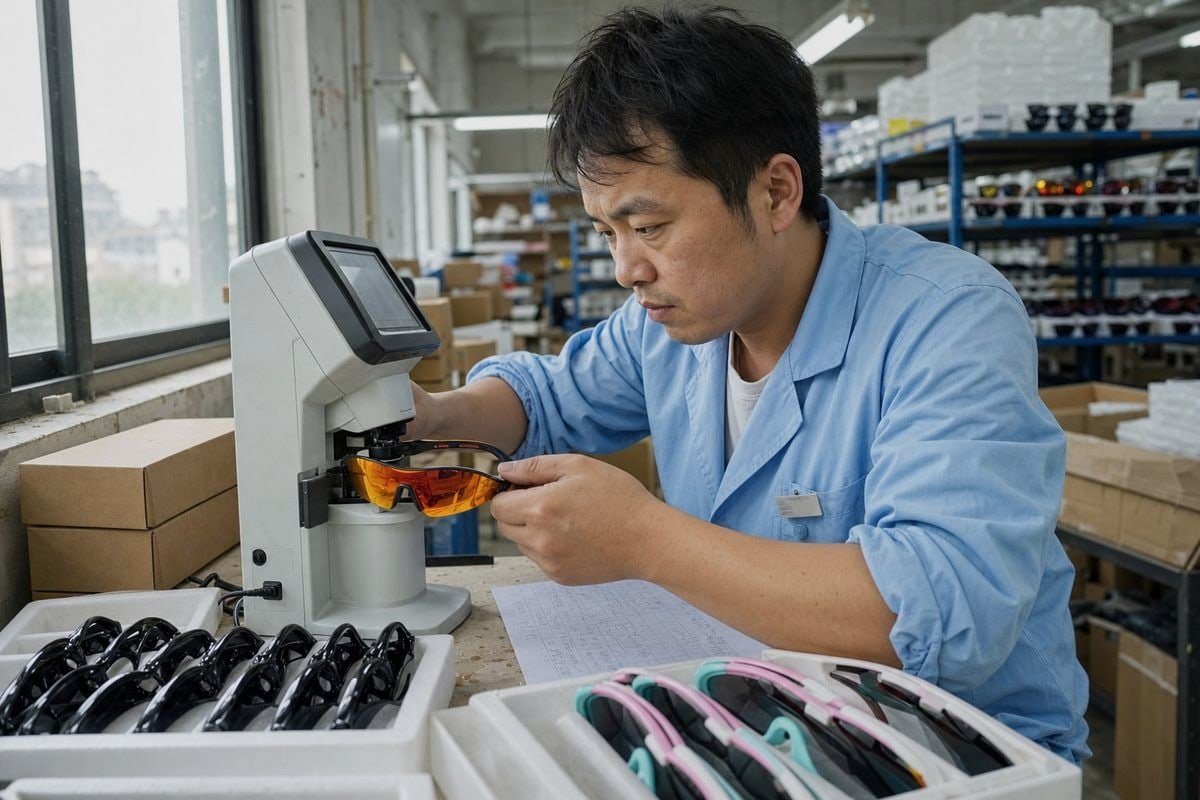
Refractive power and prism deviation quietly decide kids’ sunglasses lens quality. On our production line in Taizhou, I have seen dark, stylish lenses fail both tests — and buyers only discover it after complaints arrive.
Refractive power and prism deviation determine kids’ sunglasses lens quality by controlling focus and image position. Lenses should hold refractive power within ±0.13 diopters and prism deviation below 0.50Δ horizontal and 0.25Δ vertical, because children’s developing eyes are highly sensitive to blur and misalignment.
Tint darkness gets all the attention. But the real quality story sits inside the lens itself. Let me walk you through what actually matters, and how to verify it before you commit to a bulk order.
What Refractive Power Tolerance Should I Require for Children's Sunglasses Lenses?
A buyer from Australia once returned a competitor's sample to us with a simple note: "My daughter says everything looks wavy." Our QC team measured the plano lenses and found the answer in seconds — the dioptric power was far outside tolerance.
Require a refractive power tolerance of ±0.13 diopters or tighter for non-prescription children's sunglasses, in line with ANSI Z80.3 standards. Plano lenses should add zero focusing power; anything beyond this range causes unintended magnification, blur, and chronic visual fatigue in children.

Refractive power, measured in diopters, is the lens's focusing strength. A non-prescription (plano) sunglass lens should have essentially zero dioptric power. It should only darken the view, not bend the focus. When a cheap injection-molded lens has uneven thickness or a poorly controlled curve, it accidentally acts like a weak prescription lens. An adult might shrug it off. A child cannot, because a child's visual system is still developing and even small optical errors can affect comfort, clarity, and potentially visual development.
Why Children Are Less Forgiving Than Adults
Kids adapt to bad optics by squinting, tilting their heads, or simply refusing to wear the sunglasses. Parents then blame the brand, not the physics. In our fifteen years making children's eyewear, the styles with the fewest returns are always the ones where lens optics were verified before shipping — not the ones with the trendiest colors.
Practical Tolerance Benchmarks
Here is the reference table we share with buyers when they draft a quality specification:
| Optical Parameter | Recommended Tolerance | What Happens If Exceeded |
|---|---|---|
| Spherical power (plano lens) | ±0.13 D | Blur, unintended magnification, eye strain |
| Astigmatic (cylinder) error | ≤0.13 D | Wavy or stretched images, "swim" effect |
| Lens thickness consistency | Uniform across zone | Localized distortion, nausea during play |
| Surface quality | No waves in window test | Poor optical clarity, spatial disorientation |
A quick field check: hold the lens at arm's length and look at a straight window frame through it while moving the lens. If the lines wave or jump, the surface quality and refractive accuracy are suspect. It is not a lab test, but it catches the worst offenders — especially low-quality "toy" sunglasses with inconsistent lens thickness.
How Does Prism Deviation Impact Visual Comfort and Eye Safety for Kids?
The trade-off we weigh most often in product development is wrap versus optics. High-wrap sport frames protect better and look great on active kids, but every degree of lens curve and tilt risks inducing prism if the lens is not engineered correctly.
Prism deviation shifts where images land on each retina, forcing a child's eyes to fight for alignment. Excess prism — above 0.50Δ horizontal or 0.25Δ vertical — disrupts binocular vision and causes eye strain, headaches, double vision, and head tilting in children.
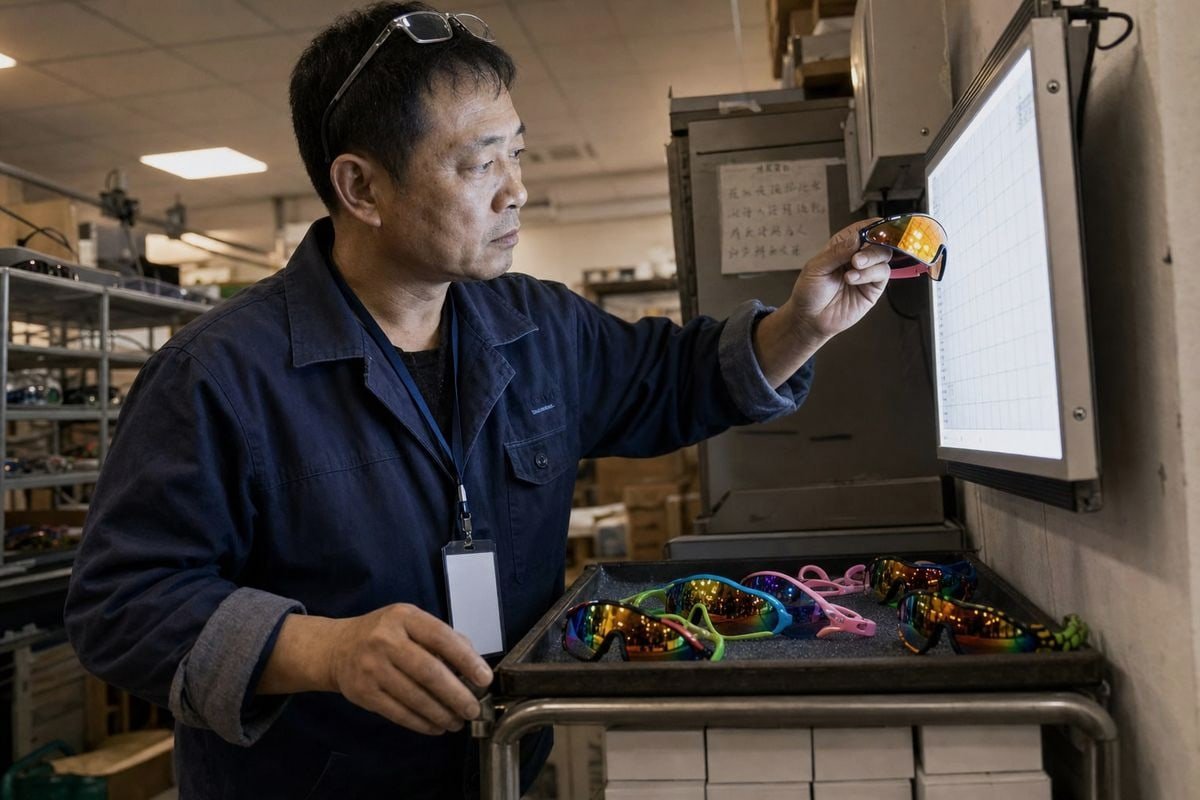
Prism does not blur an image. It moves it. One prism diopter (1Δ) shifts light by 1 cm at a distance of 1 meter. If the left lens shifts the image one way and the right lens shifts it another, the child's two eyes receive mismatched pictures. Young visual systems work overtime to fuse them, and the result is visual fatigue, headaches after outdoor play, or a child who quietly stops wearing the sunglasses.
Where Unwanted Prism Comes From
Prism is sometimes prescribed intentionally by eye doctors to manage misalignment. In children's sunglasses, though, prism is almost always an accident of poor manufacturing or fitting. Prentice's rule explains it: induced prism equals the decentration distance (in centimeters) multiplied by the lens power (in diopters). Three common causes stand out:
- Lens decentration — the optical center of the lens does not line up with the child's pupil. Kids have smaller interpupillary distances 1 than adults, so lenses cut on adult assumptions are decentered from day one.
- High wrap angles — curved shield lenses tilt relative to the visual axis. Well-designed wrap frames use decentered lens blanks to compensate; cheap ones do not.
- Frame stress — even flexible materials like TPEE can exert uneven pressure on a lens perimeter if the assembly is sloppy, inducing stress astigmatism and localized deviation. This is exactly why our workshop controls lens seating pressure during assembly of TPEE and TR90 frames.
Warning Signs Parents Report
| Symptom | Likely Optical Cause |
|---|---|
| Head tilting while wearing sunglasses | Vertical prism imbalance |
| Complaints of double vision | Horizontal prism beyond tolerance |
| Rubbing eyes, headaches outdoors | Cumulative binocular strain |
| Refusing to wear the glasses | General optical discomfort |
Children with strabismus, amblyopia, or high refractive error 2 are the least forgiving of induced prism, so brands serving broad kids' markets should hold the tighter end of the tolerance range.
Which Lens Testing Standards Should I Verify Before Placing a Bulk Order?
When a Japanese buyer audited our factory last year, the first documents she asked for were not price lists. They were lens test reports. That told me she had been burned before — and it shaped how we now present quality data to every new client.
Verify compliance with ANSI Z80.3 (US) or ISO 12312-1 (international) before ordering. Confirm refractive power, prism deviation, UV400 protection, impact resistance, and tint category test results, and request batch-level reports rather than a single one-time certificate.
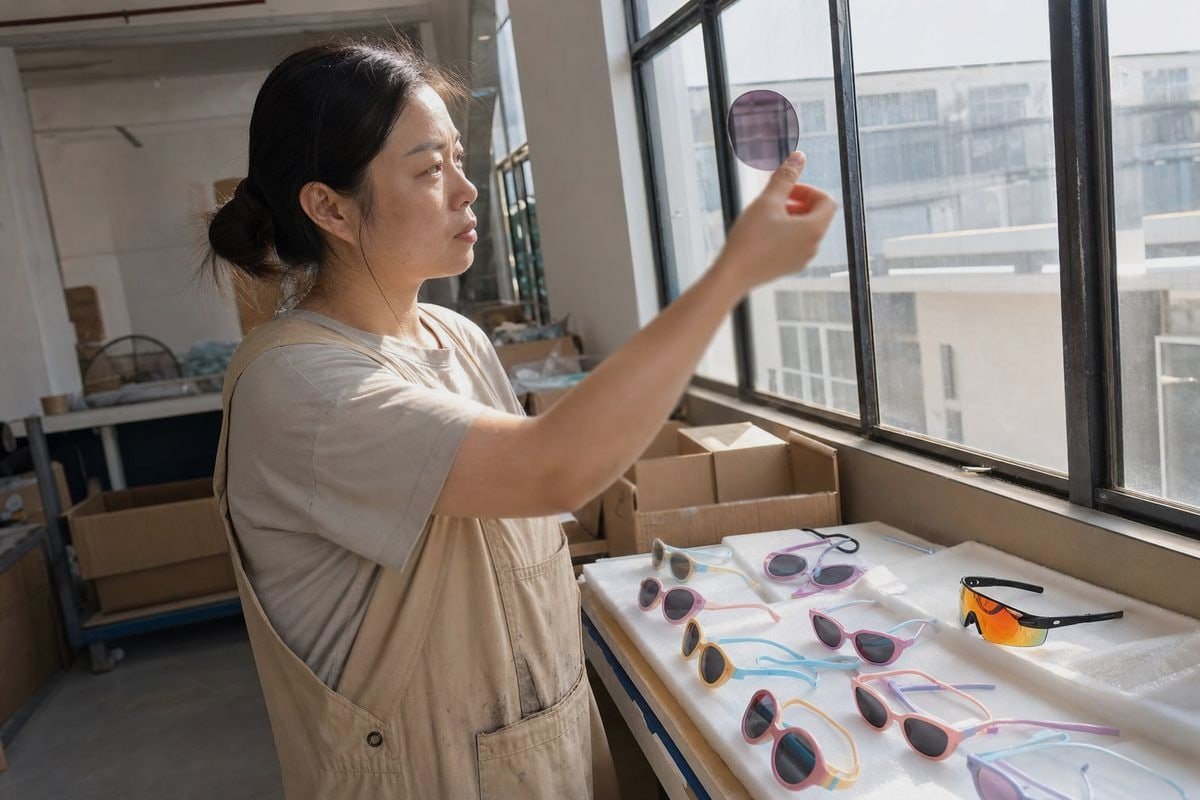
Standards exist so buyers do not have to guess. But a certificate on a wall is not the same as consistent production compliance. Here is what I recommend you check, in order of importance:
| Standard / Test | Region | ما يغطيه |
|---|---|---|
| ISO 12312-1 3 compliance | International / EU | Refractive and prismatic power, UV filtering, tint categories, robustness |
| ANSI Z80.3 standards | الولايات المتحدة | Optical tolerances, UV transmittance, impact resistance |
| AS/NZS 1067 | أستراليا / نيوزيلندا | Sunglass lens categories and UV performance |
| حماية UV400 4 test | All markets | Blocks wavelengths up to 400 nm |
| Drop-ball / impact test | US market especially | Lens impact resistance for active kids |
Beyond the Certificate: What to Ask For
First, ask which lens material is used. Polycarbonate lenses 5 are the pediatric default for مقاومة الصدمات, though their lower Abbe value can produce slight الانحراف اللوني 6 at lens edges — acceptable, but worth knowing. Second, ask how UV400 protection is achieved. A dark tint without full UV blocking is worse than no sunglasses, because pupil dilation behind a dark lens lets more radiation reach the crystalline lens. Third, ask about tint category logic 7. Category 3 suits most children; overly dense Category 4 tints can block the bright outdoor light believed to help regulate myopia development.
Finally, ask for test frequency. On our line, optical checks run per batch, not per certification cycle. If a supplier can only show you one report from two years ago, treat that as a red flag.
Can I Trust My Manufacturer's Quality Control for Optical-Grade Lens Accuracy?
A lesson I learned early in our fifteen years of eyewear production: buyers rarely lose money on the first shipment. They lose it on the fifth, when a supplier quietly relaxes tolerances after winning the business. Trust must be structural, not personal.
Trust your manufacturer only if quality control is documented and repeatable: incoming lens inspection, in-process optical checks, batch test records for dioptric power and prism, and traceable rejection data. A factory that cannot show its process cannot guarantee its lenses.
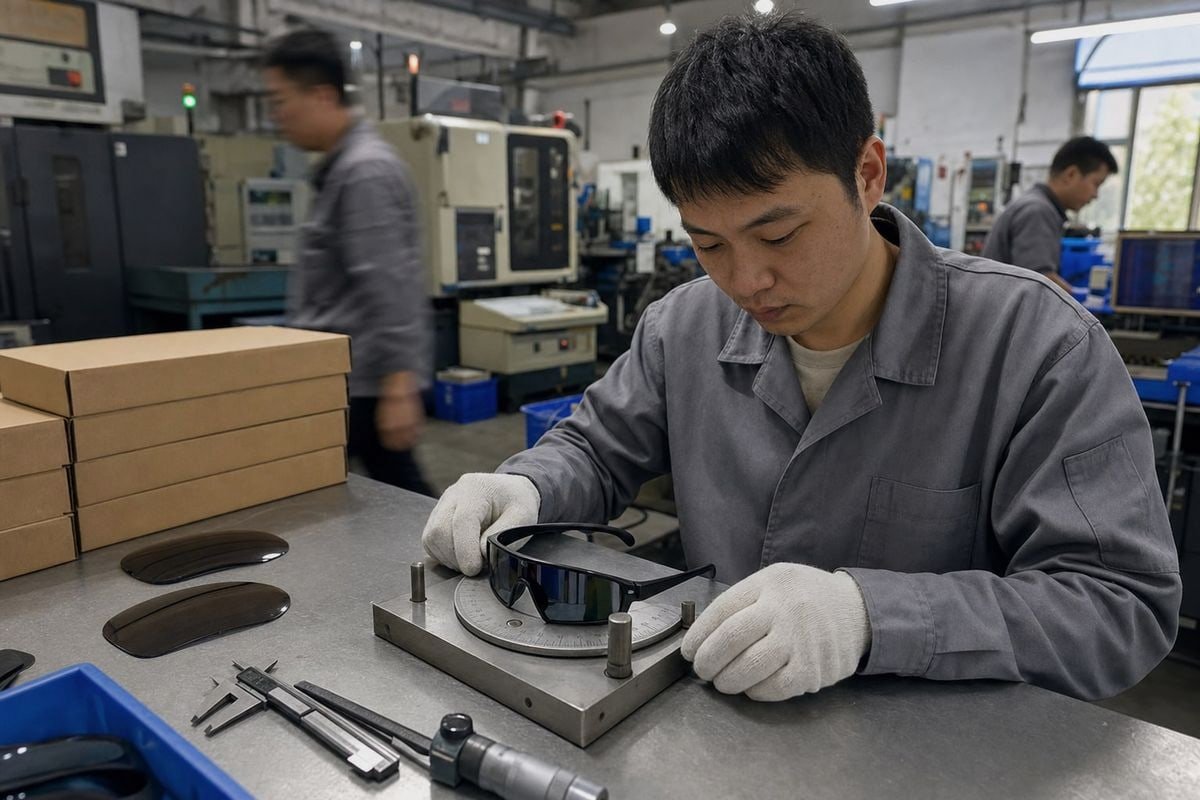
Optical accuracy is not one inspection at the end of the line. It is a chain of controls, and any weak link degrades the finished lens. In our 5S-managed workshop, the process runs in stages, and I encourage buyers to audit each one — whether with us or any other supplier.
The QC Chain That Protects Lens Optics
- Incoming lens inspection. Every lens batch is checked for dioptric power, surface waves, and coating integrity before it touches a frame. Bad blanks never enter assembly.
- Cutting and centration control. The optical center must land where a child's pupil will sit. Because kids have smaller pupillary distances, we cut and position lenses on pediatric geometry, not scaled-down adult templates. This is where lens decentration errors are prevented — or created.
- Assembly stress checks. Flexible TPEE temples and TR90 fronts are gentle on children's faces, but assembly pressure must stay even so the lens is not warped in its groove.
- Final optical verification. Sample lenses from each batch are re-measured for refractive power and prismatic imbalance against ANSI Z80.3 and ISO 12312-1 limits, alongside UV400 verification.
- Documentation and traceability. Every batch links to its test record. If a buyer questions a shipment months later, we can trace it back.
Questions That Separate Real Factories From Traders
Ask to see the lensometer or focimeter on the production floor. Ask who performs optical checks and how often. Ask what the internal rejection rate looks like and what happens to rejected lenses. A genuine factory answers in specifics; a trader answers in reassurances. With around 800 existing styles already built on tested lens-and-frame combinations, we can also show buyers proven optical platforms instead of asking them to gamble on unverified new molds — which lowers both tooling cost and optical risk for a new brand.
الخلاصة
Dark lenses can still be optically wrong. Demand tight refractive power and prism tolerances, verified standards, and documented QC — and partner with a factory that proves it, batch after batch.
ملاحظات ختامية
1. Defines the eye-spacing measurement affecting lens decentration risk in children’s eyewear ↩︎
2. NIH’s National Eye Institute defines these pediatric eye conditions affected by lens optical errors ↩︎
3. ISO publishes the international standard governing sunglasses lens optical and UV performance testing ↩︎
4. WHO explains UV radiation risks that UV400 lens protection standards are designed to prevent ↩︎
5. Background on the impact-resistant material commonly used in children’s protective lenses ↩︎
6. Explains the optical distortion phenomenon referenced regarding lens edge clarity ↩︎
7. American Academy of Ophthalmology guidance supports proper sunglasses tint category selection for children ↩︎
مقالات أخرى قد تعجبك
August 1, 2026
هل يجب على المصنع التعامل مع تغليف ووضع ملصقات نظارات الأطفال الشمسية، أم استخدام مورد مخصص؟

August 1, 2026
مستودع خاص مقابل الوفاء المباشر من المورد: أيهما يقلل تكاليف الإرجاع لعلامات نظارات الأطفال الشمسية؟

August 1, 2026
مباشر إلى ميناء المستودع أو التخزين الخارجي: أيهما يوفر أكثر على شحن نظارات الأطفال الشمسية؟
هل تبحث عن شريك موثوق به للنظارات للأطفال؟
استكشف أكثر من 800 نمط جاهز ودعم OEM/ODM كامل مصمم خصيصًا لعلامتك التجارية.
اتصل بنا English
  Español de México
  Deutsch
  Français
  日本語
日本語  العربية
  Português do Brasil