How Do Licensing Royalties Affect Cost and Retail Price for Kids’ Sunglasses?
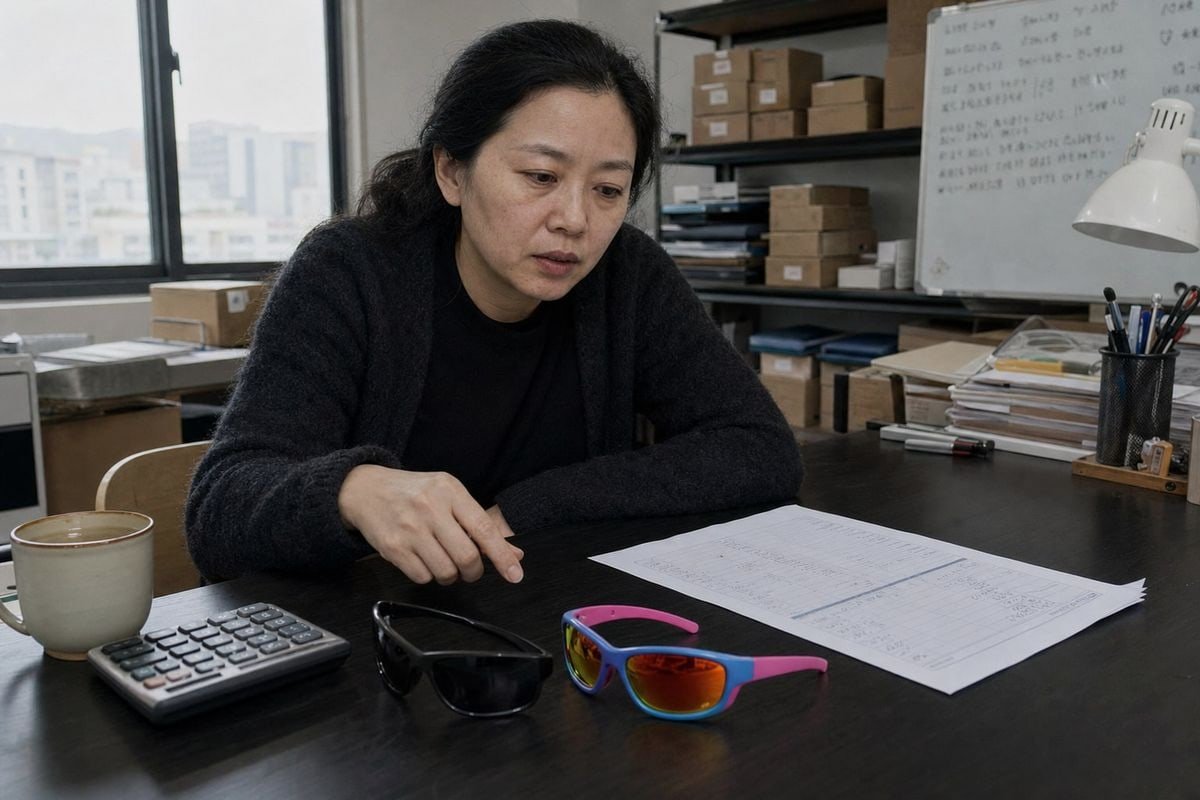
Licensing royalties on kids’ sunglasses confuse many buyers I quote at our Taizhou factory keystone markup 1. The frame cost looks clear — then the character license 2 quietly reshapes the whole price structure.
Licensing royalties typically add 5%–15% of net sales to the cost of kids’ sunglasses, plus possible marketing contributions of 7%–13%. Because retailers apply 2x–2.5x markups on royalty-inclusive wholesale prices, a licensed pair often retails 30%–50% higher than an identical unlicensed pair.
That compounding effect is the part most new brands miss. Below, I break down the real numbers, the offsets, the retail math, and the questions to ask before you sign.
How much do licensing royalties typically add to my per-unit cost?
Last year, a European buyer asked us to quote the same TR90 3 frame twice — once plain, once for a character license. The factory cost was identical. The landed cost was not.
Licensing royalties usually add 5%–15% of the wholesale or net sales price per unit for kids' sunglasses. Entertainment and character licenses often sit at 10%–12%, fashion brands at 4%–12%, and some deals add a separate 7%–13% marketing contribution on top.
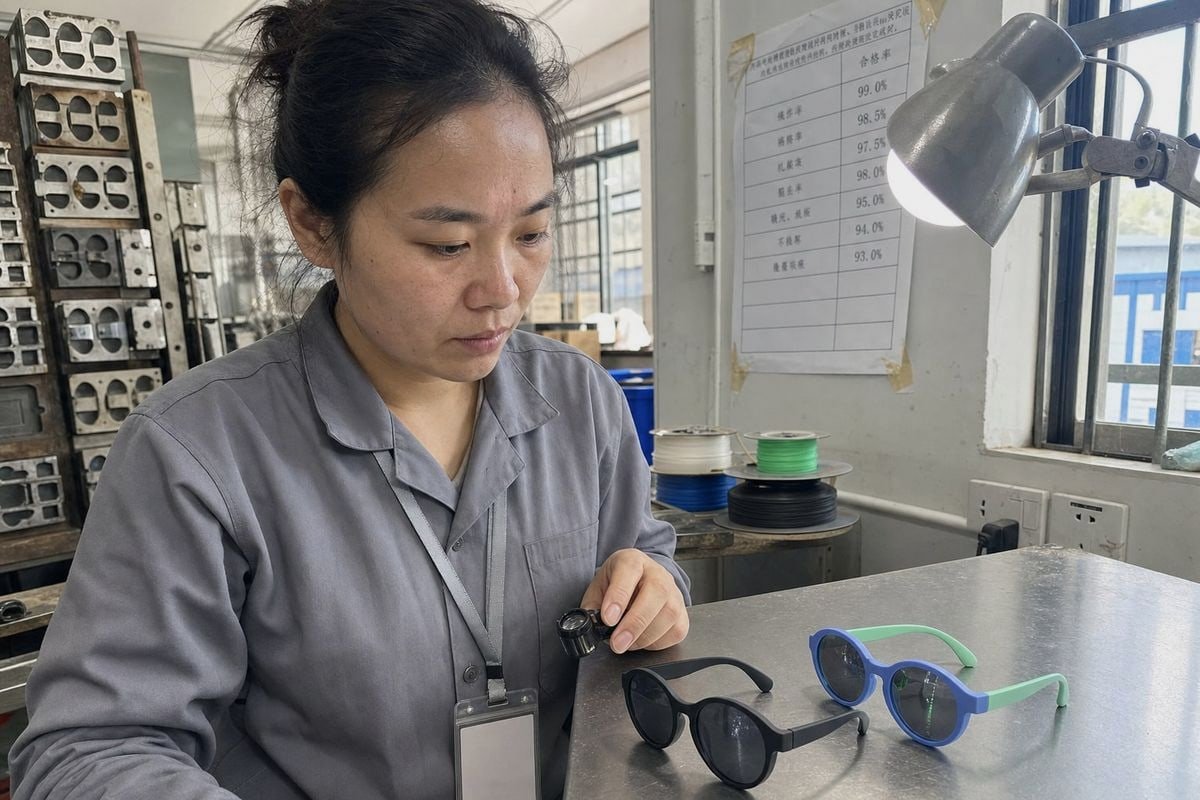
The royalty is not a flat dollar amount. It is a percentage, and the base it is calculated on matters enormously. Some contracts use net sales. Others use wholesale price, retail price, FOB value 4, or a fixed per-unit fee. Two deals with the same headline rate can produce very different per-unit costs depending on that base.
Typical royalty ranges by category
| License type | Typical royalty rate | Common royalty base |
|---|---|---|
| Entertainment / cartoon characters | 10%–12% | Net sales or wholesale |
| Fashion and lifestyle brands | 4%–12% | Net sales |
| Sports brands and teams | 8%–15% | Wholesale or retail |
| Broad industry range (all categories) | 2%–18% | Varies by contract |
| Eyewear-specific deals | 5%–15% + 7%–13% marketing | Revenue |
Why the percentage hurts more on kids' sunglasses
Kids' sunglasses sit in a lower price band than adult premium eyewear. A 10% royalty on a $3.00 FOB pair takes a much bigger bite out of margin than 10% on a $40 luxury frame. In our experience quoting for brands in 20+ countries, the royalty often eats more margin than the lens upgrade, the safety testing, and the custom packaging combined.
There is also the Minimum Guarantee. Most licensors require an MG payment regardless of how many units you actually sell. If your production run is small or a design sells slowly, that fixed payment spreads across fewer units, and your effective per-unit royalty can climb well above the headline rate. A brand ordering 5,000 pairs against an MG sized for 50,000 pairs is paying far more than 10% in practice.
Can I offset licensing fees without sacrificing quality or safety compliance?
The temptation I see most often is cutting material cost to pay for the license. On children's eyewear, our engineers always push back on that trade-off — and there are better levers.
Yes. You can offset licensing fees by using existing tooling instead of new molds, consolidating SKUs, negotiating tiered royalty rates, bundling multiple properties under one agreement, and optimizing packaging — all without touching UV400 lens quality, flexible frame materials, or CPSIA and ANSI Z80.3 compliance.
Safety compliance is not a place to save money on kids' sunglasses. Testing costs for CPSIA and impact standards are real, but they are small compared to the reputational cost of a failure. So the smart offsets come from everywhere else in the cost stack.
Five offsets that protect quality
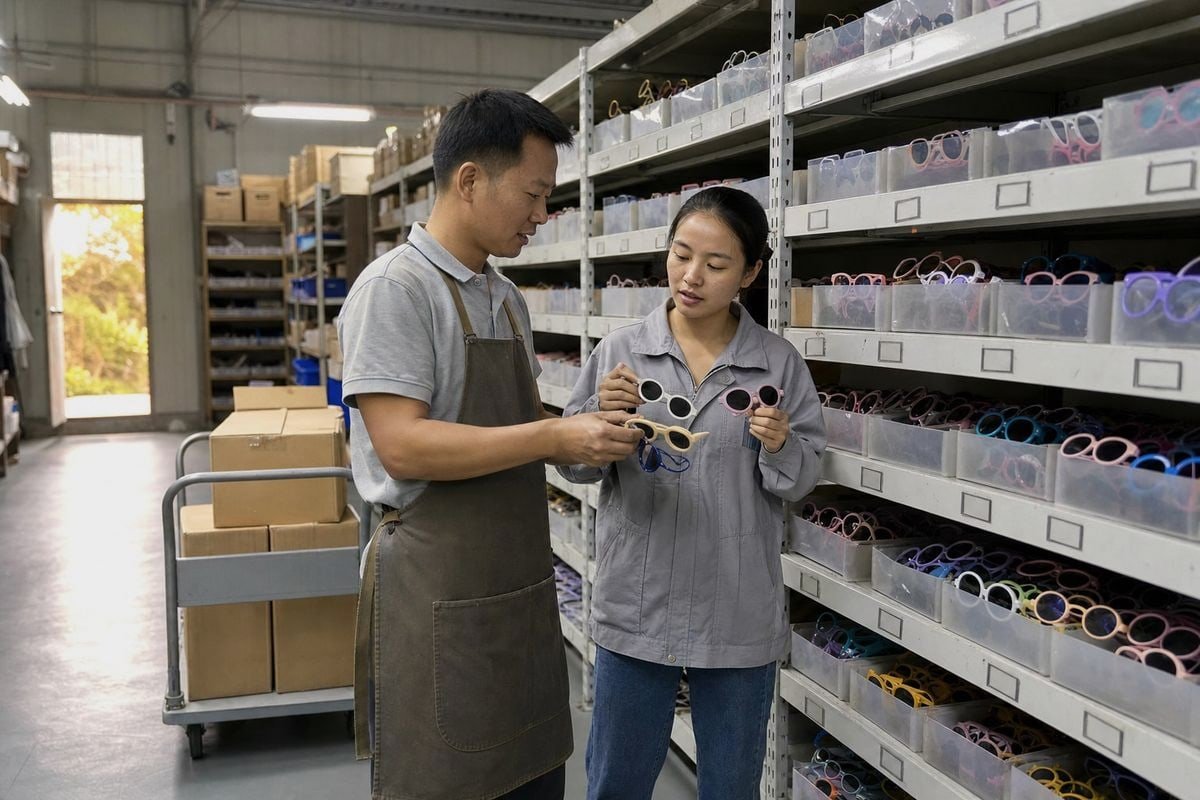
- Skip the mold investment. Our factory holds roughly 800 existing styles. Launching a licensed line on proven tooling can save thousands of dollars per SKU and several weeks of lead time. That saving alone can fund a full year of royalties on a modest run.
- Consolidate SKUs. Fewer frame shapes with more colorways spreads MG payments and testing costs across higher volumes per mold.
- Negotiate tiered royalties. Many licensors accept rates that step down as volume grows. High-performing lines can stabilize their price premium over time.
- Bundle properties. Securing several character brands under one agreement can lower the effective per-SKU royalty and keep pricing consistent across your range.
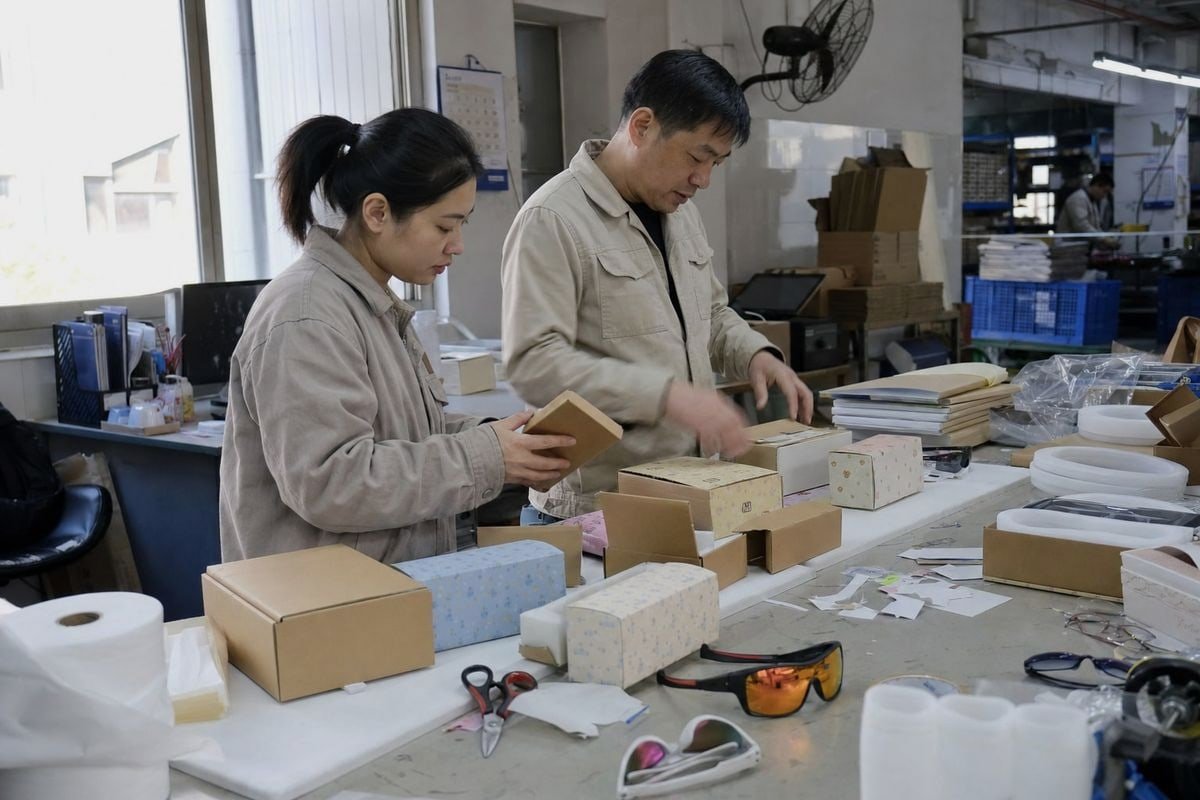
- Rework packaging, not the product. A smarter retail-ready box design often saves more than downgrading from TPEE temples to rigid cheap plastic ever would — and the child still gets a safe, flexible frame.
When we develop licensed programs with buyers, we model the royalty into the FOB quote from day one. Hiding it until the purchase order stage is where quality-cutting pressure usually starts. Transparency early keeps the lens coating, hinge quality, and material grade off the negotiating table.
How do I calculate the right retail price after factoring in royalty costs?
A procurement manager from Australia once sent me her pricing spreadsheet with the royalty added at the end, after retail markup. We rebuilt it together — the shelf price changed by nearly two dollars.
Calculate retail price by building the full cost chain in order: factory cost, plus royalty on the contracted base, plus freight, duties, and compliance testing, to get true landed cost. Then apply your wholesale margin and the retailer's 2x–2.5x keystone markup to that royalty-inclusive figure.
The order of operations is everything. A royalty is applied upstream, so every markup after it multiplies the fee. This is why a modest percentage produces a visible shelf premium.
A worked example: licensed vs. unlicensed
Here is a simplified model using the same TR90 frame with TPEE temples and عدسات UV400 5 in both columns.
| Cost stage | Unlicensed pair | Licensed pair (10% royalty on wholesale) |
|---|---|---|
| Factory FOB cost | $3.00 | $3.00 |
| Freight, duty, testing | $0.80 | $0.80 |
| Royalty | $0.00 | $0.70 (10% of $7.00 wholesale) |
| Wholesale price | $6.30 | $7.00+ |
| Retail markup (2.2x) | $13.86 | $15.40+ |
| Shelf price (rounded) | $13.99 | $15.99–$17.99 |
Notice what happened. A $0.70 royalty became roughly a $2.00–$4.00 difference at retail. Add a marketing contribution or an MG shortfall, and the gap widens further.
Three checks before you finalize the price
- Confirm the royalty base. A 10% royalty on retail is more than double a 10% royalty on FOB. Model the actual contract language, not the headline rate.
- Stress-test against currency and tariffs. Most royalty contracts are denominated in USD, so exchange swings and import duties add volatility that has nothing to do with the royalty itself.
- Validate the price band. Licensed kids' sunglasses can carry a 30%–50% premium, but only if the character genuinely drives purchase in your market. Test the ceiling before committing to an MG. If you are working backward from a target shelf price, learning to reverse-calculate landed cost from a retail price helps you see whether the royalty leaves any margin at all.
What should I ask my manufacturer before signing a licensed eyewear deal?
Over fifteen years of running our workshop, I have learned that most licensed-eyewear problems trace back to questions nobody asked before the contract was signed — not to the factory floor.
Ask your manufacturer about existing tooling to avoid mold costs, minimum order quantities against your MG, CPSIA and ANSI Z80.3 test documentation, licensor-approved artwork and color processes, packaging capabilities for retail-ready presentation, and realistic lead times including licensor approval rounds.
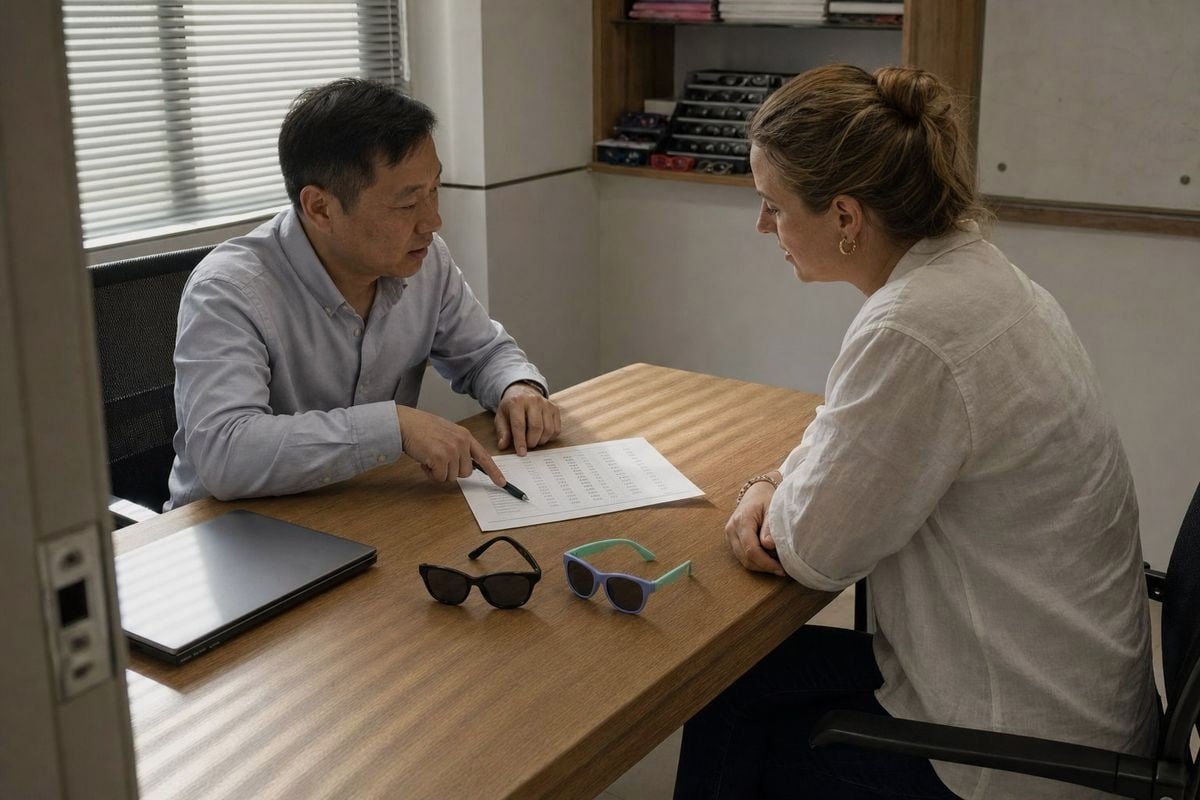
Licensors audit their licensees. If your factory cannot support the compliance paperwork, approval samples, and consistent color matching a licensor demands, the deal becomes a liability. Here is the checklist I recommend buyers bring to any factory conversation.
The pre-contract question checklist
| سؤال | لماذا هو مهم |
|---|---|
| Do you have existing styles that fit the license aesthetic? | Avoids mold investment; lets you meet MG volumes with lower risk |
| What is your MOQ per style and per colorway? | Your MOQ must align with your Minimum Guarantee math |
| Can you provide CPSIA and impact-resistance test reports? | Licensors require compliance proof; kids' products face extra scrutiny |
| How do you control Pantone color matching on frames and prints? | Character artwork approval fails on inconsistent color |
| Can you produce licensor-approved packaging and hang tags? | Retail-ready presentation is usually a contractual obligation |
| What is the lead time including pre-production approval samples? | Licensor approval rounds add weeks; plan them into launch dates |
| What materials do you use for children's frames? | Flexible TPEE and TR90 reduce breakage returns and safety complaints |
One more thing worth probing
Ask how the factory handles quality control documentation across repeat orders. Licensed programs run in seasonal waves, and a licensor expects unit one thousand in wave three to match the approved sample from wave one. In our ورشة عمل مدارة بنظام 5S 6, we keep sealed reference samples for every licensed program precisely because drift between production runs is the fastest way to lose a license. A factory that cannot explain its sample-retention process is telling you something important.
الخلاصة
Licensing royalties reshape the entire pricing structure of kids' sunglasses. Model the royalty base early, protect safety and materials, offset fees through tooling and negotiation, and choose a factory built for licensed programs.
ملاحظات ختامية
1. Investopedia explains keystone pricing, the retail markup method referenced for pricing calculations. ↩︎
2. Background on how branded characters are licensed for merchandise like eyewear. ↩︎
3. Wikipedia background on thermoplastic materials like TR90 used in eyewear frame construction. ↩︎
4. Defines the FOB pricing term used as a common royalty calculation base. ↩︎
5. Background reference on UV protection standards relevant to sunglasses lens quality discussion. ↩︎
6. ISO provides standards context for 5S and quality management systems referenced in manufacturing. ↩︎
مقالات أخرى قد تعجبك

August 1, 2026
هل يجب على المصنع التعامل مع تغليف ووضع ملصقات نظارات الأطفال الشمسية، أم استخدام مورد مخصص؟

August 1, 2026
مستودع خاص مقابل الوفاء المباشر من المورد: أيهما يقلل تكاليف الإرجاع لعلامات نظارات الأطفال الشمسية؟

August 1, 2026
مباشر إلى ميناء المستودع أو التخزين الخارجي: أيهما يوفر أكثر على شحن نظارات الأطفال الشمسية؟
هل تبحث عن شريك موثوق به للنظارات للأطفال؟
استكشف أكثر من 800 نمط جاهز ودعم OEM/ODM كامل مصمم خصيصًا لعلامتك التجارية.
اتصل بنا English
  Español de México
  Deutsch
  Français
  日本語
日本語  العربية
  Português do Brasil